



Macfarlane Burnet Medal and Lecture

Award highlights
- This award recognises scientific research of the highest standing in the biological sciences.
- As a Premier Award, this award is one of the Academy’s most prestigious awards recognising researchers of the highest standing over a career of whatever length.
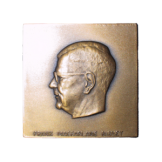
- The award commemorates the contributions to science by Nobel Laureate Professor Sir Frank Macfarlane Burnet OM KBE MD FAA FRS Nobel Laureate.
The Macfarlane Burnet Medal and Lecture recognises scientific research of the highest standing in the biological sciences. It is a career award that commemorates the contributions to science by Nobel Laureate Professor Sir Frank Macfarlane Burnet OM KBE MD FAA FRS Nobel Laureate. Along with the Matthew Flinders and Ruby Payne-Scott Medals, it is one of the most prestigious career awards of the Academy. Nominated candidates should normally be resident in Australia.
Candidates and nominators may be non Fellows.
As a Premier Award, this award is one of the Academy’s most prestigious awards recognising researchers of the highest standing over a career of whatever length.
This award is open to nominations for candidates from all genders. The Australian Academy of Science encourages nominations of female candidates and of candidates from a broad geographical distribution.
Referee reports are not required as part of the nomination process for this award.
To be eligible for nomination an appropriate period of time should elapse following the receipt of any other Academy award.
Key dates
Below are the key dates for the nomination process. While we aim to keep to this schedule, some dates may change depending on circumstances.
GUIDELINES
The following guidelines provide important information about eligibility, submission requirements, and assessment processes. Please review them carefully before submitting a nomination.
The following guidelines contain information for honorific award nominators.
These guidelines contain information for honorific award nominators.
Please submit your nominations using the Nominate button found on the top right of this webpage when nominations are open.
Please note the Academy uses a nomination platform that is external to the main Academy site. Nominators will be required to create an account on the platform. Even if you are familiar with the nomination process, please allow extra time to familiarise yourself with the platform.
Early-career, mid-career and career medals
Can I nominate myself?
- No – you must be nominated by someone else. Self-nominations are not accepted.
Can I submit a nomination on behalf of someone else?
- Yes – you can submit a nomination on behalf of someone else if you are not the nominator. An example would be a university grants office or personal/executive assistant completing the online nomination form on behalf of a nominator. Once the form is submitted, the nominator will be sent an email confirming that the nomination has been completed. If a nominee submits a nomination for themselves on behalf of a nominator it will not be considered a self-nomination.
Residency requirements
- Winners of all awards except the Haddon Forrester King Medal should be mainly resident in Australia and/or have a substantive position in Australia at the time of the nomination deadline. Unless explicitly stated in the awarding conditions, the research being put forward for the award should have been undertaken mainly in Australia. Some awards have more specific conditions that the relevant selection committee must apply and nominators are advised to read the conditions associated with each award very carefully.
Honorific career eligibility (more specific details found in the honorific awards nominator guidelines and the honorific award post PhD eligibility guidelines)
- Career eligibility is calculated by calendar year.
- Early career awards are open to researchers up to 10 years post-PhD.*
- Mid-career awards are open to researchers between eight and 15 years post-PhD.*
- * or equivalent first higher degree e.g. D.Phil., D.Psych., D.Sc.
- Please note that the Awards Committee may consider nominees with post PhD dates outside of these ranges if a career exemption request is being submitted with the nomination, further guidelines on career exemption requests can be found in the nomination guidelines.
- See the post-PhD eligibility guidelines document for relevant conferral dates.
Academy fellowship requirements in award nominations
- Fellows and non-Fellows of the Academy can provide nominations for either Fellows or non-Fellows for all awards.
Women only awards
- The Dorothy Hill, Nancy Millis and Ruby Payne-Scott Medals are for women only. These medals are open to nominees who self-identify as a woman in the award nomination form. The Academy does not require any statement beyond a nominee’s self-identification in the nomination form.
- This practice is consistent with the Sex Discrimination Act 1984, which has recognised the non-binary nature of gender identity since 2013, and gives effect to Australia’s international human rights obligations. The Academy remains committed to the fundamental human rights principles of equality, freedom from discrimination and harassment, and privacy, as well as the prevention of discrimination on the basis of sex and gender identity.
PREVIOUS AWARDEES
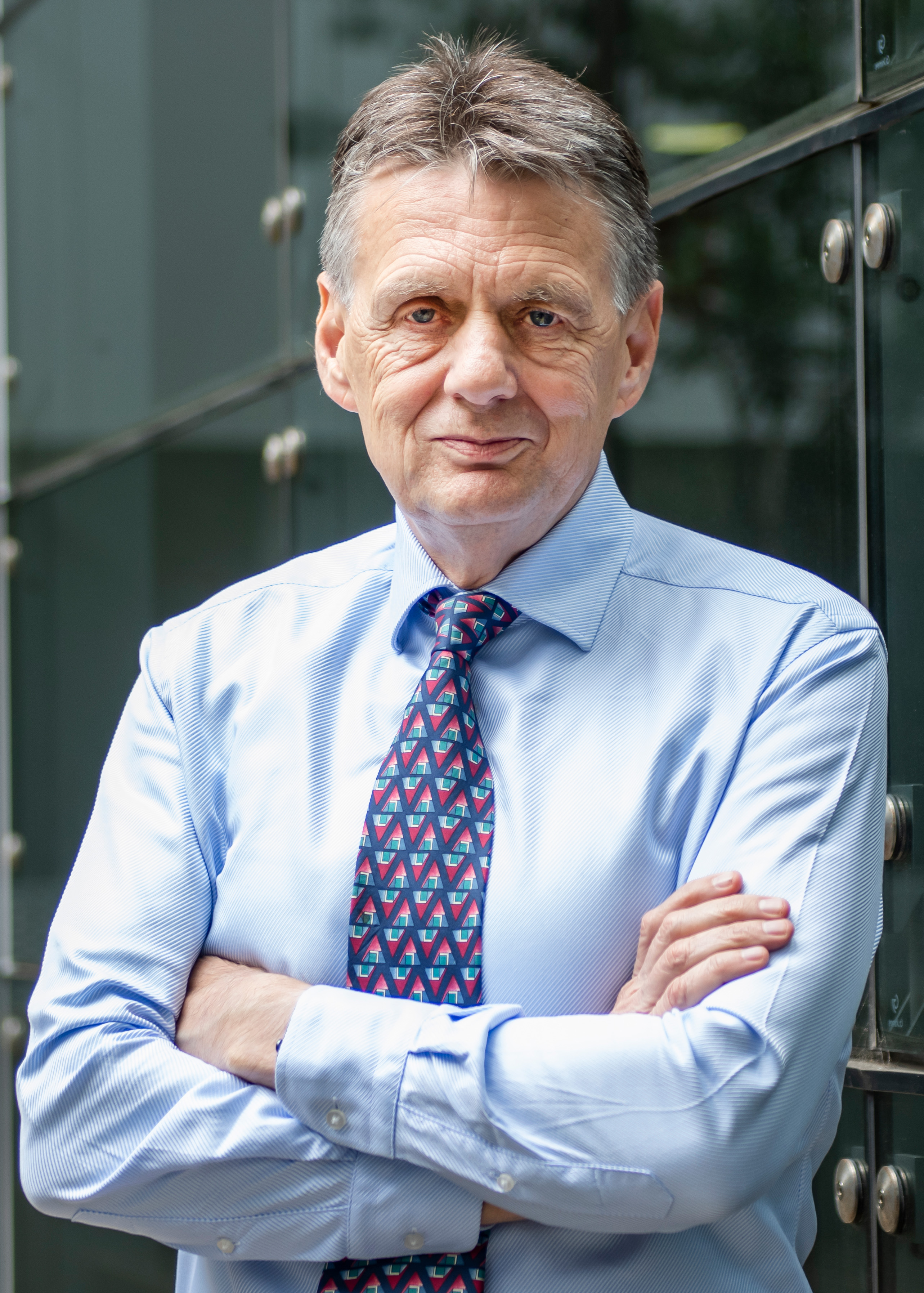
Professor Alan Cowman AC FAA FAHMS FRS, Walter and Eliza Hall Institute of Medical Research (WEHI)
Over the last 30 years, Professor Alan Cowman has been studying Plasmodium falciparum, the causative agent of the most severe form of malaria in humans. Malaria is one of the biggest killers of children under five in most developing countries. Significant advances in understanding malaria biology have been enabled by discoveries made in Professor Cowman’s laboratory, including research tools to genetically modify the P. falciparum parasite that have been used worldwide, defining the parasite’s mechanisms to invade and modify human red blood cells, and identifying the molecular mechanism of resistance to commonly used antimalarial drugs.
Professor Cowman’s fundamental discoveries have directly led to the development of novel therapeutic candidates including live genetically weakened vaccines and new antimalarial compounds. He has run many international malaria forums and founded the first Malaria World Congress. Through research advancements and leadership roles, Professor Cowman has made an enormous impact on the biomedical sciences and human health advancements.
Professor David Lindenmayer AO FAA, Australian National University
Professor David Lindenmayer is an international authority on conservation and landscape ecology. He has discovered novel ways in which key drivers of landscape change interact to affect biodiversity, ecological processes and ecosystem condition. Through a pioneering series of large-scale, long-term studies in forests, plantations and agricultural environments, he has uniquely demonstrated how pre-existing landscape conditions combine with new kinds of landscape transformation to shape temporal and spatial patterns of species decline and recovery at multiple scales (from individual trees to sites, landscapes and regions). Professor Lindenmayer has also discovered mechanisms through which species respond to multiple natural and human disturbances. With his unique perspectives across an array of ecosystems, he established innovative strategies for the management of biota and ecosystems in Australia and globally. He has also developed new conceptual models and approaches for designing experiments and other kinds of studies to quantify the effects of multiple, interacting factors on biodiversity.
Professor Steve Simpson AC FAA FRS, University of Sydney
Professor Steve Simpson has revolutionised the scientific understanding of swarming in locusts, with research spanning neurochemical events in the brains of individual locusts to continental-scale mass migration. Professor Simpson, with colleague David Raubenheimer, has also developed a powerfully integrative framework for nutrition called the Geometric Framework, which he devised and tested using insects. The Framework has since been applied to a wide range of organisms, from slime moulds to humans, and to problems from aquaculture and conservation biology, to dietary causes of human obesity and ageing. Since 2012, Professor Simpson has applied his biological and biomedical research and knowledge to ease the burden of chronic disease in humans through a unique, cross-disciplinary initiative at the Charles Perkins Centre at the University of Sydney.
Professor Marilyn Renfree AO FAA, University of Melbourne
Australia is home to a unique assembly of mammals—the marsupials and monotremes. Professor Marilyn Renfree has pioneered modern research on their reproduction, development, evolution, conservation, molecular and comparative genomics for 40 years, demonstrating their importance for biomedical research as well as providing novel conservation and management approaches for our iconic kangaroos and koalas. Her lifetime passion for these long-neglected Australian fauna has led to pioneering discoveries and insights that challenged assumptions and opened up new areas of biomedical research internationally. Professor Renfree’s research program has advanced our understanding of embryonic development and placentation, how the development of their embryos can be suspended, and how their extraordinary lactation is controlled. Her most important contributions have been to the field of sexual differentiation, overturning established paradigms and showing how genes and hormones interact during early development, providing new understanding of what makes a male and a female mammal—leading to new clinical guidelines and making a contribution to our understanding of human sexual development as well as that of other mammals.
Professor Geoffrey Burnstock FAA FRS, University College London and Melbourne University
Professor Geoffrey Burnstock is internationally recognised for the discovery of purinergic neurotransmission, a novel signalling system between cells that is of central importance for many biological processes. His 1976 discovery challenged established concepts of the biology of cell messengers and neurotransmission. More recently, he has focused on a cell communication process that takes place in metabolism known as purinergic signalling. This research has had an impact on the understanding of pain mechanisms, bone formation and skin and bladder cancer and kidney disease. He continues to be an inspiration for many and his vision and creativity have enabled and driven the research of a very large number of laboratories around the world. He has had a very large impact on this field by his initial discovery and its elaboration, involving challenge to Dale’s principle of ‘One nerve terminal—one transmitter’.
2016
Professor Graham D Farquhar AO FAA FRS, Australian National University
Professor Graham Farquhar is an outstanding plant scientist whose innovative work has had far reaching impact on our understanding of plant function in a changing world. Combining mathematical rigour and biological insight, his highly cited research has been applied at vastly different scales, from how plants partition their resources between water use and photosynthesis to global interactions between vegetation and the atmosphere. His work has enabled development of crop varieties that are better equipped to cope with changing environmental conditions, particularly those associated with drought.
2014
Professor Jerry Adams FAA FRS, Walter and Eliza Hall Institute of Medical Research
Professor Adams has advanced understanding of cancer development, particularly of genes activated by chromosome translocation in lymphomas, through molecular analysis and transgenic mouse models. By clarifying how the Bcl-2 protein family controls the life and death of cells, he and his colleagues have galvanized the development of a promising new class of anti-cancer drugs that directly engage these cell death regulators.
2012
Professor Ruth Hall FAA, University of Sydney
Ruth Hall has made a substantial and highly influential contribution to our understanding of how antibiotic resistance genes are acquired by gram negative bacteria. This is important because antibiotic resistance develops by resistance genes coming into a pathogen from elsewhere. She discovered and characterised experimentally one of the central mechanisms of gene movement found in bacteria and is continuing to work on novel antibiotic transfer systems. More broadly, her work has made a seminal contribution to our understanding of how genes of all types are mobilised by bacteria and hence how bacterial genomes evolve.
2010
Professor David Vaux FAA, La Trobe University
David Vaux is best known for identifying the proto-oncogene bcl-2 as an inhibitor of cell death, thus launching the field of molecular biology of apoptosis (programmed cell death). His subsequent work on the 'Inhibitor of Apoptosis' family of proteins has underpinned the development of a novel group of compounds currently undergoing clinical trials in humans for the treatment of cancer, placing him at the forefront of biomedical science.
2008
Professor Richard Shine, University of Sydney
Richard Shine has an outstanding and influential research history in ecology, evolution and conservation spanning over 30 years. He has a very high international profile with over 500 papers published in international scientific publications. He is an accomplished communicator producing books for general audiences and speaking frequently at international conferences. Professor Shine's influence on Australian vertebrate biology is unparalleled and has transformed the fields in which he works.
2006
Professor Jenny Marshall Graves, Australian National University, Canberra
Jenny Graves has a highly acclaimed international reputation for her work in mammalian genetics and comparative genomics on Australian marsupials and monotremes. Her research has raised profound questions about human biology and mammalian evolution. She has made extensive ground-breaking discoveries relating to the cell cycle, control of DNA replication, evolution of the mammalian genome and the function and evolution of sex chromosomes. She graduated from Adelaide University and received a Fulbright award to undertake a PhD in Molecular Biology at the University of California, Berkeley, USA. Jenny was selected as the 2006 laureate for the Asia-Pacific region L’Oréal-UNESCO Awards for women in science. She is a Research Director at the Australian Research Council Centre for Kangaroo Genomics.
2003—B.J. Marshall
2001—G.R. Sutherland
1999—M.R. Bennett
1997—S. Cory
1995—P.M. Colman
1993—D. Metcalf
1991—F.W.E. Gibson
1989—W.J. Peacock
1987—D.A. Denton
1985—F.J. Fenner
1983—D.R. Curtis
1981—J.M. Rendel
1979—G .J .V. Nossal
1977—W. Hayes
1975—R.N. Robertson
1973—E.J. Underwood
1971—J.F.A.P. Miller