



The Max Day Environmental Science Fellowship Award

Program highlights
- The Max Day Environmental Science Fellowship Award is an annual award of up to $20,000 per awardee to assist PhD students or early career researchers with their research.
- It provides funding support toward research expenses, courses and the costs of travel.
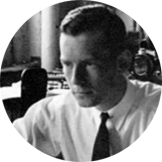
- The award is named in honour of the late Dr Maxwell Frank Cooper Day AO FAA who spent a lifetime championing entomology, conservation and forestry, as well as helping other scientists.
The Max Day Environmental Science Fellowship Award is an annual award of up to $20,000 per awardee to assist PhD students or early career researchers with their research. It provides funding support toward research expenses, courses and the costs of travel. Grants are GST exclusive. Funded activities are normally expected to have been undertaken within two years from the date of award. Awardees can apply for project variations if their award proposals are impacted by extenuating circumstance.
The award is named in honour of the late Dr Maxwell Frank Cooper Day AO FAA who spent a lifetime championing entomology, conservation and forestry, as well as helping other scientists. Through sponsoring this award Dr Day is acknowledging the support that he himself received as a young researcher to travel overseas to gain his PhD at Harvard. Following Dr Day’s strong belief in the strength of an interdisciplinary approach to research, only applicants who are able to demonstrate an interdisciplinary approach to their research will be considered for this award.
Key dates
Below are the key dates for the application process. While we aim to keep to this schedule, some dates may change depending on circumstances.
GUIDELINES
The following guidelines and FAQs provide important information about eligibility, submission requirements, and assessment processes. Please review them carefully before submitting an application.
- Applicants must be Australian citizens or permanent residents at the time of application.*
- Applicants should either:
- be accepted to undertake a PhD (or equivalent research doctorate), have completed their confirmation and be enrolled in their program (at the time of the award closing date**)
- have held a PhD (or equivalent) for no more than 5 years at the time of the award closing date**
This award is open to nominations for candidates from all genders.
* Includes the Special Category visa Subclass 444 for New Zealand citizens
** The Australian Academy of Science is committed to ensuring that all eligible researchers can be considered for awards and collects career interruption information to assess their opportunity to demonstrate scientific excellence. Accordingly, extensions to the post PhD eligibility requirements for early and mid-career awards will be provided for qualifying career disruptions.
A career disruption involves prolonged interruption to a nominee’s capacity to conduct full time equivalent (FTE) high-level research, either due to part-time employment or absence (for periods of one month or greater) and/or long-term partial return to work, to accommodate carer’s responsibilities, illness or other interruption.
The career disruptions here must have occurred post the date of the letter advising that the PhD thesis was passed and resulted in significantly reduced research productivity or nil research output. Career disruption periods will be taken into account for those who would otherwise be beyond the post PhD career eligibility requirements
Applicants must demonstrate an interdisciplinary approach to their research work, address all selection criteria and conduct their research in one or more of the biological sciences relating to one or more of the following disciplines:
- conservation of Australia’s flora and fauna
- ecologically sustainable resource use
- environmental protection
- ecosystem services (either provisioning services, or habitat and supporting services).
Applicants may use the award in Australia or overseas but must demonstrate that the proposal has direct relevance to Australia in one of more of the four disciplines mentioned above. Successful applications will clearly address all selection criteria.
Download the relevant selection criteria below.
Eligible expenses are all expenses that fall under the following areas of funding:
- course fees
- cost of travel to undertake research or attend relevant conferences/workshops
- Funding may be used towards the costs of fieldwork, equipment, consumables and other research costs not covered from other sources.
Funding may NOT be used to cover bench fees, other overhead costs or as a top-up for stipends, personal expenses, salaries or any non-research related costs.
Applications must include the following:
- A proposal summarising your chosen area of study/research and why the Max Day Fellowship will be of particular benefit to you. Please refer to the selection criteria section above for information outlining how the proposals are assessed. Maximum of 1,000 words.
- Itemised budget detailing eligible expenses with brief justification for each item, the names and details of funding already received (funding body, amount).
- The applicant must show they have been recognised by one or more research institutions, such as their host institution, by the provision of some level of direct financial contribution towards their project (excluding salaries).
- Brief CV including qualifications, summary of any professional/research experience and publications/presentations. A full publications list is not required. Maximum of three pages using size 12 font.
- PhD students require a letter of reference from their supervisor confirming and commenting on their existing research. Maximum of one page using size 12 font.
- Post-doctoral researchers must attach two referee reports to the application. The reports should be addressed to the Awards Committee and should indicate the referee’s knowledge of the applicant’s proposed Max Day Fellowship activities, and the potential benefits of these activities to the researcher and/or the research field. Maximum of one page using size 12 font per report.
Late applications will not be considered and applicants who fail to adhere to the above requirements will not be considered.
Applications are considered carefully against the selection criteria by a committee of scientists with diverse expertise. The decisions of the committee are based on the assessed competitiveness of the proposal. The Academy is not able to enter into discussion or correspondence regarding the reasons why an application is successful or not.
The successful awardee(s) will be notified of the award by early November for a Fellowship starting up to 12 months from the date of award.
The successful awardee(s) will also be offered travel and accommodation to attend the Science at the Shine Dome event as part of their award.
- Applicants must commence their research within 12 months of being offered the Fellowship, after which the Fellowship offer will automatically lapse.
- The Fellowship may be held concurrently with awards or grants from other institutions.
- Applicants can only receive funding from the same research or travelling research award once in a three calendar year period.
- Applicants may apply for more than one award but can only receive one Academy travelling or research award per calendar year.
- Supporting institutes and awardees are required to ensure that any research they undertake that is funded by the Australian Academy of Science adheres to the Australian Code for the Responsible Conduct of research, severe breach of these codes may result in the withdrawal of current and refusal of future funding support. Research involving Indigenous Australians must comply with the Guidelines for Ethical Research in Australian Indigenous Studies.
An annual report is required on the progress of the research project. The report should detail progress on the research goals outlined in the grant-holder’s proposal, and expected vs. actual expenditure to date.
If the Grant is held for two years, a report is also required at the end of the second year.
Applications are to be completed through an online form found by clicking on the Apply button on the top right of this web page when the round is open.
Travelling awards, research grants, workshop and lecture awards
- Can awarded funds pay for salary expenses?
- The Thomas Davies Research Grant funds can cover research assistant salaries, but not primary researcher salary expenses. The Aboriginal and Torres Strait Islander Scientist Award, the Margaret Middleton Fund and Max Day Fellowship Awards are not able to cover any salary expenses, for either primary researchers or research assistants.
- Can I apply for more than one research award?
- Yes – however, you can only receive one research award per calendar year. If you are ranked highly for multiple research awards, the assessment committee Chairs will decide which award is most appropriate for the project and applicant.
- Can I receive the same research award for a different project in subsequent years?
- No – once you have received a research award, you are not eligible to receive the same award for 3 calendar years.
- Can I use the funds to attend a conference?
- The Margaret Middleton Fund does not support conference expenses.
- The Aboriginal and Torres Strait Islander Scientist Award and the Max Day Fellowship funds can be used to cover the cost of travel to undertake research or attend relevant conferences/workshops.
- Thomas Davies Research Fund can support conference expenses if it can be demonstrated that it is relevant for the project, however, this is not the primary objective of the award.
- Can I use the funds to cover overhead expenses?
- No – each award notes the specific exclusions for use of funding; however, no award allows funds to be used towards bench fees, managerial, visa, insurance or infrastructure costs.
- Can I request feedback on my application assessment?
- No - applications are assessed based on the competitiveness of the proposal by a committee of scientists with diverse expertise. The Academy is not able to enter into discussion or correspondence regarding the reasons why an application is successful or not.
- Can I apply for the Max Day Environmental Science Fellowship if my PhD has not yet been through the confirmation process?
- No. If you are a PhD student applying for a Max Day Environmental Science Fellowship you must have completed the PhD confirmation process with your institution. Please note that specific confirmation process requirements may vary between institutions. Candidates are strongly encouraged to clarify the requirements with their institution prior to submitting the fellowship application.
Previous awardees
Dr Joseph Chung, University of Canberra: An interdisciplinary approach to safeguarding threatened frogs from a deadly fungal pathogen: creating long-lasting resistance through tadpole immunisation
Mr Jules Farquhar, Monash University: The invasion of the six-toothed rainbow skink in Darwin: Eco-evolutionary mechanisms driving an intra-continental introduction
More information on the 2026 Max Day Environmental Science Fellowship Awardees can be found here.
Rebecca Greening, University of Adelaide: Soil function and ecosystem productivity: A comparative analysis between a century of regeneration and livestock-grazed arid South Australia
Dr Nina Wootton, University of Adelaide: Plastic to Plate? An interdisciplinary study of microplastic pollution in traditional food sources and ecosystems in North-East Arnhem Land
More information on the 2025 Max Day Environmental Science Fellowship Award awardees can be found here.
Aviya Naccarella, Deakin University: The contribution of mycophagous mammals to ecosystem services and restoration
Dr Elvis Okoffo, University of Queensland: Unmasking the hidden threat: Investigating microplastic pollution in Moreton Bay for a sustainable future
More information on the 2024 Max Day Environmental Science Fellowship Award awardees can be found here.
Patrick Finnerty, University of Sydney: Neighbourhood watch—using ‘virtual’ neighbours to protect plants from herbivores during habitat restoration and post-fire recovery
Shawn Scott, University of South Australia: Post-fire population response and chytrid occurrence in South Australian frogs
More information on the 2023 Max Day Environmental Science Fellowship Award awardees can be found here.
Miss Bridget Campbell, Macquarie University: Warrakan ganma: Bridging Western and Indigenous science to safeguard biocultural diversity
Dr Brock Bergseth, James Cook University: Bolstering conservation outcomes – understanding social and ecological effects of illegal fishing behavioural interventions
Highly commended applications
Mr Timothy Ghaly, Macquarie University: Who lives inside fungi? Bacterial endosymbionts of plant-associated fungi
Dr Stephanie Gardner, University of New South Wales: Quantifying the contribution of benthic invertebrates to global nitrous oxide production
Dr Niloofar Karimian, Southern Cross University: Arsenic and antimony co-behaviour in soil under a changing climate: resolving unexplored interactions between microbiology, mineralogy and geochemistry
Dr Alice Twomey, University of Queensland: Enhancing resilience of coasts: nature-based solutions for flood mitigation
More information on the 2022 Max Day Environmental Science Fellowship Awardees can be found here.
Dr Laura Brannelly, University of Melbourne: Using genetic techniques to develop conservation strategies for an endangered frog species
Ms Lea Hannah, Western Sydney University: Harnessing next generation DNA sequencing to explore whether honeybees providing crop pollination services benefit from floral resource plantings
Highly commended applications
Dr Luke Jeffrey, Southern Cross University: Greenhouse gas guzzlers: Are methane consuming microbes active within the bark of endemic Australian wetland trees?
Ms Maggie-Anne Harvey, University of Queensland: Developing low-impact selenium agromining using Neptunia amplexicaulis
Dr Stephanie Gardner, University of Queensland: Enhancing resilience of coasts: nature-based solutions for flood mitigation
More information on the 2021 Max Day Environmental Science Fellowship Awardees can be found here.
Dr Emma Camp, University of Technology Sydney: Elemental diagnostics of environmental change on the Great Barrier Reef
Ms Allison Broad, University of Wollongong: Merchant shipping, anchor scour and seafloor biota: a large scale experimental examination of impacts
Highly commended applications
Dr Catherine Price, University of Sydney: When it takes one bite: deceiving herbivores to protect rare and threatened orchids.
Ms Emily Scicluna, La Trobe University: Using personality and cognitive assessment of individuals as a conservation tool for improving reintroduction/translocation success
Ms Georgia Sinclair, RMIT University: Developing biomarkers of environmental exposure to poly- and perfluoroalkyl substances to improve environmental policy and health
Dr Tatiana Soares da Costa, La Trobe University: Fighting herbicide resistance with vitamin deprivation.
More information on the 2020 Max Day Environmental Science Fellowship Awardees can be found here.
Dr Tim Doherty, Deakin University: Ecological consequences of introduced predator removal for a native mesopredator and ecosystem engineer Varanus gouldii
Ms Nicole Foster, University of Adelaide: Prioritising for success: Innovative approaches to management of coastal environments
Highly commended applications
Ms Anita Perkins, The Southern Cross University: Fungi as degraders of kelp detritus: unravelling the role of fungi in coastal carbon cycling and storage
Dr José Lahoz-Monfort, The University of Melbourne: Acoustic monitoring: new technologies and analytical tools for large-scale monitoring of the threatened Sarus crane
Dr Alexandra Carthey, Macquarie University: Microbially mediated olfactory communication in the Anthropocene: a key to the lockbox of problematic captive breeding for conservation?
More information on the 2019 Max Day Environmental Science Fellowship Awardees can be found here.
Ms Melissa Houghton, University of Queensland: Invertebrate monitoring and community ecology as a measure of change in island ecosystems to inform conservation decision-making.
Mrs Charlie Phelps, Edith Cowan University: Determining the cumulative effect of putative pathogenic microbes, increased temperature and herbivory on the ecologically important kelp, Ecklonia radiata.
Highly commended applications
Dr Tatiana Soares Da Costa, La Trobe University: Development of New Herbicide Cocktails for Effective Weed Management
Dr Emma Camp, University of Technology Sydney: Set-up for survival – the holobiont signature facilitating Australia’s coral communities in the face of climate change.
Watch the awards videos about the research of Ms Melissa Houghton and Mrs Charlie Phelps.
Mr Nicholas Leseberg, University of Queensland: Ecology and conservation biology of the Night Parrot.
Dr Marta Yebra, Australian National University: Flammability warning from space
Highly commended applications
Dr Hugo Harrison, James Cook University: Connecting reefs in the Anthropocene: Managing Australia’s coral reefs for recovery and persistence.
Dr Kerensa McElroy, CSIRO: The ‘DNA footprint’ of near extinction: interrogating 100 years of black-throated finch decline by sequencing contemporary and historical specimen.
Mr Max Worthington, Flinders University: Renewable polymers for agriculture and the environment
Donors
This award has been made available through generous contributions from the following individuals:
Academy Circle
Dr Maxwell Frank Cooper Day AO FAA
Dr Jon Day PSM
Mr Doug Hooley PSM
Science Circle
The Griffin Family
Professor Frank Andrew Smith FAA
Academy Associates
Anonymous
Ms Virginia Berger
Mr Ian Hardy
Ms Kelly McMahon
Supporters
Mrs Eliza Allen
Mr Nicholas Benson
Marek Cmero
Dr Peter Coyne
Dr Alana Grech
Professor Alec Lazenby AO
Dr Laurence Mound
Dr Libby Robin
Ms Suzanna Rumon
Dr Denise Sherer