



Haddon Forrester King Medal, sponsored by Rio Tinto

Award highlights
- This award honors the contributions of the late Haddon Forrester King whose work applied the geological and related sciences to the search for mineral deposits in Australia and elsewhere.
- The award recognises original and sustained contributions to Earth and related sciences of particular relevance to the discovery and sustainable development of mineral deposits.
- In addition to a medal presentation dinner, this award includes a $3,000 honorarium and up to $7,000 towards a short lecture tour highlighting the awardee's discoveries, research and achievements.
The Haddon Forrester King Medal, sponsored by Rio Tinto, is one of the Australian Academy of Science’s prestigious career awards for life-long achievement and outstanding contribution to science.
The award is made in honour of the contributions of the late Haddon Forrester King whose work applied the geological and related sciences to the search for mineral deposits in Australia and elsewhere. Haddon King joined Zinc Corporation as its Chief Geologist in 1946, became Director of Exploration for the merged Conzinc Rio Tinto of Australia (CRA) in 1962 and continued in this capacity until his retirement in 1970. He was a consultant at CRA until 1986.
The Award is made to a scientist, resident in Australia or overseas, and normally awarded once every two years. It recognises original and sustained contributions to Earth and related sciences of particular relevance to the discovery and sustainable development of mineral deposits.
In addition to a medal presentation dinner, this award includes a $3,000 honorarium and up to $7,000 towards a short lecture tour highlighting their discoveries, research and achievements. The Medal and a lecture is presented at a dinner in the awardee's state capital. International awardees' events will be held at the Shine Dome in Canberra.
The Australian Academy of Science encourages nominations of female candidates and of candidates from a broad geographical distribution.
Candidates may be put forward for more than one award. If a proposed candidate is already the recipient of an Academy award, the second award must be for a distinct, additional, body of work undertaken since the first award, and/or work in a different field.
The Academy acknowledges the support of family and friends of Haddon King, and CRA Limited (now Rio Tinto). In 2007, Rio Tinto began a series of financial contributions to the Haddon Forrester King Fund and to acknowledge this generosity the medal is now known as the Haddon Forrester King Medal, sponsored by Rio Tinto.
Key dates
Below are the key dates for the nomination process. While we aim to keep to this schedule, some dates may change depending on circumstances.
GUIDELINES
The following guidelines and FAQs provide important information about eligibility, submission requirements, and assessment processes. Please review them carefully before submitting a nomination.
How to nominate a scientist for the Academy’s honorific awards
The following guidelines contain detailed information for nominators.
These guidelines contain information for honorific award nominators.
The following guidelines contain information for honorific award referees.
These guidelines contain information for honorific award referees.
Please submit your nominations using the Nominate button found on the top right of this webpage when nominations are open.
Please note the Academy uses a nomination platform that is external to the main Academy site. Nominators will be required to create an account on the platform. Even if you are familiar with the nomination process, please allow extra time to familiarise yourself with the platform.
Early-career, mid-career and career medals
Can I nominate myself?
- No – you must be nominated by someone else. Self-nominations are not accepted.
Can I submit a nomination on behalf of someone else?
- Yes – you can submit a nomination on behalf of someone else if you are not the nominator. An example would be a university grants office or personal/executive assistant completing the online nomination form on behalf of a nominator. Once the form is submitted, the nominator will be sent an email confirming that the nomination has been completed. If a nominee submits a nomination for themselves on behalf of a nominator it will not be considered a self-nomination.
Residency requirements
- Winners of all awards except the Haddon Forrester King Medal should be mainly resident in Australia and/or have a substantive position in Australia at the time of the nomination deadline. Unless explicitly stated in the awarding conditions, the research being put forward for the award should have been undertaken mainly in Australia. Some awards have more specific conditions that the relevant selection committee must apply and nominators are advised to read the conditions associated with each award very carefully.
Honorific career eligibility (more specific details found in the honorific awards nominator guidelines and the honorific award post PhD eligibility guidelines)
- Career eligibility is calculated by calendar year.
- Early career awards are open to researchers up to 10 years post-PhD.*
- Mid-career awards are open to researchers between eight and 15 years post-PhD.*
- Please note that the Awards Committee may consider nominees with post PhD dates outside of these ranges if a career exemption request is being submitted with the nomination, further guidelines on career exemption requests can be found in the nomination guidelines.
- See the post-PhD eligibility guidelines document for relevant conferral dates.
- * or equivalent first higher degree e.g. D.Phil., D.Psych., D.Sc.
Academy fellowship requirements in award nominations
- Fellows and non-Fellows of the Academy can provide nominations for either Fellows or non-Fellows for all awards.
Women only awards
- The Dorothy Hill, Nancy Millis and Ruby Payne-Scott Medals are for women only. These medals are open to nominees who self-identify as a woman in the award nomination form. The Academy does not require any statement beyond a nominee’s self-identification in the nomination form.
- This practice is consistent with the Sex Discrimination Act 1984, which has recognised the non-binary nature of gender identity since 2013, and gives effect to Australia’s international human rights obligations. The Academy remains committed to the fundamental human rights principles of equality, freedom from discrimination and harassment, and privacy, as well as the prevention of discrimination on the basis of sex and gender identity.
PREVIOUS AWARDEES
From 1993 to 2024, the medal was awarded for original and sustained contributions to Earth and related sciences of particular relevance to the discovery, evaluation and exploitation of mineral deposits, including the hydrocarbons.
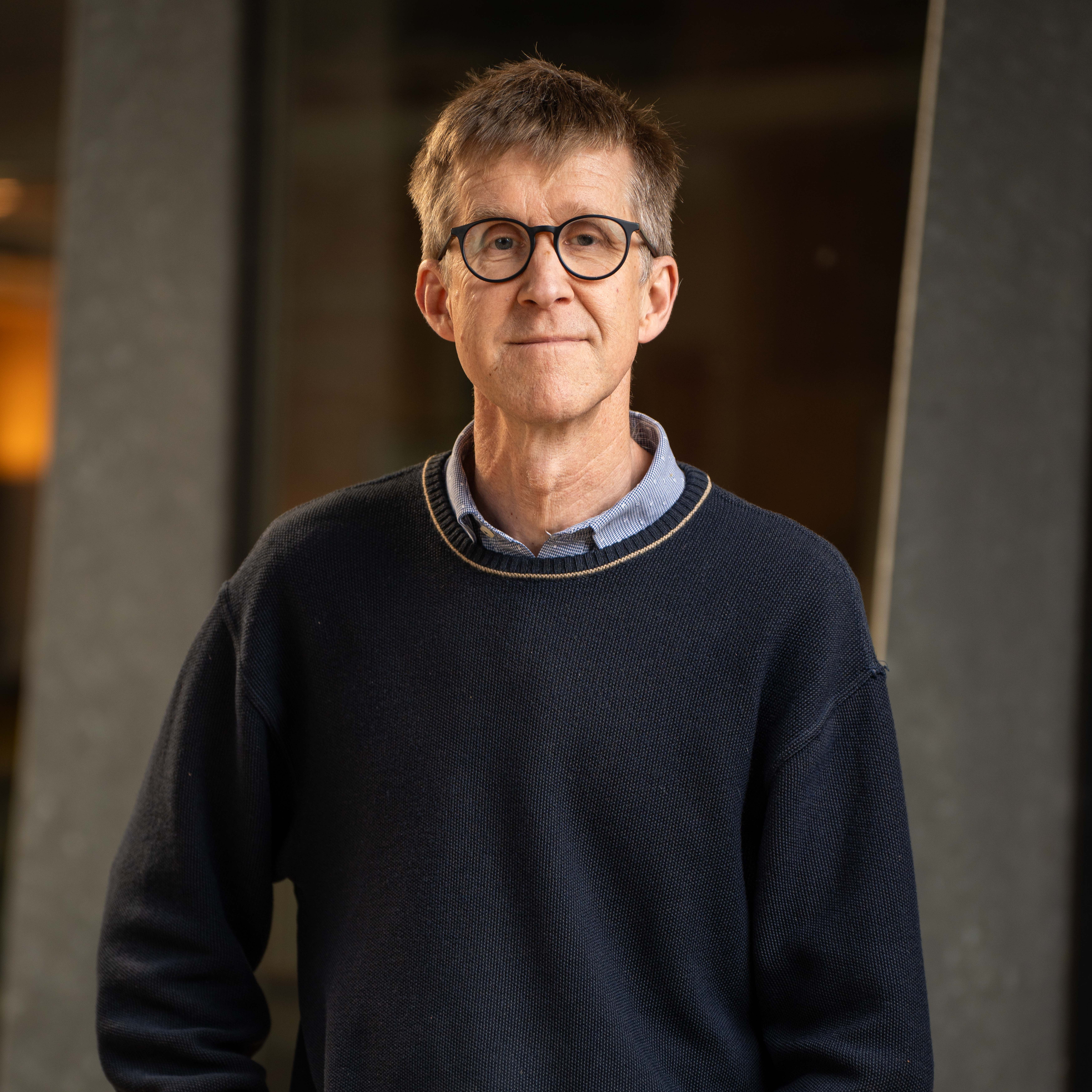
Professor Graham Heinson, Adelaide University
Professor Graham Heinson is a globally recognised leader in geophysics, whose pioneering work has transformed magnetotelluric (MT) methods from academic tools into powerful instruments for exploring mineral, energy and water resources. Since 2000, he has led major innovations in geophysical research and infrastructure, including the development of national MT capabilities and the landmark AusLAMP project. His collaborations with industry and government have advanced resource discovery, environmental monitoring and hydrogen exploration.
A passionate educator and mentor, Professor Heinson has supervised dozens of postgraduate students, initiated the transformative training program the National Exploration Undercover School (NExUS) and mentored students in the globally recognised Next Generation Explorers Award. His career is marked by visionary leadership, practical innovation, and an enduring commitment to student development and interdisciplinary collaboration. Professor Heinson has redefined the role of MT in Australia and inspired a generation of geoscientists through education, outreach and groundbreaking research.
Professor Stephen Cox, Australian National University
Professor Stephen Cox has conducted research spanning the fields of experimental rock deformation, field-based structural geology, microstructural analysis, isotope geochemistry, seismology and numerical simulation to explore how fluid migration deep in Earth’s crust triggers earthquakes and generates the high permeabilities necessary to sustain the development of many types of ore deposits whose formation involves large fluxes of metal-bearing fluids. His research is providing new understanding of the dynamic coupling between fluid flow, deformation processes, and reaction involved in the formation of ore deposits. It is also providing insight into how the structure of seismically-active fault networks localises fluid migration pathways and ore deposit location at depth in the Earth’s crust. These new perspectives are critical to developing more effective strategies during exploration for Earth resources. Professor Cox has demonstrated a consistent commitment to sharing his knowledge via undergraduate teaching, training research students, and providing training courses for minerals industry geoscientists, both nationally and internationally.
Dr Kathy Ehrig, BHP Billiton
Dr Kathy Ehrig is renowned for her insights into the complex geological events involved in the formation of the supergiant copper-uranium-gold-silver Olympic Dam ore deposit. Her leadership in this research has attracted global attention because her advances may contribute to further discoveries elsewhere. She has created highly innovative solutions in characterising in situ ore properties and predicting metal extraction in advance of mining, primarily in the context of the Olympic Dam mine. These solutions are based on her profound knowledge and understanding of mineral assemblages and have proven to be highly robust and transferable to other mines, thereby having a crucially positive impact on productivity. The foundation of her achievements has been her ability to integrate diverse datasets through harnessing cutting-edge research methods and novel approaches. Dr Ehrig’s diligence, enthusiasm and dedication to the pursuit of science combine to make her an exceptional research leader.
Professor Richard Henley, Australian National University
For over 50 years, Professor Richard Henley has been a leader in the development of understanding of how economic deposits of metals, especially copper and gold, were formed within large-scale hydrothermal systems in volcanoes and mountain belts. The fundamentals that he derived have provided the basis of exploration for epithermal through to orogenic gold deposits, the practical chemistry of fluids in active geothermal systems and many follow-up research programs around the world. He has been acknowledged for his direct contribution to a number of major discoveries including the giant Ladolam Au (Lihir Island, Papua New Guinea) and the Onto Cu-Au (Hu’u, Sumbawa Island, Indonesia) deposits. In the last few years, he has led the recognition of high temperature magmatic gas reactions with rock forming minerals as the principal control on the generation of porphyry copper deposits. He is currently focused on application of X-ray micro CT scanning to derive new and detailed understanding of water-rock interaction chemistry and the properties of rock materials.
Professor Ian Campbell, Australian National University
Professor Ian Campbell is widely recognised internationally as one of the world's leading experts in ore deposit geology. After graduating from the University of Western Australia he spent three years working for Western Mining Corporation at Kambalda where he found the Juan Shoot, one of the richest nickel deposits in Western Australia. He has had a long and distinguished career in mineral exploration and research relating to the origin of magmatic sulfide deposits, particularly platinum group element (PGE) deposits, and later, porphyry copper deposits. His hypothesis for the origin of PGE deposits was initially controversial but recent experiments have confirmed its key predictions. Several of his projects have been directed at discriminating between economically mineralised and barren bodies of rocks; the outcomes of these projects have direct application in exploration.
Professor David Cooke, University of Tasmania
Professor David Cooke’s main research theme is the geological, chemical and fluid processes that produce the world’s major copper-gold deposits, known as ‘porphyry copper deposits’. His recent research has focused on documenting changes in the chemistry of minerals surrounding these magmatic copper-gold deposits. Particular minerals retain trace elements in relative abundances which vary in patterns set by the temperature gradient and wall-rock compositions. Systematic, rapid sampling of a prospective area can define mineral chemical vector techniques that companies can employ to assist targeting of drill holes designed to discover deeply buried deposits. The importance of this work has been recognised by many companies that now employ the techniques as a routine procedure in exploration for magmatic copper–gold deposits. His other significant contribution has been the mentoring of a large number of PhD students who have gone on to fill important geoscience roles in many mineral exploration companies worldwide.
2016
Professor Murray Hitzman, Colorado School of Mines
Professor Hitzman is one of the world’s leading mineral-deposits scientists. He has distinguished himself as a first class researcher, an outstanding educator, a successful mine discoverer and developer, and an influential scientific advisor to government. The foundation of his achievements has been careful field studies of many different types of mineral deposits and insightful interpretations based on an excellent understanding of the physics and chemistry of mineral formation. His outstanding record of success includes the discovery and development of the Lisheen lead-zinc mine in the Republic of Ireland, his leadership role in the recognition and characterisation of a new type of mineral deposit—the iron-oxide copper gold or IOCG type—and his new ideas on the origin of the sediment-hosted copper deposits of Central Africa. His work is having a growing impact globally on 21st century mineral exploration.
2014
Professor Neil Williams PSM, University of Wollongong
Professor Neil Williams' career across academia, the minerals exploration industry and government epitomises a lifelong commitment to the role geoscience can play in our society, but particularly to the discovery, evaluation, and exploitation of mineral deposits including hydrocarbons. Professor Williams' leadership of the national geoscience agency from 1995 to 2010 represents an original and sustained contribution to earth sciences and has placed Australia in a global leadership position in the use and application of high quality science to manage natural resource issues.
2012
Dr Shunso Ishihara, Geological Survey of Japan
Shunso Ishihara is famous for his recognition in 1971 of the magnetite- and ilmenite-series of granitic rocks, which he first recognised in Japan and has since applied to many granites elsewhere. He was the first to recognise that the degree of oxidation of a granite magma may be related to geographic location, with important implications for the type of associated mineralisation that may be found. His recognition of "oxidised" and "reduced" granites has been fundamental to developing an understanding of the relationship between the oxygen fugacity of both magmas and the magmatic volatile phase, and mineralisation. The recognition of the association of Sn, W, Mo and Cu mineralisation with granites of different oxidation states by Ishihara predated experimental studies that have demonstrated the dependence of the behaviour of those elements on oxygen fugacity. The magnetite-ilmentite scheme remains the basic scheme for the metallogenic classification of granites to this day.
Professor Anthony Naldrett, The University of the Witwatersrand
Professor Anthony Naldrett was nominated for the Haddon King award because of his major life-time contribution to the understanding of orthomagmatic Ni-Cu-PGE sulfide deposits of all types. Tony Naldretts book on the geology of these deposits (now in second edition) is the primary reference for all who study and explore for this type of deposit. He has played a key role in the elucidation of almost all the fundamental geological processes associated with this type of deposit and his work is the primary reason that this type of deposit is relatively well understood. He has published on all major examples of this deposit type. Notably, he was the first western researcher to obtain access to the giant Noril'sk and Jinchuan deposits in Russia and China.
2010
Professor Emeritus Steven Scott, University of Toronto, Canada
Steven Scott has pioneered the use of deep diving submersibles to observe volcanic massive sulphide ore deposits on the seafloor due to hydrothermal activity. He has been one of the most active scientists in the world in exploring for and facilitating economic mining of deposits on the modern seafloor. One site in the waters of Papua New Guinea may become the first underwater base metal and precious metal mine.
His theoretical work ranges over a very large field of mineral chemistry, the nature and chemistry of fluid inclusions and vent solutions, isotope chemistry and the lithogeochemistry of volcanic massive sulphide environments.
2009
Dr J David Lowell, Lowell Mineral Exploration LLC, Arizona, USA
David Lowell has achieved world-wide fame as a practicing exploration geologist and lecturer. His initial field of speciality was porphyry copper deposits and his ground breaking research and study with Professor John Guilbert in 1967 set the scene for his future discoveries and became a benchmark for the global exploration industry in the search and discovery of these ore deposits. He has an outstanding record spread over nearly 50 years of many discoveries of important copper and gold deposits, including finding the La Escondida porphyry copper deposits.
- 2007—D.I. Groves
- 2005—R.R. Large
- 2003—K.G. McCracken
- 2001—J.P. Hunt
- 1998—R.L. Stanton
- 1995—R.H. Sillitoe
- 1993—F.K. Rickwood; R. Woodall
Principal partner