


News and views

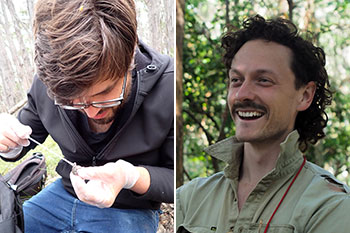
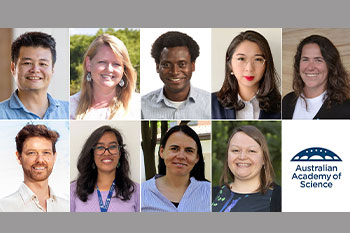
‘Pure joy’: nine marine, soil and plant biologists awarded 2023 Thomas Davies Research Grants
Nine early-career and mid-career researchers have been awarded the 2023 Thomas Davies Research Grant for Marine, Soil and Plant Biology.
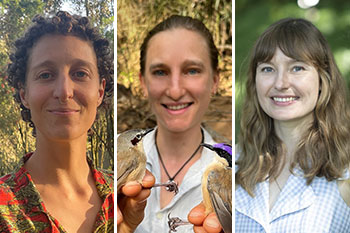
Margaret Middleton Fund recipients to protect fairywrens, mountain frogs and culturally significant species
The Margaret Middleton Fund for endangered Australian native vertebrate animals was established in 2000 with Dr Margaret Middleton, who donated generously to this fund across her lifetime. Dr Middleton was a long-time supporter of the Academy and early-career scientists, with the fund supporting more than 90 projects to date.
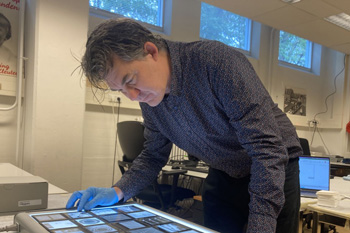
The role of popular astronomy: Moran Award for History of Science Research 2023
Dr Martin Bush from the University of Melbourne has received the 2023 Moran Award for History of Science Research, for his research proposal ‘Literary skies: the popular astronomy of William Albert Amiet’.
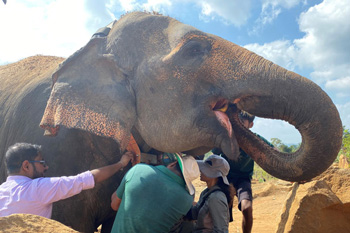
Elephants, buffalo and baboons: the wild side of the Graeme Caughley Travelling Fellowship
Not only did Dr Benjamin Allen have to contend with having his lunch stolen by samango monkeys while fulfilling his Graeme Caughley Travelling Fellowship, there were also the matters of civil unrest and the outbreak of a pandemic.

Wastewater and AI to plan for pandemics: WH Gladstones Population and Environment Fund
Dr Xuan Li from the University of Technology Sydney has been awarded the WH Gladstones Population and Environment Fund to fund her research into the effect of Australia’s population on the environment.
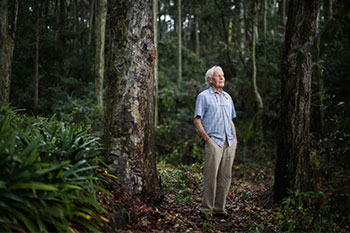
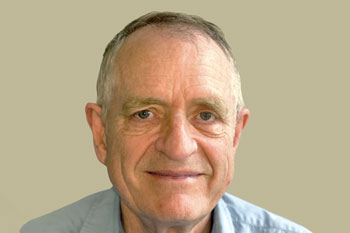
Remembering Dr Alec Costin, the father of Australian high mountain ecology
Academy Fellow Dr Alec Costin devoted his life to learning about and protecting Australia’s unique ecosystems. He was an international authority on the ecology of high mountain and high latitude ecosystems, and made major contributions to the flora of the Snowy Mountains area.