





Research round-up: Quolls, dingoes and bushfires
In this edition: Indigenous knowledge sheds light on quoll decline, bush-fires have long-term impacts on water quality, and tracing the resurgence of Murchison dingoes
- 3 mins read

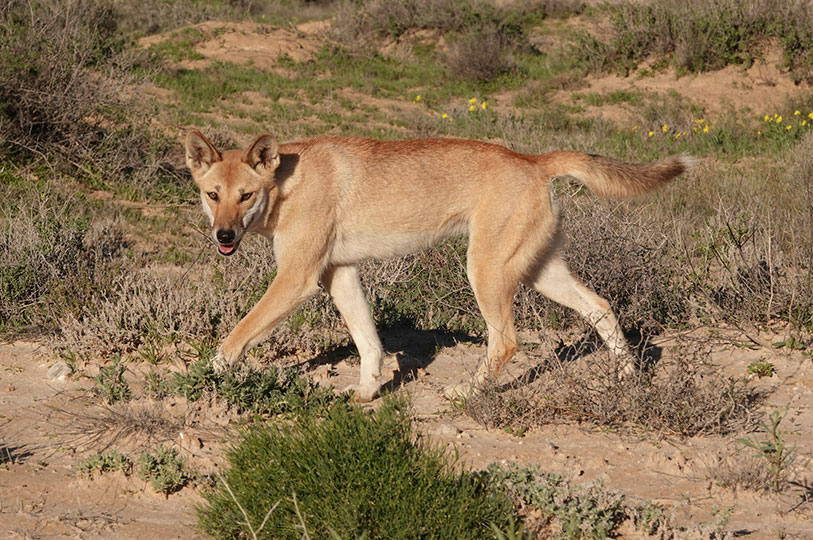
Image credit: Paul Coddington via iNaturalist (CC BY 4.0).
The Academy is pleased to partner with CSIRO Publishing Journals to champion Australian science excellence. In this regular research round-up series, we feature recent discoveries reported in CSIRO Publishing Journals.
Indigenous knowledge reveals decline of Pilbara northern quolls
"This is the one you got to take care of when I’m gone; this is the very important one.” Heather Samson, Martu Elder of the western desert of WA, remembers her father’s words about wiminyji, the northern quoll.
Across their two lifetimes, numbers of wiminyji have rapidly dwindled. The small carnivorous marsupials used to be everywhere in rocky and sandy Country, Martu Elders say.
The quolls disappeared in the mid-20th century, as invasive predators (cats and foxes) arrived and ‘wrong-way fire’ disrupted traditional burning practices.
Martu Elders shared these insights with researchers as part of ninti, or knowledge sessions, held on Country close to a population of wiminyji first detected by western scientists in 2012.
The Elders’ knowledge fills critical gaps in scientific understanding of where wiminyji once lived, and highlights the importance of Indigenous perspectives in conservation.
Bushfires leave long shadow for water quality
During the Black Summer bushfires of 2019–20, half a million hectares of the Lake Hume catchment burned. But the fallout for the major water reservoir on the NSW–Victoria border lasted far longer than the flames.
For five years, researchers tracked how the bushfire affected the water flowing into the lake.
In the Mitta Mitta River, water quality didn't noticeably change, since an upstream reservoir helped to trap ash and sediment.
But in the Murray River, sediment entering the system surged up to 15 times higher than usual and stayed elevated for five years. Nutrients such as nitrogen and phosphorus rose to around three times normal levels for several years, increasing the risk of harmful algal blooms.
The findings highlight how bushfires can have lasting impacts on waterways, with implications for ecosystems, drinking water and post-fire recovery.
Read the original research in Marine and Freshwater Research
Read the Academy's evidence briefs on the impact of bushfires on soil, wildlife and health.
Outback dingoes return
Dingoes vanished from a vast swathe of WA pastoral land in the mid-20th century after decades of intensive eradication effort – but began to bounce back after 2000, new research shows.
The research, co-authored by Academy Fellow Professor Chris Dickman, draws on historical archives and interviews with people who have lived and worked across three million hectares of station country.
It charts the sharp decline, decades-long disappearance, and eventual resurgence of the dingo, alongside interactions with other animal populations such as kangaroos, foxes and goats.
The dingo’s comeback was triggered by shifts in social, environmental and economic conditions, including a move from sheep to cattle farming. With the prevailing view that cattle are less affected by dingo predation, the impetus to control dingo populations has waned.