





Sir Ernest Rutherford: A man of sums and sketches
A well-worn maths booklet owned by the famed physicist provides a glimpse into the working life of a researcher in the early 20th century, complete with surprising doodles.
- 2 mins read

Sir Ernest Rutherford was a towering figure in 20th century science, influencing a generation of researchers including future president of the Australian Academy of Science, Sir Mark Oliphant.
Considered the father of nuclear physics, Sir Ernest won the 1908 Nobel Prize for Chemistry for his investigations into radioactive substances and his discoveries led to our modern understanding of an atom’s structure.
He became the director of the Cavendish Laboratory at the University of Cambridge in 1919. Sir Mark initially studied under Sir Ernest as a doctoral student from 1927, before becoming a fellow staff member.
This career connection has provided the Academy’s Fenner Archives with a unique piece of Rutherford history – a Four figure mathematical tables booklet. The 59-page booklet might strike the viewer as ordinary. It is, however, full of surprises!
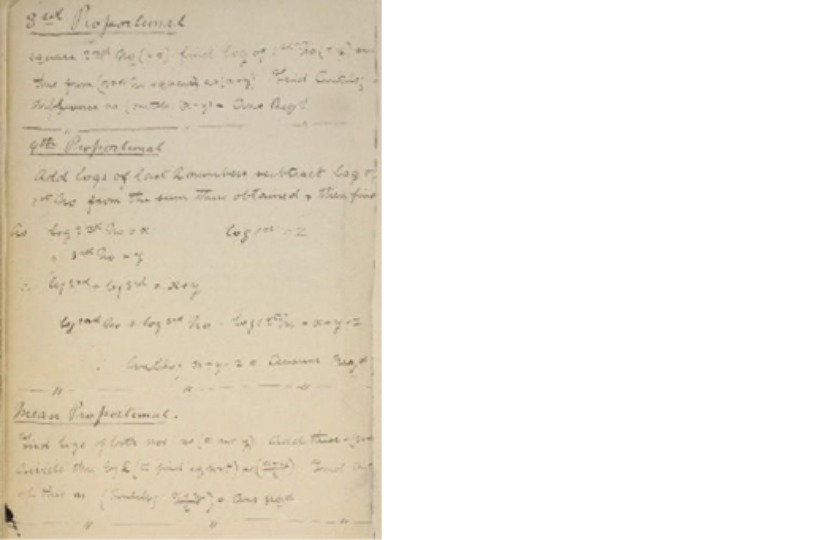
Image 1: Close-up of handwritten equations on page 3, titled ‘3rd Proportimal, 4th Proportimal and mean Proportimal’.
Firstly, it is important because it reminds many of us – who have technology at our fingertips –that Sir Ernest achieved his discoveries in physics without an electronic calculator. Two internal pages are filled with handwritten equations by Sir Ernest (Image 1). On the last page, Sir Ernest has written instructions ‘to find line chasm from L of Δ’ (Image 2). It is comforting to know that even a Nobel Prize winner appreciated an equation cheat sheet.
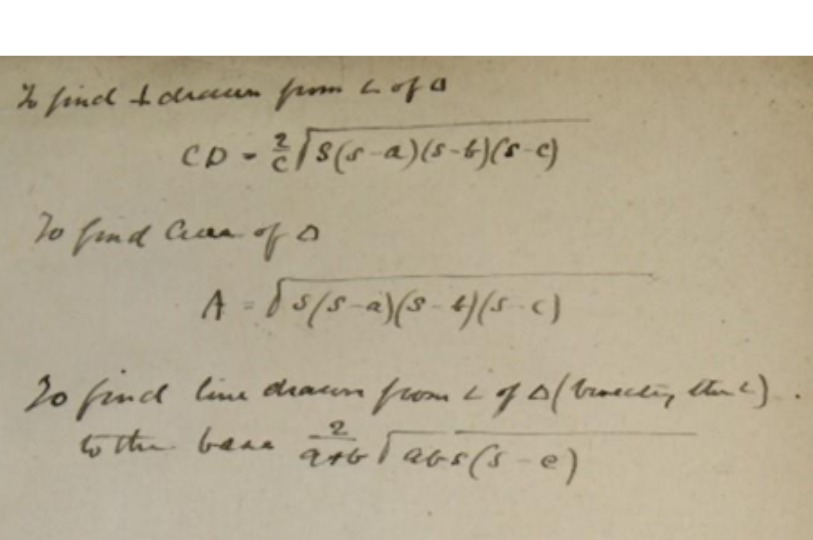
Image 2: Close-up of handwritten equations on page 61.
There are annotations at the top of nine pages – sometimes an equation, other times an arrow. There are extensive repairs carefully administered inside its pages with 18 different tears strengthened. This book was well used and preserved repeatedly to lengthen its working life.
We don’t know if Oliphant also used the book in his work, since only ‘ER’ is scrawled on the front cover. The booklet most likely travelled to Australia in the 1950s, with Oliphant later donating it to the Fenner Archives in 1971.
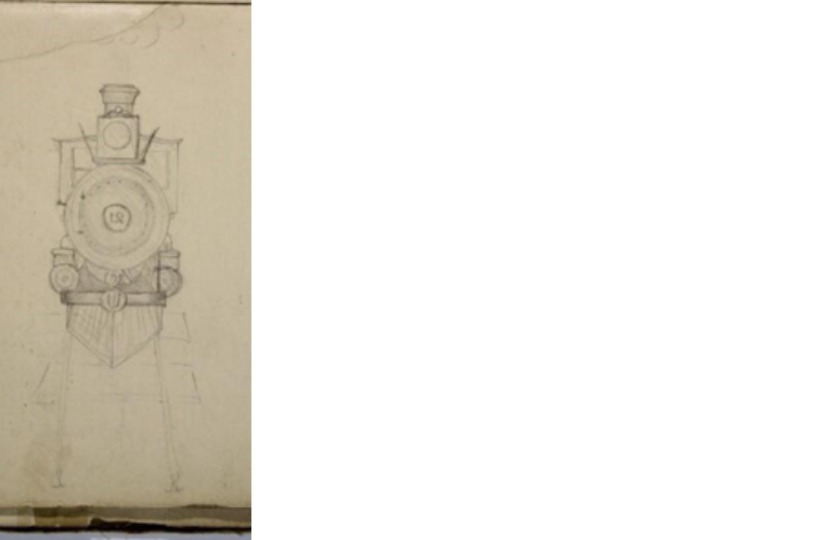
Image 3: Sketch of No.21 steam-engine found on page 60.
Mathematical annotations are one thing – but what sets this working booklet apart is two pencil sketches at the back: an approaching no.21 steam engine train (Image 3) and the side of the no.101 train (Image 4).
The train depicted appears to depict a 4-4-0 American-type steam locomotive. The artist has taken care to sketch the headlight lamp at the head of the train, as well as its bell and metal pilot.
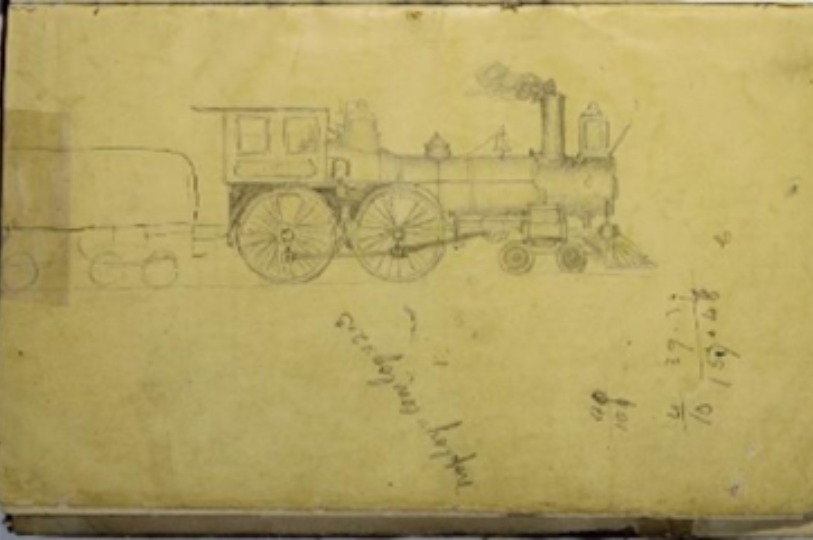
Image 4: Pencil sketch of No.101 steam-engine found on page 62.
We will never know whether the sketches were done by – Rutherford, Oliphant or another artist. Share your hypotheses with us at library@science.org.au.
Support our work
The quality digitisation of this fragile piece of science history was enabled through the Library’s ATIZ book scanner.
We thank David Anstice for his support in purchasing this scanner that has breathed new life into numerous pages of material from the Fenner Archives for the digital era, now preserved and accessible to the public.
Contact our philanthropy team on philanthropy@science.org.au if you would also like to contribute and support the wider digitisation project.