



Brian Anderson Medal

Award highlights
- The award recognises outstanding contributions by early-career researchers to research in information and communications technology (ICT).
- The successful candidate will present a 10-minute lecture on their work at the annual Science at the Shine Dome event.
- This award honours the contributions to science by Professor Brian Anderson AC FAA FTSE FRS.
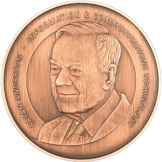
The Brian Anderson Medal recognises outstanding contributions by early-career researchers to research in information and communications technology (ICT). It honours the contributions to science by Professor Brian Anderson AC FAA FTSE FRS.
The medal will be awarded to researchers up to 10 years post-PhD in the calendar year of nomination, except in the case of significant interruptions to a research career. The award may be made annually and is restricted to candidates who are normally resident in Australia. Relevant research undertaken outside Australia may be considered, provided the researcher has conducted the majority of their research career—defined as periods of employment or study primarily involving research activities or research training—in Australia, and has been resident in Australia for at least the past two years. An honorarium of $7,500 is offered. The successful candidate will present a 10-minute lecture on their work at the same Science at the Shine Dome event at which their medal is presented.
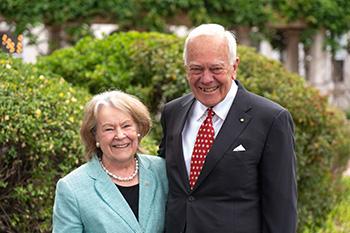
This award has been established thanks to a generous donation from Professor Anderson and Mrs Dianne Anderson AM. Learn more about their donation.
Candidates should have a demonstrable record of conducting high-quality research over their career or in a single major contribution in ICT. The research may encompass theoretical, experimental, or applied aspects of ICT. ICT is deemed to include all aspects of computer science, and most aspects of ‘light current’ electrical engineering, including but not limited to information theory, signal processing, control systems and networks, as well as communications.
Research outside of ICT will be largely excluded from consideration. Application of ICT ideas to various applications domains can be considered. Examples of eligible research would include applying machine learning to medical diagnosis, detection of misinformation and peak hour traffic control, and applying techniques of control systems to power system control, epidemic control or control of social networks.
Candidates may be put forward for more than one award. If a proposed candidate is already the recipient of an Academy early-career honorific award, they will not be eligible for nomination for another early-career or mid-career honorific award. A mid-career honorific award recipient will also not be eligible for nomination for another mid-career honorific award. Fellows of the Academy are ineligible to be nominated for early- and mid-career awards.
Key dates
Below are the key dates for the nomination process. While we aim to keep to this schedule, some dates may change depending on circumstances.
GUIDELINES
The following guidelines and FAQs provide important information about eligibility, submission requirements, and assessment processes. Please review them carefully before submitting a nomination.
How to nominate a scientist for the Academy’s honorific awards
The following guidelines contain detailed information for nominators.
These guidelines contain information for honorific award nominators.
The following guidelines contain information for honorific award referees.
These guidelines contain information for honorific award referees.
See below for specific relevant conferral dates for the current award round.
This document contains specific PhD conferral dates for early and mid-career honorific awards in the current award round.
Please submit your nominations using the Nominate button found on the top right of this webpage when nominations are open.
Please note the Academy uses a nomination platform that is external to the main Academy site. Nominators will be required to create an account on the platform. Even if you are familiar with the nomination process, please allow extra time to familiarise yourself with the platform.
Early-career, mid-career and career medals
Can I nominate myself?
- No – you must be nominated by someone else. Self-nominations are not accepted.
Can I submit a nomination on behalf of someone else?
- Yes – you can submit a nomination on behalf of someone else if you are not the nominator. An example would be a university grants office or personal/executive assistant completing the online nomination form on behalf of a nominator. Once the form is submitted, the nominator will be sent an email confirming that the nomination has been completed. If a nominee submits a nomination for themselves on behalf of a nominator it will not be considered a self-nomination.
Residency requirements
- Winners of all awards except the Haddon Forrester King Medal should be mainly resident in Australia and/or have a substantive position in Australia at the time of the nomination deadline. Unless explicitly stated in the awarding conditions, the research being put forward for the award should have been undertaken mainly in Australia. Some awards have more specific conditions that the relevant selection committee must apply and nominators are advised to read the conditions associated with each award very carefully.
Honorific career eligibility (more specific details found in the honorific awards nominator guidelines and the honorific award post PhD eligibility guidelines)
- Career eligibility is calculated by calendar year.
- Early career awards are open to researchers up to 10 years post-PhD.*
- Mid-career awards are open to researchers between eight and 15 years post-PhD.*
- Please note that the Awards Committee may consider nominees with post PhD dates outside of these ranges if a career exemption request is being submitted with the nomination, further guidelines on career exemption requests can be found in the nomination guidelines.
- See the post-PhD eligibility guidelines document for relevant conferral dates.
- *Or equivalent first higher degree e.g. D.Phil., D.Psych., D.Sc.
Academy fellowship requirements in award nominations
- Fellows and non-Fellows of the Academy can provide nominations for either Fellows or non-Fellows for all awards.
Women only awards
- The Dorothy Hill, Nancy Millis and Ruby Payne-Scott Medals are for women only. These medals are open to nominees who self-identify as a woman in the award nomination form. The Academy does not require any statement beyond a nominee’s self-identification in the nomination form.
- This practice is consistent with the Sex Discrimination Act 1984, which has recognised the non-binary nature of gender identity since 2013, and gives effect to Australia’s international human rights obligations. The Academy remains committed to the fundamental human rights principles of equality, freedom from discrimination and harassment, and privacy, as well as the prevention of discrimination on the basis of sex and gender identity.
PREVIOUS AWARDEES

Associate Professor Liang Zheng, Australian National University
Associate Professor Liang Zheng has made pioneering contributions to representation learning – that is, how to best represent images with vectors in complex and changing environments. He and collaborators designed a training data augmentation method that is widely used to improve AI representations and performance across various domains, including crop disease identification, fish classification, surgery robots, speech understanding and general computer vision.
Moreover, he released widely adopted datasets and algorithms for learning object representations used in object instance recognition, segmentation, and tracking from multiple cameras and scenes. These contributions have significantly benefited smart city applications such as public safety enhancement and autonomous perception.