


Nancy Millis Medal

Award highlights
- The award is open to women mid-career researchers, eight to fifteen years post-PhD in the calendar year of nomination, in any branch of the physical and biological sciences
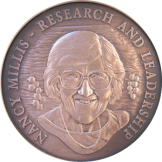
- This award honours the contributions made to science by the late Professor Nancy Millis AC MBE FAA FTSE and recognises her importance as a role model for women aspiring to be research leaders.
- The Academy acknowledges the funding received from friends and colleagues of Professor Millis and the perpetual funding received from The University of Melbourne.
The Nancy Millis Medal of the Australian Academy of Science has been established to honour the contributions made to science by the late Professor Nancy Millis AC MBE FAA FTSE and recognises her importance as a role model for women aspiring to be research leaders.
The award is open to women mid-career researchers, eight to fifteen years post-PhD in the calendar year of nomination except in the case of significant interruptions to a research career, in any branch of the physical and biological sciences. Recipients will have established an independent research program and demonstrated exceptional leadership.
The award is made annually and is restricted to candidates who are normally resident in Australia. Relevant research undertaken outside Australia may be considered, provided the researcher has conducted the majority of their research career—defined as periods of employment or study primarily involving research activities or research training—in Australia, and has been resident in Australia for at least the past two years.
The Academy acknowledges the funding received from friends and colleagues of Professor Millis and the perpetual funding received from The University of Melbourne.
The Australian Academy of Science encourages nominations of candidates from a broad geographical distribution.
Candidates may be put forward for more than one award. If a proposed candidate is already the recipient of an Academy early-career honorific award, they will not be eligible for nomination for another early-career or a mid-career honorific award. A mid-career honorific award recipient will also not be eligible for nomination for another mid-career honorific award. Fellows of the Academy are ineligible to be nominated for early and mid-career awards.
Key dates
Below are the key dates for the nomination process. While we aim to keep to this schedule, some dates may change depending on circumstances.
GUIDELINES
The following guidelines and FAQs provide important information about eligibility, submission requirements, and assessment processes. Please review them carefully before submitting a nomination.
How to nominate a scientist for the Academy’s honorific awards
The following guidelines contain detailed information for nominators.
These guidelines contain information for honorific award nominators.
The following guidelines contain information for honorific award referees.
These guidelines contain information for honorific award referees.
See below for specific relevant conferral dates for the current award round.
This document contains specific PhD conferral dates for early and mid-career honorific awards in the current award round.
Please submit your nominations using the Nominate button found on the top right of this webpage when nominations are open.
Please note the Academy uses a nomination platform that is external to the main Academy site. Nominators will be required to create an account on the platform. Even if you are familiar with the nomination process, please allow extra time to familiarise yourself with the platform.
Early-career, mid-career and career medals
Can I nominate myself?
- No – you must be nominated by someone else. Self-nominations are not accepted.
Can I submit a nomination on behalf of someone else?
- Yes – you can submit a nomination on behalf of someone else if you are not the nominator. An example would be a university grants office or personal/executive assistant completing the online nomination form on behalf of a nominator. Once the form is submitted, the nominator will be sent an email confirming that the nomination has been completed. If a nominee submits a nomination for themselves on behalf of a nominator it will not be considered a self-nomination.
Residency requirements
- Winners of all awards except the Haddon Forrester King Medal should be mainly resident in Australia and/or have a substantive position in Australia at the time of the nomination deadline. Unless explicitly stated in the awarding conditions, the research being put forward for the award should have been undertaken mainly in Australia. Some awards have more specific conditions that the relevant selection committee must apply and nominators are advised to read the conditions associated with each award very carefully.
Honorific career eligibility (more specific details found in the honorific awards nominator guidelines and the honorific award post PhD eligibility guidelines)
- Career eligibility is calculated by calendar year.
- Early career awards are open to researchers up to 10 years post-PhD.*
- Mid-career awards are open to researchers between eight and 15 years post-PhD.*
- * or equivalent first higher degree e.g. D.Phil., D.Psych., D.Sc.
- Please note that the Awards Committee may consider nominees with post PhD dates outside of these ranges if a career exemption request is being submitted with the nomination, further guidelines on career exemption requests can be found in the nomination guidelines.
- See the post-PhD eligibility guidelines document for relevant conferral dates.
Academy fellowship requirements in award nominations
- Fellows and non-Fellows of the Academy can provide nominations for either Fellows or non-Fellows for all awards.
Women only awards
- The Dorothy Hill, Nancy Millis and Ruby Payne-Scott Medals are for women only. These medals are open to nominees who self-identify as a woman in the award nomination form. The Academy does not require any statement beyond a nominee’s self-identification in the nomination form.
- This practice is consistent with the Sex Discrimination Act 1984, which has recognised the non-binary nature of gender identity since 2013, and gives effect to Australia’s international human rights obligations. The Academy remains committed to the fundamental human rights principles of equality, freedom from discrimination and harassment, and privacy, as well as the prevention of discrimination on the basis of sex and gender identity.
PREVIOUS AWARDEES
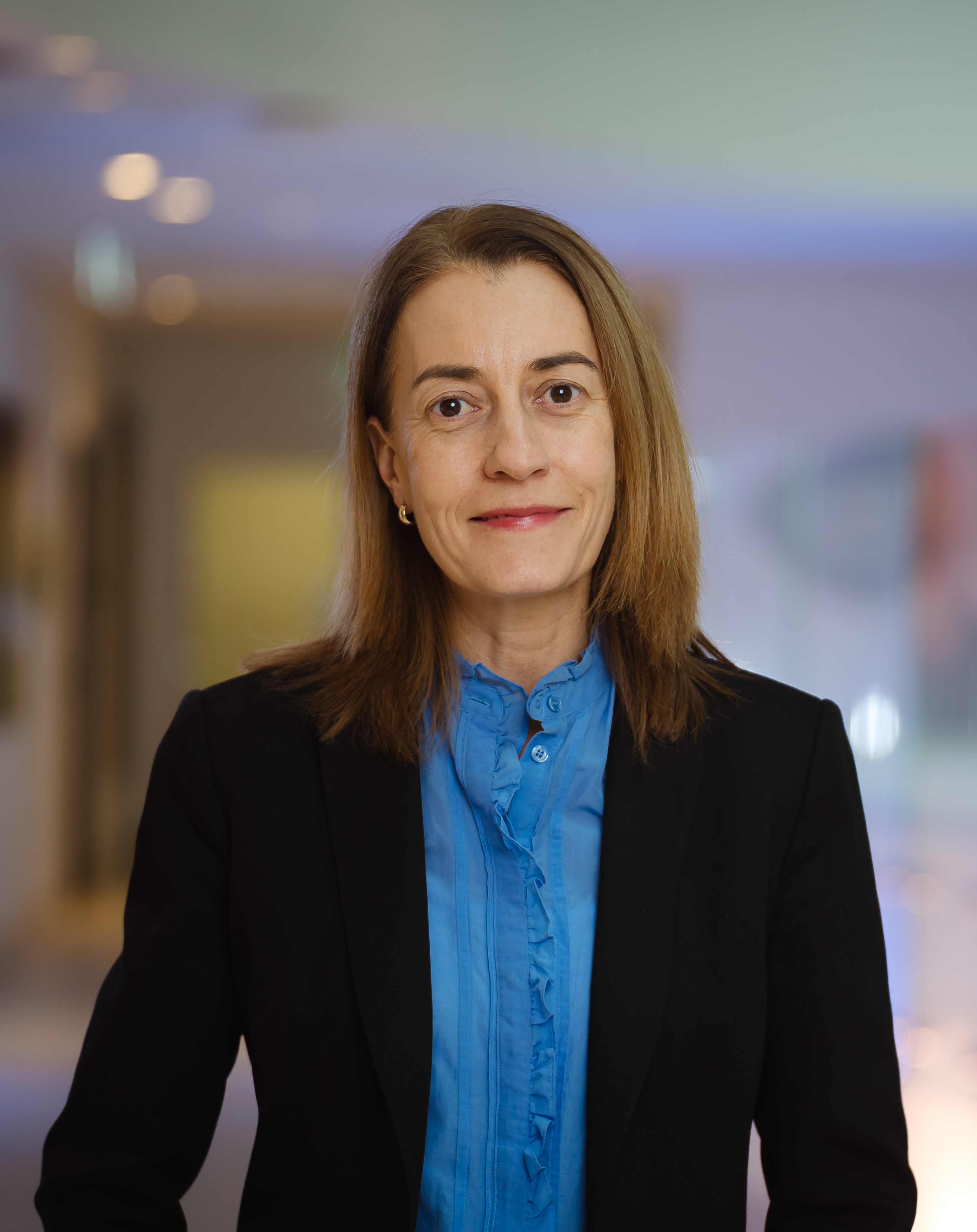
Professor Sarah-Jane Dawson FAHMS, Peter MacCallum Cancer Centre
Many cancers shed small amounts of DNA (circulating tumour DNA or ctDNA) into the patient’s bloodstream. Recent technological advances allow levels of ctDNA to be accurately measured in the blood. ctDNA analysis can provide a ‘liquid biopsy’ alternative to tissue biopsies allowing the serial analysis of cancer-specific genomic changes from a simple blood test. Moreover, changes in ctDNA levels have potential to be used as markers of disease progression and response to cancer therapy.
Professor Sarah-Jane Dawson’s research has pioneered fundamental advances in the clinical application of cancer genomics and the development of personalised biomarker approaches using ctDNA, establishing a new paradigm for molecular disease monitoring in cancer. The research has helped change clinical practice and led to a rapid global expansion and investment in this arena with the goal of facilitating precision cancer medicine and improving survival outcomes for patients across many different malignancies.
Associate Professor Natasha Hurley-Walker, Curtin University
Associate Professor Natasha Hurley-Walker has transformed our view of the radio sky. She uses powerful supercomputers to analyse petabytes of data from Western Australian telescopes to explore the universe. Her discoveries include the remains of stellar explosions, insights into the lives of supermassive black holes, and a new kind of repeating radio source unlike anything astronomers have seen before. Associate Professor Hurley-Walker has mapped the southern sky in ‘radio colour’, bringing a new view of the cosmos to the world. Giving public talks and media interviews, and filming for documentaries, she has reached tens of millions across the world, inspiring interest in STEM careers. Her work will help Australian astronomers find the unexpected with the Square Kilometre Array, which will be the world’s largest radio telescope.
Professor Anita Ho-Baillie, University of Sydney
Professor Anita Ho-Baillie is a pioneer in developing next-generation solar cells which will play a key role in the transition to a carbon-free-economy. Traditional silicon-based solar cells are inefficient at converting high-energy light into electricity. Professor Ho-Baillie’s research centres on multi-junction solar cells, utilising a range of semiconductor materials to absorb different sections of the solar spectrum within a single cell, significantly enhancing energy conversion efficiency. She has achieved record efficiencies for multi-junction solar cells utilising metal halide perovskites. Her recent breakthrough addresses the issue of perovskite cell degradation in heat and humidity. This marks a pivotal step toward durable, commercially viable perovskite cells and solidifies her role in advancing this technology. Beyond research, Professor Ho-Baillie is deeply committed to inspiring young minds in STEM fields and science communication. She is a regular speaker at the Harry Messel International Science School, engaging high-calibre high-school students worldwide. She is also a popular public speaker for science outreach, contributing to numerous National Science Week events.
Professor Renae Ryan, University of Sydney
Neurotransmitters are the chemical messengers responsible for cellular communication in the brain, a fundamental process that underlies everything we do including moving, thinking, reading and speaking. Professor Renae Ryan’s research focuses on neurotransmitter transporters – nanoscale vacuum cleaners that suck chemical messengers back into cells after they have sent their message on. In diseases such as Alzheimer’s disease, epilepsy and stroke these vacuum cleaners can break down, leading to confusion in cellular communication and, ultimately, cell death. Her internationally recognised research has revealed the molecular architecture and choreography of these miniature vacuum cleaners, allowing us to start to understand why they stop working in disease states, and providing the basis for the development of new medications to treat brain disease. Professor Ryan is a globally respected leader and advocate for gender equity, diversity and inclusion, and a sought-after supervisor, mentor and role model for women in science.
Professor Vanessa Peterson, Australian Nuclear Science and Technology Organisation
Our continual need for cheap energy presents major challenges. Professor Vanessa Peterson’s game-changing research into the fundamental working mechanisms of energy materials is helping to solve these global challenges. Professor Peterson’s significant research targets functional materials at the heart of energy technology such as batteries, fuel cells and materials for the separation and storage of energy relevant gases including hydrogen and carbon dioxide. Vanessa has pioneered methods to understand the atomic level function of materials, revealing in unprecedented detail how the arrangement and motions of atoms can be harnessed to make new and better sustainable-energy devices. Her work has led to discoveries that push the frontier of our understanding of energy materials, helping to reduce Australia’s carbon emissions and develop sustainable clean-energy systems. Professor Peterson is an internationally-regarded leader in materials characterisation, specialising in neutron scattering methods, and is an outstanding mentor, advocate and role model for women in science.
Professor Angela Moles, UNSW Sydney
Professor Moles’ research is to understand the different strategies that plants have evolved to grow in ecosystems ranging from tropical rainforests to arctic tundra. She was the first to quantify global scale patterns in vital plant traits such as plant height, seed size and defences against herbivores. Her work has also revealed how quickly introduced plant species evolve when they are introduced to a new range with different environmental conditions. One such plant has changed so much since being introduced to Australia in the 1930s that it is becoming a new, reproductively isolated species. She is currently applying her understanding of the ways that environmental conditions shape plant ecological strategies to help understand the likely effects of climate change on Australian ecosystems.
Professor Moles is nationally and internationally regarded as a leader in global scale ecology, and is an outstanding mentor, advocate and role model for women in science.
Associate Professor Cathryn Trott, Curtin University
During the first billion years, the first stars and galaxies formed and died, bathing the Universe in light and evaporating the hydrogen fog that existed beforehand. By using low frequency radio telescopes, Associate Professor Trott hunts for this needle-in-a-haystack signal from the time of the first generation of stars. She has pioneered methods to observe this weak signal and separate it from all of the radio light from other galaxies that formed in the past 12 billion years. Observation of this signal requires advanced knowledge of our telescopes, and painstaking work to collect the thousand hours of clean data required to find it. Trott is a world-leader in the hunt for this exciting, important and fickle signal that will transform our understanding of the Universe.
Professor Nicole Bell, University of Melbourne
Professor Nicole Bell is an outstanding theoretical astroparticle physicist who has made significant contributions in the areas of dark matter and particle theory, matter-antimatter asymmetries and neutrino astrophysics and cosmology. Her work has helped shape the interpretation of Large Hadron Collider searches for dark matter, using physically self-consistent descriptions of dark matter interactions. She has explored the link between dark matter and matter–antimatter asymmetries and examined whether the accumulation of dark matter in old neutron stars can result in gravitational collapse to black holes. She has also used cosmology and astrophysics to constrain the properties of neutrinos and has examined whether dark matter annihilation can account for unexplained galactic gamma ray and antimatter signals.
Associate Professor Kate Schroder, University of Queensland
Associate Professor Kate Schroder is an international leader in the field of inflammatory biology. Her innovative work is defining the molecular and cellular processes of inflammation. The protein complexes involved in inflammation and disease are known as inflammosomes. Her research has established that inflammasome signalling is crucial in antimicrobial defence and she has established that they drive pathological inflammation in diseases. Associate Professor Schroder’s laboratory seeks to use the understanding of fundamental cellular processes to develop therapeutics for a wide range of inflammatory diseases. Small molecule inflammasome inhibitors co-invented by Associate Professor Schroder are currently under commercialisation as novel anti-inflammatory drugs.
Professor Jacqueline Batley, University of Western Australia
Professor Batley has made major contributions to our understanding of the genetics and genomics of crops including canola (Brassica napus), a major source of edible oil. Her DNA markers have been critically important in the mapping and sequencing of genomes of canola, related Brassicas such as turnip and cabbage, and other crops including wheat, peas and lentils. In addition, she has developed new ways of looking at how pathogens interact genetically with crop plants. In these ways she has played a key role in pioneering biotechnological methods that are now being exploited by plant breeders worldwide. Examples of some successful commercial applications in canola include improvements in oil quality, reduced shattering of seed pods, and breeding for increased resistance to blackleg fungus infection. Her motivation to improve world food security and rural economies is being rewarded through such applications.
Dr Marie-Liesse Asselin-Labat, The Walter and Eliza Hall Institute of Medical Research
Dr Marie-Liesse Asselin-Labat is internationally recognised as a leading researcher in cancer biology, tissue-specific stem cells and development and is emerging as one of Australia’s young leaders in medical research in the lung stem cell and cancer research field. Using multiple strategies combining genetic approaches as well as computational studies, her team has demonstrated that some lung cell types are efficient in repairing their DNA following exposure to DNA damaging agents while others are not so proficient. These results provide novel insights into the pathogenesis of lung diseases such as lung cancer and emphysema. She also identified key regulators of basal stem cell production in the embryonic lung. Her work sheds lights on the molecular events that are critical in normal lung formation and maintenance that may be altered in lung disorders and impacts therapeutic applications.
2017
2017
Professor Kerrie Ann Wilson, University of Queensland
Professor Kerrie Wilson has made significant discoveries in the environmental sciences that have resulted in more effective conservation practices. She identified how significant funds for conservation can be saved and investments could be more equitable through incorporating socio-economic principles into setting priorities for conservation investments. This has resulted in new theory and novel decision support tools to inform how limited conservation funds should be allocated to achieve multiple objectives, further enhancing the legacy and impact of her influential applied research program. Her research has led to innovative ways to efficiently protect and restore natural ecosystems and her ability to translate this new knowledge into practical applications has positioned her as a global, national and local leader in conservation science.
2016
Dr Elena Belousova, Macquarie University
Dr Belousova has achieved international renown for her TerraneChron® method for analysing trace elements in zircon and applying this technology to studying crustal evolution. Her discoveries have greatly influenced understanding of the geological development of the Australian continent and has major significance for mineral exploration.
2015
Associate Professor Tamara Davis, University of Queensland
Associate Professor Davis uses astrophysics to test our fundamental laws of physics, and study the nature of dark energy and dark matter. She is one of the most highly cited astrophysicists in the world. Her contributions include testing advanced theories of gravity, measuring time-dilation of distant supernovae, using galaxies to measure the mass of the lightest massive particle in nature (the neutrino), and discovering that active galaxies fuelled by black holes can be used as standard candles.
2014 inaugural award
Professor Emma Johnston, University of New South Wales
Professor Johnston is Australia’s leading young investigator of human impacts on marine systems. Her research has broken new ground by combining traditional laboratory studies with novel field-based experiments in Antarctica, the Great Barrier Reef, and temperate Australian estuaries. Her work has earned respect in both the international ecological and ecotoxicological fields.
Professor Johnston’s work has generated critically important findings on the causes and consequences of bio-invasion. As a result, she has not only found the first evidence that pollution facilitates the invasion of marine systems, but also discovered that heritable pollution tolerance promotes invader dominance, published the first studies of marine invasion that control exposure to marine invasive larvae, and identified the potential for translocation of non-indigenous species via small-scale disruptions to antifouling surfaces.
Director of the Sydney Harbour Research Program for SIMS, Professor Johnston has demonstrated outstanding leadership in the field – all the more remarkable given that her PhD was received just 11 years ago.
Principal partner
Founding donors
The Academy would like to thank the following founding donors for their generous support of the Nancy Millis Medal:
- J A Angus
- E S Dennis
- S Cory
- I D Gust
- E Hartland
- A B Holmes
- P Y Ladiges
- J A Pittard
- R Roush