



Suzanne Cory Medal


Award highlights
- This award recognises outstanding research in all of the biological sciences, being awarded in alternate years in the biomedical sciences and in all of the biological sciences excluding biomedical sciences.
- The 2027 Suzanne Cory Medal is for all of the biological sciences excluding biomedical sciences.
- The award honours the contributions made to science by Professor Suzanne Cory AC FAA FRS who, as a molecular biologist, has made major contributions to understanding the genetic causes of cancer.
The Suzanne Cory Medal recognises outstanding research in all of the biological sciences, being awarded in alternate years in the biomedical sciences and in all of the biological sciences excluding biomedical sciences. It is a career award that is open to any biological science researcher regardless of time since their major degree. It honours the contributions made to science by Professor Suzanne Cory AC FAA FRS who, as a molecular biologist, has made major contributions to understanding the genetic causes of cancer.
The 2027 Suzanne Cory Medal is for all of the biological sciences excluding biomedical sciences.
The 2028 Suzanne Cory Medal will be for the biomedical sciences.
This award is open to nominations for candidates from all genders.
Career awards recognise achievement over a career of whatever length.
The award is made annually and is given to candidates who are normally resident in Australia, with the majority of the relevant research having been conducted in Australia.
Candidates may be put forward for more than one award. If a proposed candidate is already the recipient of an Academy award, the second award must be for a distinct, additional, body of work undertaken since the first award, and/or work in a different field.
Key dates
Below are the key dates for the nomination process. While we aim to keep to this schedule, some dates may change depending on circumstances.
GUIDELINES
The following guidelines and FAQs provide important information about eligibility, submission requirements, and assessment processes. Please review them carefully before submitting a nomination.
How to nominate a scientist for the Academy’s honorific awards
The following guidelines contain detailed information for nominators.
These guidelines contain information for honorific award nominators.
The following guidelines contain information for honorific award referees.
These guidelines contain information for honorific award referees.
Please submit your nominations using the Nominate button found on the top right of this webpage when nominations are open.
Please note the Academy uses a nomination platform that is external to the main Academy site. Nominators will be required to create an account on the platform. Even if you are familiar with the nomination process, please allow extra time to familiarise yourself with the platform.
Early-career, mid-career and career medals
Can I nominate myself?
- No – you must be nominated by someone else. Self-nominations are not accepted.
Can I submit a nomination on behalf of someone else?
- Yes – you can submit a nomination on behalf of someone else if you are not the nominator. An example would be a university grants office or personal/executive assistant completing the online nomination form on behalf of a nominator. Once the form is submitted, the nominator will be sent an email confirming that the nomination has been completed. If a nominee submits a nomination for themselves on behalf of a nominator it will not be considered a self-nomination.
Residency requirements
- Winners of all awards except the Haddon Forrester King Medal should be mainly resident in Australia and/or have a substantive position in Australia at the time of the nomination deadline. Unless explicitly stated in the awarding conditions, the research being put forward for the award should have been undertaken mainly in Australia. Some awards have more specific conditions that the relevant selection committee must apply and nominators are advised to read the conditions associated with each award very carefully.
Honorific career eligibility (more specific details found in the honorific awards nominator guidelines and the honorific award post PhD eligibility guidelines)
- Career eligibility is calculated by calendar year.
- Early career awards are open to researchers up to 10 years post-PhD.*
- Mid-career awards are open to researchers between eight and 15 years post-PhD.*
- Please note that the Awards Committee may consider nominees with post PhD dates outside of these ranges if a career exemption request is being submitted with the nomination, further guidelines on career exemption requests can be found in the nomination guidelines.
- See the post-PhD eligibility guidelines document for relevant conferral dates.
- *or equivalent first higher degree e.g. D.Phil., D.Psych., D.Sc.
Academy fellowship requirements in award nominations
- Fellows and non-Fellows of the Academy can provide nominations for either Fellows or non-Fellows for all awards.
Women only awards
- The Dorothy Hill, Nancy Millis and Ruby Payne-Scott Medals are for women only. These medals are open to nominees who self-identify as a woman in the award nomination form. The Academy does not require any statement beyond a nominee’s self-identification in the nomination form.
- This practice is consistent with the Sex Discrimination Act 1984, which has recognised the non-binary nature of gender identity since 2013, and gives effect to Australia’s international human rights obligations. The Academy remains committed to the fundamental human rights principles of equality, freedom from discrimination and harassment, and privacy, as well as the prevention of discrimination on the basis of sex and gender identity.
PREVIOUS AWARDEES
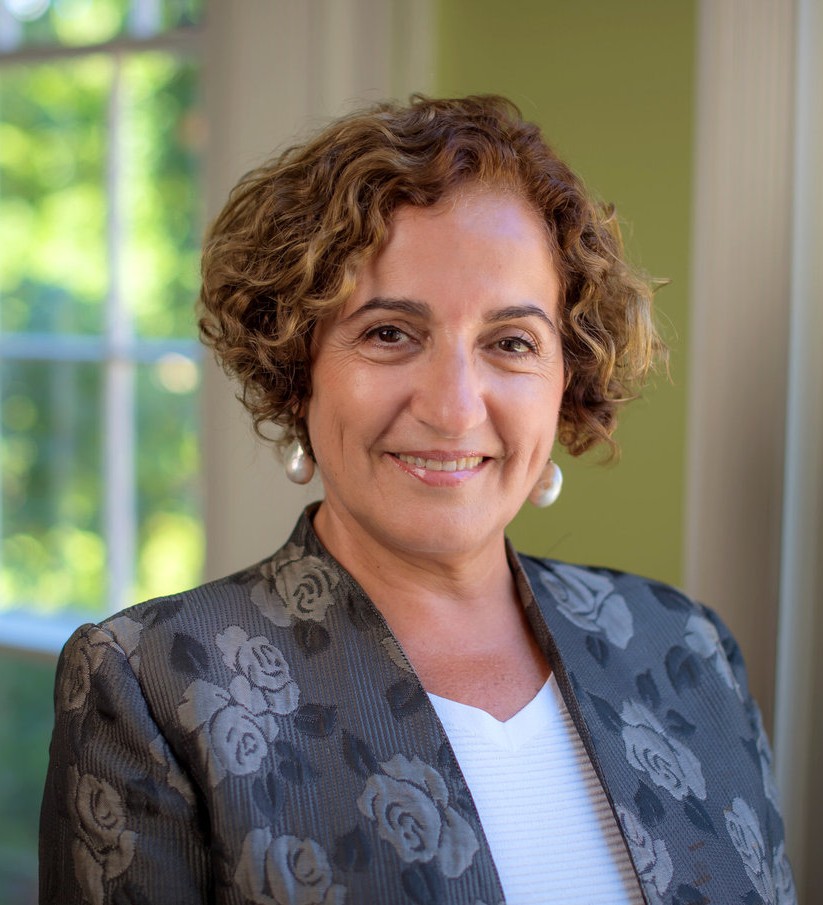
Professor Hala Zreiqat AM FAA FTSE FAHMS, The University of Sydney
Professor Hala Zreiqat is an internationally recognised biomedical scientist whose pioneering research is transforming bone regeneration therapies. Her team developed the world’s first strong, bioactive synthetic ceramic scaffold that mimics natural bone, enabling the body to regrow tissue and restoring function after injury or disease. The team’s innovations, including patented materials now moving towards clinical use, offer new hope for millions affected by bone loss. Professor Zreiqat’s team also pioneered 3D-printed, patient-specific ceramic implants and novel surface treatments to enhance implant integration.
Her research spans cutting-edge areas such as anti-senescence biomaterials for ageing tissues and nanoengineered coatings for medical devices. Through extensive industry partnerships, her lab’s discoveries are progressing towards global clinical application. A distinguished leader and mentor, she has advanced interdisciplinary collaboration and championed diversity in STEM worldwide. Her research holds the promise of revolutionising musculoskeletal repair and improving quality of life for patients around the world.
Professor Steven Chown FAA, Monash University
Professor Steven Chown’s research concerns biodiversity variation through space and time, and the conservation requirements for mitigating the impacts of environmental change. He co-developed the field of macrophysiology – the investigation of large-scale patterns in and processes underlying physiological variation and their ecological implications. He has worked in Australia, Africa, the Asia-Pacific, the UK, and in the Antarctic, where he has over 30 years of field experience. For many years Professor Chown represented the international Scientific Committee on Antarctic Research (SCAR), of which he was also President (2016–21), at the Antarctic Treaty Consultative Meetings, providing scientific advice on a broad range of environmental and science policy matters. He has been National Delegate to SCAR for both Australia and South Africa. He provides a range of advice to international Antarctic programs through advisory committees and boards.
Professor Peter Koopman FAA, University of Queensland
Professor Peter Koopman’s research focuses on how genes function as the blueprint for embryonic development. He is best known for his role in discovering the Y-chromosomal sex-determining gene Sry, widely acknowledged as a milestone in 20th century genetics. His subsequent work has exposed the molecular, genetic and cellular pathways by which the gonads form in the embryo, addressing the essential question of how males and females come to be. In parallel, Professor Koopman discovered several Sry-related (Sox) genes including those that act as master regulators of skeletal and vascular development. These achievements have had broad and enduring impact in developmental biology, medical genetics and reproductive biology.
Professor Terence Hughes FAA, James Cook University
Professor Terry Hughes has made a superlative and sustained contribution to marine biology and science leadership in Australia and globally. His early research pioneered new understanding of the population dynamics and life histories of corals, and of the ecology of coral reef ecosystems. Among his most significant research has been his ground-breaking exploration of the resilience of coral reefs to pollution, overfishing and climate change, and on the dynamics of tipping-points and regime-shifts. Throughout his distinguished career, Professor Hughes’s research provides innovative and practical solutions for improving coral reef management and governance. He is also a Highly Cited Researcher with many publications in Science and Nature, and the founding Director and driving force behind the ARC Centre of Excellence for Coral Reef Studies, providing leadership and mentoring a large team of researchers of all career stages.
Professor Catherine Lovelock FAA, The University of Queensland
Professor Catherine Lovelock is a leading global expert on the impacts of climate change on coastal wetlands and the role of coastal ecosystems in mitigating climate change. Her research demonstrates the important role coastal wetlands (mangroves, saltmarsh and seagrass) play in mitigating climate change. Achieved by assimilating atmospheric carbon within living wetland plants, a proportion of this plant material is stored in sediments for long periods of time and is known as blue carbon. Professor Lovelock has been pivotal in driving international research and policy regarding blue carbon, and was instrumental in developing a voluntary blue carbon market in Australia that will play a central role in Australia’s efforts to adapt to and mitigate the effects of climate change on Australia’s coasts. Professor Lovelock’s research emphasises the important role of coastal wetland plants in accumulating substrates, a process that is particularly important in a changing climate where sea-level rise will increase erosion and inundation frequency along shorelines. Despite this important role, she has cautioned that the capacity of coastal wetlands to adjust to climate change will become increasingly limited throughout this century, unless planning decisions reduce pressures and facilitate landward retreat.
Professor Georgia Chenevix-Trench FAA, QIMR Berghofer
Professor Georgia Chenevix-Trench is a cancer geneticist, interested in both inherited and acquired genetic variants that contribute to the risk and development of cancer. Her main focus is on breast and ovarian cancer, but she has also made major contributions to inherited skin and gastric cancers. In the last 15 years, her main focus has been on genome-wide association studies to identify inherited genetic variants associated with cancer risk. These have identified over 200 regions of the genome associated with breast cancer risk. This information is currently being used in international clinical trials to stratify women for breast screening, but has also transformed our understanding of the biological basis of breast cancer. Professor Chenevix-Trench’s main focus now is to identify the relevant susceptibility genes in those 200 regions, to determine how they contribute to breast cancer risk, and whether this information can be used to treat breast cancer, or even to prevent it.
Professor John Endler FAA FRS, Deakin University
Professor John Endler is a world leading evolutionary biologist. His research explores the interplay between ecological, behavioural and genetic factors, and how they affect geographic variation and the process of natural selection in natural populations. His contributions are wide ranging and seminal. His scholarly books on how geographical variation can develop despite movement between habitats and his hypothesis of Sensory Drive are classics. The latter proposes that the environment sets the direction of the combined evolution of senses and signals, as well as mate and microhabitat choice behaviour. He pioneered this new interdisciplinary field of sensory ecology. Professor Endler has worked with a variety of species, notably wild guppies and bowerbirds, and topics from population genetics and evolution through behavioural ecology and visual physiology. He defined the properties of bird and other animal eyes to understand visual perception and visual illusions and the importance of colour perception in mating success and sexual selection.
Professor Susanne von Caemmerer FAA FRS, Australian National University
Professor von Caemmerer is the pre-eminent authority on modelling metabolic, physiological, structural and environmental aspects underpinning photosynthetic CO2 fixation in plant leaves. She changed the way we think about photosynthesis and gas exchange in leaves and remains at the forefront of this research. Her ability to combine mathematical modelling with experimental approaches and her progressive exploitation of ever more powerful molecular engineering methods throughout an outstanding career have refined and deepened our understanding of biochemical, physiological and environmental limitations to photosynthesis. Her research from leaf chloroplasts to global models of plant production aimed at enhancing photosynthetic rates in crop plants to increase their yields and adapt to climate change is now applied world-wide.