



Emerging ecology researchers boosted by Margaret Middleton Fund
From the desert to the ocean, early-career scientists are deploying cutting-edge conservation to help Australia's endangered wildlife.
- 3 mins read

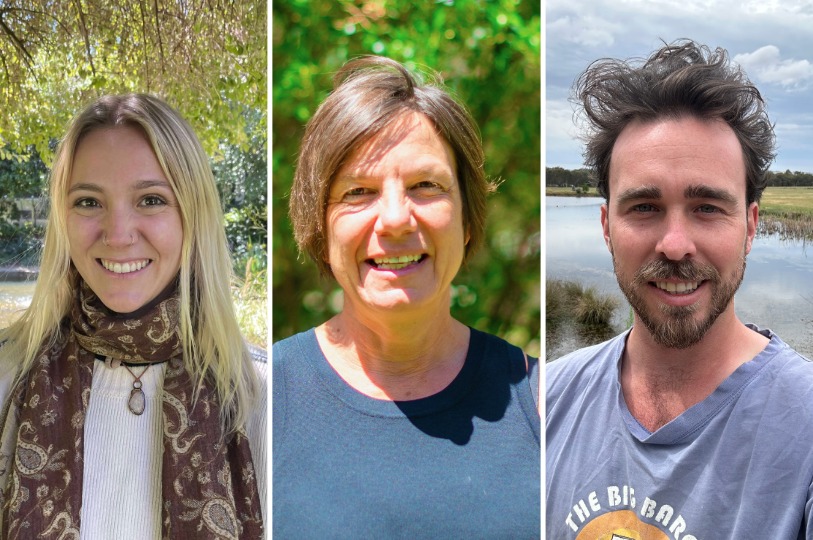
The Margaret Middleton Fund recipients for 2026, left to right: Camille Kynoch and Dr Louise Tosetto and Benjamin Wilson.
Track a turtle, save a skink, build a better home.
These are the missions behind three research projects backed by the Academy’s Margaret Middleton Fund for Endangered Australian Native Vertebrate Animals in 2026.
Established to turn scientific insights into on-the-ground conservation outcomes, the Fund supports early-career researchers investigating solutions for Australia’s wildlife at risk.
Breeding on borrowed time: Tracking male flatback turtles
Camille Kynoch, Monash University
A climate change curveball is threatening flatback turtle populations in Australia, since nest temperature determines whether hatchlings become male or female. As temperatures get warmer, fewer male turtles hatch, jeopardising the long-term viability of populations.
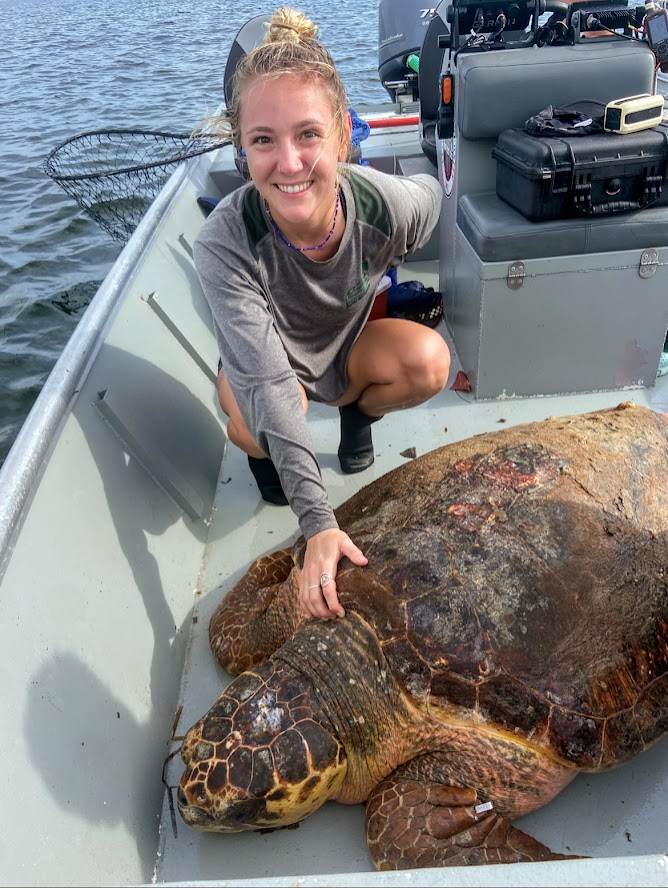
Camille Kynoch with a flatback sea turtle (Natator depressus).
PhD candidate Camille Kynoch will test new methods to track male flatback sea turtles in Western Australia. By comparing adult and hatchling numbers, this data will help scientists understand the male shortage and its consequences.
Kynoch says the Margaret Middleton funding will allow her project to be more impactful.
“This will pioneer new, non-invasive approaches to track the survival and reproductive success of male sea turtles, to help managers make informed conservation decisions for flatback sea turtles in the face of rising global temperatures,” she says.
No place like home: Designing better artificial habitats
Dr Louise Tosetto, Macquarie University
Manmade shelters – like nest boxes and artificial burrows – are a staple of modern conservation. But how can we ensure the wider habitat provides everything an endangered species needs to survive and thrive?
Dr Louise Tosetto is taking a sensory ecology approach to bridge this gap. This involves analysing the colours, patterns and visual perspectives of predators and prey that allow animals to blend in with their surroundings.
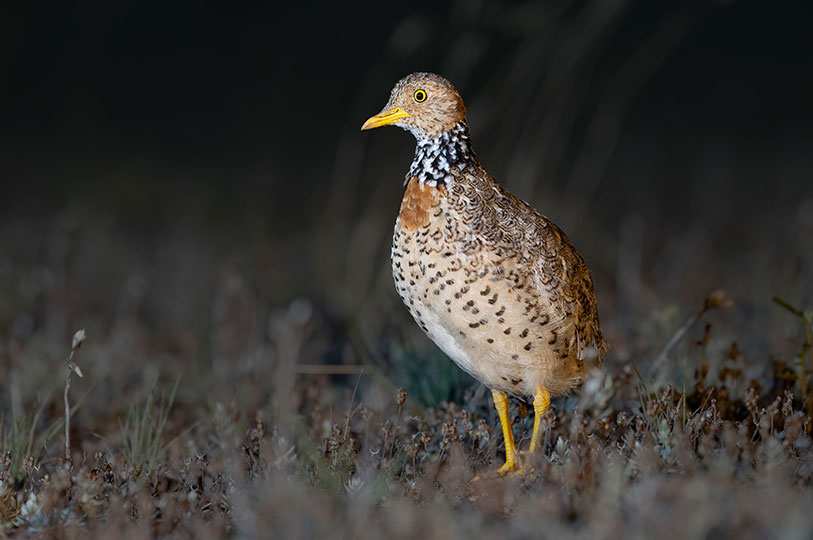
Female plains-wanderer (Pedionomus torquatus). Credit: JJ Harrison via Wikimedia (CC BY-SA 3.0).
Understanding these features “will help us understand what makes a refuge truly safe and functional,” Dr Tosetto says.
She will focus on the critically endangered plains-wanderer, a ground-nesting bird that relies on camouflage for survival, to develop a method for assessing habitat quality.
“This will be a first step toward creating a toolkit that helps conservationists design better artificial habitats tailored to the needs of different species,” she says.
Olfactory overload: Confusing feral cats to save a lizard
Benjamin Wilson, Charles Sturt University
The great desert skink or tjakura is a reptile species with profound cultural significance for Western Desert Traditional Owners.
However, its habit of hanging out at burrow entrances and frequenting communal latrines creates a skink-stink – an unintended invitation for hungry feral cats.
With almost half of all cat scats containing tjakura remains in some places, predation is driving population decline.
PhD candidate Benjamin Wilson plans to investigate whether disrupting the tjakura’s scentscape can create olfactory ‘misinformation’ that makes it harder for feral cats to sniff out the skinks.
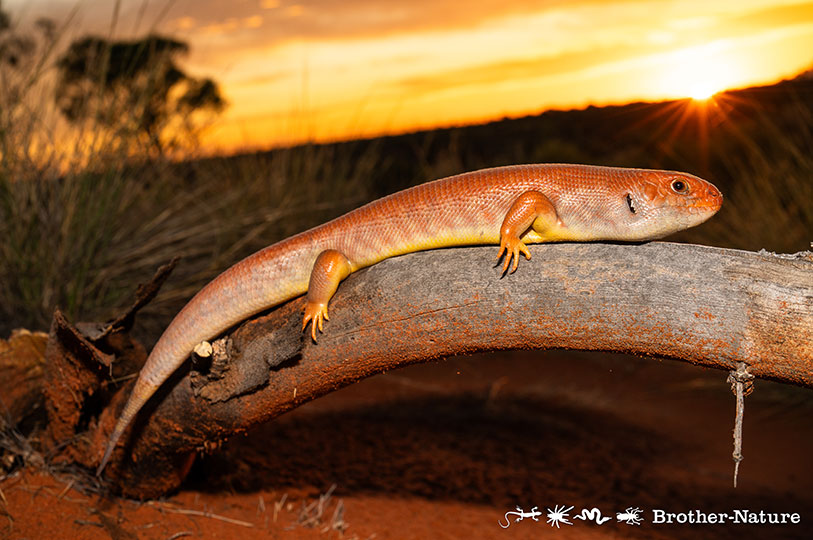
Tjakura (Liopholis kintorei). Credit: brother-nature via iNaturalist (CC BY-NC 4.0).
“Reptiles are often maligned, and in general receive less conservation attention than their cuddlier counterparts,” Wilson says.
“My hope is that this grant will allow for a meaningful improvement in the conservation status of the great desert skink, and potentially other similarly threatened lizard species.”
About the Margaret Middleton Fund
The Margaret Middleton Fund for endangered Australian native vertebrate animals was established in 2000 with Dr Margaret Middleton, who donated generously to this fund for many years. Dr Middleton was a long-time supporter of the Academy and early-career scientists, with the fund supporting more than 90 projects to date.