



Australian space research 2004–2006
Biennial report to the Committee on Space Research (COSPAR) with contributions from institutions undertaking space-related research in Australia.

Compiled by the National Committee for Space Science, this report presents aspects of Australian space activity which the contributors regard as relevant and appropriate to the International Science Council's COSPAR for 2004–06.
Significant events include:
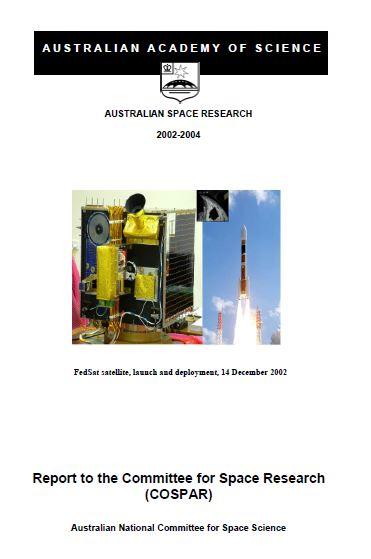
- the successful operation of FedSat, Australia’s first scientific satellite since the 1960s
- Australian members of the Japanese Hayabusa (MUSES-C) spacecraft team helping the spacecraft reach, identify a safe landing site, and land on asteroid Itokawa for its sample-return mission
- completion of the Unwin radar at Invercargill, New Zealand, and its successful operation with the similar Bruny Island radar to form the Tasman International Geospace Environment Radar (TIGER) system, within the international SuperDARN network
- an international team, including Australian scientists readying NASA’s Solar Terrestrial Relations Observatory (STEREO) to launch from Cape Canaveral in mid-2006, in order to study the Sun, solar wind, and space weather effects on the Earth’s environment and human technology.