


Asia-Pacific Academic Mentoring Programme launched with nearly 30 new pairings
This year’s cohort matches early-career researchers from seven countries with established researchers from Australia.
- 2 mins read

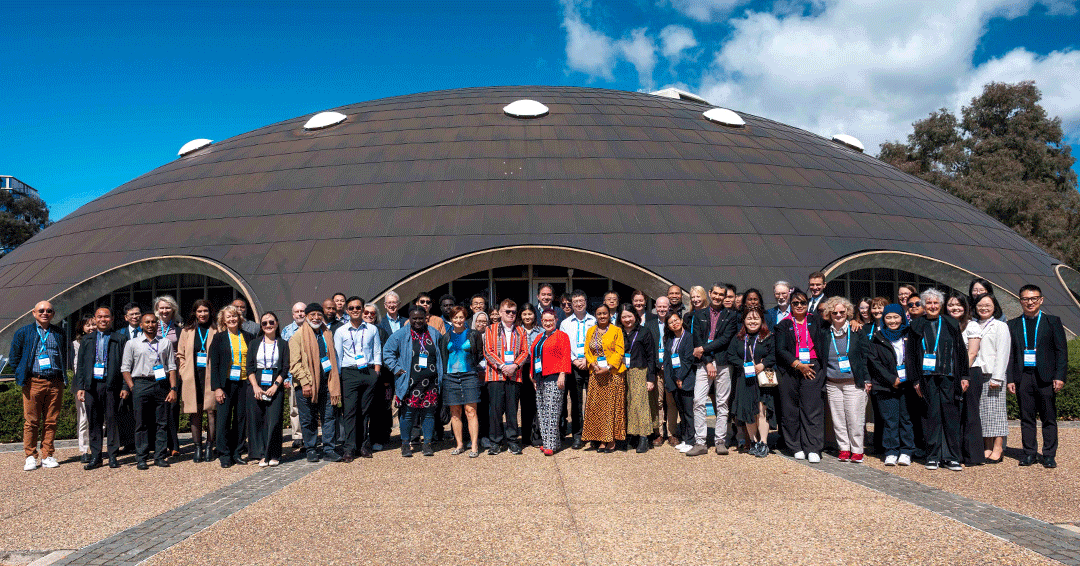
The International Science Council Regional Focal Point for Asia and the Pacific (ISC RFP-AP) launched its 2026-27 Academic Mentoring Programme on 15 September 2026, pairing early-career researchers from across Asia and the Pacific with established scientists and researchers from Australia.
Now in its third year, the programme has nearly tripled its cohort since inception.
This year’s intake brings together 28 mentee-mentor pairs spanning seven countries: Fiji, Indonesia, Papua New Guinea, the Philippines, Solomon Islands, Thailand and Vietnam.
For the first time, the programme welcomes a dedicated cohort from Indonesia, supported by the KONEKSI programme.
The programme was launched at Science at the Shine Dome, the Australian Academy of Science’s flagship event, with opening remarks from Academy President Professor Sam Berkovic AC PresAA FAHMS FRS.
“They say it takes a village to raise a child; the same is true of raising a researcher,” Professor Berkovic said. “Many of us have been fortunate to have great influences who guided, advised and supported our careers along the way.”
Academy Foreign Secretary Professor Steven Chown FAA, who oversees the RFP-AP, pointed to the impact seen in previous years.
“At the closing session of last year’s cohort, we heard from mentees about what the past year had looked like with their mentor’s support,” Professor Chown said.
“Research proposals and journal articles were strengthened, confidence and capability built, and networks were broadened through introductions their mentors made. Some mentees even went on to collaborate on research projects together.”
ISC RFP-AP Director Ronit Prawer said the programme continues to strengthen the region’s research capability.
“What sets this programme apart is the care we take in each pairing. We match every mentee with a mentor whose research background closely aligns with their own, which makes for a genuinely productive relationship,” Prawer said.
“The growth we’ve seen over three years, and the addition of our Indonesian cohort this year, speaks to the depth of demand for this kind of support across Asia and the Pacific.”
Aradhana Deesh, a mentee from Fiji, said she was fortunate and delighted to be selected. She was looking forward to receiving academic support from her mentor in order to improve her writing skills and communicate her findings in agricultural production to ultimately improve the GDP of her country.
Mentors and mentees will spend the next year working together to achieve goals identified by the mentee, with additional RFP-AP support to build capacity and ensure mentees receive a comprehensive training experience.