


Australian-led research projects given green light in Asia-Pacific
Five Australian-led projects will share more than $660,000 to tackle waste, improve recycling and extend solar panel and battery lifespans across Asia-Pacific communities.
- 3 mins read


Five Australian-led research projects aimed at extending the life of solar panels and batteries, reducing food waste and improving recycling across the Asia-Pacific have been given the green light.
More than $660,000 in funding will be shared under Round One of the Academy’s Regional Challenge Research Initiative (RCRI), which brings together researchers from across the region to collaborate on projects and build solutions.
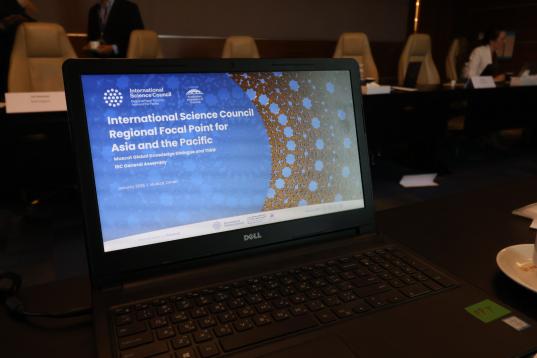
The Academy is proud to host the $1.5 million Australian Government-funded program, which will be delivered by the International Science Council's Regional Focal Point for Asia and the Pacific.
Australian Academy of Science President, Professor Sam Berkovic AC, said it would deliver tools, models and datasets to use across the region.
“Communities and industries across Australia and our region need practical ways to reduce waste and make better use of valuable resources,” he said.
“These projects have the potential to help, from improving recycling systems in Pacific Island countries to keeping solar panels in use for longer and reducing food waste.”
The projects chosen are aimed at addressing the challenge of the circular economy, including keeping materials and products in productive use for longer, extending the lifespan of solar panels and batteries, and improving recycling or reducing waste through regional collaboration.
Australian leads of the successful projects include CSIRO, Adelaide University, UNSW Sydney and Central Queensland University.
“By bringing together Australian researchers and partners across the Asia-Pacific, this investment will help develop tools and approaches that can be adapted to local needs, and that can deliver environmental and economic benefits for communities and businesses across the region,” Professor Berkovic said.
“The Academy is proud to host the International Science Council’s Regional Focal Point for Asia and the Pacific, which is delivering this Australian Government initiative. I congratulate the five successful teams and their partners from across the region.”
The five selected projects
- Fiji-to-Pacific Recycling Pathways, led by Scientia Professor Deo Prasad at UNSW Sydney, will study Fiji’s recycling system and an emerging recycling pathway from Nauru to Fiji. The team will develop guidance and training to help Pacific communities assess options for their own recycling systems.
- Australia–Indonesia citrus supply chains, led by Associate Professor Imran Ali at Central Queensland University, will use sensors and artificial intelligence to track fruit conditions across commercial shipments. The project aims to help businesses act earlier to prevent food loss and retain the value of the crop.
- SolarLoop Asia-Pacific, led by Professor Jian Zuo at Adelaide University, will develop a decision-support tool to help governments and industry identify when ageing solar panels can be repaired, reused or repurposed, and when their materials should be recovered.
- BIOCIRCLE-AP, led by Dr Maja Arsic at CSIRO, will develop tools to help governments, businesses and researchers compare uses for agricultural and forestry residues, including bioenergy and other products, and assess their environmental, economic and social impacts.
- BatteryLoop Asia-Pacific, led by Dr Jing Zhao at UNSW Sydney, will pilot a system to assess battery health and improve traceability. The project aims to support decisions about safe reuse, repair, second-life applications and responsible material recovery.