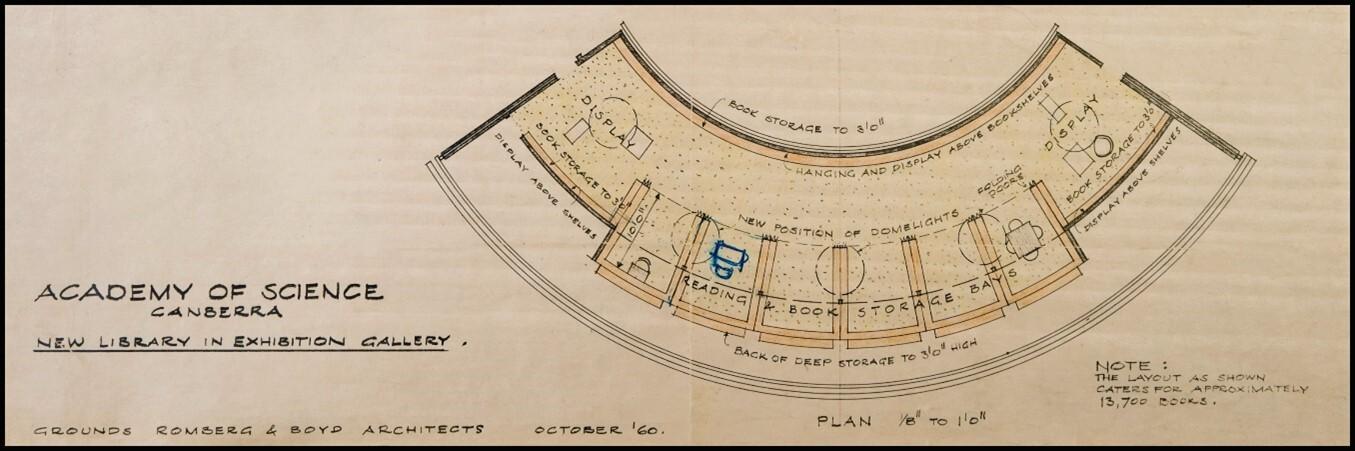




Historical geology material recently acquired at the Fenner Archives
Field books reveal how pioneering geologist Professor David Green carried out his work in Papua New Guinea in the 1950s.
- 3 mins read

New material documenting the early career of geologist Professor David Green AM FAA FRS has been added to the Academy's Fenner Archives, becoming the collection's 244th addition since its establishment in 1962.
The donation includes transparencies, field books, letters and certificates spanning Green's career, offering a fascinating look at how geologists worked during his era.
Professor Green, a world leader in experimental petrology and geochemistry, is best known for work he undertook while based at the Australian National University (ANU) and University of Tasmania.
But two items offer a rare window into his work in Papua New Guinea for the Australian Bureau of Mineral Resources (now Geoscience Australia) in the late 1950s.
This experience was important as Green would continue studying the Papuan Ultramafic Belt when he returned to ANU in 1994. He also supervised the first Papua New Guinean geoscientist Dr Wildred Lus.
Handwritten field books fill in the gaps before GPS
Before GPS, geologists recorded sample locations and field observations by hand. Two Bureau of Mineral Resources docket books in the collection show how Green did this.
The first, covering May 1958, contains 98 used sheets signed by Green, with some pages intentionally folded to mark entries.
The second is undated, but the localities mentioned (Rill Cove and Lizard) indicate that Green most likely used a spare Bureau of Mineral Resource docket book for his PhD study in Cornwall between 1959 and 1962
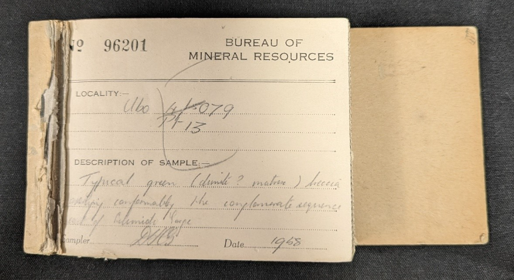
1958 Bureau of Mineral resources docket book (244000027-001) used in Green’s fieldwork in Papua New Guinea.
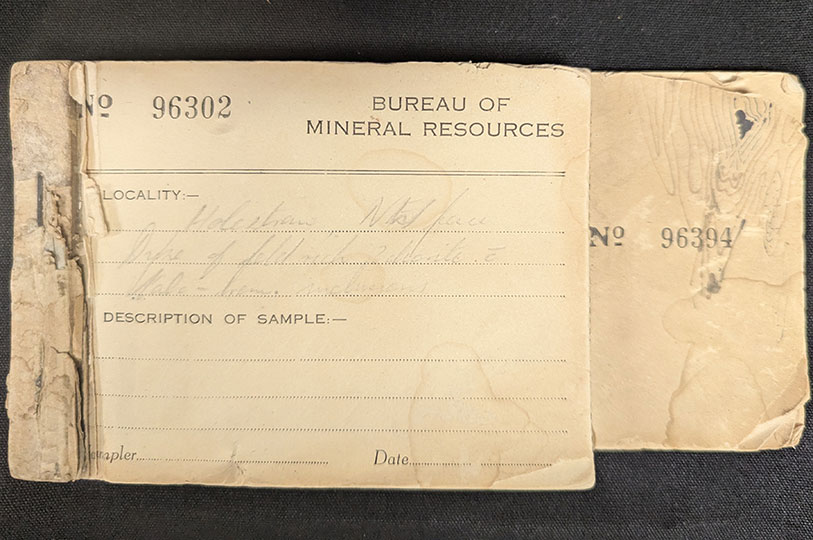
Undated Bureau of Mineral Resources docket book (244000027-002) most likely used in Green’s fieldwork in Cornwall 1959–1962.
Aerial survey transparencies record geological detail
Green kept 19 brown envelopes titled ‘ADASTRA Aerial Surveys’. Rather than aerial photographs, the envelopes contain 84 transparencies with hand-drawn geographical details and detailed geology notes.
When cross-referenced with context in the docket book, the map places his fieldwork in a heavily forested area between the Waiowa Volcano and Mt Suckling, with the minerals 'epidotised quartzite' and 'peridotite' noted down.
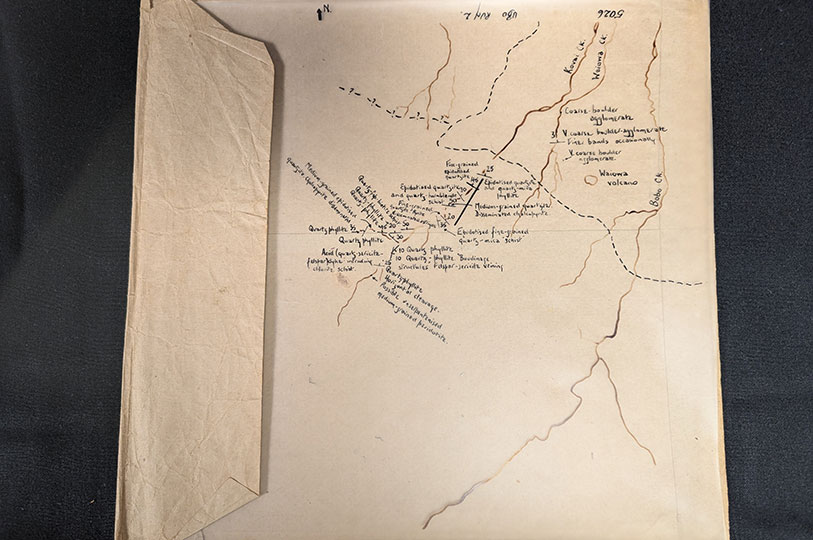
Shows transparency (244000028) labelled ‘UBO Photo 5026’ with handwritten geology details.
A living record of science
The Fenner Archives hold more than 240 collections tracing the lives of eminent scientists and Fellows of the Australian Academy of Science. This material is open to researchers, Fellows and Academy staff.
The full listing of all 30 items in the David Green collection is available through the hierarchy browser of MS244 David Green Collection. If you see a listing of interest, you can view the item in person at the Shine Dome in Canberra or contact the archivist for further information.
Support our work
To support the preservation of Australia’s scientific legacy and help us bring more treasures online for everyone, please donate or contact us at philanthropy@science.org.au.