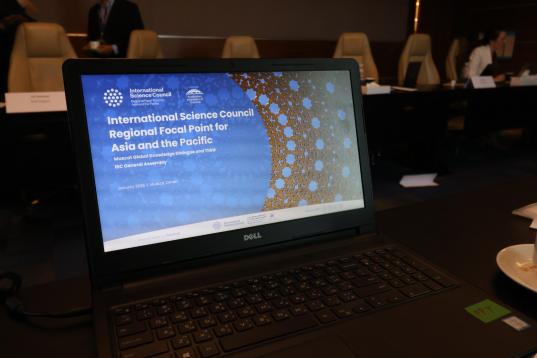




Pacific leaders and researchers unite to strengthen food systems resilience ahead of COP31
The 'Pacific Resilience by Design Symposium' explored practical pathways for strengthening food security in the face of climate change, economic shocks and growing regional challenges.
- 2 mins read

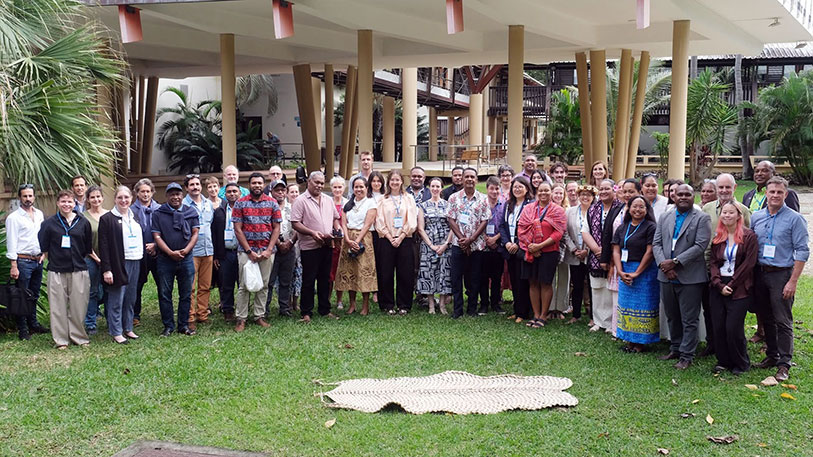
The International Science Council Regional Focal Point for Asia and the Pacific (ISC RFP-AP) joined partners including the OECD Co-operative Research Programme, CSIRO, the Pacific Community (SPC), the Australian Government Department of Agriculture, Fisheries and Forestry, the University of Hawai'i and representatives from Pacific governments, research institutions and civil society to explore practical pathways for strengthening food security in the face of climate change, economic shocks and growing regional challenges.
Across two days of dialogue, interactive workshops and knowledge exchange, participants examined how science, Indigenous and traditional knowledge, community leadership and evidence-informed policy can work together to build food resilience across the Pacific.
“Building resilient food systems requires sustained collaboration across science, policy and community leadership. The RFP-AP is proud to have contributed to a process that puts Pacific priorities and Pacific voices at the centre of this agenda,” said Ronit Prawer, Director of the ISC RFP-AP.
The timing of the discussions served as a powerful reminder of the urgency of the challenge. As delegates met in Nouméa, unseasonal wind and heavy rain swept across New Caledonia, flooding agricultural land and damaging crops. The events reinforced the reality that climate impacts are already affecting Pacific food systems and livelihoods, underscoring the need to move from dialogue to coordinated action.
A key outcome of the symposium was the commitment to establish a Pacific Food Systems Community of Practice – a collaborative network that will bring together researchers, policymakers and practitioners to share knowledge, strengthen partnerships and advance evidence-based approaches to food systems resilience. The initiative aligns with the symposium’s ambition to lay the foundations for an ongoing Pacific-centred research and policy network that can support regional priorities and collective action.
By convening expertise across disciplines and sectors, the ISC continues to support science that responds to regional priorities and contributes to sustainable development across Asia and the Pacific.
This article was originally published by the International Science Council Regional Focal Point for Asia and the Pacific.