


As the world looks up, Australia looks away
The Australian Government’s decision to withdraw from its association with the European Southern Observatory (ESO) is short-sighted and risks long-term damage to the country's astronomy capability.
- 2 mins read

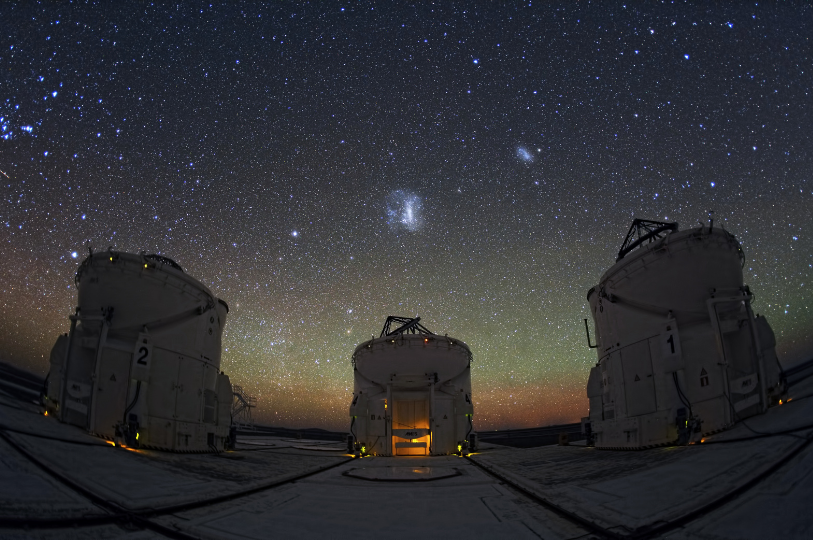
These moveable units are part of the Very Large Telescope Interferometer (VLTI) in Chile, an ESO facility. Image credit: Y. Beletsky (LCO)/ESO (CC BY 4.0).
The Australian Academy of Science has condemned the Australian Government’s decision to withdraw from its association with the European Southern Observatory (ESO), calling it short-sighted and warning the move will inflict lasting damage to a research and development system already facing deep structural underinvestment.
“Stepping back now risks long-term damage to our capability and competitiveness, and this decision means Australia will no longer remain at the forefront of astronomy research and discovery,” said Professor Margaret Sheil AO FAA FTSE, Secretary of Science Policy at the Australian Academy of Science.
Full membership of ESO was a key recommendation of the Academy’s Astronomy decadal plan 2026–2035 launched last year. Abandoning ESO directly contradicts that plan, which identified full membership as essential to Australia’s research future. Under the Government’s decision, access to ESO will be shut off entirely from 2027.
“ESO is a gateway to collaboration. It connects Australian researchers to world-leading facilities and international teams, multiplying the impact of domestic investment. In a field defined by scale and precision, partnerships are not optional extras, they are core capability,” Professor Sheil said.
Australia’s strategic partnership with ESO, established in 2017, had provided Australian scientists access to world-leading infrastructure that cannot be replicated by Australia alone.
Membership has fuelled a thriving Australian astronomy instrumentation program, expanding engagement with industry, and growing astronomy applications across medicine, defence, mining and other sectors.
Professor Sheil said the Government’s decision puts all of that at risk.
“When baseline funding is already thin, withdrawing from shared global infrastructure reduces access to data, talent, and opportunity – without solving the underlying problem. You cannot build world class science in isolation,” she said.
The announcement comes as the Artemis II lunar mission – the first crewed Moon voyage in more than 50 years – captures public imagination.
Professor Sheil said the timing makes this decision harder to understand.
“Astronomy does more than deliver discoveries. It inspires students, engages communities, and builds the pipeline of future scientists. Stepping back from a flagship international collaboration at the very moment the world is looking up risks dimming that inspiration for a generation,” she said.