




Henry Oliver Lancaster 1913–2001
Henry Oliver Lancaster made landmark discoveries linking UV radiation to melanoma and rubella to congenital deafness, while transforming mathematical statistics.

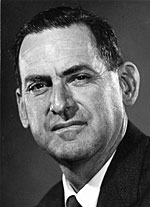
Henry Oliver Lancaster (1913–2001) was a pioneering Australian statistician and medical scientist.
His most celebrated medical contributions include the first quantitative demonstration that melanoma rates increased closer to the equator due to UV radiation, and a groundbreaking study establishing the causal link between rubella infection during pregnancy and congenital deafness.
As Foundation Professor of Mathematical Statistics from 1959 to 1978, he made major theoretical advances in the decomposition of the chi-square statistic and the theory of bivariate distributions, work that was incorporated into leading international statistical textbooks.
He was also a prolific historian and bibliographer of statistics and medicine, producing the vast scholarly work Expectations of life (1990) among many other publications.
He was elected a Fellow of the Australian Academy of Science in 1961, awarded the Lyle Medal, and appointed an Officer of the Order of Australia in 1992.
Download the memoir
About this memoir
This memoir was originally published in Historical Records of Australian Science, vol. 15(2), 2004. It was written by:
- E. Seneta, School of Mathematics and Statistics, University of Sydney. Eugene Seneta, FAA, succeeded H.O. Lancaster as Professor and Head of Mathematical Statistics at the University of Sydney in 1979. Denoted by 'ES' in the sequel.
- G.K. Eagleson, Australian Graduate School of Management, University of New South Wales. Geoff Eagleson was one of Lancaster's first PhD students in Mathematical Statistics (PhD, University of Sydney, 1967).