




Robert Kerford Morton 1920–1963
Professor Robert Morton FAA was a biochemist who pioneered enzyme purification techniques, achieved the first crystallisation of a cytochrome, and shaped Australian biochemistry through prolific, wide-ranging research.

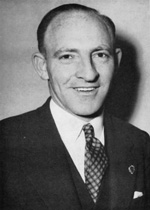
Robert Kerford Morton (1920–1963) was an Australian biochemist who studied at Sydney University, served in the Royal Australian and Royal navies during WWII, and completed his PhD at Cambridge under Malcolm Dixon before holding posts at Melbourne and the Waite Institute, University of Adelaide. He pioneered the use of butanol to free enzymes from lipoprotein complexes, a technique that opened up numerous previously intractable enzymes to study, and – with C. A. Appleby – achieved the first crystallisation of a cytochrome, the flavohaemoprotein cytochrome b2. His research spanned milk and mammary biochemistry, nuclear enzymes and cell division, cancer chemotherapy mechanisms, and wheat endosperm protein synthesis, yielding some 110 papers across just fourteen years of research. Elected a Fellow of the Australian Academy of Science in 1957 and a founder of the Australian Biochemical Society, Morton died in September 1963 from injuries sustained in a laboratory explosion while refining a purification method, cutting short a career colleagues regarded as one of exceptional brilliance.