




Fellows update: May 2026
Stay current with honours and awards to Fellows, obituaries and recently published biographical memoirs.
- 6 mins read

Honours and awards to Fellows
Royal Society – Fellows elected in 2026
- Professor Bostjan Kobe FAA FRS
- Professor Alex McBratney AM FAA FRS
- Professor Malcolm Sambridge FAA FRS
Read more about the Academy Fellows elected to the Royal Society
Obituaries
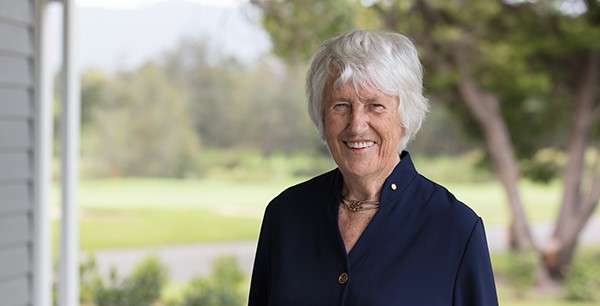
Dame Bridget Ogilvie AC DBE FAA FRS
24 March 1938 – 27 April 2026
Dame Bridget Ogilvie was one of the most distinguished scientists of her generation – a pioneering parasitologist, a visionary science leader, and a tireless advocate for global health. Born in Glen Innes, New South Wales, she rose from rural Australia to the very forefront of international science, embodying the curiosity and determination that define the finest scientific minds. She completed a Bachelor of Rural Science degree with First Class Honours at the University of New England, graduating with the university medal in 1960. She was awarded a Commonwealth Scholarship to attend Girton College, Cambridge. She was Lord High Steward of the University of Cambridge from 2001 to 2009. She was the first and still the only woman to be elected to this prestigious honorary position.
Her research at the Medical Research Council's National Institute for Medical Research made foundational contributions to our understanding of the immune response to parasitic infections, work of enduring significance to both human and animal health. As Director of the Wellcome Trust from 1991 to 1998, she oversaw the establishment of the Sanger Institute, which played a central role in the sequencing of the human genome, and greatly expanded the Trust's support for tropical medicine research across Africa and the Asia–Pacific. She also advocated for and led substantial investments in research infrastructure, understanding that the conditions for great science matter. After stepping down from the Trust she served as a Director of Lloyds Bank and AstraZeneca and gave her time and expertise to various charities including as Chair of Medicines for Malaria and Sense about Science.
Dame Bridget was elected a Fellow of the Royal Society in 2003 and a Fellow of the Australian Academy of Science in 2008. She was appointed a Dame Commander of the Order of the British Empire in 1996 and a Companion of the Order of Australia in 2007. She was also recognised with honorary degrees from a number of Australian and British universities.
Beyond her research and leadership, she was deeply committed to communicating science to the public and to nurturing the next generation of researchers. Many Australian scientists were fortunate to benefit from her mentorship in the UK, and later years through her involvement at the University of Wollongong. Her influence on Australian and international science will be felt for many years to come.
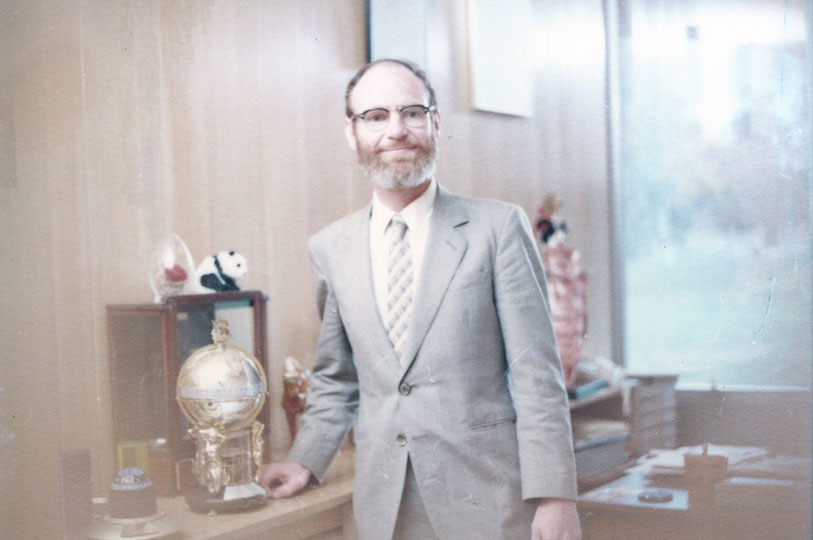
Dr Donald Charles Morton FAA
12 June 1933 – 26 April 2026
Dr Donald Morton was born in Canada and studied at the University of Toronto (BA in mathematics and physics 1952–1956) and Princeton University (PhD in Astronomy 1959). On completion of his PhD, he worked as an astronomer at the US National Research Laboratory for two years before taking a position as research associate at Princeton in 1961. Dr Morton remained at Princeton until 1976 when he left his position as Senior Research Astronomer, Lecturer and Professor to move to Australia as Director of the Anglo–Australian Telescope in Epping and Coonabarabran. As the telescope’s second director, he oversaw the facility’s early rise to prominence as it opened up the southern skies for optical research, consolidating its position among the finest of the world's large telescopes with a dominant influence in British and Australian optical astronomy.
Dr Morton was a pioneer in optical astronomy. From instruments mounted on rockets in 1965, he obtained the first ultraviolet stellar spectra, and deduced the existence of stellar winds – now recognised as a major phenomenon in the evolution and structure of giant stars. From Copernicus satellite data, he made landmark measurements of the chemical abundances in the interstellar medium – the gas and dust that exists between stars.
Dr Morton was elected as a Fellow of the Australian Academy of Science in 1984 and served on the National Committee for Astronomy (1979–1980 and 1984–1986).
After ten years in Australia, he returned to Canada to take up the position of Director General of the Herzberg Institute of Astrophysics. He held this position until 2000 when he was appointed Researcher Emeritus at the Institute.
Professor Garth William Paltridge FAA
24 April 1940 – 1 May 2026
Professor Garth Paltridge was elected to the Academy in 1980 for his contribution to atmospheric sciences. These range from stratospheric electricity to the modelling and analysis of growth and form of plants as determined by atmospheric variables. They also include pioneering studies of the radiation properties of clouds and of the interaction of radiation with cloud growth and decay.
He was born in Brisbane and completed a BSc with honours at the University of Queensland (1961) before moving to Melbourne. Professor Paltridge was awarded an MSc and PhD (1965) from the University of Melbourne. In 1966, he took up a postdoctoral fellowship at the New Mexico Institute of Mining and Technology in the US. He changed continents again in 1967 and became a senior science officer at the Radio and Space Research Station in the UK.
Professor Paltridge returned to Australia in 1968 to the CSIRO Division of Meteorological Physics (eventually renamed as the Division of Marine and Atmospheric Research), rising to the level of Chief Research Scientist. In 1990, he became Professor and Director of the Institute of Antarctic and Southern Ocean Studies at the University of Tasmania (1990–2002). He was instrumental in setting up one of the first Cooperative Research Centres, the CRC for Antarctica and the Southern Ocean (1991). He was director of the Antarctic CRC until his retirement in 2002. He then became Emeritus Professor and Honorary Research Fellow at the University of Tasmania and a Visiting Fellow at the Australian National University Research School of Biology.
Professor Paltridge gave his time very generously to the Academy. He served on the Sectional Committee for Terrestrial and Planetary Sciences (1982–1985, Chair 1985–1986), the Elizabeth and Frederick White Research Conferences Program (1984–1987 and 1988–1999), Council (1994), Regional Group for Tasmania (1991–1997, as Chair), several medal committees including the Frederick White Medal (2001), Jaeger Medal (2004 and 2008–2016), Selby Fellowship (2005) and the Anton Hales Medal (2008–2012). He also served on the National Committee for Antarctic Research (including as Chair 1994–1999), National Committee for Atmospheric Sciences (1981–1986, as Chair) and the National Committee for Climate and Atmospheric Sciences (1992–1996).
Recently published biographical memoirs
Alongside the many fascinating history of science articles published in our journal, Historical Records of Australian Science, we publish biographical memoirs – biographies of deceased Fellows commissioned by the Academy. We are very grateful to all the authors who go to great lengths to make these articles as complete as possible.
Recent biographical memoir: