



Research round-up: What will Australia’s ecosystems look like in 2100?
Also in this edition: the problem with prescribed burning in a biodiversity hotspot, and how Indigenous Knowledge contributes to drug discovery.
- 3 mins read

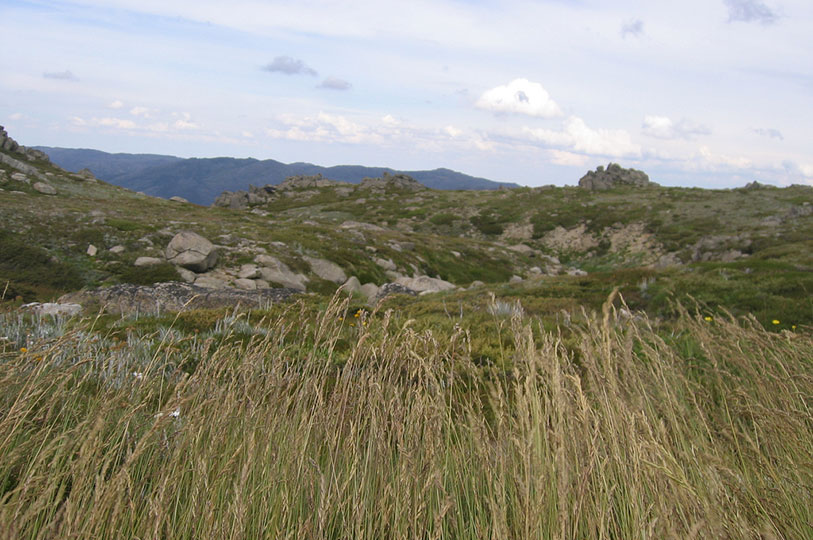
Alpine grassland in the Snowy Mountains. Credit: Cimexus via Wikimedia (CC BY 2.0).
The Academy is pleased to partner with CSIRO Publishing Journals to champion Australian science excellence. In this regular research round-up series, we feature recent discoveries reported in CSIRO Publishing Journals.
Find out more about CSIRO Publishing Journals
Charting possible futures for Australian landscapes in 2100
What will the bush look like when your grandkids visit? A team of ecologists, led by Academy Fellow Emeritus Professor Mark Westoby, imagined the year 2100 for four of the country’s iconic landscapes.
Across alpine grasslands in the Snowy Mountains, subtropical rainforest near Byron Bay, grassy woodlands near Canberra and semi-arid woodlands in WA, big changes might play out.
This includes four degrees of climate change, controlling invasive species via gene technology and changed land use as livestock production is replaced by lab-grown meat. Under the different scenarios explored, more frequent extreme fires emerged as a key threat across all four ecosystems.
Ultimately, the researchers suggest that conservation might need a mindset shift: from asking ‘how do we get back to the way things were’ to ‘what do we want the future to look like’.
Read the original research in the Australian Journal of Botany
Indigenous Knowledge and the ethics of finding new medicines
Many modern medicines – like aspirin – trace their origins to Indigenous or Traditional Knowledge. Yet communities holding that knowledge are rarely recognised or compensated for their contributions.
Researchers crafted two hypothetical case studies to unpack how Indigenous Knowledge informs drug discovery. In one, an Aboriginal community shares their detailed knowledge directly with researchers – including a crucial step (soaking the plant in running water) that turns the toxic plant into a safe medicine. In the second, researchers scour archival European texts for promising leads, some originally sourced from unacknowledged Indigenous peoples.
Both cases highlight that Indigenous Knowledge can dramatically narrow the search for new medicines. But they also expose ethical gaps, including unclear provenance and communities left uncredited. The authors call for research built on genuine, ethical partnership, not extraction.
Read the original research in the Australian Journal of Chemistry
Prescribed burning may be putting WA’s unique wildlife at risk
Every year, around 200,000 hectares of bushland in the south-west of WA is deliberately burnt to protect people and property. However, ‘prescribed burning’ practices are putting unique species at risk in this biodiversity hotspot, argue researchers in a new perspective article.
Species like the honey possum, quokka and western ringtail possum rely on long-unburnt habitat, while frequent fires also damage ancient Tingle forests, peat swamps and black cockatoo nesting sites. Meanwhile, burning large tracts of bush away from people does little to prevent wildfires, research suggests.
The authors, including Academy Fellow Professor David Lindenmayer AO, call for a rethink of the way bush is routinely burned, accompanied by long-term monitoring, independent research and protection of unburnt habitat.
Read the original research in the Australian Journal of Zoology