




Press conference transcript: Kathleen Folbigg's convictions quashed
The Australian Academy of Science welcomes today's decision by the Court of Criminal Appeal to squash the convictions of Kathleen Folbigg. But make no mistake, that without law reform, these sort of miscarriages of justice will continue.

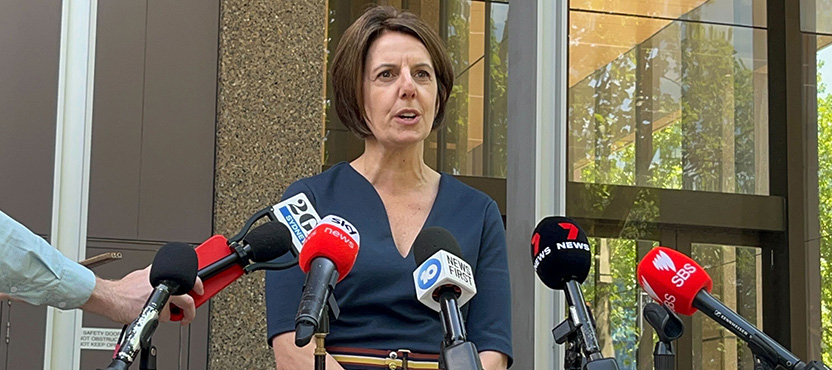
Please note: this transcript has been slightly edited for clarity.
Anna-Maria Arabia:
The Australian Academy of Science welcomes today's decision by the Court of Criminal Appeal to squash the convictions of Kathleen Folbigg. But make no mistake, that without law reform, these sort of miscarriages of justice will continue.
Although, there was evidence in 2019, new scientific evidence, basic scientific principles were not adhered to from the time of trial. There were at least six occasions on which this occurred from 2003. There was no medical or pathological evidence for the smothering of Kathleen Folbigg's children. Yet she was convicted of smothering them.
Circumstantial evidence was given more weight than scientific evidence. There was pathological and medical evidence that explained the death of the children at the time of the trial.
No trauma, journalling, or grief experts were brought before any legal proceedings until 2022.
The International Calmodulin Registry was inappropriately and wrongly interpreted, and that evidence was admitted into the inquiry in 2019. There is ample evidence that scientific principles have not been upheld in this case since her trial in 2003.
We must absolutely use this occasion in Australia to bring about law reform. Firstly, there is no jurisdiction in Australia that has a reliability standard. You and I and our liberty rely on reliable evidence being admitted into courts of law. There is no way to check that in Australia at the moment. That is a first form of law reform.
A Criminal Case Review Commission or some sort of independent post-appeal mechanism must be introduced in Australia so miscarriages of this kind do not happen again.
And finally, the Australian Academy of Science acted as an independent scientific adviser to this case. That was rare, unique ... but it ought not to be.
We must find mechanisms to enable independent experts from the right disciplines, wherever they reside, to be brought before our courts so that they can be cross-examined by all parties.
Without law reform, we will continue to see miscarriages of justice across our country and across the globe. Thank you.
Journalist:
[paraphrased] What more would you like to see specifically from the New South Wales justice system?
Anna-Maria Arabia:
The New South Wales justice system, the New South Wales Government, must absolutely, as a matter of urgency, look at their current justice system and ask whether it is delivering justice to the people of New South Wales. I would go further and say that every jurisdiction in Australia needs to ask the same question.
There is significant law reform that needs to happen in Australia if we are to create a more science-sensitive legal system. It does not exist at the moment, unreliable evidence is routinely admitted into courts. And there is no post-review appeals mechanism to deal with mistakes when they are made.
Is New South Wales behind other jurisdictions on this, or are they all behind?
All jurisdictions need to look at the legal system but here in New South Wales, we've just seen the quashing of the convictions of Kathleen Folbigg after 20 years in jail.
If a case of this magnitude does not trigger law reform, I'm not sure what does. It is time for Australia to review its legal system to ensure it can be more scientifically informed, particularly given the pace of change of scientific discovery and technological advances.
Thank you.
More information
Read the Academy's media release on the decision by the NSW Court of Criminal Appeal to quash Kathleen Folbigg’s convictions.
Australia must seize nuclear science opportunities to meet challenges on the horizon
Maintain the health of Australians through medical research and its translation into care. Defend Australia. Meet our space ambitions. None of this can be achieved without increasing Australian nuclear science capabilities.
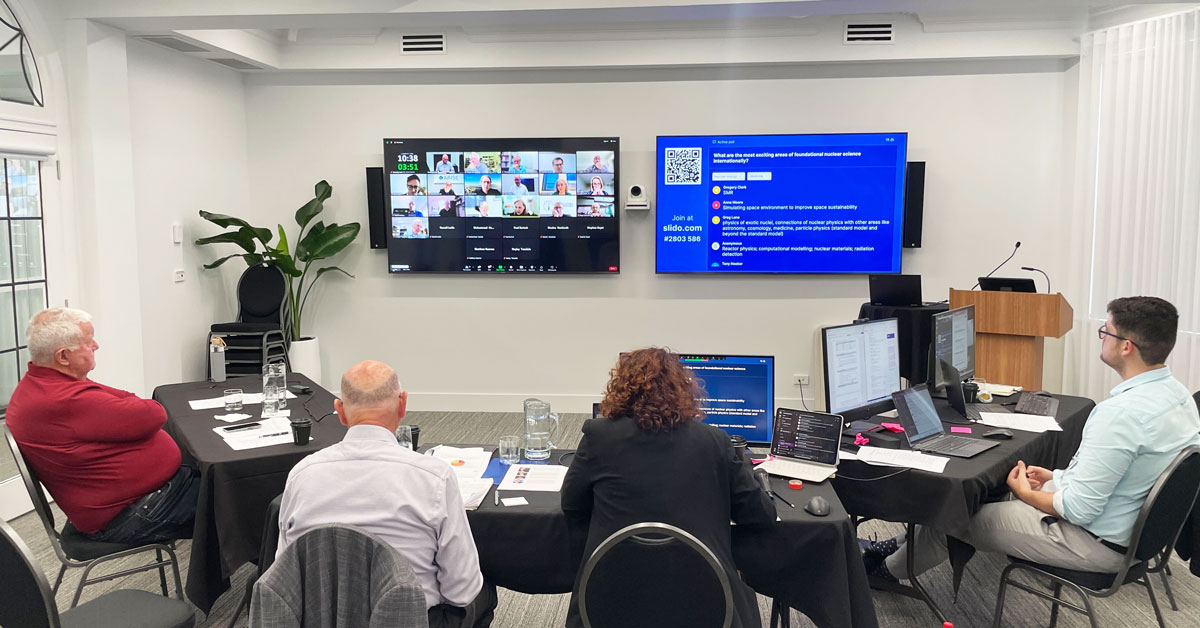
Maintain the health of Australians through medical research and its translation into care. Defend Australia. Meet our space ambitions. None of this can be achieved without increasing Australian nuclear science capabilities.
That is the conclusion reached by experts at a national nuclear science roundtable hosted recently by the Australian Academy of Science.
The roundtable determined that Australia’s nuclear science sector needs a national strategy that leads to new knowledge and infrastructure and equips Australians for jobs in this expanding sector.
The online forum brought together multidisciplinary experts from fields including nuclear physics, nuclear medicine, radiation science, space, nuclear waste management, environmental science, and nuclear regulation and diplomacy.
The roundtable was chaired by Emeritus Professor Lawrence Cram.
“Basic research is key to Australia’s ability to have a successful applied nuclear science sector and to be able to benefit from new technological developments and mitigate sovereign risk,” Emeritus Professor Cram said.
“There is also a critical need for informed debate and respectful deliberation to inform decision-making and improve public understanding of nuclear science and the benefits it can bring to Australia.”
The experts concluded that new technologies and hands-on experiences would inspire students and improve nuclear science literacy in schools. Nuclear science will provide new careers across Australia, requiring additional undergraduate and postgraduate courses.
A survey of experts conducted prior to the roundtable found 74% believed that if Australia’s core nuclear science capabilities were not strengthened, there is a high risk of increased misinformation about nuclear science.
The participants of the national roundtable called for:
- an independent knowledge broker between academia, industry and government to advise on national needs and opportunities that require nuclear science in all its dimensions
- a national strategy that:
- identifies opportunities to grow education pathways in nuclear science, including the potential to expand existing programs
- details the infrastructure required to train nuclear scientists, conduct novel foundational and applied research, and promote multisector collaborations
- outlines a communications plan to help the Australian public to engage with nuclear science.
The Academy’s President, Professor Chennupati Jagadish said the AUKUS agreement has increased awareness of critical gaps in Australia’s fundamental and applied nuclear science capabilities.
“A scaling up of nuclear science capabilities is needed to transform our ageing nuclear science infrastructure and to plug the current deficits in our knowledge and skills so that we can meet our national ambitions,” Professor Jagadish said.
The Academy will publish a summary of the roundtable in 2024.
Roundtable participants
Roundtable Chair: Emeritus Professor Lawrence Cram, Visiting Fellow, Research School of Physics, Australian National University
Dr Miles Apperley, Group Executive Nuclear Safety, Security, and Stewardship, Australian Nuclear Science and Technology Organisation
Dr Stephen Bayer, Director Safeguards Policy Section, Australian Safeguards and Non-Proliferation Office
Dr Paul Bertsch, Science Leader Environment BU, Commonwealth Scientific and Industrial Research Organisation
Professor Eva Bezak, Centre Director, Centre for Translational Cancer Research, University of South Australia Cancer Research Institute
Dr Greg Clark AC FAA FTSE, The Australian National University
Ms Michelle Durant, Managing Director, Australian Institute of Nuclear Science and Engineering – AINSE Ltd.
Dr Jacinda Ginges, Senior Lecturer, School of Mathematics and Physics, University of Queensland
Associate Professor Susanna Guatelli, School of Physics, University of Wollongong Centre for Medical Radiation Physics
Dr Mohammad Haskali, Chief Radiopharmaceutical Scientist, Peter MacCallum Cancer Centre
Associate Professor Anthony Hooker FARPS, Director, Centre for Radiation Research, Education and Innovation, University of Adelaide
Professor Mihail Ionescu, Leader, Nuclear Fuel Cycle Research, Australian Nuclear Science and Technology Organisation
Professor Matther Kearnes, Deputy Head of School, School of Humanities and Languages, University of New South Wales
Professor Tomas Kron, Director of Physical Science, Peter MacCallum Cancer Centre
Professor Greg Lane, Department of Nuclear Physics and Accelerator Applications, Australian National University
Dr Russell Leslie, Visiting Fellow, Australian National University
Professor Anna Moore, Director, ANU Institute for Space (InSpace)
Dr Thomas Payten, Managing Director, NovaTerra
Distinguished Professor Anatoly Rozenfeld, Director, Centre for Medical Radiation Physics, University of Wollongong
Professor Tim Senden, Director, Research School of Physics, Australian National University
Dr Ed Simpson, Fellow, Department of Nuclear Physics and Accelerator Applications, Australian National University
Professor Nigel Spooner, Prescott Environmental Luminescence Laboratory, University of Adelaide
Dr Kath Smith, Chief Nuclear Officer, Australian Submarine Agency
Dr Ivan Williams, Chief Medical Radiation Scientist & Branch Head, Australian Radiation Protection and Nuclear Safety Agency
Summary of 2023 Symposium: Professors Steven Chown and Frances Separovic
We have now come to the end of the 2023 Symposium. Today we have heard from a range of thought leaders from Defence, foreign affairs, our security agencies, the university and research sectors, and industry. The big question we sought to answer today was: “have we got the balance right between national security and research openness?”
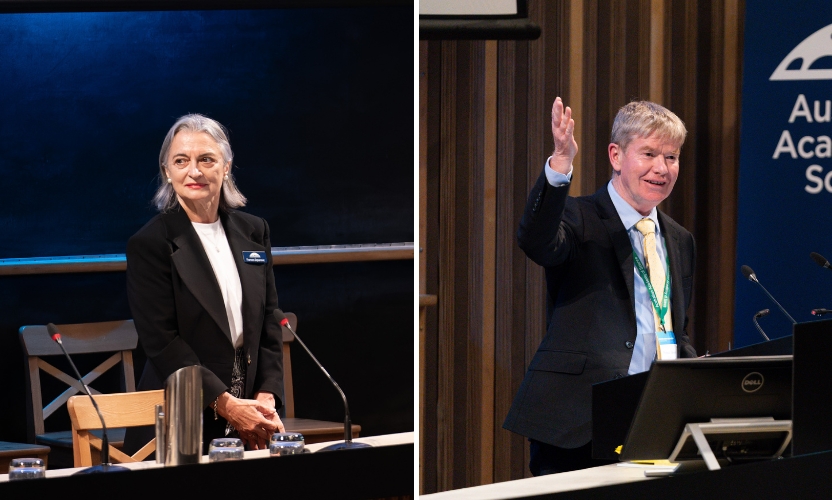
Welcome back, everyone.
We have now come to the end of the 2023 Symposium. Today we have heard from a range of thought leaders from Defence, foreign affairs, our security agencies, the university and research sectors, and industry.
We have examined the complexity and changing nature of the geopolitical landscape and the challenges national security experts, scientists, and researchers alike face in navigating this terrain.
I would like to thank all of our speakers and panelists for sharing your expertise with us today, and for the frank discussions that took place.
I found some of it confronting and some of it encouraging.
There are some principles I think we could all agree on:
- when risks are managed, we can achieve greater outcomes through international collaboration while maintaining security needs. Responses need to be proportional to risk, and grounded in evidence rather than fear
- science is a critical diplomatic asset and a lever to deter conflict. The scientific community can provide a window of communication to other nations that political leaders can use
- Australia plays an important role in international science diplomacy and working with key partners such as the US, UK, Europe and China. The Academy will play a key role in regional diplomacy through our hosting of the International Science Council Regional Focal Point for the Asia-Pacific
- international collaboration is the norm in Australia and central to our scientific research capability—and is underpinned by academic freedom. It is in our sovereign interest to remain a part of international scientific collaboration; it gives us access to breakthrough innovations, ensures we don’t fall behind or be caught unprepared and allows us to leverage global expertise and infrastructure to advance Australia’s national interests
- scientists have a responsibility to be security aware and do their due diligence, managing research administration burdens which we anticipate will increase in the coming years
- governments have a responsibility to consider unintended consequences and to measure the impact of security measures of the research ecosystem. Government has a responsibility to consider how compliance and regulatory burden are reflected in research funding. Geopolitical interests are shaping international collaborations, and as Sir Peter Mathieson and Diarmuid Cooney-O'Donoghue mentioned, we don’t want researchers to need to ‘self-censor’—it’s not in Australia’s national interest.
With the assistance of the Academy’s policy team, who have been furiously taking notes over the course of the day, I will ask Steven to try to summarise what we have learnt and what will inform the Academy’s next steps.
Keynotes
Our keynotes this morning discussed that, when presented with global challenges and the big challenges of our time, we can only solve them together. Agile international collaboration between scientists is essential, such as was demonstrated in the COVID-19 pandemic.
As scientists, we know that the best solutions come from the sharing of ideas.
The balance between collaboration and national security is delicate, but when managed correctly can lead to strategic and productive partnerships and collaborations.
Assistant Minister for Foreign Affairs the Hon Tim Watts MP spoke to the constrained environment we are operating in, but that there is still so much we can do to benefit Australia, our region, and the world. He also highlighted international partnerships on space, energy, and critical minerals.
Deputy Secretary National Security and Resilience Nathan Smyth emphasised that foreign espionage and interference present an unprecedented threat to Australia.
He spoke on how our best asset to protect our intellectual property and national security is for institutions and researchers, who best understand their research, to exercise due diligence to identify and address risks and what the end use of a technology may end up being in the hands of nefarious actors.
In the Q&A discussion, audience members highlighted the resources needed to help the research sector exercise due diligence, and the problematic ‘zero-sum’ framing of national security discourse (“we got it, they want it, we need to protect it”). In Australia's case, we also need to consider the inverse framing (“we don’t have it, they do have it”).
Deputy Prime Minister the Hon Richard Marles MP, in conversation with Chief Defence Scientist Professor Tanya Munro AC, discussed the Defence strategic review and how state power is now innovation power.
He spoke about how Australia needs a science-centric culture—and that the biggest microeconomic reform challenge we have is infusing our economy with science and technology.
Panel 1
Our first panel discussed the two-way responsibility for engagement between government and scientists. Scientists and their research organisations are required to understand their responsibilities, and government needs to ensure that guidance for engagement is implementable.
They discussed fundamental science to be included in considerations of risk for collaboration, because it is a pool of knowledge from which applications are drawn from.
The panel discussed AUKUS, the proposed Defence Trade Controls Amendment Bill 2023 and what this means for working with other allies outside the trilateral agreement.
There will be benefits from free exchange with the US and UK, however, there are serious concerns in the research community regarding the impacts that proposed legislative reforms to strengthen export controls, including criminal penalties, will have on research collaborations captured in the Defence and Strategic Goods List with countries and foreign nationals outside this partnership—and the very architecture of our research system.
Professor Monro highlighted work her team is doing engaging with the sector to establish ‘carve-outs’ in the regulations—today’s discussions are highly valuable in this context, and the Academy will engage with this to convene those impacted by the legislation and provide science advice to design a workable system of export controls.
Panel 2
Our second panel explored current approaches to the management of national security risks associated with research collaboration in Australia and overseas in the context of increasing geopolitical tension and the emergence of a multipolar research system. Presenters focused on collaborations with China, considering both potential risks and rewards.
This ‘spicy’ session highlighted the real human impact on researchers and risks to research culture from an overly cautious and disproportionate approach. It challenged the evidence base on which security measures have been designed.
As well as exploring the current experiences of managing security risks in Australian universities, lessons from the global experience were highlighted. The importance of a balanced approach to regulation and compliance that protects academic excellence and freedom emerged, as did the importance of engagement and information sharing between government, the national security sector and the research sector.
Panel 3
Our third panel considered whether current constraints on international engagement will impact the ability of science and technology to help solve global challenges.
The panel discussion emphasised that collaboration is central to solving global challenges such as climate change. They are too big and too complex to be solved with a single perspective and no single nation has the full suite of capabilities to realise emerging technologies that could be part of solutions.
Sharing their experience in international science collaboration, panellists recognised that collaboration comes with risk, but that this must be balanced with the risks posed by global challenges.
They reflected on how we can re-think and reshape international and local collaboration in more inclusive ways, as well as opportunities to learn from the way we have worked in the past.
For example, the negotiation of the Antarctic Treaty in the lead-up to 1959 was about demilitarisation and the prohibition of nuclear proliferation.
This is an example of science collaborating despite the deterioration of politics regarding dual use technologies and goods.
Summary
The big question we sought to answer today was: “have we got the balance right between national security and research openness?”
I don’t think we have an answer, other than we need to get the balance right—and we will need to continue to try to get it right as geopolitics changes and science and technology evolves.
We did reach some points of agreement:
- science and scientific collaboration is vital. Australians are terrific collaborators, and long may this continue. From the discussions today, we seem to be on the same page about this—but we need to weigh the benefits against the risks, and we need to consider focusing collaborations with those nations that share our values
- the world order of science is changing, and this has implications for how scientists assess the risks—both positive and negative—of collaborative activities
- this implies a degree of cultural change needed—both by government in its habits of engagement with the scientific community, but also by scientists to understand the changed geopolitical environment and the perspective of the national security community
- it is essential that government, the national security community and the research community work side by side and forge an open dialogue on risks and are clear-eyed on the issues this presents for research
- it would be helpful to establish a more systematic architecture and taxonomy for Australia’s equivalent of FFRDCs and UARCs and understand how they can be further developed to support Australia’s research endeavour.
There are serious discussions that started today around new legislation that is coming around Defence export controls to understand the actual target of regulatory action, and the implications of this on the architecture and conduct of research in this country and beyond.
This will affect research and researchers, and we need to be transparent and aware of the realities of how this will play out and how to encourage compliance and minimise unintended consequences.
These discussions and dialogue will need to continue.
We look forward to sharing the detailed proceedings with you all in the coming months, which will inform useful discussions that can progress the sharing of knowledge between scientists and government to ensure we support vital international scientific collaboration while protecting both our scientists and their intellectual property, and our nation.
It has been a pleasure to co-convene and host this symposium.
Thank you all once again and I will now hand over to Professor Chennupati Jagadish for his final remarks.

History made as Pacific scholars vote to establish Pacific academy
In a truly historic day, more than 60 Pacific scholars from across the Pacific Island nations overwhelmingly agreed to establish a Pacific academy of sciences and humanities at a gathering in Apia, Samoa on 24 and 25 October.
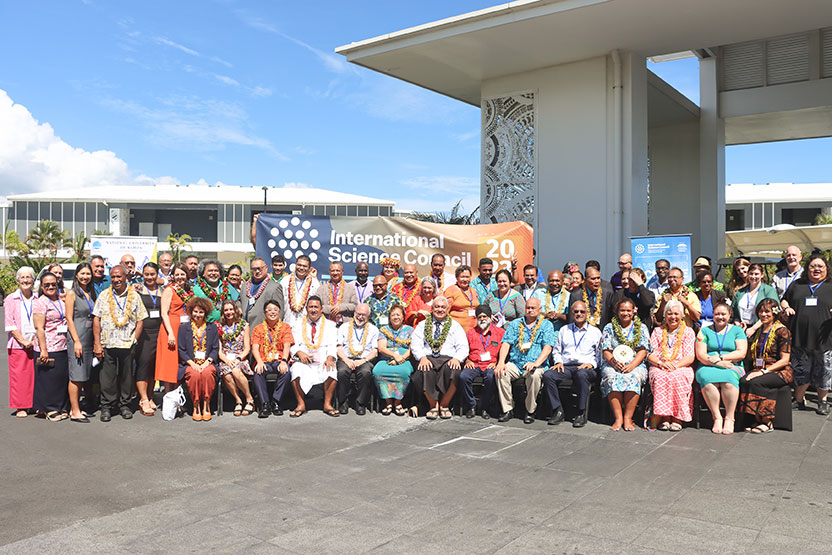
In a truly historic day, more than 60 Pacific scholars from across the Pacific Island nations overwhelmingly agreed to establish a Pacific academy of sciences and humanities at a gathering in Apia, Samoa on 24 and 25 October.
The establishment of a Pacific academy received the endorsement of the Prime Minister of Samoa, Fiamē Naomi Mataʻafa.
At present, there is no mechanism for Pacific scholars to convene and bring together their knowledge so it can inform regional and international decision-making, despite the region experiencing profound impacts arising from a changing climate. More often than not, decisions are made by others about them, not with them, even though local scientists and indigenous communities possess unique knowledge about their respective regions and inhabitants.
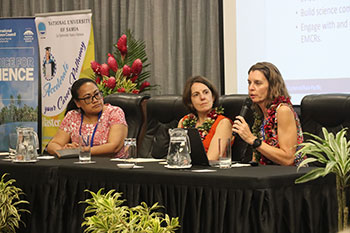
Left to right: Salote Austin, Oceania Manager, ISC Regional Focal Point for Asia and the Pacific; Anna-Maria Arabia, Chief Executive, Australian Academy of Science; and Petra Lundgren, Director, ISC Regional Focal Point for Asia and the Pacific.
The meeting was attended by Academy Foreign Secretary Professor Frances Separovic AO FAA; Academy Chief Executive, Anna-Maria Arabia; Dr Petra Lundgren, Director, ISC Regional Focal Point for Asia and the Pacific; and Salote Austin, Oceania Manager, ISC Regional Focal Point for Asia and the Pacific. They heard directly from Pacific scholars on their needs and challenges and learnt about the criticality of respecting and incorporating the ‘Pacific Way’ and indigenous knowledge into decision-making.
Ms Arabia shared the experiences of the Australian Academy of Science, alongside representatives from the African Academy of Sciences, the Royal Society Te Apārangi (NZ), and the US National Academies.
Ms Arabia said, “A Pacific academy, designed by Pacific scholars, will provide a systematic and permanent mechanism to bring together the region’s expertise, and empower local experts to be part of solutions in their region and unite as a voice for science.”
Meeting participants agreed to set up an establishment group to take the next steps in designing an academy that represents Pacific scholars and their knowledge.
The landmark meeting was facilitated by the International Science Council (ISC) and its regional office, the ISC Regional Focal Point for Asia and the Pacific, which is led by the Australian Academy of Science.
The meeting was hosted by National University of Samoa, with funding support from the Sasakawa Peace Foundation and the Richard Lounsberry Foundation.
‘Masterful and thorough research’ by Academy Fellow led to Kathleen Folbigg pardon
The role of science in overturning one of Australia’s biggest miscarriages of justice has featured in a national TV documentary broadcast to more than half a million Australians.
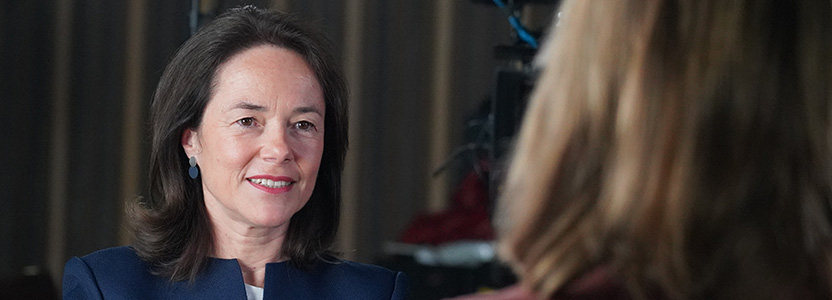
The role of science in overturning one of Australia’s biggest miscarriages of justice has featured in a national TV documentary broadcast to more than half a million Australians.
The exclusive Channel Seven Spotlight program featured the breakthrough research of Academy Fellow Professor Carola Vinuesa FAA FRS, who is now based at the Francis Crick Institute in the United Kingdom.
Her discoveries with 26 co-authors, published in leading international medical journal Europace in 2021, led to the establishment of a second Inquiry into the convictions of Ms Kathleen Folbigg.
That Inquiry found reasonable doubt regarding the convictions, which saw Ms Folbigg unconditionally pardoned in June this year.
The Spotlight program was Ms Folbigg’s first interview since her release from jail. It detailed her visit to the Shine Dome and the ANU’s John Curtin School of Medical Research in Canberra, where Ms Folbigg met some of the scientists behind the research.
The Spotlight program also published additional interviews online with former Academy President, Professor John Shine and current Academy Chief Executive, Anna-Maria Arabia.
The interviews delved into the science and explored why the Academy backed the petition that called for Ms Folbigg’s pardon.
In his interview with guest host Natalie Barr, Professor Shine said Professor Vinuesa’s work was masterful and thorough.
“She took advantage of the latest sequencing technologies, taking DNA from the deceased children, looking for unknown mutations that might cause cardiac death,” Professor Shine said.
Those mutations were explored in detail at the second Inquiry.
In her interview with Spotlight, Ms Arabia said the case illustrated how science and the justice system can engage more effectively.
“We know this case will lead to reform in the justice system,” Ms Arabia said.
This case has implications for law reform in the following areas:
1. The adoption of a reliability standard as applied to the admissibility of expert opinion
2. Mechanisms for the selection of experts by independent and reliable sources, particularly where complex scientific material is required to inform decision-making
3. Establishment of post appeals review mechanisms, such as a Criminal Cases Review Commission.
— Australian Academy of Science (@Science_Academy) October 16, 2023
Fellow’s ‘extraordinary journey’ leads to PM’s Science Prize
Academy Fellow Professor Michelle Simmons AO FAA FTSE FRS has been awarded the 2023 Prime Minister’s Prize for Science for her world-leading research in quantum electronics.
Academy Fellow Professor Michelle Simmons AO FAA FTSE FRS has been awarded the 2023 Prime Minister’s Prize for Science for her world-leading research in quantum electronics.
The award recognises her influential contribution to technology that promises to transform many industries—from cryptography to drug design.
Professor Simmons’ efforts have opened a path into the quantum world, bringing us closer to powerful computers that can solve complex problems in minutes, which would have otherwise taken thousands of years.
"Twenty years ago, the ability to manipulate individual atoms and put them where we want in a device architecture was unimaginable,” Professor Simmons said.
“We can now not only put atoms in place but can connect complete circuitry with atomic precision—a capability that was developed entirely in Australia.”
In the early 2000s, she pioneered the field of atomic electronics with research showing that quantum computers might be possible. She and her team have since made several breakthroughs, creating the world’s first single atom transistor in 2012 and the first quantum processor in silicon in 2022.
“Taken as a whole, this has made for an extraordinary journey, and it is the journey that I am proud of more than any specific result,” Professor Simmons said.
The Scientia Professor at the University of New South Wales is just as proud of her former students and postdocs, and her current team at Silicon Quantum Computing, as she is of any scientific breakthroughs.
“To develop a pioneering technology takes pioneering people,” she said.
“My team mean the world to me.”
A “strong believer in diversity of thought”, Professor Simmons is passionate about encouraging young people—especially young women and girls—to pursue careers in physics and computing.
“I hope that I can inspire others to take on technologically challenging problems as I honestly believe this is where some of the greatest rewards lie.
“Being a scientist requires enormous perseverance and hard work, but it’s a team game and it is exciting and meaningful work.
“That means, most importantly, it can be a heck of a lot of fun.”
Professor Simmons’ trailblazing research has earned many accolades, including Australian of the Year in 2018 and Officer of Order of Australia in 2019. She was elected to the Academy in 2006—at the time, one of the youngest researchers elected to the Fellowship.
Academy Fellows have featured in the Prime Minister’s Science Prizes each year since the awards’ inception in 2000.
Recipients of the Prime Minister’s Prizes for Science will be celebrated at a breakfast at the Shine Dome on Tuesday, 17 October.
For the complete list of 2023 PM Prize winners, visit the Department of Industry, Science and Resources website.
Three emerging innovators to represent Australia at Falling Walls Lab in Germany
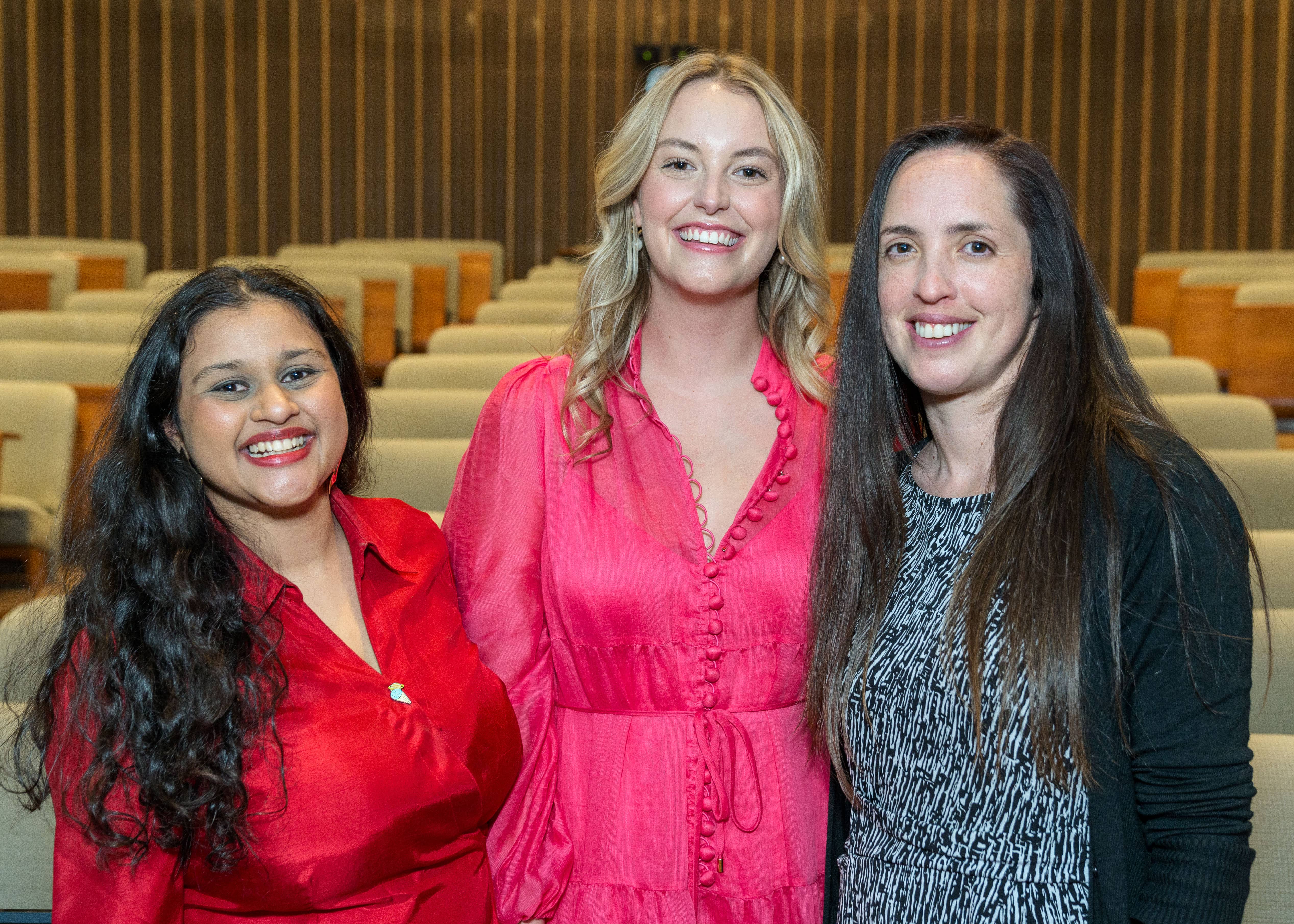
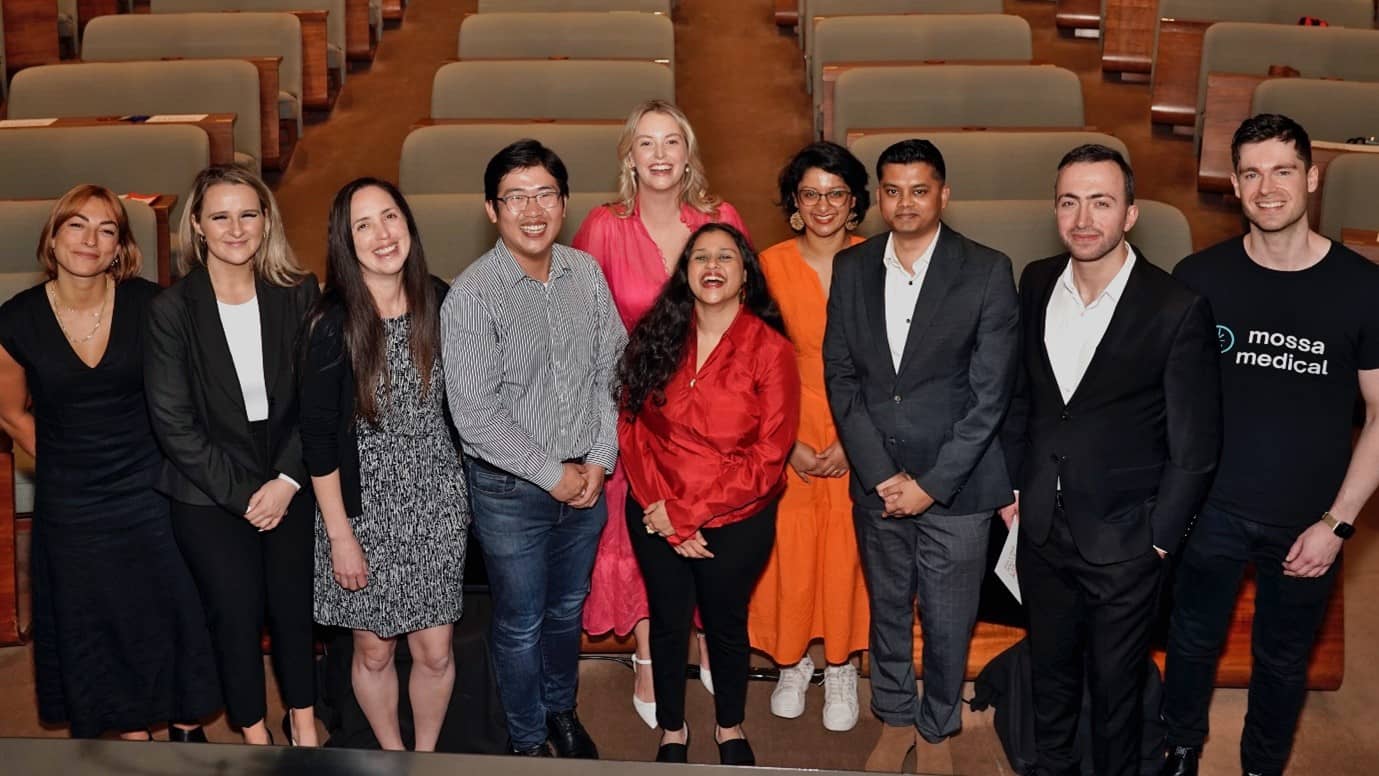
Dr Emma-Anne Karlsen is the winner of the eighth Falling Walls Lab Australia event, hosted by the Australian Academy of Science on 18 September.
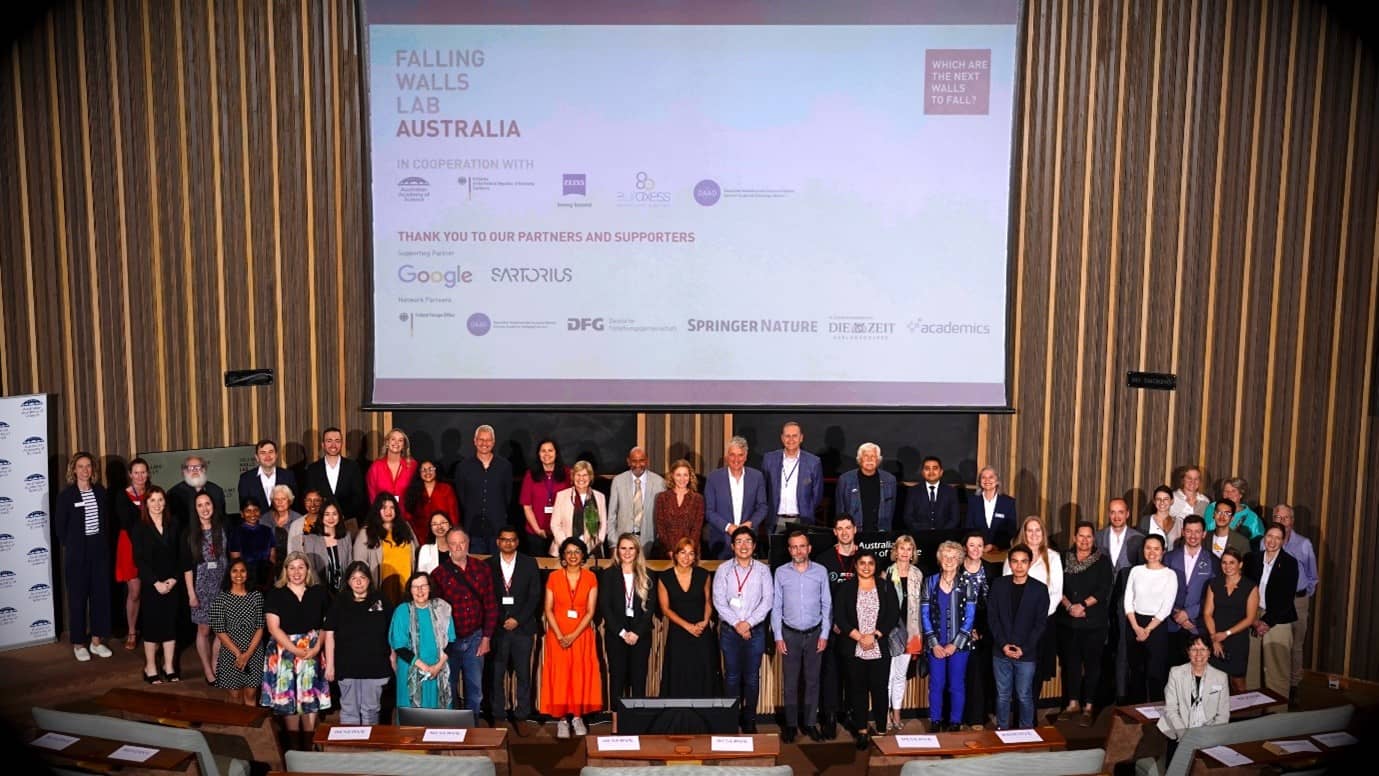
Dr Emma-Anne Karlsen is the winner of the eighth Falling Walls Lab Australia event, hosted by the Australian Academy of Science on 18 September.
Emma-Anne spoke about ‘breaking the wall’ of cancer therapy. As a PhD candidate at the University of Queensland’s Frazer Institute, she is investigating novel breast cancer biomarkers and therapeutic strategies. Also a General Surgery Registrar, Emma-Anne hopes to build a career as a surgeon-scientist to improve global health outcomes for women with breast cancer.
Second place was awarded to Alex Griffin, a postdoctoral research fellow at the Cerebral Palsy Alliance and The University of Sydney. Alex is a physiotherapist, early-career researcher and consumer of paediatric disability services. Her mission is to advance the development and application of new treatments for paediatric disability, in partnership with people with lived experience.
University of Queensland PhD candidate Hemanshi Galaiya came in third place. As a champion for youth and women empowerment, Hemanshi spoke about ‘breaking the wall’ of inequitable education by increasing the quality of STEM education—particularly in her home country, Kenya.
The three winners will travel to Berlin in November to represent Australia at the Falling Walls Lab Finale. They will present their 3-minute pitch alongside 100 other finalists selected from more than 79 Labs across the globe.
The top 3 were chosen from 10 emerging innovators, who gathered at the Shine Dome in Canberra to present their ideas, research and initiatives on the theme ‘Which walls will fall next?’. The 10 finalists were selected from earlier heats in Adelaide, Sydney and Brisbane.
Each participant had just 3 minutes to make their pitch in front of a jury of eminent academics and leaders from government, business and finance, chaired by President of the Australian Academy of Science, Professor Chennupati Jagadish AC PresAA FREng FTSE.
The Falling Walls Science Summit is an annual conference that fosters discussion on research and innovation and promotes the latest scientific findings among a broad audience from all parts of society. The Lab is an international forum for the next generation of outstanding innovators and creative thinkers.
Falling Walls Lab Australia is organised by the Australian Academy of Science in association with the Embassy of the Federal Republic of Germany in Australia, and with the support of event partners ZEISS, EURAXESS Australia and New Zealand, and the DAAD German Academic Exchange Service.
Fourteen 2023 France and Europe Mobility Grants awarded for outstanding research
The Academy is pleased to announce the recipients of the France and Europe Mobility Grants for 2023.
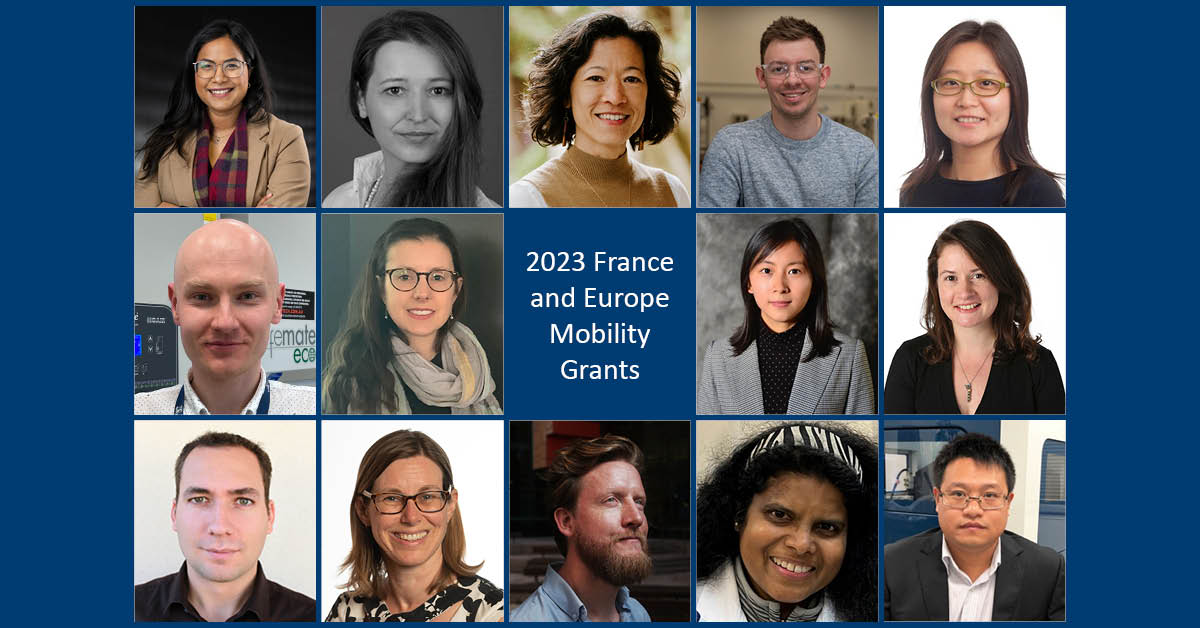
The Academy is pleased to announce the recipients of the France and Europe Mobility Grants for 2023.
A total of just under $100,000 has been awarded to 14 Australian early- and mid-career researchers (EMCRs) to collaborate with leading researchers at major science and technology organisations across Europe.
The grants, valued up to $7,500 each, are made possible by the generous support of the Rod Rickards Fellowships and the Bede Morris Memorial Fund.
Recipients’ research covers diverse topics, from how to manage a honeybee pest to developing next-generation materials.
Ten EMCRs have been awarded a 2023 France and Europe EMCR Mobility Grant, funded by the Rod Rickards Fellowships. Among the recipients is Dr Karen Alt from Monash University. Dr Alt’s research focuses on the development of a molecular imaging probe for early detection of various diseases, which could accelerate the development of novel drugs for their treatment.
“My visit under the support of the Rod Rickards Fellowship to two world-class laboratories and the World Molecular Imaging Conference will give me the opportunity to present my work and discuss my findings with leading researchers in the field,” Dr Alt said.
“This will provide invaluable feedback and open new research opportunities and collaborations, which will directly influence the future direction of my research efforts.”
The EMCRs who have received grants funded by the Rod Rickards Fellowships are:
- Dr Karen Alt, Monash University – Theranostics: Therapy and diagnostic in a single agent
- Dr Guanyu Deng, University of Queensland – Study on fatigue and wear service performances and associated failure mechanisms of an additive manufactured novel cost-effective high entropy alloy
- Dr Shashi Goonetilleke, University of Adelaide – SweetFlow: Study of the genetic architecture of phenology-related traits and heat/chill requirements in sweet cherry
- Dr Sara Kyne, University of New South Wales – Iron nanoparticles for sustainable synthetic transformations
- Dr Yang Liu, James Cook University – Field-deployable chemical sensors for water quality monitoring in the Great Barrier Reef
- Dr Chandnee Ramkissoon, University of Adelaide – Exploring the toxicity of amorphous silica in engineered stone dust: Implications for lung disease prevention
- Dr Emily Remnant, University of Sydney – Building an integrated Varroa management strategy for Australia's honeybee industry
- Dr Neil Robinson, University of Western Australia – Spins on the move: Magnetic resonance hyperpolarisation for next-generation materials development
- Dr David Skerrett-Byrne, University of Newcastle – Paternal stress signatures that shape offspring health
- Dr Jing Zhang, University of South Australia – MOF-polymer hybrid materials for functional 3D printing under visible light
The following EMCRs have been awarded a 2023 France and Europe EMCR Mobility Grant, supported by the Bede Morris Memorial Fund.
- Dr Maciej Daniszewski, University of Melbourne – Transplantation of organoid-derived retinal cells for vision restoration in animal models and assessment of cell function and integration
- Associate Professor Jenny Fisher, University of Wollongong – A view from the south: Exploring Southern Ocean mercury cycling and what it means for the UN Minamata Convention
- Professor Kim-Anh Lê Cao, University of Melbourne – New statistical methods to integrate microbiome studies
- Dr Ludovic Rapp, Australian National University – Restructuring matter with laser pulses at ultra-relativistic intensity: Search for new silicon phases
Professor Kim-Anh Lê Cao’s research focuses on the development of statistical methods for the analysis of microbiome data. Her expertise in multivariate statistics and her deep understanding of molecular biology put her at the forefront of cutting-edge biological research.
“Receiving the Bede Morris Memorial Fund is a great honour and a recognition of the importance of developing analytical methods for large biological data,” Professor Lê Cao said.
Professor Lê Cao is also an Academy honorific award recipient, receiving the Moran Medal in 2019.
Associate Professor Fisher also received the Academy’s Anton Hales Medal in 2022.
About the Rod Rickards Fellowships
The Rod Rickards Fellowships were established in 2009 by the family of Professor Rod Rickards FAA in honour of the important contributions he made to Australian science through outstanding achievements in chemistry and biology. Since 2010, Fellowships have been awarded to 40 outstanding Australian EMCRs to travel to Europe and undertake collaborative research projects in the fields of chemistry or biology at cutting-edge institutes.
About the Bede Morris Memorial Fund
The Bede Morris Memorial Fund was established to honour Professor Bede Morris FAA, one of Australia’s most distinguished medical scientists. The fund has supported Australian researchers to travel and undertake collaborative projects with researchers in France since the early 1990s. In recent years, the fund has focused support on Australian EMCRs, contributing to travel costs to France for research in any field of the natural sciences.
Undermining science undermines us all
Australian science enjoys the overwhelming confidence of the public, but this is at risk from those who seek to twist the truth to suit their agenda.
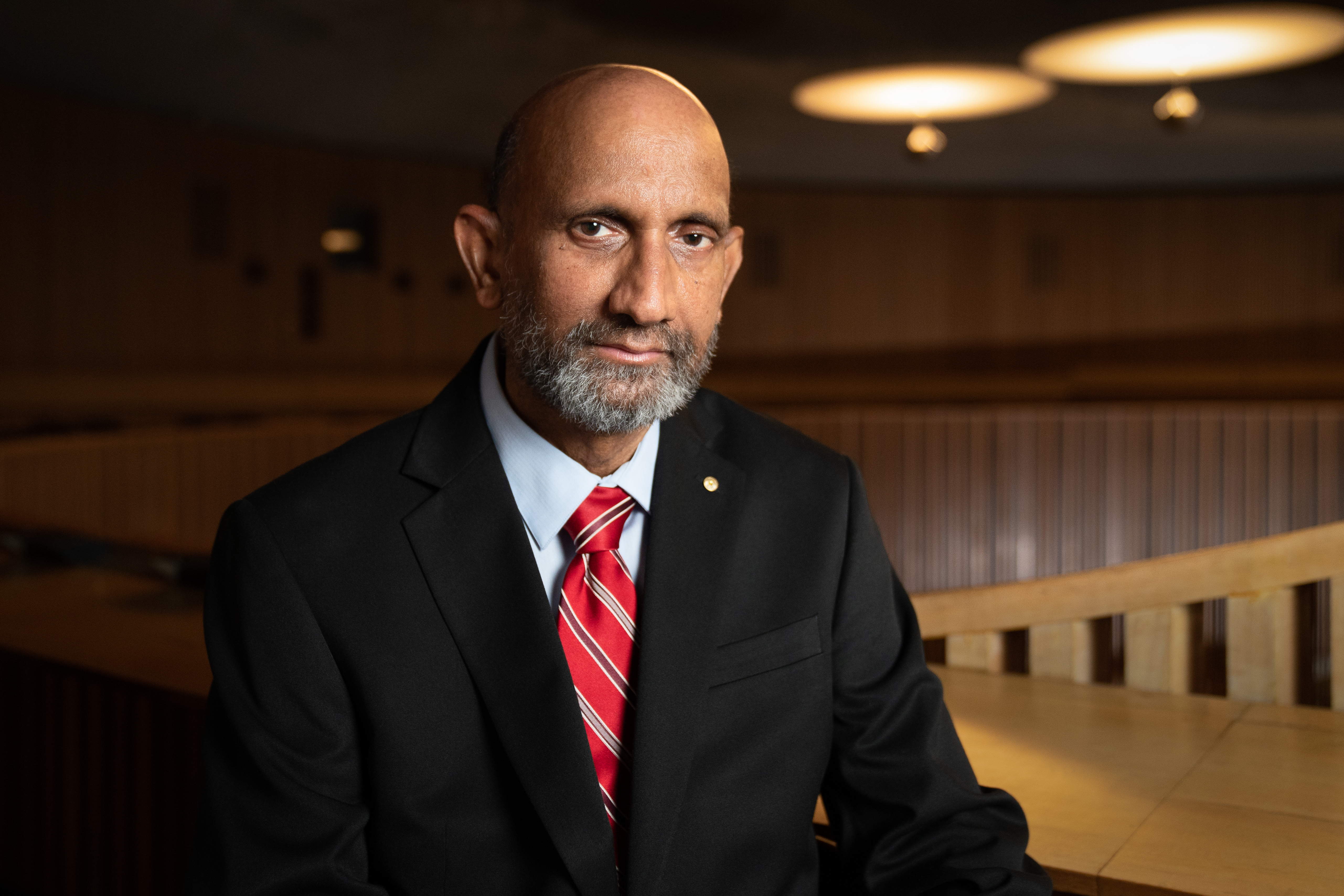
Academy President Professor Chennupati Jagadish.
Australian science enjoys the overwhelming confidence of the public, but this is at risk from those who seek to twist the truth to suit their agenda.
A 3M/Ipsos poll of more than 1,000 Australians published recently found 92% say that science can help us solve the problems of tomorrow and 88% see the connection between science and its role in improving their lives.
The Australian Academy of Science thanks the Australian public for their confidence and trust in science.
It is important for the Academy—whose fellowship is a rigorously selected group from amongst Australia’s top scientists—and all our Australian scientists, to know that the public has such confidence in what they do.
The Academy also acknowledges that confidence in science is earned and cannot be taken for granted.
Building science-based knowledge is one of the great achievements of humankind. What we know has evolved over millennia with each generation of scientists building on what has gone before.
Perhaps the 88% of Australians surveyed who see positive benefits to their lives can imagine what life would be like without science and its application—a life without vaccines, no sanitation, no refrigeration, no smart phones, no comfortable dentistry, and no weather forecasting.
In a world in which everybody can be a (public) sceptic but not everybody can be an expert, it is more important than ever that science is explained openly, in language that is accessible, and that the public can readily find sources of information that can be trusted—dispassionate, rational, expert.
It is easy to sow doubt—to take sentences from here and there in email streams and compare early thinking with later conclusions—and presume any change is due to some unspecified pressure rather than a change in the weight or direction of evidence, or even argument.
Such tactics are not new. We have witnessed the seeding and dissemination of uncertainty throughout the years—to postpone the regulation of tobacco consumption, to continue the use of lead in petrol, to obstruct vaccination during the ongoing pandemic, or to prevent action on climate change to list a few.
The current level of discourse around science, in Australia and the world, in relation to the origin of SARS-CoV-2 is another contemporary example. It reflects a worrying pattern of deliberate undermining of public trust in science at a time when policymakers need to inform their decisions with rigorously gathered evidence, rather than in response to conspiracy and fearmongering.
As a society we must hold scientists to the highest of standards.
Scientists and scientific organisations have a responsibility to conduct and communicate their research with integrity, respect, fairness, transparency, and trustworthiness and to consider the implications of new knowledge and its applications for society. Integrity and ethics in research are critical for maintaining excellence and public trust in science.
What every member of the public must be able to expect from our scientists is the application of a rigorous scientific process of inquiry so that the best available knowledge can inform our decisions. This means fostering better public understanding of how science works and how it allows us to build knowledge over time.
Science is a system of knowledge: knowledge about the physical and natural world, knowledge gained through observation and experimentation, and knowledge organised systematically. It is knowledge gained and repeatedly tested using the scientific method, commonly involving a hypothesis that can be tested and changed as evidence builds, or a question that can be answered.
Science-based knowledge is subject to discussion, debate, further examination, and it is reviewed time and time again, especially as new information becomes available.
This rigorous and documented process of testing, contesting, and reviewing can give us all confidence in the state of knowledge at a particular time.
This means that conclusions we draw can, will and must change as evidence builds; as will public policy responses.
That is why practising and upholding scientific principles and rigorous process is an important responsibility of all scientists.
The Australian Academy of Science’s support for science, underpinned by rigorous processes, is unequivocal.
Science relies on high-quality journalism to communicate discoveries that impacts our lives. And that is why we must be concerned when journalism and other sources seek to mislead, distort and obfuscate scientific evidence and in doing so undermine public trust in science.
It is a dangerous trend and must be called out. As a national academy whose remit is to uphold standards of excellence in science, we will call out behaviour that serves no good purpose and that harms the essential underpinnings of a stable, safe and civil society that relies on evidence-informed decision making.
It is up to all those who value the importance of knowledge as a public good to take a stand in the face of those who would assault it. Indeed, the public is aware: 93% of Australians surveyed believe positive outcomes can be achieved if people stand up for and defend science; 92% want business to take action to defend science.
We urge for a better comprehension of the scientific process, that not only serves us well in the every day, but is critical to assist us navigate global challenges and the increasingly complex geopolitical world we all live in.
Efforts to undermine science, undermine us all. And the survey of Australians shows they know that.
_____
Professor Chennupati Jagadish AC PresAA FREng FTSE
President
Australian Academy of Science
Young Australian scientists learn from Nobel Laureates at 72nd Lindau Meeting
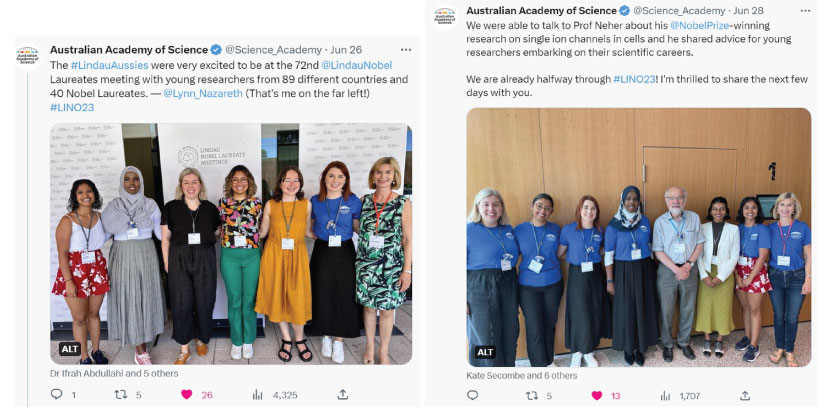
Seven of Australia's brightest young scientists attended the 72nd Lindau Nobel Laureate Meeting dedicated to physiology and medicine from 25 June to 1 July in Germany.
Seven of Australia's brightest young scientists attended the 72nd Lindau Nobel Laureate Meeting dedicated to physiology and medicine from 25 June to 1 July in Germany.
The Australian delegation was led by nutrition scientist and Academy Fellow Professor Jennie-Brand Miller AO.
Participation in the Lindau Nobel Laureate Meetings is proudly supported by the Science and Industry Endowment Fund (SIEF) and administered by the Australian Academy of Science.
This event is a highly prestigious annual gathering of Nobel Laureates and approximately 600 young scientists from around the world.
The meetings provided an opportunity for young Australian scientists to share their research, experiences and ideas, and gain inspiration from fellow emerging scientists and Nobel Laureates.
Through lectures, Agora talks, Laureate Lunches, Science Walks and open exchanges, the delegates learnt about both the professional and personal lives of the Laureates.
One of the delegates, Dr Kate Secombe from the University of Adelaide said, “Many of the Nobel Laureates were very generous with their time and their answers.
“I particularly enjoyed listening to the Open Exchanges between Young Scientists and Nobel Laureates Frances Arnold and Emmanuelle Charpentier.
“It was interesting to hear about how they have fit their careers into their life and how things have changed since winning a Nobel Prize. They were very candid about their decision making at critical points in their career and also the sacrifices they have made.”
Another delegate, Cottrell Tamessar from the University of Newcastle and the Hunter Medical Research Institute, described their most memorable experience at the meeting as, “Listening to Professor Shwetak N Patel’s lecture on ‘The emergence of mobile phones and wearables in health’.
“His talk was a fantastic implementation of AI in medical research and an inspiration for how researchers could be implementing cutting edge technology in STEM.
“I also learned vocabulary like ‘democratising healthcare,’ which is a notion I have been passionate about in my own research but now I have the common understanding/language to connect to the broader scientific landscape.”
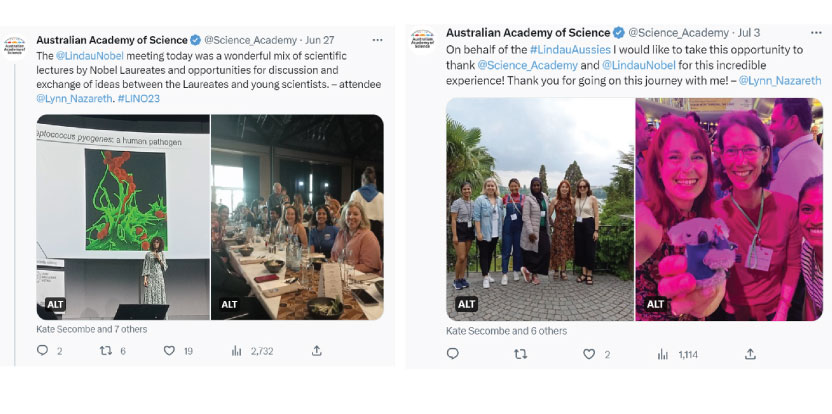
The Academy also organised a Research Innovation Tour in Berlin the week before the Lindau meeting.
The tour enabled the young scientists to visit a range of prestigious research institutes connected to their fields of studies, including the Charité University Berlin, the Humboldt University, the Max Planck Institute for Human Development and the German Centre for Rheumatic diseases (Rheumaforschungszentrum).
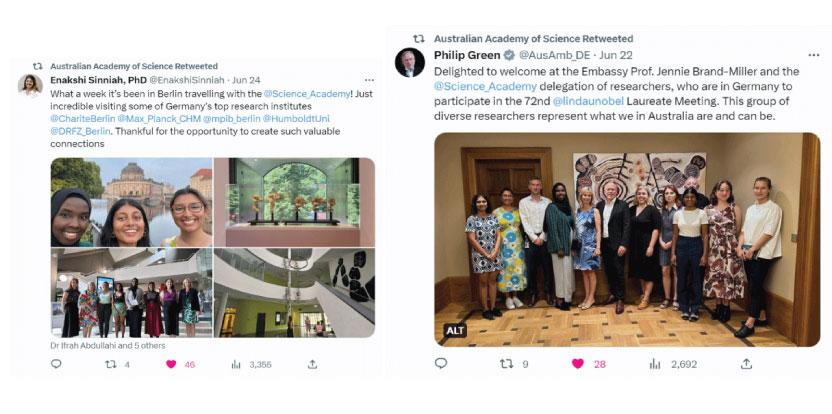
A highlight of their trip was meeting the Australian Ambassador, Phillip Green, at the Australian Embassy in Berlin and learning about the role of science in Australia and Germany’s bilateral relationship.
For our young scientists, this was an experience of a lifetime.
Rachel Visontay from the University of Sydney said, “I made such strong friendships with the Aussie group and loved exchanging experiences of being a young researcher in Australia.
“[I] got a great sense of the German research scene. Lindau was so intellectually stimulating, especially getting to meet brilliant young people from around the world!”
Next year’s 73rd Lindau Nobel Laureate Meeting, which is dedicated to the discipline of physics, will be held from 30 June – 5 July 2024.