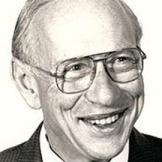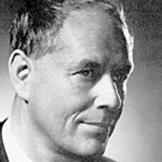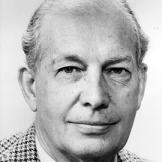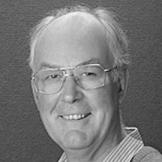

Each biographical memoir of deceased Fellows of the Academy is carefully researched, resulting in a unique biographical collection of celebrated lives and important achievements.

Noel Hush researched electron transfer in electrochemical changes, between metal ions, in covalent bond frameworks, in surface chemistry of gold, and in complex organic and bio-organic molecules.
Norman Alan Walker 1929–2013
Professor Alan Walker was a plant physiologist who developed pioneering electrophysiological methods to make major contributions to our understanding of how solutes are transported across plant cell membranes.
Oscar Werner Tiegs 1897–1956
Professor Oscar Tiegs FAA FRS was a zoologist who traced the ancestry of insects to myriapod origins and uncovered a novel muscle type powering the extraordinary speed of Dipteran wings.
Otto Frankel 1900-1998
Sir Otto Frankel was a geneticist by training, plant breeder by occupation, cytologist by inclination and genetic conservationist by acclaim. His career in science was unusual in that his most widely acclaimed work was done after his official retirement.
Paul Ivan Korner 1925–2012
Professor Paul Korner AO FAA was a cardiovascular physiologist who made major contributions to understanding the pathogenesis of hypertension and to improving the management of cardiovascular diseases.
Pehr Victor Edman 1916-1977
Pehr Victor Edman was born in Stockholm, Sweden, in April 1916 and died in Munich, FRG, in March 1977. He was born into a lawyer's family and received his schooling in Stockholm. In 1935 he began medical studies at the Karolinska Institute and graduated with his primary medical qualifications in 1938. He became interested in research and, following graduation, continued to work at the Karolinska Institute, largely in the laboratory of Professor Eric Jorpes.
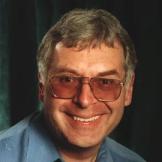
Peter Gavin Hall 1951–2016
Professor Peter Hall was a mathematician and statistician, one of the most influential and prolific theoretical statisticians in the history of the field.
Peter Orlebar Bishop 1917–2012
Professor Peter Bishop AO FAA FRS was a neurophysiologist who pioneered precise, quantitative methods for studying the mammalian visual system, uncovering neural mechanisms of binocular vision and stereopsis.
Peter William Gage 1937–2005
Peter William Gage (1937–2005) was recognised nationally and internationally as one of Australia’s leaders in membrane physiology, biophysics and neuroscience. His research on neurotransmission, muscle and the structure–function of ion channels was extraordinarily productive, with over 7,000 citations. A gifted speaker with a great enthusiasm for research and for the introduction of cutting-edge technology, Peter Gage influenced and encouraged a great many research students, postdoctoral fellows and senior colleagues in their scientific careers.
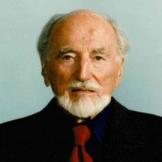
Phillip Garth Law 1912–2010
Dr Phillip Law AC CBE FAA FTSE was the defining figure of Australia's Antarctic program for many years, leading the Australian National Antarctic Research Expeditions (ANARE) 1947–66 and establishing Australia's permanent presence on the continent.