



Fellows' biographical memoirs
Each biographical memoir of deceased Fellows of the Academy is carefully researched, resulting in a unique biographical collection of celebrated lives and important achievements.


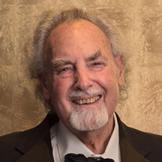
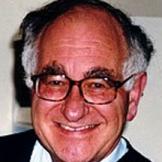
Geoffrey Ivan Opat 1935-2002
Geoffrey Ivan Opat, Professor of Experimental Physics at the University of Melbourne, died suddenly at home on 7 March 2002, at the age of 66. He was one of Australia’s most versatile and highly respected physicists, scholars and teachers and his death came as a profound shock to the staff of the University of Melbourne and to the physics community in Australia.
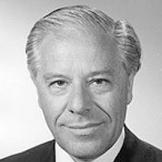
Geoffrey Malcolm Badger 1916–2002
Geoffrey Malcolm Badger was Professor of Organic Chemistry at the University of Adelaide from 1955 to 1964 and, after serving briefly as a member of the CSIRO Executive, Vice-Chancellor from 1967 to 1977. Elected to Fellowship of the Australian Academy of Science in 1960, he served on the Council and was President of the Academy from 1974 to 1978. He was President of the Royal Australian Chemical Institute in 1965 and Chairman of the Australian Science and Technology Council (ASTEC) from 1977 to 1982. He was admitted to the order of Australia (AO) in 1975 and knighted in 1979.
George William Kenneth (Ken) Cavill 1922–2017
Professor Ken Cavill's research lay at the interface of chemistry and biology, focused on insect venoms and compounds with attractant and repellent properties. He discovered entirely new classes of terpenoid compounds and was awarded the first ever personal chair by UNSW.
Graeme James Caughley 1937-1994
Graeme Caughley studied the interactions between large mammalian herbivores and the environments they occupy. The pattern of population growth that can be predicted theoretically from such a relationship is both complex and variable. He argued that the dynamics of mammalian herbivore populations are comprehensible only in terms of an interactive relationship between the herbivores and vegetation. He further argued that efficient management of such systems requires an understanding of the underlying mechanisms whereby the animals react to the plants and in turn the plants react dynamically to the effects of grazing.