



Rudi Lemberg Travelling Fellowship

Award highlights
- The purpose of the Fellowship is to enable either Australian or overseas scientists of standing to visit Australian scientific centres and to deliver lectures.
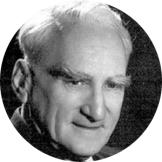
- The Fellowship commemorates the contributions of Professor M.R. Lemberg, FAA, FRS to science in Australia.
The Rudi Lemberg Travelling Fellowship commemorates the contributions of Professor M.R. Lemberg, FAA, FRS to science in Australia. The Fellowship is financed through the generous bequest of Mrs Hanna Lemberg and the Australian Society for Biochemistry and Molecular Biology. It is offered every two years.
The purpose of the Fellowship is to enable either Australian or overseas scientists of standing to visit Australian scientific centres and to deliver lectures. Up to $A15,000 (GST exclusive) is offered. The Lemberg Fellow may be drawn from any field of biology but special consideration will be given to those areas in which Professor Lemberg had an especial interest, namely biochemistry, conservation and the Australian flora.
The financial support of the Australian Society for Biochemistry and Molecular Biology is greatly appreciated.
Key dates
Below are the key dates for the nomination process. While we aim to keep to this schedule, some dates may change depending on circumstances.
GUIDELINES
The following guidelines provide important information about eligibility, submission requirements, and assessment processes. Please review them carefully before submitting an application.
The Lemberg Fellow may be drawn from any field of biology but special consideration will be given to those areas in which Professor Lemberg had an especial interest, namely biochemistry, conservation and the Australian flora.
As well as having outstanding scientific credentials, the successful candidate must also have a proven ability to inspire the next generation of scientists and reach the lay public outside of his/her field.
Nominators should be based in Australia, with appropriate connections to be able to support the candidate in organising their visit. It is the responsibility of the nominator to nominate hosts for the arrangement of both public and scientific lectures in the various centres to be visited.
The Fellowship is tenable for visits to and within Australia of not less than two weeks.
The Australian Academy of Science encourages nominations of female candidates and of candidates from a broad geographical distribution.
Fellowships are normally expected to have been undertaken within two years from the date of award. Awardees may apply for extensions due to extenuating circumstances or to apply for variations to remove or adapt to barriers encountered to their planned travel.
Up to $A15,000 is available to cover economy class airfares and assistance towards living expenses. The amount offered is subject to a budget and detailed itinerary.
Lectures are encouraged to be held at the Academy's Shine Dome and this is accordingly made available free of charge, although caretaking charges apply for weekends and on weekdays from 5 pm. Nominators are also encouraged to contact the secretariat to determine costing for anything in addition to week day venue hire.
The Academy does not, in general, have the resources to offer support to partners and children to accompany an awardee of a travelling fellowship or scholarship, but will on a case by case basis and subject to the availability of funds, consider support for a carer to accompany an infant if this allows the carer to accept the award.
Individuals cannot self-nominate for this award.
Nominations must include the following:
- The nominee's brief curriculum vitae. Maximum of three pages using size 12 font.
- Evidence of the nominee's scientific achievements and honours (max. 150 words).
- Evidence of the nominee's lecturing capabilities. Must be no more than 100 words. Provide a summary of lecturing capabilities, including the ability to communicate with scientific and lay-audiences.
- List of up to 5 of the most significant publications (of most relevance to this Fellowship), each including up to 50-words on why they are significant. Outline the candidate's specific role in the research and indicate percentage contribution.
- Aims and benefits of the nominee's tour and an outline of the planned itinerary.
- Itemised budget with brief justification for each item. Up to $A10,000 is available to cover travel and living expenses. Daily allowance rates followed for this scheme are listed in table 1 of the ATO Tax determination ruling. They can also be found through contacting the awards team at awards@science.org.au
- Contact details of two referees.
- It is the responsibility of the nominator to nominate and contact hosts for the arrangement of both public and scientific lectures in the various centres to be visited.
- This grant does not provide funds for bench fees, managerial, visa, insurance, infrastructure costs, or salaries.
- Applicants can only receive funding from the same research or travelling research award once in a three calendar year period.
- Applicants may apply for more than one award but can only receive one Academy travelling or research award per calendar year.
- Supporting institutes and awardees are required to ensure that any research they undertake that is funded by the Australian Academy of Science adheres to the Australian Code for the Responsible Conduct of Research. Severe breach of these codes may result in the withdrawal of current and refusal of future funding support. Research involving Indigenous Australians must comply with the Guidelines for Ethical Research in Australian Indigenous Studies.
A report is due after the completion of travel. The report should include the purpose and outcomes of the tour, along with details of venues, approximate attendee numbers (with specifics on EMCR attendee numbers), and expected vs. actual expenditure.
Nominations are to be completed through an online form found by clicking on the Nominate button on the top right of this web page when the round is open.
Previous awardees
- 2026—Katrina Dlugosch
- 2024—Peter Reich
- 2020—Robert Edwards
- 2018—Christina A Kellogg
- 2016—Lawrence J Berliner
- 2012—Peter Jones
- 2010—Johann Deisenhofer
- 2008—John F Allen
- 2006—Jan Vymazal
- 2004—Gerard C Dismukes
- 2002—Petra Fromme; Richard N Perham
- 2001—D.M.J.S Bowman
- 1999—Vern L Schramm
- 1997—Martin Brand
- 1996—Tim F Flannery
- 1993—Winslow R Briggs
- 1992—Edward M Kosower
- 1991—Robert Huber
- 1990—Jerker Porath
- 1989—Michael L Rosenzweig
- 1986—Hugo Scheer
- 1985—Michael G Rossmann
- 1984—Owen T G Jones
- 1983—Jack Heslop-Harrison
- 1982—Wolfgang K Joklik
- 1981—Emanuel Margoliash; Peter H. Raven
- 1980—Leonard E Mortenson; Gustav J V Nossal
- 1979—Britton Chance; John B. Gurdon; Gunther S Stent