


Research round-up: Return of the platypuses
Also in this edition: don’t judge a sperm by its looks, and rainbowfish at risk.
- 3 mins read

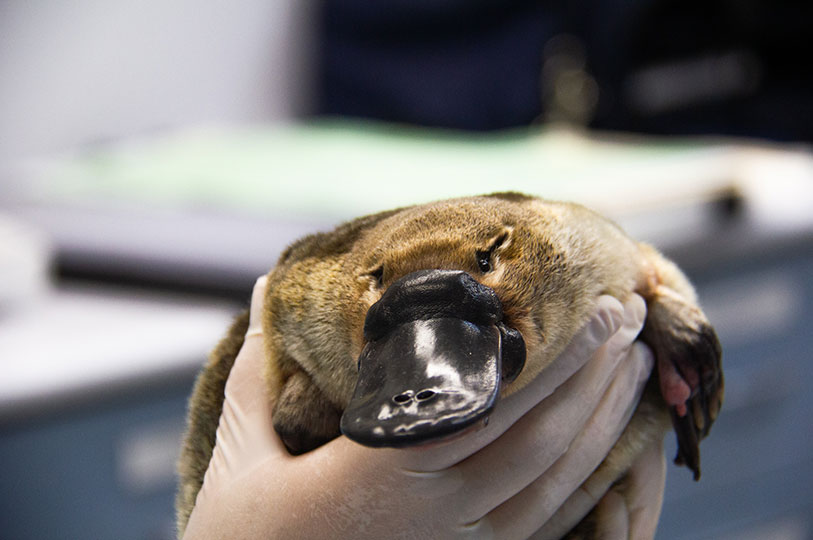
A platypus from Tidbinbilla Nature Reserve near Canberra receives care at Taronga Zoo in 2020. Image credit: ACT Government.
Rescued platypuses settle back in post-drought
During the Black Summer of 2019–20, severe drought dried out the ponds at Tidbinbilla Nature Reserve near Canberra, killing eight resident platypuses. The remaining seven were rescued and transported to Taronga Zoo in Sydney for care.
Five platypuses were eventually returned to the wild in Tidbinbilla – but researchers didn’t know how they would fare after several months in captivity.
Using tiny, implanted transmitters, they tracked the platypuses’ movements over 18 months. The platypuses quickly settled into old haunts, re-establishing home ranges and scoping out the spots richest in invertebrate snacks within just days of release.
"As we take a more active role in protecting platypuses, one critical piece of the puzzle is understanding how animals cope with rescue during an environmental crisis and return once conditions improve," said Associate Professor Gilad Bino, UNSW ecologist and lead author of the study.
"This research tells us that emergency rescue is a viable tool, meaning we are better prepared for when platypuses need our help in the future."
Read the original research in Marine & Freshwater Research.
Don’t judge a sperm by its looks
Standard fertility tests count sperm, check how well they swim and assess what they look like. But this captures only part of the male fertility picture, Australian researchers say.
Sperm also carry RNA, proteins and chemical tags on DNA that can shift with lifestyle and environmental factors, such as diet, stress, smoking and pollution. Since these are delivered to the egg alongside DNA itself, they too can affect an embryo’s development and ultimately health.
“This article suggests that looking beyond sperm count, movement, and appearance could help explain many cases of unexplained male infertility,” says Dr Natalie Trigg, a reproductive biologist from the University of Newcastle.
“A growing body of research … suggests that a father’s health before pregnancy may affect not only the chances of conception, but also pregnancy outcomes and the health of future children.”
Read the original research in Reproduction, Fertility and Development.
Rare wet tropics fish need a recovery plan, experts say
Five species of freshwater rainbowfish in North Queensland’s Wet Tropics are at high risk of extinction, say a team of 18 experts.
The Daintree rainbowfish, found only in small rainforest streams in the Daintree north of Cairns, faces 10 different threats.
The Bloomfield River cod, Mulgrave goby and several species of migratory cling gobies were also highly threatened, according to the assessment of 22 rare and endemic species.
“These freshwater fish species are unique,” lead author Dr Kaitlyn O’Mara said.
“Many are found nowhere else on Earth. If they are lost from the Wet Tropics, they become globally extinct.
“Freshwater fish are also important components of stream ecosystems and are indicators of ecosystem health. Their decline signals broader environmental deterioration.”
Key threats included invasive species, climate change, habitat and water quality degradation, and hybridisation.
The research team say that protecting waterways, controlling invasive species, replanting stream banks and captive breeding could help, and call for a coordinated recovery plan to reverse declines.
Read the original research in Pacific Conservation Biology.
The Academy is pleased to partner with CSIRO Publishing Journals to champion Australian science excellence. In this regular research round-up series, we feature recent discoveries reported in CSIRO Publishing Journals.