




Space weather

The Australian Academy of Technological Sciences and Engineering and the Australian Academy of Science call for a practical response to space weather events.
Such events have the potential to significantly and detrimentally affect our access to space-based (i.e. satellite) services, and in some instances may also severely degrade ground-based and airborne electronic services.
Australia is strongly reliant on access to space-based services for telecommunications, positioning and timing information and remote sensing imagery, among others.
These services contribute to Australia’s national security, environmental integrity and to our standard of living.

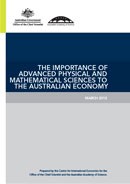
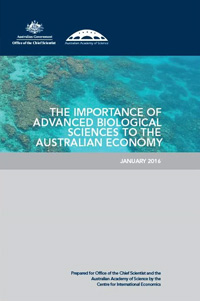
The importance of advanced physical, mathematical and biological sciences to the Australian economy
If advances in the physical, mathematical and biological sciences over the past 20 to 30 years had not occurred, and those advances had not been incorporated into a range of products and services, our economy would be between 20% and 30% smaller than it is today.
The economists found that the combined contribution of the advanced physical, mathematical and biological sciences, directly and indirectly:
- account for 26% of Australian economic activity, or around $330 billion per year
- provide 10% of total Australian employment (about 1.2 million jobs)
- generate 32% of our exports, or about $84 billion per year
Further, it is estimated that if advances in the biological sciences over the past 30 years had not occurred, and the new medical products and practices underpinned by those advances had not been created, the burden of disease in Australia would be 18% to 34% higher than it is today.
The Office of the Australian Chief Scientist and the Australian Academy of Science commissioned the Centre for International Economics to develop this rigorous estimate of the extent to which our economy, our health and our environment are based on global advances in specific fields over the past 20 to 30 years.
This report is complemented by reports that individually assess the contributions of advanced physical and mathematical sciences, and biological sciences.
Download the infographic
A national strategy for mathematical sciences in Australia
Most of the great innovations that have changed the way people live over the past two centuries were enabled by mathematics.
Without mathematics, there would be no cars, no planes, no mobile phone networks, no electric lights, and certainly no computers.
Yet there is evidence that Australian mathematics and mathematics education are in serious trouble.
This report from the National Committee for the Mathematical Sciences calls upon all Australian governments to act, and calls for a national strategy for mathematics and mathematics education.
National strategic plan for the geosciences: Geoscience – unearthing our future
This plan provides a framework to develop geoscience contributions to major national and global issues while ensuring continued research excellence and relevance.
It presents key challenges, strategic goals, and a vision for geoscience:
A vibrant Australian geoscience community highly valued for its contribution to the nation’s sustainability, wealth, and development of knowledge.
Download the background papers
October 2003
June 2002
Gender equity in science workshop findings
The Science in Australia Gender Equity (SAGE) Forum was hosted by the Australian Academy of Science with support from the Office of the Chief Scientist, to address the issue of gender imbalance in science.
A two-day workshop was held on 25–26 November 2014 to consider gender equity issues and identify appropriate solutions for Australia.
This report summarises the key issues raised by participants at the SAGE Forum workshop, and includes the recommendations made by the workshop to adopt an approach similar to the Athena SWAN Charter in Australia.
Energy for Australia in the 21st century: the central role of electricity
This report outlines the challenges posed by Australia's ageing energy infrastructure when responding to rapidly evolving technologies.
Focusing on three key drivers – affordability, security and sustainability – the report examines the science and technology that will drive and enable a transformation in Australia's electricity system over the coming decades.
Energy for Australia in the 21st century is the second in a series of ‘Future Science’ reports supported by the Defence Science and Technology Group.
Discovery machines: accelerators for science, technology, health and innovation
This report reveals the remarkable extent to which accelerators have enabled so many of the discoveries that shape our lives, industries and economy today, and how they continue to be a fundamental part of Australian and global science.
It provides an overview of accelerators and examines Australia’s position in the global arena of accelerator science.
This report looks to the future and the developments that lie over the horizon and gives a list of recommendations to help maintain and enhance Australia's position.
Foundations for the future: a long-term plan for Australian ecosystem science
A strong and sustainable Australian ecosystem science enterprise is vital for understanding and securing ecosystems in the face of current and future challenges.
This plan defines the vision and key directions for a national ecosystem science capability that will enable Australia to understand and effectively manage its ecosystems for decades to come.
The vision guiding the development of this plan is that in 20 years’ time, the status of Australian ecosystems and how they change will be widely reported and understood, and the prosperity and wellbeing they provide will be secure.
The report identifies six equal priority areas for action to achieve this vision.
Developed collaboratively through extensive national consultation across 2013–14, the plan was endorsed by the Academy and the National Committee for Ecology, Evolution and Conservation.
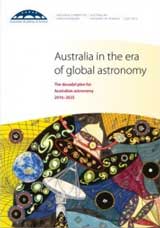
New horizons: A decadal plan for Australian astronomy 2006–2015
We live in a truly remarkable time. As our understanding of the Universe deepens, we are seeing connections emerge between many formerly disparate fields of research. Astronomy targets some of the biggest questions it is possible to ask.
Australian astronomy’s outstanding track record has been, and must continue to be, based on a suite of strategic investments in both national and international infrastructure, and in the people who turn such facilities into research outcomes.
This decadal plan for Australian astronomy, New horizons, presents the Australian astronomical community’s strategic vision for 2006–2015.
Download a high-quality print version
Critical skills for Australia’s future: the national strategic review of mathematical sciences research in Australia
Urgent action is needed to avert the 'fatal course' of mathematical sciences in Australia, this strategic review concludes. It makes four key findings:
- Mathematical research in Australia is becoming increasingly narrowly focused.
- The number of mathematics and statistics students and lecturers at Australian universities is critically low.
- Mathematicians and statisticians are not teaching all the university courses in mathematics and statistics. Many university courses such as engineering that should include a strong mathematics and statistics component, no longer do.
- Not enough trained mathematics teachers are entering the high school system. Australian students are abandoning higher-level mathematics in favour of elementary mathematics.
The review presents a way forward with five key recommendations:
- Significantly increase the number of university graduates with appropriate mathematical and statistical training.
- Broaden the mathematical sciences research base.
- Identify, anticipate and meet industry needs for a pool or tertiary-trained expert mathematicians and statisticians.
- Ensure that all mathematics teachers in Australian schools have appropriate training in the disciplines of mathematics and statistics to the highest international standards.
- Encourage greater numbers of high school students to study intermediate and advanced mathematics.
This review took place under the auspices of the National Committee for the Mathematical Sciences with financial support from the Australian Research Council, the Australian Mathematical Society, Inc., the Australian Mathematical Sciences Institute, and the Statistical Society of Australia, Inc.
Download key findings and recommendations
More information on the review
This University of Melbourne webpage hosts information related to the review including the terms of reference, submissions and other relevant reviews.