
Sleep, sensors and science: 2025 Australia-Scotland Fund recipients announced

The Australian Academy of Science is pleased to announce the recipients of the inaugural round of the Australia-Scotland Fund.
Image Description
Sleep, sensors and science: 2025 Australia-Scotland Fund recipients announced

Australian researchers Associate Professor Matthew Luskin (left) and Associate Professor John Lesku are being supported by the Australia-Scotland Fund to work with their Scottish counterparts.

The Australian Academy of Science is pleased to announce the recipients of the inaugural round of the Australia-Scotland Fund.

Awardees are provided with a grant of up to $9,500 from the Academy, with the funding to support joint projects, knowledge sharing, and research visits between Scotland and Australia for a period of four to six weeks.

The initiative facilitates access to unique infrastructure and knowledge for Australian and Scottish early- and mid-career researchers, supporting the creation of ongoing collaborative research relationships between the two countries.

The inaugural Australian awardees are Associate Professor John Lesku from La Trobe University, and Associate Professor Matthew Luskin from the University of Queensland.

Ecotourism effects on wildlife at night

Associate Professor Lesku has received the award for his project, ‘Integrating conservation biology with sleep physiology to address whether ecotourism in the Great Barrier Reef keeps wildlife up at night’.

His research explores the impact of artificial light at night (ALAN) on the sleep of wild birds; a growing concern as human development blurs the natural boundaries of day and night. Focusing on white-capped noddies nesting near a resort and research station on Heron Island, Australia, his team aims to determine if proximity to human-made lights leads to sleep loss.

Associate Professor Lesku will be collaborating with Associate Professor Davide Dominoni, from the University of Glasgow. Associate Professor Dominoni is a highly established urban ecologist and animal physiologist who researches the influences of population on the physiology and behaviour of urban animals.

Instead of invasive methods, the two researchers will measure oxalic acid levels in the birds’ blood, a novel biomarker for sleep deprivation.

When asked what it meant to be awarded this grant, Associate Professor Lesku said that until now, most of their work has been done on laboratory-housed animals or in outdoor pens.

“While useful, this paints an incomplete picture of how light pollution might influence sleep, as captive animals are forced to sleep near light at night.

“This grant will allow us to study the effect of light pollution on birds in the wild, something rarely done. In this way, we can see whether birds nesting near a tropical resort, with augmented night-time light levels, have disrupted sleep relative to birds sleeping in nests farther from artificial light at night.”

Autonomous biodiversity sensor networks

Associate Professor Luskin was awarded for his project, ‘Developing a pipeline for autonomous biodiversity sensor networks to go from field sample to cloud to AI to data to analytics to decisions’.

His research aims to develop a fully automated, end-to-end data workflow by integrating cutting-edge environmental data collection technologies, ecological AI, and advanced statistical ecology. This initiative seeks to overcome the challenges of processing vast amounts of data from autonomous wildlife sensors, ultimately transforming how both Australia and Scotland monitor wildlife, understand interspecies interactions, and make informed decisions to address threats from invasive species and environmental change.

Associate Professor Luskin will be hosting Associate Professor Chris Sutherland, an expert in ecological statistics and population dynamics from the University of St Andrews.

“Collaboration is the lifeblood of science. International collaborations for Australian scientists can be logistically challenging given the time change and travel, and this is especially true for collaborations with Europe.

“We have acknowledged our complementary skills for years but had not been able to effectively collaborate due to the logistical challenges. We are delighted to now have an extended research trip made possible by the Australia-Scotland Fund,” said Associate Professor Luskin.

More information about the Australia-Scotland Fund

More information on awards and opportunities at the Academy

The Academy’s commitment to the journey of reconciliation

NAIDOC Week provides an opportunity for the Academy to reflect on its reconciliation journey so far. This follows the launch last year of the Academy’s Innovate Reconciliation Action Plan.
Image Description
The Academy’s commitment to the journey of reconciliation
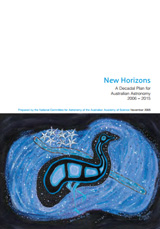
The cover artwork for our Innovate Reconciliation Action Plan was created by Richard Allan, Director, Traditional Core. See page 3 of the plan for the story of the artwork.

NAIDOC Week provides an opportunity for the Academy to reflect on its reconciliation journey so far. This follows the launch last year of the Academy’s Innovate Reconciliation Action Plan.

This year’s NAIDOC Week theme is ‘The Next Generation: Strength, Vision & Legacy’.

In celebration of this theme the Academy recently welcomed four inspiring young Indigenous researchers and community advocates for an evening of dialogue and connection – hearing their perspectives on meaningful reconciliation through research, respect and relationship.

The event featured rich and thought-provoking discussion with Dr Katrina Wruck, Associate Professor Shannon Kilmartin-Lynch and Dr Mitchell Gibbs, guided by Tiahni Adamson.

Their discussion delved into how the science system can better respect and value Traditional Knowledges – highlighting the vital role these knowledges play in shaping a stronger, more innovative, and sustainable future for our nation and world.

The talk is available to watch on the Academy’s event page.

Recognising excellent research

Earlier this year Associate Professor Shannon Kilmartin-Lynch and Dr Mitchell Gibbs received the Academy’s Aboriginal and Torres Strait Islander Scientist Award for their exceptional interdisciplinary and sociocultural research in the physical and biological sciences.

Their work exemplifies the powerful intersection of culture, science, and community – paving the way for a more inclusive and enriched scientific landscape.

Dr Gibbs is a geoscientist drawing on Traditional practices to restore local marine ecosystem.

He emphasises that genuine inclusion of Indigenous knowledges in research begins with working with the community that lives there.

“You need to be able to go to those communities to ask: ‘what do you know?’ and ‘how can we learn from you?’”.

Learn more about their research in the video below.

Moving forward together

The Tri-Academy Partnership inaugural summit was held in November 2024, hosted by the Royal Society of Canada in collaboration with the Australian Academy of Science and the Royal Society of New Zealand Te Apārangi.

The summit brought together Indigenous scholars and academics from Australia, Aotearoa New Zealand and Canada – alongside non-Indigenous allies and stakeholders – for powerful dialogue centred on cultural heritage in an era of reconciliation.

The event provided valuable opportunities for deeper understanding, knowledge sharing and connections across the three countries.

Dr Jordan Pitt, former Chair of the Academy’s Early and Mid-career Researcher Forum, who attended the summit in Canada, reflected on the mutual benefits of collaborating with Aboriginal and Torres Strait Islander communities.

“For communities with genuine partnership and benefit sharing, engagement with academia and the learned academies could meaningfully uplift communities,” Dr Pitt said, in an article for the Conversation.

This was the initial gathering of Indigenous knowledge holders across the three countries, with the next meeting to be hosted later this year by the Royal Society of New Zealand Te Apārangi.

The third summit will be held in Australia in 2026 and will be hosted by the Australian Academy of Science.

A new plan for Australia to remain an astronomy world-leader

Australian scientists are on the verge of answering humanity’s biggest questions about our cosmic origins and whether we’re alone in the universe.
Image Description
Cover of 'Astronomy decadal plan 2026-2035' showing artwork by Noeleen Hamlett, Wajarri Yamaji

The plan provides the vision and priorities for Australian astronomy over the coming decade. Cover artwork: Seven Sisters, Noeleen Hamlett, Wajarri Yamaji

Australian scientists are on the verge of answering humanity’s biggest questions about our cosmic origins and whether we’re alone in the universe.

But for Australia to remain at the forefront of astronomy research and discovery, our nation’s astronomers need access to the next generation of world-leading mega telescopes, including the next generation 30m class telescopes, and 8m class telescope capabilities.

The Chair of the Australian Academy of Science’s National Committee for Astronomy, Professor Virginia Kilborn, said one way this could be achieved is through membership of the European Southern Observatory (ESO), an intergovernmental organisation of 16 member states.

The recommendation is included in the Academy’s new 10-year plan for astronomy being launched today in Adelaide at the annual meeting of Australia’s astronomers.

“Australia’s astronomy instrumentation program is thriving and engagement with industry is expanding with astronomy applications in diverse areas including medicine, defence, mining and more,” said Professor Kilborn, who is also a radio astronomer and the Chief Scientist at Swinburne University of Technology.

A new plan for Australia to remain an astronomy world-leader

Chair of the National Committee for Astronomy, Professor Virginia Kilborn, led the development of the comprehensive plan.

“These achievements are in part due to smart Australian investment in strategic international partnerships, including the ESO and the Square Kilometre Array Observatory (SKAO).

“Mega-telescopes of the coming decade are so large that they go beyond any single-nation effort. Within this interlinked research environment, Australia has a major role to play.”

The recommendation for Australia to become a full member of the ESO is among nine priorities in the plan. Other priorities in the plan include:

  • capitalising on Australia’s engagement with SKAO
  • building Australian capacity including strengthening access to high-performance computing, data and software
  • building connections with Aboriginal and Torres Strait Islander astronomy
  • promoting dark and radio-quiet skies in Australia.

Professor Kilborn said the plan also highlights how Australia’s astronomy workforce is delivering value for the nation, from making fundamental scientific discoveries to developing technology and data science capability and growing a high-tech workforce.

“Importantly, this decadal plan is the first time Australia’s astronomy community has focused on and incorporated Aboriginal and Torres Strait Islander astronomy.

“We hope this new plan inspires Australians, connects them to our collective endeavour to answer our deepest questions about the cosmos and empowers a new generation of STEM superstars.”

Read the Astronomy decadal plan 2026–2035

The Academy acknowledges the financial support provided by CSIRO, Australia’s national science agency, and the late Professor Michael Dopita AM FAA to develop this plan.

About the cover artwork

The artwork on the decadal plan’s cover is Seven Sisters (2024) by Noeleen Hamlett, Wajarri Yamaji. The artwork is part of the Cosmic Echoes: Shared Sky Indigenous Art Exhibition, which is an SKAO initiative, in collaboration with SARAO, CSIRO and the Wajarri Yamaji Aboriginal Corporation.

Are you a top US-based scientist wanting to relocate to Australia?

Image Description

The Australian Academy of Science is leading Australia’s efforts to attract top US scientific talent Down Under. The call for applications is now open.

Academy President Professor Chennupati Jagadish AC said the Academy was proud to be nationally coordinating the recruitment of leading US scientists and Australians returning home.

“There has been strong interest among US based scientists since the Academy announced the establishment of the Global Talent Attraction Program in April, the first of its kind in Australia,” Professor Jagadish said.

“We are now calling for formal applications from both Australian and non-Australian citizens based in the US whose work is internationally recognised as exceptional.”

The Academy’s candidate merit pool is institution- and discipline-agnostic, with an initial focus on candidates relocating from the United States.

The Academy has designed a comprehensive and competitive relocation package which includes research funding, access to Australian research infrastructure, family relocation support and visa acceleration.

Professor Jagadish said the Academy was looking for outstanding candidates who want to join a strong and stable research environment and make a valuable, lasting contribution to Australian research and innovation.

Applicants are expected to be of high calibre demonstrating scientific or technological excellence. They should demonstrate capacity to contribute to and elevate Australia’s global research reputation through placements in long-term, funded positions with an Australian research organisation.

Applicants must also have a strong track record in mentoring early- and mid-career researchers, and a commitment to fostering the next generation of scientific talent and creating inclusive, high-performing teams benefitting Australia and the world.

The closing date for Round 1 applications is 29 August 2025.

More information on candidate eligibility and the application process.

Academy strengthens biodiversity partnerships with China

Australian Academy of Science President Professor Chennupati Jagadish and Head of International Affairs Nancy Pritchard recently joined Academy Fellows and Australian experts in Beijing for high-level discussions on environmental collaboration and shared conservation priorities. The Australia-China Workshop on Environmental Protection and Biodiversity was organised by the Chinese Academy of Sciences and the Australian Academy of Science.
Image Description
Academy strengthens biodiversity partnerships with China

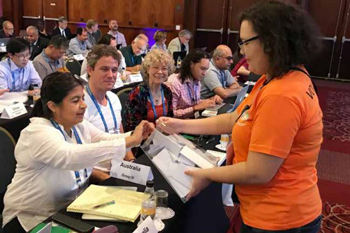
The visit included tours of research facilities, such as the Supercomputing Facility at the Chinese Academy of Sciences’ Institute of Atmospheric Physics.

Australian Academy of Science President Professor Chennupati Jagadish and Head of International Affairs Nancy Pritchard recently joined Academy Fellows and Australian experts in Beijing for high-level discussions on environmental collaboration and shared conservation priorities.

The Australia-China Workshop on Environmental Protection and Biodiversity was organised by the Chinese Academy of Sciences and the Australian Academy of Science.

The event brought together six leading Australian biodiversity and conservation experts, including distinguished researchers from Charles Darwin University, James Cook University, Griffith University, the University of Sydney, and the Australian National University.   

Academy Fellow Professor Alan Andersen from Charles Darwin University was Australian co-convenor and delegation leader.

Professor Linxiu Zhang, Director of the United Nations Environment Programme-International Ecosystems Management Partnership, served as Chinese co-convenor.

Academy strengthens biodiversity partnerships with China

The workshop showcased existing Chinese-Australian research links as well as highlighting opportunities for further collaborations.

The workshop program covered four key themes: terrestrial biodiversity and conservation; river basin management and freshwater biodiversity; marine ecosystem and coastal protection; and climate change and biodiversity conservation.

The workshop showcased existing links between Chinese and Australian researchers across institutions, including CSIRO and the Australian National University.

Discussions centred on researcher mobility, funding mechanisms and shared scientific priorities, with participants agreeing to pursue further collaboration to develop joint project proposals.

Professor Jagadish said China’s commitment to biodiversity research and conservation is clear.

“The scale of its conservation actions, particularly their long-term monitoring programs, have no parallel in Australia,” Professor Jagadish said.

“There is certainly potential for Australian Chinese research collaboration in areas including migratory shorebirds, plastic ingestion in birds, restoration efforts and research on the biosphere and hydrosphere.”

The visit also included tours of research facilities, such as the Earth System Numerical Simulation Facility, EarthLab and the Supercomputing Facility at the Chinese Academy of Sciences’ Institute of Atmospheric Physics.

Australian researcher internationally recognised for global supply chain research

A sustainability researcher nominated by the Australian Academy of Science has been awarded an international science prize worth A$1.5 million at a ceremony in Switzerland.
Image Description
Australian researcher internationally recognised for global supply chain research
(from left) Professor Jean-Claude Burgelman, Director, Frontiers Planet Prize; Associate Professor Arunima Malik, Frontiers Planet Prize 2025 International Champion, Australia; and Professor Dr Johan Rockström, Chair of the Jury 100, Frontiers Planet Prize and Director, Potsdam Institute of Climate Impact Research. Photo: Oliver O’Hanlon

A sustainability researcher nominated by the Australian Academy of Science has been awarded an international science prize worth A$1.5 million at a ceremony in Switzerland.

Associate Professor Arunima Malik of the University of Sydney has been named one of three international champions of the 2025 Frontiers Planet Prize, a prestigious award recognising research with the most promising potential to keep humanity within planetary boundaries.

Professor Zahra Kalantari from Sweden and Dr Zia Mehrabi from the USA also received the 2025 Frontiers Planet Prize.

The Frontiers Planet Prize, awarded by the not-for-profit Frontiers Research Foundation, is the world’s largest science prize in scientific solutions for planetary health, offering US$1 million to each of the three international champions.

The award ceremony took place on 17 June 2025 at the Villars Symposium in Villars-sur-Ollon, Switzerland.

Associate Professor Malik’s winning paper, ‘Polarising and equalising trends in international trade and Sustainable Development Goals’, was published in Nature Sustainability and underscores the significant global implications of trade on sustainability.

Associate Professor Malik’s interdisciplinary research employs big-data modelling to assess the social, economic and environmental impacts embedded in global supply chains.

Her work reveals that while international trade can drive economic growth, it also often shifts environmental and social burdens to lower-income nations, exacerbating global inequalities.

This research challenges traditional models by highlighting the uneven distribution of trade-related benefits and costs.

Interdisciplinary collaboration

“The year 2030 is fast approaching, but many targets for the United Nations Sustainable Development Goals remain out of reach. Our work on cross-border effects sheds light on multiple interconnected factors that influence the Goals,” Associate Professor Malik said of her research.

“This award is a testament to the successful interdisciplinary collaboration across multiple institutions and reflects the commitment of all authors in realising this important research. I thank Professor Manfred Lenzen, Dr Mengyu Li, Camille Mora, Dr Sarah Carter, Dr Stefan Giljum, Dr Stephan Lutter and Professor Jorge Gomez-Paredes for their valuable contributions.

“This award is a stepping stone for putting research on cross-border impacts on the global agenda, and to further strengthen collaborations with international organisations and networks working to drive progress towards sustainable development,” Associate Professor Malik said.

Australian researcher internationally recognised for global supply chain research
(from left) Professor Jean-Claude Burgelman, Director, Frontiers Planet Prize; Associate Professor Arunima Malik, Frontiers Planet Prize 2025 International Champion, Australia; Dr Kamila Markram, Co-founder and CEO, Frontiers, and Vice-President, Frontiers Research Foundation; Professor Dr Johan Rockström, Chair of the Jury 100, Frontiers Planet Prize and Director, Potsdam Institute of Climate Impact Research; Professor Zahra Kalantari, Frontiers Planet Prize 2025 International Champion, Sweden; and Dr Zia Mehrabi, Frontiers Planet Prize 2025 International Champion, USA. Photo: Oliver O’Hanlon
While international trade can drive economic growth, it also often shifts environmental and social burdens to lower-income nations, exacerbating global inequalities.

The Australian Academy of Science nominated Associate Professor Malik’s research for the Frontiers Prize. In April, she was named as Australia’s National Champion for the prize, alongside the national champions of 18 other countries.

President of the Australian Academy of Science Professor Chennupati Jagadish AC commended Associate Professor Malik’s achievement.

“This recognition underscores the global significance of Australian research in addressing critical sustainability challenges,” Professor Jagadish said.

“Professor Malik’s work exemplifies the impact of science in shaping a more equitable and sustainable future.”

As an international champion, Associate Professor Malik joins a distinguished network of researchers committed to advancing planetary health.

Find out more about the Frontiers Planet Prize and its initiatives.

2025 Lloyd Rees Lecture to explore future of quantum computing

Professor Lloyd Hollenberg has been awarded the 2025 Lloyd Rees Lecture by the Australian Academy of Science in the International Year of Quantum Science and Technology.
Image Description
2025 Lloyd Rees Lecture to explore future of quantum computing

Professor Lloyd Hollenberg will deliver the Lloyd Rees Lecture in November.

Professor Lloyd Hollenberg has been awarded the 2025 Lloyd Rees Lecture by the Australian Academy of Science in the International Year of Quantum Science and Technology.

A Fellow of the Academy, Professor Hollenberg leads the University of Melbourne’s IBM Quantum Hub – a large team of academics and graduate researchers testing notions of quantum computing on state-of-the-art hardware.

His work focuses on rigorously testing the capabilities of these emerging quantum systems to determine if, how, and when they can outperform classical computers for practical applications.

Beyond pushing the boundaries of the technology itself, Professor Hollenberg is also dedicated to democratising access to this complex field through the development of teaching tools designed to introduce quantum computing concepts to secondary school students.

“I am delighted and honoured to be awarded the opportunity to deliver the 2025 Lloyd Rees Lecture,” Professor Hollenberg said.

“In particular, I am looking forward to speaking on behalf of many outstanding students, postdocs and colleagues I have been fortunate to work with in quantum computing, including on applications in chemistry.”

In his talk, Professor Hollenberg will give an update on the state of the field of quantum computing, and the direction in which the field is heading.

The Lloyd Rees Lecture series honours the significant contributions of the late Dr. A.L.G. Rees FAA to science, industry and education by inviting distinguished chemical physics researchers to present their work.

I am looking forward to speaking on behalf of many outstanding students, postdocs and colleagues I have been fortunate to work with in quantum computing, including on applications in chemistry.

The Lloyd Rees Lecture will be held on 6 November 2025 at 2.30pm in the Wark Theatre at CSIRO in Clayton, Victoria.

Registrations will open on the Academy’s website closer to the event date.

Find out more about the Lloyd Rees Lecture.

Find out more about the International Year of Quantum Science and Technology.

New Sydney ferry honours astronomer Ruby Payne-Scott

A new Sydney ferry has been named in honour of Ruby Payne-Scott – an Australian pioneer in radio physics and astronomy and outspoken advocate for women’s rights.
Image Description
Two women standing on a wharf, next to a green and yellow catamaran ferry named 'Ruby Payne-Scott'

Academy Fellow Professor Nalini Joshi (left) with Fiona Hall, daughter of Ruby Payne-Scott and prominent Australian artist.

A new Sydney ferry has been named in honour of Ruby Payne-Scott – an Australian pioneer in radio physics and astronomy and outspoken advocate for women’s rights.

Academy Fellow Professor Nalini Joshi – a world-renown mathematician and recipient of the Academy’s own Ruby Payne-Scott Medal – represented the Academy at the launch ceremony, held on Sydney Harbour at Barangaroo Wharf.

Professor Joshi, who is the Payne-Scott Professor at the University of Sydney, drew on Ruby’s foundational contributions to radio astronomy and the systemic discrimination Ruby faced as Australia’s first female radio astronomer.

True passion

“Ruby was already attending the University of Sydney at the age of 16, and just a few years later, became only the third woman to graduate in physics from that institution,” Professor Joshi said in her speech.

“During the Second World War, Ruby was hired as a librarian by Amalgamated Wireless Australasia. She used this position to find her way into her true passion in research, turning her position into a full-time role as a physicist.

“In 1941, she joined the CSIR Division of Radiophysics, where she made her greatest scientific contributions. From 1944 to 1951, Ruby helped lay the very foundations of radio astronomy—a whole new way of seeing the universe.

“She helped uncover how the sun sends out bursts of radio energy and developed instruments that could ‘film’ solar explosions in real time.

“Her work enabled Australia to become a world leader in this field.”

More than a scientist

But, Professor Joshi said, Ruby was more than a scientist – she was an advocate for women’s rights at a time when doing so came at great personal cost.

“She questioned why women couldn't wear shorts while climbing radio towers, why they weren’t paid equally, why they were forced to resign upon marriage or pregnancy.

“Ruby didn’t win every battle. In fact, she was forced out of her role after expecting her second child, ending her scientific career far too early at the age of 39.

“But the stands she took helped shift the conversation – and eventually, the policies – that had kept women out of science.”

The ferry’s naming aims to encourage girls and women to consider a STEM career, and is a proud tribute to Ruby’s excellence and perseverance.

The seven new Parramatta River Class ferries, replacing the 30-year-old RiverCats, are named after notable Australians who have made significant contributions to science, culture and the community. Five of these vessels have so far entered service:

  • Associate Professor Isobel Bennett – celebrating Isobel Bennett, a pioneering marine biologist known for her work on Australian seashores
  • Frances Bodkin – named after Frances Bodkin, a respected D’harawal elder, botanist and educator
  • Professor Martin Green FAA – named after Professor Martin Green AM FAA FTSE FRS, a leading figure in solar energy research and development
  • Dr John Nutt – honouring John Nutt for his lead role in the construction of the Sydney Opera House
  • Ruby Payne-Scott – honouring one of Australia’s first female radio astronomers and a trailblazer for women in science.

Academy welcomes new Council members

Image Description
Academy welcomes new Council members

Professor Margaret Sheil (left) is the Academy’s new Secretary for Science Policy, and Professor Barbara Nowak the new Treasurer,

President of the Australian Academy of Science Professor Chennupati Jagadish AC has welcomed new office holders and members of the Academy’s Council.

Professor Margaret Sheil AO begins her role as the Academy’s Secretary for Science Policy, succeeding Professor Ian Chubb AC.

Professor Sheil has been Vice-Chancellor of QUT since February 2018 and is also Chair of the Queensland Museum Network and lead Vice-Chancellor for Research for Universities Australia. She was elected a Fellow of the Academy in 2021.

Professor Barbara Nowak begins her role as the Academy’s Treasurer, succeeding Professor Marilyn Anderson AO.

Professor Nowak is Professor Emeritus at the Institute for Marine and Antarctic Studies at the University of Tasmania and Honorary Professor at RMIT University. She was also elected a Fellow of the Academy in 2021.

“I would like to thank Ian and Marilyn for their significant contribution to the Council and continuing support of the Academy’s strategic objectives,” Professor Jagadish said.

“I also welcome the election of Professors Joanne Etheridge, Jennifer Martin AC and Jamie Rossjohn to the Academy’s Council, and thank outgoing members Professors Julian Gale, Colin Raston and David Bowtell.”

Find out more about the Academy’s Council members.

Bringing better science to the justice system: ABC interview with Academy Chief Executive Anna-Maria Arabia

TOPICS: Kathleen Folbigg and creating a more science-aware justice system. Broadcast on Tuesday 27 May 2025
Image Description
Bringing better science to the justice system: ABC interview with Academy Chief Executive Anna-Maria Arabia

Australian Academy of Science Chief Executive, Anna-Maria Arabia OAM

ABC Radio National Breakfast – Changing Australia: Anna-Maria Arabia and bringing better science to the justice system

TOPICS: Kathleen Folbigg and creating a more science-aware justice system. Broadcast on Tuesday 27 May 2025

Sally Sara: Well, at the end of 2023 New South Wales woman Kathleen Folbigg fronted a big media pack after spending 20 years in prison over the deaths of her four children – the New South Wales Court of Appeal quashed her conviction.

Kathleen Folbigg (recording): I am grateful that updated science and genetics has given me answers as to how my children died. However, even in 1999 we had legal answers to prove my innocence. They were ignored and dismissed.

Sally Sara: You might remember some of those news pictures. Well, standing beside Kathleen Folbigg that day was Anna-Maria Arabia, the head of the Australian Academy of Science. The Academy was eventually brought into the case as an independent scientific adviser. It said basic scientific principles were not adhered to from the start of Kathleen Folbigg’s trial, but today, Anna-Maria Arabia says the major reforms urgently needed to avoid other miscarriages of justice still have not been put in place. Anna-Maria Arabia, the Chief Executive of the Australian Academy of Science, is my guest today. Anna-Maria, welcome to Changing Australia. It’s lovely to be with you; it’s good to have you in the studio. In the time since Kathleen Folbigg was released, do you think that the courts have improved the way that they apply and interpret science to the cases that need it?

Anna-Maria Arabia: Sally, I think the short answer to that is no, unfortunately, there is a great need to bring about changes to our justice system so that it is more science sensitive. That certainly takes time. And one of the barriers we have, is that justice systems are usually in the remit of states and territories. And of course, there’s an overarching system federally, and therefore to bring about change right across Australia takes concerted effort across the nation in a jurisdictional sense. It also takes time, because science is evolving quickly. New knowledge is generated daily, and for system change to happen, they need to be able to recognise that and change accordingly, so that they’re able to accept science in a range of different circumstances. So I don't pretend it would happen overnight, but I would like to have seen the Kathleen Folbigg case trigger some review of things like the Evidence Act and other measures that we might have looked at to see how we can create a more science-sensitive system.

Sally Sara: And if we’re standing back and looking at the Kathleen Folbigg case in particular, was it that that science didn’t exist at the time, or that science existed but it wasn’t taken account of?

Anna-Maria Arabia: Yes, so the science that ultimately saw her inquiry come to life certainly didn’t exist at the time of her conviction, so the genetic mutations that Kathleen Folbigg and her daughters held could not have been known in 2003 when she was convicted. It did exist in 2019 at her first inquiry, but it was not well heard. The range of experts that were brought to bear at that inquiry were not necessarily the best experts in their field, and so those last three years, from 2019 to when she was released, really, the science was known then, but the system was not created or working in a way that enabled that science to be heard and to deliver justice for Kathleen and certainly others.

Sally Sara: Each profession and each institution has its own culture. It has its own language, reason for existing and priorities. What’s it like dealing with the legal system coming from a scientific perspective?

Anna-Maria Arabia: Sometimes it’s like two people from different planets trying to talk to each other, and that doesn't mean they don’t want to understand each other. I think there’s a couple of principles here. So in science communication, it is really important to be able to communicate science in a way that engages audiences, and in this case, it’s a legal system. But equally, we as scientists, we need to be really conscious of how we communicate to members of the public, to legislators, parliamentarians, policy makers – and each of those requires nuance and sophisticated communication. But each profession, the legal system and the science system, the professionals in those systems, bring their best to their professions. There’ s no doubt in my mind about that when you have emerging science, it’s unfair to think a judge or jury could be an amateur scientist or be able to get across that, so we need to find mechanisms to enable the communication of science across those two audiences. And equally, it’s really difficult for a scientist who is used to exploring the grey, putting certainty and uncertainty measures around the evidence that they generate, for them to be able to understand a system that’s looking for finality, that might be more black and white, where cross-examination asks for yes–no answers. Scientists don’t often do yes–no. They seek to explain the nuance and the grey. So it is difficult for those two systems to come together, but not impossible, and there’s ways we can improve that.

Sally Sara: I’m wondering whether reputation is also an issue. A scientist might know that this science is proven, but do they worry about their reputation going into court to give evidence on a particular aspect of science?

Anna-Maria Arabia: Absolutely, the scientists who have been expert witnesses with whom I’ve spoken, they speak about the great integrity they bring to that process, the real desire to be the best professional they can be, and to explain something completely, and then feel a little bit let down and cornered when they’re asked a yes–no question. So it does go to reputation. It also goes to the court – the courts being adversarial, and I understand it’s an adversarial system, as it should be. It’s not really an environment where scientists, I think, feel most comfortable bringing their expertise, albeit quite accustomed to controversy and people critiquing their work, being sceptical about their work. That’s quite normal within their scientific community. But when the opportunity to convey science in its completeness in a fulsome way, is denied – at least that’s how they feel – I think there are real difficulties in bringing those two professions together.

Sally Sara: How and why did you become involved in the Kathleen Folbigg case?

Anna-Maria Arabia: The Australian Academy of Science, like many academies across the world and the Royal Society of London and the National Academy of Science in the US, have been involved in science law matters for quite a while. The Kathleen Folbigg case was a very interesting and I think unique manifestation for the Academy of Science to bring evidence to decision-making. We do that all the time. We bring evidence to this parliament. We try and convey evidence wherever decisions are made, but it was one of our Fellows, the extraordinary Professor Carola Vinuesa, who undertook the genetic analysis of Kathleen and her children, and she was an expert witness in the first inquiry in 2019, and she very, very strongly felt that the scientific knowledge and understanding that she held had not been heard in that legal setting. And quite frustrated, she came to the Academy of Science looking for an august institution that had some weight to be able to make the case. And we looked closely at this, and Sally, to be honest, when we first looked at it, it’s like ‘are you sure Carola, you know, you’ve understood this completely?’ We have great faith in our justice system in Australia, and so we questioned it as we should have. And actually, as we looked closer, it became really clear that there had been many missteps in that case. And so we became involved in it and eventually were appointed as the independent scientific advisor to the second inquiry. And that’s something that I don’t think has happened anywhere in the world. And for me, was an illustration of how we can create a more science-sensitive legal system, and the benefit of having an independent body come to that setting and make recommendations. So, it wasn’t a decision-making role, but to be able to say to the justice system, here are the right experts in this very particular field you’re looking at. Here are some of the questions you might ask of them, so you can get the most clear understanding of this situation, and then you make your decision from that point on. But at least you have available then, you have in front of you, the best available expert evidence from the most qualified experts. So that was a unique role. And one I’m really proud of.

Sally Sara: In addition to the legal process, you know, Kathleen Folbigg is, is an individual. What was it like for you, your colleagues and others to convey this information to Kathleen Folbigg: ‘this is what we’ve found’.

Anna-Maria Arabia: We didn’t play that role, that went via her solicitor. But Kathleen, today, as a free woman, talks about receiving the genetic analysis, her own genetic analysis and that of her children as a very freeing moment. For her it gave her an understanding of why her children died. So she had grieved her children, been imprisoned for murdering them, knowing that she was innocent. So, the science wasn’t just the pathway to her freedom, but she speaks about it as a pathway to her resolving her grief for her children, and to understanding the sort of mutations that they had and then using that to potentially help other families as well. So, I think the science played a really important role in her emotional state and her psychological ability to to deal with this extraordinary trauma that she had been through.

Sally Sara: Kathleen Folbigg’s case is an incredible example of when things go wrong, but also the way that science can be applied once it emerges, and deliver more evidence. What else is happening in this interaction between science and law now with the lessons that were learned from Kathleen Folbigg’s case and from other experiences as well?

Anna-Maria Arabia: Yeah, so Kathleen’s case has received international attention. I was recently in London speaking about it actually, and there are legislators across the world who are looking at it, to look at ways in which they can improve their justice systems and the better delivery of justice. Some of the things we’ve been working on, taking the learnings from the Kathleen Folbigg case, is how do we have as a matter of routine the independent selection of experts. So at the moment, prosecution and defence select their experts and then they’re cross-examined. They are limited by the reach of prosecution and defence. If you had the independent selection of experts they could be offered to the justice system and then cross-examined by prosecution and defence, and that would enable the best possible experts to be there. Things like the Evidence Act, I think it’s probably time that the Evidence Act be reviewed. There are reliability standards that are within that act, there is a question to be asked about whether that’s still fit for purpose. So as you have new science and new technologies emerging, and you’re looking at those, we need to be able to run a ruler over evidence before it is admitted into a court of law asking whether it’s reliable, and reliable from a scientific perspective as well. There’s really interesting work and calls we’ve been part of, to have genome sequencing done of all causes of so we can investigate causes of death where they are unknown particularly in children. So imagine families who have lost children, cannot explain their death, have the finger pointed at them, or even don’t have the finger pointed at them. They end up in the Coroner’s Court. There is no great understanding of what’s caused that death. Imagine being able to sequence those genomes and have an understanding before any criminal proceedings or any sort of court proceedings even start – that would give great comfort to parents. It would help parents avail themselves to things like genetic counselling and IVF that would enable them to have healthy children going forward. It would add to the body of evidence to help us understand disease. Those sort of measures don’t just help the justice system; they help families, they help science. They would be terrific things we could introduce as learnings from the Kathleen Folbigg case.

Sally Sara: You’re listening to Changing Australia and my guest this morning is the head of the Australian Academy of Science, Anna-Maria Arabia. Now that there is a greater look at incorporating science and scientific expertise and evidence into the justice system, I’m wondering about other issues. We know that, for example, amongst the prison population there is a proliferation of people who’ve had significant head or brain injuries, and there’s a lot of discussion about criminal responsibility with that. What sort of other applications do you see for not only experts testifying in cases, but a rethink of the way that we deal with questions of justice and questions of science?

Anna-Maria Arabia: It’s huge. So that’s one example. Think about climate change litigation, which is in our courts already, where the underpinning science around climate change is brought into those legal settings. Think about the use of AI. Think about autonomous vehicles and where responsibility lies when things go wrong. These are all advances in science and technology, and these are within the courts and within our justice system more broadly. We need mechanisms to be able to deal with this, so it requires the justice system to be more scientifically literate. It also requires the science system to be more literate of how the law works. So, there’s a mutual responsibility there. But there are a number of challenges facing our legal system. This isn’t new though; it’s not beyond our wit to be able to do this. I remember when I was a young scientist, my supervisor at the time was called to be an expert witness, and he was explaining to me that he needed to provide evidence as to whether stress caused cardiovascular conditions, and whether somebody who had had a heart attack and whether their work environment contributed to that. It was very grey at the time, and the courts were trying to deal with this, and there was a lot of litigation. That’s the same principle at play equally. The ones I’ve just mentioned are now examples nowadays. We’ll see many emerge with quantum computing. We’ll see many emerge as science continues. So again, we really need a legal system that’s fit for purpose and able to evolve and work with new knowledge as it comes to life and influences the way we all engage in society and some of the matters that emerge in a legal sense.

Sally Sara: Anna-Maria, coming full circle, back to where we began. I’m wondering, personally and professionally, what are the biggest things that you learnt from your involvement in the Kathleen Folbigg case?

Anna-Maria Arabia: It was an extraordinary experience, personally, to look at a case, a criminal case so closely that involved a grieving mother who has gone through an unimaginable amount of grief and injustice, and to be able to bring science to bear to that was extraordinary. One of the things that drives me every day is, how do I bring evidence to decision-making? And I know that sounds really kind of transactional, but this is where the rubber hits the road. This is where it affects lives, where we can look at systems and structures. And [to] help in this case, the delivery of justice, for me was an enormously proud moment to be able to convene the wonderful scientists in our country and indeed internationally; in the case of Kathleen Folbigg – to bring them to the justice system to bear witness to the communication of science in that courtroom, which Sally I would argue, was the most sophisticated engagement between the justice system and the science system I’d ever seen. The Commissioner, Bathurst, was fully engaged in this complete explanation of science and the mutations that Kathleen holds and her children hold, and why they’re important in a way that was not superficial, that brought about understanding. It was evidence-informed decision making at its very best. And for me, it was an example of what this could look like and how an organisation like the Australian Academy of Science can really be brought to bear to help individuals, to help systems. It was a very proud moment.

Sally Sara: Anna-Maria Arabia, it’s been so interesting to talk to you about your work and the applications of this kind of work as well. Thank you so much for being my guest this morning on Changing Australia.

Anna-Maria Arabia: It’s such a pleasure to be here. Thanks for having me.

Listen to this interview on the ABC website.