




Financial report 2019–20

This is the financial report of the Australian Academy of Science for the year ended 30 June 2020.
It includes a balance sheet for the financial year, as well as statements of comprehensive income, changes in equity and cash flows.
Financial report 2018–19
This is the financial report of the Australian Academy of Science for the year ended 30 June 2019.
It includes a balance sheet for the financial year, as well as statements of comprehensive income, changes in equity and cash flows.
Annual report 2023
The Academy recorded significant achievements that elevated our influence and standing in Australia, the region and globally, including the establishment of the International Science Council Regional Focal Point for Asia and the Pacific, and our support for the establishment of a Pacific Academy.
Significant achievements for the Academy during the year included bringing together leading minds to gather evidence to inform decisions on how to protect the Great Barrier Reef, prepare our nation for its high-performance computing needs, progress solutions to blood cancer, examine our nuclear science capability and enable international scientific collaboration.
Our four-year effort to bring science to bear in the Kathleen Folbigg case culminated in December when she had her convictions quashed after spending 20 years wrongfully imprisoned. The Academy continues to call for law reform so the justice system can engage more effectively with complex and emerging science.
The Australian Academy of Science Annual report 2023 covers 1 January to 31 December 2023.
2023 highlights
Policy influence and advice
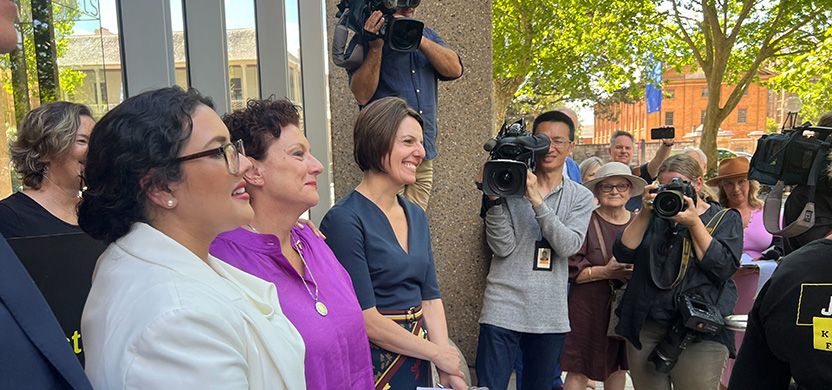
The Academy convenes scientific expertise to ensure that evidence-based science is heard by the Australian Government, in the courtroom and wherever science is needed to inform decisions.
In 2023, we:
- published expert reports on possible futures for the Great Barrier Reef, novel negative emissions approaches for Australia, and educating Australia’s future bioscientists
- played an integral and sustained role in the Bathurst inquiry into the convictions of Kathleen Folbigg, providing access to the latest scientific evidence and helping the inquiry understand the science
- convened experts in partnership with the Australian Academy of Health and Medical Sciences to inform a parliamentary inquiry into long COVID
- made 31 submissions to government
- released position statements on an Australian system for managing research misconduct, freedom and responsibility of science, and the Voice to Parliament.
International engagement
The Academy facilitates Australia’s access to global science and technology, promotes strategic partnerships between Australian and overseas researchers, and contributes Australian expertise and leadership in regional and global science networks.
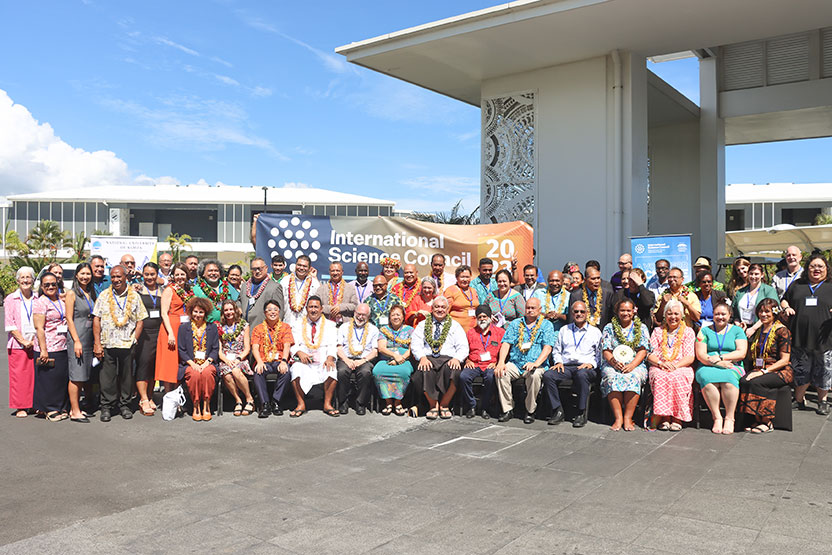
During the year, the Academy demonstrated its growing regional leadership role by establishing the International Science Council Regional Focal Point for Asia and the Pacific. Together with the International Science Council, the Academy facilitated a meeting of Pacific scholars which led to a historic agreement to establish a Pacific Academy of sciences and humanities.
In 2023, we also:
- facilitated a Global Knowledge Dialogue in partnership with the Academy of Sciences Malaysia and the International Science Council, which brought together more than 150 scientists from 31 countries to provide input into regional priorities
- brought together top minds from Australia and overseas at our annual symposium in November to discuss the implications of geopolitical tensions on international science collaboration, and we released a discussion paper on international scientific collaborations in a contested world
- launched the Ukraine-Australia Research Fund, supporting Ukrainian scientists who have fled the war with Russia or who have been unable to work due to the destruction of their workplace
- hosted the 16th Australia–China Symposium on Marine Sciences for Sustainable Development, in partnership with the Chinese Academy of Sciences and the Australian Academy of Technological Sciences and Engineering
- awarded nearly A$1 million in travel grants and fellowships to support international collaboration between Australian researchers and their counterparts across the globe
- awarded nearly A$100,000 in France and Europe mobility grants to 14 Australian early- and mid-career researchers to collaborate with leading researchers at major science and technology organisations across Europe
- hosted the finale of the eighth Falling Walls Lab Australia for early-career researchers and supported the winners to compete at the global event in Berlin—where Dr Emma-Anne Karlsen of the University of Queensland achieved third place
- supported seven early-career researchers to attend the Lindau Nobel Laureate Meeting in Germany.
National Committees and Future Earth Australia
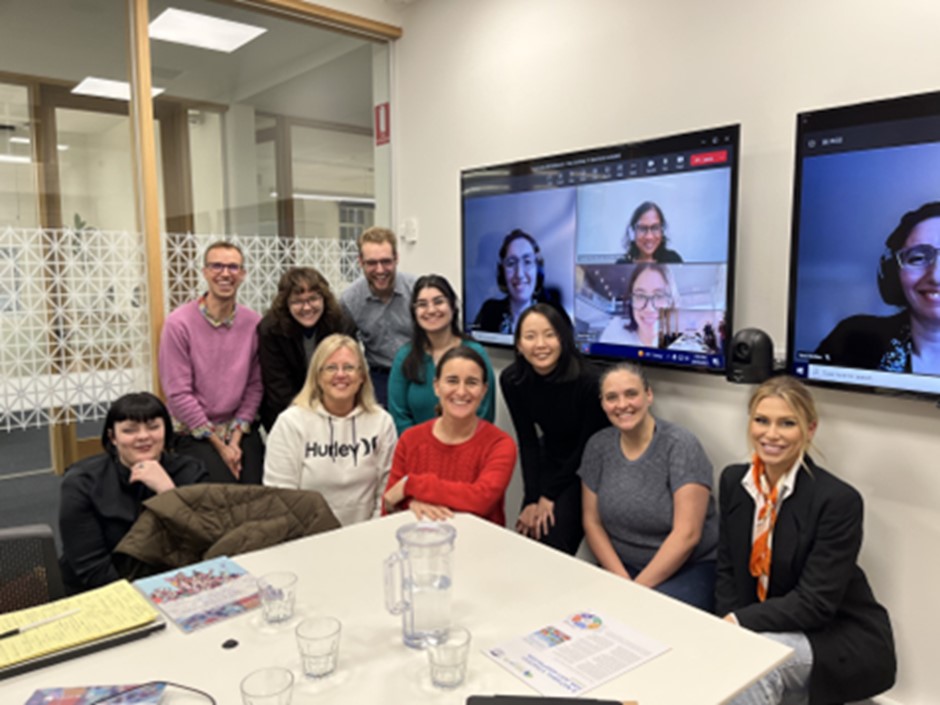
Our national committees serve to shape scientific disciplines and anticipate their future needs. This year, the National Committees for Science and Future Earth Australia facilitated collaboration between Australian scientists, governments, industry and NGOs both nationally and abroad.
In 2023, we:
- published an update to the Sustainable Cities and Regions strategy by the Future Earth Australia Early Career Urban Research Working Group
- worked with the Australian Research Data Commons to convene a joint symposium on digital government meeting open science to address grand challenges
- held two early career innovation labs to foster transdisciplinary solutions to key sustainability issues and convened two conferences dedicated to progressing the recommendations of the Nourishing Australia decadal plan.
Diversity and inclusion
The Academy is committed to supporting excellence in science and empowering the next generation of scientists. We recognise that to achieve this, it is imperative that we embrace diversity and inclusion in all its forms and embed diversity and inclusion in everything we do.
In 2023, we:
- implemented recommendations from the Diversity and Inclusion Governance review, including establishing a Diversity and Inclusion Advisory Committee including expert external advisors
- were recognised as an Inclusive Employer in the Diversity Council of Australia Inclusive Employer Index
- expanded our STEM women Australia platform to become STEM Women Global with 1194 profiles at year’s end, connecting women in the STEM industries with opportunities and with each other on a global scale
- grew our network of Women in STEM decadal plan champions, welcoming The Australian Research Council Centre of Excellence for Transformative Meta-Optical Systems (TMOS)
- recognised two Aboriginal and Torres Strait Islander researchers, who received the Academy’s Aboriginal and Torres Strait Islander Scientist Award
- explored how Indigenous Knowledges are informing the modern world, through our 2023 public speaker series
- made significant progress on our Innovate Reconciliation Action Plan.

Bringing science to a broad audience
Communicating effectively on key Academy initiatives and the work of our Fellowship is fundamental to achieving our mission: to advance Australia as a nation that embraces scientific knowledge and whose people enjoy the benefits of science. We achieved this by reaching policymakers, the science community and the public with scientific information they engaged with deeply on the issues that matter most.
In 2023, we brought science to a broad public audience by:
- welcoming nearly two million viewers in total to our websites
- delivering more than 50 events—from symposiums to award ceremonies, expert roundtables, and speeches by government ministers and Indigenous Australian Elders
- being featured or mentioned in more than 7,700 articles in Australian and international mainstream media
- digitising important historical documents, including a collection of papers belonging to Professor Sir Mark Oliphant, one of the 20th century’s most influential physicists
- publishing and sharing 78 videos on a wide range of science topics.
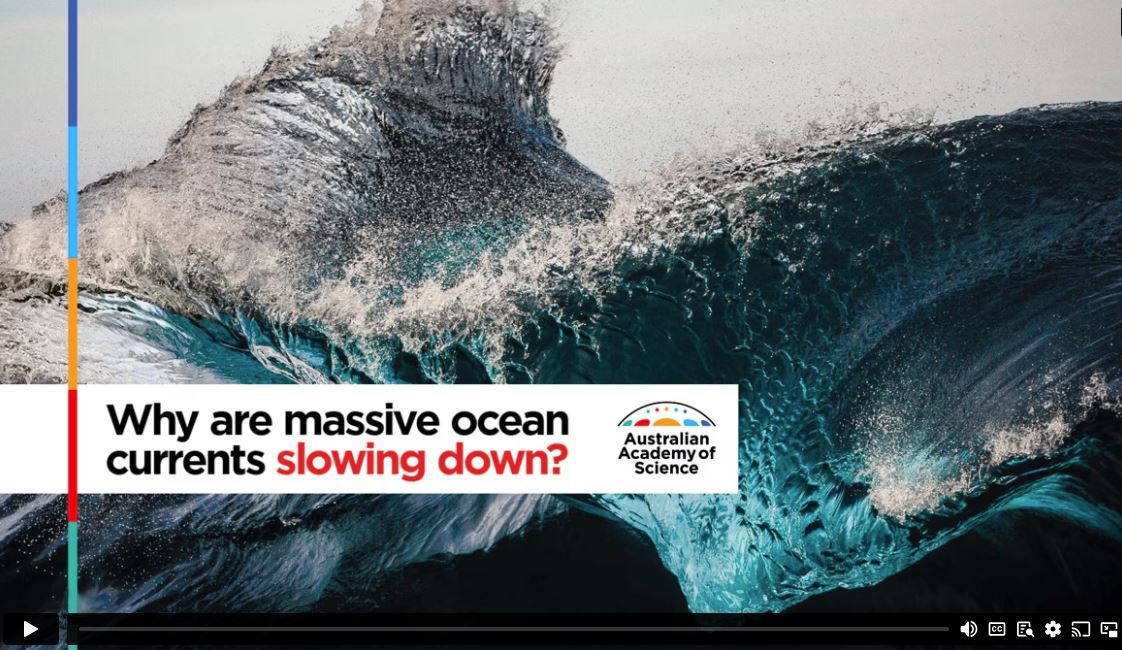
One of our breaking news videos, exploring Academy Fellow Professor Matthew England’s research into the slowing of massive ocean currents, was widely shared online and shortlisted in the Best Use of Video category at the 2023 Mumbrella Publish Awards. This story, along with the Academy’s involvement in the Kathleen Folbigg case, were two of the top news stories featured by the Australian Science Media Centre for 2023.
Education
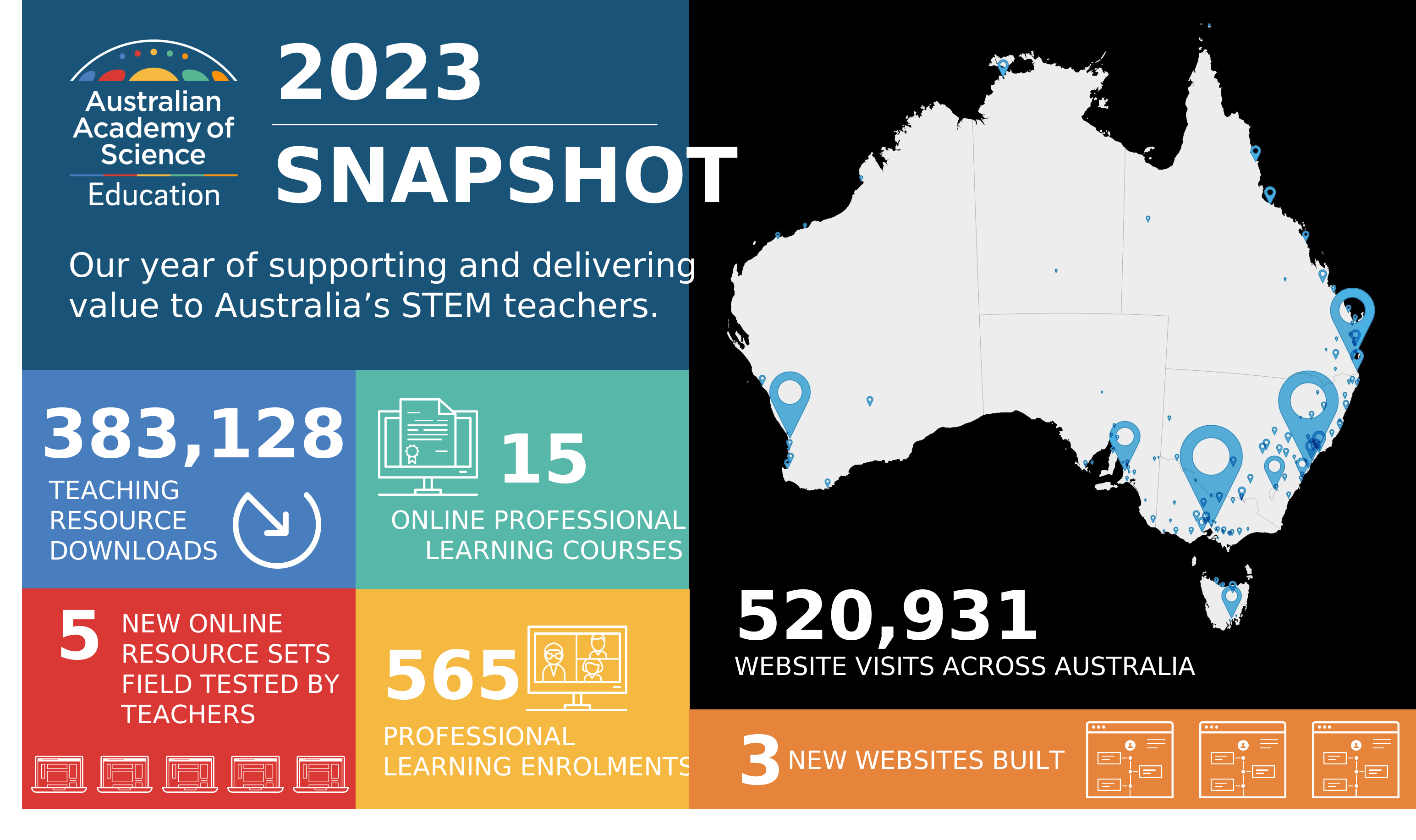
We supported primary and secondary school education across Australia by providing:
- access to quality, downloadable, curriculum-aligned teaching resources for mathematics and science through our Education program websites
- online professional learning courses available throughout the year for teachers to complete at their own pace.
In doing so, we reached more than 270,000 people across Australia who have a role in teaching science and mathematics in schools.
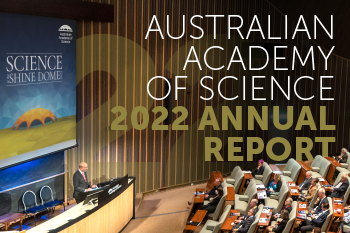
2022 Annual report
The Australian Academy of Science 2022 Annual Report covers 1 January to 31 December 2022.
The Academy’s advancements of science internationally are among the many achievements highlighted in the report, spearheaded by the announcement that we will lead a new regional focal point for the International Science Council to coordinate scientific engagement in the Asia-Pacific.
Major achievements included the production of a range of reports based on scientific evidence to assist decision-makers; the publication of a national strategy for just adaptation to climate change; the launch of a global platform for women in STEM; and the creation of a new award to foster integrity in science.
2022 highlights
Advancing science in Australia
To advance science in Australia, we:
- launched ‘Australia in Space: a decadal plan for Australian space science 2021–30’, and published a mid-term review of ‘Australia’s 10-year plan for mathematical sciences’
- launched a discussion paper ‘Getting ahead of the game: Athlete data in professional sport’
- launched ‘Australia’s data-enabled research future: Science’, a report calling for action to support the future of scientific research
- were accepted as an independent scientific adviser to the Second Inquiry into the convictions of Kathleen Folbigg
- released our ‘Science and Australia’s positive future’ position statement ahead of the federal election, and met with the Prime Minister to discuss ways to bring science to the service of the nation
- established the David Vaux Research Integrity Fellowship Award to recognise individuals who have led efforts to foster and promote integrity in science
- made 31 submissions to government.
Climate change
On climate change science, we:
- hosted a national roundtable to consider the capability of science to explore new negative emissions approaches
- launched Future Earth Australia’s 'National strategy for just adaptation', bringing Indigenous and other relevant knowledges, adaptation science, the social sciences and the humanities together to reshape the national adaptation and resilience agenda
- published a report on what could be done to support the world’s most precious heritage assets in the face of climate change.
Advancing science internationally
To advance science internationally, we:
- welcomed the announcement that we will lead a new regional focal point for the International Science Council to coordinate scientific engagement in the Asia–Pacific
- launched STEM Women Global to enable women working in STEM fields around the world to raise their profile and discover opportunities to progress their careers
- produced 19 videos highlighting some of the scientific collaborations Australia has undertaken with our Asia–Pacific neighbours
- released a statement condemning the invasion of Ukraine by Russia, and announced funding support of $800,000 by the Breakthrough Prize Foundation to support Ukrainian scientists.
Support for scientists and diversity in science
To support scientists and encourage diversity in science, we:
- welcomed 22 new Fellows, the cohort made up of 50% women and 50% men, the first time in the Academy’s history that gender parity has been achieved in the annual election of new Fellows
- recognised 20 leading scientists with honorific awards, and announced support for scientists with grants, fellowships and conference funding
- helped 12 young Australian scientists attend the 71st Lindau Nobel Laureate Meeting in Germany
- hosted the seventh Falling Walls Lab Australia finale for early-career researchers and supported the national winners to take part in the international three-day conference in Berlin
- participated in NAIDOC Week, and supported the research of five Aboriginal and Torres Strait Islander scientists through our Aboriginal and Torres Strait Islander Scientist Award.
Science for a broad audience
To bring science to a broad audience, we:
- welcomed more than 2.7 million visitors to our websites
- published our archival collection of one of the twentieth century’s most outstanding biologists, Sir Frank Macfarlane Burnet, in digital format
- delivered 38 online and hybrid events for national and international audiences
- celebrated science in our flagship event, Science at the Shine Dome
- supported early- and mid-career researchers
- took new developments in science to broad audiences
- informed policymakers about climate change impacts, adaptation and vulnerability
- embraced Indigenous knowledges in STEM
- explored the impact of COVID-19 on women in the STEM workforce in Pacific Alliance countries
- discussed drug use and the law
- recorded more than 28 million impressions on social media
- published 144 videos, 43 of which were embedded in online mainstream media stories a total of 472 times, and 18 articles that were mentioned or quoted 133 times in online news websites, including syndications
- reopened our newly renovated heritage buildings, the Shine Dome and Ian Potter House, following severe hailstorm damage in 2020.
2021 Annual report
The Australian Academy of Science 2021 Annual report covers 1 January to 31 December 2021.
The Academy’s responses to COVID-19 and climate change are among the many achievements highlighted in the report.
Major achievements included collaborating with government departments to communicate pandemic-related information; calling for an RNA manufacturing capability in Australia and convening a national RNA roundtable of experts; calling attention to the risks to Australia of a warmer world; and the publication of a hub of climate change resources.
2021 highlights
COVID-19
This year, on the topic of COVID-19 the Academy:
- developed and distributed a new version of our popular booklet, ‘The science of immunisation’
- created eight videos, six articles and two infographics explaining the science of COVID-19, sharing them widely with Australians and internationally
- delivered five webinars to encourage international collaboration during COVID-19.
We thank the Australian Government Department of Health and the Department of Industry, Science, Energy and Resources for supporting these activities.
See our COVID-19 resources hub
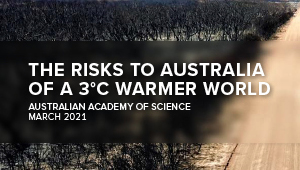
Climate change
On climate change science, the Academy:
- released a landmark climate change report on the risks to Australia of a 3°C warmer world
- created a digital hub featuring all its articles, reports and videos on climate change science and solutions
- published six media releases, including three statements on COP26 and climate change
- released a national 10-year strategy for sustainable oceans and coasts.
See our Climate change hub
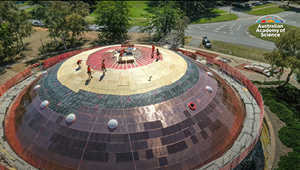
Advancement and celebration of science
To advance and celebrate science in Australia and internationally, we:
- published a report identifying opportunities to advance data-intensive research in Australia
- supported the call for Kathleen Folbigg’s pardon and release from prison based on recent strong scientific evidence
- launched a Champions of the Decadal Plan program to support the implementation of the 2019 'Nourishing Australia: A decadal plan for the science of nutrition' by the National Committee for Nutrition
- hosted a national RNA roundtable that supported Australia becoming a leader in RNA science and technology
- called on the NSW Government to remove all feral horses from Kosciuszko National Park
- provided advice and submissions to government inquiries and consultations, including appearing at parliamentary hearings
- re-roofed and improved the sustainability of our heritage-listed building, the Shine Dome, following severe hail damage in 2020.

Support for scientists and diversity in science
We supported scientists and encouraged diversity in science by:
- recognising 24 leading scientists with honorific awards, and announcing support for more than 40 scientists with grants, fellowships and conference funding
- welcoming 22 new Fellows for 2021, the cohort made up of 41% women and 59% men
- publishing a report about gender inequity in the STEM workforce across the Asia–Pacific
- launching the STEM Women Asia database to raise the profile of women in STEM
- hosting the finale of Falling Walls Lab Australia for early career researchers
- participating in NAIDOC Week, and shining light on Aboriginal and Torres Strait Islander scientists
- joining with Australia’s other learned academies to respond to the Uluru Statement from the Heart.
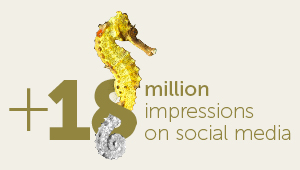
Science for a broad audience
We brought science to a broad audience by:
- recording more than 18 million impressions on social media
- welcoming more than 4.4 million visitors to our websites
- publishing over 70 videos, many of which were embedded in online mainstream media stories 615 times, and articles that were mentioned or quoted 122 times (across all media syndications)
- delivering 37 online and hybrid events for audiences across Australia and around the world, including the Academy’s annual flagship event ‘Science at the Shine Dome’
- holding ‘scienceXart’, a photo competition about food and nutrition for school students across Australia.
2020 Annual report
The Australian Academy of Science 2020 Annual Report covers 1 January to 31 December 2020.
The Academy’s responses to COVID-19 are among the many achievements highlighted in the report.
Major achievements included providing leadership and support for the Rapid Research Information Forum (RRIF) to produce expert reports; collaborating with government departments to communicate pandemic-related information; creating an online database to enable public access to more than 1800 experts; supporting teachers and parents with emergency remote teaching; and initiating Global Science TV in partnership with the International Science Council.
2020 highlights
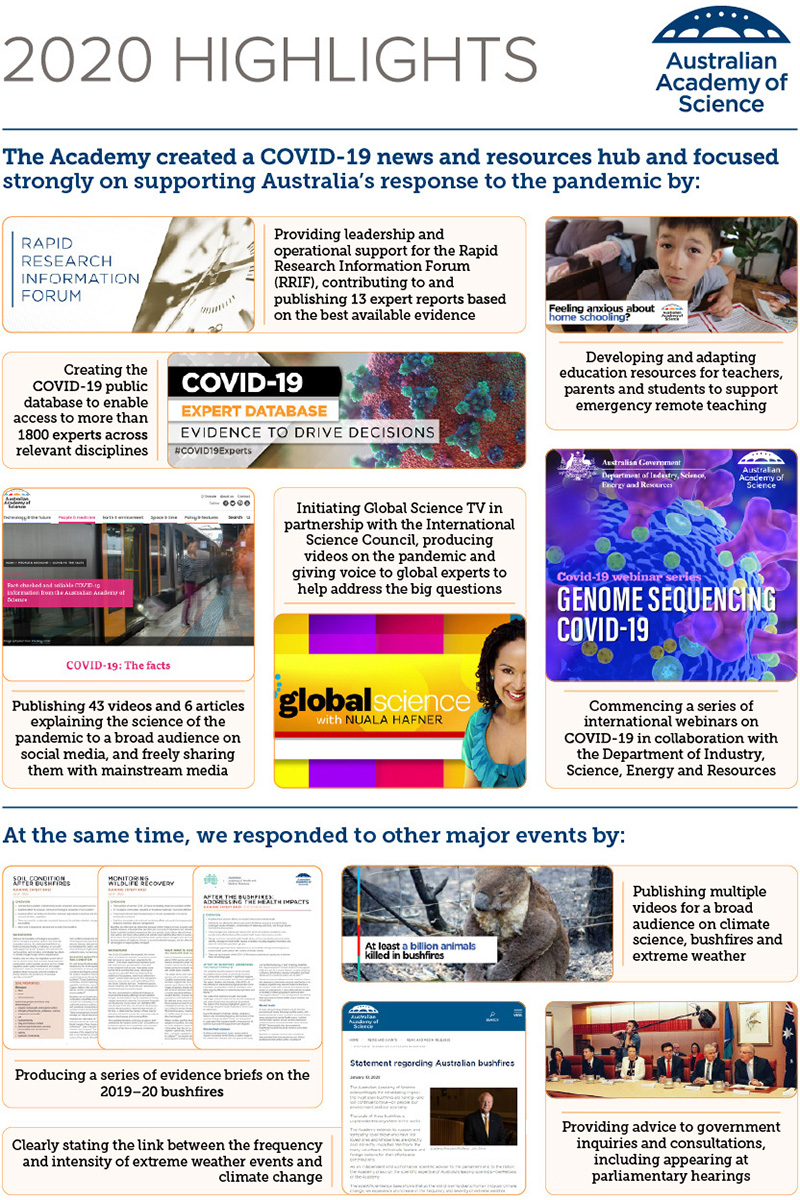
The Academy created a COVID-19 news and resources hub and focused strongly on supporting Australia’s response to the pandemic by:
- providing leadership and operational support for the Rapid Research Information Forum (RRIF), contributing to and publishing 13 expert reports based on the best available evidence
- creating the COVID-19 public database to enable access to more than 1,800 experts across relevant disciplines
- developing and adapting education resources for teachers, parents and students to support emergency remote teaching
- publishing 43 videos and 6 articles explaining the science of the pandemic to a broad audience on social media, and freely sharing them with mainstream media
- initiating Global Science TV in partnership with the International Science Council, producing videos on the pandemic and giving voice to global experts to help address the big questions
- commencing a series of international webinars on COVID-19 in collaboration with the Department of Industry, Science, Energy and Resources
- publishing 43 videos and 6 articles explaining the science of the pandemic to a broad audience on social media, and freely sharing them with mainstream media.
At the same time, we responded to other major events by:
- producing a series of evidence briefs on the 2019–20 bushfires
- clearly stating the link between the frequency and intensity of extreme weather events and climate change
- publishing multiple videos for a broad audience on climate science, bushfires and extreme weather
- providing advice to government inquiries and consultations, including appearing at parliamentary hearings.
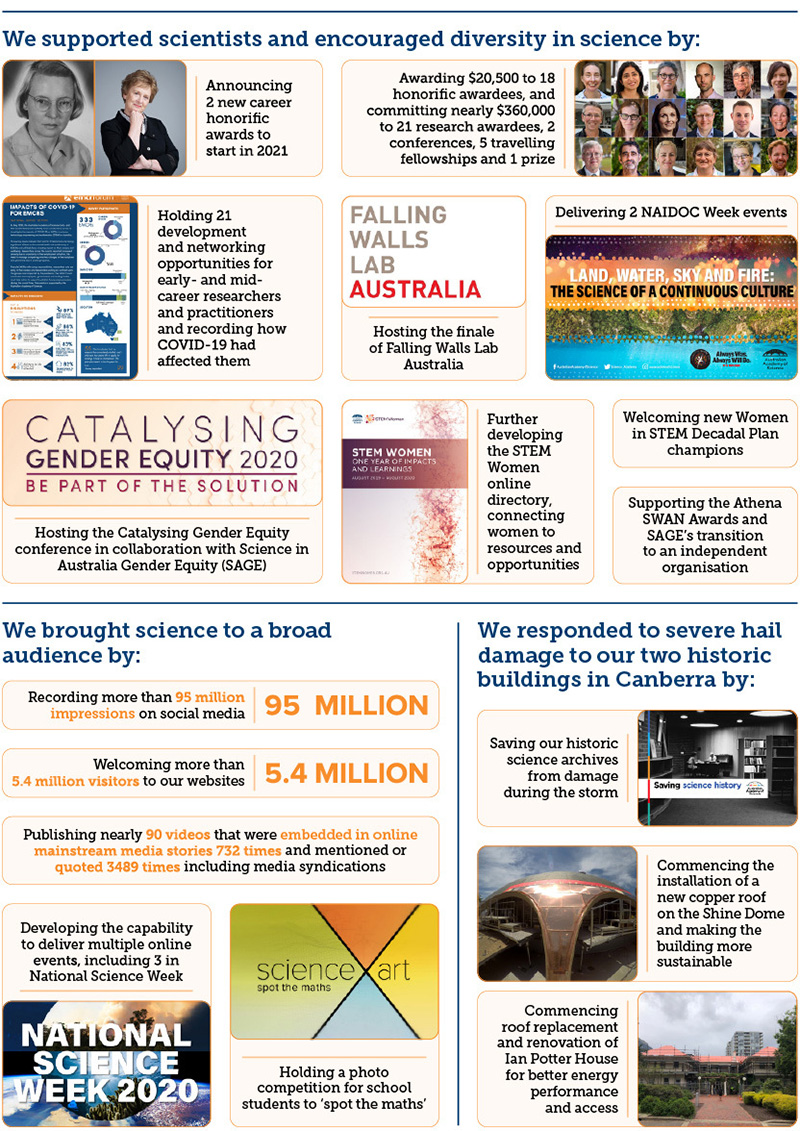
We supported scientists and encouraged diversity in science by:
- announcing 2 new career honorific awards to start in 2021
- awarding $20,500 to 18 honorific awardees, and committing nearly $360,000 to 21 research awardees, 2 conferences, 5 travelling fellowships and 1 prize
- holding 21 development and networking opportunities for early- and mid-career researchers and practitioners and recording how COVID-19 had affected them
- hosting the finale of Falling Walls Lab Australia
- delivering 2 NAIDOC Week events
- hosting the Catalysing Gender Equity conference in collaboration with Science in Gender Equity (SAGE)
- further developing the STEM Women online directory, connecting women to resources and opportunities
- welcoming new Women in STEM Decadal Plan champions
- supporting the Athena SWAN Awards and SAGE's transition to an independent organisation.
We brought science to a broad audience by:
- recording more than 95 million impressions on social media
- welcoming more than 5.4 million visitors to our websites
- publishing nearly 90 videos that were embedded in online mainstream media stories 732 times and mentioned or quoted 3489 times including media syndications
- developing the capability to deliver multiple online events, including 3 in National Science Week
- holding a photo competition for school students to ‘spot the maths’.
We responded to severe hail damage to our two historic buildings in Canberra by:
- saving our historic science archives from damage during the storm
- commencing the installation of a new copper roof on the Shine Dome and making the building more sustainable
- commencing roof replacement and renovation of Ian Potter House for better energy performance and access.
Annual report 2019
The Australian Academy of Science Annual report 2019 covers 1 January to 31 December 2019.
National progress in diversity and inclusion in the science sector was one of the many achievements highlighted.
Major achievements included the launch of three major women in STEM initiatives, support for nearly 5000 early- and mid-career researchers, and the publication of a Reconciliation Action Plan.
2019 in numbers
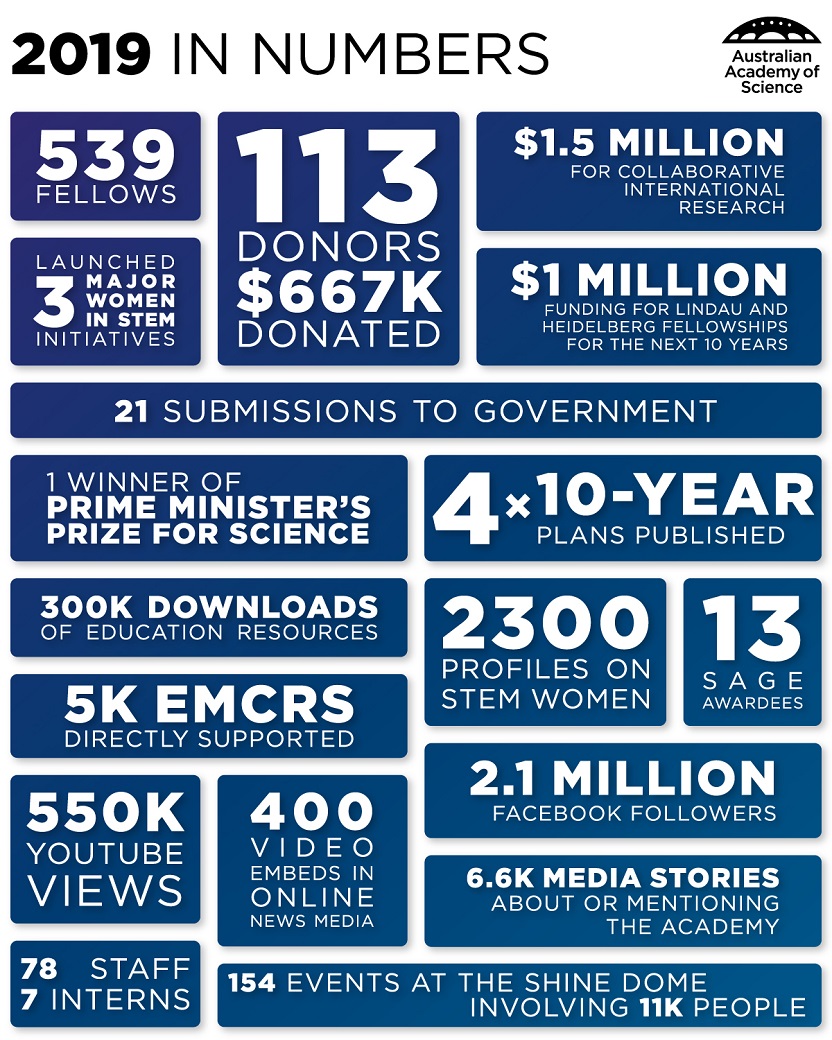
- 539 Fellows
- 113 donors, $667k donated
- $1.5 million for collaborative international research
- $1 million funding for Lindau and Heidelberg fellowships for the next 10 years
- 4 x 10-year plans published
- 1 winner of Prime Minister’s Prize for Science
- 3 major women in STEM initiatives launched
- 21 submissions to government
- 300k downloads of education resources
- 2.3k profiles on STEM Women
- 5k EMCRs directly supported
- 13 SAGE awardees
- 2.1 million Facebook followers
- 550k YouTube views
- 6.6k media stories about or mentioning the Academy
- 400 video embeds in online news media
- 154 events at the Shine Dome involving 11k people
- 78 staff, 7 interns
2016–17 federal Budget: science, research, innovation and higher education
The 2016–17 federal Budget included new measures committing long-term funding to support Antarctic science, and a new program of investment for Geoscience Australia.
Chapter one includes a summary and commentary of the major announcements in the federal Budget.
Chapter two presents forward estimates (four-year spending plans), with comparisons to the previous federal Budget.
2015–16 federal Budget: science, research, innovation and higher education
Despite immediate relief for the National Collaborative Research Infrastructure scheme (NCRIS) and an ongoing commitment to establish a Medical Research Future Fund, overall funding for science in Australia will continue to decline.
Part one contains a summary and commentary of the major funding announcements.
Part two analyses the impact of the federal Budget on the large science agencies, and the most significant science funding programs. This section makes direct comparisons between the science expenditure plans as set out in the 2015–16 Budget with the 2014–15 Budget.
Mathematical sciences: Adding to Australia
This review examines the health of research in the mathematical sciences in Australia. The review also investigates the provision of high-level mathematical services, and demonstrates how the nation gains benefit from its investment in this discipline.
This strategic review of mathematical sciences research and advanced mathematical services in Australia has four principal findings and 20 recommendations.
Principal findings
It is essential for Australia to have a sound research base in the mathematical sciences for the following reasons:
- to be able to respond to new research ideas and opportunities
- to capture benefit through collaborative research and downstream technology transfer
- to educate future mathematical sciences graduates
- to contribute to the economic and cultural strength of the nation
- to benefit from international developments.
In general, Australia possesses a sound research base, although certain sub-disciplines, among them operations research and financial mathematics, need to be strengthened.
- The mathematical sciences are critical to Australia's economic competitiveness and quality of life, and will become more so. The mathematical sciences are generic and enabling technologies. They are essential to the prosperity of many value-adding industries in Australia.
- The mathematical sciences make a vital contribution to many fields of research and endeavour. The importance of this contribution needs further emphasis because
- much work in the mathematical sciences is multi-disciplinary in nature
- there is a spillover of concepts and techniques from the mathematical sciences into other disciplines, particularly through methods and software widely used in those disciplines
- researchers in many other disciplines (including the social sciences) who would not describe themselves as mathematical scientists nonetheless make extensive use of mathematical and statistical concepts.
- The mathematical sciences profession in Australia faces a number of major challenges:
- improving the image of the profession to match its importance and effectiveness
- balancing an age distribution which is currently skewed by the growth in the profession in the late 1960s and 1970s
- redressing the gender imbalance at senior levels
- attracting good undergraduate students into mathematical sciences courses
- increasing opportunities for postdoctoral level researchers
- broadening the funding base for research
- educating potential users to the value of the mathematical sciences
- improving technology transfer programs and associated educational programs, particularly for SMEs (small to medium enterprises).
If these challenges are not addressed successfully, there will be significant diminution in Australia's capabilities in the mathematical sciences, to the detriment of the nation.