




Statement—The future of Australian science

On 18 February 1996, Professor Sir Gustav Nossal, President of the Australian Academy of Science, made the following public statement.
Australia is blessed with an excellent science base. This is the result of investment by previous generations combined with continuing expenditure on research. International comparisons of the published outputs of research show that our researchers publish at about double the global rate in the respected journals. In most fields our researchers are accepted as colleagues in other world-class laboratories, an essential pre-condition for staying up-to-date in science.
Why does our standing in science matter? There are three answers: the national need for innovation, our national obligation to be good stewards of the unique Australian environment, and the need to access the leading edge of world research and advances in knowledge in science and technology.
A decade ago the economists were liable to describe science as an 'exogenous variable' in the economy, something industries would suck in when the real drivers of economic growth created the demand for it. Today we understand much more clearly the central role that innovation plays in economic growth. This is not to say that innovations flow from the laboratory. Companies innovate, but without a strong national science base they will lack the access to skilled people, the specialised knowledge and the links to the latest technologies available overseas, all of which are essential to innovation.
This is well known to the 'tiger' economies, old and new, which are investing heavily in their science bases and in fostering innovation. They know they will need new industries to replace the manufacturing jobs that are being transferred to lower-cost countries.
The current government can point with some satisfaction to a 50% increase over 13 years in the proportion of our national economic output that goes to research and development. R&D covers the whole spectrum of activities from basic research to product development and design. Much of the new money has gone to three areas: industrial R&D (by definition mostly short-term) through tax concessions; funds aimed at creating links between our public laboratories and research users; and support for the research costs associated with the striking growth in the number of university students and staff.
At the same time, those researchers whose task it is to produce our basic research have experienced some real worsening in the conditions for basic research. Today's publicly-funded researchers, especially the younger ones, find they are spending more time on relations with research users, and the academics among them have heavier teaching loads. More time must be spent on performance reviews, writing applications for research funds, and so on, all in an environment that often provides insecure employment, and pay rates below those available in comparable countries. These may be some of the reasons for the observed decline in recent years of the high publishing rate of our researchers.
Our goal for the future can be stated simply. We must maintain and enhance the quality of our science base as an investment in our future. The Academy has a number of suggestions as to what should be done in the immediate future.
What I have called the research base, the research done in our universities, publicly-owned laboratories and research institutes, is in urgent need of assistance. The government's National Board for Employment, Education and Training established that universities need more than $100 million to restore their laboratories, equipment and computers to an acceptable standard.
Meeting that need should be delayed no longer. Considering that most research funds available to university researchers require competitive applications, the current success rate of 23%, and declining, is an intolerable discouragement to highly capable younger researchers. A reasonable short-term target is 33%, with the urgent need for special support for investigators earlier in their careers.
CSIRO remains one of the strengths of Australia's research base. What it needs, above all, is a clear statement from government of what its broad goals are, and an equally clear declaration of confidence in the capacity of its management to get on with the job.
There has been a substantial increase in research by companies over the last decade. The Government deserves credit for that achievement. One of the instruments of that change has been the 150% tax concession for investment in R&D. Another scheme, R&D Syndication, was showing great promise as a means of funding the commercialisation of good inventions coming out of research. With good reason, the Government has been concerned about the potential cost to tax revenues, and has introduced new restrictions. The Academy believes the new arrangements have not yet achieved the right balance. Some of our best laboratories are excluded, and the appeal of the scheme to investors has been so reduced that its potential benefits may be lost. The next Government should revisit the subject as soon as possible.
Science education is the basis of the whole R&D edifice, and an essential support for innovation in the economy. Many have complained over the years about the lack of systematic science education in primary schools. Through a program called Primary Investigations the Academy has demonstrated that systematic science education can be introduced to primary schools, in a form that is received enthusiastically by teachers and students, at an annual cost of less than ten dollars for each student. It is time for national and state governments to commit themselves to the achievement of universal science education from the first year of primary school on.
Another achievement of the present Government is the Prime Minister's Science and Engineering Council. It is essential that whoever is Prime Minister commits himself to using the Council to make sure the role of science and technology is recognised across the departments of state. The willing assistance of the S&T community should be harnessed more effectively to national needs through a restructured Australian Science, Technology and Engineering Council. One model worth close examination is that of the USA, where the Academies, at arm's length to government, form a National Research Council. This uses its great prestige to elicit voluntary work from top scientists to forge independent advice on a great range of specialised subjects.
The condition of our science base is, I am happy to report, one cause for optimism about our future. It would be folly not to build on it. I look forward to a time when our leaders, at election time, abandon their competition to spend more on our current needs and desires, real as they are, and ask us to support them for their willingness to invest in the longer-term generators of wealth such as science, technology and innovation.
Statement—Science and technology and the future of cities
On 1 June 1996, the following statement of the world's scientific academies was made to the UN Habitat II Conference in Istanbul.
Contents
- The challenges of an urban World
- Potential of science and technology for urban development and sustainability
- Developing an urban research agenda
- Local and national capacity building for sustainable cities
- International cooperation
- Concerted action
The challenges of an urban world
During the next century more than half of the world's inhabitants will reside in cities. The rapid growth and urbanization of the world's population are the result of many complex economic, social, demographic, and political factors and pose unprecedented challenges to the functioning of human settlements and the quality of life for their inhabitants.
Urbanization has many beneficial aspects. Cities play an increasingly vital role in education, culture, and productivity. The process of urbanization is also a significant factor in the worldwide demographic transition to lower birth rates.
However, cities throughout the world suffer from a host of problems, including congestion, pollution of air and water, inadequate water supplies, wasteful use of energy, problems of waste disposal, inadequate housing, the spread of communicable diseases, and the deterioration of social support systems. Many cities have expanded into areas prone to earthquakes, floods, and other natural disasters. Even those cities which are no longer growing in population continue to expand in territory, dwelling space, transportation density, resource consumption, and production of wastes.
The problems of our cities must be addressed by effective economic and social policies and strategies. Science and technology also have a crucial role and responsibility in providing solutions and in ensuring the long-term sustainability of cities and the ecosystems on which they depend. A critical factor in the ability of science to contribute to solutions will be the education, training, and capacity building of local scientific and technical expertise.
Potential of science and technology for urban development and sustainability
Advances in science and technology - especially progress in transportation, communication systems, public health, and agricultural and industrial production - have significantly contributed to the evolution of cities. In recent decades, many important new discoveries have been made in essentially all aspects of the sciences and engineering. While this wealth of new knowledge has improved the quality of life for millions of individuals, many new technological advances have only slowly penetrated to the less affluent communities of the world. In general, the potential for science and technology to ameliorate or solve the problems of the world's multiplying cities has not been realized. A much broader discussion is needed on how the range of existing technological and scientific research findings can be translated into actions at the national, regional and local levels.
As urban populations multiply, older technologies and practices - previously appropriate to settlement development - will not necessarily be the best solutions to these problems. Indeed, some once-successful technologies can lead to difficulties and become problems as the process of urbanization continues. Urban planning for the next century thus requires a fresh consideration of the current problems and available solutions within the context of regional environmental, cultural, and socioeconomic conditions.
Many new discoveries in science and engineering are potentially applicable to the amelioration of urban problems. Among these are the following:
- Computational capability. The rapid expansion of computational power over the past two decades has permitted the construction of intricately detailed models of the behavior of the Earth's atmosphere on both global and regional scales. These models have improved steadily in recent decades and are now in worldwide use, proving better and more sophisticated understanding of the world's climate system. Comparable computational ability for modeling the micro-climatic behavior of individual buildings and building complexes also exists, but has only rarely been applied despite its obvious utility for reducing energy consumption and improving indoor air quality and the health of the inhabitants.
- Waste disposal and recycling. Tremendous advances have been made in waste disposal and recycling, especially of building materials and other solid waste, but are still slow in penetrating into general use globally. However, a cohesive overall plan for sustainable waste management is possible for most cities in the world. Such a plan would include techniques which ensure waste avoidance, re-use and recycling, biological waste management processes, reduction of toxic waste, incineration; and landfills.
The aim of such planning should be to reduce the environmentally damaging effects of the growing quantities of waste. - Global positioning systems and global information systems. The advances in global positioning systems (GPS) now permit entirely new methods of land management, especially when coordinated with hand-held communication systems. These are in turn part of the rapidly expanding capability of global information systems (GIS) for storage and manipulation of vast quantities of demographic, geographic and other data. These same data manipulation capabilities underlie the important development of computer-assisted and ultimately computer-controlled transport systems.
- Biotechnology and ecological engineering. The developments of biotechnology and ecological engineering promise changes in the design and physical structure of the human ecosystem, which will allow use of local resources in a more sustainable manner. For example, parks may serve as lungs to process vehicle emissions, and buffer zones of wetlands can prevent deterioration in coastal zones because of waste and pollutant release.
- Disease surveillance and control. In recent decades, improvements in sanitation and implementation of effective intervention programs have reduced mortality from infectious diseases in most of the world's population. However, increased urbanization - in combination with poverty, pollution, poor sanitation, and inadequate health services - has contributed to a resurgence of infectious diseases, many of which are becoming increasingly drug resistant. The challenge for public health is remediation of the conditions that are fostering this increase. Examples of possible interventions include establishment of coordinated global systems of disease surveillance and control using modern scientific methods and technologies, and accelerated development of promising new drugs or vaccines.
Developing an urban research agenda
While much research is being conducted relevant to the challenges of cities and other human settlements, neither the pace of scientific research nor its transfer into practical application has kept up with the rapidity of urban growth. This situation exists in both the developed and developing worlds.
The generation of new knowledge about how cities and their various components actually operate requires commitment to scientific study far beyond current levels. Research into all aspects of urban development, including the managerial and political approaches to transfer of new knowledge into practice, needs to be intensified. Strengthening of research within developing countries is important for generating new knowledge relevant to the challenges of cities and for promoting collaboration with research institutions in more developed nations.
Important research areas with specific focus on urban settlements include (with no order of priority) the following:
- Integrated approaches to urban systems and their environments
- New housing types, materials, and production methods, with an emphasis on housing for limited-income populations
- Energy systems for densely populated settlements
- Waste treatment, reuse and disposal
- Disease surveillance and control and improved health care services
- Environmental quality, with reference to water, soil, and air.
- Economic diversification
- Information and communication technologies, including geographical information systems
- Improved public and private transportation
- Monitoring, maintenance and evolution of physical infrastructure, including improved prediction and mitigation of natural disasters.
- Human behavior and adaptability to urbanization - issues of urban crime and other social stresses.
- Changing demographic patterns, including redistribution of population and the role of urban areas.
- Improving living quality in slum and deteriorated areas, informal neighborhoods, and squatter settlements.
- Urban labor markets, community development, and absorption and integration of migrants
Local and national capacity building for sustainable cities
Each urban area constitutes a unique entity in terms of geography, climate, economic and cultural history, and form of governance. Thus it is important to ensure that site specific solutions to urban challenges are sought at all stages of investigation, planning, implementation and due to its size, management. The combination of local expertise and knowledge derived from worldwide research and experience are both required for successful resolution of the problems of each city or metropolitan region.
Planning and leadership
The improvement of existing cities, as well as planning for future human settlements, needs to become a new priority discipline in which expertise is developed locally and shared more broadly. Planning includes interaction among major elements of human settlement development, such as housing, transportation, water, waste management and health systems, energy, communications, and job locations. Each urban planning and economic development strategy must take account of complex interactions with the natural environment and with other human settlements, and must recognize the necessity of a functional ecological resource base for the long-term survival of the city. This is especially important in fragile ecosystems.
Political leaders and managerial and planning experts need to be in continuous communication with each other and with the scientific community. They should be broadly knowledgeable of relevant developments in a wide range of disciplines, including the physical sciences, engineering, agriculture, human health, ecology, economics, geography, architecture, sociology and the political sciences.
Education and training
The foundation of all capacity for addressing the challenges of human settlements -whether related to poverty, housing, energy, water supply, sanitation and health, employment, or other components - is the education and training of all segments of the population.
Important elements include:
- universal basic literacy and education, founded on up-to-date scientific knowledge. It is especially important to include women and populations in the marginal or informal employment sectors
- continuing training to provide citizens with the ability to adapt to new employment opportunities, as well as to the changing nature of employment. These changes are associated with rapid shifts in the global economy and with the emergence of new technologies which alter not only products and production processes, but also living and working conditions
Absorption and generation of knowledge
Higher education and research are necessary not only to produce new knowledge, but to build the capacity to assess, absorb, and use technology and experience developed elsewhere. Research capability should be developed to address the sustainability issues inherent in the choices and plans of each locality and country. This includes the ability to assess indigenous and traditional knowledge, and to combine it as appropriate with knowledge obtained elsewhere.
Knowledge centers and linkages
The nature and complexity of challenges of human settlements inherently require integrated efforts among education, research, and operational institutions. A barrier to the application of scientific and technological advances has been the sectoralization of education, industrial, public sector, and other science and technology institutions. It is critical to develop interdisciplinary mechanisms for linkages, communication, and cooperation among these sectors. This function can be performed by creating or enhancing knowledge centers (such as universities, technology parks, research centers), networking initiatives at the local, national, regional, and international levels, and creation of integrated educational programs.
Maintenance and evolution of infrastructure
Planning and education capabilities should include the ability to foresee, at the outset, the human and other investments needed to maintain the technological systems by which human settlements function. The evolution, replacement, and modification of systems need to be integral elements of infrastructure concepts. The capability to plan for and mitigate natural and man-made disasters is a critical element in the functioning and survival capacity of a human settlement.
Institutional support - providing the environment for successful innovation
Several non-technological institutional elements are critical to enabling technological innovation and successful handling of challenges of human settlements. These include:
- legal frameworks, including property ownership and the protection of intellectual property,
- effective and flexible standards,
- institutions for efficient mobilization of capital resources,
- tax and regulatory structures which are conducive to innovative solutions to urban challenges
Monitoring, assessing, and evolving
Human settlements are changing at an unprecedented rate. There is thus an urgent need to measure continuously their status and to monitor changes in order to project future developments and identify appropriate policies. For example, the capacity of the environment to produce basic resources and to process urban wastes must be explicitly evaluated. An effective capability for measurement of parameters such as water quality, air quality, and demographic changes requires an operational organization and ongoing interaction among political leaders, urban planner, the public, and the research community. Scenario building and modeling are important tools to link monitoring, research, and planning.
International cooperation
Cities and other human settlements do not exist in isolation. Action taken locally by one city may generate regional and even global effects. Innovative solutions developed in one city may have application elsewhere. New forms of international cooperation are thus required for developing and sharing information and technologies for the benefit of all urban areas.
Multinational research planning
The sustainability of cities in the next century requires a better understanding of the complex interactions among environmental, economic, political, social and cultural factors at local, regional, and global levels. Multinational cooperation is required to assess scientific and technological priorities and to sponsor research efforts encompassing scientists and engineers throughout the world. The commitment of the scientific community to develop collaborative research programs in areas of common interest needs the support of governments and international agencies. While some of these activities can be performed within current budgetary allocations, additional resources will often be necessary.
Information sharing
The scientific approaches and technological possibilities that find application in one urban location often are very useful in many areas of the world. New communication networks are required that link existing and newly created international and regional research and training centers. Current information and telecommunication networks can be utilized to facilitate new linkages among researchers and urban planners. The exchange of information and sharing of experiences among cities through the world can be enhanced by new communications technologies.
Capacity building
For international cooperation in science and technology to be effective in supporting sustainable development of urban settlements, the overall competence of all the participants needs to be heightened. Scientists and engineers in all the world's urban communities must be able to evaluate the local requirements, develop competence to solve local and national problems through appropriate R&D, evaluate, assimilate and adapt indigenous and emerging technologies, and effectively participate in regional and international research cooperation. Where necessary, international assistance should be provided for capacity building of local scientific and technological expertise.
Concerted action
Science and technology can produce widespread benefit for future generations only if there is synergy among scientific research, urban planning, and management. The worldwide scientific community must work together and with political and managerial decision makers to identify and implement innovative solutions for meeting the needs of the world's 21st century cities.
Statement—Joint academies statement on sustainable ecosystems
On 10 August 2007, the Australian Academy of Science contributed to the following joint academies statement on sustainable ecosystems. It was issued by the Chinese Academy of Sciences, the Australian Academy of Science and the Australian Academy of Technological Sciences and Engineering.
China and Australia recognise the importance of international science and technology cooperation as a key element of national science and innovation development.
In a world of increasing globalisation, advances in science and technology have large scale implications that provide important opportunities to enhance economic growth as well as environmental and social benefits.
Australia and China have established a global record of excellence in many areas of science. During the China–Australia Symposium on Sustaining Global Ecosystems held 8–10 August in Beijing, Chinese and Australian scientists have focused on the vital global research area of sustainable ecosystems.
While continued ecosystem change now seems inevitable, it is important to reduce the pace and impact of that change to give extra time for societies and ecosystems to adapt as smoothly as possible.
The symposium identified a number of areas where China and Australia confront similar challenges in terms of sustainable use of land, water, air and energy and the effects that environmental factors have on health.
Considerable research is being undertaken on these issues in both countries and the symposium identified areas where existing collaborations can be strengthened and new opportunities for joint research programs might emerge. The challenges faced require urgent action and the collaboration will lead to an accelerated understanding of the underpinning science.
The three Academies involved in the symposium, the Chinese Academy of Sciences, the Australian Academy of Science and the Australian Academy of Technological Sciences and Engineering, stress that scientific, technological, and health capabilities – supported by the governments and international cooperation, and mobilised by appropriate social and economic policies – will produce substantial progress over the next decades toward a sustainable human future. Realising this progress will demand efforts by the scientific and technological community to promote the use of existing knowledge more widely and effectively, to generate new knowledge and beneficial technologies, and to work with governments, international organisations and the private sector to promote a worldwide transition to sustainability.
This joint symposium forms an important step in this progress.
Academy endorses statement on ocean acidification
The Australian Academy of Science has joined with academies of sixty nine other countries around the world to endorse a statement issued by the InterAcademy Panel on International Issues (IAP) on ocean acidification.
The release of the statement has been timed to coincide with the United Nations Framework Convention on Climate Change in Bonn this week.
The statement highlights that:
- the oceans have absorbed about a quarter of the carbon dioxide emitted to the atmosphere by human activities since the industrial revolution;
- rapid and irreversible changes in ocean chemistry have occurred as a direct result; and
- these changes will have implications for marine ecosystems.
The Academy notes that the statement:
- provides further indication of possible negative consequences of CO2 emissions that together point to the need to control future emissions; and
- is based on our current best understanding of the science but that further research will be required, particularly into the impacts on ecosystems.
For this reason the Academy welcomes the federal government’s budget announcement that the Chief Scientist for Australia, Professor Penny Sackett will chair a coordination group to develop and implement a new Australian Climate Change Science Framework. The framework will identify future research priorities and the capabilities needed to deliver on those priorities.
The full text of the IAP ocean acidification statement, along with the names of national science academies that have endorsed it, is available on the IAP website.
Notes for news editors
The InterAcademy Panel on International Issues (IAP) is a global network of the world's science academies, launched in 1993. Its primary goal is to help member academies work together to advise citizens and public officials on the scientific aspects of critical global issues. IAP is particularly interested in assisting young and small academies achieve these goals and, through the communication links and networks created by IAP activities, all academies will be able to raise both their public profile among citizens and their influence among policy makers.
Statement—2010 election statement: Empower science, power the future
On 10 August 2010, the Australian Academy of Science made the following statement—Empower science, empower the future—in the context of the 2010 election.
Australia must continue to increase its investment in science, mathematics, technology, and engineering to provide the science capability that will drive our nation's future.
Governments around the world recognize that investment in science is vital for economic growth and international competitiveness. Last year, during the global financial crisis, when President Barack Obama announced the largest US investment in science since the Apollo Project at the US National Academy of Science, he commented that
…there are those who say we cannot afford to invest in science, that support for research is somehow a luxury…I fundamentally disagree. Science is more essential for our prosperity, our security, our health, our environment and our quality of life than it has ever been before.
Many big challenges loom for Australia - in health, energy, water, climate change, infrastructure, sustainable agriculture and preservation of biodiversity.
To tackle these challenges, we need highly creative scientists and engineers, drawn from many disciplines, and a technologically skilled workforce. We need leaders and policy-makers who are scientifically well-informed. We need a scientifically literate community.
As we embrace the challenges and rapid developments of the 21st Century, the Academy notes that past success, policies and attitudes are no guarantee that Australia will continue to deliver exciting and productive research outcomes. Research excellence is a precious entity that requires constant tending and nurturing. We believe that our scientific potential to contribute to world knowledge, national wealth and security, and the health and education of all Australians, has never been greater. For this potential to be realised, ongoing nurture and reform is required.
To sustain and grow Australian science capability, the Academy sees the following priorities for Government in 2010:
1. Increase R&D expenditure to 3% of Australian GDP by 2020
Over the last decade, successive Australian governments have steadily increased expenditure on R&D. However, even now, our expenditure is < 2% of GDP and Australia ranks only 13th amongst the OECD nations. Several smaller nations, such as Finland, Sweden and Switzerland, already spend 3 to 4% of their GDP on R&D. Expenditure should be increased in Australia across the entire research and innovation sector, both by government and by business, through a variety of mechanisms, including Government incentives that will stimulate philanthropic investment in research.
Recommendation
- Commit to increasing Australia’s R&D expenditure to 3% of GDP by 2020
2. Safeguard investment in basic research and foster interdisciplinary approaches and cross-sector collaboration
Basic research is risky – while investment will increase the knowledge pool, clearly linked economic returns may not eventuate for a decade or more. The private sector shies away from this type of investment because outcomes are unpredictable and may be taken up by others who will derive benefit - which is why basic research is the special responsibility of Government.
Despite the risks, the rewards from ‘blue sky’ research can be very significant. Last year Dr John Sullivan, a Fellow of our Academy, won the Prime Minister’s Science Prize for his work that led to wireless communication. Sullivan’s invention had its genesis in research on sharpening images from optical telescopes. It took over 15 years for the technology to mature to an application that is now used by over a billion people and underpins multi-billion dollar industries.
To maximize social, environmental and economic outcomes for Australia, it is crucial to eschew mediocrity, focus on excellence and maintain breadth. Although transformative advances are impossible to predict, it is likely they will involve interdisciplinary research. Complex questions require effective collaboration across research sectors including, increasingly, the social sciences and humanities and the development of systems-based approaches.
Recommendations
- Ensure strong Government investment in excellent basic science research
- Foster interdisciplinary and systems-based research through new funding mechanisms
3. Provide full research costs
Proposals for public sector research funding appropriately undergo intense scrutiny for intrinsic merit, track record and potential outcomes, and only applications in the top band are successful. Once approved, however, applications should be fully funded, for both direct costs and indirect costs. Indirect costs (such as administration, maintenance of equipment, and IT) can vary according to discipline but are widely agreed to amount to ~ 60 cents for every research dollar. Despite recent improvements in the University sector, funding for indirect research costs is still inadequate and uneven across Australia’s research and innovation sector.
Recommendations
- Provide indirect research costs with all Government research grants, at a level commensurate with actual costs, indexed over time
4. Enable effective engagement with the international scientific community
As confirmed by the 2010 Commonwealth Parliamentary review Australia's International Research Collaboration, science is an international endeavour, with a ready exchange of ideas and fluid movement of people between nations. Although a strong performer for its population size, Australia is but a small part of this effort, producing only 3% of new knowledge. To have access to the other 97%, to tackle problems that simply cannot be solved at the national level and to benchmark ourselves properly against the best international competition, it is vital to continue to build international scientific relationships and collaborations.
Recommendations
- Ensure continuity in strategic international scientific relationships by speedily putting in place a properly funded successor program to the International Science Linkages program, which ends in June 2011
- Focus and support the expansion of Australia’s international science efforts by developing an integrated national strategy across Government departments and agencies
- Establish a science, research and innovation network of officers at Australia's overseas missions, to contribute to 'soft diplomacy' and raise the profile of high quality Australian research abroad.
- Utilise science more effectively as a tool in foreign policy
- Remove unnecessary barriers to international collaboration posed by restrictions, availability and processing times for securing Australian Visas
5. Strengthen research career paths and increase flexibility
Australia is fortunate to have a rich scientific heritage, built over generations. Our strong research base is one of our greatest national assets, but without continuing attention, this asset will depreciate - the global market for scientific talent is highly competitive.
To attract and retain internationally competitive researchers, Australia needs further and more considered investment in sustainable career paths. Although there have been welcome Government initiatives in recent years to enhance fellowship support, career structures remain suboptimal. Furthermore, major bottlenecks lie ahead – where will the 1000 Future Fellows find their next 5 or 10 years of salary support when their current fellowships finish? There are simply not enough career investigator positions available in the National Health and Medical Research Council (NHMRC) and Australian Research Council (ARC) systems, and employment opportunities at most levels of government research organizations is also tight. This is an area of great concern to early career researchers and to students contemplating a career in research.
An integral part of a policy of investing in the best people is ensuring that movement between sectors (Commonwealth Scientific and Research Organization (CSIRO), universities, research institutes, industry, government) is as seamless as possible and that there is increased awareness of alternative career paths in science, outside academia.
It is also essential to maximize participation by women in our scientific workforce. The 2009 report prepared for the Federation of Australian Scientific and Technological Societies (FASTS), Women in Science: Maximising Productivity, Diversity and Innovation, documented the high levels of attrition in the post doctoral phase of women’s scientific careers and the small number of women in leadership positions in the science and technology sectors. It also highlighted the costs in terms of international competitiveness and return on educational investment.
Career flexibility is a major issue in relation to child bearing and rearing for women and, increasingly, for men. There is a need for increased availability of quality childcare and appropriate leave arrangements that support career re-entry for promising young scientists who experience discontinuity for this or other compelling reasons (eg carer responsibilities).
Recommendations
- Review and reform research career structures in Australia
- Increase the number of NHMRC and ARC established investigatorships, with new dedicated funding
- Ensure equal opportunities for women in science
- Improve mobility of researchers between research sectors by identifying and removing any remaining employment barriers
6. Use scientific research to inform national strategy and underpin Government policies
Many critical issues that face Australia today require background scientific knowledge as well as a critical ability to assess scientific judgments, if appropriate decisions to meet Australia’s future needs are to be made.
Relatively few Australian politicians or public service leaders have had formal training or background in science. This potentially compromises the proper consideration of scientific evidence as a normal part of administrative and planning practice.
Despite the emphasis given in recent years to the value of “evidence based” policy by major political parties, new policy announcements and spending initiatives are rarely referenced with peer-reviewed research to substantiate the arguments.
Recommendations
- Appointment of a senior Scientific Adviser within all major Government Departments
- Public discussion of the scientific basis of all new or proposed government policies and strategies
- Active recruitment of scientists, doctors and engineers into politics and the public service
7. Enhance science teaching
The Academy has long emphasized the importance of school science education and actively contributed to its improvement. High quality, inspirational science teaching is vital to ensure that Australia produces sufficient world standard scientists, mathematicians, engineers and technologists to meet its future needs in industry, government and academia. It is also essential to create a technologically skilled workforce and a scientifically literate community.
The Academy strongly supports the intent and aspirations of the new Australian science and mathematics curricula and looks forward to their effective implementation. Research indicates that inquiry-based science programs are having a significant positive impact on student achievement and interest in science.
Recommendations
- Continued Government investment in effective education initiatives such as the Academy's programs Primary Connections and Science by Doing
- Structure Commonwealth Government education funding to States to provide quality professional development programs for primary and secondary teachers that will enable them to successfully implement the new Australian science and mathematics curricula
8. Foster a scientifically literate and engaged Australia
Achieving the full benefits from Australia’s investment in R&D requires effective communication and active engagement with the wider community. We aspire to being a nation that is inspired by its scientific stars, knows its scientific achievements, engages with scientific issues and encourages its children into scientific careers.
Issues such as climate change, genetically modified food crops and stem cell science are both technically complex and socially confronting. Yet they are often debated without sound reference to contemporary scientific knowledge. It is essential that the Australian scientific community contributes to debate on key national issues and international issues as they pertain to Australia. It is also essential that the Australian community has the scientific background and knowledge to assess and participate in scientific discussions on these critical issues.
Recommendations
- Implement with adequate funding the 2010 Inspiring Australia Science Communication strategy
Professor Suzanne Cory AC FAA FRS
President
Professor Bob Williamson AO FAA FRS
Secretary for Science Policy
Incentivising business investment in R&D
The Australian Academy of Science is calling for an urgent national conversation on R&D investment in Australia.
Investment in R&D is at a historic low. Within five years, Australia will be at the bottom of the OECD, a perilous place in a technologically advanced and volatile world where research – and the technologies it produces – is a source of intense global competition and power. Without it, no nation can remain prosperous or safe.
Australia has a sustained an intolerable pattern of R&D underinvestment by government and the business sector.
Sustained business sector underinvestment has now amounted to a gap of $32.5 billion when compared with the OECD average (0.89% of GDP, less than half the OECD average of 1.99%).
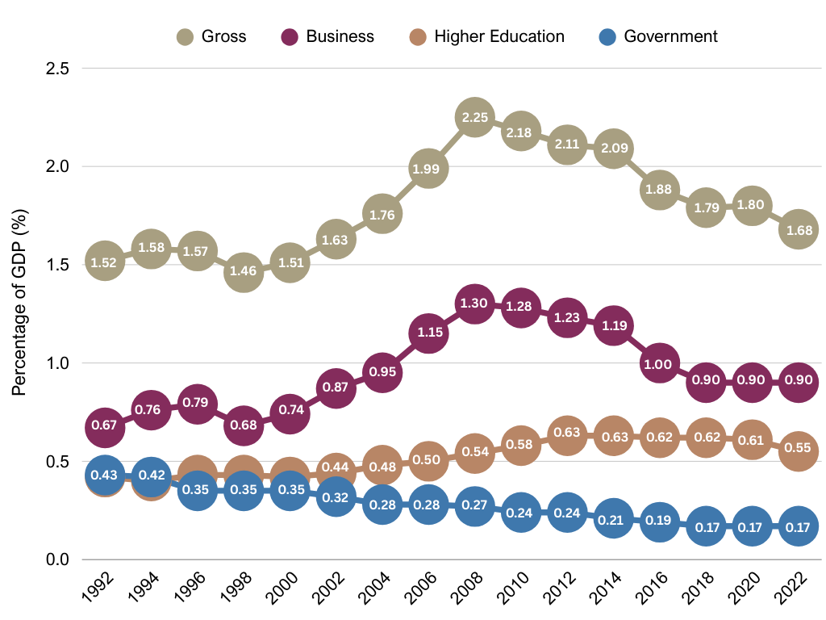
In 2023, the Productivity Commission stated that Australian businesses are not keeping pace with the frontier of innovation and may not be aware of how far they lag.
Large businesses have built their success on the fruits of long-term taxpayer funded research and R&D incentives. They are well positioned to invest and innovate, and to reap the benefits of improved competitiveness, greater profits and access to new markets.
Urgent measures are required to stimulate business investment in R&D.
The Academy proposes incentivising business investment in R&D by applying either a 0.25% or 0.5% R&D levy to businesses with annual revenue of $100 million or more, which can be discounted if businesses invest in R&D.
The levy revenue must be legislated, quarantined and invested in research to maintain the wellspring of innovation needed to keep the R&D system – including businesses – healthy, productive and delivering for all Australians.
The Academy presents two options: an annual continuous levy or a time-limited levy applied until a Research Future Fund reaches maturity.
The measure rewards those businesses that invest in R&D, incentivises those that don’t, and grows the pool of funds available for investment in research.
The Academy commissioned independent economic modelling based on publicly available data from the Australian Taxation Office.
It estimates an R&D levy could raise between $2.14 billion and $12.84 billion annually which would contribute to a Research Future Fund and its returns invested in research.
Australia’s persistent underinvestment in R&D threatens our productivity, limits wage growth, threatens our standard of living and weakens our ability to respond to global volatility. These threats have consequences for every member of society.
For many nations, science and technology is considered an indispensable strategic national asset. Not in Australia, where our record of R&D investment by government and business shows a sustained pattern of decline.
We want technologies like AI to boost our productivity, we want new medicines to keep us healthy, and the most advanced Defence capabilities to keep our island nation safe, but we aren’t willing to invest sufficiently in the discoveries that create them.
Sovereign R&D capability gives us the tools we need to be self-reliant, making us more resilient to external shocks, and turbo charging productivity and economic growth. It’s an investment in ourselves rather than a reliance on others who are motivated to advance themselves, not us.
The Academy welcomes additional proposals to stimulate R&D investment and to create the conditions for the broad R&D ecosystem to thrive.
The Academy’s proposal is included in its submissions to the Economic Reform Roundtable, the Productivity Commission’s Inquiry, and to the Strategic Examination of Australia’s R&D system, which is currently exploring how to drive greater industry investment and boost overall R&D intensity and industrial diversity in Australia.
More information


Academy Vice-President delivers keynote at NAST Philippines Annual Scientific Meeting
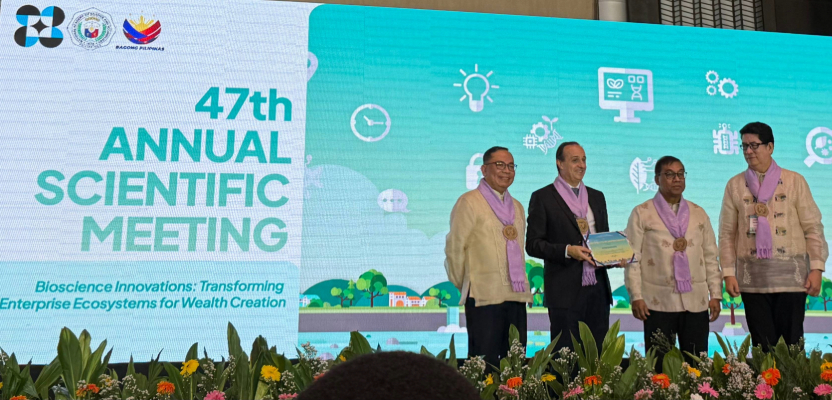
Academy Vice-President Professor Ivan Marusic (second from left) provided an Australian perspective on shaping a thriving, innovation-led future for the Asia-Pacific.
On 9 July in Manila, Australian Academy of Science Vice-President, Professor Ivan Marusic, delivered a keynote address at the 47th Annual Scientific Meeting of the National Academy of Science and Technology of the Philippines (NAST-PHL).
Professor Marusic’s presentation, Bioscience Futures: Collaboration, Innovation and Impact in Australia and the Asia-Pacific, was warmly received, with strong interest in building deeper linkages between researchers, universities, academies and governments across the region.
He explored how collaborative models – spanning academia, industry and government – are driving advances in bioscience research. Several case studies highlighted the work of Academy Fellows, including Dr Evans Lagudah’s team at CSIRO. Their research uses genetic solutions to improve cereal crop resistance to fungal pathogens, aiming to reduce chemical inputs and promote environmental and human health. A notable example is their collaboration with the International Rice Research Institute (IRRI) in the Philippines, where gene editing techniques were applied to replicate wheat resistance traits in rice, resulting in improved fungal resistance.
Professor Marusic also examined the transformative role of artificial intelligence, high-performance computing, and shared international infrastructure in enabling bioscience breakthroughs. He discussed Australia’s bioscience education landscape and the future vision outlined in the Academy’s Bioscience 2030 report, emphasising the need for future-ready education and workforce development to build resilient innovation ecosystems.
The presentation also introduced the Academy’s new foresighting initiative, Australian Science, Australia’s Future: Science 2035, which aims to measure and shape Australia's long-term science capability. This initiative has synergies with the Philippines' own foresight work, PAGTANAW 2050 (Looking Ahead 2050).
Professor Marusic’s presentation provided an Australian perspective on how strategic foresight, investment in research infrastructure and regional collaboration can shape a thriving, innovation-led future for the Asia-Pacific.
Expanding our horizons: Academy co-hosts event on Australia–Europe research collaborations
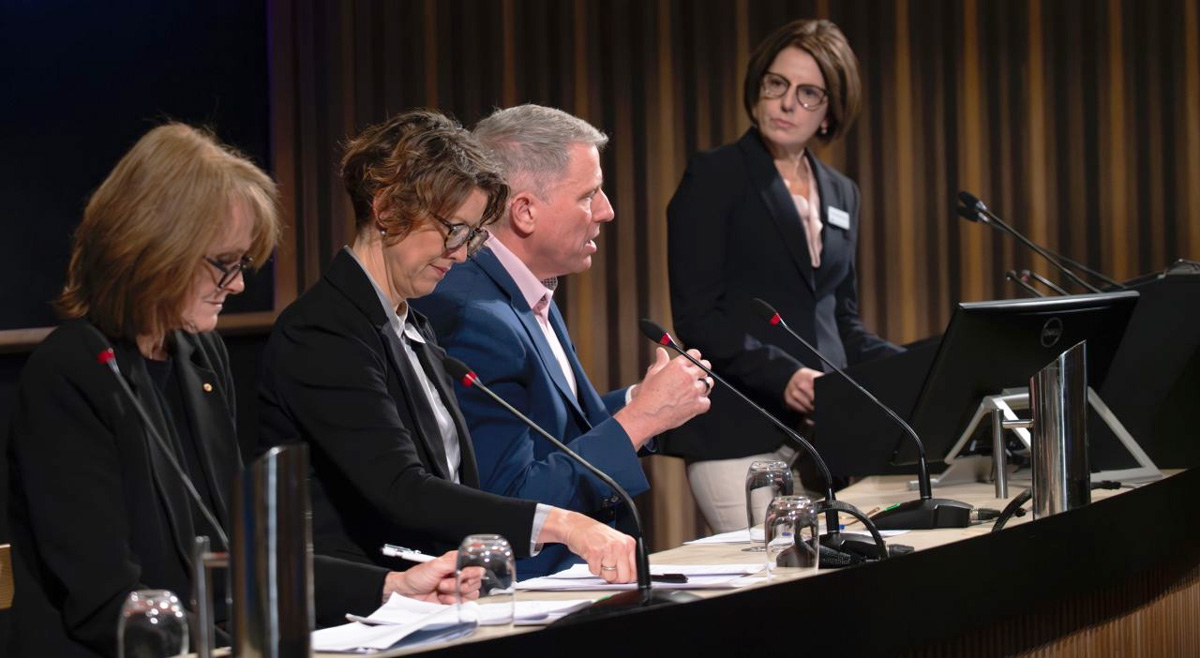
At the event were (from left) former Chief Scientist Dr Cathy Foley, Australian Academy of Technological Sciences and Engineering CEO Kylie Walker, Executive Director Governance, Strategy & Partnerships at Universities Australia, John Wellard, and Academy of Science Chief Executive Anna-Maria Arabia.
Deepening Australia’s research and industry relationship with European countries was the focus of an event held at the Shine Dome on 9 July 2025.
Co-hosted with EURAXESS Australia & New Zealand, the Delegation of the European Union to Australia, and the French, German and Italian embassies, the Australian Academy of Science convened a diverse group of stakeholders from academia, industry, government and the diplomatic community.
The forum explored the strategic benefits of deepening Australia’s research and industry relationship with Europe, in particular via association with Horizon Europe.
Horizon Europe is the world’s largest research and innovation program, offering access to over A$163 billion in funding opportunities.
The event convened a distinguished group of speakers and panelists, including representatives from the European Union who highlighted existing valuable relationships between Australia and various European countries. They also emphasised the success of Australian researchers in securing funding from European institutes; having a notable 30% success rate, nearly double the general success rate of 17% – highlighting the high calibre and global competitiveness of Australia’s R&D sector.
Australia’s Chief Scientist, Professor Tony Haymet delivered the keynote address, reflecting on the rich history of collaborations between Australian and European researchers. He highlighted the mutual benefits derived from these partnerships – ranging from access to world-class infrastructure to the value of cross-cultural exchange.
“World-leading science is very often international science – no country can go it alone when tackling big challenges,” Professor Haymet said.
Ms Signe Ratso, Deputy Director-General, Directorate-General for Research and Innovation at the European Commission and the Chief Negotiator for Horizon Europe Association, provided the second keynote address. She emphasised the key factors that position the European Union as an attractive partner for international research collaboration – namely its substantial investment in R&D, its world-leading public research institutes, and the quality of its publications.
A panel discussion was subsequently moderated by Academy Chief Executive Anna-Maria Arabia OAM, who provided an overview of the current landscape of Australia–international research collaborations. The data presented demonstrated that Australia has strong scientific research collaborations with the US, China and the UK, as well as with individual countries in the European Union.
To illustrate the science and technology opportunities available to Australia through associations with Horizon Europe, Ms Arabia’s presentation examined Australia’s research collaborations in areas aligned to three of the Australian Government’s Future Made in Australia priorities: green metals, low-carbon liquid fuels, and clean energy manufacturing. The analysis revealed a consistent pattern of strong collaborations with Europe across most of the fields, emphasising the EU as a critical research partner to advance Australia’s interests. It also highlighted a strong track record of research collaboration with individual European nations in these priority areas, which can be leveraged via association with Horizon Europe. The data also made clear that diversifying Australia’s international research collaborations mitigates risks and enables us to benefit from global knowledge generation.
“Aside from China, in aggregate the EU is leading in most of these fields,” Ms Arabia said.
“In aggregate, the EU is a strong performer across all sciences, including the Future Made in Australia areas. If this is the trend across individual countries when aggregated, we would expect amplified capability via the Horizon Europe program,” she said.
The event also featured contributions from former Chief Scientist Dr Cathy Foley, Australian Academy of Technological Sciences and Engineering CEO Kylie Walker, and representatives from the Group of Eight and Universities Australia. In addition, researchers with extensive experience collaborating across Australian and European institutions shared practical insights and reflections, all of whom emphasised the potential for increased output and impact through fostering deeper Australia-EU research relationships. Iain Cossar, representing New Zealand’s Ministry of Business, Innovation and Employment, highlighted the economic benefits accrued by New Zealand via association with Horizon Europe since 2023.
The Academy acknowledges and thanks the Delegation of the European Union to Australia, EURAXESS Australia & New Zealand, Embassy of Germany, Embassy of France, and Embassy of Italy as co-hosts of the event.
Sleep, sensors and science: 2025 Australia-Scotland Fund recipients announced

Australian researchers Associate Professor Matthew Luskin (left) and Associate Professor John Lesku are being supported by the Australia-Scotland Fund to work with their Scottish counterparts.
The Australian Academy of Science is pleased to announce the recipients of the inaugural round of the Australia-Scotland Fund.
Awardees are provided with a grant of up to $9,500 from the Academy, with the funding to support joint projects, knowledge sharing, and research visits between Scotland and Australia for a period of four to six weeks.
The initiative facilitates access to unique infrastructure and knowledge for Australian and Scottish early- and mid-career researchers, supporting the creation of ongoing collaborative research relationships between the two countries.
The inaugural Australian awardees are Associate Professor John Lesku from La Trobe University, and Associate Professor Matthew Luskin from the University of Queensland.
Ecotourism effects on wildlife at night
Associate Professor Lesku has received the award for his project, ‘Integrating conservation biology with sleep physiology to address whether ecotourism in the Great Barrier Reef keeps wildlife up at night’.
His research explores the impact of artificial light at night (ALAN) on the sleep of wild birds; a growing concern as human development blurs the natural boundaries of day and night. Focusing on white-capped noddies nesting near a resort and research station on Heron Island, Australia, his team aims to determine if proximity to human-made lights leads to sleep loss.
Associate Professor Lesku will be collaborating with Associate Professor Davide Dominoni, from the University of Glasgow. Associate Professor Dominoni is a highly established urban ecologist and animal physiologist who researches the influences of population on the physiology and behaviour of urban animals.
Instead of invasive methods, the two researchers will measure oxalic acid levels in the birds’ blood, a novel biomarker for sleep deprivation.
When asked what it meant to be awarded this grant, Associate Professor Lesku said that until now, most of their work has been done on laboratory-housed animals or in outdoor pens.
“While useful, this paints an incomplete picture of how light pollution might influence sleep, as captive animals are forced to sleep near light at night.
“This grant will allow us to study the effect of light pollution on birds in the wild, something rarely done. In this way, we can see whether birds nesting near a tropical resort, with augmented night-time light levels, have disrupted sleep relative to birds sleeping in nests farther from artificial light at night.”
Autonomous biodiversity sensor networks
Associate Professor Luskin was awarded for his project, ‘Developing a pipeline for autonomous biodiversity sensor networks to go from field sample to cloud to AI to data to analytics to decisions’.
His research aims to develop a fully automated, end-to-end data workflow by integrating cutting-edge environmental data collection technologies, ecological AI, and advanced statistical ecology. This initiative seeks to overcome the challenges of processing vast amounts of data from autonomous wildlife sensors, ultimately transforming how both Australia and Scotland monitor wildlife, understand interspecies interactions, and make informed decisions to address threats from invasive species and environmental change.
Associate Professor Luskin will be hosting Associate Professor Chris Sutherland, an expert in ecological statistics and population dynamics from the University of St Andrews.
“Collaboration is the lifeblood of science. International collaborations for Australian scientists can be logistically challenging given the time change and travel, and this is especially true for collaborations with Europe.
“We have acknowledged our complementary skills for years but had not been able to effectively collaborate due to the logistical challenges. We are delighted to now have an extended research trip made possible by the Australia-Scotland Fund,” said Associate Professor Luskin.
The Academy’s commitment to the journey of reconciliation

NAIDOC Week provides an opportunity for the Academy to reflect on its reconciliation journey so far. This follows the launch last year of the Academy’s Innovate Reconciliation Action Plan.
This year’s NAIDOC Week theme is ‘The Next Generation: Strength, Vision & Legacy’.
In celebration of this theme the Academy recently welcomed four inspiring young Indigenous researchers and community advocates for an evening of dialogue and connection – hearing their perspectives on meaningful reconciliation through research, respect and relationship.
The event featured rich and thought-provoking discussion with Dr Katrina Wruck, Associate Professor Shannon Kilmartin-Lynch and Dr Mitchell Gibbs, guided by Tiahni Adamson.
Their discussion delved into how the science system can better respect and value Traditional Knowledges – highlighting the vital role these knowledges play in shaping a stronger, more innovative, and sustainable future for our nation and world.
The talk is available to watch on the Academy’s event page.
Recognising excellent research
Earlier this year Associate Professor Shannon Kilmartin-Lynch and Dr Mitchell Gibbs received the Academy’s Aboriginal and Torres Strait Islander Scientist Award for their exceptional interdisciplinary and sociocultural research in the physical and biological sciences.
Their work exemplifies the powerful intersection of culture, science, and community – paving the way for a more inclusive and enriched scientific landscape.
Dr Gibbs is a geoscientist drawing on Traditional practices to restore local marine ecosystem.
He emphasises that genuine inclusion of Indigenous knowledges in research begins with working with the community that lives there.
“You need to be able to go to those communities to ask: ‘what do you know?’ and ‘how can we learn from you?’”.
Learn more about their research in the video below.
Moving forward together
The Tri-Academy Partnership inaugural summit was held in November 2024, hosted by the Royal Society of Canada in collaboration with the Australian Academy of Science and the Royal Society of New Zealand Te Apārangi.
The summit brought together Indigenous scholars and academics from Australia, Aotearoa New Zealand and Canada – alongside non-Indigenous allies and stakeholders – for powerful dialogue centred on cultural heritage in an era of reconciliation.
The event provided valuable opportunities for deeper understanding, knowledge sharing and connections across the three countries.
Dr Jordan Pitt, former Chair of the Academy’s Early and Mid-career Researcher Forum, who attended the summit in Canada, reflected on the mutual benefits of collaborating with Aboriginal and Torres Strait Islander communities.
“For communities with genuine partnership and benefit sharing, engagement with academia and the learned academies could meaningfully uplift communities,” Dr Pitt said, in an article for the Conversation.
This was the initial gathering of Indigenous knowledge holders across the three countries, with the next meeting to be hosted later this year by the Royal Society of New Zealand Te Apārangi.
The third summit will be held in Australia in 2026 and will be hosted by the Australian Academy of Science.