




Academy President among four Academy Fellows elected to the Royal Society

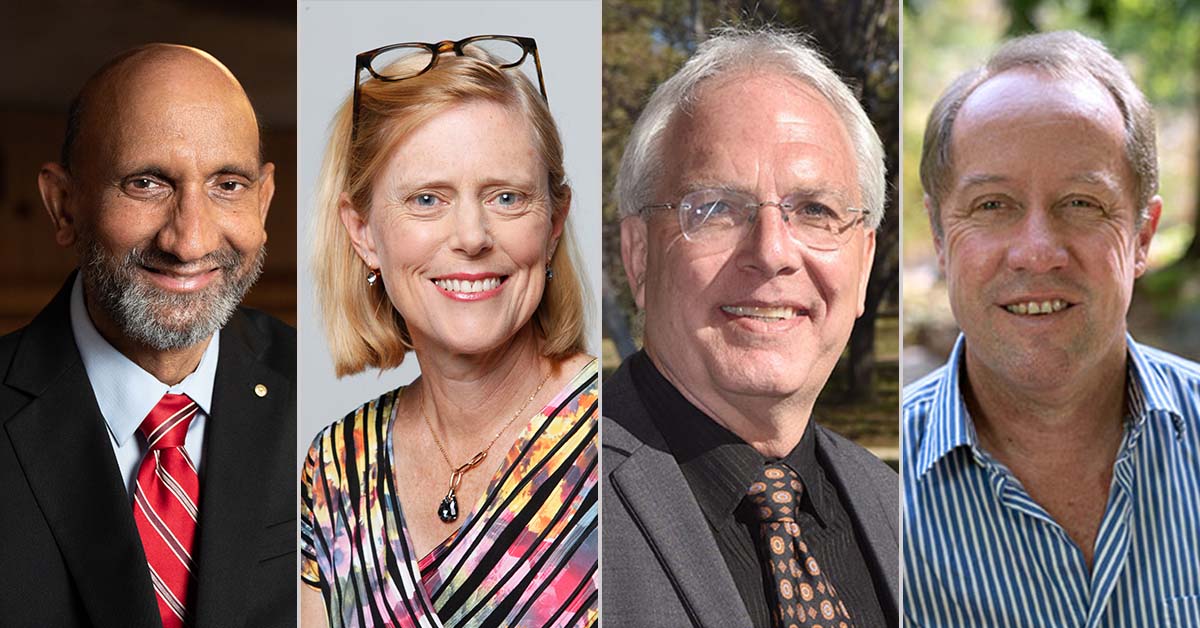
Academy Fellows elected to the Royal Society in 2025 are (from left) Professor Chennupati Jagadish, Professor Melissa Little, Professor Bill Laurance and Professor Hugh Possingham.
President of the Australian Academy of Science, Professor Chennupati Jagadish, is one of four Academy Fellows elected to the Royal Society, the United Kingdom’s national academy of sciences. Internationally recognised for achievements in their fields, the Academy Fellows elected to the Royal Society are:
- Professor Chennupati Jagadish AC PresAA FRS FREng FTSE from the Australian National University, elected for playing a pivotal role in shaping science policy in Australia, advancing the field both nationally and globally as President of the Australian Academy of Science, and for his pioneering contributions to semiconductor optoelectronics and nanotechnology.
- Professor Melissa Little AC FAA FAHMS FRS from the Novo Nordisk Foundation Centre for Stem Cell Medicine (reNEW) in Denmark and Australia’s Murdoch Children’s Research Institute, elected for her international leadership in developmental biology, stem cell science and nephrology, particularly her seminal research in renal regeneration.
- Professor Bill Laurance FAA FRS from James Cook University, elected for his pioneering research into the causes and consequences of human degradation of tropical forest ecosystems, in particular his work on the impacts of habitat fragmentation, logging, fires, infrastructure expansion, climate change and exotic pathogens.
- Professor Hugh Possingham FAA FRS from the University of Queensland, elected for his major contributions in mathematical and theoretical ecology and his work in applying ecological theory to formulate and solve some of the biggest problems in nature conservation.
Giants of science
Professor Jagadish said that following in the footsteps of giants of science like Isaac Newton, Charles Darwin, Albert Einstein, Ernst Rutherford, Stephen Hawking, Dorothy Hodgkin and Mark Oliphant “is truly humbling”.
“This is a recognition for the work of many of my students, postdocs, academic colleagues, and national and international collaborators during the past 35 years.
“There is a long history of collaboration between the Academy and the Royal Society. It is a particular honour for me to have been elected a Fellow of the Royal Society while serving as the President of our Academy.
“My election is not only based on my contributions to science but also for my science leadership. This will allow me to further strengthen the historical relationship between our organisations and work together to champion the cause of science and serve the global community through science in these challenging times,” Professor Jagadish said.
The best of scientific endeavour
Royal Society President, Professor Sir Adrian Smith, welcomed the latest cohort of outstanding researchers.
“Their achievements represent the very best of scientific endeavour, from basic discovery to research with real-world impact across health, technology and policy,” Sir Adrian said.
“From tackling global health challenges to reimagining what AI can do for humanity, their work is a testament to the power of curiosity-driven research and innovation.”
The Royal Society and the Australian Academy of Science share strong historical ties. In the early 1950s, a group of Australian-based Fellows of the Royal Society, including physicists Sir Mark Oliphant and Dr David Martyn, championed the establishment of a similar national organisation of scientists to support the growing capability of Australian science.
Since then, both organisations have continued to recognise scientific excellence nationally and around the world by electing distinguished researchers to their Fellowships.
Building Australia’s Future powered by science and innovation
The President of the Australian Academy of Science, Professor Chennupati Jagadish AC, has welcomed the new Albanese Ministry and outlined seven immediate priorities for the federal government.
“The Albanese government has shown their commitment to reforming the R&D system by commissioning the Strategic Examination of R&D,” said Professor Jagadish.
“Redesigning our R&D system is critical to boosting productivity, diversifying the economy, creating jobs and building Australia’s future.”
Together, we have a chance to create a better Australia – and a better world – powered by science. Ultimately, investing in science is investing in our future.Anthony Albanese, October 2024
Top priorities for the new Albanese government
- Embrace the Strategic Examination of R&D – the most comprehensive review of the R&D system in decades – to recognise and position R&D as a key driver of productivity, economic diversity and international competitiveness.
- Co-invest in the Academy’s philanthropically supported Global Talent Attraction Program to urgently fill R&D capability gaps in Australia.
- Urgently modernise Australia’s high-performance computing and data infrastructure – our supercomputers – which are reaching their end of life and cannot meet the growing demands of science, defence, industry and society.
- Respond to the policy shifts in the United States, including emerging vulnerabilities to Australian national R&D capabilities such as vaccine development, climate modelling, quantum computing and advanced manufacturing.
- Urgently develop a strategy to guide Australia’s approach to international scientific collaboration, so we can compete in the global scientific and technological race, build economic resilience and national security, and position science and technology as a critical lever in diplomacy.
- Develop an AI investment plan to build national AI capability across the R&D system, including in fundamental AI science.
- Reform the National Science and Technology Council to enable Cabinet decision making to be informed by the best available evidence.
“The Academy warmly welcomes the appointment of Senator the Hon Tim Ayres as the new Minister for Science and Minister for Industry and Innovation and the Hon Dr Andrew Charlton MP as the new Assistant Minister for Science, Technology and the Digital Economy,” said Professor Jagadish.
“R&D covers virtually every portfolio. The Academy especially acknowledges the new appointments of the Hon Dr Andrew Leigh (Productivity) and Senator the Hon Murray Watt (Environment and Water), and the reappointments of the Deputy PM the Hon Richard Marles (Defence), the Hon Jim Chalmers (Treasury), Senator the Hon Katy Gallagher (Finance), Senator the Hon Penny Wong (Foreign Affairs), the Hon Mark Butler (Health and Ageing), the Hon Jason Clare (Education), the Hon Julie Collins (Agriculture, Fisheries and Forestry), the Hon Chris Bowen (Climate Change and Energy) and the Hon Pat Conroy (Pacific Island Affairs).
“The Academy looks forward to working with the new government and the 48th Parliament to provide independent, evidence-based science advice to shape policies that benefit all Australians,” Professor Jagadish said.
Elevating our voices: Reflections on the International Science Council from an EMCR perspective
By Dr Charlie Morgan, member of the EMCR Forum Executive Committee
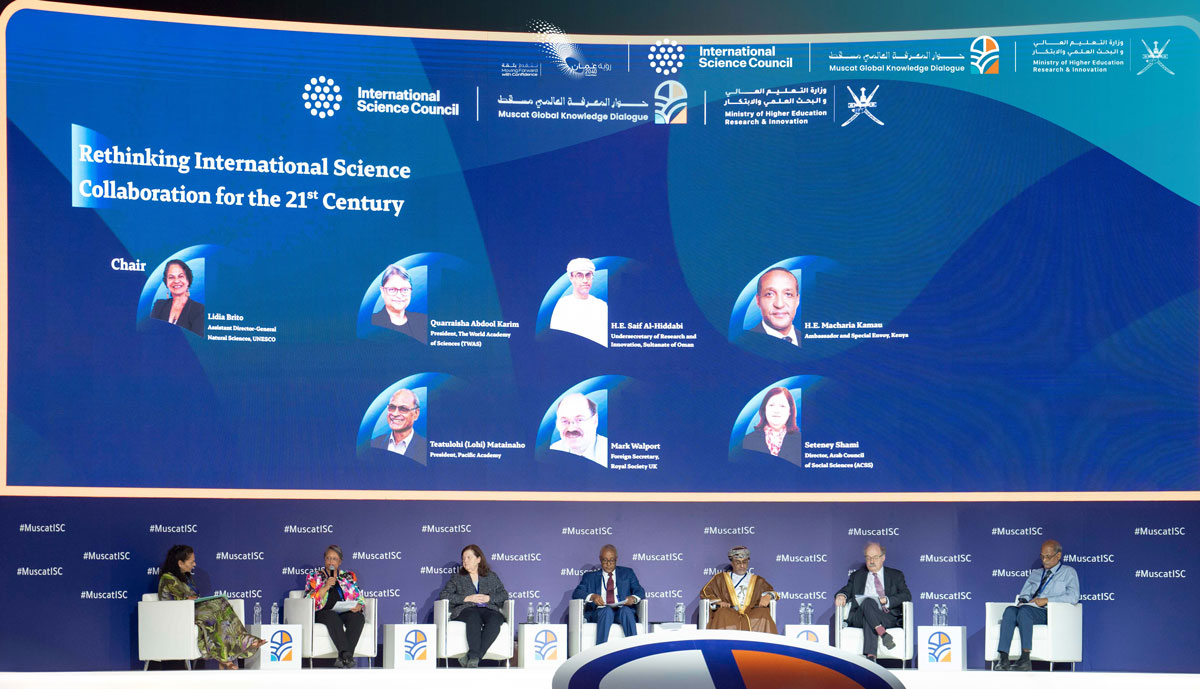
Earlier this year, I had the privilege of joining the Australian delegation at the Global Knowledge Dialogue and 3rd General Assembly of the International Science Council (ISC).
The tandem event took place in Muscat Oman at the end of January.
Over five days it provided a platform and space for hundreds of delegates across 250 member organisations to meet, re-connect, share challenges and ideas, and progress shared agendas on some of the most pressing global challenges of this century. Priority themes were Freedom, Responsibility and Inclusivity in Science; International Science Agenda Setting; The Evolution of Science and Science Systems; Evidence-Based Policymaking; and Science Diplomacy.
Many of the sessions were recorded and are available on the ISC YouTube channel.
It was not lost on delegates that there had been a strategic decision by ISC to both welcome and enable the participation of EMCRs at the event. Traditionally these events have been a very high-level and a more senior delegate exercise in international science policy and cooperation between scientific unions and national science academies.
It was not lost on delegates that there had been a strategic decision by ISC to both welcome and enable the participation of EMCRs at the event.
More on the EMCR perspectives later.
If like me you are unfamiliar with the ISC it emerged in 2018 from the merger of the International Council for Science (ICSU) and International Social Science Council (ISSC). The ISC leverages the integration of natural and social sciences with their distinctive legacies, systems and networks stretching back to their formations in 1931 and 1952 respectively.
I have always been more motivated by the challenge and question than the disciplinary boundaries and methods that often push us into silos. While many may argue about the number of Ms and inclusion of A into the acronym of STEM, I have come to appreciate the ISC definition: ‘science is used to describe the systematic organisation of knowledge that can be rationally explained and reliably applied’*.
To set the backdrop to the meeting, US President Trump was re-writing international norms, a cease fire was taking hold in Gaza, the third anniversary of the Russian-led war in Ukraine loomed, and the civil war in Sudan was worsening for civilians. With more than 56 armed conflicts across the globe, it was little surprise that conversations and questions often touched on the dual uses of science, the responsibility of science and its scientists in a global world.
As a Research Strategist at a top-ranked university, in a remote and highly developed country, the responsibility and contribution that an EMCR makes in a global system of science – and science for sustainable development – is over the horizon most days. Yet the goodwill, passion and determination on display by many of the senior and EMCR delegates served as an important reminder to the common bonds we share, the challenges, and the impacts that cascade by starting small and acting together.
By the end of the conference, I came to appreciate the unique role that the ISC and its members play in shaping global, regional and local objectives and initiatives that have direct impacts on EMCRs.
It remains unanswered how to best engage the EMCR perspectives in the ISC platform and those of many of its members. The challenge is both structural and conceptual. Few if any of the EMCRs I met had any confidence that they would attend the next General Assembly in 2029 or even have financial means to attend the mid-term meeting to be hosted by the China Association for Science and Technology (CAST) in Beijing, in October 2026. Most EMCR delegates I spoke with were quick to highlight the gap in the program for EMCRs as speakers, panel members or session chairs. Further integration of EMCR voices into the formal program will strengthen future dialogues, and the network and impact of the ISC and its members.
The goodwill, passion and determination on display by many of the senior and EMCR delegates served as an important reminder to the common bonds we share, the challenges, and the impacts that cascade by starting small and acting together.
Special thanks to ISC President-elect Robbert Dijkgraaf for attending the morning session for young academies and associations (YAAs), sometimes referred to as young scientist organisations. It is recognised by many, including Robbert, that referring to us as ‘young’ misses the mark and conjures a certain grey haired (if any hair at all) less desirable stereotype of the Fellows of our more senior/elder academies. Given the choice again, I suspect that ‘young’ would not be chosen.
The voices of young academies are increasing in numbers and impact, likely an outcome from growing multi/transdisciplinary focus of their membership. Yet our own lived experiences as the Australian EMCR Forum and that of the analogous North American organisations, that is, the College of New Scholars, Artist and Scientists of the Royal Society of Canada (RSC College) and New Voice program, teach us about different models and the value of conveying diverse voices of EMCRs for dialogues that build emerging leader capabilities and shape national and global futures.
I hope Robert’s interest and election of at least two ISC governing board members who have close ties to EMCR communities will lead to more engagement and dialogue about the challenges and shared benefits of growing YAAs participation in ISC initiatives.
One option would be a formation of a working group of interested YAAs and conversations with ISC staff and board members to draft a vision and action plan that articulates the challenges, opportunities and actions to support scalable and sustainable YAAs engagement in ISC activities. It is evident that building capacity and knowledge in regional and international cooperation among EMCRs will have long-term benefits for science and society, yet the pathway to get there needs more navigators and mentors. It is also evident that the challenges facing the ISC, its members, and the multilateral system are complex, priority setting and resourcing is challenging, and pathways to progress are uncertain. It is my hope that strengthening ISC regional focal points, such as in Asia and the Pacific, Latin America, and a newly announced office in Muscat, will increase accessibility and engagement for regional EMCRs.
It is my hope that strengthening ISC regional focal points, such as in Asia and the Pacific, Latin America, and a newly announced office in Muscat, will increase accessibility and engagement for regional EMCRs.
My real awareness of the ISC and its role in international science systems and policy is a direct outcome of my executive committee role on the EMCR Forum hosted by the Australian Academy of Science. In addition to my engagement with the ISC and its members, my principal motivation in attending the event was meeting face to face and developing relationships with similar organisations of EMCRs to exchange ideas, lessons and challenges that we encounter as ‘national’ associations of EMCRs. After countless conversations with delegates, I gained a better understanding of the nuances of structure, governance, funding mechanisms, meaning and value of membership, core activities, and relationship with more senior academies that are used in different organisations and regions. As expected, it isn’t a one size fits all approach, but there are lessons to be used and adapted for the Australian context and needs.
It is apparent that both national and international science systems are recognising the value of EMCR perspectives in shaping research policies, practices and culture. While I expect opportunities to contribute will grow, we as organisations must make tough choices on what we pursue. Principally we are volunteer-led, bottom-up communities with shared objectives and limited resources and capacity.
With the support and early leadership of the Australian Academy of Science, the EMCR Forum is one of the older organisations that promotes EMCR voices in national science dialogues. Yet with seniority also comes a responsibility to periodically review our unique role and responsibilities, including governance, the meaning of membership, and our value proposition to Australian EMCRs and our stakeholders in universities, industry and government.
It is apparent that both national and international science systems are recognising the value of EMCR perspectives in shaping research policies, practices and culture.
Many thanks to the people of Oman and our gracious hosts at the Ministry of Higher Education, Research and Innovation.
Special thanks to the Australian Academy of Science for their support for my attendance and generous contributions from other ISC members that collectively enabled over 80 delegates from the global south to attend and contribute to the discussions and panels.
Dr Charlie Morgan
About the author
Charlie Morgan is a chemical biologist and research strategist at the ANU. He has served as an executive committee member of the EMCR Forum since 2022. He currently leads the Forum’s International Portfolio and previously served as a co-deputy chair. He highly values the opportunities the Forum have catalysed for him to collaborate with EMCRs, academy staff and fellows, to raise awareness and promote EMCR perspectives that shape science dialogs and systems in local, national and most recently international policies and priorities.
* The ISC states it uses this shorthand [STEM] because there is no single word or phrase in English to adequately describe this knowledge community.
Global Talent Attraction Program: BBC interview with Academy Chief Executive Anna-Maria Arabia
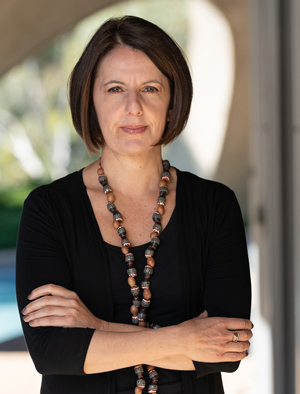
Australian Academy of Science Chief Executive, Anna-Maria Arabia OAM
Transcript of interview with BBC World Service Weekends
Julian Worricke: With American researchers and students looking at leaving the country to study abroad, there are a whole host of international higher education centres who are desperate to entice them. This week the Australian Academy of Science, for example, announced it was launching a Global Talent Attraction Program and said the government needed to act swiftly to attract the smartest minds leaving the United States. Shortly I will speak to the head of the Australian Academy of Science about that ambition and how they will compete in a global market.
Anna-Maria Arabia: We’ve launched a Global Talent Attraction Program to respond to what we’re seeing as many very talented scientists and technologists who have perhaps lost their jobs or who are feeling disenchanted, and to bring their excellence and expertise to Australia so that they can contribute to the Australian context. We have seen time and time again the benefits of bringing expertise and scientists who are committed to their fields to Australia. They’re able to seed talent, create jobs and really nurture the next generation. So, we're looking at attracting talented people to Australia, but we know we have to act swiftly.
Julian Worricke: I’m also aware that a lot of other countries are also doing the same thing just now.
Anna-Maria Arabia: Indeed, and we’re not the only ones to have identified this opportunity and that’s the very reason we do need to act quickly. There are many talented people across the United States, some of whom unfortunately may be facing very uncertain times. Countries around the world, both at a national level, sometimes at a continent level and institutionally are starting to establish programs to enable them to attract talent to their shores. We feel Australia can benefit and so we’ve moved to act very swiftly to capture that benefit.
Julian Worricke: Are there any particular areas of science where you’d most like to attract people?
Anna-Maria Arabia: We are both institutionally and discipline agnostic at the Australian Academy of Science. By which I mean we’re able to look at any discipline. We know that when you bring excellence to your scientific endeavour it breeds results; it leads to innovations that are unheard of or unthought of at the time of that discovery science. However, there is a case to be made at looking at national need and looking at areas where we may have capability gaps. The Australian Academy of Science has undertaken a number of studies in this area. So, looking at the potential pool of candidates who may wish to come here, there may be an opportunity to fill those gaps as a priority.
Julian Worricke: You launched this Global Talent Attraction Program as of Thursday and you warned the nation needed to act swiftly. So, what kind of timeframe do you have in your mind here?
Anna-Maria Arabia: We’ve established the program and done some modelling around the sort of relocation package that would be required to attract people to Australia. We’ve also surveyed the Fellows of the Australian Academy of Science, who collaborate with their counterparts across the world including in the United States. So, through them we have been able to gain a clearer picture on the sort of demand there is for relocation. We feel this will take time. You don’t just pack up your bags and leave immediately. But certainly, we’re willing to work with candidates who may be inclined to move. I think one of the things we need to remember about scientists worldwide is that they are driven by curiosity. They are driven by discovery. You can’t just turn research on and off and I think it’s that desire to continue their work for the global good that will drive people to want to continue in a nurturing environment. We hope Australia might be a destination that they would consider.
Julian Worricke: Well, thank you very much for coming on the program. Interesting to hear that perspective on all of this. That’s Anna-Maria Arabia, Chief Executive of the Australian Academy of Science.
Join us in shaping Australia’s future: Academy of Science leads establishment of a Global Talent Attraction Program
The Australian Academy of Science is excited to announce the establishment of a Global Talent Attraction Program.
Australia has an urgent and unparalleled opportunity to attract the smartest minds leaving the United States to seed capability here and nurture the next generation of scientists and innovators.
We must act swiftly to capitalise on this opportunity.
The Academy is inviting funders to contribute to the Global Talent Attraction Program. Their visionary leadership will leave a profound and nation-building legacy.
Through the Global Talent Attraction Program, we are leading a national, coordinated effort to rapidly recruit to Australia leading US scientists and Australians returning home.
Our Program is institution- and discipline-agnostic. This allows the Academy to prioritise excellence and focus on areas of national need when attracting talent to our shores.
Australians have repeatedly witnessed the multiplier effect of embedding smart minds within the Australian R&D system. These individuals seed capability, create jobs, attract further investment, mentor young scientists, stimulate collaboration, contribute to the national economy, and shape our future.
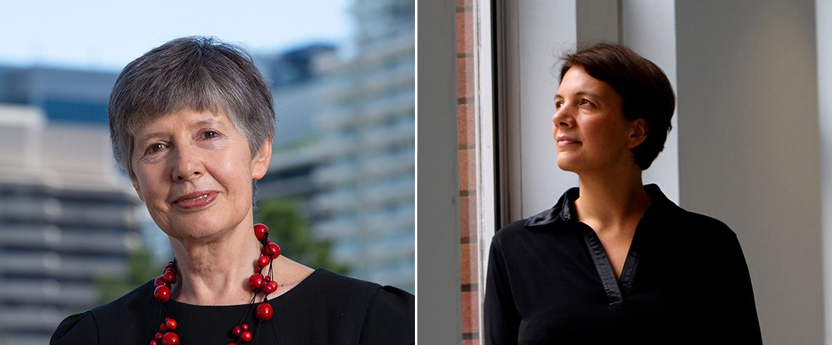
When Professor Michelle Simmons AO FAA FTSE FRS decided to call Australia home, she seeded a 30-year development of quantum science that today sees Australia leading the race to develop the first quantum computer.
When Professor Lidia Morawska FAA joined Queensland University of Technology, she gifted Australia world-leading expertise in airborne transmission of disease that shaped the global response to COVID-19.
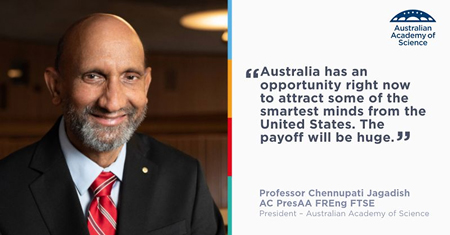
The Academy has designed a competitive relocation package sufficient to attract leading scientists and technologists to Australia to work in any research organisation or industry.
Our independence and more than 70 years of experience in international engagement, most recently demonstrated through the philanthropically supported Ukraine–Australia Research Fund, is instrumental in delivering this benefit to Australia.
There is no time to waste as other countries have already recognised the opportunity and are mobilising to attract talent to their shores.
This statement is attributable to: Professor Chennupati Jagadish AC PresAA FREng FTSE, President, Australian Academy of Science
GTAP
Support the program
We invite you to partner with us to support the Global Talent Attraction Program. To find out more contact the Academy via philanthropy@science.org.au or phone +61 6201 9460.
Read the transcript of a BBC interview with the Academy Chief Executive about the program.
Eight ways Australia can improve the way it invests in research
The Australian Academy of Science’s submission to the Australia Research Council’s (ARC) review of the National Competitive Grants Program (NCGP) makes eight recommendations that would improve its effectiveness.
Amongst them, the submission makes the point that: “two years is too short for the proposed Initiate scheme and embedded fellowships and recommends the Initiate grants have a minimum duration of three years, ideally four.”
Academy President, Professor Chennupati Jagadish, said shorter grants detract from research productivity and risk excessive administrative load, particularly impacting early- and mid-career researchers (EMCRs).
“Longer grants are necessary to foster groundbreaking research and attract skilled researchers,” Professor Jagadish said.
The submission also recommends that the ARC change the design of the Lead and Mentor scheme to focus on talent attraction.
“The ARC should change the wider Lead and Mentor scheme's design to reflect the original intent of the Georgina Sweet Australian Laureate Fellowship’s, which was to be a talent attraction scheme for Australia.”
The Academy submission also calls on the ARC to explore how a new model for the NCGP can enhance international research collaboration. This includes incentivising overseas partner investigators' participation, providing opportunities for researcher exchange at overseas institutions and facilitating Australian researchers to access international funding schemes.
Academy President thanked the ARC for listening to the sector’s concerns and endorsed the ARC’s greater appetite for risk outlined in the proposed reforms.
“Any changes to the scheme should be considered in the context of broader transformation of Australia’s R&D system including not adversely impact early and mid-career researchers,” said Professor Jagadish.
Read the Academy’s full list of eight recommendations and submission.
Read the Academy’s EMCR Forum submission.
Five emerging scientists receive 2025 J G Russell Award
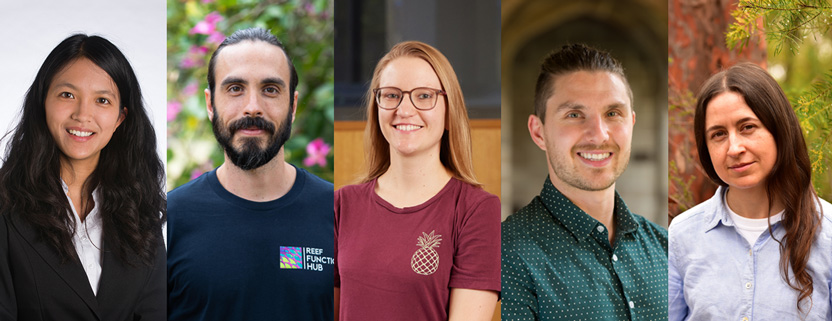
(from left) Dr Morgan Li, Dr Alexandre Siqueira, Dr Sarah Piper, Dr Marcus Giansiracusa and Dr Laura Williams. Images supplied.
Five researchers have been awarded funding from the Australian Academy of Science to support research in fields as varied as rare-earth minerals and microplastics.
The Academy’s J G Russell Award provides financial assistance to talented younger researchers in the basic sciences. It recognises the costs involved in experimental research and can be used towards equipment, maintenance and travel.
The award is supported by the generosity of the late Miss J Russell and provides top-up grants of up to $7,000 to projects funded through the Australian Research Council’s Discovery Early Career Research Award (DECRA).
Dr Marcus Giansiracusa, University of Melbourne
Dr Marcus Giansiracusa’s molecular advances aim to enhance efficiency by reducing material quantities and lowering energy costs. Receiving the award will enable him to explore new applications for rare-earth minerals from a chemical design perspective.
“These elements, for which Australia holds a significant global supply, already play a pivotal role in modern technology,” Dr Giansiracusa said.
“I am honoured to receive the JG Russell Award, which will support me in establishing a collaboration with the National High Magnetic Field Laboratory in the USA. I will gain expertise in techniques for quantifying spin coherence in candidate molecules for quantum computing applications,” he said.
Dr Morgan Li, University of Sydney
Dr Morgan Li seeks to enhance the understanding of microplastic transport in natural environments and raise public awareness about this pollution issue through scientific publications and engagement with the Australian microplastic assessment project (AUSMAP) platform.
“I am very excited to have the opportunity to contribute to community outreach in addition to scientific research. This will allow me to engage in scientific communication and share the fun of STEM with a broader audience,” Dr Li said.
Dr Sarah Piper, Monash University
Receptors are crucial proteins that transmit external information across the cell membrane to the cell interior. Using innovative structural biology approaches, Dr Sarah Piper’s project will investigate the molecular details on how the PAC1 receptor, an important G protein-coupled receptor, is activated and how different variants of this receptor change its shape and function.
“I will also utilise the latest 3D graphics tools to communicate the data through molecular movies and 3D animations,” Dr Piper said.
“The award will allow an extended visit with an expert computational lab to apply molecular dynamics simulations to better understand the function of these critical receptors.”
Dr Alexandre Siqueira, Edith Cowan University
Marine biologist Dr Alexandre Siqueira investigates the forces shaping coral reef biodiversity through history. His research aims to uncover the key features of ancient reefs that drove reef fish productivity, a vital ecosystem service for human nutrition.
With the J G Russell Award, Dr Siqueira will collaborate with experts at the Smithsonian Tropical Research Institute, advancing modelling techniques and building networks to bring transformative insights about coral reef biodiversity back to Australia.
“My project brings together diverse disciplines to answer fundamental questions about coral reef ecosystems,” Dr Siqueira said.
“By understanding the past, we can better protect these habitats and the resources they provide.”
Dr Laura Williams, Western Sydney University
Dr Laura Williams’s research aims to understand the causes and consequences of the diversity of eucalypt trees in Australia. She combines spectroscopic data analysis with vegetation modelling to investigate how this diversity arose and its impact on ecosystem function.
“I am thrilled to receive the J.G. Russell Award, and I am very grateful to Miss Russell and the Academy for their support of early career researchers,” Dr Wiliams said.
“This award will support an overseas trip where I will visit and collaborate with several research groups using spectroscopic data to investigate the ecology and evolution of plants. I envision this trip will have immediate and lasting impact on my research by expanding my network of collaborators and giving me the opportunity to learn new analytical skills central to my DECRA project.”
Applications and nominations for the Academy’s 2026 awards and funding opportunities are now open.
Speech: President’s address to Indiaspora gathering
I wish to acknowledge the Traditional Custodians and pay my respects to their Elders past, present, and emerging.
Jai Patel and Shanthini Naidoo – thank you for your invitation to speak at this special event.
MR Rangaswami – congratulations on all that you have achieved and the impact you’ve created 13 years on from founding Indiaspora.
It is wonderful to be here at the SCG – a place of excellence, performance, and team spirit – much like the values that drive us in science and innovation.
About me
I was born in India, raised with deep cultural roots and a strong belief in education as a pathway to serve others.
That belief brought me to Australia where I’ve had the privilege of building a career in science and today, I am a proud nanoscientist.
I work with things a million times smaller than a pinhead. I could probably fit 21 lasers into a single strand of your hair… but don’t worry, I won’t try that tonight!
Shared values
It’s a very special occasion to be in a room like this – surrounded by people who believe in knowledge, service, and giving back.
At the Australian Academy of Science, which I’m honoured to lead, we see science as a public good – something that belongs to everyone, and that should benefit everyone.
That spirit is alive here tonight – in the work of Indiaspora, in what St Vincent’s does every day to care for our communities, and in the quiet efforts many of you make to build bridges across countries, sectors, and generations. Global society is the beneficiary of our many shared and important endeavours.
Advancing science and medical research
And we are living in an exciting time for science. Knowledge is moving fast, and the intersections between fields are where real breakthroughs lie.
My own research sits at one of those intersections: using nanotechnology applied to neuroscience.
We are using nanomaterials to stimulate brain cells – a potential non-invasive way to help people living with Alzheimer's.
This work lies at the intersection of physics, engineering, biology and medicine – and it shows what’s possible when we think and work across disciplines.
My discovery research over the past 30 years has also led to the creation of new solar cells, new methods to split water to create clean energy sources and breath sensing for ketosis.
But I have learned that the most meaningful breakthroughs happen when we work together.
Global Collaboration: India, Australia and the United States
Science knows no borders and neither should we.
Despite some of the challenges we currently face across the globe, the opportunities for Australia to work with India and deepen our connection could not be greater.
India, Australia, the US and many more countries all bring something unique to the table of knowledge: deep expertise, global perspectives, talent infrastructure and world-class institutions.
Australia and India have so much more potential to unlock – in AI, quantum technology, renewable energy, health, and more.
There is an immense opportunity for Australia and India to deepen collaboration through joint research initiatives, PhD exchange programs and commercialisation partnerships in health, AI, quantum, renewable energy – to name just a few.
Places like St Vincent’s show how global talent can come together to turn research into real care.
And diaspora networks like this one can be the bridge – we carry the stories, values, and trust to make partnerships real.
Philanthropy
Beyond the lab, I believe deeply in giving – of time, knowledge, mentorship and through philanthropy.
Many years ago, I directly felt the transformational impact that the generosity of others can have. If it weren’t for the generosity of my maths teacher in India, today I would most probably be ploughing the field in India like my cousins.
My maths teacher gave me the gift of education. Never could I have imagined that it could set me on a path to pursue inquiry and scientific endeavour and to become President of one of the most prestigious scientific organisations in the country, the Australian Academy of Science.
This generosity inspired my wife, Vidya and I, to create a fund which gives students and researchers from developing countries a chance to travel to the Australia to pursue collaborative research and develop their networks. We have gone on to support initiatives at the Australian Academy of Science to nurture the next generation.
Because talent is everywhere, but opportunity is not. I leave you with this parting thought.
I want finish with my sincere thanks, it’s been a pleasure to share stories, ideas, and possibilities with you all. Thank you.
Academy President Professor Chennupati Jagadish delivered this speech at an Indiaspora event in Sydney on 8 April 2025.
Leading minds and emerging stars: Academy announces recipients of prestigious honorific awards
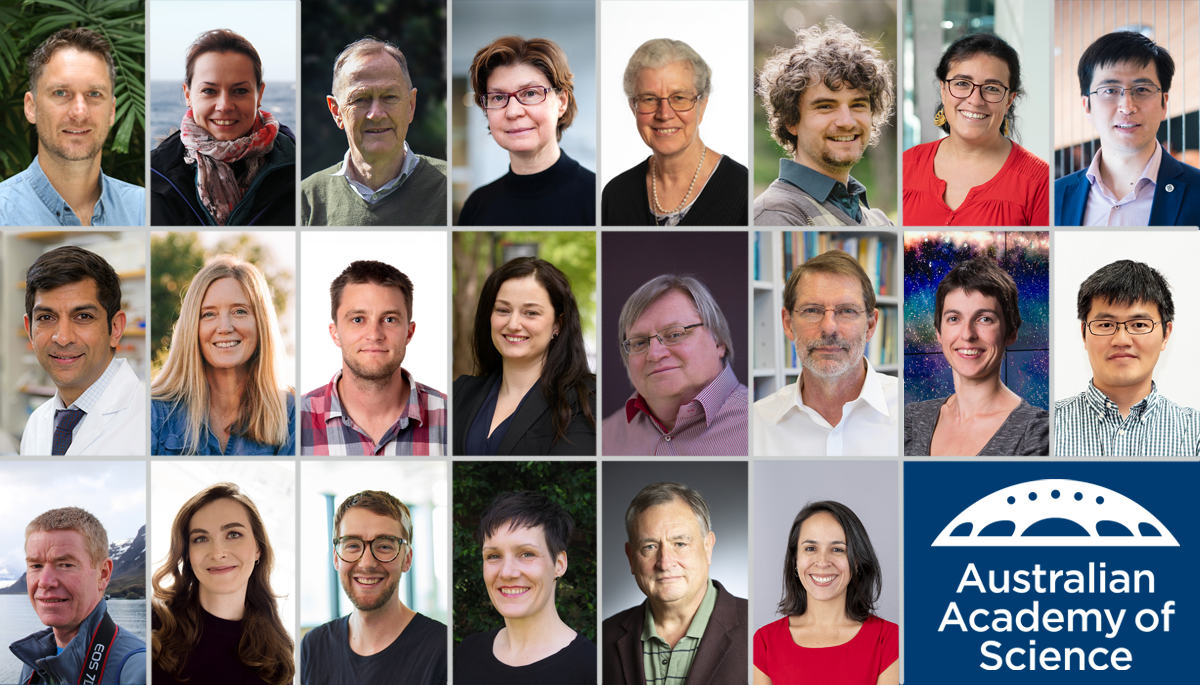
The Australian Academy of Science’s honorific awardees for 2025.
The Australian Academy of Science today recognises 22 scientists from across the country in its annual honorific awards, which celebrate the achievements of leading minds and emerging scientific stars working to solve humanity’s greatest challenges.
Among those recognised are scientists working to fight breast cancer, antibiotic resistance and climate change, together with efforts to understand the evolution of Earth and how galaxies are formed.
“Our nation boasts distinguished scientists whose research is making great strides towards new scientific discoveries. The annual honorific awards present an opportunity for the Academy to recognise these burgeoning and established researchers and their invaluable research,” President of the Australian Academy of Science, Professor Jagadish, said.
“On behalf of the Academy, I congratulate this year’s awardees who have all made remarkable contributions in their respective fields.”
Our nation boasts distinguished scientists whose research is making great strides towards new scientific discoveries.
The power of fundamental research
The Australian National University’s Distinguished Professor Yuri Kivshar FAA, a world-recognised pioneer in optics and photonics, has received one of the most prestigious career awards of the Academy, the Matthew Flinders Medal and Lecture.
The metaphotonics research Professor Kivshar is conducting at ANU is revolutionising optical communications, biomedical sensing, and defence systems. For more than two decades, Professor Kivshar pioneered nonlinear optics and metamaterials before transitioning metamaterials into optics, founding metaphotonics – a field yielding artificial photonic materials with unique properties.
Professor Kivshar’s curiosity and daily discoveries fuel his pride in creating a globally followed research direction. At ANU, he continues to inspire, blending scientific rigour with practical impact. His contributions not only advance photonics but also shape technologies that enhance security, healthcare and connectivity, demonstrating the power of fundamental research in transforming lives.
Professor Kivshar said receiving the Matthew Flinders Medal is a “very important achievement” for him.
“When I came to Australia more than 30 years ago, I didn’t expect I would achieve something like this,” he said.
Potent new antibiotics
Early-career researchers Associate Professor Amy Cain from Macquarie University and the ARC Centre of Excellence in Synthetic Biology, and Associate Professor Shom Goel from the University of Melbourne and the Peter MacCallum Cancer Centre have been awarded this year's Gottschalk Medal. The medal recognises outstanding research in the biomedical sciences by researchers up to 10 years post-PhD.
Antibiotic resistance is predicted to cause 10 million deaths per year by 2050 – more than all cancers combined as a result of antibiotics no longer working against deadly infectious bacteria. Associate Professor Cain’s research bridges a key gap between finding promising drug targets in bacteria and developing potent new antibiotics. She is developing and applying new technologies to the deadliest hospital bacteria to build blueprints of how their genes adapt during treatment with existing antibiotics, revealing hidden weaknesses that can be targeted with new drugs.
“My dad was always a huge supporter of my career, always reinforcing that women can do whatever they put their minds to. A story he told about how he was one of the first civilians to receive antibiotics in the 40s, and how penicillin saved him from life-threatening pneumonia when he was an infant, was always a motivator for me to pursue the development of these miracle drugs (antibiotics),” Associate Professor Cain said.
Associate Professor Cain said she is honoured to receive the Gottschalk Medal. “I deeply respect the Australian Academy of Science and its Fellows are Australia’s top scientists that I admire very much.
“Given this chance to even be in their orbit is humbling and I hope I can become an Academy Fellow one day,” Professor Cain said.
New approaches
Associate Professor Shom Goel’s laboratory research has sought to identify and understand treatments that block cancer cell division, with a focus on breast cancer. He has made seminal discoveries that have changed the way we think about cancer cell division, cancer immunology, and cancer epigenetics. which have led to the design of new approaches to treat breast cancer.
“I am acutely aware of the impact cancer can have on an individual and their family, both in the short and long term, and am driven to discover treatments that can lessen that burden. This motivation, coupled with my love of solving problems with logical thinking, led me to my current career path,” Associate Professor Goel said.
“Science has given me the opportunity to work alongside bright and brilliant people all over the world and has instilled in me a true optimism that medical research can drive rapid progress,” Associate Professor Goel said.
2025 honorific award recipients
Premier honorific awards
Matthew Flinders Medal and Lecture – Distinguished Professor Yuri Kivshar FAA, Australian National University
Ruby Payne-Scott Medal and Lecture – Professor Jane Visvader FAA FAHMS FRS, Walter and Eliza Hall Institute of Medical Research
Career honorific awards (for lifelong achievement)
David Craig Medal and Lecture – Professor Alison Rodger FAA, Australian National University
Hannan Medal – Professor Noel Cressie FAA, University of Wollongong
Jaeger Medal – Professor Hugh O’Neill FAA FRS, Monash University
Suzanne Cory Medal – Professor Steven Chown FAA, Monash University
Thomas Ranken Lyle Medal – Professor George Willis FAA, University of Newcastle
Mid-career honorific awards (8–15 years post-PhD)
Jacques Miller Medal – Professor James Hudson, QIMR Berghofer Medical Research Institute
Nancy Millis Medal – Associate Professor Natasha Hurley-Walker, Curtin University
Early-career honorific awards (up to 10 years post-PhD)
Anton Hales Medal – Associate Professor Stijn Glorie, University of Adelaide
Christopher Heyde Medal - Associate Professor Anita Liebenau, University of New South Wales
Dorothy Hill Medal – Dr Linda Armbrecht, University of Tasmania
Fenner Medal – Associate Professor Katherine Moseby, University New South Wales and Associate Professor Daniel Noble, Australian National University
Gottschalk Medal – Associate Professor Amy Cain, Macquarie University and Associate Professor Shom Goel, Peter MacCallum Cancer Centre
John Booker Medal – Associate Professor Qianbing Zhang, Monash University
Le Fèvre Medal – Dr Fengwang Li, University of Sydney
Moran Medal – Professor Margarita Moreno-Betancur, Murdoch Children’s Research Institute and University of Melbourne
Pawsey Medal – Associate Professor Claudia Lagos, University of Western Australia and Dr Daria Smirnova, Australian National University
Ruth Stephens Gani Medal – Dr Ira Deveson, Garvan Institute of Medical Research
More about our awards
Read more about the awardees and their research.
See our award feature stories on Antarctic research and breast cancer research.
Nominations for the Academy’s 2026 honorific awards close 1 May 2025. Nominate now.
Leading scientists recognised by Academy for excellence in Antarctic research
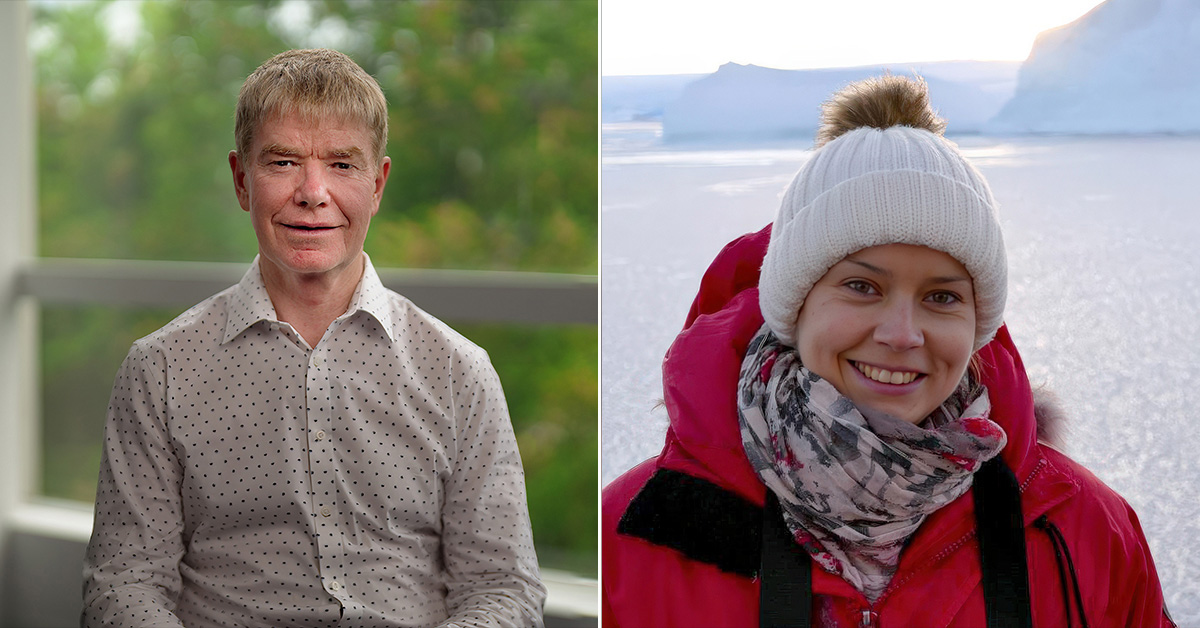
Two distinguished researchers in the field of Antarctic science and conservation have been recognised as 2025 honorific award recipients by the Australian Academy of Science.
Find out about all our 2025 honorific awardees.
Professor Steven Chown FAA, Monash University
Academy Fellow Professor Steven Chown has been awarded the Suzanne Cory Medal, recognising his outstanding research in biological sciences across his career.
With over 30 years of field experience in Antarctica, Professor Chown has made profound contributions to understanding biodiversity variation and developing conservation strategies to mitigate the impacts of environmental change.
Professor Chown co-developed the field of macrophysiology – the investigation of large-scale patterns in physiological variation and their ecological implications. His work has revealed that invasive species have greater physiological tolerances than their indigenous counterparts, potentially advantaging them in the changing climate.
“I have always been interested in the natural world, and apparently with observational patience from a young age,” Professor Chown said.
“Science has enabled me to see our world in a multitude of different ways, through my eyes, and through the profound vision of others.”
His research has transformed understanding of Antarctic biodiversity, identifying the mechanisms structuring its variation and the approaches needed to secure that variation as the environment changes. His work has revealed that speciation events since the Miocene epoch – extending from around 23 to 5 million years ago – were important for generating terrestrial diversity in the broader Antarctic, previously a pattern identified only for marine species.
Science has enabled me to see our world in a multitude of different ways, through my eyes, and through the profound vision of others.
Professor Chown's continent-wide investigation of foreign species transport to Antarctica has also proven prescient. His collaborative research identified high-risk locations on the Antarctic Peninsula – precisely where independent researchers later discovered some of the first widely established invasive species.
His research directly informs policy development by the Antarctic Treaty Consultative Parties, leading to protocols for reducing species transfer by ships, aircraft and visitors. As President of the Scientific Committee on Antarctic Research from 2016–21, he provided critical scientific advice on environmental and science policy matters.
“Through my research and capability, I have been in the fortunate position to contribute to international Antarctic environmental and science policy,” said Professor Chown, who currently leads the nationally funded Special Research Initiative Securing Antarctica's Environmental Future.
Dr Linda Armbrecht, University of Tasmania
Dr Linda Armbrecht has received the Dorothy Hill Medal for her exceptional contributions to Earth science, continuing the legacy of women in scientific leadership.
Dr Linda Armbrecht has pioneered techniques to extract and analyse ancient DNA preserved in seafloor sediments (sedimentary ancient DNA, or ‘sedaDNA’). Her work addresses crucial gaps in our understanding of past marine ecosystems, particularly for organisms that don’t leave fossil records.
“I specialise in palaeo-genomics, specifically, the study of sedimentary ancient DNA preserved in the seafloor,” explained Dr Armbrecht. “My focus region is Antarctica, where my research generates new insights into how marine organisms have responded to climate variabilities through time.”
Her innovative methods have pushed the boundaries of what’s possible in the field.
“This has resulted in our ability to detect minuscule amounts of genetic material preserved in the deep seafloor, and over much longer times than we initially expected,” she said.
Her team’s groundbreaking research has extended the Antarctic marine sedaDNA record back to at least 1 million years – an achievement that allows “novel investigations into ecosystem dynamics over several glacial-interglacial cycles, including major global warming events, providing a biological equivalent to atmospheric climate records”.
My focus region is Antarctica, where my research generates new insights into how marine organisms have responded to climate variabilities through time.
Dr Armbrecht’s expertise has earned her invitations to participate in numerous Antarctic voyages.
“To date, I've travelled to Antarctica five times, and am about to embark on my sixth expedition to the icy continent leading my own voyage to the completely under-explored Cook Glacier marine region in 2026,” she said.
In 2021, she was awarded an Australian Research Council Discovery Early Career Researcher Award, which enabled her to establish her own research group at the Institute for Marine and Antarctic Studies (IMAS).
“I feel very fortunate to be leading this group where everyone is so passionate about applying and further developing these new genetic tools for polar ecosystem reconstruction with the goal to improve future predictions,” she says.
Her work provides critical insights into how keystone species like plankton and krill – which form the base of polar food webs – have evolved and adapted to past climate changes, offering vital clues about how Antarctic ecosystems might respond to future climate challenges.
Recognising excellence in science
The Suzanne Cory Medal, awarded to Professor Chown, recognises outstanding research in biological sciences and honours the contributions made to science by Professor Suzanne Cory AC FAA FRS, a molecular biologist who has made major contributions to understanding the genetic causes of cancer.
The Dorothy Hill Medal, received by Dr Armbrecht, honours the contributions of the late Professor Dorothy Hill AC CBE FAA FRS to Australian Earth science and her work in opening up tertiary science education to women. Professor Hill made history as Australia's first woman Professor in 1959 at the University of Queensland and as the first Australian woman Fellow of both the Australian Academy of Science (1956) and the Royal Society of London (1965).
Both researchers exemplify Australian leadership in Antarctic science, combining rigorous research with practical applications for conservation. Their work underscores the critical importance of Antarctic research – not only for preserving this unique environment but also for understanding broader patterns of climate change and biodiversity conservation globally.
This knowledge, as Dr Armbrecht said, “improves predictions of the extent and speed at which Antarctic marine communities can adapt to ongoing environmental change, ultimately helping us to manage marine resources in Antarctica”.