




Distinguished cardiovascular doctor to share research with Australian audiences

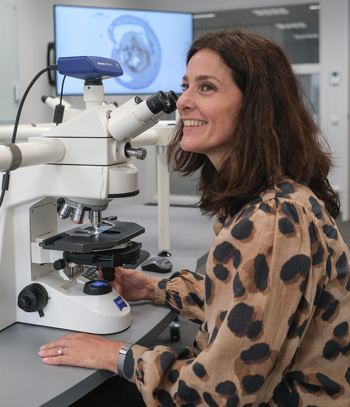
Professor Judith Sluimer will visit Australia as the recipient of the 2025 Selby Fellowship. Photo: Joey Roberts
The Academy is pleased to announce that Professor Doctor Judith Sluimer from Maastricht University in the Netherlands is the 2025 recipient of the Selby Fellowship. The fellowship is awarded to distinguished international scientists to conduct public lectures and visit scientific centres across Australia to share their research.
Professor Sluimer has worked in Maastricht University Medical Center since 2010, where she is focused on cardiovascular pathophysiology, specifically the pathogenesis of atherosclerosis and vascular ageing.
Her research investigates the molecular mechanisms underlying the responses of macrophages and mesenchymal cells in vascular physiology and pathology to cellular stress, and resulting changes in cellular identity and function. She combines experimental models with cutting-edge multi-omics techniques, and studies involving human subjects and tissue samples.
During her visit to Australia, Professor Sluimer will share her scientific work and resources to explore new collaborations in the field of atherosclerosis, vascular ageing, metabolism and data science. In addition, she will explore funding schemes available for international collaboration and interact with early-career scientists and the general public.
“I’m excited to return to the country where my academic career started during an MSc internship at the University of Queensland, Brisbane in 2000,” Professor Sluimer said.
“Death and illness caused by cardiovascular disease is a global problem with insufficient solutions, requiring scientists across the globe to work together to address this challenge. The Selby Fellowship will allow me to physically cross these borders. I’m really looking forward to discussing science with Australia’s excellent cardiovascular community to foster new partnerships during the lecture tour,” Professor Sluimer added.
The Selby Fellowship is financed through the trustees of the Selby Scientific Foundation. In 1980, the Directors of H B Selby Australia recognised the need for a continuing source of funds to help finance education, research and development in the fields of science and medicine.
Dates and locations of Professor Sluimer’s public lectures will be published on the Academy website once confirmed.
Applications for the 2026 Selby Fellowship open on 13 February.
Academy welcomes new Chief Scientist Professor Tony Haymet
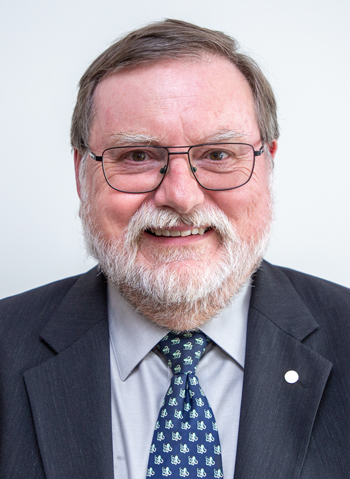
Professor Tony Haymet FTSE has been appointed Chief Scientist of Australia.
The Australian Academy of Science congratulates Professor Tony Haymet on his appointment as Chief Scientist of Australia.
Australian Academy of Science President, Professor Chennupati Jagadish, warmly welcomed the appointment.
“Professor Haymet has made outstanding contributions to Australian and international science, its application and philanthropy,” Professor Jagadish said.
“We look forward to continuing the unique and longstanding relationship between the Chief Scientist and Australia’s learned academies given our shared remit of providing independent scientific advice to government.
“The Chief Scientist is able to readily draw on the convening power of the academies to access expertise wherever it resides and in whatever field so as to inform his advice to government.”
Our collaboration with the Office of the Chief Scientist was exemplified during the COVID-19 pandemic, and continues with the academies’ support of the National Science and Technology Council.
“We celebrate the Australian Government’s choice of a scientist of distinction and look forward to continuing our work with the Office of the Chief Scientist under Professor Tony Haymet’s leadership to inform government decision-making with scientific evidence,” Professor Jagadish said.
Academy Fellows and Chief Executive recognised in 2025 Australia Day Honours List
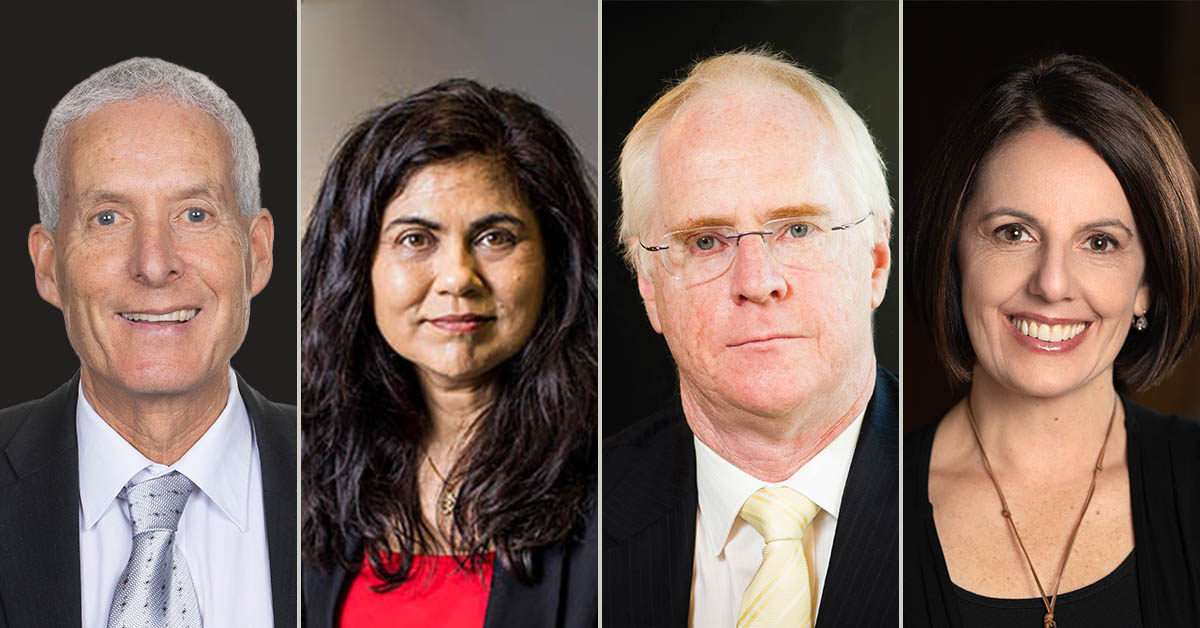
(from left) Professor Andrew Blakers, Professor Veena Sahajwalla, Professor Keith Nugent and Anna-Maria Arabia have all been recognised in the 2025 Australia Day Honours List.
Three Fellows and the Chief Executive of the Australian Academy of Science have been recognised in the 2025 Australia Day Honours List.
Each year, the Honours List recognises and celebrates Australians for distinguished and outstanding service.
Officer of the Order of Australia
The following Fellows were appointed an Officer of the Order of Australia (AO).
Professor Andrew Blakers AO FAA FTSE was recognised for his distinguished service to science in the field of solar cell development, and as an advocate for energy storage and renewable technologies.
Professor Blakers has made major contributions to the advancement of solar energy as the key to decarbonising the global economy. Professor Blakers is also globally prominent in the analysis of 100 per cent renewable energy systems and developed the Global Atlas of Pumped Hydro Energy Storage. An Academy Fellow since 2024, he is a joint winner of numerous awards, including the 2023 Queen Elizabeth Prize for Engineering and the 2018 Eureka Prize for Environmental Research.
Professor Keith Nugent AO FAA was recognised for his distinguished service to tertiary education, to science as a physicist, and to the advancement of optical physics.
Elected to the Academy in 2000, he is a distinguished optical physicist who has been singularly creative from the earliest age. Much of Professor Nugent’s work has been devoted to problems of neutron and X-ray optics for which refractive materials are not available. His work has made contributions to X-ray holography, coherence measurement and near-field optics.
Professor Veena Sahajwalla AO FAA FTSE was recognised for her distinguished service to science as an engineer and inventor, to sustainable materials research and technology and waste management.
Professor Sahajwalla is an internationally recognised materials scientist, engineer and innovator who is revolutionising recycling science. She is renowned for pioneering the high temperature transformation of waste in the production of a new generation of ‘green materials’. As Director of the Sustainable Materials Research and Technology Centre at UNSW, she has built a world-class research hub dedicated to innovation. She was elected to the Academy in 2018.
Medal of the Order of Australia (OAM)
The Academy’s Chief Executive Anna-Maria Arabia OAM was recognised for her service to science, particularly through organisational leadership roles.
Ms Arabia began her career as a neuroscientist and has worked nationally and globally in scientific research, policy development, politics and science advocacy.
Her leadership has led to significant reform at the science–policy interface and she has established novel mechanisms to facilitate evidence-informed decision-making in parliaments and the justice system. She has spearheaded new approaches to science communication and implemented global initiatives to make underrepresented scientists more visible.
Academy delegation to engage in global science diplomacy for Australia
The Australian Academy of Science is set to play a role in advancing global science diplomacy at the International Science Council (ISC)’s third General Assembly in Muscat, Oman this month.
The General Assembly marks a critical opportunity to strengthen the voice of Australia and the Asia-Pacific region in global science.
The Academy’s delegation will engage in high-level discussions on pressing global priorities, including freedom and responsibility in science, the development of effective science policy and advice, the future of science diplomacy, and advancing science education.
Highlights will include the first face-to-face meeting of the Advisory Council of the ISC Regional Focal Point for Asia and the Pacific, which is led by the Academy.
This will include representatives from the recently established Pacific Academy of Sciences, bringing together scientific leaders from across our region.
To further regional and global collaboration, the delegation will host an Oceania Connect reception, enabling high-level engagement between Australian and international scientific leaders.
These activities exemplify the Academy’s leadership in science diplomacy and its commitment to ensuring science remains central to solving global challenges and to building resilient, sustainable societies.
To pursue these objectives and ensure the Australian and Asia-Pacific’s scientific voice is amplified on the global stage, the Australian delegation includes:
- Professor Chennupati Jagadish AC PresAA FREng FTSE, President of the Australian Academy of Science
- Professor Frances Separovic AO FAA, Academy Foreign Secretary
- Anna-Maria Arabia, Academy Chief Executive
- Chris Anderson, Director, Policy and International
- Ronit Prawer, Director, ISC Regional Focal Point for Asia and the Pacific
- Nancy Pritchard, Head of International Affairs
- Dr Charlie Morgan, representing the Academy’s Early- and Mid-Career Researcher Forum.
Fellows on the global stage
The Academy warmly congratulates eminent Australian scientist Professor Nalini Joshi AO FAA – also attending the ISC General Assembly – on her recent election to the ISC Governing Board.
This is a testament to the global role and influence of Australian scientific leadership.
The International Science Council
The ISC harnesses the universal language of science to catalyse and convene scientific expertise, advice and influence on issues of major concern to both science and society, through a unique global membership of natural and social sciences and humanities.
The ISC General Assembly is the premier occasion for ISC Members and Affiliated Bodies, Fellows and partners from all domains of science and regions of the world to meet for cross-disciplinary, strategic discussions on challenges and priorities for international cooperation in science.
The ISC General Assembly is held every four years.
The Muscat Global Knowledge Dialogue and ISC General Assembly will take place in Oman, between 26 and 30 January 2025.
New director announced to lead International Science Council’s Asia Pacific program

Ronit Prawer begins at the Australian Academy of Science as Director of the International Science Council Regional Focal Point for Asia and the Pacific.
A science diplomat with extensive global experience in strategic management of science relationships across governments, non-government organisations, industry and academia has been appointed Director of the International Science Council (ISC) Regional Focal Point for Asia and the Pacific, led by the Australian Academy of Science.
Ronit Prawer has returned to Australia from Boston, United States, where she was Director, Science and Innovation at the British Consulate, in charge of strategic management of the US–UK bilateral science relationships.
A Fellow of the Centre for Science and Policy at the University of Cambridge, Ms Prawer will lead the five-year Australian Government-funded program aimed at ensuring the unique and underrepresented needs of the Asia-Pacific region are integrated into global scientific dialogue.
In October 2024, the Regional Focal Point supported the successful launch of the Pacific Academy of Sciences and the appointment of 12 eminent Pacific Islands Foundation Fellows in Samoa alongside the Commonwealth Heads of Government Meeting.
President of the Australian Academy of Science Professor Chennupati Jagadish, and President of the International Science Council Sir Peter Gluckman, welcomed Ms Prawer to the team as the Regional Focal Point takes the critical step towards establishing an Asia Science Mission Program for sustainability in 2025.
“The region strongly endorses the proposed pathway laid out by the Global Commission on Science Missions for Sustainability in its call to deploy well-funded and truly transdisciplinary programs and we are working with members of the International Science Council to develop a science mission for our region,” Professor Jagadish said.
“I believe the depth of experience in science diplomacy, strategic program management and policy development that Ms Prawer brings to the Regional Focal Point for Asia and the Pacific at this stage will be invaluable.”
The ISC is a non-governmental organisation that brings together more than 200 international scientific unions, associations, and national and regional scientific organisations including academies and research councils.
The Asia-Pacific membership of the ISC extends across 26 nations. Australia has hosted the program since 2023, deepening engagement in the Asia-Pacific region, showcasing Australia’s science capabilities and strengthening our position as a collaborative leader in the region.
“We are facing a critical time in history when the depth and breadth of science in the region needs to work together to ensure evidence-based advice is considered in government policy and decision-making in an age of mis- and disinformation,” Sir Peter Gluckman said.
“I congratulate the Australian Academy on this outstanding appointment and look forward to supporting Ms Prawer in leading the Asia-Pacific Focal Point for science.”
Ms Prawer said she looked forward to working with scientists and scientific organisations in the region to improve outcomes for society’s most intractable challenges.
“I am honoured to join the International Science Council and the Australian Academy of Science as Director of the Regional Focal Point for Asia and the Pacific,” Ms Prawer said.
“Our region is home to incredible diversity, unique challenges, and exceptional scientific talent. By fostering collaboration across disciplines, borders and communities, we can ensure that science contributes to sustainable solutions that benefit all societies. I look forward to working with scholars, policymakers, and partners to advance evidence-based decision-making and to champion the vital role of science in addressing our most pressing challenges.”
Ms Prawer hails from Melbourne, Australia, where she achieved first-class honours in genetics and biotechnology. She also holds a degree in English literature and French from the University of Melbourne, and a master’s in law and diplomacy from Tufts University in the United States.
In 2022, Ms Prawer was selected to be a Senior Executive Fellow at Harvard University’s Kennedy School of Government.
The Australian Academy of Science thanks Dr Petra Lundgren for her distinguished service to the International Science Council Regional Focal Point for Asia and the Pacific and her many achievements in the role.
Australian innovators set for international science and technology collaborations
Joint media release: Australian Academy of Technological Sciences and Engineering and Australian Academy of Science
Teams developing hydrogels for more effective reconstructive surgeries, advancing next-generation solar cell manufacturing, creating novel rare-earth magnets, using artificial intelligence (AI) to help design carbon neutral construction methods and establishing a hydrogen catalysis commercialisation hub are just some of the recipients of $6 million in funding to spur international science and technology collaborations.
Nine exceptional Australian knowledge-makers and innovators in AI, hydrogen, manufacturing and more will be sharing in catalytic grants from the Global Science and Technology Diplomacy Fund – Strategic Element (GSTDF-SE), announced today by the Hon Ed Husic MP, Minister for Industry and Science, and delivered by Australia’s two Learned Academies for science and technology.
These grants will allow Australian teams to collaborate with partners in countries including Japan, the Republic of Korea, Thailand, Singapore and New Zealand on strategic science and tech projects capable of bringing direct benefits to advanced industries.
Recipients include Associate Professor Markus Müllner from the University of Sydney who will be working with researchers and industry in the Republic of Korea to deliver a new type of injectable hydrogel for versatile medical applications, from reconstructive surgery to tissue engineering and drug delivery.
Professor Rose Amal from the University of New South Wales will be collaborating with teams in Japan, Indonesia, Malaysia and Singapore to create a research and development hub coordinating global efforts to commercialise solar hydrogen production technology.
This first round of the GSTDF-SE advances science and technology development in Australia and plays a pivotal role in building a thriving innovation ecosystem in our global region.
Australian Academy of Technological Sciences and Engineering CEO Kylie Walker said the fund is filling a critical need in Australian innovation, as demonstrated by the strong demand for grants under the scheme.
“Research and development teams around Australia are vying for the opportunity to work globally on important challenges. Early support from the Global Science and Technology Diplomacy Fund will super-charge impactful international collaborations and bring new technologies closer to widespread implementation.
“Importantly, this fund is building advanced STEM skills, networks and long-term relationships across Australia and our region. Through global collaboration with key partners on advanced technology, we will highlight and promote regional capability consistent with Australia’s national interest and potential.”
Australian Academy of Science Chief Executive Anna-Maria Arabia said stimulating international scientific collaboration in areas of national interest enables industrial and economic growth.
“Science and technology exchange plays an increasingly important role in Australia’s diplomatic efforts, particularly in the current geopolitical environment. The Global Science and Technology Diplomacy Fund is strengthening links between Australian science and technology leaders and regional partners.”
The Australian Academy of Technological Sciences and Engineering and the Australian Academy of Science collaborate to deliver the grants which are funded by the Department of Industry, Science and Resources. These grants leverage the insights and advice of the Academies’ expert Fellowships, and their long history of leading global initiatives that deliver results for Australian science and technology.
Aligned with Australia’s science priorities and running over four years, the Global Science and Technology Diplomacy Fund is supporting international collaboration with strategically important partner nations to enhance Australia’s capability and profile in science and technology research and its application. Simultaneously helping commercialise cutting-edge products and services and strengthening R&D collaborations, GSTDF-SE provides a foundation for our modern industries of the future to grow and thrive.
List of recipients
- Professor Rose Amal, The University of New South Wales
- Advancing Sunlight-to-Hydrogen Conversion for a Sustainable Future
- Partner countries: Japan, Indonesia, Malaysia and Singapore
- Professor Tuan Ngo, The University of Melbourne
- Building a Sustainable Future Toward Net Zero: A Whole-Life-Cycle Approach to Digital Manufacturing of Carbon-Neutral Modular Panels for Affordable Housing
- Partner countries: Japan, Malaysia, New Zealand, Thailand and Vietnam
- Associate Professor Ebinazar Namdas, The University of Queensland
- Global Hub of Advanced Materials and Integrated Optoelectronics (GH-AMIO)
- Partner countries: Japan, Republic of Korea, Malaysia and Thailand
- Professor Zongyou Yin, The Australian National University
- Solar Thermal-Plasmonic Seawater Splitting for Hydrogen Production
- Partner countries: Japan and Singapore
- Professor Simon Ringer, The University of Sydney
- An Additive Manufacturing Solution to the Critical Minerals Supply Challenges in Rare-Earth Permanent Magnets
- Partner countries: Japan
- Associate Professor Markus Müllner, The University of Sydney
- Injectable Hydrogels with Biomimetic Properties
- Partner countries: Republic of Korea
- Professor Shujuan Huang, Macquarie University
- Advanced Green Manufacturing and Automation Technology for Next-Generation Solar Cells
- Partner countries: Republic of Korea
- Associate Professor Rosalie Hocking, Swinburne University of Technology
- Novel Manufacturing Strategies for Electrolyser Component Manufacture
- Partner countries: Thailand
- Dr Tom McGoram, The Australian National University
- Forging the Future of Space Tech: ANU and ZES Partnership for Advancing Radiation Testing
- Partner countries: Singapore
To find out more about the Global Science and Technology Diplomacy Fund – Strategic Element, visit the website.
Set the table for summer with our Fellows’ reading and listening recommendations
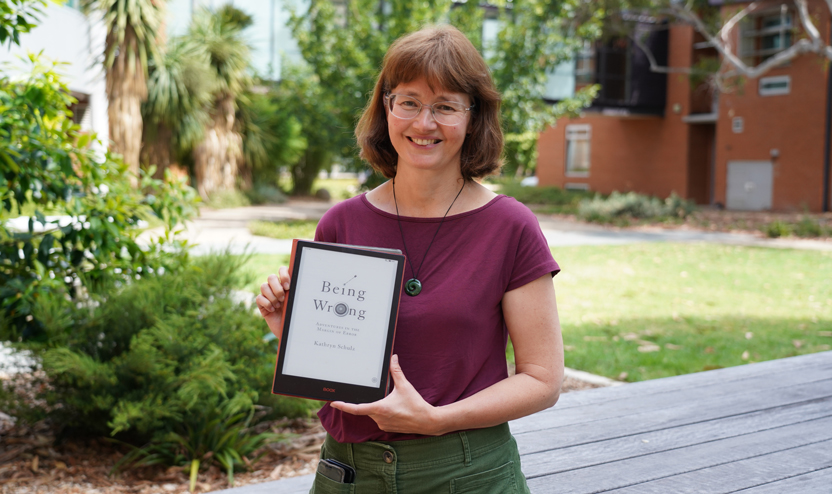
Dinner table debates are a staple of the season and this year’s Fellows’ reading list offers plenty of food for thought.
Whatever the topic, set the table with an exploration of the empowering but little-taught art of being wrong or the importance of approaching public discussions with an open mind.
Pepper conversations with historical tidbits as you venture back in time to uncover the forces that shaped the present state of the world’s ocean environments and the US Constitution, or treat yourself with richly imagined futures, new and old, that speak to our anxieties.
Whatever your tastes, our Fellows’ book and podcast recommendations will have something for everyone.
See the 2024 Fellows’ reading and listening list
A selection of recommendations
Being Wrong: Adventures in the Margin of Error
Kathryn Schulz
Recommended by Professor Kylie Catchpole FAA FTSE
This is a delightful exploration of being wrong (an essential skill for a scientist, but seldom taught). It is empowering to discover that most people have been wrong about many things throughout history; the corollary is that most people probably are still. I almost bought this book some 15 years ago – if I had, I would have enjoyed being wrong for much longer.
Deep Water
James Bradley
Recommended by Professor David Lindenmayer AO FAA
A deeply intellectual foray into the many aspects of the world’s ocean environments with a ‘deep dive’ into topics such as the impacts of shipping and its connections to slavery and European colonisation.
The Forever War
Nick Bryant
Recommended by Emeritus Professor Jeremy Mould FAA
The US constitution was a war document and intentionally anti-democratic. As we know, constitutions are very hard to change if an organised group opposes change.
Also recommended by Professor Robyn Williams AO FAA
Astonishing and explains all.
The Dispossessed
Ursula K. Le Guin
Recommended by Emeritus Professor Barbara Nowak FAA
While this book was published 50 years ago, it still remains highly relevant. It is not just an intriguing science fiction story about two worlds run by two different political systems, but also offers some insights about scientists and their engagements in activism. As a scientist who grew up in a communist system but for most of their life lived in Western democracy, I found this book particularly appealing and interesting.
Juice
Tim Winton
Recommended by Emeritus Professor David Blair FAA
Tim Winton’s first sci-fi novel about climate change, set in the landscape of Ningaloo, Exmouth, Western Australia. If you saw his recent ABC documentary about Ningaloo, this book transports you to that amazing place. Not today, but the apocalyptic world of the 23rd century AD, a lament about the future, blamed on today’s greedy oligarchs.
Also recommended by Professor Michael Kearney FAA
This ‘cli-fi’ saga is not a light read, but an important and engaging one. It was described by the author as: “A novel about a bloke in a hole telling stories while he still can.” Winton has thought deeply about how the future could look if we fail to get our act together now and he has built a thoughtful thriller around this bleak scenario. I found myself reaching for the dictionary quite often with this one!
Also recommended by Professor Fiona Stanley AC FAA FAHMS(Hon) FASSA
This book by outstanding WA author Winton is essential reading for any of us concerned about climate change. Known for his environmental activism, this book is set vaguely near the Ningaloo coast; it describes a very scary future in a country destroyed by the fossil fuel companies. The social, environmental and climate circumstances described dictate how our ‘hero’ lives and tries to survive.
Also recommended by Professor Barry Jones AC FAA FTSE FAHA FASSA
‘Juice’ is a long (513 pages), complex, but beautifully written, dystopian novel, set in Western Australia
perhaps two centuries hence, when climate has changed how people live, working outside is almost
impossible and there is a significant return to Plato’s cave. But it is not all depressive and Winton emphasises
survival techniques, adaptability and finding values. ‘Juice’, by the way, is both oil and human energy.
Previous recommendations
Want to know what else might be on the menu? See what our Fellows recommended in:
Opinion: We cannot supercharge Australia’s economy without fixing this major inefficiency
Professor Chennupati Jagadish AC PresAA RSEng FTSE
News that the government has fired the starting gun on its review into how Australia can strengthen its research and development (R&D) system could not have come soon enough.
For years, Australia’s R&D system has been groaning under the weight of 14 government portfolios and 151 programs that, whilst well-intentioned, overlap and struggle to support our scientists, entrepreneurs and companies to create jobs or build economic resilience at the scale the country desperately needs.
The consequence of this lack of coordination across portfolios and across sectors is plain to see. Australian inventions are commercialised offshore, incentives for business and philanthropy to invest in Australian R&D are insufficient or non-existent, we stood at the back of the supply chain queue during the pandemic, and we no longer adequately nurture the creative spirit that is essential to discovery and that is the essential precursor to commercialisation.
As a nation, we are falling behind the pack in our investment in R&D. In fact, we have gone from being about average amongst OECD countries for overall investment in R&D to hurtling towards the bottom of the pack with no prospect of halting that decline, let alone reversing it.
While rumblings of a global recession become louder, and Australia’s growth in GDP slows to a crawl, there has never been a more important time to use the R&D lever to kick-start productivity growth, to diversify our economy, and set the nation on a path driven by Australian smarts.
We desperately need to create the conditions to bring to bear the full power of the research and development to meet our national ambitions, secure our borders and assure our global competitiveness.
Economists have long recognised that a nation’s human capital — its stock of educated people and its ideas — are central to building the complexity and prosperity of our country and providing for the wellbeing and security of our citizens.
We can no longer afford duplication, nor can we let a workforce that is skilled and able to meet national ambitions languish as they compete for a diminishing pool of funds and operate in a system that is fragmented, lacking in strategy and drowning in bureaucracy.
We live in a region with escalating geopolitical tensions, in a moment of unprecedented global competitiveness and in a world less open to knowledge exchange than before.
The Australian future depends on its R&D enterprise because it can no longer rely on importing knowledge, technologies and a foreign trained workforce.
The strategic examination of R&D must deliver a roadmap that clearly shows us the structures, systems, incentives and connections we need to bring to bear the full power of R&D to power our nation.
This is a once-in-a-generation opportunity to look collectively at the future we want and need for Australia and to prepare for it now.
The examination must be brave. It must be radical. And it must create an R&D enterprise fit for today’s needs.
Importantly, we must get this right because: businesses ready to grow and innovate rely on it; an economy vulnerable to shocks needs diversification; we need to decarbonise our economy faster before the impacts of climate change cripple us entirely; we have no choice but to accelerate the Defence technology critical to protect our borders; and because we need to get in front of technologies like artificial intelligence and quantum technology before they get in front of us.
In today’s world, creating an R&D system that is efficient, coherent and strategic is not optional.
It is necessary and it can’t come soon enough, because the more volatile the world becomes, the more we need home-grown R&D.
There is no economic prosperity for Australia without getting the R&D system right.
This opinion piece was first published on 3 December in Examine, a weekly newsletter by science reporter Liam Mannix, owned by the Sydney Morning Herald.
Read the Academy’s media release on the strategic examination of the R&D system
Academy announces 2024–25 recipients of Theo Murphy Initiative (Australia) grants
The Australian Academy of Science congratulates the grant recipients of the Theo Murphy Initiative (Australia) (TMIA) grant funding for the 2024–25 round.
Established by the UK’s Royal Society to further scientific discovery among Australia’s early- and mid-career researchers (EMCRs), the TMIA is administered by the Australian Academy of Science and provides grant funding to support activities that provide tangible benefits in the fields of science, technology, engineering and mathematics (STEM).
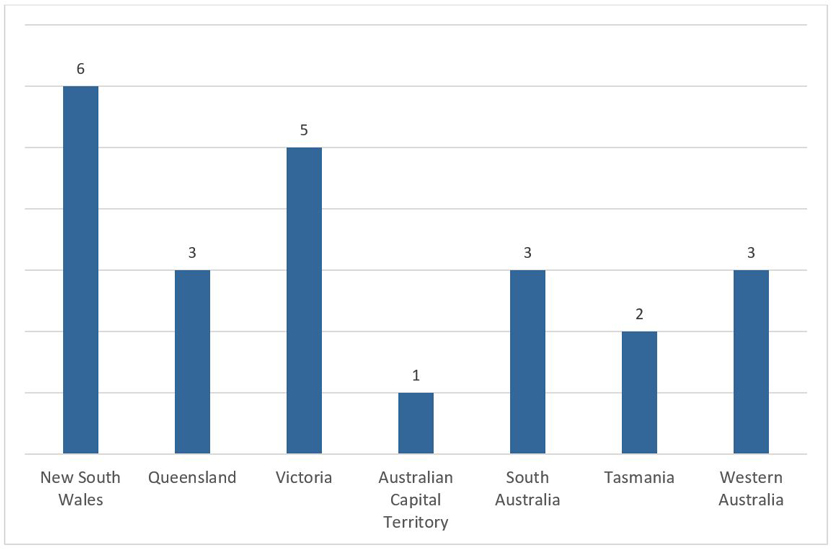
This round sees a total commitment of $300,000 allocated to support 23 applications, with the grant recipients spread across Australia. These grants are distributed among four Flagship activities, six Amplify activities and 13 Participation Support grants which are expected to commence from January 2025.
Funding stream one: Flagship activities
Find out more about Flagship activities
Four grants averaging $44,000 each have been approved to deliver activities designed to provide meaningful benefits to EMCRs in Australia and the broader scientific community. The initiatives will foster collaboration between more than one organisation and garner additional sponsor support from partners to maximise impact.
Approved Flagship activities
| Project title | University/institution |
|---|---|
|
Empowering the next generation of researchers in shaping boundary-spanning responsible AI |
Australian Institute for Machine Learning, University of Adelaide |
|
Advancing early- and mid-career researchers: WREN 2025 Global Events |
University of Newcastle |
|
Workshop on applied fabrication and energy research in solar cells |
University of New South Wales |
|
Beyond the mining state – Western Australian EMCR technology and research symposium |
University of Western Australia |
Funding stream two: Amplify activities
Find out more about Amplify activities
Six grants averaging $12,300 each have been approved to enhance conferences, workshops, symposiums and networking events. These activities are designed as complementary additions to scientific events to support a greater focus on EMCR engagement. They are intended to create opportunities for meaningful interactions and collaborations beyond research endeavours. The grant covers the additional costs to support EMCR participation, ensuring a more inclusive and enriched experience for all attendees.
Approved Amplify activities
| Project title | University/institution |
|---|---|
|
EMCRs leading the Targeted Protein Degradation Satellite Meeting at the 2025 Lorne ubiquitin summit |
Walter and Eliza Hall Institute of Medical Research (WEHI) |
|
Unified frontiers in parental and early childhood obesity prevention: integrating consumer and community involvement |
Monash University |
|
2025 Addiction Neuroscience Australia EMCR symposium |
University of Technology Sydney |
|
SCBO-hosted ECR day at the International Congress for Conservation Biology 2025 |
University of Tasmania |
|
Data to discovery: a multi-omics masterclass |
Murdoch University
|
|
Connecting minds: empowering early and mid-career researchers investigating bipolar and depressive disorders |
University of Melbourne
|
Funding stream three: Participation Support grants
Find out more about Participation Support grants
Thirteen grants averaging $3,800 each were approved for Australian EMCRs to support their participation in scientific events and activities. This funding covers expenses related to caregiving, accessibility and mobility, ensuring EMCRs can access career development opportunities like conferences and workshops. By reducing financial barriers, Participation Support grants enable EMCRs to fully engage in activities essential for their professional advancement.
Approved Participation Support grants
| Applicant | University/institution |
|---|---|
|
Dr Stefan Pavetich |
Australian National University |
|
Dr Zhiyao Wang |
University of Queensland |
|
Dr Sai Vara Prasad Chitti |
La Trobe University |
|
Dr Ashlee Turner |
University of Sydney |
|
Dr Mohammad Sanjari |
Griffith University |
|
Dr Sarah Hancock |
Victor Chang Cardiac Research Institute |
|
Dr Yang Liu |
James Cook University |
|
Dr Ilona Turek |
Australian Centre for Disease Preparedness, CSIRO |
|
Dr Katia Ferrar |
Flinders University |
|
Dr Matthew Ryan |
CSIRO |
|
Dr Melissa Stanfield |
University of Tasmania |
|
Dr Shovon Chandra Sarkar |
Murdoch University |
|
Dr Buddhini Ginigaddara |
University of Newcastle |
|
Dr Vicki Brown |
Deakin University |
The next round
The Academy anticipates the next call for applications to open around mid-2025. For any enquiries related to the Theo Murphy Initiative (Australia) program, please email theomurphyau@science.org.au.
Archives reveal how early ‘science communicator’ raised funding for solar observatory
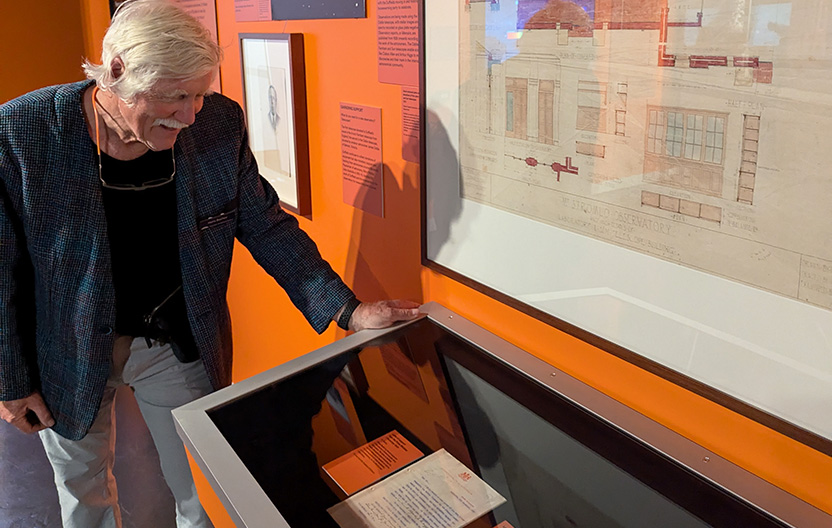
The letters of a British woman who toured Australia and New Zealand raising funds for a southern solar observatory are among the latest pieces of Australia’s science history to be shared from the Academy’s archives.
Canberra’s Shine Dome is home to the Australian Academy of Science Basser Library and Fenner Archives collections, which together significantly contribute to documenting the history of science in Australia.
The Fenner Archives contain primary documents from the lives of many of the Academy’s eminent fellows. These field books, letters, photographs, draft works and sketches are accessible to researchers by appointment.
One researcher who visited the archives earlier this year was Curator of Social History, Dr Hannah Paddon from the Canberra Museum and Gallery (CMAG), who accessed and viewed documents from the Walter Duffield collection (MS095) which date from the early 1900s.
Her research visit was in preparation for the exhibition Outer Space: Stromlo to the Stars, commemorating Mount Stromlo’s 100th anniversary—a project made more challenging due to record losses during the three bushfires Mount Stromlo had suffered in the last century.
The Duffield collection at the Academy captures the persistent and world-wide campaign, spear-headed by Dr Duffield, to see a solar observatory established in Canberra.
Dr Paddon’s visit and subsequent loan request to have physical documents from the archives be part of the upcoming exhibition resulted in further research and digitising of the collection.
In the exhibition, a total of 10 documents from the Fenner Archives are now on public display for the first time.
The exhibition opened earlier this month and will run until 16 November 2025.
The collection
Dr Walter Duffield was the first director at the Mount Stromlo Observatory. His collection at the Academy provides a clear picture of the amount of international support there was for the building of the observatory and the sustained petitioning that happened over 15 years.
His scrapbook, also housed at in the Fenner Archives, was made available online through Trove this year thanks to the Community Heritage Grant from the National Library of Australia.
The book chronicles how his advocacy for an observatory started early as a recent graduate in 1907 and continued until his death in 1929.[1]
He argued, as did the international scientific community, that there needed to be a solar telescope in the South Pacific to fill a gap in solar observations globally.[2]
The wonderful result of researchers visiting our archives is that treasures can be revealed and further highlighted. It was among Dr Duffield’s wider papers that Dr Paddon found another example of his international collaboration.
Among bequest and fundraising letters, Dr Paddon highlighted the importance of one author: Mary Proctor.
Proctor was an English science promoter, something a modern audience would now regard as a professional science communicator.
She toured Australia and New Zealand at the invitation of Dr Duffield from 1912 to 1914, promoting the need for an observatory and fundraising on their behalf.
The Fenner Archives hold her 1912 letter to Dr Duffield.
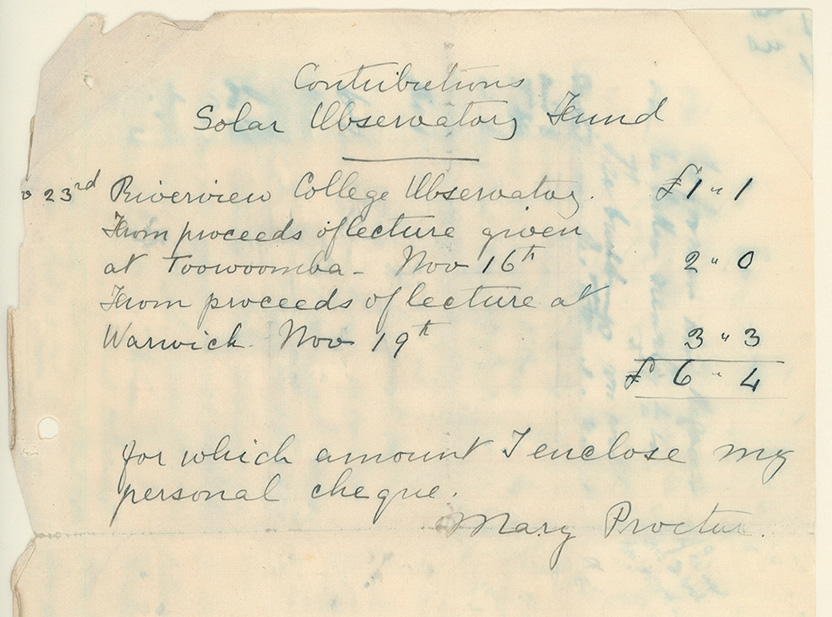
The two pages consist of a hastily written note and accounting of funds. It records her forwarding £6’’4 for the Solar Observatory fund.
The letter was sent while on the Australian leg of her lecture tour, and the second page of her letter clarifies that the money Proctor is sending is coming from proceeds of her lecture series in Toowoomba on 16 November, and from proceeds three days later, from a lecture in Warwick.
It also notes £1’’1 came from the small Riverview College Observatory in NSW which had been open for only four years.[3]
While six pounds does not sound too impressive to us today, the UK’s National Archives currency converter indicates that £6’’4 roughly converts to £484.67 in 2017[a], which roughly equates to A$949 today.
Using the same estimations, Proctor’s earlier amount of 12 pounds would be in the ballpark of $1,928.00 today.
An important early science author, journalist and speaker, Proctor’s visit to Australia and New Zealand was well covered in the newspapers at the time.[4]
Research Fellow at the University of Melbourne Martin Bush estimates that her tour possibly contributed a total close to £200 by the end of 1913 and believes that although not the largest financial contributor to the Solar Observatory project, her tour happened at an integral point for the Australian public.[5]
Her 1912 letter is special as it provides firm figures raised at two of her Australian lectures and shows her scientific lectures were well received by Australian audiences.
The letter is also a testament to difficulties of international fundraising in the 20th century with an annotation on the top left reading ‘Rec.d 30.xii.12 Uncrossed cheque £6-4-0 returned unpaid, marked ‘a/c closed’, followed by possibly the words ‘Acc Due 3.1.13’ and may provide further weight to why Proctor was checking if her prior cheque had been received yet.
Despite the fund transfer difficulties for Dr Duffield, the letter does provide an early Australian example of how ‘science celebrities’ were used to promote a cause and fundraise in the 20th century, even rarer as the lecturer was a woman.
Readying items for participation in an exhibition
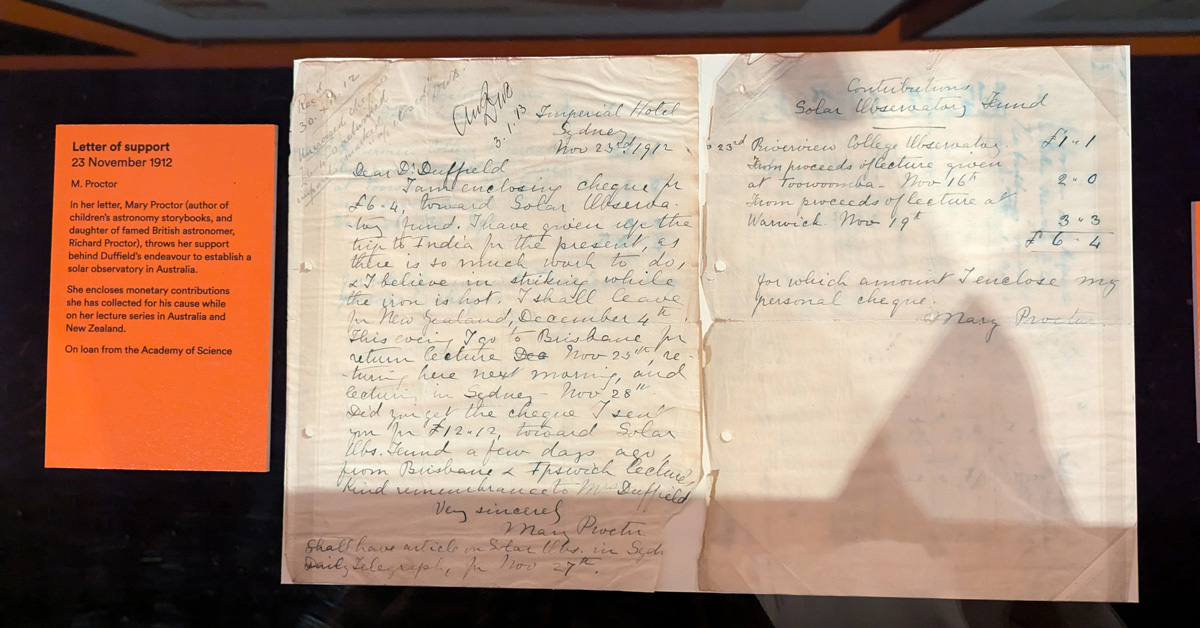
Proctor’s hastily written letter is also one of five initial items loaned to CMAG for display, making this exhibition a special occasion where Mary Proctor’s handwriting can be seen in person on public display.
As well as highlighting the important authors, the loan of material has also provided greater documentation of the condition of specific documents as they underwent a review for inclusion in a condition report before leaving the Shine Dome.
This process documents and records the position and degree of any damage or deterioration of each document and reveals Mary Proctor’s letter is in relatively fair condition for being over one hundred years old!
It also provided insight into how the document was handled and stored. The inspection revealed that at some stage the letter’s thin pages were pinned together.
Much of Dr Duffield’s collection appears to have at one time been exposed to water with ink, mostly a highly dissolvable purple ink, having migrated to many neighboring documents.
It remains unclear what happened to the collection, but considering many family heritage documents are destroyed in leaks and floods, the Academy and the wider community is very fortunate to still have access to this document and the collection.
Mary Proctor’s letter and Dr Duffield’s wider collection are a testament to the importance of ongoing researcher engagement and the treasures still hiding in the archival boxes of the Fenner Archives.
The loan of material also ensured documents that had not yet been digitised were scanned in-house to a high standard with equipment made possible through the generous support of Academy supporter Professor David Anstice. Four Mount Stromlo Manuscript booklets, which are also part of the exhibition, would have proven challenging to scan without this equipment.
Support our work
If you would like to support the preservation of Australia’s scientific legacy and help us to bring more of our collections and conversations online, for everyone please donate or contact us at philanthropy@science.org.au to find out more.
References
Bush, Martin (2022). Mary Proctor and the Cawthron observatory project: a lost history of the Mount Stromlo Observatory, Historical Records of Australian Science, 33, 12- 22.
[1] Anonymous, Solar Phenomen, Adelaide Advertiser (South Australia) 4 April 1907; in News Cuttings collected by Walter Geoffrey Duffield covering his career in astronomy and solar physics, https://nla.gov.au/nla.obj-3399725334/view, p.3 accessed November 2024
[2] Anonymous (1908), A Solar Physics Observatory: An Adelaidean’s suggestion, The Register (South Australia), 18 April 1908, 7
[3] Saint Ignatius College Riverview, https://wingaru.riverview.nsw.edu.au/timeline, accessed November 2024
[4] Bush, Martin (2022). Mary Proctor and the Cawthron observatory project: a lost history of the Mount Stromlo Observatory, Historical Records of Australian Science, 33(1), p.16.
[5] Bush, Martin (2022). Mary Proctor and the Cawthron observatory project: a lost history of the Mount Stromlo Observatory, Historical Records of Australian Science, 33, pp.17, 21.