




Ukrainian researchers supported by Aussie counterparts in second round of grants

The Australian Academy of Science congratulates recipients of the second round of grants from the Ukraine-Australia Research Fund, announced today.
In this funding round, a total of A$405,000 has been awarded to assist Ukrainian researchers impacted by the war with Russia. The fund supports two activities, each offering practical support to enable the continuation of research and technology activities by Ukrainian scientists.
Activity 1 – Short-term visits to Australia
This activity supports Ukrainian researchers to participate in short-term visits to Australia to engage in project research at a host institution, or to participate in a conference and site visit program.
Activity 1 has awarded 12 applicants a total of A$205,000, which will support 15 Ukrainian visitors. The Australian hosts, visiting Ukrainians, and their institutions are:
| Host institute | Australian host | Visiting researcher | Visitor institute |
| Monash University | A/Prof Jeremy Barr | Ms Valeriia Zymovets | Umea University Sweden |
| Dr Marichka Zlatohurska | Central European Institute of Technology, Masaryk University (Czech Republic) D.K. Zabolotny Institute of Microbiology and Virology of the National Academy of Sciences of Ukraine | ||
| Dr Yuliia Faidiuk | Hirszfeld Institute of Immunology and Experimental Therapy, Polish Academy of Sciences (Poland) Taras Shevchenko National University of Kyiv (Ukraine) Zabolotny Institute of Microbiology and Virology of the National Academy of Sciences of Ukraine | ||
| Dr Alla Kushkina | Hirszfeld Institute of Immunology and Experimental Therapy, Polish Academy of Sciences (Poland) Zabolotny Institute of Microbiology and Virology of the National Academy of Sciences of Ukraine | ||
| A/Prof Marianne Tare | Dr Olesia Moroz | Educational and Scientific Center “Institute of biology and medicine”, Taras Shevchenko National University of Kyiv (Ukraine) | |
| University of Queensland | Dr Cheong Xin Chan | Dr Liudmyla Gaponova | Institute for Evolutionary Ecology of the National Academy of Sciences of Ukraine |
| University of Sydney | Prof Philip Kuchel | Dr Victor Mikhailenko | R.E. Kavetsky Institute of Experimental Pathology, Oncology and Radiobiology of the National Academy of Sciences of Ukraine |
| Prof Mikhail Prokopenko | Prof Nataliia Kuznietsova | National Technical University of Ukraine “Igor Sikorsky Kyiv Polytechnic Institute” | |
| Prof Philip de Chazal | Dr Hanna Porieva | National Technical University of Ukraine “Igor Sikorsky Kyiv Polytechnic Institute” | |
| Prof Gregg Suaning | A/Prof Kateryna Ivanko | National Technical University of Ukraine “Igor Sikorsky Kyiv Polytechnic Institute” | |
| University of Technology Sydney | Dr Marian-Andrei Rizoiu | Prof Iryna Zolotaryova | Simon Kuznets Kharkiv National University of Economics (Ukraine) |
| Australian National University | Prof Ilya Shadrivov | Dr Andrey Iljin | Institute of Applied Physics, University of Münster (Germany) Institute of Physics of the National Academy of Sciences of Ukraine |
| Prof Elena Ostrovskaya | A/Prof Alexander Yakimenko | Universitá di Padova (Italy) | |
| A/Prof Christian Wolf | Dr Alexey Sergeyev | Institute of Astronomy of V.N. Karazin Kharkiv National University, Kharkiv (Ukraine) Observatoire de la Côte d'Azur, Nice (France) | |
| University of Melbourne | Prof Kevin Otto | A/Prof Borys Prydalnyi | Lutsk National Technical University (Ukraine) |
Activity 2 – Facility access
Under Activity 2, Ukrainian researchers are supported to access leading infrastructure capabilities in Australia, such as supercomputing facilities, microscopy and microanalysis, and telescopes, by way of funded grants.
Ukrainian researchers will be able to send their samples to Australian facilities for analysis, with the results returned to the Ukrainian research institute.
The grants will cover expenses associated with sending samples between Ukraine and the Australian facility, instrument access, and testing and analysing the samples. Activity 2 supports Ukrainian researchers to remain productive and publishing at their own institutes in Ukraine while also engaging in international collaborations.
Activity 2 has seen nine applications approved to support access to National Collaborative Research Infrastructure Strategy (NCRIS) and other Australian research facilities. The total amount awarded was just over A$200,000.
The collaborating Australian facilities, Ukrainian awardees, and their institutes are:
- Astronomy Australia and the Australian National University
- Dr Serhii Borysenko, Main Astronomical Observatory, National Academy of Sciences of Ukraine
- AGRF
- Dr Iryna Kozeretska, State Institution National Antarctic Scientific Center of Ukraine
- Australian National University
- Prof Volodymyr Levenets, National Science Center Kharkov Institute of Physics and Technology
- Australian National University RSES SHRIMP
- Dr Irine Shvaika, M.P. Semenenko Institute of Geochemistry, Mineralogy and Ore Formation
- Australian Proteome Analysis Facility
- Mr Oleh Platonov, Palladin Institute of Biochemistry of the National Academy of Sciences of Ukraine
- Bioplatforms Australia
- Dr Eugene Tukalenko, Institute for Nuclear Research of the National Academy of Sciences of Ukraine
- Bioplatforms Australia and Royal Botanic Gardens Victoria
- Dr Tetiana Dvirna, M.G. Kholodny Institute of Botany of the National Academy of Sciences of Ukraine
- Curtin University
- Dr Olena Ganzha, Institute of Geological Sciences of the National Academy of Sciences of Ukraine
- John de Laeter Centre (Curtin University)
- Dr Mariia Reshetnyk, The National Museum of Natural History of the National Academy of Sciences of Ukraine.
Applications received under the program were evaluated by an assessment committee of Academy Fellows and relevant subject matter experts. The final decision on approvals and allocations was made by the Ukraine-Australia Research Fund Working Group, chaired by Academy President Professor Chennupati Jagadish.
The Academy thanks the not-for-profit Breakthrough Prize Foundation for their funding support of this program, the Australian institutes and researchers hosting Ukrainian visitors, the NCRIS facilities and Directors Group for their ongoing contributions to the program, and the Ukrainian participants.
Read about the first round of grants from the Ukraine-Australia Research Fund.
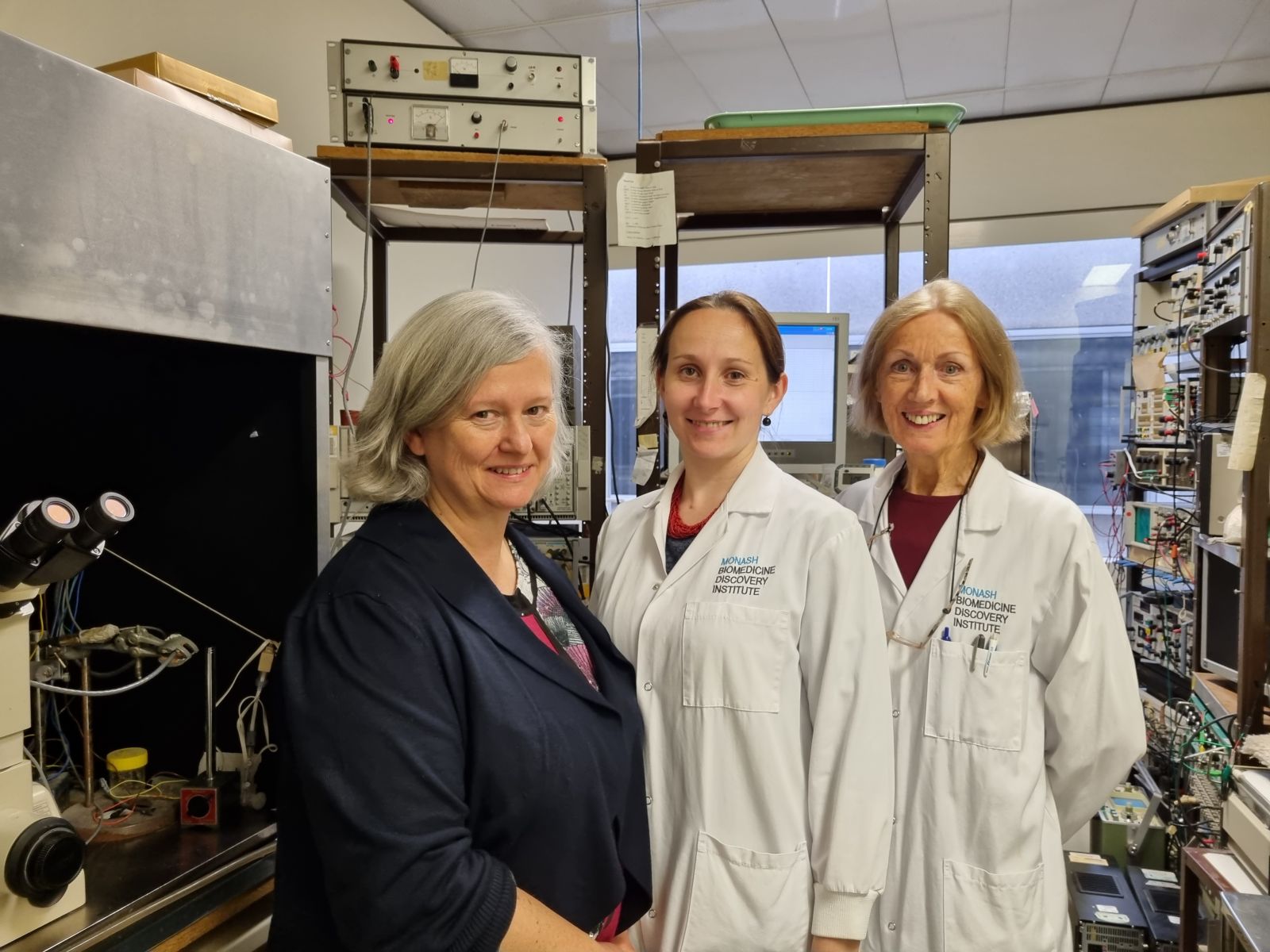
Above: Ukrainian scientists Svitlana Omelchuk and Maryna Dzuh were grant recipients from the first round of the Ukraine-Australia Research Fund and visited Australia in October 2023.
Eventful year planned to celebrate Academy’s 70th anniversary
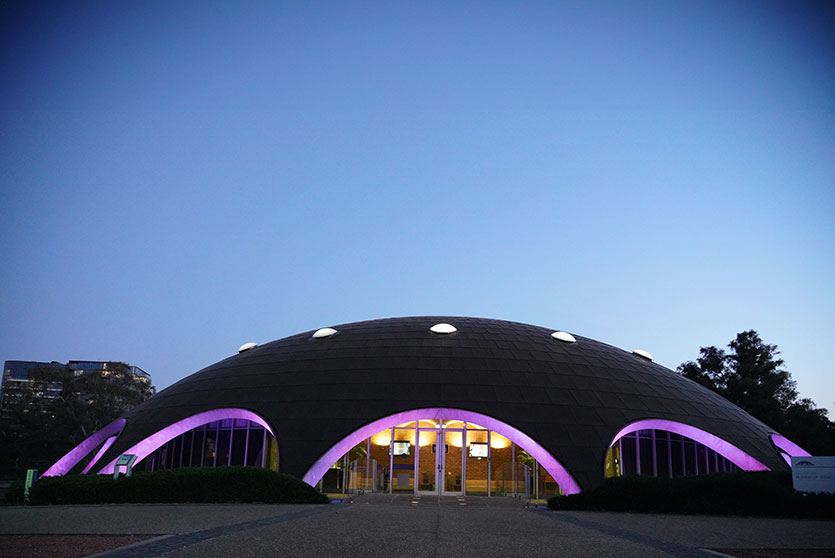
The Shine Dome at dusk.
The Australian Academy of Science will celebrate its 70th anniversary across 2024, with a full calendar of events to mark seven decades of scientific excellence.
The Academy will reflect on its vivid history as well as look to the future and invites all with an interest in science to join in the festivities.
“Our country has a deep reservoir of talent within the sciences, including some of the world’s most eminent researchers and professionals,” said Academy President Professor Chennupati Jagadish.
“In our 70th year, the Academy will deliver a rich program of events, profiling our most distinguished and emerging scientists, champions, and organisations who contribute to science every day.”
A ceremony at the Shine Dome in Canberra will kick off the year-long celebrations on 13 February 2024, marking the week the Academy was founded in 1954 by Australian Fellows of the Royal Society of London.
Across the year, a six-part public speaker series, titled The journey of Australian science: Tracing our history, discovering future paths, will delve into the fascinating history and future of Australian science. Each instalment will tell the story of one scientific discipline, from the landmark discoveries of the Academy’s earliest Fellows – such as founding President, distinguished physicist Sir Mark Oliphant – to today's cutting-edge frontiers.
In March, the Academy’s annual symposium, Food futures: Nourishing a nation, will highlight the hot-button issue of food security during the World Science Festival in Brisbane.
2024 will also see the iconic symbol of Australian science, the Shine Dome, celebrate its 65th birthday. As part of the ACT Heritage Festival, the Shine Dome will be open to the public for tours on 20 April.
Science at the Shine Dome, the Academy’s flagship annual event, will run 9–12 September 2024. The event will feature the admission of distinguished Fellows elected to the Academy in 2023 and 2024 and offer an occasion to reflect on the Academy’s rich history and bright future.
Further activities will be held across the year to celebrate this milestone.
Folbigg case: wrongful convictions will continue to occur without major justice system reform
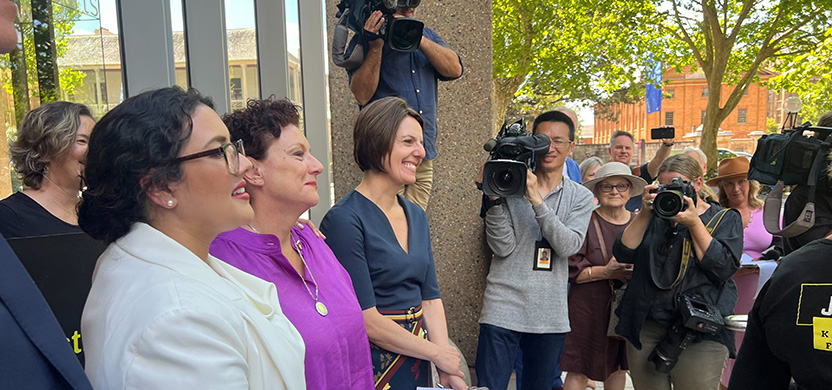
Kathleen Folbigg (in purple) with her lawyer Rhanee Rego (left) and Chief Executive of the Australian Academy of Science Anna-Maria Arabia (right) outside the NSW Court of Criminal Appeal after Ms Folbigg’s convictions were quashed.
Australian scientists have welcomed today’s decision by the NSW Court of Criminal Appeal to quash Kathleen Folbigg’s convictions.
While justice has finally been served for Ms Folbigg, wrongful convictions will continue to occur without major reforms to justice systems across Australia.
New genetic evidence available in 2019 played a significant role in bringing about the second Inquiry into Kathleen Folbigg’s convictions and subsequent pardon in 2023; however, basic scientific principles were not upheld from the time of her trial.
For example:
- Kathleen Folbigg was convicted for murdering her children by suffocation, yet there was no pathology-based evidence of suffocation of the children
- medical and pathological evidence was available to indicate natural causes of death of the Folbigg children
- the case against Kathleen Folbigg was premised on an incorrect logic that four children could not die in a family from natural causes unless it was one unifying cause of death
- circumstantial evidence (including non-scientific opinions about Ms Folbigg’s diaries) was given more weight than medical and pathological evidence available at the time of trial
- at the first Inquiry, erroneous interpretation of data held in the International Calmodulinopathy Registry was presented and accepted
- no journalling, trauma or grief experts were given the opportunity to provide expert evidence in a formal legal process until the 2022 Inquiry.
Australia must be open to learning from the gross miscarriage of justice in Ms Folbigg’s case. The Academy’s role in Ms Folbigg’s case has always been to ensure that science is being heard in the criminal legal system.
Our role in this case has reinforced our view that in every Australian state and territory, a more science-sensitive legal system is required.
As a matter of urgency, Australian jurisdictions must adopt a reliability standard to determine the admissibility of evidence.
Until Evidence Acts across the country are amended to introduce a reliability standard, there is a significant risk that unreliable evidence will be admitted into courts. Australia remains well behind other nations in its absence of a legal reliability standard.
When the Academy petitioned the Governor of NSW to pardon Kathleen Folbigg based on additional scientific evidence uncovered by its Fellow, Professor Carola Vinuesa FAA FRS, it took nearly three years for Ms Folbigg to be pardoned.
This unacceptable time delay is because Australia lacks effective post-conviction review mechanisms. In countries such as the United Kingdom, Norway, New Zealand and, most recently, Canada, criminal cases review commissions have been established.
These commissions are independent, dedicated bodies that investigate miscarriages of justice. It is time Australia introduced an independent, transparent and accountable review mechanism. This is particularly important in an age of rapid scientific and technological discoveries.
The Australian Academy of Science acted as an independent scientific adviser to the second Folbigg Inquiry – a unique and rare interaction between a learned academy and a legal system. It assisted by independently recommending experts to assist the Inquiry. This meant that the Inquiry could hear from the best available experts from the relevant scientific disciplines wherever they resided in the world.
A mechanism to enable the courts to routinely hear from independently identified experts who are available to all parties for cross-examination must be found.
The Academy looks forward to working with the Attorneys General across Australia to develop and implement more science-sensitive legal systems.
More information
Read a transcript of the press conference with Australian Academy of Science Chief Executive Anna-Maria Arabia outside the NSW Court of Criminal Appeal.
Further action needed to strengthen the governance of research misconduct
The Australian Academy of Science says further action is needed to strengthen the governance of Australian research following the publication of an evaluation of the performance of the Australian Research Integrity Committee (ARIC).
The evaluation by KPMG was published earlier this week after being commissioned by two of the nation’s research funding councils: the National Health and Medical Research Council (NHMRC) and the Australian Research Council (ARC).
Responding to the publication of the ARIC evaluation, the Academy’s Secretary for Science Policy, Professor Ian Chubb, said processes are important, and good changes are welcome.
“ARIC might be more efficient if the recommendations of the evaluation are adopted. Time will tell,” said Professor Chubb.
“However, the substance of the issues that we must deal with will be missed when the terms of reference of a review are so narrow that it cannot grapple with the threats to the scientific enterprise.
“This evaluation will, therefore, not advance Australia’s capacity to manage allegations of research misconduct in any of our organisations, large or small.”
The Academy notes recommendation (11) of the evaluation, which says:
ARIC Reports should make assessments to balance the importance of ensuring adherence to the Code with countervailing priorities, such as the costs for institutions and the scale of institutional breaches or deviations from defined processes.
Professor Chubb said read literally, this recommendation suggests adhering to the Code is optional.
“This evaluation itself identified that international best practice is a system that is national in scale, has processes and policies that align with national policy and an oversight mechanism.
“We do not have such a system, and even what we have is limited, officially, to organisations that receive funding from NHMRC and ARC, or some others that may volunteer.
“There is no reason to believe that research misconduct is limited to such institutions. Any institution that receives public funding to conduct research should be subject to both the Code and to the consequences of any breach,” Professor Chubb said.
In a new position statement on research integrity published earlier this month, the Academy said protecting the scientific enterprise from research misconduct is a difficult task and that although Australia’s current system attempts to be all-encompassing, there are deficiencies in several areas such as coverage, accountability and transparency.
The Academy submission noted that ARIC also has deficiencies owing primarily to the narrow scope of its remit.
The Academy will continue to engage with the sector, funding agencies and government on meaningful changes to enhance the governance of research misconduct and looks forward to deeper conversations on the matter.
2023 in review: Science more valued but more vulnerable
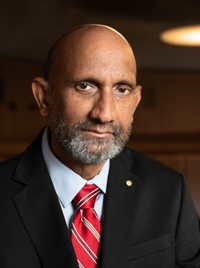
Professor Chennupati Jagadish, President of the Australian Academy of Science
Governments and society in 2023 turned to science for evidence to inform vital decisions we faced. Yet we also saw overall investment in R&D drop to an all-time low. 2023 is the year that science became more valued, but more vulnerable.
The Australian Government looked to the Academy and the Australian scientific community to help it get to grips with the rapid advance of science in domains as varied as artificial intelligence (AI), the future of the Great Barrier Reef, and our regional relationships in the Pacific and Asia. And the justice system looked to the Australian Academy of Science to act as an independent scientific adviser to make sure scientific principles were upheld during the Second Inquiry into the Convictions of Ms Kathleen Folbigg.
Internationally, we convened AI experts across our region to explore how nations are preparing their science systems for the impacts of AI and how preparedness could be measured. The Academy also reconceived the research integrity system in Australia to make it more robust and fit for the modern research enterprise.
We convened experts and published advice on the science required to remove greenhouse gases from the atmosphere, an analysis of Australia’s high-performance computing needs, and the impact of national security measures on international research collaboration – an area of growing importance as trilateral arrangements between the US, UK and Australia develop under the AUKUS agreement.
The Academy commenced its five-year leadership role hosting the International Science Council’s Regional Focal Point for the Asia Pacific and, importantly, assisted in convening Pacific scholars who have agreed to establish a Pacific Academy to ensure they can contribute to and benefit from regional and international decision making.
Review: Hopes for 2024 – ten-year investment plan
In 2024, the Academy celebrates its 70th anniversary. Since 1954 there have been 915 Fellows elected for their outstanding contributions to science. Next year we look forward to highlighting their ground-breaking achievements.
The contributions of Fellows have changed the world: think Howard Florey’s discovery of penicillin, to Fiona Stanley identifying that a maternal diet rich in folic acid can prevent spina bifida in babies, to David Solomon creating plastic bank notes.
Many of the Academy’s current Fellows are also at the forefront of technical innovation: think quantum computing (Michelle Simmons), recycling (Veena Sahajwalla) and clean energy (Rose Amal).
In 2024, it is our goal to have the Australian Government develop a cross portfolio and cross sectoral 10-year investment plan that reverses the decline in R&D investment and sees government, the higher education sector and industry take a cohesive and strategic approach to R&D that achieves multi-partisan support.
The Academy will develop a Decadal Plan for Science to show how today’s discovery is tomorrow’s prosperity. It will outline the conditions necessary for the science community to enable Australia to meet its ambitions to be healthy, prosperous and secure in a sustainable environment, and to face the multiple challenges before it.
We also want policy makers and governments to intensify their use of expertise to inform decision making. Science should be heard wherever and whenever decisions are made – in our parliaments, boardrooms, courts of law and in the public square.
In 2024, science must be brought to the service of the nation to accelerate the reconfiguration of our economy, so it is fuelled by industries that are circular, not consumptive. And we need to create knowledge in a transdisciplinary and inclusive way.
Our knowledge systems must evolve to embrace Indigenous knowledge and to adapt to the community’s varying capacity to respond to scientific and technological advances. When we disenfranchise communities, we all suffer and we risk eroding trust in the very knowledge we need to live within planetary boundaries.
Professor Chennupati Jagadish AC PresAA FREng FTSE
President, Australian Academy of Science
This article was first published in Cosmos Magazine.
Australian scientist recognised as emerging talent
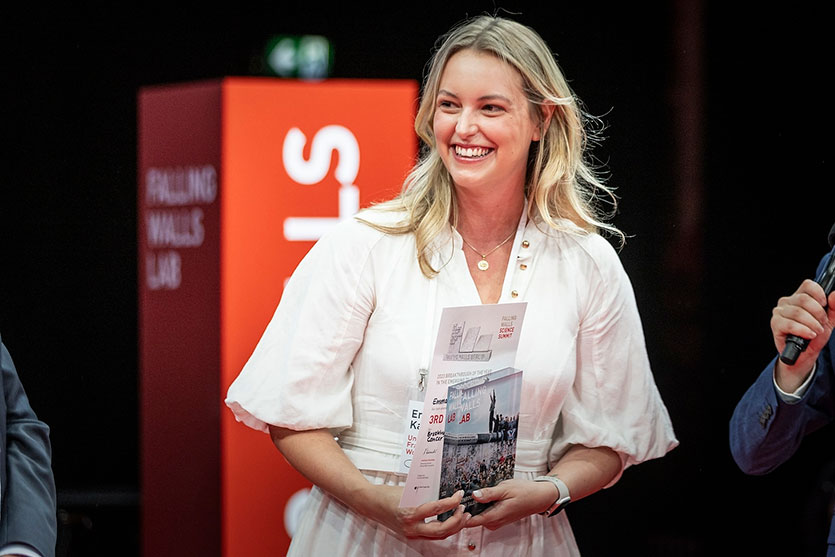
An Australian scientist was awarded third place in the Emerging Talents category of the Falling Walls Science Breakthrough of the Year last month, at one of the world’s premier conferences for research and innovation, the Falling Walls Science Summit.
Dr Emma-Anne Karlsen from the University of Queensland was one of three Australians, and one of 100 young innovators, selected from more than 2,300 submissions across the globe to present her work in this prestigious competition.
Dr Karlsen wowed the audience and an esteemed panel of judges with her three-minute pitch ‘Breaking the wall of cancer therapy’, where she described her work investigating novel breast cancer biomarkers and therapeutic strategies.
In her pitch, Dr Karlsen explained how monoclonal antibodies are fantastic targeted medications for cancer, but that a sizeable portion of patients do not respond to the treatment.
Her team’s research is focused on repurposing an anti-nausea medication, prochlorperazine, at higher than usual doses to improve response rates to these medications. Once proven to be safe and efficacious through clinical trials, they envision better outcomes for patients with a range of cancers.
“The Simpson Lab at the University of Queensland work exceptionally hard to improve outcomes for patients with cancer. I feel very lucky to represent our wonderful scientists and clinicians,” said Dr Karlsen, who was honoured to receive the recognition.
The Falling Walls Science Summit is a global gathering of innovators and scientists, brought together to share their innovative ideas and breakthroughs to address some of society’s toughest challenges.
Each year the conference is held on the anniversary of the fall of the Berlin Wall, which marked the dawn of a new era of freedom by breaking down barriers—both physical and imaginary.
“[Falling Walls] is a fantastic opportunity to connect with scientists from different countries and backgrounds. I have met incredible future collaborators and made genuine friends for life,” said Dr Karlsen.
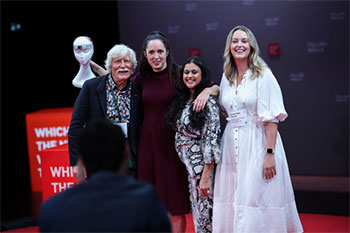
Professor Hans Bachor AM FAA with the Australian Falling Walls Lab participants, left to right: Dr Alex Griffin , Hemanshi Galaiya and Dr Emma-Anne Karlsen.
Past President of the Academy, Professor Andrew Holmes, and Academy Fellow, Professor Hans Bachor, were both at the event to support the three Australian scientists and to celebrate Dr Karlsen’s success.
Professor Bachor, who was MC of this year’s Falling Walls Lab Australia, described the experience in Berlin as “an unforgettable week, where our young Australian scientists get to present their ideas to an influential audience, to people who can trigger changes, invest in solutions, influence their own communities, companies and governments across the world.”
Each year, the Academy hosts Falling Walls Lab Australia for students and early-career professionals to share their innovative ideas and be in to win a spot at the international finale in Berlin.
Read more on this year’s Falling Walls Lab Australia winners and on this year’s Falling Walls Lab global finale winners.
Information on the next Falling Walls Lab will be available in early 2024.
Statement on the Defence Trade Controls Amendment Bill
The very architecture and nature of Australia’s capacity to engage in the global research system is at stake with the introduction of the Defence Trade Control Amendment Bill in Parliament.
This legislation will see Australia expand its backyard to include the United States (US) and the United Kingdom (UK) but raise the fence for many other countries when it comes to international research collaborations.
A more seamless collaborative environment with the US and UK as part of the AUKUS arrangements is welcomed, but the Australian Academy of Science is concerned about the negative impacts this will have on research collaborations with all other countries, which serve our national interest.
In particular, the Academy suggests that the proposed exemption for fundamental or basic research, consistent with the United States definition, should be placed in the legislation to protect and give confidence to scientists that this legislation will not unnecessarily restrict scientific progress.
Efforts must be made by the government to facilitate critical scientific and technological collaboration with countries other than the US and UK.
The Australian Government must ensure this legislation does not undermine or compromise the Principle of Freedom and Responsibility in Science, within Article 7 of the International Science Council’s Statutes.
The Australian Government must consider the resource implications of implementing this legislation.
The Academy recommends that amendments be made to the Bill include an exemption for ‘fundamental research’ in the legislation aligned with the US definition in the National Security Decision Directive 189 and improved impact monitoring embedded in reviews of the legislation to capture and address unintended consequences.
The Academy welcomes the government's intention to work collaboratively with the science sector as the Defence Trade Controls Amendment Bill progresses through the Parliament to address the following:
- Measures to improve awareness, understanding, implementation, and compliance with the new legislative environment. This includes educational resources, training and easy-to-use decision guides;
- Measures to mitigate unintended consequences on research and development, such as self-censorship by the research sector, which leads to missed opportunities and benefits for Australia that cost us dearly;
- Measures to avoid adverse impacts on the international research workforce in Australia. Foreign students and researchers make up a significant proportion of the Australian research workforce, and they will be needed in greater, not fewer, numbers in the future to meet national needs;
- Investments to establish secure research environments in Australian universities; and
- Initiatives to widen low-risk international collaborations, such as through Australia’s association with Horizon Europe.
Is Australia ready for our supercomputing future?
Heard of exascale computing? It’s the next big thing in high-performance computing and it’s paving the way for scientists to analyse huge amounts of data and simulate complex real-world problems, thanks to computer processing speeds never seen before.
But Australia’s scientists say the nation is at risk of being left behind when it comes to reaping the benefits of high-performance computing without a long-term strategy and more significant strategic investment from government.
Experts at a national roundtable hosted by the Australian Academy of Science this week have called for an international exascale computing facility to be hosted in Australia.
They say a national strategy backed by at least one exascale capability would secure Australia’s sovereign research capability and enable science to meet national and regional priorities into the future.
Experts at the roundtable discussed Australia’s opportunity to position itself to host a next-generation computing facility that could be shared with regional partners – advancing science for the region and building a skilled workforce in Australia.
The online forum hosted by the Academy brought together 21 multidisciplinary experts from fields including genomics, computational medicine, climate science, artificial intelligence and quantum physics.
The roundtable was chaired by Mr Andrew Stevens, Board Chair of Industry Innovation and Science Australia.
Mr Stevens said the way scientists are using high-performance computing facilities to respond to global challenges is rapidly evolving.
“It is crucial that Australia gets on the front foot to assess the needs of our community in the national priority areas of today and even tomorrow,” Mr Stevens said.
“We need to ensure we have both sovereign computing capability to respond to these needs and understand any impediments that may prevent prospective users from being able to take advantage of high-performance computing capabilities.
“I congratulate the Australian Academy of Science for showing leadership and convening experts to identify current trends and to determine the future computing needs of Australia’s science sector.”
Academy President Professor Chennupati Jagadish said a high-performance computing capability is a critical issue for science in Australia, but also in the Asia-Pacific region more broadly.
“This capability is vital for tackling region-specific issues, including natural disasters, climate change and public health concerns,” Professor Jagadish said.
Read the Academy’s brief: The future computing needs of the Australian science sector
Roundtable participants
Roundtable Chair: Mr Andrew Stevens, Board Chair of Industry Innovation and Science Australia
Professor David Abramson FTSE, Director, University of Queensland Research Computing Centre
Associate Professor Alan Aitken, Associate Professor, School of Earth Sciences, University of Western Australia
Dr Greg Ayers FTSE, Advisory Board Chair, National Computational Infrastructure
Senior Professor Amanda Barnard AM, Computational Science Lead and Deputy Director, Australian National University
Professor Nathan Bindoff, Program Leader, Australian Antarctic Program Partnership (Professor of Physical Oceanography, University of Tasmania)
Professor Lachlan Coin, Laboratory Head, Computational Sciences and Genomics, Doherty Institute
Professor Susan Coppersmith FAA, Head of School of Physics, UNSW Sydney
Dr Rebecca Farrington, Director of Research Data Systems, AuScope
Dr Daniel Grimwood, Discipline Leader Supercomputing Services and Technology, Australian Defence Science and Technology
Associate Professor Junming Ho, Associate Professor, School of Chemistry, UNSW
Professor Andy Hogg, Director, ACCESS-NRI
Associate Professor Parwinder Kaur, Associate Professor (Biotechnology), University of Western Australia and Special Advisor – Science & Technology Plan, Department of Jobs, Tourism, Science and Innovation
Mr Tennessee Leeuwenburg, Team Leader of Data Science and Emerging Technologies, Bureau of Meteorology
Professor Naomi McClure Griffiths FAA, ARC Laureate Fellow in Radio Astronomy, Research School of Astronomy and Astrophysics, Australian National University
Dr Christina Maher, Postdoctoral Research Scientist, University of Sydney
Professor Grainne Moran, Pro-Vice Chancellor (Research Infrastructure), UNSW
Mr Rob Pike, Programmer and author, Formerly Bell Labs Computing Sciences and Google
Professor Andy Pitman AO FAA, Director, ARC Centre of Excellence for Climate Extremes
Professor Sean Smith, Director, National Computational Infrastructure
Mr Mark Stickells, Executive Director, Pawsey Supercomputing Research Centre
Professor David Thomas, CEO Omico: the Australia Genomic Cancer Medicine Centre
Race to identify Australia’s unknown species before they’re gone
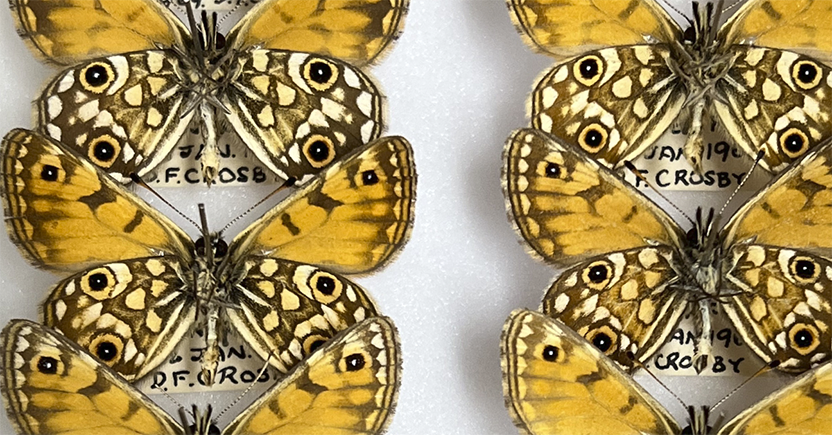
Image credit: Isabella Robinson.
As Australia’s taxonomists gather in Canberra to celebrate the 50th anniversary of the body established to document Australia’s plants, animals and fungi, one issue is top of mind: their ambitious goal to name all undescribed species in Australia within a generation may remain out of reach without more government and philanthropic support.
Professor Andy Austin, Director of Taxonomy Australia at the Australian Academy of Science, is one of the co-convenors of the national conference Biosystematics 2023.
He said about 70% of Australia’s rich biodiversity has not yet been documented and is unnamed.
“This is despite an acknowledgement by the government of the economic returns that spending on taxonomy and naming species can bring, and our declining biodiversity being among the top concerns for Australians right now,” Professor Austin said.
“Undocumented species are mostly invertebrates and fungi—small organisms hidden away in forests, leaflitter, in rivers and below the seashore—but serving critical functions in providing ‘ecosystem services’ such as maintaining soil fertility, keeping pests in check, and providing food for larger species.
“With ecosystems worldwide at risk of breaking down within our lifetimes due to the impacts of climate change and habitat loss, we must do all we can to understand and protect Australia’s biodiversity.”
Professor Austin said while cost of living is the dominant issue for Australians currently, protecting Australia’s biodiversity is also a top concern.
“Australians surveyed regarding their views about the impacts of climate change said their highest level of concern is for Australian plants and animals and impacts on biodiversity.”
Earlier this year, Minister for the Environment and Water the Hon Tanya Plibersek MP acknowledged how the Australian economy benefits by between $4 and $35 for every dollar spent on taxonomy and naming species, citing a cost-benefit analysis by Taxonomy Australia and Deloitte Access Economics.
However, the latest State of the Environment Report found the annual federal government budget of just over $2 million for the taxonomy research community has remained unchanged for more than a decade.
The conference will hear from international keynote speaker Dr Olwen Grace, Deputy Director of Science at the Royal Botanic Gardens Edinburgh. Until recently, Dr Grace led the Accelerated Taxonomy program at the Royal Botanic Gardens Kew.
The program is drawing on new tools and technologies, including phylogenomics (comparing genetic information) and machine learning to accelerate the characterisation and identification of new species.
The Academy’s Decadal Plan for Taxonomy and Biosystematics outlines the steps required to document Australia’s biota within a generation, including a reinvigorated training program of young taxonomic scientists and the application of new technologies in molecular biology, imaging and computer-based learning for describing species.
Background information
Biosystematics 2023 is a joint conference of the Australian Biological Resources Study (ABRS), Society of Australian Systematic Biologists (SASB), Australasian Mycological Society (AMS) and Australasian Systematic Botany Society (ASBS). The conference celebrates the 50th anniversary of the ABRS, first set up by the Whitlam Government, and the 50th anniversary of the ASBS. Find out more about Taxonomy Australia.
Learned academies and Leukaemia Foundation join forces to accelerate blood cancer research
Blood cancers are among the most common cancers in Australia, responsible for almost 6,000 cancer-related deaths annually.
The Leukaemia Foundation is hoping that by 2035 no Australian will lose their life to blood cancer. Accelerating blood cancer research is one of four major priorities outlined in the National Strategic Action Plan for Blood Cancer.
This plan serves as a blueprint to coordinate and accelerate national efforts to improve blood cancer survivor rates and improve quality of life for patients and their families.
The Foundation on behalf of the Blood Cancer Taskforce has partnered with the Australian Academy of Science to develop a 10-year Research Roadmap to strengthen research efforts to help deliver that vision.
The Academy, in collaboration with the Australian Academy of Health and Medical Sciences (AAHMS), is developing the roadmap to identify priority areas for research activity and investment, and barriers and opportunities for research advancement and translation into clinical care.
The Academy will consult widely with the sector to understand the current blood cancer landscape in Australia through a consultation paper to be released soon, interviews, and a series of themed, interactive webinars and surveys.
President of the Australian Academy of Science, Professor Chennupati Jagadish, said the partnership was an important step towards advancing blood cancer research and improving outcomes for patients.
“The Academy is delighted to work with the Leukaemia Foundation and the Australian Academy of Health and Medical Sciences on this vital initiative,” Professor Jagadish said.
“By convening the best minds and resources from across the scientific disciplines, we hope to map out a new way forward that will foster innovation and excellence in blood cancer research and translate discoveries into an improvement in clinical care and survival of blood cancers.”
The Leukaemia Foundation is the only national charity dedicated to helping Australians with blood cancer and related blood disorders survive and live a better quality of life. The Foundation’s CEO, Mr Chris Tanti, said the partnership with the Academy was a strategic move to align with the national vision for blood cancer.
“The Leukaemia Foundation is committed to supporting world-class blood cancer research in Australia. We are proud to partner with the Academy to conduct this scoping work, which will help us achieve our vision of zero lives lost to blood cancer by 2035,” Mr Tanti said.
President of the Australian Academy of Health and Medical Sciences, Professor Louise Baur, said AAHMS was pleased to contribute to the initiative.
“It’s our mission to advance research and innovation to improve everyone’s health,” Professor Baur said.
“This research roadmap will do exactly that, and we look forward to learning more from researchers, consumers and other stakeholders in this consultation process.”
The scoping work is expected to be completed by 2024. The findings will be shared with the blood cancer research community and other stakeholders.