




JOINT STATEMENT: Australian Academies of Science and Health and Medical Sciences welcome long COVID report

The Australian Academy of Science and the Australian Academy of Health and Medical Sciences (the Academies) welcome the findings of the House of Representative’s Standing Committee on Health, Aged Care and Sport’s inquiry into long COVID and repeated infections.
The report recognises the need for research and evidence to address the challenge of long COVID in Australia, which was recommended in the submissions to the inquiry and subsequent roundtable.
In particular, recommendations for an updated definition of long COVID, enhanced data collection and linkage, a nationally coordinated research program, and the development of co-designed evidence-based living guidelines are critically important to improve knowledge and options for managing long COVID in Australia. The Academies look forward to seeing its progress.
In November 2022, the Academies partnered on a joint submission to the inquiry and subsequently convened an expert roundtable discussion in February 2023, which was chaired by Professor Tania Sorrell AM FAHMS, a Fellow of the Australian Academy of Health and Medical Sciences.
The Academies’ written submission addressed the inquiry’s terms of reference related to research, innovation and evidence-based care, and was developed based on input from Fellows of both Academies and other experts.
The roundtable discussions provided further input on these important topics.
Professor Sorrell said the Committee’s report will be valuable in ensuring Australia is properly equipped to tackle the challenges presented by long COVID, including its treatment, prevention and care.
“We thank the Parliamentary Committee for a valuable, comprehensive report that outlines the issues, gaps, processes, planning and government support needed to put Australia at the forefront of evidence-based, person-centred health care and social support for individuals with long COVID,” Professor Sorrell said.
“This is crucial to ensure we are able to support patients and communities impacted by the condition.”
Australian Academy of Science President Professor Chennupati Jagadish AC PresAA FREng FTSE said the roundtable provided Parliamentary Committee members with direct access to those at the forefront of COVID research.
“The partnership of both Academies to convene the roundtable was a novel way to bring scientific evidence to a committee of this nature,” Professor Jagadish said.
“We hope this can be a blueprint for future inquiries,” he continued.
The definition of long COVID was an important point of discussion at the roundtable, as it is important to enable better diagnosis, patient access to care and support, data collection, health system planning and consistency across research studies.
The Academies are pleased to see the Committee’s recommendation that federal and state/territory governments work together to ensure the definition is based on the latest information, which is essential to remain useful and relevant for health professionals, patients and researchers. This process will require input from experts in research and the health sector.
Significantly, the Committee also highlighted the importance of improving indoor air quality and ventilation. This is an important discussion in reducing transmission of COVID-19 and it is hoped that the Committee’s recommendation to establish a multidisciplinary advisory body to oversee an assessment of its impact is considered.
Finally, the Academies strongly welcome the announcement of A$50 million from the Medical Research Future Fund (MRFF) for research into long COVID as another positive step for the Government to enable researchers to fill knowledge gaps.
Academy launches Ukraine-Australia research fund
The war in Ukraine is having a devastating impact on the country's people, with nine million people displaced inside and five million displaced outside of the country. That includes many scientists, working on everything from medical research to the future of space exploration.
Thanks to $800,000 funding support from the not-for-profit Breakthrough Prize Foundation, the Australian Academy of Science is now extending a helping hand to Ukrainian scientists through The Ukraine-Australia Research Fund.
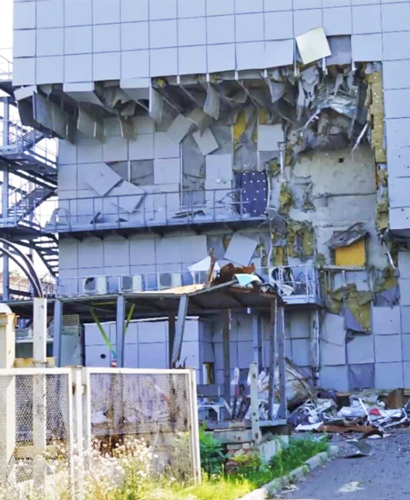
Damage to the ‘Neutron Source’ building captured in August 2022, at the Kharkiv Institute of Physics and Technology. Credit: Supplied.
The funding is being used to establish two different activities, each designed to offer practical support to enable the continuation of research and technology activities by Ukrainian scientists.
Short-term visits (Activity 1)– Ukrainian researchers will participate in short-term visits to Australia to engage in research at a host institution, or to participate in a conference and site visit program.
Facility access (Activity 2) – Ukrainian researchers can access leading infrastructure capabilities in Australia, such as supercomputing facilities, microscopy and microanalysis facilities, and telescopes. Ukrainian researchers will be able to send their samples to National Collaborative Research Infrastructure Strategy (NCRIS) facilities for analysis, with the results returned to the Ukrainian research institute.
Foreign Secretary of the Australian Academy of Science, Professor Frances Separovic, said the research fund allows Ukrainians who are impacted to collaborate with Australia so that their research efforts can continue.
“It is paramount that the research workforce and capability required to help rebuild Ukraine is not depleted over the course of the war,” said Professor Separovic.
His Excellency Ambassador of Ukraine to Australia Vasyl Myroshnychenko said to rebuild Ukraine, the country will need the support of the world.
“I think the connections that will be built as a result of this program will help us better help Ukraine in the future,” said Ambassador Myroshnychenko.
The call for applications to the research fund is now open.

Australia's scientists welcome review of ARC Act
The Australian Academy of Science welcomes the release of the Australian Government’s Trusting Australia’s Ability: Review of the Australian Research Council Act 2001.
Academy President Professor Chennupati Jagadish said the underlying theme of the review is that of trust with a strong emphasis on the critical role of the ARC in Australia’s research system.
“The role of the ARC, its leadership and the execution of its functions should reflect our aspirations for the research landscape, for research excellence and how they can best support our national ambitions,” Professor Jagadish said.
“The recommendations in the review provide a strong basis to support this purpose and the ongoing effectiveness of the ARC.
“The Academy welcomes the recommendation that the commitment to funding basic research should be incorporated into the ARC’s purpose under the Act.
“The Academy views this as important to safeguard fundamental research that grows our knowledge base.”
The Academy also endorses several other noteworthy recommendations to:
- restore the ARC Board and populate it with members with the right combination of skills and experience
- discontinue Excellence in Research Australia (ERA) and modernise ARC capacity and requirements for data collection and analysis
- streamline National Competitive Grants Program (NCGP) guidelines to reflect international best practice and reduce the administrative burden on academic and research organisations.
Professor Jagadish said the focus of ministerial discretion on the NCGP guidelines and funding available, rather than on individual grants, would place the recommendations and approvals in the hands of the people with the expertise to assess their merit.
“It is positive to see the recommendations to advance Indigenous Australians in research and recognition of the impact of the ARC on attracting and retaining research talent,” Professor Jagadish said.
“The recommendations in the review are so important and sensible that the Academy looks forward to their implementation as soon as practicable.”
The Academy thanks the review panel for its expert contribution and guidance.
‘Blue carbon’ expert to represent Australia in international prize
A scientist whose work showing the massive amounts of carbon that could be captured by oceans and coastal ecosystems has been chosen to represent Australia in a lucrative global sustainability prize.
Professor Peter Macreadie, of Deakin University, was declared a National Champion for the inaugural Frontiers Planet Prize.
An initiative of the not-for-profit Frontiers Foundation, the prize recognises breakthroughs in sustainability science within the last two years that have measurable potential to help humanity remain within the boundaries of our planet’s ecosystem.
Professor Macreadie is one of three researchers nominated by the Australian Academy of Science for the prize.
Professor Macreadie is in the running for one of three International Championship prizes (each worth one million Swiss francs or ~A$1.6 million), which are awarded to the host institutions of each winning researcher.
The National and International Champions are chosen by a jury of 100 leading sustainability scientists.
Professor Macreadie’s research has demonstrated the enormous potential for ocean and coastal ecosystems to contribute to capture and store carbon—known as blue carbon—on a global scale. Conservation and restoration of blue carbon ecosystems can offset carbon emissions and help mitigate climate change.
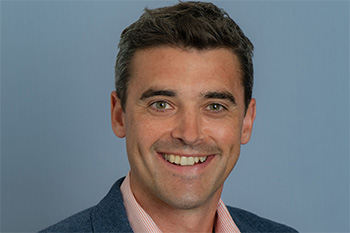
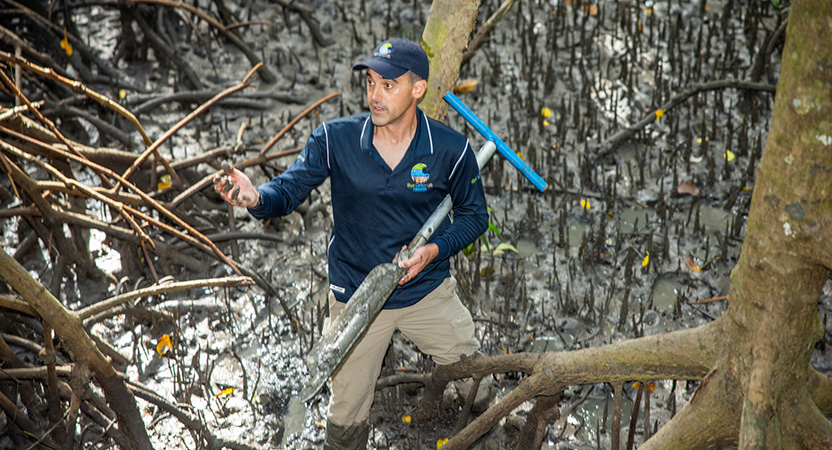
Professor Macreadie is the founder and director of the Blue Carbon Lab. Photo: Simon Fox
The study for which he was nominated showed blue carbon ecosystems such as mangrove forests, tidal marshes and seagrass meadows store more than 30 billion tonnes of carbon across about 185 million hectares.
It demonstrated that conserving these ecosystems could potentially avoid over 300 million tonnes of CO2 emissions per year, and that restoring damaged or destroyed ecosystems could draw down a significant additional amount of CO2.
The research was published in Nature Reviews Earth & Environment in 2021.
Fellow of the Australian Academy of Science Professor Catherine Lovelock, who’s based at the University of Queensland, is a co-author on the paper.
As the founder and director of the Blue Carbon Lab at Deakin University, Professor Macreadie is currently working with his team to break down the obstacles to blue carbon markets becoming economically viable, effective tools for mitigating climate change.
Professor Macreadie said he was honoured to represent his team and their work as Australia’s National Champion.
“This prize would provide much needed recognition that blue carbon is a high-quality and globally significant natural climate solution,” Professor Macreadie said.
“Achieving the restoration scale required to deliver maximum climate change mitigation benefits from Blue Carbon Ecosystems needs strong governance, and support from governments, beneficiary industries, corporations and communities. This prize will greatly advance this cause.”
The winners of the International Championships will be announced at an award ceremony on 27 April at the Frontiers Forum in Montreux, Switzerland.
The two Australian runner-up nominees are also conducting breakthrough research in sustainability science.
Professor Nerilie Abram from the Australian National University was nominated for her work highlighting the compounding ways human-induced climate change has increased the risks of fires that threaten forest ecosystems and human lives in Australia.
Professor Zaiping Guo of the University of Adelaide was nominated for her work on energy storage technologies, which are currently a roadblock to adopting clean energy solutions.
Her nominated paper details the creation of a new liquid, non-flammable electrolyte to improve the energy density and safety of rechargeable lithium-ion batteries.
Discussions continue on the future of the Great Barrier Reef
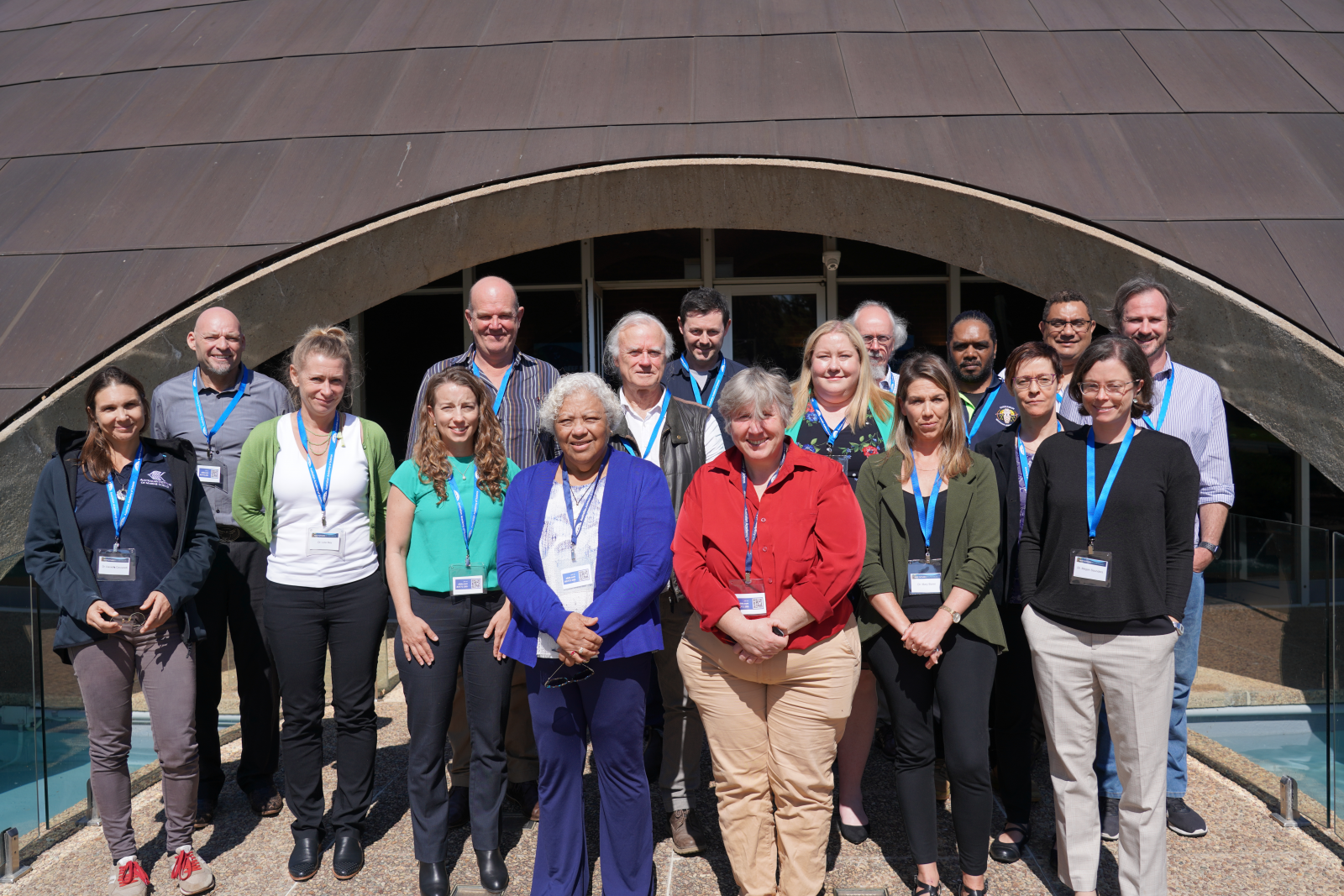
The Australian Academy of Science convened 17 experts including ecologists, climate scientists, Traditional Owners, oceanographers and others, for the second of three roundtables on the likely impacts of climate change on the Great Barrier Reef.
The Australian Academy of Science has hosted the second of three expert roundtables to inform advice to government on the likely impacts of climate change on the Great Barrier Reef and potential interventions under plausible climate futures.
The Department of Climate Change, Energy, the Environment and Water engaged the Academy in January to convene the roundtables and deliver a synthesis report to support the Reef 2050 Independent Expert Panel’s advice to government.
The second roundtable expanded on discussions from the first roundtable.
Thirty-one experts discussed the interventions and technologies that could sustain or improve the health and functioning of the Great Barrier Reef in the face of current and future climate impacts that may be anticipated in the medium-term future (2040–60) under both low and high emission scenarios.
The potential interactions, combined benefits and conflicts between these intervention strategies and technologies were explored, with focused discussion on understanding knowledge gaps and barriers for deployment of technologies and interventions at scale.
Diverse expertise from scientists, engineers, Traditional Owners, policy and regulatory experts was presented in the discussion, reinforcing the holistic approach that is required to understand and maintain the complex Great Barrier Reef ecosystem.
Topics including climate mitigation, greenhouse gas emission reductions and cost benefit assessments are not within the remit of these roundtables.
The final roundtable, to be held on 2 May, will build on the findings of roundtables one and two and integrate these with additional social and cultural context.
The final report to be delivered later this year will present the outcomes of the roundtable process to the Independent Expert Panel for its consideration. Following this, the report will be made publicly available as a resource for governments and the non-government sector.
See more information and the project terms of reference.
Roundtable participants
Chairs
Ms Chrissy Grant
Dr Beth Fulton
Participants
Dr Vincent Backhaus
Dr Line Bay
Dr Roger Beeden
Professor David Bellwood
Dr Mary Bonin
Dr Kerryn Brent
Associate Professor Andrew Brooks
Dr Emma Camp
Dr Danielle Ceccarelli
Dr Scott Condie
Mr Jonathan Daly
Dr Aaron Davis
Professor Norm Duke
Professor Matthew Dunbabin
Dr Katharina Fabricius
Dr Mark Gibbs
Dr Daniel Harrison
Ms Nyssa Henry
Mr Bob Muir
Mr Chris Muriata
Dr Rachel Pears
Dr Suzanne Prober
Dr Megan Saunders
Dr Roger Shaw
Dr Nicki Shumway
Dr Andy Steven
Mr John Tapim
Dr Bruce Taylor
Ms Liz Wren
Joe Pawsey and the Founding of Australian Radio Astronomy: new biography of a foundation Fellow
A new biography, Joe Pawsey and the Founding of Australian Radio Astronomy, examines the life and career of an Academy foundation Fellow.
The book follows Dr Joseph Lade Pawsey FAA FRS (1908–1962) from humble beginnings in country Victoria through a unique career shaped by the challenges and opportunities of his generation.
It is freely available online as open access, or can be purchased as a hard copy from the publisher, Springer Nature.
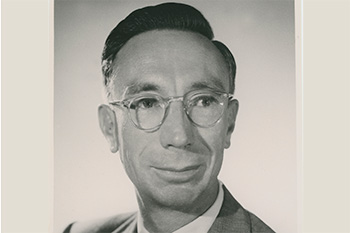
Joseph Pawsey was born in Ararat, Victoria, on 14 May 1908, and was the only child of farming parents Joseph Andrews and Margaret Lade.
The biography examines Dr Pawsey’s critical role in the development of radar during World War II and his leadership in transitioning the CSIR Division of Radiophysics to peacetime projects. It explores the birth and growth of radio astronomy and explains how an isolated continent with limited resources became a world leader in the field.
The book shows Dr Pawsey’s talent for mentoring young scientists, many of whom became innovators in their own right, and describes his work with Ruby Payne-Scott and Lindsay McCready on the connection between sunspots and increased radio emissions from the sun.
It covers the development of aperture synthesis and the following controversial disagreement with Sir Martin Ryle, who was later awarded the Nobel Prize in Physics in 1974, while exploring the connection between prominent international astronomers and Australian engineers and physicists who developed and advanced the field.
I was only 17 when Dad died, but the book has brought him back to life for me, as a successful international scientist who has been described as the ‘father of Australian radio astronomy’. His biography re-introduced me to my complete father, a man I’d previously only known as ‘Dad’.Hastings Pawsey
Dr Pawsey received many honours during his lifetime. In 1954 he was elected to the Fellowship of the Royal Society, London, and was made a Foundation Fellow of the Australian Academy of Science. He received the Thomas Ranken Lyle Medal from the Australian National Research Council in 1953. In 1957, he was the Academy’s first Matthew Flinders Medal Lecturer, and was awarded the Hughes Medal from the Royal Society in 1960. The Pawsey Medal, recognising outstanding contributions to research in physics, was the second medal struck by the Academy and was named in his honour.
The process of gathering material for the book took almost 20 years—with co-author Dr W M Goss, who was awarded the Pawsey Medal in 1976, having approached Dr Pawsey’s youngest son Hastings around the year 2005 with the possibility of writing a book about his father.
Hastings Pawsey said this was the opening of a ‘Pandora’s box’, prompting him to begin exploring the family archive with the help of his wife Liz.
Dr Goss, Dr Claire Hooker and Professor Ronald D Ekers AO FAA FRS drew extensively from these primary sources, including previously unreleased material in the care of the Pawsey family, building a portrait of as a person as well as a scientist.
The resulting biography is a comprehensive and often personal account of the whole of Joseph Pawsey: his experiences, philosophies, and place in the history of 20th century science.
The research and experience of Australian scientists forms the foundation on which we build our future. It is vital that we capture and preserve their stories. Donations from organisations and individuals are welcome; if you would like more information about supporting the archive project, please contact our Philanthropy Manager at philanthropy@science.org.au
Discussions begin on the future of the Great Barrier Reef
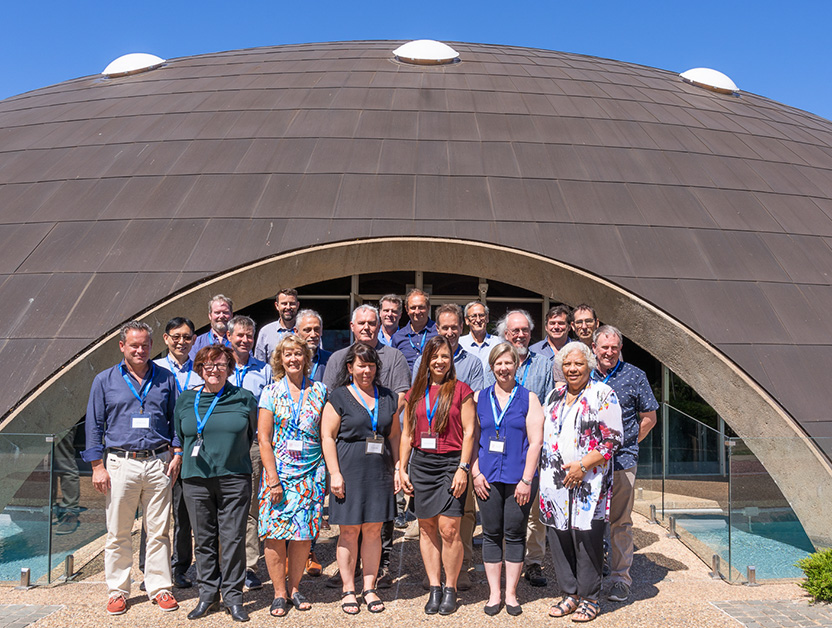
The Australian Academy of Science convened 26 experts including ecologists, climate scientists, Traditional Owners, oceanographers and others, for the first of three roundtables on the likely impacts of climate change on the Great Barrier Reef.
The Australian Academy of Science has hosted the first of three expert roundtables to inform a synthesis report, to be delivered later this year, on the likely impacts of climate change on the Great Barrier Reef.
The Department of Climate Change, Energy, the Environment and Water engaged the Academy in January to convene the roundtables and deliver a synthesis report to support the Reef 2050 Independent Expert Panel’s advice to government.
The 26 experts at the first roundtable included ecologists, climate scientists, Traditional Owners and oceanographers, among those from other fields of expertise.
The first roundtable focused on the health and functioning of the Great Barrier Reef in the face of current climate impacts and the climate impacts that may be anticipated in the medium-term future (2040 – 2060) under low and high emission scenarios.
Participants discussed the differential impacts of climate change on marine and terrestrial species groups, habitats, ecosystem values and processes in different climate futures.
These impacts were explored to determine which are key to the overall functioning, health and resilience of the Reef, which are most vulnerable and where gaps in knowledge exist.
Traditional and local knowledges are key components of understanding Australia’s ecosystems and a key feature of each of the roundtables.
This holistic approach ensures that the comprehensive ecosystem of the Great Barrier Reef is instilled throughout the proceedings.
The second roundtable will build on the issues that arose from roundtable one and will explore the existing and emerging interventions that could be used within these plausible future climate scenarios.
The Academy will invite experts to provide diverse knowledge and relevant expertise to each roundtable.
The final roundtable will collate the findings of roundtables one and two and integrate these with additional social and cultural context.
The final report will outline the outcomes of the roundtable process to present to the Independent Expert Panel for their consideration. The final report will be made publicly available as a resource for governments and the non-government sector.
More information and the project terms of reference can be found on the Academy website.
Roundtable participants
Chairs:
Chrissy Grant
Dr Steve Morton
Participants:
Dr Ken Anthony
Dr Andrew Ash
Dr Mark Baird
Professor David Bellwood FAA
Dr Wenju Cai FAA
Ms. Sheila Charlesworth
Professor John Church AO FAA FTSE
Mrs Larissa Hale
Professor Michelle Heupel
Professor Andrew Hoey
Dr Cass Hunter
Professor Ian Mcleod
Professor Peter Mumby
Professor John Pandolfi
Professor Morgan Pratchett
Dr Michael Rasheed
Professor Jodie Rummer
Dr Britta Schaffelke
Professor Colin Simpfendorfer
Mr Gavin Singleton
Dr Claire Spillman
Dr Jenny Stauber FAA FTSE
Dr Jess Stella
Mr Josef Syktus
Mr Angus Thompson
Dr David Wachenfeld
We have the tools, but not the ambition—President’s statement on IPCC report
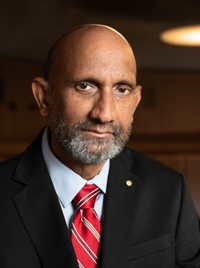
Professor Chennupati Jagadish, President of the Australian Academy of Science
It has been five years since the IPCC highlighted the unprecedented scale of human-induced climate change from rising greenhouse gas emissions.
Now, it clearly states that we still have an opportunity to secure a liveable, sustainable future for all, but climate action must be mainstreamed, and its pace and scale must be accelerated.
Global action is not ambitious enough. No single action and no single country will achieve the scale of emissions reduction required.
A mammoth effort across the world, including a portfolio of approaches, is essential to stabilise emissions. We must pull every lever available to us: policy, financial, economic, scientific, technological and social.
Australia has direct experience of the loss and damage associated with more frequent and intense climate-induced events such as bushfires and flooding. And no nation can ignore the ravaging climate impact on our Pacific neighbours, which has geopolitical consequences for the world, especially for Australia.
Australia must do something substantial about its contribution to global warming.
We have the tools but lack the necessary ambition.
Emissions reduction and removal
The solutions to reduce greenhouse gas emissions are more readily available than ever before.
But we must expand our toolkit to remove already released emissions from the atmosphere. Scaled removal solutions can bring massive opportunities to our nation and will be essential to reach net zero emissions and limit global warming to 1.5°C.
Late last year, I convened experts to determine the scientific capability, research and collaboration needed to support breakthroughs in greenhouse gas removal.
Watch the recording of the event, from 1 March 2023:
Whilst Australia has been active in promoting land-based approaches such as afforestation, reforestation and carbon farming, these approaches can only account for part of the large-scale greenhouse gas removal required.
The roundtable identified a range of novel greenhouse gas removal and storage approaches, including direct air capture methods; ocean alkalinity enhancement; technologies that split CO2 into carbon and oxygen; mineral carbonation; enhanced mineralisation; blue carbon; and using photosynthetic organisms.
The Academy welcomes informed democratic parliamentary debate on the safeguard mechanism. However, this is just one tool and given our nation’s track record of policy stagnation, it places us at the starting line when we should be halfway through the race.
The safeguard mechanism should be passed into legislation as a priority and every single arm of government, industry and the community sector leveraged to take action to reduce and remove greenhouse gas emissions.
Where emissions reduction or removal technology does not exist, investment in research must be prioritised and scaled up.
With elements of the national science and innovation system under review by the government, there is a unique policy window to elevate emissions removal in the Australian policy discourse.
Greenhouse gas reduction and removal must be part of the Australian Government’s suite of priorities across investment vehicles such as the Australian Renewable Energy Agency, the Clean Energy Finance Corporation and the National Reconstruction Fund.
Equitable climate action
The impacts of climate change are already upon us, and often those least equipped to adapt are impacted the most.
But no one is invulnerable to the impacts of climate change and the IPCC tells us that by 2030 every continent on Earth will have felt its impact, if they haven’t already.
Urgency is necessary to enable immediate adaptation from climate harm. In this regard, the Academy welcomes the Australian Government’s early commitments to reduce the impacts of coastal erosion and future-proof communities, and measures to strengthen climate resilience and adaptation in the Torres Strait Islands.
Over the last three years, the Academy, via Future Earth Australia, has done some heavy lifting by convening experts and stakeholders from diverse backgrounds across the public and private sectors.
This has led to the publication of a National Strategy for Just Adaptation designed to disrupt current adaptation thinking and foster recognition, inclusion and capacity building for all Peoples and nature.
This work can give the government a head-start on scoping the recently announced National Climate Risk Assessment capability—a national framework to respond to climate risks.
The National Strategy for Just Adaptation moves us from a focus on strictly technological approaches to one that encompasses social, political and behavioural strategies and systems change. In short, it enhances the adaptive capacities of people, places and ecosystems in all their diversity.
Five Priority Reform Areas are offered to embed justice into climate adaptation, including empowering Indigenous leadership, supporting community groups to drive transformation, and advancing adaptation research.
Historically, we have fought and won our greatest challenges such as victory in World War II and developing vaccines and therapeutics to enable us to emerge from a pandemic because we concentrated our efforts, directed our investments, resolutely focused on our goals, and scaled up solutions that were offered by science.
Addressing global warming is no different. The scale is mammoth, but so were our previous challenges.
Professor Chennupati Jagadish AC PresAA FREng FTSE
President, Australian Academy of Science
Read more about the Academy’s work on climate science and solutions
Celebrating champion of Australian science, Nancy Pritchard
After decades supporting Australian science internationally, Nancy Pritchard says her work isn’t done yet—noting there are challenging times ahead with the region’s shifting geopolitics.
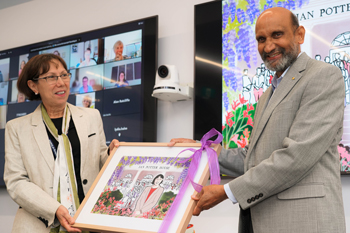
President of the Academy Professor Jagadish Chennupati presenting Nancy with her gift.
At an event this week to acknowledge Nancy’s 30th anniversary as an Australian Academy of Science staff member and her significant contributions to science, Academy President Professor Chennupati Jagadish AC said the organisation owed Nancy a debt of gratitude.
“With her deft interpersonal and diplomacy skills, Nancy has built far-reaching and productive working relations with public servants, science diplomats and international science organisations over many years,” Professor Jagadish said.
“Her tireless efforts have strengthened scientific links between Australia and the global community.
Science has no national boundaries
“Nancy understands better than most that science has no national boundaries, and that by continuing to work together we can make progress addressing the global problems faced by society and the planet.
“We sincerely thank Nancy for her contributions and look forward to continuing to work with her.”
Nancy began her career at the Academy in 1992. Her first role was with the Academy’s fundraising arm, the Australian Foundation for Science.
“It was during this time that the Academy secured funding to restore the Shine Dome: a $1 million donation from Professor John Shine AC FAA FRS and a $525,000 grant from the National Council for the Centenary of Federation,” Nancy said.
Nancy took on the role of managing the Academy’s international scientist exchange program in 2000.
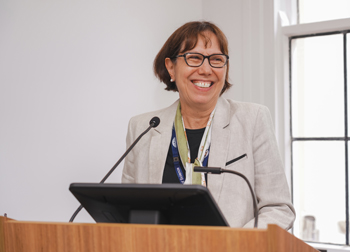
She continues in that role today, which has expanded to include promoting Australia’s international scientific engagement and overseeing the Academy’s many awards and the work of the National Committees for Science.
The work has seen her travel to many countries to support and promote bilateral and multilateral scientific partnerships, including Mongolia, Nepal, Brazil, Indonesia, China, Japan, Malaysia, Sri Lanka, Singapore, France, England, Turkey and Vietnam.
She said Australia hosting the high-profiile ‘International Day’ for the first time at the annual Lindau Nobel Laureates Meeting in Germany in 2014 stands out in her mind.
“It was a great showcase of Australian science, cultural and educational achievements, spearheaded by three of Australia’s Nobel Laureates, to an audience of 600 young researchers from 60 countries.”
Nancy has worked under nine Academy presidents and watched the organisation grow from 18 to 70 secretariat staff.
“It has been an extremely fulfilling role in which I have made great friends. I just love what I do, particularly working with our Fellows and my secretariat colleagues who are amazing people and are all passionate about the mission. That rubs off on you,” Nancy said.
“Just like the Fellowship, the Academy’s secretariat is now a much more diverse workplace than when I started.”
Regional Focal Point a personal highlight

Reflecting on her time at the Academy, Nancy said the establishment of the International Science Council’s Asia-Pacific Regional Focal Point at the Academy, announced late last year, was a personal highlight.
“Another highlight has been my involvement with the Association of Academies and Societies of Sciences in Asia (AASSA) Women in STEM special committee chaired by Professor Cheryl Praeger AC FAA.
“It has been a privilege to work with outstanding women scientists from the region who have faced major challenges and made sacrifices to get to where they are now. I still stay in touch with them.”
Academy Chief Executive Anna-Maria Arabia said Nancy is a national treasure.
“The Academy and Australian science are so fortunate to have benefited from Nancy’s expertise and tireless commitment to advancing science domestically and internationally,” Ms Arabia said.
“I congratulate Nancy on this significant milestone and very much look forward to continuing to work together for many years to come.”
Looking to the future, Nancy said increasing school science education globally is a common topic of discussion at the international meetings she attends.
“More than anything, the learned academies want more school science education to happen in their respective countries.
“Our Academy does that well—through programs including Science by Doing, Primary Connections and Resolve. That is something the Academy and Australia should be proud of,” Nancy said.
“International science is also changing, in part because of the geopolitical issues facing the region. But you cannot do science without international collaboration. Continuing to build trust between researchers and scientists across the globe, as we navigate these geopolitical issues, is crucial for the future of the planet.”
Statement from the Australian Academy of Science: AUKUS nuclear submarine announcement
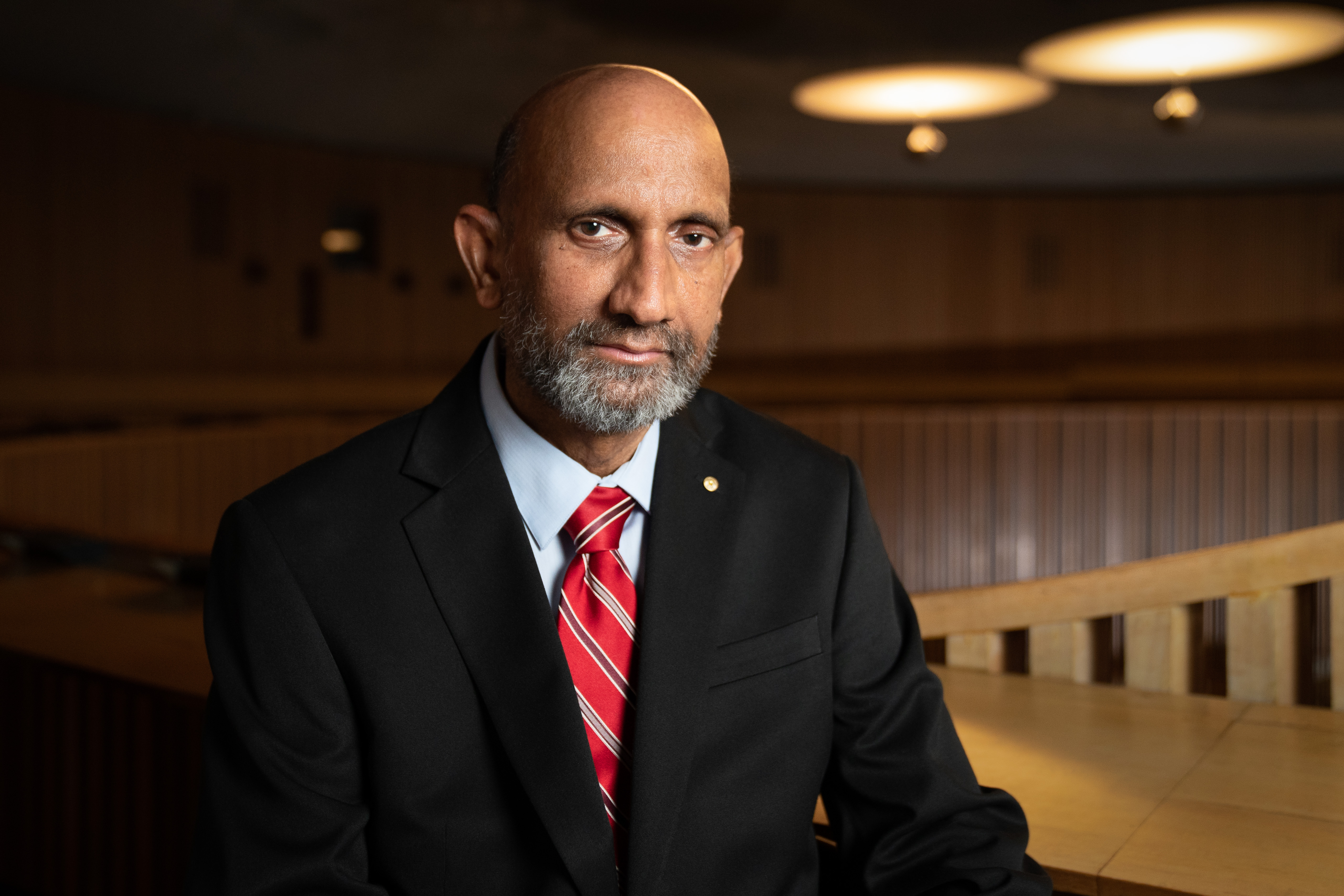
Professor Chennupati Jagadish, President of the Australian Academy of Science
Quotes attributable to Professor Chennupati Jagadish AC PresAA FREng FTSE, President of the Australian Academy of Science.
“Building capability in nuclear science will be central to achieving the aims of the Australian Government in developing a nuclear-powered submarine capability.
“Even before AUKUS, there was an increased demand for knowledge in nuclear science in Australia. The AUKUS partnership to acquire nuclear-powered defence submarines, the increasing use of radiotherapies in medicine, focuses on quantum technologies, development of materials robust enough to withstand space radiation—all these sectors require a deep understanding of nuclear physics and subatomic interactions to ensure they are safe and effective.
“Nuclear science in Australia faces a skills crisis. We are significantly behind our peer nations in national nuclear and radiation science capability.
“Demand for nuclear scientists to meet existing workforce needs, let alone the national capacity to benefit from new developments in nuclear physics, is running well above supply and the capacity of Australian universities to train sufficient scientists. Australia is overly dependent on overseas trained workforce and lacks the capacity to train new nuclear scientists to meet our existing needs.”
Background
Prime Minister Anthony Albanese announced details of a nuclear-powered submarine deal with the United Kingdom and the United States under the AUKUS partnership on 14 March 2023.