




2023 Symposium closing remarks: Professor Chennupati Jagadish

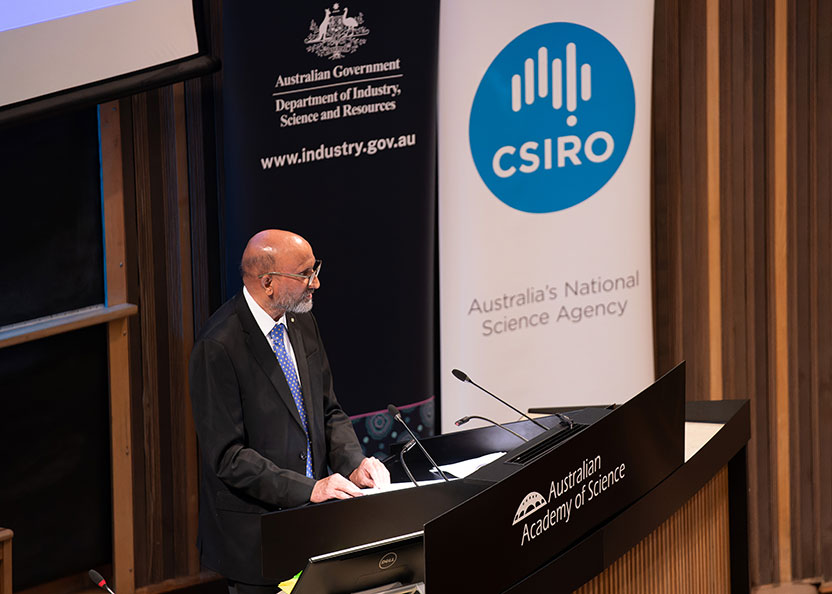
Thank you, Professors Steven Chown and Frances Separovic for your summary of the Academy's 2023 Symposium.
I, too, would like to reflect briefly on today’s event.
The national dialogue we have had today has been necessary.
We have been deliberate in bringing together the national security and research sectors so they could hear from each other, and engage and move forward constructively with a deeper understanding of each other’s challenges and perspectives.
The more we can do to forge a culture of dialogue between these sectors, the better.
The balance between scientific collaboration and national security is a delicate balance, and as Assistant Minister for Foreign Affairs the Hon Tim Watts MP said earlier:
“It's not an all or nothing situation—and there's no one answer. Most issues will fall somewhere in that in between space, and we should always be looking very closely at what we need to protect, and how we can collaborate where we can—for our shared interests, as well as for our own national interest.”
I’m pleased there was an acknowledgement of the need for Defence to reach deeper into universities to communicate with researchers at the coalface and who stand to be most impacted by the dynamic threat environment and measures to manage it.
Reaching a shared understanding of who we can collaborate with, on what terms, and how much risk we are comfortable accepting is a shared responsibility.
A strong dialogue between the national security and research sectors will also help determine the carve-outs that will apply to security measures.
An evidence-informed discussion is also important.
The Academy looks forward to working with the Department of Defence to convene the research sector and help inform decision-making.
I am also pleased to hear resounding support for strengthening multilateral scientific engagement and a desire to find better ways to share science talent and knowledge.
Many speakers emphasised the importance of international scientific collaboration, not just to solve global problems, but to bring back global knowledge to solve uniquely Australian problems.
I was encouraged to hear Deputy Prime Minister the Hon Richard Marles MP say that Australia needs to change our cultural relationship with science—to see it front and centre and crucial to responding to issues our country faces, such as the lack of economic diversification in the Australian economy.
I could not agree more.
Something that was largely unspoken today was the role that industry research and development plays in this context.
The most recent BERD figures show that industry is responsible for over half (53%) of Australia’s R&D investment—much of this is not coming from homegrown Aussie startups where we can provide guidance on selecting members of the board.
It’s from large multinational companies, like Rio Tinto, BHP, Atlassian and Canva, who develop ideas in Australia, and take their know-how wherever they need.
As I highlighted this morning, the implications of AUKUS and the threat environment have direct impacts on my research group at ANU.
I see myself at the forefront of the significant changes that will likely be required to ensure our science system is appropriately responsive to the evolving geopolitical environment.
I am confident this symposium has improved our mutual understanding of the research and national security challenges we face.
I am of the view that the Defence Trade Controls Amendment Bill 2023 will benefit from amendments to make it implementable.
The Academy will work with decision-makers across the government to seek to achieve a nuanced approach that supports our respective and joint objectives consistent with the principles of evidence-based co-design and proportionality.
It is my view that the Learned Academies need to play a role in helping the government communicate and build an understanding of the requirements and responsibilities that will increasingly be placed upon scientists, and importantly, where they will not.
I would like to extend my heartfelt gratitude to all our speakers and panellists, some who have travelled a long way to be here.
To our event partners, thank you:
- ANU
- CSIRO
- The Department of Industry, Science and Resources
- The Department of Defence
- The University of Adelaide
- Monash University
- ANSTO.
This event would not have been possible without your generous support.
To the convenors of today’s event, Professor Steven Chown and Professor Frances Separovic, thank you for your knowledge, time and dedication in preparing for the symposium. And for assisting us throughout today to facilitate these important conversations.
Thank you also to Academy Chief Executive Anna-Maria Arabia, whose leadership and vision helped shape our symposium.
I would also like to thank the Academy Policy and Communications teams for their tireless work behind the scenes to prepare and deliver this event.
With extra special thanks to Lisa Crocker, our Events Manager.
And finally, thank you all for attending and engaging.
One final announcement: we are excited to announce the Academy’s national symposium will be moving to Brisbane next year!
As part of the World Science Festival Brisbane on Friday 22 March 2024, the symposium is titled “Food Futures: Nourishing a Nation”.
The symposium will explore what science can tell us about what Australians will be eating in 10 years’ time, the forces that will impact food systems, and the innovations that will shape our diets.
More information will be available soon.
Partnership opportunities are also now available.
We hope you will join us in Brisbane in March.
Thank you all again, safe travels home, and good afternoon!


President's keynote address: International Science Collaborations in a Contested World National Symposium 2023
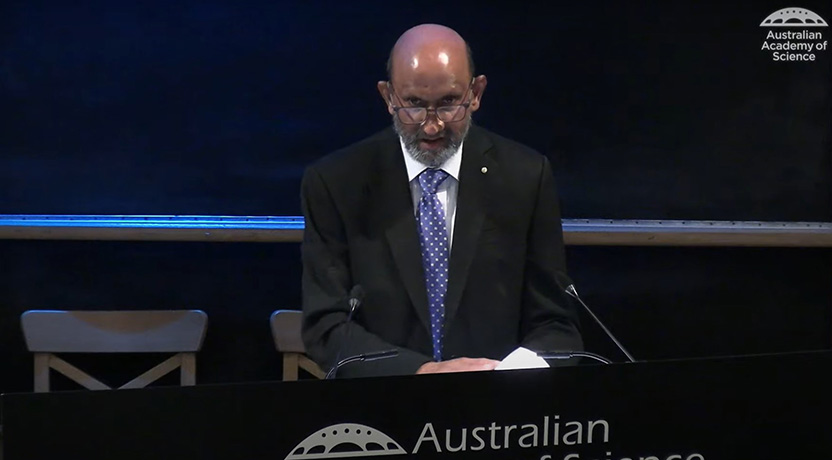
Tuesday, 14 November 2023
Not long after the Academy was established nearly 70 years ago, our second President, Sir Thomas Cherry, stood here and welcomed 150 participants for an international symposium on water resources, use and management.
In the audience were scientists from around the globe, including the United States, Russia and Belgium.
Sir Thomas called it the most important symposium the Academy had ever organised.
Then-Prime Minister Sir Robert Menzies, opening the symposium, described the topic as “a problem of the first magnitude”.
His comments came just two years before drought spread from NSW across much of Australia, ruining the rural economy and restricting exports.
As the driest inhabited continent on Earth, successfully managing our rivers, aquifers and catchments remains a challenge.
And a safe water supply for a world population that has now surpassed eight billion people is even more critical.
But today, I’m going to be bold. I claim that the 2023 National Symposium may well trump that of 1963, and be our Academy’s most important symposium yet, because of what’s at stake.
At stake of course is the future of the planet.
And it is in danger—science tells us that every day.
We are fed a never-ending stream of evidence about collapsing global ecosystems, about biodiversity loss, the damage to natural resources and their decline, and the rise and mobility of diseases due to the changing climate.
But what is also at stake is the very architecture and nature of the global research system required to respond to these challenges.
Today, I argue that the global science system is at its most valuable, and its most vulnerable.
There are local challenges which each country’s scientists will need to work to seek to solve, but the global challenges are different: bigger, harder and more complex, and political.
They require global solutions, and that will require researchers and peoples to work together.
We face challenges from technologies born of science that were recently the stuff of dystopian Hollywood imagination—artificial intelligence, advanced robotics and quantum.
And whilst they too demand collaborative science to deliver answers to government and society, they have fast become matters more characterised by strategic national competition, than collaboration.
But collaboration is a matter of strategic national interest, for everybody.
We in Australia can’t do without international collaboration either—our size and location make that obvious.
We have to be willing and able to contribute to the knowledge-bank that will help solve the challenges, and we need our scientists to be there when the big decisions are made that affect us and that affect the living systems in all other countries.
We share one planet; we have nowhere else to go.
We will be saved by ourselves—not some as yet undiscovered but friendly neighbour who happens to pass by and feel the urge to help us do what we are not willing to do: work together.
So, how do we in Australia navigate the next few months and years?
How do we facilitate strategic collaboration?
The answers may well be amongst the most significant decisions we make as a nation.
They will dictate our contribution to meeting global challenges.
They will determine whether we develop the sovereign capabilities needed to secure our nation and globe.
They will determine whether science is adequately equipped to serve the national interest.
Whether it is:
- open enough to develop the technologies we need and to access the 96% of knowledge we don’t generate
- and protected enough to ensure our knowledge and capabilities do not fall into foul hands.
It’s a conundrum of global proportions and my own field of scientific endeavour illustrates why.
My work in nanotechnology and semiconductors—an area of strategic competition between nations—is fuelled by my research group which is entirely made up of international students.
My work is also made possible because of some 30 collaborations I maintain across the world, spanning countries including the UK, US, India, China, Germany, France, Sweden, Finland, Norway, Italy, the Netherlands, Japan, South Korea, Russia, Lithuania, Poland, Brazil, South Africa, and the list goes on.
My work is fundamental discovery research, designed to better understand our world at a nanoscale.
To put this into perspective, I can place 20 lasers in one strand of your hair.
Why would I want to do that?
Because at the nanoscale, I can create technology to better diagnose disease and understand and treat Alzheimer’s disease in the longer term.
I can create technology that more efficiently runs solar cells and generates hydrogen as a sustainable fuel source needed to decarbonise our industries and economy.
The trouble is, my research is also listed on the Defence and Strategic Goods List. Category 6, specifically 6A004, 6A005, 6A007… the number soup goes on.
And this means, placed in the wrong hands, my research could be used for less than desirable purposes.
On 7 November, a new piece of legislation was released designed to strengthen Australia’s defence export control framework, so it keeps pace with the emerging challenges in Australia's security environment.
I, the Academy, and the research sector have an opportunity to express our views on the Exposure Draft of the Defence Trade Controls Amendment Bill 2023 by this Friday the 17th of November.
The Bill proposes to strengthen our defence export control framework, by, amongst other things, creating three new criminal offences in the Defence Trade Controls Act 2012.
It says I can collaborate freely with the US and the UK—which certainly has its benefits—but I would require an approved permit prior to collaborating with other foreign nationals.
Without it, my collaborations would see me jailed.
So, it expands Australia’s backyard to include the US and the UK, but it raises the fence.
For my research group, which consists entirely of PhD students, post-docs, technicians and senior researchers from countries other than the US and the UK, we will need permits for all that we do.
And members of my group will need to operate in a closed environment to not unintentionally share knowledge that may have a dual use.
Discussion at international conferences, where unpublished knowledge is shared freely to solve research problems and enable collaboration, seems unlikely if this Bill becomes law.
Some of this may still be technically legal under this new legislation, but how will I know which session of these conferences I will be able to present at, ask questions or engage in discussions with or without a permit?
My ability to attract the best and brightest in the world, wherever they are, will diminish.
It’s timely to ask what Australia is really seeking to secure if we are restricting the development of technologies that are critical for our country?
In my experience and the experience of researchers worldwide—the best research is global.
But, to comply with the new laws, I will have to lock down my communications and restrict my collaborations.
It feels like I am being asked to create something akin to the US’s federally funded research and development centres (FFRDCs) or university-affiliated research centres (UARCs), minus the funding.
These centres are not-for-profits that are established and funded to meet long-term engineering, research, development and analytic needs, like the Lincoln Lab at MIT.
They are a mechanism used in the US to control risk but not limit collaboration for critical innovation.
If such structural change in the research architecture and system is required to address national security concerns, the Australian Government will need to consider the resource implications of implementing such changes.
Resources to establish secure research facilities.
Resources to educate and train the workforce on the changing Defence and Strategic Goods List.
Resources to foster a more security-aware culture across the research sector.
And resources to facilitate compliance.
They will also need to accept the limitations of compliance.
Students live in shared houses and university colleges; they go to cafes and to the student union.
They don’t only talk about the weather or the latest episode of their favourite show on Netflix.
It’s natural to share what they do—perhaps vent a frustration, seek reassurance about a doubt or celebrate a success.
We all do it because we are human.
It ought not to be a jailable offence.
So, there is a lot at stake as we revise the architecture of our research system to respond to security threats.
I am the first to agree that we need to do something to the changing geopolitical environment we need to operate in.
But we ought not to throw the baby out with the bathwater.
I will leave it to others to share with you the defence and security reasons why we need a tall fence around a small paddock.
But, as President of the Australian Academy of Science, it is incumbent on me to make the case for international research collaboration as a matter of strategic national interest.
Forty-five percent of the Academy’s Fellows elected in the past five years were born overseas.
The scientific work of these stellar individuals has helped shape our nation.
In fact, Australia is the product of the freedom of movement of scientists and our ability to collaborate and welcome talent—like them—to our shores.
This is not new.
World War II saw researchers become part of the United States war effort—leading to evolutions in radar, computing and the development of nuclear weapons through the Manhattan Project.
Key amongst those researchers was the founding President of this Academy, Sir Mark Oliphant.
Throughout and beyond the Cold War, scientists continued to work with governments to find systematic approaches to research and technology development.
What followed was an era of openness, globalisation and an unimpeded flow of scientific communication and exchange.
It was research and collaboration in the name of constructing our nation post-war.
Today, we have a National Reconstruction Fund, with a stated ambition to diversify and transform Australia’s industry and economy.
We may not be post-war.
But we are post-pandemic, which has shown us how critical it is to both collaborate and to develop sovereign capability.
And much reconstruction is needed because we are still 93rd in the world in terms of our economic complexity.
In other words, we have a vulnerable economy that is underpinned by too few exports and industries, key amongst them unprocessed natural resources.
So, more than ever, we need to diversify our industrial base and build onshore capabilities.
With these imperatives in mind, it is not a time to impede collaboration.
Why?
There is perhaps no better recent example of the benefit of international science collaboration than the development of COVID-19 vaccines.
While the science behind mRNA was decades in the making, getting a vaccine to market in less than 12 months was a stunning achievement.
Take a look at this infographic [slide 1]. On the left are the five countries that led in COVID-19 research efforts and on the right are the countries they collaborated with the most.
Australia is there on the right, having the most research publications with the United Kingdom and China.
Consider global efforts to develop large-scale infrastructure beyond the capacity of any one country, like the Square Kilometre Array.
The SKA Observatory is one global observatory, over two sites: South Africa and Australia and associated data processing facilities.
It is achieved through a collaboration of member states and institutions, including Australia, China, Italy, the Netherlands, Portugal, South Africa, Spain, Switzerland, and the United Kingdom.
They collectively provide resources and knowledge, and industrial, technical scientific and policy experience, to realise the SKA.
Chinese industry and scientists have contributed to engineering design and development work.
Their know-how and technology are built into this global infrastructure.
We have been able to provide safeguards, without erecting high fences.
Australian businesses are benefitting from the economic opportunities of being a host nation.
And history has shown us that when we better understand the universe and its origins, it leads to unforeseen technological developments—like Wi-Fi.
Understanding our universe deepens our understanding of the fragility of the Earth’s ecosystems and helps us respond to variations to it.
It enables our communications. The list goes on.
Could we achieve any of our innovations and competitive edge without collaboration?
No.
Let’s be clear: the last major Australian invention that did not involve international input was the stump-jump plough.
That was 1876.
When we collaborate, we are stronger.
Consider the Antarctic Treaty—itself a demilitarisation agreement settled in 1959, the year this building was completed.
Despite individual national interests and international challenges, collaboration has kept the Antarctic free from military conflict and nuclear proliferation.
Where once science was dominated by the USA and Europe, as you can see in this figure of international scientific collaboration networks, it has now evolved into three main centres of activity: USA, Europe and China. There are other players, too, particularly in East and South Asia and South America.
Science has become increasingly networked and team oriented.
Let’s look at Australian research trends over time.
This data is drawn from that captured in the Academy’s discussion paper published on our website ahead of this symposium.
Australia is a relatively small market—0.3% of the world’s population—with low investment in R&D by international standards, at 1.68% of our GDP.
This has been falling for several years and is now well below the OECD average, as you can see here.
Australia and Oceania together account for only 1.1% of the world’s investment in research and innovation, a level that is dwarfed by the world’s science superpowers—the USA (29%), China (37%) and Europe (22%).
We are a middle-power science nation. Despite this, we are prolific collaborators with significant influence in global science for our size.
Looking at our share of global science, we contribute 3.5% of the world’s research and 7% of the world’s most highly cited research.
Australia is ranked ninth globally in the volume of scholarly outputs and sixth globally in citations.
Australia is above average in the OECD in international scientific collaborations.
Australian scientists’ proportion of the top 10% of cited publications involving international collaboration has risen more sharply than the OECD average.
It is indisputable—international collaboration is the norm for researchers in Australia.
Ninety percent of the top 50 cited papers from Australian authors in the Web of Science (from 2013 – 2023) were co-authored with overseas collaborators.
Eighty percent of Australian Research Council Discovery projects in STEM fields awarded in 2022 involved international collaborations.
Australia’s patterns of international scientific collaborations are wide and diverse. We collaborate with almost every country in the world, with collaborations with the USA and UK being particularly strong.
Collaborations with China have grown in recent decades (teal-coloured line), and it is now among our most important international partners.
You can see on the chart how our scholarly outputs with China have increased steeply over the last decade.
Who does the research in Australia?
Our higher education sector and research workforce are also highly international.
You can see from this graph how, in the natural and physical sciences, the number and proportion of overseas students has grown over the last two decades.
In 2021, 39% of natural and physical sciences postgraduate research student enrolments in Australia were overseas students.
Overall, international students represent 36% of Australia’s postgraduate research students, who make up nearly a quarter of our research workforce which drives much of the original research conducted in Australia.
In 2022-23, the top five citizenship countries for postgraduate research sector student visas granted were China (18%), India (9%), Saudi Arabia (9%), Sri Lanka (7%), and Bangladesh (7%).
The ‘professional, scientific and technical’ industry is the biggest user of temporary skilled visas.
In 2020-21, universities sponsored 320 university lecturers and tutors.
Let’s not forget that universities rely on international student fees to remain financially viable.
To summarise, our national interest is served by:
- accessing 96% of the total knowledge pool which is generated abroad to innovate and advance our own priorities—consider Farrer and Federation Wheat where European genetic insights enabled plant breeding to evolve in Australia—industries that are now the backbone of jobs and communities in our wheat belts and provide cheaper food for Australians
- a research workforce bolstered by overseas talent, wherever that brain power resides. With global demand for STEM skills skyrocketing, we really can’t afford to be picky
- access to global infrastructure that Australia cannot afford to purchase
- decision-making informed by the best available scientific evidence
- participation in global ‘big science’ resulting in technologies such as the genome sequencing, vaccine development and touchscreens
- cooperation brought about by effective science diplomacy, the role of which has become ever more central to international politics and state power
- building networks and scientific capacity in our region, because it’s the right thing to do and because we must share the benefits amongst those least able to access them. And because it pays back in political stability, borne from a deeper more nuanced understanding of other nations, their values and their aspirations.
Colleagues, the bottom line is that supporting international scientific collaboration is in Australia’s national interest.
Perhaps just as much as strengthening our security is in our national interest.
International research collaboration does provide challenges to national security, but it also contributes to maintaining it.
Today, the global science system is more vulnerable than it has ever been due to decisions taken by states as they respond to respond to security challenges.
The Cold War and the war in Ukraine have shown that geopolitical events shape science as much as science shapes our lives.
So, we must tread carefully and with eyes wide open when presented with proposals that restrict our international scientific engagements.
We must consider all alternatives, like whether there is scope to consider new ways for middle science powers to maintain multilateral science collaboration in safe ways.
Or mitigation strategies such as deepening our association with Europe, via Horizon Europe.
We must carefully weigh up the benefits and the costs of de-risking our research environment.
We must consider the impact of our work on society so that we do not grow the number of disaffected people—those most likely to turn away from science-based solutions and those most likely to challenge our democracy.
And we must always take an evidence-informed approach.
There is too much at stake to do otherwise.
Thank you.
-ENDS-
Are Australia’s international scientific collaborations at risk with the Defence Trade Controls Amendment Bill 2023?
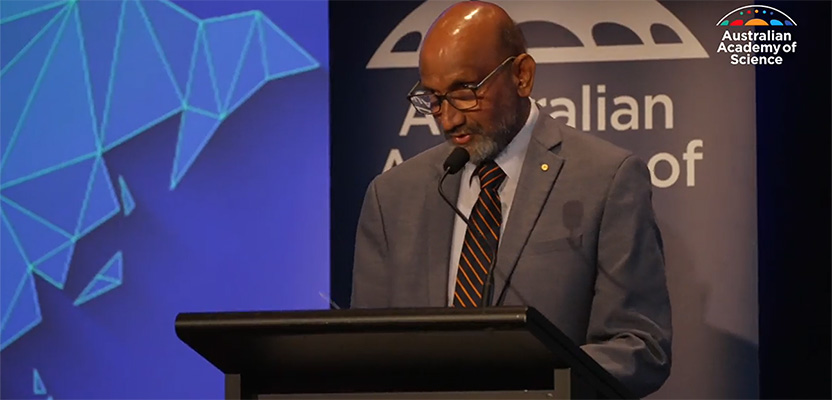
Australia’s national security and research community has gathered in Canberra tonight on the eve of a National Symposium to discuss how Australia can address national security concerns while enabling the benefits that open scientific collaboration offers Australia and the globe.
The symposium, tomorrow Tuesday 14 November, comes as new legislation is set to be introduced that will see Australia expand its backyard to include the US and the UK, but raise the fence for any other country when it comes to international research collaborations in areas on the Defence and Strategic Goods List.
The draft legislation is designed to strengthen Australia’s defence export control framework, and creates three new criminal offences in the Defence Trade Controls Act 2012.
In a dinner hosted by the Australian Academy of Science on Monday night, His Excellency the Hon Dr Kevin Rudd AC, Australian Ambassador to the United States of America, addressed the issue from Washington DC.
He told the dinner audience that he can conceive the possibility of a range of academic institutions, across some research domains, being proscribed from collaborating with their Chinese counterparts.
“While collaboration on medical research and the life sciences would likely continue,” he said, “if you are at the hard edge of the sciences which are nearest and closest to the revolutionary intersections involving artificial intelligence ... it’s going to be harder and harder, as both sides seek to de-risk their engagements, for what we would describe as normal scientific collaboration to occur.”
Her Excellency Ms Caroline Kennedy, Ambassador of the United States of America to Australia, who spoke at the dinner, said, “Striking the right balance between collaborative research and national security is one of the most important and difficult goals of democratic societies like the US and Australia … we need to be clear-eyed about the risks of openness and the intent of our competitors.”
The Australian Academy of Science President, Professor Chennupati Jagadish AC, said that while the Academy welcomes a more seamless collaborative environment with the US and UK as part of the AUKUS arrangements, it is concerned about the negative impacts this will have on research collaborations with all other countries, which serve our national interest.
“Efforts must be made by government to facilitate critical scientific and technological collaboration with countries other than the US and UK,” Professor Jagadish said.
The Academy’s Chief Executive, Anna-Maria Arabia, said the Federal Government must consider the resource implications of implementing this legislation.
“This includes resources to establish secure research facilities, to educate and train the research workforce to make it more security-aware—especially as non-compliance, accidental or otherwise, will be a criminal offence—and to create opportunities to widen low-risk international collaborations, such as through association with Horizon Europe.”
Media note:
A highlights package video of the evening is available here.
A Dropbox of tonight’s speeches and the panel discussion is available here. Please contact the Academy for clean grabs without the Academy watermarked logo.
Livestream registrations are open for the Academy’s national symposium tomorrow, Tuesday, 14 November. To register please email: media@science.org.au
The Australian Academy of Science provides independent, authoritative and influential scientific advice, promotes international scientific engagement, builds public awareness and understanding of science, and champions, celebrates and supports excellence in Australian science.
International research collaborations now at stake
No single country will be capable of solving the problems faced by our planet—from dwindling natural resources to collapsing ecosystems, rising sea levels or the eruption of new pandemics.
But the global research system required to respond to these challenges is now at stake.
On Monday 13 November, the Australian Academy of Science held a dinner ahead of its National Symposium, to discuss how we can address national security concerns while still enabling the benefits that open scientific collaboration offers Australia and the globe.
Australian scientists have always been international collaborators—whether that’s working with those coming to Australia for research or study, or while seeking assistance of scientists from other shores to help build capacity and solve our problems.
President of the Australian Academy of Science Professor Chennupati Jagadish AC pointed out that the last major Australian invention that did not involve international input was the stump-jump plough—in 1876.
And while Australia’s international scientific collaborations have increased significantly over the past two decades (from 2013 – 2023, 90% of the top 50 cited papers from Australian authors in Web of Science were co-authored with overseas collaborators) the global science system is now at its most vulnerable.
“The changing geopolitics of our time is impacting the organisation and evolution of global science and international scientific collaborations like never before,” Professor Jagadish said.
“There’s no doubt scientists and researchers are a competitive bunch, but presenting science purely as a competition among groups or nations ignores the reality of our interconnected global science system and its international networks.”
Her Excellency Ms Caroline Kennedy, Ambassador of the United States of America to Australia, spoke about the special relationship between researchers in the US and Australia.
“Thanks to the generational opportunity presented by AUKUS, our societies now have the chance to catapult to the forefront of advanced capabilities—AI, quantum and cyber. Just like the moonshot spurred scientific and technological advances—like GPS, water purification, and heart monitors 60 years ago—these new fields will also produce innovations that benefit people in their everyday lives and inspire new generations to get involved in science and to dream and create,” Ms Kennedy said.
“Striking the right balance between collaborative research and national security is one of the most important and difficult goals of democratic societies like the US and Australia… we need to be clear-eyed about the risks of openness and the intent of our competitors.”
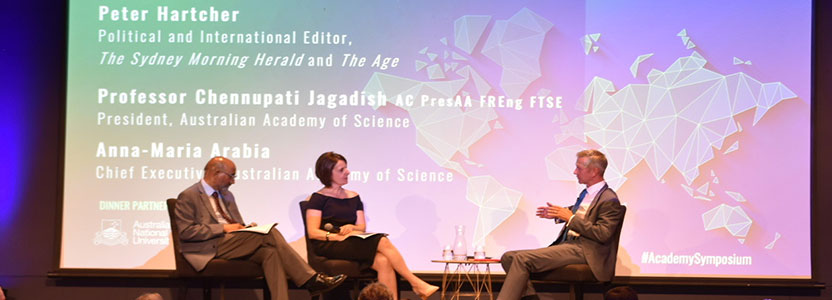
Peter Hartcher, political and international editor of The Sydney Morning Herald and The Age, spoke with Australian Ambassador to the United States of America His Excellency the Hon Dr Kevin Rudd AC in Washington DC ahead of the dinner.
The Hon Dr Rudd said there have been significant diplomatic efforts on both sides of the US–China relationship, and that Australia was similarly looking to stabilise its relationship with China following a turbulent few years.
But he said the scope for scientific collaborations may vary greatly between fields of science.
“I think in the domain of space, like cyber, like quantum and like artificial intelligence, we’ve simply got to be realistic about where geopolitics is going to take us… I think the baseline about geopolitics just makes that far too difficult [to collaborate],” Dr Rudd said.
In the panel discussion between Professor Jagadish and Ms Arabia, moderated by Peter Hartcher, Ms Arabia elaborated on the draft Defence Trade Controls Amendment Bill 2023.
“What has come into stark reality is that the very architecture of the research system is likely to transform,” Ms Arabia said.
Professor Jagadish drew on his own experiences to highlight how imperative research collaborations are to maintaining a healthy research ecosystem.
“I have 12 nationalities in my research group. Not a single person in there, including myself, is born in Australia. That is the real landscape of the Australian research environment,” Professor Jagadish said.
On Tuesday 14 November, symposium attendees will hear from experts sharing data on the impacts of national security on Australia’s research collaborations and compare those to measures adopted in other nations.
The discussion will seek to address: have we struck the right balance between openness in scientific research and development in Australia and risk mitigation measures designed to secure our national security?
Speakers and panelists include: Deputy Prime Minister and Minister for Defence the Hon Richard Marles MP; Australia’s Chief Defence Scientist Professor Tanya Monro AC; the American Association for the Advancement of Science’s Dr E. William Colglazier; Advisory Board Member of the National Foundation for Australia-China Relations Associate Professor Courtney Fung; and Chair of the Task Force on Security Issues in UK Higher Education Professor Sir Peter Mathieson.
Academy Foreign Secretary Professor Frances Separovic AO and Academy Fellow Professor Steven Chown, Director of the ARC Special Research Initiative Securing Antarctica's Environmental Future, are co-conveners of the National Symposium.
Read more about the symposium, including details of speakers.
The Academy thanks the following event partners for their support.
Platinum and Dinner Partner: The Australian National University
Platinum Partner: CSIRO and Department of Industry, Science and Resources
Silver Partner: Department of Defence
Silver Partner: The University of Adelaide
Bronze Partner: Monash University
Event Supporter: ANSTO
Scientists call for law reform following release of final report into Kathleen Folbigg’s convictions
The Australian Academy of Science welcomes today’s report by former Chief Justice of NSW Tom Bathurst AC KC confirming reasonable doubt regarding the convictions of Kathleen Folbigg.
The Academy is pleased the Commissioner has referred this case to the Court of Criminal Appeal for potential quashing of her convictions.
The Academy’s President, Professor Chennupati Jagadish, said Commissioner Bathurst and Counsel Assisting the Inquiry, Ms Callan SC, Ms Roy and Ms Wootton must be applauded for adopting mechanisms to have science so comprehensively considered throughout the Inquiry.
“Science needs to inform decisions wherever they are made, including in the justice system, and the second Folbigg Inquiry benefited from the Academy being appointed an independent scientific adviser,” said Professor Jagadish.
The Academy is calling for a more science-sensitive legal system in every Australian jurisdiction so that miscarriages of justice are not repeated.
Chief Executive Anna-Maria Arabia said Ms Folbigg’s case demonstrates the need for decisions in the justice system to be routinely informed by reliable evidence especially when it involves understanding complex and emerging science.
“We look forward to working with Attorneys-General across Australia to bring about law reform to create more science-sensitive legal systems,” said Ms Arabia.
The Academy said Ms Folbigg’s case demonstrated the need for law reform in the following three areas:
- the adoption of a reliability standard to determine admissibility of evidence
- mechanisms for the selection of experts by independent and reliable sources, particularly where complex scientific material is required to inform decision making
- the establishment of post appeals review mechanisms, such as a Criminal Cases Review Commission.
The Academy would like to acknowledge the contributions of the many scientific experts from across the world who gave written and oral evidence at the Inquiry.
Media note:
This video explains how science was central in overturning Australia’s greatest miscarriage of justice, and can be used in news reporting or embedded into online news stories.
Background information:
The Academy’s role as an independent scientific adviser to the Second Inquiry into the Convictions of Kathleen Folbigg is believed to be the first time worldwide that a Learned Academy has played such a role in a judicial inquiry.
As an independent scientific adviser to the inquiry, the Academy was able to systematically communicate complex and emerging scientific evidence to a non-specialist audience. This included assisting in the selection of experts so that those from the most relevant scientific disciplines could inform the Inquiry, and identifying the issues experts were qualified to address.
The Academy’s role at the Inquiry offers a unique example to examine approaches that could be used by justice systems in Australia in their consideration, evaluation, and management of scientific evidence and expert witnesses.
Anna-Maria Arabia will be speaking on this topic at an event on 17 November at the Australian National University titled Rethinking Scientific Communication in Courts.
The Australian Academy of Science provides independent, authoritative and influential scientific advice, promotes international scientific engagement, builds public awareness and understanding of science, and champions, celebrates and supports excellence in Australian science.
Science to help us better prepare for future pandemics
The Australian Academy of Science welcomes the independent Inquiry into Australia’s response to the COVID-19 pandemic.
The Academy has argued that an inquiry should be future-focused, about preparing for the next pandemic, and led by experts. The approach adopted by the Federal Government is consistent with this approach: learn from the past, prepare for the future.
It is critical that it does take this approach. The world faces challenges of a type and at a scale not seen before. Climate change and deforestation, for example, will increase the risks of pandemics.
“We need to work out how to prepare our nation, and our world, for what’s to come,” said Academy President Professor Chennupati Jagadish.
“The Academy stands ready to play its part in that process, just as it did through the COVID-19 pandemic, via the Rapid Research Information Forum.”
This innovative model provided the latest evidence to the government to help drive the country’s response to the pandemic.
Its strengths were its multi-disciplinary focus, independence, and ability to rapidly draw on Australia’s best and most relevant experts on any given policy matter.
“This model must continue to be used in the long term to ensure that decision-makers are drawing on the best available evidence-base at the time. That is the way we confront and meet challenges,” Professor Jagadish said.
“And we can’t continue to deprioritise national funding in R&D, which is on a 14-year decline, and just expect to have the capability to do what we will need to do as the challenges to our health, prosperity and security grow.”
Replace our broken funding system and commit to Australian research
The Australian Academy of Science says the Australian Universities Accord must include an unambiguous commitment to research in the Australian university system and provide it with fit-for-purpose base funding complemented by, not substituted with, research project funding.
The proposal is part of the Academy’s submission to the Australian Universities Accord Interim Report.
It also says the Accord must maintain and enhance regulatory and legislative protections and obligations for Australian universities to maintain the quality of research within the system.
The submission recommends that the Australian Government:
- declares an unambiguous commitment to research in the Australian university system, with fit-for-purpose base funding supplemented by project funding
- commissions an independent science and research system review without delay
- makes a commitment to lifting investment in R&D expenditure and to working with the higher education and industry sectors to execute a 10-year plan designed to reach overall R&D investment at least to the OECD investment average.
The Academy commends the work of the panel in producing the interim report and their acknowledgement that further work is needed to reflect the role of research in the higher education system appropriately.
Science to support Southeast Asia economic strategy
The Australian Academy of Science has welcomed Australia’s 2040 Southeast Asia Economic Strategy as an opportunity to deepen science and technology regional partnerships that underpin priority areas.
The strategy announced by the Australian Prime Minister at the ASEAN-Indo-Pacific Forum in Jakarta comes ahead of global meetings in Malaysia in October that will bring together prominent scientists and decisionmakers to assess regional preparedness for Artificial Intelligence (AI) and address sustainability challenges.
Academy President and Co-Chair of the Council for the International Science Council Regional Focal Point for Asia and the Pacific (ISC RFP-AP), Professor Chennupati Jagadish AC, said that Australia is fostering scientific leadership and partnerships within the region that will support priority areas in the government’s Economic Strategy including agriculture and food, resources, green energy transition, skills, healthcare, and the digital economy.
“The Economic Strategy is yet another demonstration of the Australian Government’s commitment to our region and builds on their strategic commitment to establish the ISC RFP-AP,” Professor Jagadish said.
The ISC RFP-AP is designed to grow scientific capability and to build robust and trusted research partnerships across the region, which underpin collaboration and accelerate economic growth.
“Harnessing the vast knowledge and innovation within the Southeast Asia science network is key to supporting the areas identified in Australia’s Southeast Asia Economic Strategy,” Professor Jagadish said.
Fourteen countries are meeting in Kuala Lumpur on 5 October to discuss national science ecosystems for AI. The workshop is being held by the Centre for Science Futures, a think tank of the ISC, in collaboration with the Australian Academy of Science and the Academy of Sciences, Malaysia.
On 6 October, the Australian Academy of Science and its Malaysian counterpart will also host a pivotal Global Knowledge Dialogue that will focus on how to progress the role of science in achieving Sustainable Development Goals in Asia and the Pacific.
“We need to bring the Asia-Pacific region into focus on the international dialogue on how we can live and thrive within our planetary boundaries,” Professor Jagadish said.
“AI will have a role to play, and our region is at the forefront of the AI revolution, so the Global Knowledge Dialogue is a timely gathering.”
Amongst the 55 science institutions taking part in the Global Knowledge Dialogue are: Thailand Science, Research and Innovation (TSRI); National Research Council of the Philippines (NRCP); Philippine Social Science Council (PSSC); Indonesian Young Academy of Science (ALMI); Vietnam Union of Science and Technology Associations (VUSTA); and Universiti Malaya.
Media contact:
Aleta Johnston | M 0431 514 677 | E media@science.org.au
Australia’s leading scientists welcome draft national science and research priorities
The Australian Academy of Science welcomes the release of the Australian Government’s draft national science and research priorities.
President of the Australian Academy of Science Professor Chennupati Jagadish said that to shape our future it is crucial that Australia strategically identifies and invests in sovereign science capabilities.
“We must focus and scale up our effort to build or maintain comparative advantage and to address scientific matters unique to Australia,” Professor Jagadish said.
“To be effective, priorities need us to make choices, unite Australian scientists, and concentrate resources around ambitious missions or grand challenges.
“The new priorities align with some of the main challenges facing the nation—moving to a net zero future, adapting to a changing climate, building an innovative economy and healthier communities—and they cut across traditional disciplines.
“Setting these directions is a solid start. However, it is imperative that the final priorities be backed by a robust implementation plan that clarifies how the Australian scientific ecosystem—scientists, institutions, funders and enablers—will incorporate the new priorities in their work.
“Previous science and research priorities were not effective because they were lacking in implementation, monitoring and evaluation and therefore did little to focus and scale up science in the identified areas.
“It is important that these priorities are implemented through investment-led schemes across government, while leaving investigator-led schemes focused on the free pursuit of knowledge.
“We need both, and both can be achieved with a carefully designed implementation plan,” Professor Jagadish said.
The Academy thanks Chief Scientist Dr Cathy Foley AO PSM FAA FTSE for consulting widely and leading the national conversation on behalf of the government to inform this work.
The Academy looks forward to contributing to the upcoming consultation.
Opinion: Greater R&D investment essential to unlocking our potential as a nation
In 2020, Anthony Albanese told the nation science would be essential to future economic growth and could unlock our potential as a country. He was right. But we are yet to unlock that potential because we are not investing enough as a nation in research and development (R&D).
Figures recently published by the Australian Bureau of Statistics show national investment in R&D across the economy—business, government, and universities—fell from 1.80% in 2019/20 to 1.68% in 2021/22.
The latest figures continue a 14-year downward trend in national R&D investment, leaving us 21st in the OECD. Already in the bottom half of OECD countries, if we keep going the way we are, in five years’ time Australia will be among the lowest of them all.
This decline is especially concerning because Australia has one of the world’s least differentiated economies—93rd in the world, which places us between Uganda at 92 and Pakistan at 94. This is no place for comfort, nor for complacency.
Australia can and must differentiate the economy. We are overly dependent on exporting unprocessed materials such as agricultural products and natural resources.
Where will we be if climate change-induced weather patterns affect what we can grow, how much and where? Or a decarbonising world lowers its demand for coal and gas.
We must harness the opportunities delivered by science and technology—the fuel for job creation and industry growth. New jobs, new industries, new products, new opportunities. The possibilities are many—we just need the capacity, the will and the leadership.
The Prime Minister acknowledged earlier this month that real, enduring reforms that change a country for the better take time. Investing more in R&D needs us to play the long game. But we need to be in a rush to get to the start line.
Can the Federal Budget afford it? It can’t afford not to. The cost of letting our science base continue to decline is simple: it puts our future at risk.
The recent inter-generational report highlights the challenges down the track. Imagine how much worse they will be if we do not invest in the fabric of change and instead put the future on the credit card and leave it to the future generations to pick up our tab.
Reversing the downward trend of government investment in R&D is not the work of any single budget. Nor can the nation look only to the Federal Government to solve this. It needs to be a national mission: business, all levels of government, philanthropy and universities all need to play their part.
It will take a decade or more of commitment and effort to boost total investment in R&D. Work must start now.
This opinion piece by Professor Chennupati Jagadish, President of the Australian Academy of Science, was first published in The Canberra Times.