




Academy Fellow Professor Tom Calma named Senior Australian of the Year

The Academy warmly congratulates Fellow Professor Tom Calma AO FAA FASSA who was last night named Senior Australian of the Year, in recognition of his tireless work as a human rights and social justice advocate.
Professor Calma is an Aboriginal Elder from the Kungarakan tribal group and a member of the Iwaidja tribal group, whose traditional lands are southwest of Darwin and on the Northern Territory’s Cobourg Peninsula.
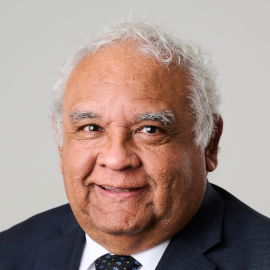
Professor Tom Calma is recognised for his long-running advocacy work.
He was elected Fellow of the Australian Academy of Science in 2022, and with his appointment as the sixth Chancellor of the University of Canberra in January 2014 Professor Calma became the first Aboriginal or Torres Strait Islander man to hold the position of Chancellor of any Australian university.
For over four decades he has championed the rights, responsibilities and welfare of Indigenous peoples’ health, justice, education, and employment status at local, community, state and international levels.
Alongside his social justice work, Professor Calma’s research interests include pharmacological application for scabies control, genomics, Indigenous cancers and tobacco control, as well as mental health and suicide prevention.
His work continues to have an enduring impact on public discourse in Australia and beyond: he co-led the co-design of a Voice to Parliament initiative, and his call for Australia to address the gap in life expectancy between Indigenous and non-Indigenous peoples was the catalyst for the Close the Gap Campaign.
Professor Calma was appointed an Officer of the Order of Australia in 2012 and named ACT Australian of the Year in 2013 and ACT Senior Australian of the Year in 2023.
He was also recognised with an Australian Hero Tree Dedication of a hoop pine (Araucaria cunninghamii) at the National Arboretum Canberra in 2020.
For over four decades he has championed the rights, responsibilities and welfare of Indigenous peoples’ health, justice, education, and employment status.
Chair of the National Australia Day Council Danielle Roche OAM congratulated the 2023 Australian of the Year Award recipients, who include: Taryn Brumfitt, body image activist and internationally recognised keynote speaker; Awer Mabil, co-founder of a not-for-profit organisation for refugees; and Amar Singh, founder of a charity that transports grocery hampers and emergency goods to those in need.
“The 2023 Australians of the Year are great examples of the Australian spirit. Their courage, determination and fearlessness are an inspiration to us all,” Ms Roche said.
“Individually brilliant, Taryn, Tom, Awer and Amar share a common bond—using their life experience as a power for good, helping others around them and making the world a better place.”
Ms Roche described the recipients as “an extraordinary group of Australians of whom we can all be incredibly proud.”
“Tom has dedicated his life and career to being a champion of equality for Aboriginal and Torres Strait Islander peoples, lighting the path towards reconciliation,” she said.
The Academy also congratulates the other finalists for the Senior Australian of the Year: Teresa Plane (NSW), Bernard Tipiloura (NT), Claude Lyle Harvey OAM (QLD), Sandra Miller (SA), Dr Frances Donaldson (TAS), Professor Frank Oberklaid AM (VIC), and Theresa Kwok (WA).
More information about Professor Calma is available on his Academy profile.
President of India awards President of Australian Academy of Science
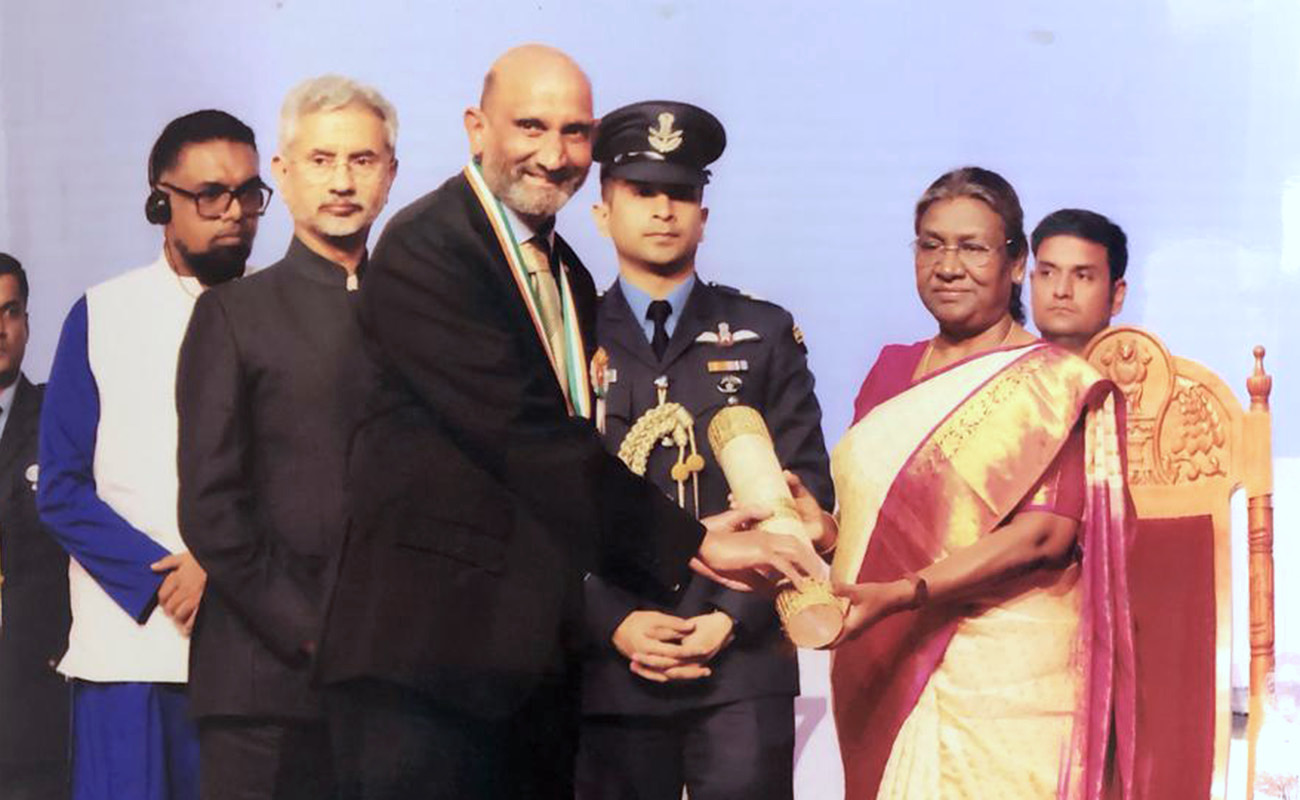
The Indian Government has recognised Australian Academy of Science President Professor Chennupati Jagadish AC PresAA FREng FTSE for his outstanding achievements in science, technology and education during an international award ceremony.
Professor Jagadish is one of 30 people born in India—now widely dispersed across the world—to receive the Pravasi Bharatiya Samman Award this year, and the only Indian-Australian.
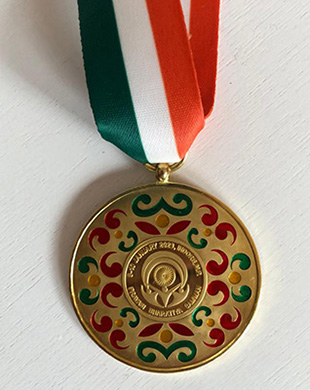
Professor Jagadish is the only Indian-Australian awardee in 2023.
He travelled from Canberra to receive the award from President Droupadi Murmu during the Pravasi Bharatiya Divas Convention, held from 8–10 January in Indore, Madhya Pradesh.
Professor Jagadish said it’s the highest honour given to Indians living overseas by the Indian Government.
“It has been a humbling experience to receive this award from the President of India. I am grateful for this honour from the Government of India for my contributions to science, technology and education.
“I am passionate about doing science and making a difference in other people’s lives; any recognitions are a bonus. I’m grateful to both the Australian and Indian Governments for honouring me and recognising my efforts during the past 35-plus years.”
Having studied by the light of a kerosene lamp until year seven and having lived with his high school maths teacher to be able to finish high school, Professor Jagadish is now recognised as a world leader in the field of semiconductor optoelectronics—with his work widely utilised in optical communication systems and infrared detectors in defence, biomedical and manufacturing.
In 2015, Professor Jagadish and his wife Dr Vidya Jagadish launched the Chennupati and Vidya Jagadish endowment fund to support students and researchers from developing countries to visit Australia and pursue collaborative research.
The Indian Ministry of External Affairs said in a statement that an awards committee including the Honourable Vice President and other distinguished members select the awardees, who represent “the excellence achieved by our diaspora in various fields”.
Other recipients in 2023 include the Guyana President Mohamed Irfaan Ali, and a businessman who helped evacuate Indian students from Ukraine into Poland when the war with Russia erupted.
Academy Fellow Professor Veena Sahajwalla FAA FTSE received the Pravasi Bharatiya Samman Award in 2011 for her outstanding achievements in science.
Significant Macfarlane Burnet archival collection now available online
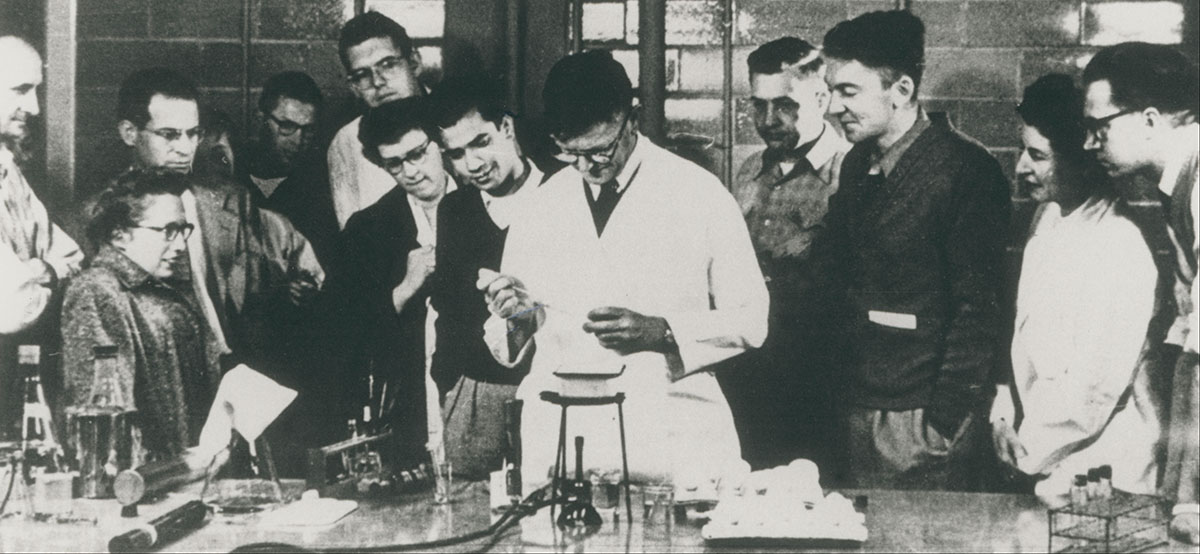
Sir Frank Macfarlane Burnet demonstrating a method for cultivating virus on the chorioallantoic membrane of chick eggs. The technique, with some adaptations, is still in use today; it was Burnet’s first major contribution to the field of virology and paved the way for mass-production of vaccines.
The Academy’s collection of one of the twentieth century’s most outstanding biologists has been digitised as part of an ongoing collaborative project with the National Library of Australia.
Sir Frank Macfarlane Burnet OM AK KBE FAA FRS Nobel Laureate (1899–1985) made a seminal contribution to modern virology, immunology and microbiology. At a time when many of his contemporaries were compelled to pursue opportunities overseas, Burnet was celebrated as the first Australian scientist to win a Nobel Prize (in Physiology or Medicine) for work undertaken in Australia. He and Sir Peter Medawar were jointly awarded in 1960 for their discovery of acquired immunological tolerance. Their findings showed how the immune system learns to recognise and tolerate its own cells—differentiating between the self and the non-self and revolutionising our understanding of immunity and rejection.
Early career
The Frank Macfarlane Burnet collection held in the archives of the Australian Academy of Science is small by archival standards, but significant. It reaches back into his early career, describing work on bacteriophages and animal viruses, particularly influenza virus, that resulted in major discoveries concerning their nature and replication. It touches on the development of Burnet’s ideas concerning immunological tolerance that underpinned his Nobel-winning research and his renowned articulation of clonal selection theory as applied to immunological theory.
The Macfarlane Burnet collection is now freely accessible via Trove and the Academy online catalogue. Highlights include Burnet’s reflections on his many years as Director of the Walter and Eliza Hall Institute of Medical Research (WEHI), his thoughts relating to autoimmune diseases, and his theoretical studies of immunology, immunological surveillance and cancer.
Broader context
There are hints of the broader historical context for many of Burnet’s later years, including political anxiety surrounding the possibility of atomic and biological warfare sparked by the Cold War. The collection contains reports on the potential biological effects of nuclear explosion fallout penned in response to weapons testing in the Pacific during the 1970s and correspondents as varied as prime ministers Menzies and Whitlam, Governor General Richard Casey and founding member of the Australian communist party Katharine Susannah Prichard who questioned Burnet’s steadfast belief that “any attempt to wage germ warfare would be fruitless” and encouraged him to join those protesting the possibility.
The collection reveals Burnet as a scientific generalist with a knack for integrating discoveries made in diverse fields in a series of lectures on the application of science to public health. These papers deal with the broad-ranging implications of advancement in medical research in a tone that reflects both his remarkable creativity and intense distrust of technology that corresponds with occasional scepticism about the future of his field. Sir Gustav Nossal, Burnet’s administrative successor at WEHI, would later recall that the most complex scientific apparatus his mentor ever used was a microscope.
To read more about the life and work of Sir Frank Macfarlane Burnet, see the biographical memoir authored by Professor Frank Fenner in 1987 or take a look at Burnet’s entry in the Encyclopedia of Australian Science and Innovation.
The Academy thanks philanthropist David Anstice, whose support made digitisation of the Frank Macfarlane Burnet collection possible.
The research and experience of Australian scientists forms the foundation on which we build our future, and it is vital that we capture and preserve their stories. Donations from organisations and individuals are welcome. If you would like more information about supporting the archive project, please contact our Philanthropy Manager at philanthropy@science.org.au.
Improvements in emissions reduction and removal in Australia welcomed
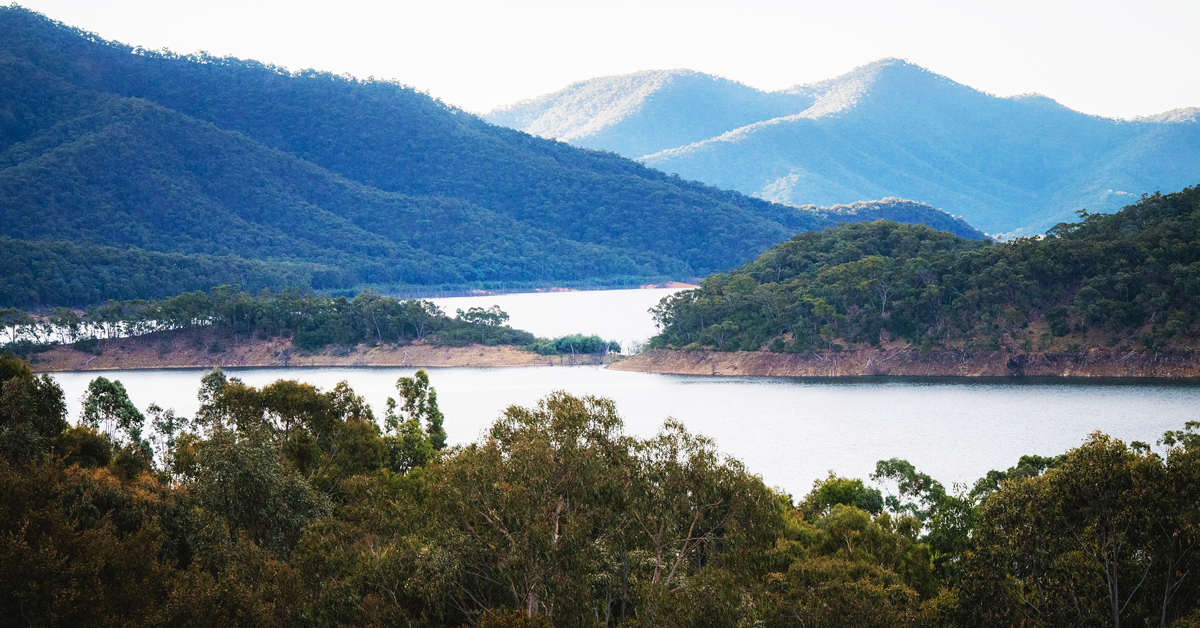
Australia needs a credible, high integrity and effective carbon offsets system.
The Australian Academy of Science welcomes the release of the final report from the Independent Review of Australian Carbon Credit Units.
The Intergovernmental Panel on Climate Change recently highlighted the need to remove CO2 from the atmosphere to limit global warming.
Reducing emissions alone will not be sufficient to achieve net zero by 2050 or limit warming to 1.5°C. Greenhouse gases will need to be removed from the atmosphere to achieve these goals.
The review has made a series of recommendations to enhance the transparency, governance, and operation of the system. They include:
- an independent scientific committee to replace the Emissions Reduction Assurance Committee, greater access to data, and an emphasis on independent verification and peer-review
- reform of method development designed to encourage agility and innovation
- consideration of how mandatory cancellation of a proportion of claimed offsets can improve the overall integrity of the system.
Academy President Professor Chennupati Jagadish AC PresAA FREng FTSE said Australia needs a credible, high integrity and effective carbon offsets system.
“Both emissions reduction and emissions removal are urgently needed for Australia and the planet,” Professor Jagadish said.
“Australians need to have confidence that our systems for emissions reduction and emissions removal are effective and have high integrity. Australian emissions reduction and removal require solutions designed, implemented, and verified by Australian scientists.
“The recommendations in the report strengthen the integrity of Australia’s greenhouse gas removal efforts.”
Under the Carbon Credits (Carbon Farming Initiative) Act 2011, Australian Carbon Credit Units (ACCUs) are issued by the Australian Government to certify that one tonne of CO2 (or equivalent warming gases) has either been stored or otherwise not released into the atmosphere. To be eligible to generate ACCUs, projects must comply with offsets integrity standards as listed in Section 133 of the Act.
The Academy was commissioned by the Independent Review Panel to provide a rapid assessment of four methods for generating ACCUs (human-induced regeneration, avoided deforestation, landfill gas, and carbon capture and storage). The report synthesised the science underpinning each method and assesses its strengths and limitations.
Input for the Academy’s assessment was sought from Fellows, members of National Committees for Science, and the Australian research community more broadly, and was peer-reviewed.
Australia’s leading scientists call for ARC to restore support for basic research
The Australian Academy of Science says the lack of coherence supporting Australian research is an indictment of the approach that knowledge is only important if it can be commercialised – or relate to some ill-defined national interest test.
The Academy also says that the current state of Australian research is the consequence of vague strategic Government direction, piecemeal interference over nearly two decades, and ad hoc interventions that have demoralised researchers, minimised efficiency and disadvantaged the nation.
The comments were made in the Academy’s submission, on the review of the Australian Research Council Act, published today.
The submission also says fundamental research should be the primary focus of the ARC.
The submission reads: It is of the utmost importance to the national research system and our national prosperity that the role of the ARC in supporting fundamental research be restored and safeguarded.
The Academy notes while the review of the Australian Research Council Act does not have the scope to consider wider system issues, no review, or recommendations to do with the Australian Research Council (ARC) can occur in a vacuum.
The submission reads: Changes to the role, responsibilities, focus, settings, governance, or legislation of the ARC will invariably influence the operation of the broader research system – without addressing the central problem: 212 research funding programs across 12 Commonwealth Departments.
The submission calls on the Australian Government to commission an independent science and research system review without delay.
It also recommends:
- the establishment of an ARC Council or Board in the Act, with a legislated requirement to have members with diverse research expertise
- the objects of the Act are revised to represent the aspirations and purpose of the ARC, including the responsibility the ARC has on behalf of the Australian people to support fundamental research
- the focus of the Linkage program on collaborations between researchers be restored, and programs on industry engagement and commercialisation be run by a different agency
- that Excellence in Research Australia (ERA) be discontinued and that the ARC modernises its capacity and requirements for data collection and analysis
- that limits be placed on the use of ministerial discretion to disapprove properly assessed research proposals.
The submission says it is instructive that research councils in overseas jurisdictions have different governance structures from that of the ARC. Read the submission and the full list of recommendations for the ARC.
Maths problem: review finds shortage of teachers and researchers
There are significant challenges facing teaching and research in the mathematical sciences in Australia, according to a nation-wide review of the discipline.
The findings are part of a mid-term review of Australia’s 10-year plan for mathematical sciences published today, and overseen by the Australian Academy of Science’s National Committee for Mathematical Sciences (NCMS).
Issues raised included the continued long-term decline in the supply of qualified secondary mathematics teachers.
NCMS Chair and Academy Fellow Professor Alan Welsh said the impact of the COVID-19 pandemic on the university sector had also resulted in notable losses to the mathematical sciences research community.
“COVID-19 exacerbated gender imbalances in the mathematical sciences workforce,” Professor Welsh said.
“These impacts affect not just mathematical sciences research outputs but also the quality of mathematical and statistical education available at all levels in Australia.”
The mid-term review recommends:
- continuing to develop programs and addressing current issues in teaching to give all Australian school students access to outstanding mathematics teachers
- urgently addressing the cuts to mathematical courses at universities, which have impacted the ability of university students in Australia to access a degree in which they can major in the mathematical sciences
- emphasising the contributions of mathematical sciences in responding to national challenges and informing policy decisions.
National Committee member and Academy Fellow Professor Kerrie Mengersen said the opportunities provided by the mathematical sciences community can only be realised with appropriate recognition of its role in responding to developing areas of interest from the government and research sectors.
“This must be paired with infrastructure and resourcing to support excellent mathematical and statistical work for the research that underpins many solutions to contemporary challenges, and to ensure high-quality education to equip the next generation of Australians with the mathematical science knowledge needed for the future,” Professor Mengersen said.
Illegal drug regulation in Australia: ‘It’s almost unethical not to revisit this’
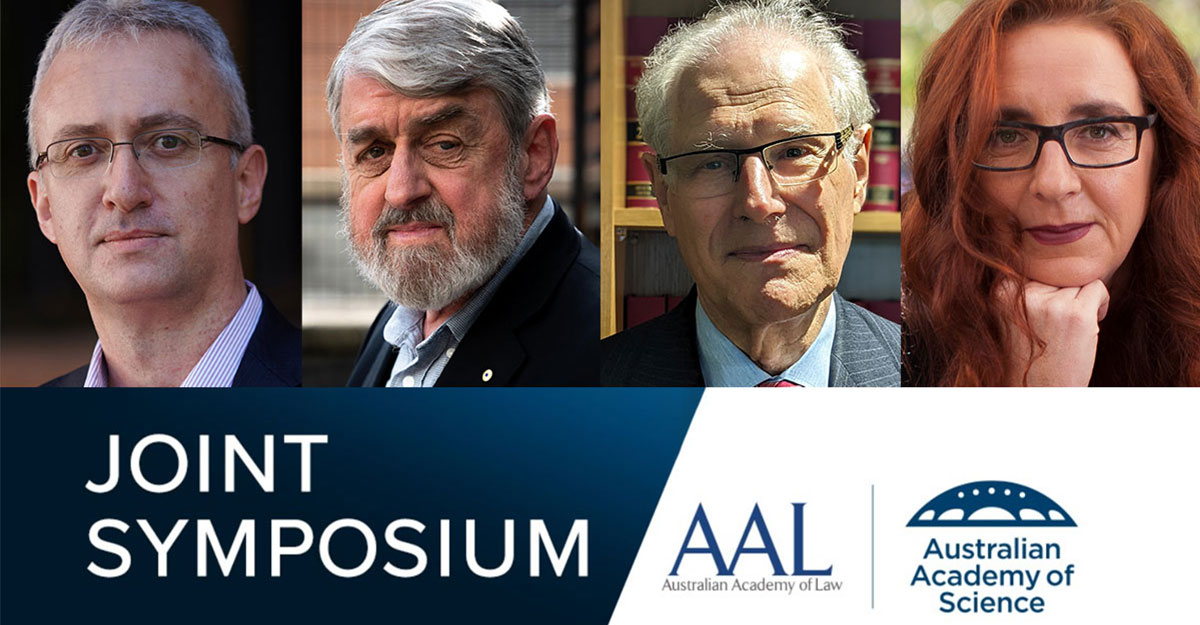
Australian Academy of Law and Australian Academy of Science Joint Symposium 2022
How Australia should regulate illegal drugs is a debate that continues—with more than 150,000 people arrested each year.
Over the past few years, support for decriminalisation has grown in Australia and around the world. Governments are starting to introduce harm-minimisation approaches. But what steps do we need to take to enact this, and what are the challenges?
The Australian Academy of Science and the Australian Academy of Law recently brought experts from the legal system and scientific and social health researchers together. The panellists’ unique perspectives shed light on how Australia continues to treat addiction as a criminal act and not as a health issue.
Chief Justice of the ACT Lucy McCallum chaired the discussion around how an outdated prosecution system worsens health equity, hurts society, causes more physiological harm than good, and what we need to do to change it.
Following are some edited excerpts from the panel, with the full recording available below.
The Hon (Acting) Justice Richard Refshauge FAA
The Hon Refshauge is a former judge and public prosecutor for drug-related crimes. He provided an insight into the history of drug laws and the prejudice that underpinned the definition of what is legal and what isn’t.
He noted that the earliest recorded history of drug use was around the time of the Egyptian Empire, when opium and hash were used predominately for medicinal purposes. During this time, there appears to have been little regulation of the use of drugs. Similarly, in 19th century Britain, America and Australia, there was virtually no regulation of narcotic drugs.
The first drug law in Australia, against opium, came about in the early 20th century, prompted by anti-Chinese discrimination.
“Then the Hague Convention of 1912 added to the prohibition of opium to include other drugs: morphine, cocaine, cannabis and heroin—much of this was political,” Justice Refshauge said.
Ten years later, the US led an international consensus that saw stricter prohibition and more severe penalties for not only the sale, but the possession of drugs. This development was linked to the ‘evil nature’ of drugs and the people who used them.
“In the 1970s use grew, so did more prohibitive legislation fuelled by views that drugs and their use were causing drug users to be rebellious,” Justice Refshauge said.
“Finally, in 1999, the Commonwealth created the Drugs of Dependence Ordinance 1989 for the ACT as a model. Since then, interestingly, greater efforts have been made to wind back this approach with diverse approaches such as diversion schemes, drug courts, and greater recognition of health as the appropriate lens through which to deal with the consequences of drug use,” Justice Refshauge said.
Scientia Professor Carla Treloar FASSA
The second speaker of the night, Professor Carla Treloar, is a leading expert in health, stigma and trust in the health system. She continued the conversation on how our current drug prohibitions impact human rights and people’s access to health care.
Her research has shown that while the number of people seeking drug treatment is at a 20-year high, it remains incredibly challenging for people to seek help due to stigma.
Prejudice and stigma were the root cause of the original drug prohibition, and Professor Treloar argued they continued to have a defining role in our current legal system.
“Stigma and stereotypes infect all of our responses to drug use in modern Australia,” Professor Treloar said.
“It’s really hard to step up and identify with living with a stigmatised condition or identity or practice. For someone who’s prohibited on top of that, the fear of repercussions is even greater.”
This limits people’s ability to seek medical help when they need it, which in turn increases the cost as their ill health gets worse.
“It has impacts on the individual. It has impacts to our population, and has impacts to our health systems,” Professor Treloar said.
While the law cannot solve all the social issues, she said, it does provide a level of protection and gives a greater ability for services to be established and run.
Decriminalising drugs would enable people at the margins of society to seek help and healthcare without worrying that, for example, their children will be taken from them or that they would be placed in the criminal justice system.
Professor Arthur Christopoulos FAA FAHMS
Professor Arthur Christopoulos is a professor of analytical pharmacology at Monash University and brought unique insight into the effects of drugs on the brain. He also spoke about the potential therapeutic benefits of drugs that are currently illegal, as well as harm associated with drugs that are legal.
“Addiction is literally associated with changes to both brain chemistry and brain structure. Prolonged exposure to psychoactive substances, legal or otherwise, can and does change the signalling, the anatomy and the function of the brain. This is no longer a hypothesis,” Professor Christopoulos said.
Like Professor Treloar, he spoke about how treating addiction as a criminal act instead of a health condition is not supported by scientific evidence.
Some illegal drugs have even been shown to have therapeutic benefits, he said. Recently, Monash University has been allowed to explore the use of psilocybin—the active ingredient of magic mushrooms and MDMA—to treat psychiatric disorders such as depression, anxiety and OCD. Results from clinical trials have so far been positive.
“In the pursuit of better, safer and more effective medicines, especially in an area such as mental ill health, we need to be able to access and utilise substances that contemporary research is clearly telling us may work better than the current standard of care,” Professor Christopoulos said.
“Yet there remains a disconnect in our ability to access and use these potential medicines in a timely manner. That can make a huge difference, particularly to those most marginalised in our society.”
Professor Christopoulos went on to note how a study by a leading neuropsychopharmacologist found that the most harmful (psychologically, medically and socially) substances in the population are alcohol, ice, heroin and nicotine, in that order.
“In contrast, MDMA and classic psychedelics were literally at the other end of the spectrum,” Professor Christopoulos said.
“So in terms of harm minimisation, we haven’t got it right; it is almost unethical not to revisit this from the ground up.
“Knowing what we know now, and if we had a clean slate, what would we do in terms of the intersection between the law and science when it comes to pharmacological substances that may or may not be historically classified as illicit?
“The divide between science and the law when it comes to how we approach and regulate medicines in drugs, especially in the psychoactive drug space, is vast. There are numerous historical reasons for this, but in this day and age, I believe we can and we should do better.”
Nicholas Cowdery AO KC FAAL
A barrister with 46 years in criminal law and 17 years as the NSW Director of Public Prosecutions, Professor Nicholas Cowdery spoke about how criminal law is not the most appropriate way to deal with drug use because it is a health and social issue.
“The story is that over time, moral decisions have been made about drugs and about individual drugs, for which there is no scientific or evidence-based foundation,” he said.
“Somebody, somewhere at some time has decided that a drug is not only bad, but so bad that it should be punished by law for a person to be associated with that drug.
“We have created the conditions for criminals to flourish, and users to suffer, by the laws that we have made. And then we spend vast amounts of public resources attempting to reverse those effects. So, in my view, radical change is necessary.”
He went on to explain that the most rational course of action would be to legalise, regulate, control and tax all drugs. Limits could then be placed on availability, advertising, and age of purchase. Educational materials and support services could also be made more readily available.
“Heroin could be made available on prescription as it is in the United Kingdom to treat addiction, it would then be provided under continuing medical supervision,” Professor Cowdery said.
With this legitimate access, he argued, we would be more able to identify and help problematic users so that addiction could be better treated. This approach would also destroy the illegal market and the crime associated with it.
The law would still hold those operating outside the licence system accountable but would remove all criminal profits from the drug trade and reduce the harm caused by using drugs.
“It is happening elsewhere, step by step.” Professor Cowdery concluded.
Watch the joint symposium
At the centre of science: 2022 in review
It's been another eventful year for the Australian Academy of Science, as we continued to support and celebrate excellence in Australian science. There are plenty of highlights—here's a month-by-month snapshot of 2022.
January
The Academy launched Australia in Space: a decadal plan for Australian space science 2021-2030—a strategy to enable Australia to be a respected partner in the global community of spacefaring nations.
Academy President Professor John Shine joined other presidents of Australia’s learned academies to raise concerns over the Australian Government exercising its veto powers to reject six projects recommended for funding by the Australian Research Council.
We were proud to see five Academy Fellows recognised for their achievements with appointments to the Order of Australia. Among the recipients was Dr Alan Finkel, who was also added to the COVID-19 Honour Roll.
We also congratulated Academy Fellow Professor Veena Sahajwalla, who was named NSW Australian of the Year 2022.
February
We hosted the first event of our ‘Surprising Science’ annual public speaker series. The series has since explored remarkable achievements in science that were only possible due to scientific disciplines borrowing from each other’s ideas.
We were proud to announce the five recipients of the Academy’s Aboriginal and Torres Strait Islander Scientist Award.
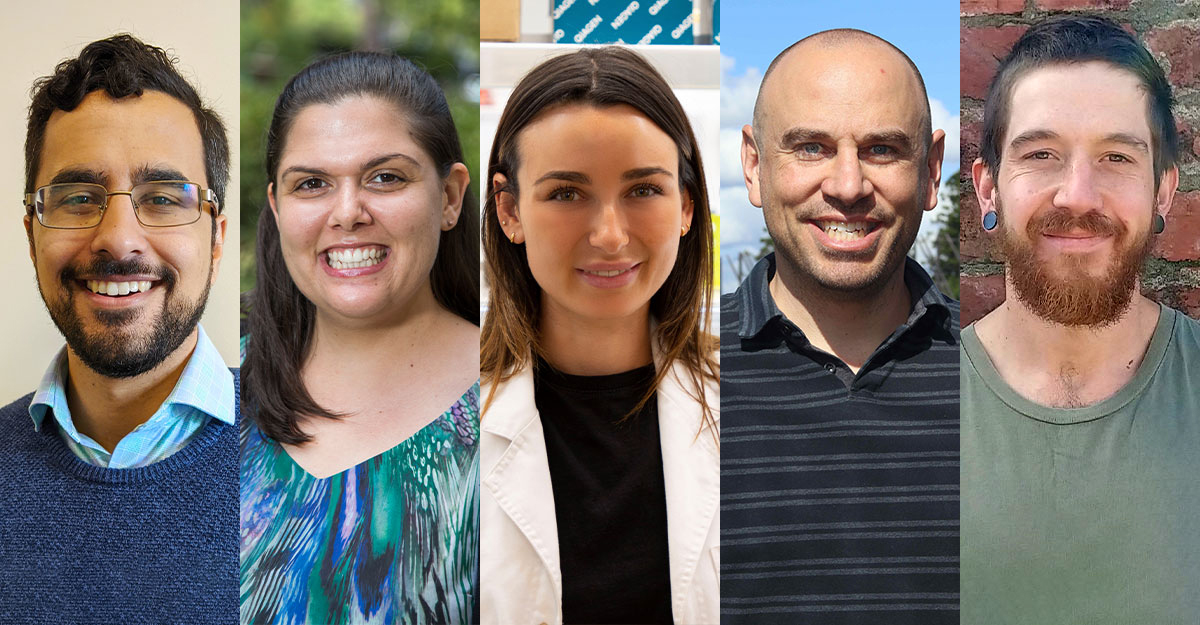
Our Chief Executive Anna-Maria Arabia penned an opinion piece on women in STEM that was first published by the Diversity Council of Australia, and the Academy made a submission to the 2022–23 Federal Budget recommending permanent mechanisms for independent science advice to government.
We also hosted Connecting the dots: knowledge brokering for impact and innovation, a symposium aimed at empowering early- and mid-career researchers (EMCRs), and released the handwritten diaries of virologist Professor Frank Fenner in digital format.
More news for January and February
March
We continued to have science in the justice system, following compelling scientific evidence that provides an alternative explanation for the deaths of Kathleen Folbigg’s children.
We hosted an online forum to inform policy makers about climate adaptation and overcoming vulnerability to the impacts of climate change, following the release of the Intergovernmental Panel on Climate Change report.
We were proud to announce the 20 researchers who received Academy honorific awards this year. We congratulated Academy Fellow Professor Sue O’Reilly, who's only the second Australian to receive a China International Science and Technology Co-operation Award, and we launched a new website for our education program Science by Doing to help teachers promote equitable learning.
The Academy also released a statement condemning the invasion of Ukraine by Russia, and stood in solidarity with the Ukrainian scientific community. The Academy reiterated this position via the InterAcademy Partnership (IAP) communique.
April
We launched Getting Ahead of the Game: Athlete Data in Professional Sport, a discussion paper on data governance in professional sport, and hosted the Lloyd Rees Lecture given by president-elect Professor Chennupati Jagadish. We also published a report on what could be done to support the world’s most precious heritage assets in the face of climate change.
We collaborated with the Australian Academy of Technology and Engineering (ATSE), to commence delivery of the Australian government’s $18.2 million ‘Global Science and Technology Diplomacy Fund—Strategic Element’, a key part of the new $60.2 million GSTDF fund. We also released the ‘Science and Australia's positive future’ position statement ahead of the federal election.
We published a video about stemming koala extinction rates.
May
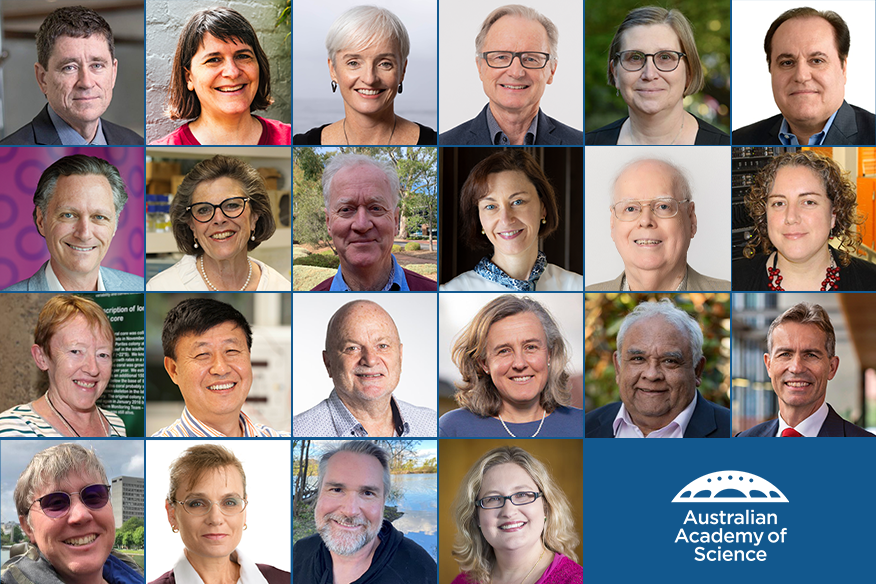
We were excited to announce our 2022 Fellows of the Australian Academy of Science, including Professor Tom Calma, the first Fellow elected to the Academy who identifies as an Aboriginal person. We also celebrated four of our Fellows being elected as Fellows of the Royal Society, the oldest scientific academy in the world. May was also the month that Professor Chennupati Jagadish took over as Academy president from Professor John Shine.
We published our 2021 annual report, and welcomed the new Albanese ministry.
June
Two-and-a-half years since severe damage caused by a Canberra hailstorm, our heritage-listed Shine Dome was reopened by the Governor-General of Australia, His Excellency General the Hon David Hurley AC DSC (Retd) and the Hon Ed Husic MP, Minister for Industry and Science.
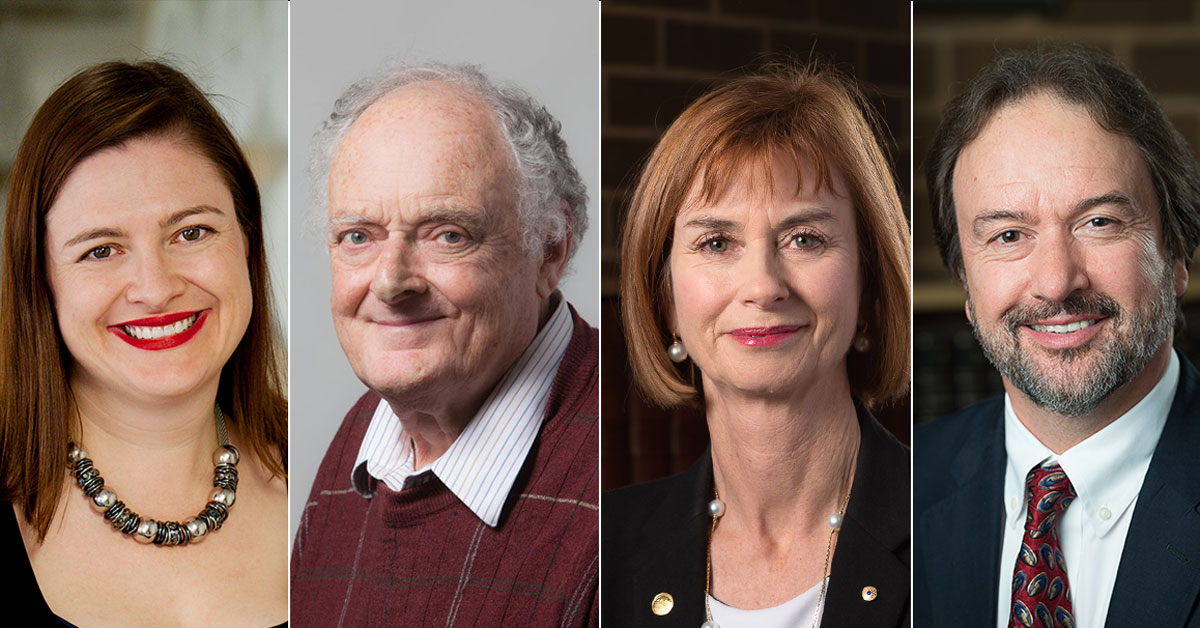
We congratulated four Fellows recognised in the 2022 Queen’s Birthday Honors List, and launched a new report, Australia’s Data-Enabled Research Future: Science, calling for action to support the future of scientific research. We also partnered with Springer Nature on a survey, the results of which indicated broad support for mandatory research integrity training in Australia.
July
For NAIDOC Week, we celebrated Indigenous Knowledges by hosting an online event on Embracing Indigenous Knowledges in STEM, and speaking with Associate Professor Bradley Moggridge, who received the inaugural Aboriginal and Torres Strait Islander Scientist Travelling Research Award from the Academy in 2019.
Academy President Professor Jagadish commented on the 6th national State of the Environment report findings, asserting the importance of establishing a new national information system led by an independent agency to manage our nation’s biodiversity data. He also urged the government to explore how to deliver stronger emissions reductions over the next decade.
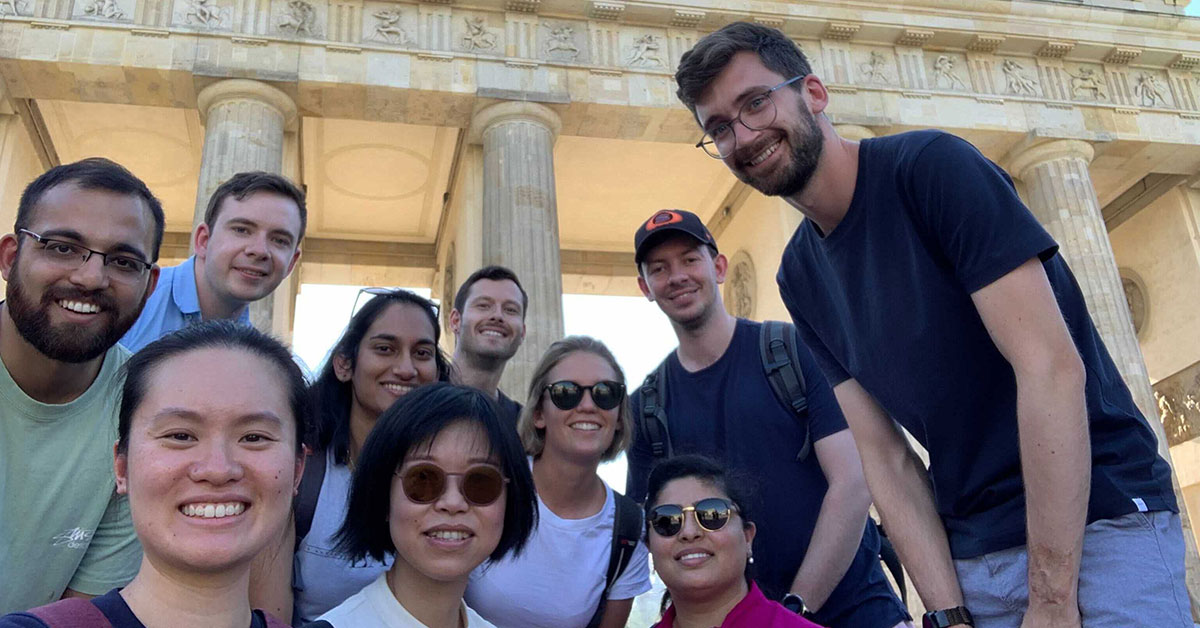
We were excited to help 12 young Australian scientists attend the 71st annual Lindau Nobel Laureate Meeting in Germany.
The Centre of Excellence for Biosecurity Risk Analysis (CEBRA) partnered with the Academy to produce a series of well-received videos highlighting the importance of biosecurity.
August
To celebrate the 75th anniversary of India’s independence, the Australian Government Department of Foreign Affairs and Trade partnered with the Academy to produce a series of videos highlighting the close scientific research relationship between Australia and India. We also celebrated the long and fruitful history of Japanese-Australian collaboration in STEM, as well as recent collaboration in the Asia-Pacific region.
We hosted an online event to discuss how the pandemic is affecting the Women in STEM workforce in Australia and Pacific Alliance countries, and produced a series of videos about research collaboration in the Asia-Pacific region.
Also in August, the digitisation of the Academy’s historic scientific collections received a generous donation by David Anstice AO, and we began broad promotion of how to celebrate science by dedicating a copper tile to a scientist.
September
We were deeply saddened by the passing of Her Majesty Queen Elizabeth II. It is believed that we are the only body in the Commonwealth to receive its charter directly from the hands of Her Majesty.
In a historic moment, the Academy was accepted as an independent scientific adviser to the Second Inquiry into the convictions of Kathleen Folbigg—a landmark case in the NSW justice system. We also hosted a national roundtable to consider the capability of science to draw out new negative emissions approaches, in addition to current approaches.
Future Earth Australia, based at the Academy, launched its National Strategy for Just Adaptation, bringing Indigenous and other relevant knowledges, adaptation science, the social sciences and the humanities together to reshape the national adaptation and resilience agenda.
We were proud to announce that Academy President Professor Jagadish was elected an International Fellow of the Royal Academy of Engineering. We also welcomed the Hon Tanya Plibersek MP to the Shine Dome.
We hosted the exciting seventh Falling Walls Lab finale to identify the national winners to take part in the international three-day conference held in Berlin, and supported their participation at the international event. And we congratulate Academy Fellows Professor Veena Sahajwalla and Professor David Lindenmayer, who were among Australia’s top scientists and science teams recognised at the 2022 Eureka Prizes.
October
We welcomed the announcement that the Academy will lead a new regional presence for the International Science Council to coordinate scientific engagement in the Asia-Pacific. This has been made possible by a $10.3 million investment from the Australian Government over the next six years.
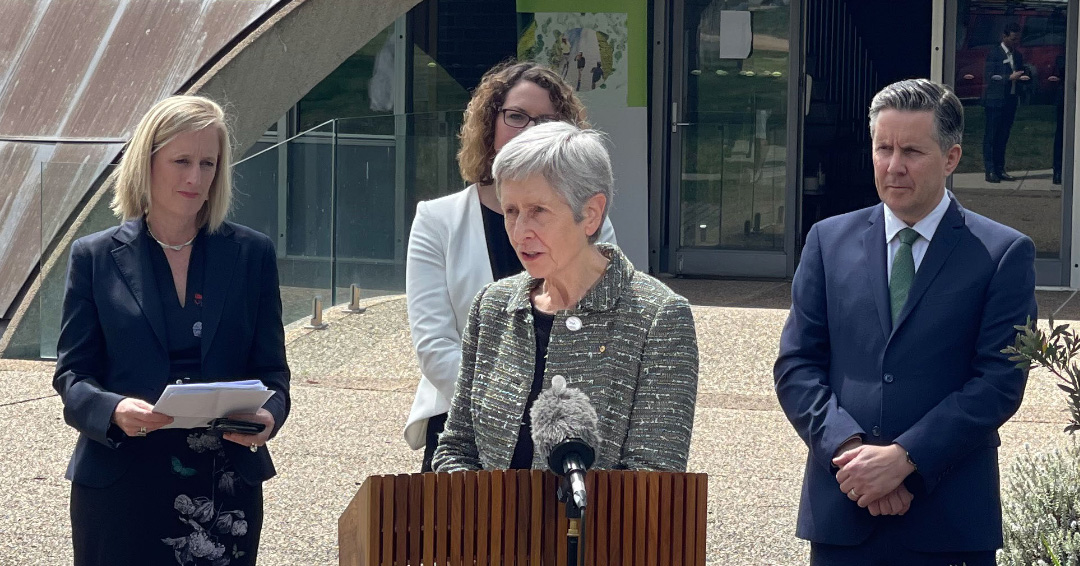
We also welcomed the introduction of measures to address systemic disadvantage faced by female and non-binary senior researchers via the Investigator Grant scheme of the National Health and Medical Research Council (NHMRC).
We held an Academy of Science and Academy of Law joint symposium on drug use and the law, and created a series of videos on Australian–Chinese science in both English and simplified Chinese.
We awarded an Academy medal to science and research advocate, the Hon Kim Carr, and were also pleased to see our heritage building Ian Potter House reopened 989 days since it sustained significant damage during a 2020 hailstorm.
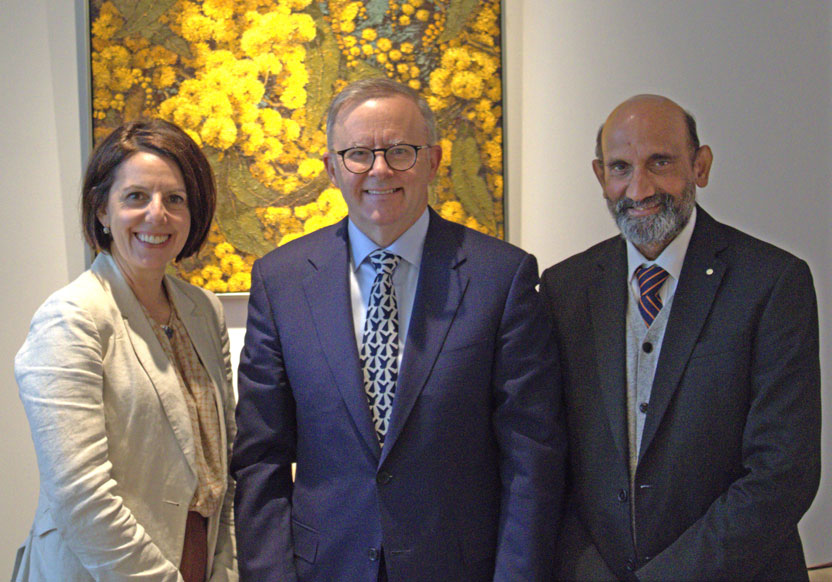
Academy President Professor Chennupati Jagadish and Chief Executive Anna-Maria Arabia met with the Prime Minister the Hon Anthony Albanese MP at Parliament House to discuss ways to bring science to the service of the nation.
November
We were excited that women working in STEM fields around the world will be able to raise their profile and discover opportunities to progress their careers following the global launch of the Academy’s innovation, STEM Women Global.
We were also overjoyed to welcome hundreds of participants to Canberra in a celebration of the best of Australian science at our flagship event, Science at the Shine Dome.
We announced that a donation of $800,000 by the Breakthrough Prize Foundation will support Ukrainian scientists who have fled the war with Russia or who have been unable to work due to the destruction of their workplace.
We proudly announced the establishment of the David Vaux Research Integrity Fellowship Award, to recognise individuals who have led efforts to foster and promote integrity in science.
We also celebrated that the 2022 Prime Minister’s Prize for Science was awarded to Academy Fellow Professor Trevor McDougall.
December
Are those Christmas trees in the outback? The Academy produced a video update on the SKA project, an initiative that will revolutionise astronomy.
We published a mid-term review of Australia’s 10-year plan for mathematical sciences, which found there are significant challenges facing teaching and research in the mathematical sciences.
We announced the 17 recipients of six funded awards for 2023: Moran Award for the History of Science Research; Thomas Davies Research Grant; WH Gladstones Population and Environment Fund; Margaret Middleton Fund; Max Day Award; and the Graeme Caughley Travelling Fellowship.
We also hosted a Frew Fellowship Lecture by Nobel Laureate Professor Donna Strickland, who spoke about her ground-breaking research on generating high-intensity, ultrashort optical pulses, and in collaboration with the National Library of Australia we digitised our collection of one of the twentieth century’s most outstanding biologists, Sir Frank Macfarlane Burnet.
And of course it wouldn’t be summer at the Academy without the annual Fellows’ reading, listening and viewing list that reveals the fascinating and diverse interests of Australia’s leading scientists.
With so much achieved, and much more to look forward to, we can’t wait to usher in 2023!
The role of popular astronomy: Moran Award for History of Science Research 2023
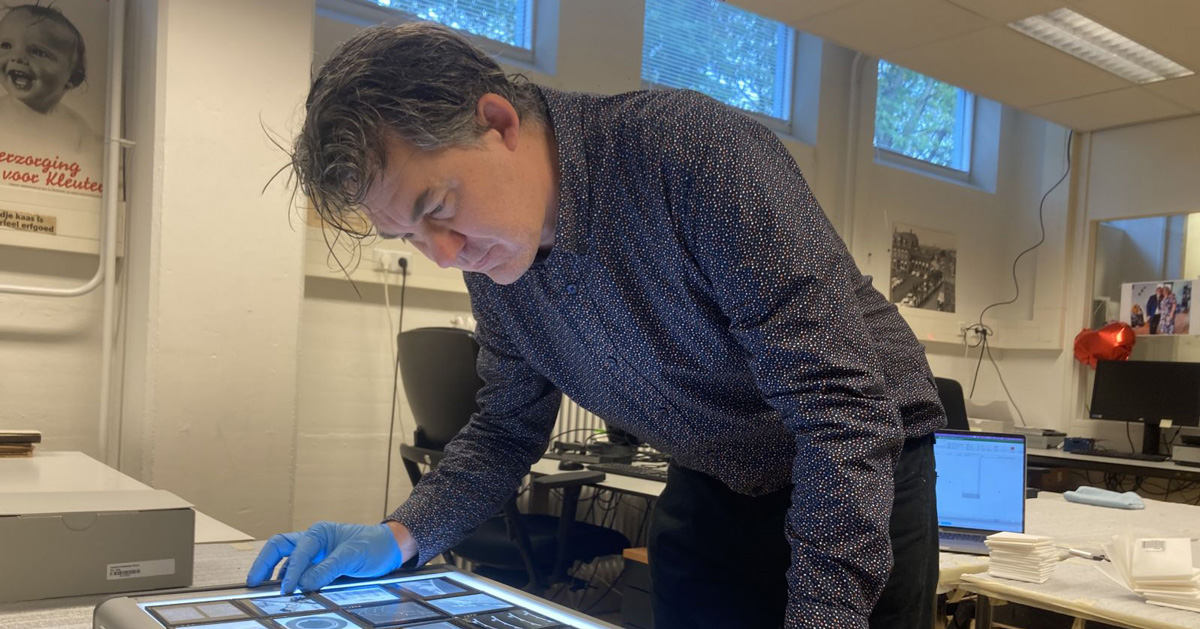
Dr Martin Bush will use the William Albert Amiet Collection, held at the University of Queensland’s Fryer Library, as the primary archive for his project.
Dr Martin Bush from the University of Melbourne has received the 2023 Moran Award for History of Science Research, for his research proposal ‘Literary skies: the popular astronomy of William Albert Amiet’.
William Albert Amiet (1890–1959) was a Queensland barrister, polymath, author, politician, community organiser and populariser of science. Amiet’s work as a scholar of literature has received some attention, as has his role as a diarist during World War 1. However, the second of Amiet’s two lifelong themes of ‘literature and astronomy’ has never been investigated.
Dr Martin Bush will explore the singular role of astronomy in Amiet’s literary and community activity, to better understand popular science in Australia in the first half of the 20th century.
To do so, Dr Bush will use the William Albert Amiet Collection at the University of Queensland's Fryer Library as his primary archive, reading it against other sources such as Trove's record of Amiet’s community activities and public writing.
Dr Bush said the Fryer Library collection is substantial, including: 56 diaries running continuously from 1903 until 1959; correspondence from 1941 to 1955; and Amiet’s impressions of the skies as seen while on service in World War 1.
“Of particular interest is his personally annotated astronomical field book, a close study of which will reveal the connections between Amiet’s amateur astronomy and his public activities,” Dr Bush said.
“Other relevant collections are at the State Library of Queensland, including correspondence from Amiet, and Eglinton’s archives, and the State Library of New South Wales, where the Angus and Robertson Archives include business files and author correspondence relating to [Amiet's books] Starry Pages and Starry Ages.”
Dr Bush intends to produce a scholarly manuscript for submission for the Australian Academy of Science’s journal, Historical Records of Australian Science.
“The Moran Award has supported so much important research in the history of Australian science, and I am honoured to join the company of previous recipients,” Dr Bush said.
About the award
The Moran Award for History of Science Research is aimed at postgraduate students and other researchers with expertise in the history of Australian science. Its purpose is to support access to archives that record the history of science in Australia, especially by younger researchers, and can be used towards travel and accommodation costs.
Stories for summer: Academy Fellows reveal their reading, listening and viewing recommendations
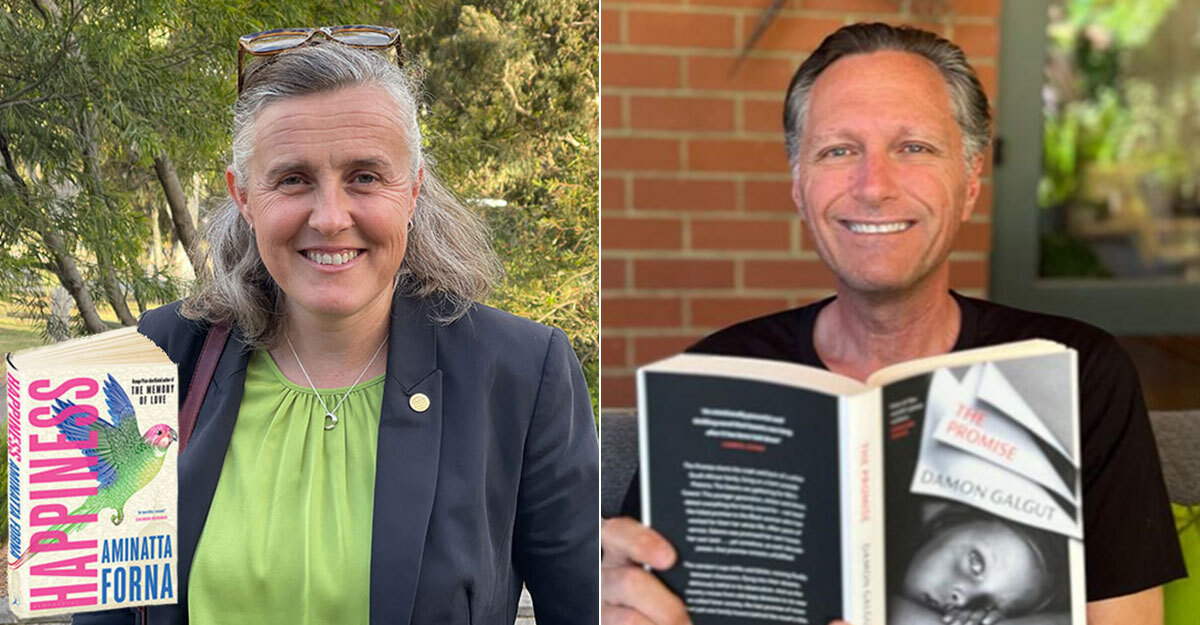
From the germination of 2,000-year-old Judean date palms to tales of beekeepers in the Ukrainian-Russian ‘grey zone’, the Australian Academy of Science’s 7th annual Fellows’ reading, listening and viewing list reveals the diverse interests of Australia’s leading scientists.
Whether you’re looking to dive into hidden histories of Australian science, imagined interactions with child-like machines, or the oddities of the English language—there’s something for everyone in this year’s list.
- See the Fellows’s reading, listening and viewing list
Below is a snapshot of this year’s recommendations.
Books
Happiness, by Aminatta Forna
Recommended by Professor Naomi McClure-Griffiths FAA: This is an amazing novel focusing on two people, Jean and Attila, from very different backgrounds whose lives intersect in London for a few days. The story dabbles into Jean’s research on urban foxes in London and Attila’s work as a psychiatrist in war zones, while wrapping in the challenges of life in late middle age, including loves lost or faded.
The Promise, by Damon Galgut
Recommended by Professor Jonathan Carapetis AM FAA FAHMS: A magnificently written tale of a family unravelling in parallel with the unravelling of apartheid in South Africa and following them over decades. Seamlessly moves between the perspectives of the main characters with wit, sarcasm and an ability to tug at the heartstrings too.
The Age of Seeds, by Fiona McMillan-Webster
Recommended by Dr Elizabeth Truswell FAA: A popular science book well written and hard to put down. Beginning with the germination of 2,000-year-old Judean date palms and dealing with the complexity of dormancy, the author also uses local examples such as the Pink Flannel Flowers of the Blue Mountains. Seed dispersal, longevity, the history of seed banks and seeds in relation to the history of human agriculture are all covered in this lively text.
Grey Bees, by Andrey Kurkov
Recommended by Professor Tony Basten AO FAA FTSE: This delightfully written and topical novel from Ukraine’s best-known author describes what life is like in the so called ‘grey zone’ between the Ukrainian and Russian lines in the Donesk region of Ukraine. A Ukrainian beekeeper and a Russian separatist live in an uneasy peace on opposite sides of a bombed-out village haunted by the daily exchange of missile and artillery fire. In a brief respite, the beekeeper takes himself and his bees to Crimea for a holiday where he faces a hostile reception.
The Wizards of Oz: How Oliphant and Florey Helped Win the War and Shape the Modern World, by Brett Mason
Professor Brian Schmidt AC FAA FRS Nobel Laureate: Brett Mason’s Wizards of Oz I think should be made part of the Australian curriculum, and should be read by anyone interested in Australian scientific history. It tells the story of how two Australians, Oliphant and Florey, made three of the arguably most profound technical contributions to World War II, and changed the course of the war. Hard to put down once you start, it will forever change your outlook on the impact of Australian science.”
Professor Margaret Sheil AO FAA FTSE: This book details the parallel lives and impact on the war effort and beyond of Howard Florey and Mark Oliphant in an engaging and informative style. While Florey’s contribution in developing penicillin is well recognised, less is known about the contributions of Oliphant’s role in critical radar technologies and in raising awareness of the feasibility of nuclear weapons and the threat posed if Germany were to get ahead of the allies in those developments. A great way to highlight the story of these two amazing Australians.
Audio and video
Word Matters, by Emily Brewster, Ammon Shea and Peter Sokolowski (podcast)
Recommended by Professor Jennifer Martin AC FAA: From the editors at Merriam-Webster, Word Matters is a show for readers, writers, and anyone who ever loved their English class. Hosted by three lexicographers, it is a joy to listen to, focusing each episode on the weird and wonderful of English words: Why are words ‘dropped’ from dictionaries? Which is correct: ‘another thing coming’ or ‘another think coming’? Can you be gruntled as well as disgruntled/kempt as well as unkempt/consolate as well as disconsolate?
Carbon: The Unauthorised Biography, by Daniella Ortega and Niobe Thompson on ABC iView (TV show)
Recommended by Professor David Karoly FAA: This outstanding documentary tells the story of carbon, the essential element for life, the environment and our society, but the most misunderstood element on Earth. It will make for great Christmas viewing for you and your family on a rainy day. It is available on ABC iView, with more information on the movie’s website and a teachers’ study guide.
Previous recommendations
Hungry for more? See what our Fellows recommended in: