




The future is what we make it, says winner of Prime Minister’s Prize for Science


Academy Fellow Professor Trevor McDougall AC FAA FRS. Photo: Department of Industry, Science and Resources.
Academy Fellow Professor Trevor McDougall AC FAA FRS has been awarded the 2022 Prime Minister’s Prize for Science for his outstanding contributions to the study of the world’s oceans and their role in regulating Earth’s climate.
The award recognises his ground-breaking research in the field of ocean thermodynamics, which looks at the role of the ocean in the movement of heat around the planet. This includes how to keep track of the heat that is exchanged with the atmosphere, and how heat is mixed in the ocean interior.
“Without the oceans, the equatorial regions would be much hotter than they are today and the polar regions much colder,” Professor McDougall said.
“The ocean is notoriously difficult to observe; we know more about the surface of the moon than we do about the sea floor.
“There are relatively few of us in the field of physical oceanography, and we have tended to perpetuate assumptions that were first made a century ago and not question them – I’ve made it my business in the past three decades to question those assumptions.”
He discovered previously unknown ocean mixing processes, which greatly improved the work of both theoretical and observational oceanographers, and these discoveries have led to completely new research areas that have improved our understanding of ocean physics.
Professor McDougall’s work is used by oceanographers around the world and has improved the accuracy of climate predictions, including the climate modelling of the Intergovernmental Panel on Climate Change.
He said that young scientists should be encouraged to join the effort to study climate science and be part of the solution.
“The future is what we make it. At the beginning of my career La Niña had not been noticed and global heating was thought of as being important only in the distant future.
“It is the research of a few thousand scientists around the globe who have spent their careers studying these things and improving our knowledge.
“It has been frustrating to see the warnings of climate scientists being largely ignored for the past 25 years, but the world knows of the dangers now.
“Do come on board this science enterprise, because the world needs many answers to ever more questions about the environmental impacts of what we humans have been doing with our grand experiment in burning fossil fuels.”
Academy Fellows have featured each year since the prizes’ inception in 2000.
Recipients of the Prime Minister’s Prizes for Science will be celebrated at a breakfast at the Shine Dome as part of Science at the Shine Dome.
See the full list of the Prime Minister’s Prizes for Science recipients.
Best of Australian science returns to Canberra
The best of Australian science will be celebrated and recognised at Science at the Shine Dome this week and for the first time since 2019, the Australian Academy of Science’s annual flagship event will be held in-person in Canberra.
Academy President Professor Chennupati Jagadish said that Science at the Shine Dome is where we come together to celebrate excellence in Australian science.
“It is also an opportunity for researchers from all career stages to connect with our Fellows and other leading Australian scientists, to forge new and important collaborations – the bedrock of science,” said Professor Jagadish.
This three-day event, which is also being livestreamed online, will see Australia’s most influential scientists from across disciplines gather to share their expertise.
Held annually since the Academy’s founding in 1954, Science at the Shine Dome will include the admission of new Fellows to the Academy, the presentation of awards and lectures, and scientific presentations by new Fellows.
“I am thrilled we can reunite researchers of all career levels to share knowledge, network and participate in professional development,” Academy Chief Executive Anna-Maria Arabia said.
Three days of scientific excellence
On Tuesday, Fellows from 2020, 2021 and 2022 will be formally admitted to the Academy, followed by a soiree on the grounds of the recently renovated and restored Ian Potter House.
On Wednesday, attendees will hear from some of Australia’s most distinguished scientists, the 2022 new Fellows, as they present their science and career achievements.
Networking breaks will give in-person attendees the opportunity to meet each other, while those joining via livestream will see exclusive feature interviews with special guests live from the Shine Dome.
On Wednesday evening, the Academy’s annual gala dinner will be held at the Great Hall of Parliament House.
It will feature a conversation between the Minister for Industry and Science, the Hon Ed Husic MP, and Gamilaroi yinarr (woman) and astronomy PhD candidate Karlie Alinta Noon from the Australian National University.
The dinner will also include the presentations of the Academy’s Premier Medals – the Macfarlane Burnet Medal, the Matthew Flinders Medal and the Ruby Payne-Scott Medal.
On Thursday, three lectures will be given by premier Academy awardees:
- Professor Marilyn Renfree (2020 Macfarlane Burnet Medallist)
- Professor Steve Simpson (2022 Macfarlane Burnet Medallist)
- Dr Liz Dennis (2022 Ruby Payne-Scott Medallist)
After these lectures, the 2022 honorific medal presentations will take place, followed by a networking lunch and an Indigenous Knowledges Workshop led by Academy Fellow Professor Tom Calma.
Registrations for in-person attendance of Science at the Shine Dome are now closed, but the livestream can be watched from anywhere in Australia or across the world.
The full program is available on the Academy website, and you can tune into the livestream on YouTube.
Thank you to our event partners
Platinum Partners: CSIRO and Department of Defence
Major – Diversity and Inclusion Partner: The University of Queensland
Major – Gala Dinner Partner: The University of Sydney
Major – Livestream Partner: Department of Education
Major Partners: The Australian National University and UNSW Sydney
Gold Partners: Department of Industry, Science and Resources, Deakin University, and The University of Melbourne
Silver Partners: QUT, The University of Adelaide, Nature Portfolio, and Evans & Partners
Bronze Partner: The University of Newcastle
EMCR Supporters: NCI, The University of Newcastle, UNSW Sydney, Griffith University, The University of Western Australia, and Monash University
Raising the profile of women in STEM across the globe
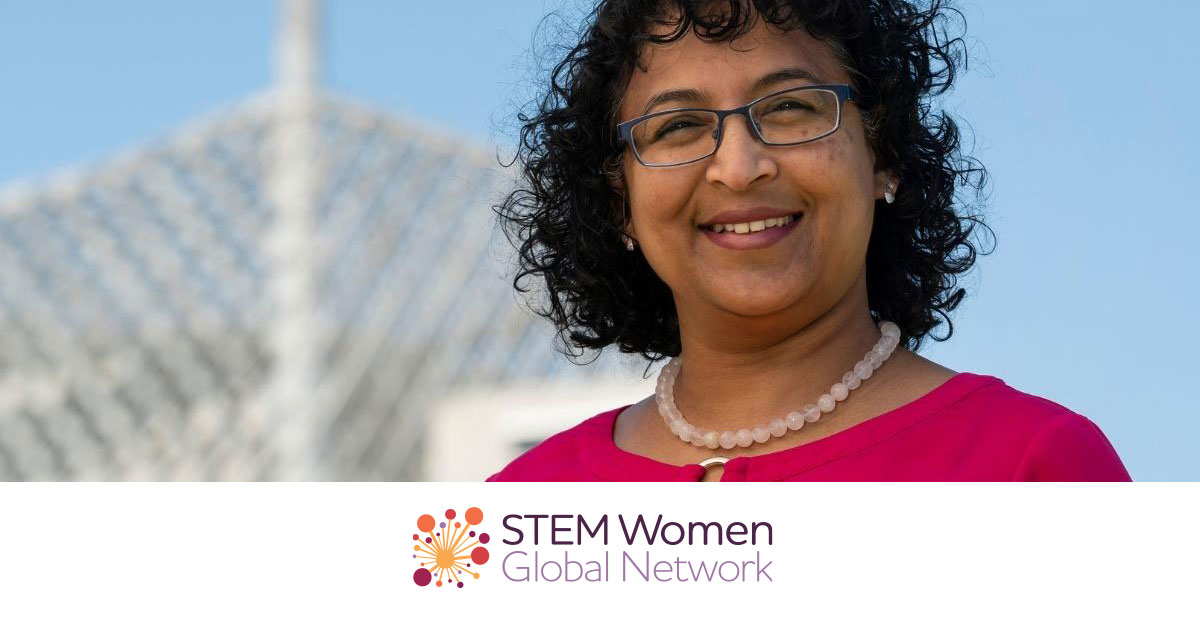
Women working in STEM fields around the world will be able to raise their profile and discover opportunities to progress their careers following the launch of STEM Women Global in November.
The existing STEM Women platform, a free online directory of women working in science, technology, engineering and mathematics (STEM) in Australia and Asia, has been expanded to include women scientists from across the globe, taking this Australian innovation to the world stage.
“We are very proud to bring STEM Women Global, an Australian innovation, to the international STEM sector,” Australian Academy of Science President Professor Chennupati Jagadish said.
“By raising the profile of women in STEM across the globe, all of science will benefit.”
STEM Women Global, which any woman working in STEM can apply to join, allows users to search for members by their expertise, country and areas of professional interest, connecting women in STEM with individuals and organisations looking for diverse STEM experts.
STEM Women Global is an initiative of the Australian Academy of Science with the support of the InterAcademy Partnership (IAP), the Association of Academies and Societies of Sciences in Asia (AASSA), the Network of African Science Academies (NASAC) and the Inter-American Network of Academies of Sciences (IANAS).
The launch included remarks from the IAP and other project partners. Speakers addressed the importance of raising the visibility of women in STEM in their regions and the significance of mechanisms such as this new directory to establish international collaborations.
As well as expanding the platform for global reach, the project will explore tools and mechanisms to support scientists in exile and will introduce multilingual options for equity of access across locations and cultures.
“The STEM Women initiative unlocks an enormous talent pool of women in STEM, increases their visibility, and directly connects them with career opportunities including international collaborations,” Academy Foreign Secretary Professor Frances Separovic said.
The project highlights the Academy’s ongoing commitment to advancing gender equity in STEM by showcasing the breadth of scientific talent both in Australia and across the world, so that women researchers and professionals working in STEM across all countries can be recognised and offered career-advancing opportunities.
Visit the STEM Women Global website
Academy welcomes S20 recommendations for global recovery
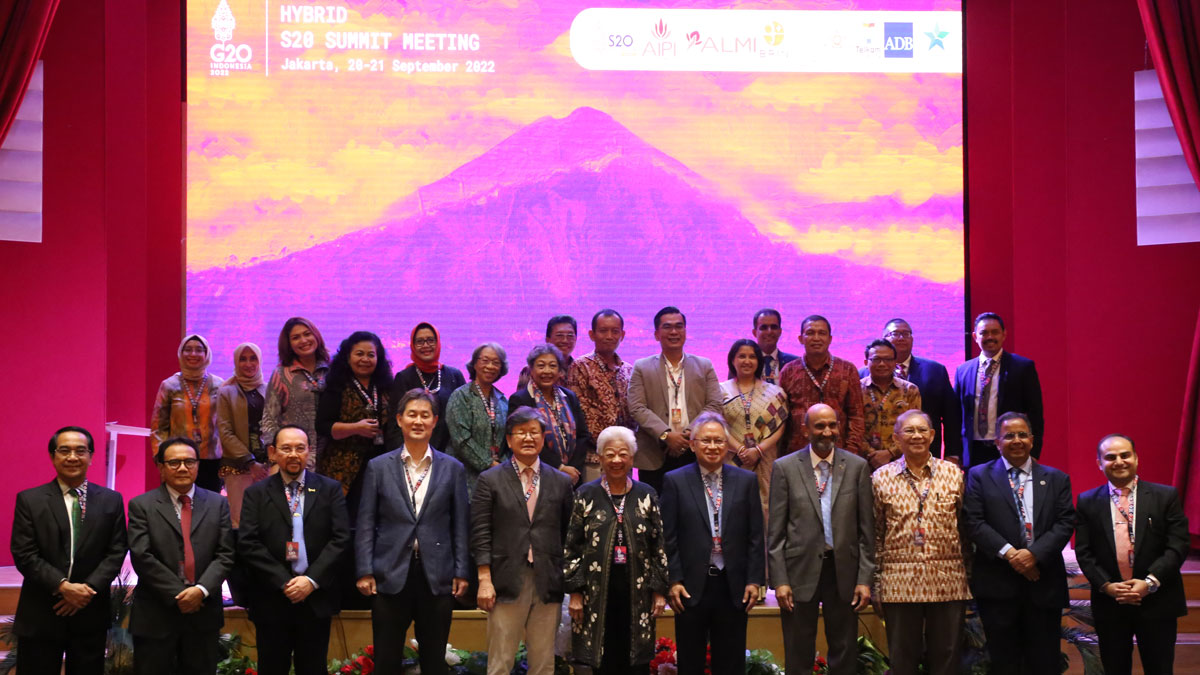
The Australian Academy of Science supports the communiqué released in September by the S20, the science academies of the G20. The S20 Summit, coordinated on the margins of the G20’s theme of ‘Recover Together, Recover Stronger’, concluded in Jakarta, Indonesia with recommendations to G20 governments on international cooperation toward common goals in key priority areas.
The communiqué recommends G20 governments tackle challenges in the following priority areas:
- Building resilient health systems
- Enhancing the adaptive capacity of health systems to climate change
- Bolstering multi-disciplinary science and technology for pandemic preparedness and climate change
- Guaranteeing people-centred systems design in societies and global structures
- Strengthening the nexus between data, research, policy and practice
Global cooperation and evidence-informed policy making are more important than ever to ensure a successful and equitable economic recovery. The S20 agreed that research and innovations in science and technology should be leveraged to develop more sustainable, resilient and effective systems across the globe, and that efforts must also increase to integrate the social sciences and humanities within public policy to ensure a people-centred design.
The COVID-19 pandemic has underscored that governments, the private sector, civil society and scientists need to re-double their efforts to work together across disciplines to coordinate a greater global response to the challenge of climate change.
The S20 encouraged open data practices to enhance knowledge collaboration and transfer among G20 members. G20 members should ensure transparency, data availability and translatability across member nations in order to equalise access and bolster the adoption of evidence-informed policy between science and decision makers.
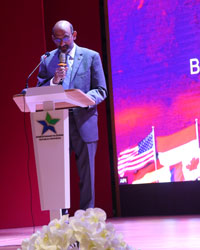
Academy President Chennupati Jagadish speaking at the S20 Summit.
“I congratulate the S20 group for this communiqué, unanimously agreeing on the importance of science and the importance of people-centric solutions,” Academy President Chennupati Jagadish said.
The Australian Academy of Science has taken action to ensure policies are evidence-informed, and where research gaps exist these are identified. Earlier this year we launched Australia’s National Strategy for Just Adaptation, produced by Future Earth Australia, which seeks to broaden the national adaptation and resilience agenda and embed principles of justice and equity across climate action.
The Academy also held a roundtable of cross-disciplinary scientists, governance and innovation policy makers, politicians, and other decision makers to provide guidance on what science and technology was still required to substantially reduce greenhouse gas emissions and draw down greenhouse gases from the atmosphere. Furthermore, the Academy is developing a roadmap for advancing data-intensive research in Australia in order to create a data ecosystem for global knowledge exchange.
Through continuous support from governments and member nations, scientists hope to ensure sustainable, adaptable and healthier global development in the face of future challenges. The Academy commends the S20, under the leadership of the Indonesian Academy of Sciences, for producing this timely communiqué.
Read the full communiqué (PDF, 536KB).
Revitalising science critical to advancing Australia’s economic and social prosperity
The Australian Academy of Science welcomes the release of the Australian Government’s 2022-23 budget.
The Academy will lead a new regional presence coordinating scientific engagement in the Asia-Pacific over the next six years thanks to a $10.3 million investment from the Australian Government.
Academy President Professor Chennupati Jagadish said the Australian Government’s investment will enable Australia to leverage its standing as a science and research leader and engage in strategic science diplomacy in our region and globally.
The Government has also made several other significant investments that rely upon science to advance Australian economic and social prosperity.
These include:
- The establishment of the $15 billion National Reconstruction Fund with seven key priorities in renewables and low emissions, medical science, value-adding resources, enabling capabilities, transport, defence and agriculture, fisheries, food and fibre.
- Confirmation of the Government’s intention to establish an Australian Centre for Disease Control.
- $105.2 million to support First Nations people to respond to climate change in their communities. The Academy’s Future Earth Australia National Strategy for Just Adaptation, published last month, called for the development of a national Indigenous-led climate change mitigation and adaptation strategy.
- Renewal of Australia’s climate policy ambition through greater investment in the Climate Change Authority, the Australian Renewable Energy Agency, net zero and negative emissions and major investments in Australia’s renewable energy systems.
- $2.9 million for the National Science and Technology Council’s provision of science and technology advice to support evidence-informed decision-making and independent science advice to Government
- A down payment on meeting Australia’s responsibility to protect our natural biodiversity including support for preventing species extinction, protecting the Great Barrier Reef and advancing environmental law reform
- 20,000 new university places for under-represented students, the Startup Year Program and establishing the Australian Universities Accord
- $5.8 million for the Women in STEM and Entrepreneurship program and the independent review into Government programs to ensure they support greater diversity in Australia’s science and technology sectors
- $10 million for Questacon to help inspire the next generation of young people to consider STEM careers
“Australians look to science to provide the knowledge, solutions, and advice to guide us through the challenges of our uncertain world. A world now more frequently experiencing climate induced natural disasters and the threat of pandemics," Professor Jagadish said.
“We recognise a lot of work is in train to revitalise the scientific enterprise and reverse the fourteen-year decline in investment in research and development. It will take time, but it can be done.
“We look forward to working with the Australian Government to map a pathway that repositions Australian science to advance national prosperity and global competitiveness."
Federal budget funding to strengthen Australian scientific leadership in Asia-Pacific

The Australian Academy of Science will lead a new regional presence coordinating scientific engagement in the Asia-Pacific thanks to a $10.3 million investment from the Australian Government over the next six years.
The Minister for Industry and Science, the Hon Ed Husic MP, announced the funding in tonight's Federal Budget.
The Academy welcomes and thanks the Australian Government’s strategic commitment to establish the International Science Council (ISC) Asia-Pacific regional presence at the Academy.
Since our foundation in 1954, the Australian Academy of Science has facilitated international partnerships and collaborations in pursuit of solutions to pressing global challenges. We recognise the benefits of effective science diplomacy.
This investment enables Australia to leverage its standing as a science and research leader and engage in strategic science diplomacy in our region and globally.
Australian Academy of Science President, Professor Chennupati Jagadish AC said hosting the International Science Council’s Asia-Pacific Regional Presence in Australia would significantly boost Australia’s scientific leadership in the Asia-Pacific region, deepen engagement across our region, and enable greater science outcomes that benefit all.
“It will also allow Australia to have greater input into global policy issues, extend its international influence through science diplomacy and provide access to a high-level network of global science leaders,” Professor Jagadish said.
“Changes to the regional geopolitical landscape, climate change, global security and technology are among the issues currently shaping Australia’s economy and society.
“An opportunity to enable meaningful regional engagement and to align activities with international science efforts will help us navigate these issues strategically and with impact.”
President of the International Science Council Sir Peter Gluckman said the Academy had a long track record of successfully managing international engagements and in representing Australia’s interests at the ISC since the Academy’s inception in 1954.
“The Asia-Pacific focal point is central to translating the ISC’s global vision into actions tailored to meet the unique needs of the Asia–Pacific region,” Sir Peter said, who was also the former Chief Science Advisor to the Prime Minister of New Zealand.
“The Australian Academy of Science is a very active and engaged member of the ISC. As host of this new branch, the Academy is well placed to strengthen partnerships across the region and to advance science as a global public good.
“The ISC is grateful for the Australian Government’s leadership and investment in building scientific cooperation in the region.”
Professor Jagadish said the Asia-Pacific region is a key focal point of the Academy’s international engagements and Australian diplomatic efforts.
“I wish to warmly thank the Academy of Sciences Malaysia for the valuable work undertaken in maintaining the Asia-Pacific regional office over previous years.
“We look forward to fostering engagement with the diverse nations across the Asia-Pacific region and working on our shared goal of championing science as a global public good,” he said.
The ISC Asia-Pacific regional presence will begin operation in 2023.
Gender equity changes to NHMRC Investigator Grants are ‘game-changing’
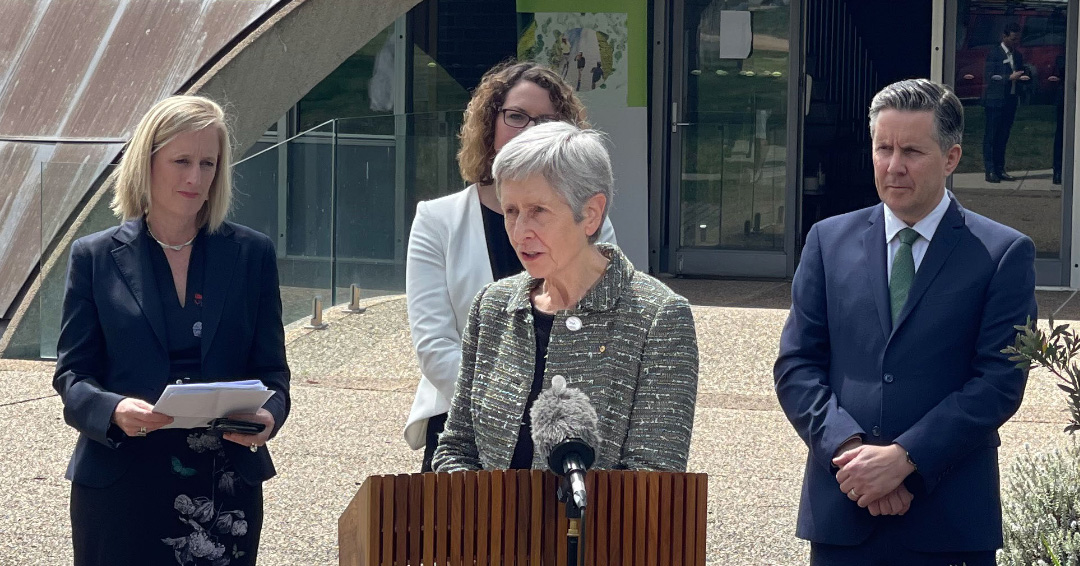
The Academy welcomes the introduction of measures to address systemic disadvantage faced by female and non-binary senior researchers via the Investigator Grant scheme of the National Health and Medical Research Council (NHMRC).
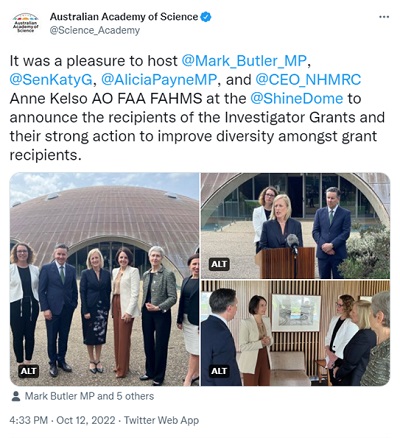
From the 2023 Investigator Grant round, the NHMRC will set targets and interventions in the scheme to fund an equal number of Leadership grants for women and men. Emerging Leadership grants will continue to use existing gender equity targets.
Non-binary researchers will also now be included alongside women, in both the new measures and the existing measures for Emerging Leadership grants.
Academy Chief Executive Anna-Maria Arabia said, “The intervention to support women at the senior levels is game-changing as it directly removes a barrier that has historically led to their attrition from the research workforce.
“Importantly, this intervention sends a strong message to both women and girls that they can pursue a successful and fulfilling career in research.
“The NHMRC has heard the calls and have acted, and we strongly applaud them for it, and we commend them for including non-binary researchers.”
The NHMRC intervention is expected to lead to changes in practices within research organisations to enable greater collaboration between researchers, stronger practices to support all genders during career breaks, and better decision-making and research design – all of which will improve research outcomes for all Australians.
Learn more about the measures being introduced on the NHMRC website.
The Academy’s Women in STEM Decadal Plan recommends initiatives of this nature to address systemic inequity.
Government as a driver of policy, funder of programs and large employer of STEM professionals has a significant opportunity to show leadership by adopting best practice. This could include making the adoption of diversity measures and evaluation a condition of government funding, or incorporating them in procurement guidelines to encourage adoption of best practice in gender equity to flow through the supply chain and the economy.Women in STEM Decadal Plan, p21
The NHMRC has also committed to measuring the impact of this intervention, in line with a key recommendation of the Women in STEM Decadal Plan which proposes evaluating programs so that we know what works and investment can be directed to the most effective measures.
The Academy continues to strongly encourage medical research institutes, universities and publicly funded research agencies to become members of Science in Australia Gender Equity (SAGE), so that they can take a systematic and evidence-based approach to remove barriers faced by women in STEM. Organisations can also become Women in STEM Decadal Plan Champions by aligning their gender equity journey with the six opportunities listed in the Decadal Plan.
The Academy’s own Premier Awards have suffered from an under-representation of senior women applicants. In response, the Academy created the Ruby Payne-Scott Medal and Lecture for Women in Science, a career medal that recognises women researchers of the highest standing in the physical and/or biological sciences. This award, along with the Macfarlane Burnet and Matthew Flinders medals, is one of the most prestigious career awards of the Academy.
The Academy’s actions to improve gender diversity among our Fellowship are also succeeding. This year’s Fellows include 50% women and 50% men, the first time in the Academy’s history that gender parity has been achieved in the annual election of new Fellows.
Academy Council members have has also taken the Panel Pledge, promising to encourage meaningful representation of women in events.
Learn more about the Academy’s commitment to promoting and sustaining diversity and inclusion in the STEM sector.
Above: Dr Liz Dennis AC FAA FTSE was the recipient of the 2022 Ruby Payne-Scott Medal and Lecture.
Kim Carr recognised for his service to Australian science and research
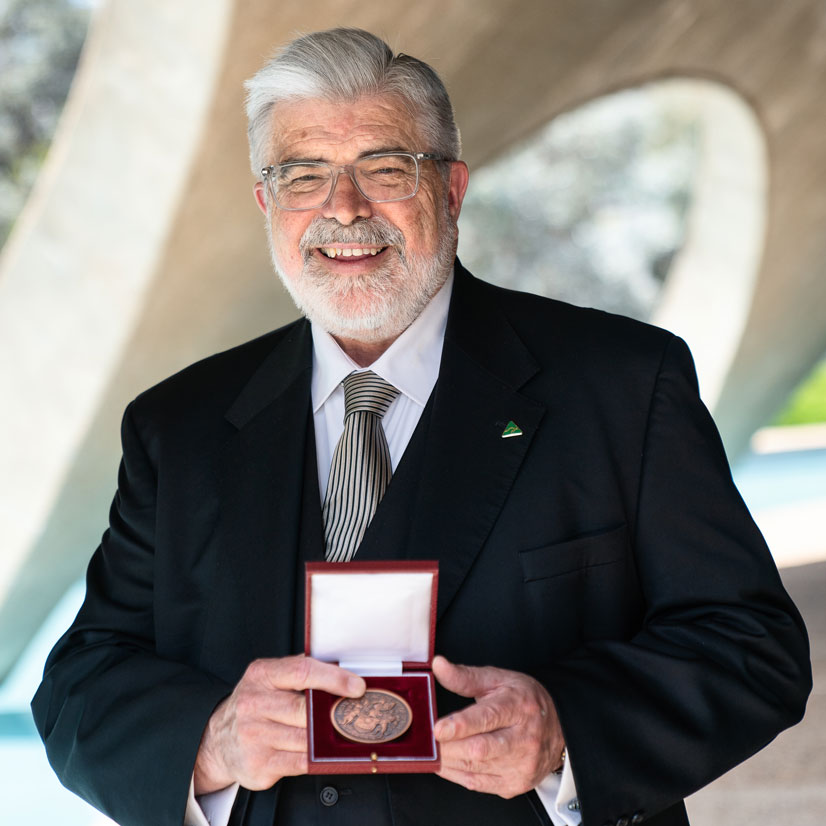
One of the Australian Parliament’s fiercest science and research advocates, Kim Carr, has been recognised by the Australian Academy of Science today for advancing the cause of science and technology in Australia.
He becomes only the second politician to receive the Academy Medal in its 32 year history.
The Academy medal is awarded to: ‘a person outside the Fellowship who has, by sustained efforts in the public domain, significantly advanced the cause of science and technology in Australia or who has made a substantial contribution to the Academy, by means other than research.’
Academy President, Professor Chennupati Jagadish, said Kim Carr has been one of the most significant federal science ministers in recent decades.
“Kim Carr’s commitment to science was obvious throughout his nearly thirty years of parliamentary service, and for that he is a worthy recipient of the Academy Medal,” Professor Jagadish said.
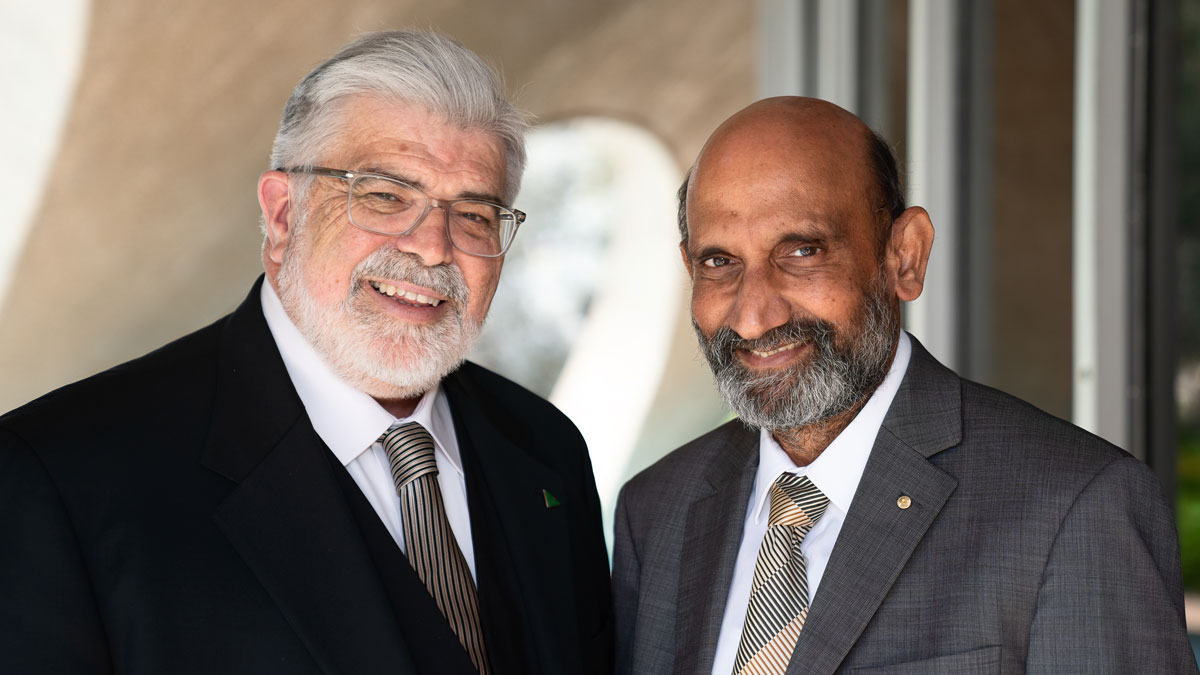
“He committed a great deal of his political life, in government and in opposition, advocating for and defending public good research, science and technology, and education.”
Kim Carr’s departure from parliament earlier this year saw an outpouring of sorrow from the higher education and research sectors. Politicians also recognised his significant contributions to science, with Prime Minister Anthony Albanese saying the parliament has had no stronger supporter of Australian manufacturing and science.
The Academy’s Secretary for Science Policy, Professor Ian Chubb, said Kim Carr was a champion of research, innovation, jobs and industry and a champion of a fairer and better Australia.
“Because we, scientists or academics, don’t hesitate to criticise politicians when they don’t consider and follow science advice, we should recognise them when they do much of what we think they should,” Professor Chubb said.
“We’ll miss Kim’s three-piece suits, his mobile eyebrows and his forward lean which always preceded a tough question in Senate estimates.”
Previous recipients of the medal include Bob Hawke (1990), Dr Norman Swan (2004), Professor Sue Serjeantson (2008), Professor Ian Chubb (2016) and Peter Yates and Professor Megan Clarke (2019).
Kim Carr said there’s still a lot of work to do.
“Science has a critical role in restoring public trust in finding solutions to the big problems this country faces.”
Academy returns to historic headquarters
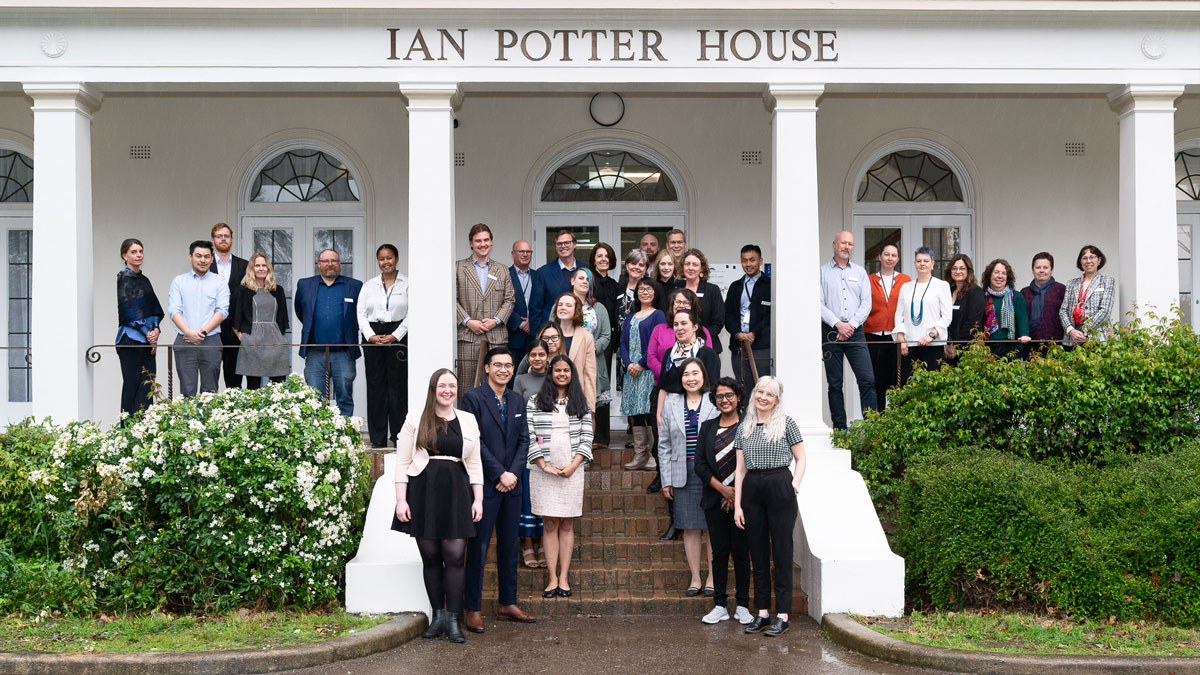
Ian Potter House, the headquarters of the Fellows and staff of the Australian Academy of Science, has officially reopened 989 days after it was extensively damaged during Canberra’s 2020 hailstorm.
It was officially reopened by Academy President, Professor Chennupati Jagadish and Ngunnawal Elder and leader, Aunty Violet Sheridan, following a smoking ceremony.
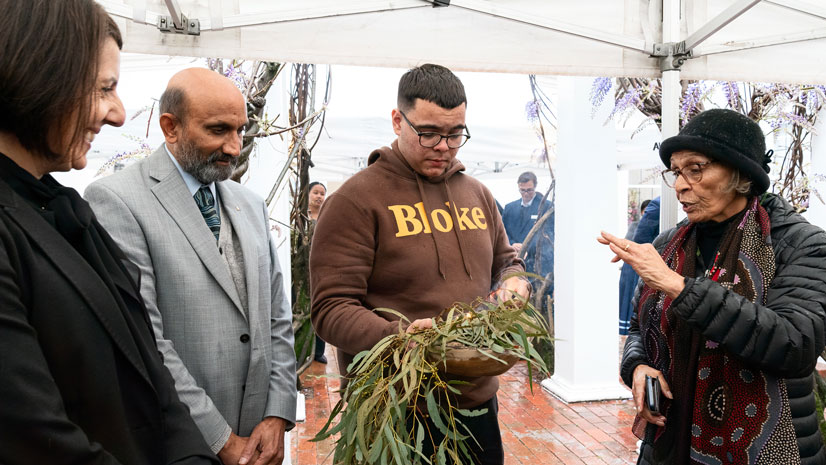
The opening was attended by Fellows of the Academy and staff, as well as Alicia Payne MP, the Federal Member for Canberra.
Following the 2020 hailstorm, the Academy undertook a complete refurbishment and restoration to improve the building’s accessibility, reduce its environmental footprint and preserve the heritage values of the building, its courtyards and gardens for future generations of Canberrans.

“Ian Potter House has been enhanced to showcase original features such as fireplaces and original ceilings where possible, whilst upgraded to provide a modern and flexible working space that is accessible, sustainable and energy efficient,” Professor Jagadish said in his opening address.
“We hope to have created a beautiful, inspiring, accessible and sustainable home for the Australian Academy of Science, its Fellows and staff.”

Academy of Science Chief Executive, Anna-Maria Arabia, welcomed back Fellows and staff and thanked them for their patience and resilience over this disruptive period.
“I am incredibly proud that we have been able to refurbish Ian Potter House, and to restore a building that holds a special place in Australia’s history and that will contribute to our future,” Ms Arabia said.
Both of the Academy’s historic buildings were significantly damaged in the 2020 hailstorm. The organisation also had the task of restoring the adjacent heritage-listed Shine Dome, including a completely new copper roof and improved energy efficiency. The Canberra landmark was officially reopened in June.
A rich history
Built as part of the Federal Capital Commission’s building program for the transfer of public servants to Canberra in 1927, the building now known as Ian Potter House represents an early phase in Canberra’s developing social and cultural history.
The Australian Academy of Science took possession of the site in 1985 and, following refurbishment in 1986–87, gave the building its current name in recognition of philanthropist and Academy Fellow, Sir Ian Potter FAA.
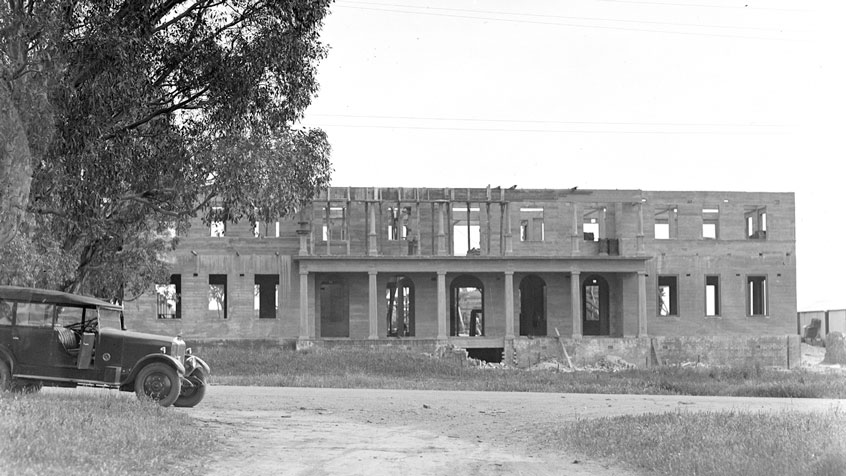
The modern restoration received a generous donation from the Ian Potter Foundation, contributing $500,000 to the works.
“Sir Ian and the Foundation have a long history of association with the Academy and with Ian Potter House,” Craig Connelly, CEO of the Ian Potter Foundation, said at the opening.
“The Foundation’s support of the refurbishments of Ian Potter House was a no-brainer.”
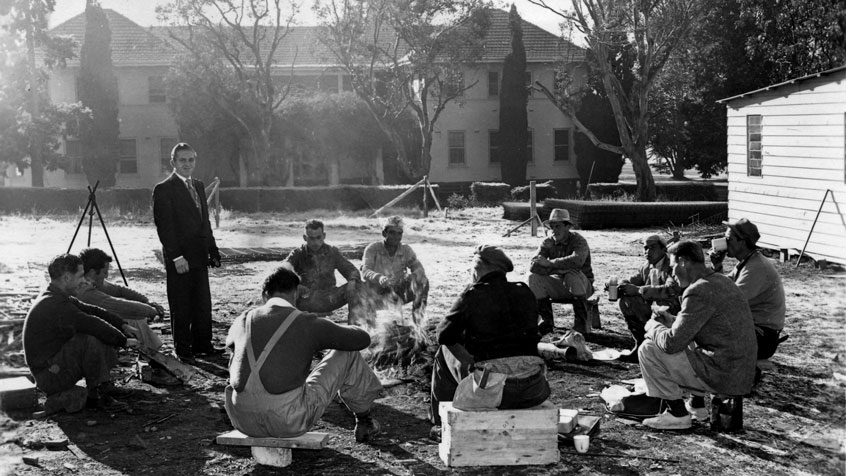
As a significant example of the Inter-War Georgian Revival style of architecture, Ian Potter House was entered in the ACT Heritage Register in 1998.
The building, including its courtyards, grounds and wisteria plants which grow over the entrance, are to be conserved and maintained in a manner consistent with its heritage significance.
Learn more about the history of Ian Potter House.
Information and images for this story were sourced from the Academy’s Basser Library and Fenner Archives, which hold a rich historical collection documenting the history of science in Australia. The archives are open to the public by appointment.
Two researchers awarded Mike Smith Student Prize for insightful essays

Jessica Urwin (left) and Margaret Williams are joint winners of the 2021–22 Mike Smith Student Prize. Images supplied.
Explorations of the history of disease and of nuclear colonisation have earned two researchers the 2021–22 Mike Smith Student Prize for History of Australian Science or Australian Environmental History.
‘The poison, leave it’
Jessica Urwin is working toward her doctorate at the Australian National University, researching the history of nuclear colonialism throughout the 20th century. Her focus is on how Australia’s nuclear industry, including uranium and radium extraction, nuclear weapons testing, and radioactive waste disposal, has intersected with colonialism in South Australia.
Her essay submitted for the prize, ‘No Time to Waste: Aboriginal resistance to Australia’s nuclear waste, 1998–2004’, follows senior women of the Kupa Piti Kungka Tjuta group and their campaign Irati Wanti – ‘the poison, leave it’ – between 1998 and 2004.
“This grassroots campaign was organised by these women in response to Prime Minister John Howard’s proposal to establish a nuclear waste dump on their Country in the late 1990s. Through examining the key messages of the women’s campaign, my essay seeks to expose some of the tensions between desert and urban communities in relation to radioactive waste storage and disposal in Australia,” Ms Urwin said.
“Dr Mike Smith’s books, Peopling the Cleland Hills and The Archaeology of Australia’s Deserts were integral to my essay. His call to scholars to ‘people’ the desert, pushing back against the historic settler tendency to consider Australia’s desert landscapes ‘unpeopled’, is at the heart of this work, and is the key message put forward by the Kupa Piti Kungka Tjuta around whom my essay revolves.
“Accepting that desert landscapes are peopled is vital to acknowledging the disproportionate impacts of the nuclear order borne by Indigenous communities the world over. Such considerations are important for both environmental historians and historians of science,” she said.
Inspired by scholars
Joint prize-winner Margaret Williams is a research fellow at the National Institutes of Health (USA) studying the history of 20th century infection control policies as well as conducting clinical research on chronic lung infections.
“My work builds on many of the interests I developed writing my essay, ‘Biopolitics and the Bacillus: Sinophobia in an Epidemic of Bubonic Plague in Sydney, 1900–10’, especially historicising the relationships between body and space in conceptualising disease and in particular personal culpability for disease transmission,” Ms Williams said.
“Amidst the challenging research conditions of a pandemic – whose challenges led me to pursue this work – this prize has encouraged me to continue interrogating the ties between race, disease and national belonging.
“As I learned to read against epidemiological reports for this essay to chart the complex social relations influencing plague’s path through Sydney, I have been inspired by the community of scholars who guided this essay. I am grateful to Dr Mary Brazelton at Cambridge for her mentorship and support, as well as to the librarians at the University of New South Wales as I worked to access sources which were otherwise inaccessible during lockdown,” she said.
Both researchers expressed how much of an honour it was to receive the Mike Smith Prize.
Find out more about the 2021-22 prize, and the criteria used to select the winning entry.
The next round of the Mike Smith Student Prize will be in 2023–24, with entries opening late in 2023.