




Wastewater and AI to plan for pandemics: WH Gladstones Population and Environment Fund


Dr Xuan Li from the University of Technology Sydney
Awardee
Dr Xuan Li, University of Technology Sydney
Transforming Australians’ health impact prediction due to COVID-19 using artificial intelligence
Dr Xuan Li from the University of Technology Sydney has been awarded the WH Gladstones Population and Environment Fund to fund her research into the effect of Australia’s population on the environment.
Dr Li was one of the earliest scientific contributors to population-wide surveillance of COVID-19 through wastewater-based epidemiology, providing better solutions to cope with pandemics. Her research aims to assist the planning and policymaking for local communities, especially for vulnerable population groups.
This project proposes that the impact of COVID-19 on hospitalisation and ICU needs can be predicted accurately through artificial intelligence and wastewater-based epidemiology.
About the fund
The WH Gladstones Population and Environment Fund offers support for empirical research into how the size, distribution, material aspirations and other characteristics of Australia’s population are likely to affect our environment—not only our land and landscape, but also social cohesion, health, the economy and defence. The fund was established in 2010 through generous donations from the late Dr William H Gladstones.
Applications for the 2025 round will open in early 2024.
Margaret Middleton Fund recipients to protect fairywrens, mountain frogs and culturally significant species
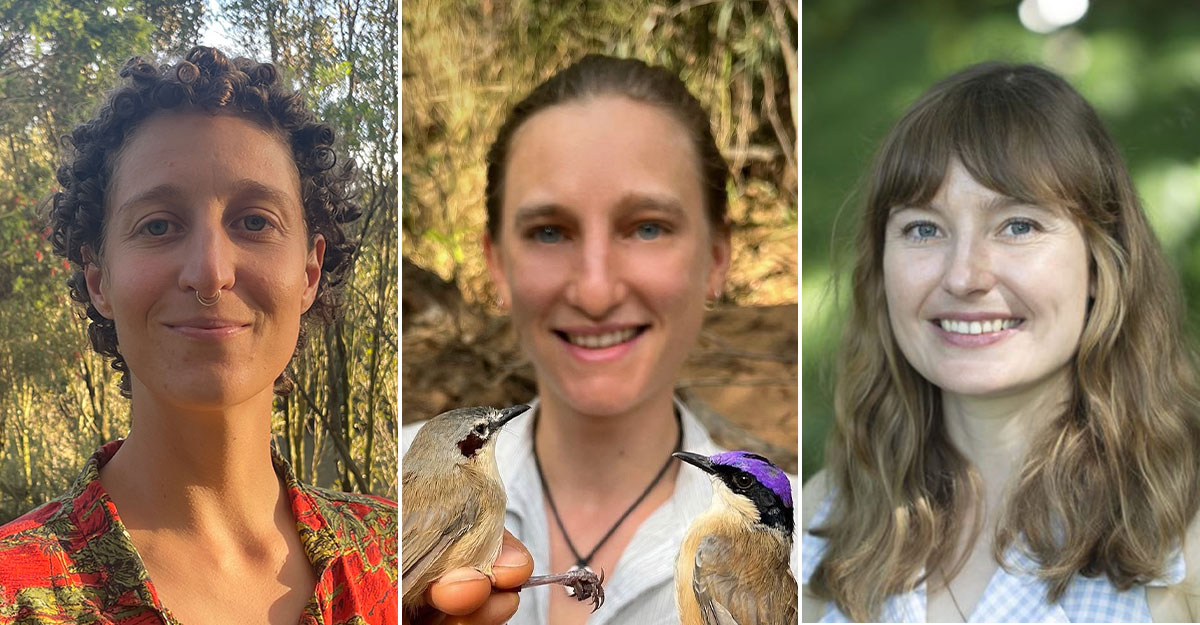
Left to right: Dr Shaina Russell from Macquarie University, Ariana La Porte from Monash University and Emma Carmichael from James Cook University.
Three early-career researchers have been awarded funding for ecology projects in 2023 thanks to the Margaret Middleton Fund for endangered Australian native vertebrate animals.
Awardees
Dr Shaina Russell, Macquarie University
Rrambani djäma (working together): New camera trap approach to detect bio-culturally important fauna on remote Indigenous land
Drawing on Yolŋu Elders’ knowledge of important fauna ecology and habitats, and working with the Yirralka Rangers, Dr Shaina Russell’s research aims to co-design and implement a camera trap network for monitoring of culturally significant and endangered species in the Laynhapuy Indigenous Protected Area in northeast Arnhem Land.
Ariana La Porte, Monash University
Early-life impacts of climate warming in endangered purple-crowned fairywrens: Studying mechanisms to inform conservation strategies
By studying the purple-crowned fairywren (PCFW), an endangered riparian bird of the Kimberley region of Western Australia, Ariana La Porte’s research aims to identify the riparian habitat features in the Kimberley that will allow species to persist under climate change. Understanding which best enable PCFWs to keep the next generation cool will allow targeted protection and restoration that will benefit all riparian species.
Emma Carmichael, James Cook University
Small frogs with big problems: Ecology and conservation of critically endangered mountaintop nursery frogs
Mountaintop-dwelling nursery frogs are among the amphibians most at risk of extinction due to climate change, but very little is known about how to conserve these species. Emma Carmichael’s research aims to improve our understanding by resolving current elevational limits for these species, whether these have contracted upwards in the past 20 years, and what environmental parameters determine distributions and breeding activity.
About the fund
The Margaret Middleton Fund for endangered Australian native vertebrate animals was established in 2000 with Dr Margaret Middleton, who donated generously to this fund across her lifetime. Dr Middleton was a long-time supporter of the Academy and early-career scientists, with the fund supporting more than 90 projects to date.
Applications for the 2024 awards will open in February 2023.
Using smell to disguise vulnerable plants, and protecting frogs from fire: 2023 Max Day awards
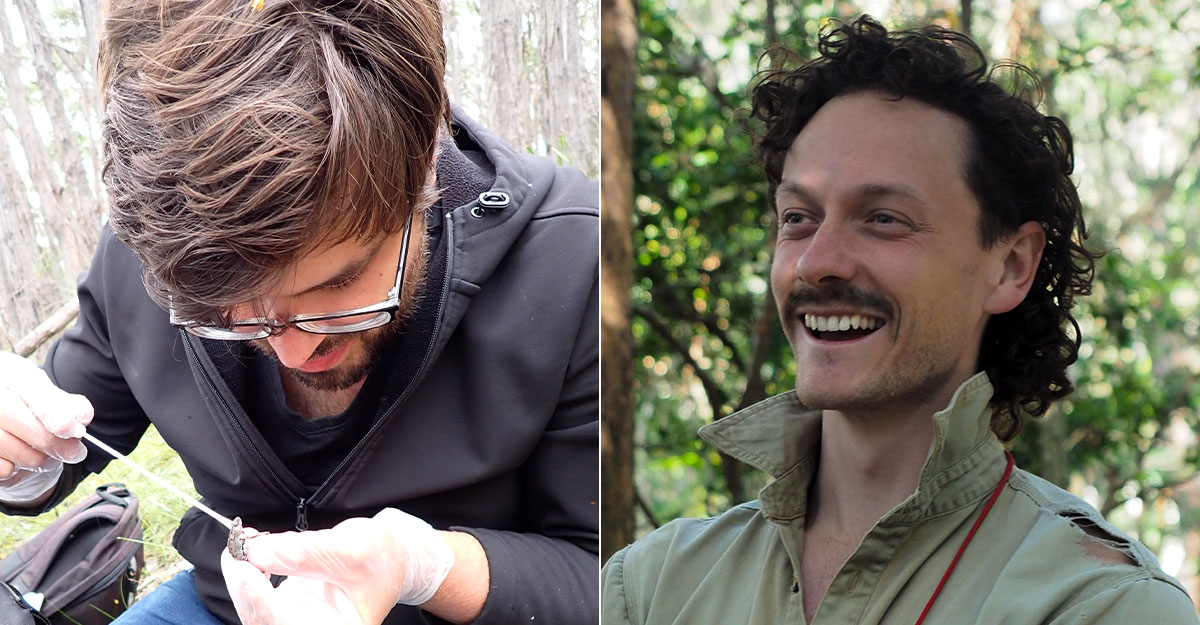
(from left) Shawn Scott from the University of South Australia (photo: Dr Topa Petit), and Patrick Finnerty from the University of Sydney.
Two early-career researchers have each been awarded a 2023 Max Day Environmental Science Fellowship Award for their highly interdisciplinary research work to protect the environment.
Awardees
Patrick Finnerty, University of Sydney
Neighbourhood watch—using ‘virtual’ neighbours to protect plants from herbivores during habitat restoration and post-fire recovery
Native herbivores are a serious threat to habitat restoration, sniffing out the most palatable native seedlings and preventing them from recovering. Patrick Finnerty aims to protect these plants by building on existing research showing herbivores rely heavily on scent when deciding where to graze. He plans to develop artificial odours to disguise vulnerable plants from browsing damage.
Shawn Scott, University of South Australia
Post-fire population response and chytrid occurrence in South Australian frogs
In Australia, two key processes that threaten the persistence of many frog taxa are modified fire regimes and disease. Using a range of fieldwork techniques and GIS, Shawn Scott’s research will address a significant gap in the understanding of prescribed burn impacts on frogs, with emphasis on the novel relationship between prescribed fire and disease.
About the award
The Max Day award provides up to $20,000 for early-career researchers working on the conservation of Australia’s flora and fauna, the ecologically sustainable use of resources, and the protection of the environment and ecosystem services. It is named in honour of Academy Fellow, the late Dr Maxwell Frank Cooper Day AO FAA, who spent a lifetime championing entomology, conservation and forestry, as well as helping other scientists.
Applications for the 2024 awards will open in February 2023.
Australia’s leading scientists welcome government response to Samuel review
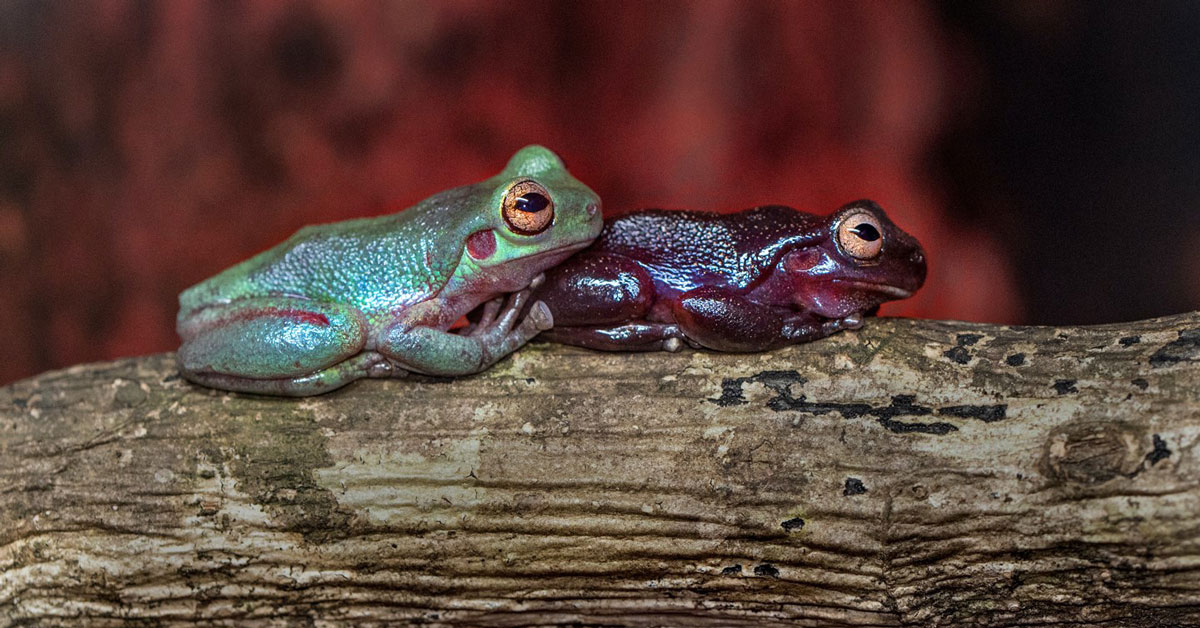
The cave-dwelling tree frog, Litoria cavernicola, is not currently endangered but is one of many frog species with a limited distribution which increases their risk of future decline. Photo: David Clode, Unsplash.
The Australian Academy of Science welcomes the release of the Australian Government response to the Independent Review of the Environment Protection and Biodiversity Conservation Act 1999 (the Samuel review).
Biodiversity decline is one of the greatest challenges facing science and humanity. Australia is failing to halt, slow or reverse loss of biodiversity.
We have one of the worst records of species extinctions of any continent, with nearly 50% of the world’s known and historically recorded mammal extinctions.
Academy President Professor Chennupati Jagadish said reform is desperately needed.
“Existing legislation is not fit for purpose for the conservation of known threatened species—let alone those that are yet to be discovered,” Professor Jagadish said.
“In that regard, we welcome the government’s commitment in their response to basing decisions on science and data.”
The Academy particularly welcomes:
- a commitment to National Environmental Standards with strong legislated protections
- an independent Environmental Protection Agency
- a national environmental data system
- an emphasis on ‘net positive’ outcomes rather than simply averting further loss
- formal recognition of Indigenous knowledge systems and a commitment to partnerships with Indigenous voices.
The shape of other components of these reforms remains unclear. For instance, while the Academy welcomes the proposal for regional planning as it may allow for more holistic assessment, we await further detail on this important area.
Professor Jagadish said the Academy thanks the environment minister Tanya Plibersek, the department, and the taskforce on environmental law reform for this comprehensive response.
“We look forward to continuing to engage with the Australian Government in refining and implementing these reforms in 2023,” Professor Jagadish said.
Elephants, buffalo and baboons: the wild side of the Graeme Caughley Travelling Fellowship
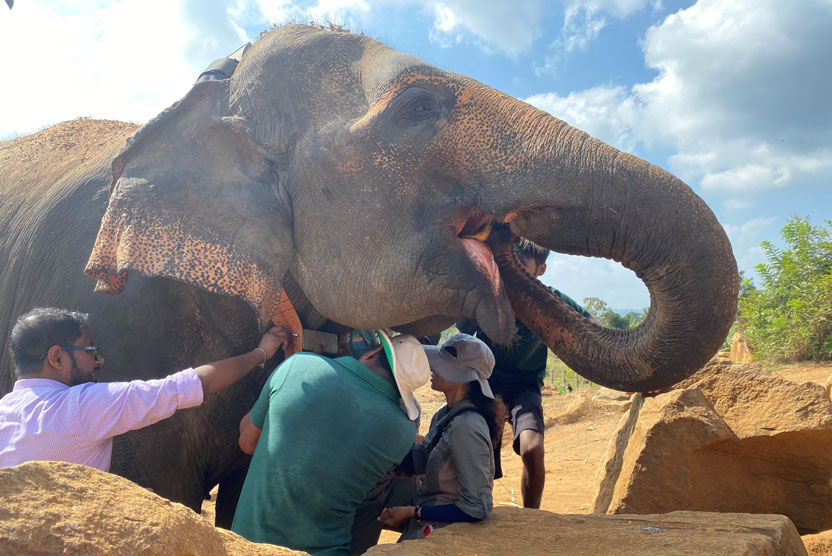
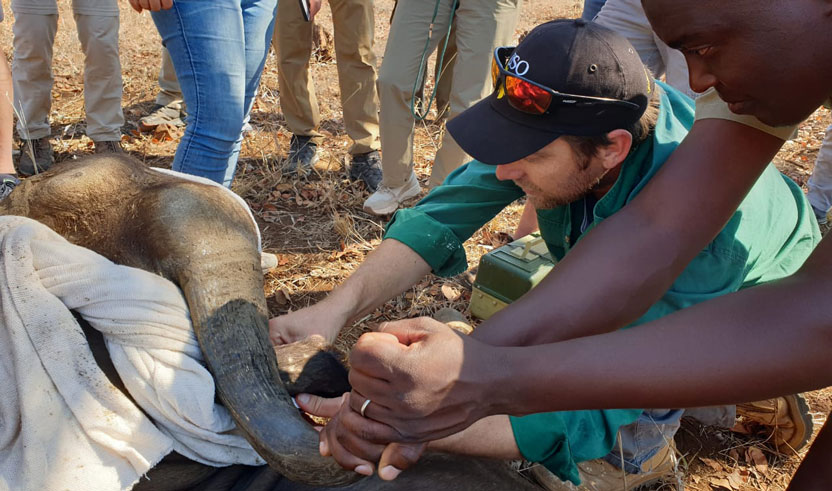
Not only did Dr Benjamin Allen have to contend with having his lunch stolen by samango monkeys while fulfilling his Graeme Caughley Travelling Fellowship, there were also the matters of civil unrest and the outbreak of a pandemic.
Dr Allen, a senior research fellow at the University of Southern Queensland, received the award in late 2019 and planned to travel to Sri Lanka, Nepal and South Africa in 2020, to progress international research on new wildlife management technologies.
Sri Lanka
But shortly after he arrived in Kandy, Sri Lanka, in March 2020, the country went into COVID-19-related lockdown. Dr Allen worked with colleagues there to secure a prestigious local grant for research on controlling the movements of elephants with virtual fences—work that was successfully completed in 2022 and has led to at least one publication to date.
His trip to the Smithsonian Primate Research Centre in Polonnaruwa was cancelled due to the pandemic, and could not be resumed due to the country later falling into civil unrest.
Dr Allen returned to Australia and the deadline for using the fellowship funding was extended until the end of 2022 to allow for restrictions on international travel.
Zimbabwe
He continued to liaise virtually with collaborators overseas until he could travel again in August 2022—and with a change in the work in Nepal meaning he no longer needed to travel there, Dr Allen decided to head straight for the Malilangwe Game Reserve in Zimbabwe.
“It was incredible to assist with capturing and tagging buffalo, and we were also fortunate enough to see wild dogs, lion, brown hyena, African elephant, warthog, crocodile, and several species of birds and antelope including sable, roan, nyala, impala and eland,” Dr Allen said.
“I learned a lot from this trip, and also shared my experience with new wildlife tracking technologies being applied in the reserve.”
South Africa
After travelling for meetings with University of Cape Town collaborators working on a joint conservation genetics project, he spent a day with staff from the environmental consultancy NCC Environmental Services, learning about their baboon management program and planning new research to apply the technologies being developed in Australia on baboons.
The trip concluded with a visit to Hluhluwe Imfolozi National Park, participating in on-foot game surveys and wild dog translocations.
“We scoped opportunities for a formal researcher exchange program between the University of Southern Queensland and Nelson Mandela University, which operates a research field station within the park. We also saw over a dozen white rhinoceros, had our car surrounded by lions, and lost our lunch to a group of conniving samango monkeys.”
Dr Allen said that despite the disruptions, the connections made and experiences gained during the fellowship have directly led to several co-authored papers, new PhD supervisions, and collaboration on cross-country research projects.
Benefits ‘immeasurable’
The benefits to Dr Allen and his institution are “immeasurable,” he said.
“They include the international recognition and engagement obtained from our published works, which indirectly contributes to the rapidly rising international ranking of USQ, but also new international teaching and research opportunities now available through USQ.
“Receiving the Graeme Caughley Travelling Fellowship has, in effect, stimulated the development of similar opportunities that can now be provided to many other students and early career researchers studying wildlife management—a legacy which Graeme Caughley would surely be proud of.”
About the Fellowship
The Fellowship commemorates the work of Dr G J Caughley FAA, who was a chief research scientist with the CSIRO Wildlife and Ecology, Canberra, until his death in February 1994.
The Fellowship is financed through the generosity of his friends and colleagues, to enable ecologists resident in Australia or New Zealand to share their expertise by visiting scientific centres in countries outside of the Fellow's own country.
Read more about the Graeme Caughley Travelling Fellowship.
‘Pure joy’: nine marine, soil and plant biologists awarded 2023 Thomas Davies Research Grants
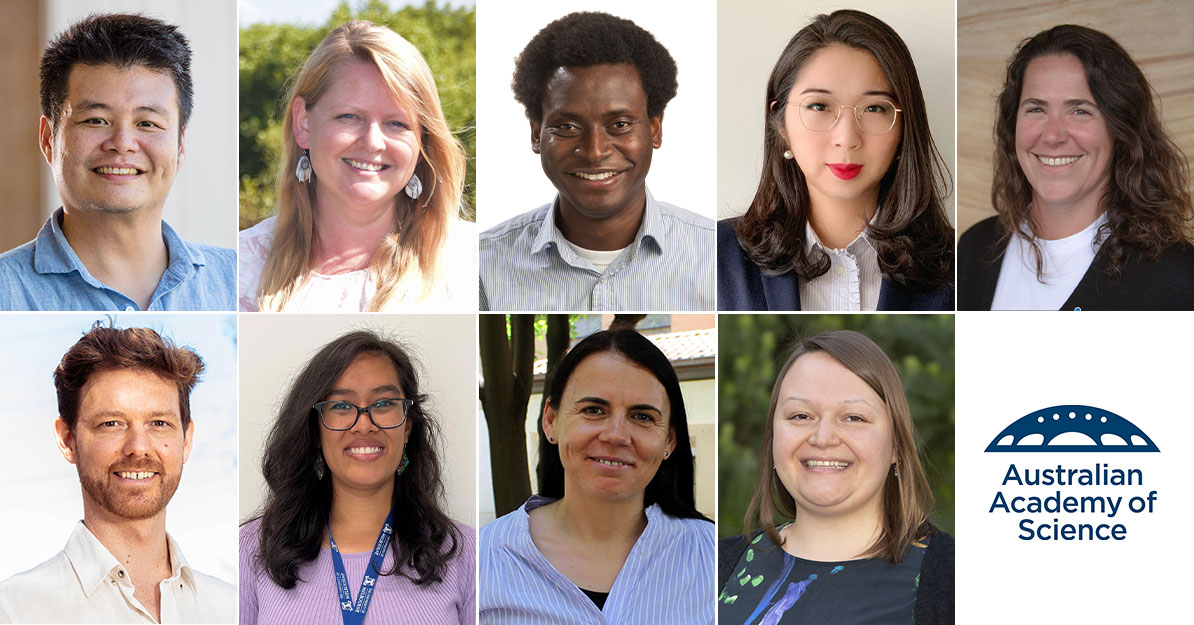
(top from left) Dr Cheong Xin Chan, Dr Inka Vanwonterghem, Dr Onoriode Coast, Dr Chaoyu Li and Dr Mariana Mayer Pinto. (bottom) Dr Martin Breed, Dr Zahra Islam, Dr Joanna Melonek and Dr Maria Ermakova.
Nine early-career and mid-career researchers have been awarded the 2023 Thomas Davies Research Grant for Marine, Soil and Plant Biology.
The grant of up to $20,000 is awarded annually and funded through a generous philanthropic bequest from the estate of the late Thomas Lewis Davies to the Australian Academy of Science.
One of the recipients, Dr Onoriode Coast, said that learning he had been awarded the grant was “pure joy”.
Another recipient, Dr Chaoyu Li, said the support has improved her self-confidence and encourages her to pursue her academic career as an early-career researcher.
Applications for the 2024 round will open in early 2023.
Learn more about the Thomas Davies Research Grant.
Awardees and their projects
Dr Martin Breed, Flinders University
Harnessing the root-associated microbiota of the invasive species buffel grass to improve its management
Buffel grass is one of the most noxious invasive plant species in Australia, which degrades refuges for threatened native fauna, out-competes rare and endemic plant species and alters fire regimes. It is very hard to eliminate, and it is probable that buffel grass modulates its root-associated microbiota to gain a growth and survival advantage. Dr Breed aims to understand how this microbial community differs from surrounding soil, and how this association contributes to the establishment and invasion potential of buffel grass.
Dr Cheong Xin Chan, University of Queensland
Deciphering the molecular regulations of heat tolerance in a coral algal symbiont
Australia’s Great Barrier Reef (GBR) is sustained by symbiosis with microalgae, which supply essential nutrients and fixed carbon to their coral hosts. Breakdown of this symbiosis under environmental stress leads to coral bleaching, coral death, and collapse of the reef ecosystem. One of these microalgae species, D. trenchii, is known for its high heat tolerance, which can be conferred to the coral host—but the molecular mechanism is unknown. Dr Chan’s project will investigate how D. trenchii acquired thermotolerance and how we can identify and design highly resilient coral-alga symbioses in warming oceans.
Dr Onoriode Coast, University of New England
Exploring acclimation of wheat leaf respiration to warm nights
Australia accounts for approximately 11% of global wheat exports, but its production is threatened by increased global temperatures. Dr Coast’s project aims to understand the drivers of wheat responses to warm nights, which will support efforts to select and breed climate-resilient crops, better model crop response to night temperature, and develop effective strategies for cropping systems to ensure global food security.
Dr Maria Ermakova, Monash University
Developing a synthetic biology platform for high-throughput genetic engineering of sorghum to sustain crop productivity
Dr Ermakova’s project will allow high-throughput testing of new genetic targets for improving sorghum productivity and will help to develop new approaches for creating higher yielding, high-value sorghum varieties able to withstand the changing global climate.
Dr Zahra Islam, University of Melbourne
The effect of fertilisers on the capacity of soil bacteria to scavenge atmospheric hydrogen
In the face of a changing global climate, sustainable agricultural practices are becoming increasingly important. Crucial to the productivity of cropping plants is the role of symbiotic microorganisms that form part of the plant microbiome. These soil microorganisms have long been recognised as key players in biogeochemical nutrient cycles, but recent studies have also highlighted the capacity of some to oxidise trace gases such as hydrogen, carbon monoxide and methane. Dr Islam’s project will investigate the trace gas oxidation capacity of plant-associated microorganisms, and whether this process can benefit the broader agricultural industry.
Dr Chaoyu Li, University of Melbourne
Unravelling the newly discovered complete ammonia oxidiser (comammox) bacteria in terrestrial ecosystems
Nitrification, a central process of the nitrogen cycle, was conventionally assumed to be a two-step process in which the first step was catalysed by ammonia-oxidising archaea and bacteria, and the second step was catalysed by nitrite-oxidising bacteria. This long-held perspective was challenged by the discovery of complete nitrifiers (known as 'comammox') that are capable of performing nitrification within a single organism. Dr Li’s project will improve our understanding of the role of comammox in the nitrification process and nitrous oxide production, which may lead to refined agricultural management strategies.
Dr Mariana Mayer Pinto, University of New South Wales
Interactive effects of light pollution and ocean warming on herbivory in temperate reefs
Artificial light at night (ALAN) is expected to profoundly impact most ecosystems on the planet by disrupting natural light cycles, and more than 20% of the world’s coastlines currently experience high levels of ALAN. Changes to the feeding activity and behaviour of sea urchins due to ALAN and ocean warming can therefore have major impacts on kelp forests—the dominant habitat-former in temperate Australia. Dr Mayer Pinto’s project will assess the effects of ALAN and ocean warming on the interactions between kelps and sea-urchins.
Dr Joanna Melonek, University of Western Australia
Uncovering the molecular function of mTERF proteins in fertility restoration in plants
Dr Melonek discovered a new clade of genes that have application to breeding hybrid cultivars in wheat, barley and rye, but the function and mechanism of action of the proteins encoded by these genes are completely unknown. The grant will help her to study them in the model plant Arabidopsis thaliana, leading to high-yielding and more stress-tolerant hybrid crops to help meet food demands in Australia and worldwide.
Dr Inka Vanwonterghem, University of Queensland
Mangrove forests’ unseen majority—unravelling microbial diversity, functions and interactions
By combining microbial genomics with environmental science, this project will allow Dr Vanwonterghem to identify core microbial species and functions that underpin mangrove forests’ health, productivity and climate change mitigation potential. The grant will enable her to understand mangrove-microbe interactions that support valuable ecosystem services, paving the way for inclusion of microbial ecology in mangrove conservation and restoration research.
Remembering Dr Alec Costin, the father of Australian high mountain ecology
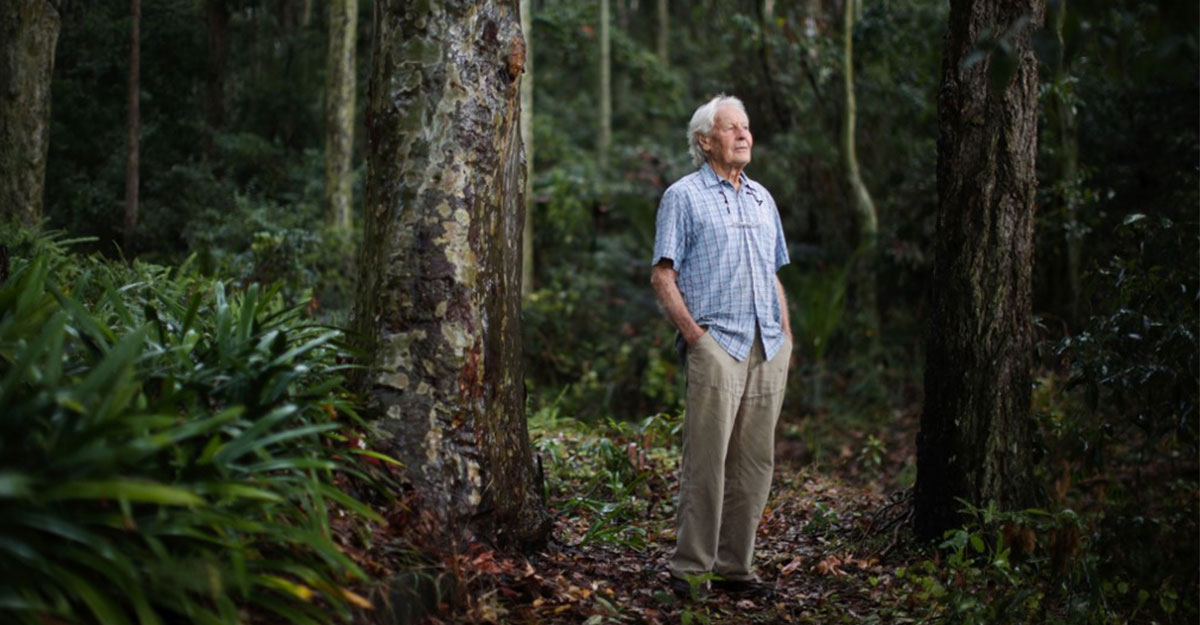
Academy Fellow Dr Alec Costin devoted his life to learning about and protecting Australia’s unique ecosystems. He was an international authority on the ecology of high mountain and high latitude ecosystems, and made major contributions to the flora of the Snowy Mountains area.
Dr Costin was born on 30 September 1925 and raised in Roseville on Sydney's North Shore. He passed away on 22 August this year at the age of 96.
Dr Costin’s family, friends and colleagues gathered at the Academy’s Shine Dome in October for a memorial to celebrate his remarkable life and significant contributions to Australian science and land management.
According to Charlie Massey, a pastoralist from the Monaro region, his “lifelong research and resultant political fighting were largely responsible for the creation and protection of a number of Australia’s great national parks and the protection of fragile landscapes therein.”
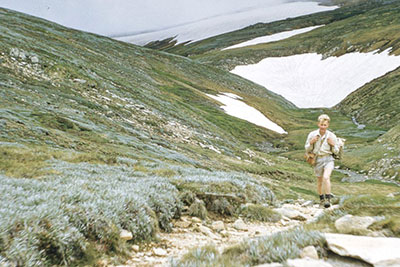
Dr Costin in the Kosciuszko region.
Dr Costin had a direct impact on the formation of national parks, forestry and farming, and helped to convince government boards that mountain catchments were more valuable for water catchments than for livestock grazing.
He consulted with government officials, scientists and farmers to protect some of Australia’s most fragile and vulnerable alpine regions.
“Alec gave his time generously to the Academy, including over two decades of service prior to his election as a Fellow,” Academy President Professor Chennupati Jagadish said.
Deidre Slattery, a fellow ecologist who was mentored by Dr Costin, made the closing remarks.
“Thank you Alec, for the devotion to our shared heritage, and for passing on your deep love and understanding of the mountains to us all.”
Dr Costin was interviewed in 2006 about his career by David Salt on behalf of the Academy. Read the full interview.
Champion of research integrity honoured with new award
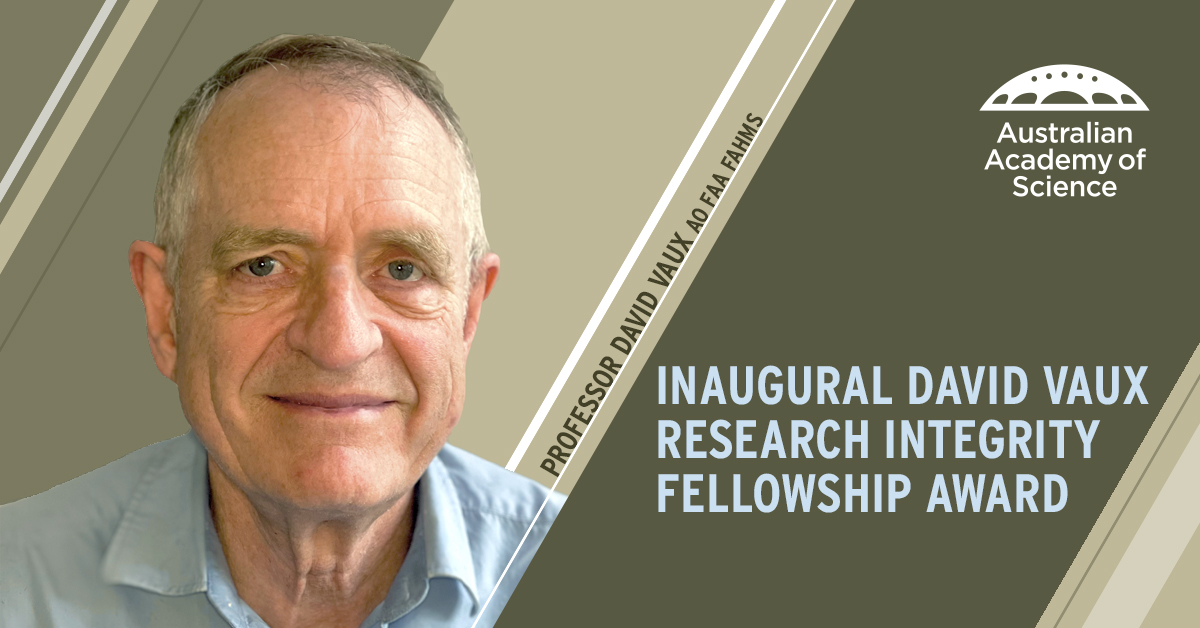
Professor David Vaux AO FAA FAHMS, who has championed research integrity in Australia, has been recognised as the inaugural recipient of a new Academy award.
The inaugural award was announced at Science at the Shine Dome, the Academy’s annual flagship event.
The award, named in his honour as the David Vaux Research Integrity Fellowship Award, has been established to recognise individuals who have led efforts to foster and promote integrity in science.
Professor Vaux said integrity means consistently upholding principles, the most important of which is honesty, both in reporting research, and in allocating credit.
“The Academy is doing a wonderful job promoting the establishment of Research Integrity Australia,” Professor Vaux said.
“It is also advocating for improvements in the way research integrity is governed in Australia so as to create a more robust system that applies to all publicly funded research.”
Professor Vaux speaks at Science at the Shine Dome 2022.
The award will be offered biennially, and awardees will be selected based on their promotion of fairness, honesty, and consideration of others in the practice of scientific research.
They will receive up to $10,000 to present workshops and lectures in Australia, primarily to research higher degree candidates, with the aim of instilling the importance of integrity in science and its outcomes and demonstrating the critical responsibility of every scientist.
A donation from the Walter and Eliza Hall Institute has enabled this award to be established and funded until 2033.
Research integrity is a key issue for Australia science, with a recent Academy survey conducted with publisher Springer Nature finding 73% of Australian researchers supported mandatory research integrity training.
“To correct errors in the literature, whether innocent or deliberate, and to manage cases where misconduct is alleged, 23 European countries, the US, UK, Canada, Japan and China have national offices for research integrity, but Australia does not,” Professor Vaux said.
Highlights from Science at the Shine Dome 2022
Watch the event highlights
Welcome to our highlights from Science at the Shine Dome 2022. This is a special year, as we come together in person at the Shine Dome for this event for the first time since 2019. The event is a hybrid format, so audiences were able to join us in person in Canberra or from anywhere in the world, online.
Science at the Shine Dome is the Academy’s annual flagship event. Over three days, Australia’s most influential scientists gather at the Shine Dome in Canberra to celebrate and honour outstanding achievements in science. It enables researchers from all disciplines and career levels to come together to present, share, network and collaborate.
We are grateful to our generous Event Partners, who made this event possible.
#ShineDome22
On this page:
Day 3: Thursday 24 November
On the third and final day of Science at the Shine Dome, we continued to recognise excellence in Australian science—with award and medal presentations.
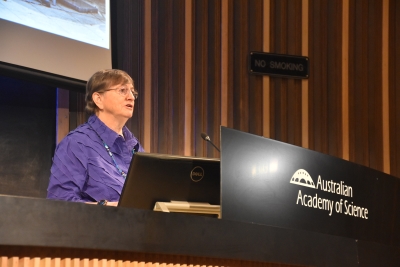
Professor Renfree has established marsupials as unique biomedical models for understanding human reproduction.
The recipient of the 2020 Macfarlane Burnet Medal Professor Marilyn Renfree gave her associated lecture, outlining how she came to be a world authority on marsupial reproduction and development.
There were also Premier Honorific awards for Professor Steve Simpson of The University of Sydney and Dr Liz Dennis of CSIRO, as well as recognition for those making outstanding contributions to science early in their careers.
Recipients of career honorifics included scientists who’ve transformed our understanding of the biological basis of breast cancer, those using light as a ‘molecular surgical tool’, and those illuminating how deposits of copper and gold form within the hydrothermal systems of volcanoes.
Mid-career and early-career awardees included trailblazers who introduced STI and COVID-19 point-of-care testing in remote Aboriginal communities, are leading international efforts to model the concentrations of atmospheric pollutants, and identifying the source locations of fast radio bursts in distant galaxies. Read about their work.
Watch the award and medal presentations
How modern science can intersect with traditional knowledges
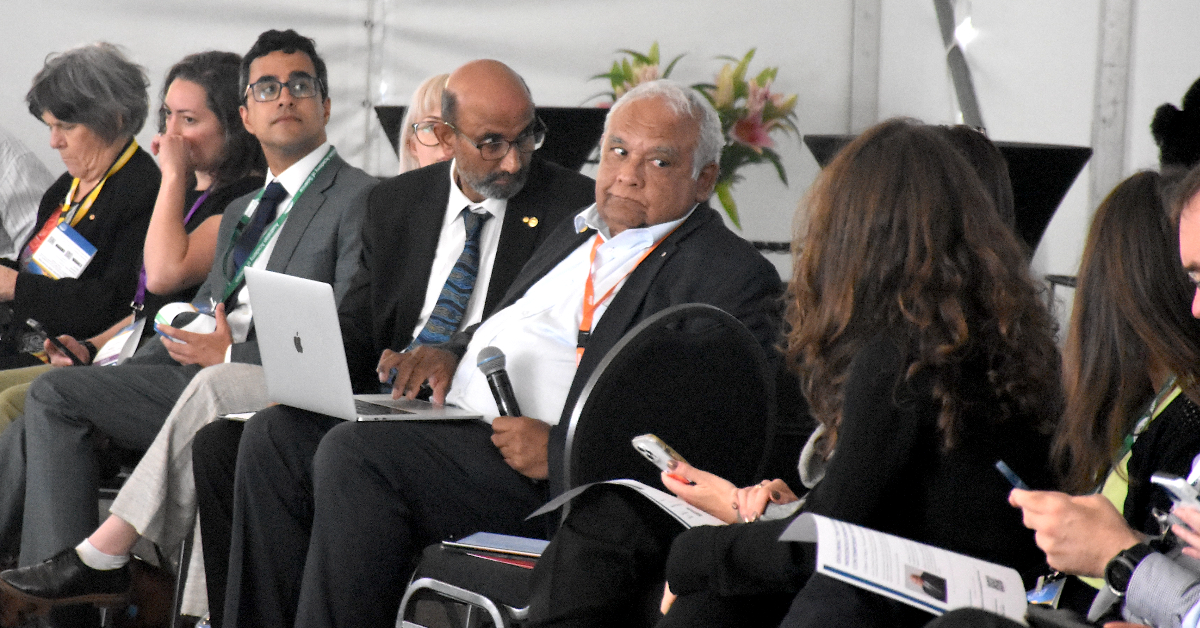
In the afternoon, Professor Tom Calma led a workshop for all attendees to discuss how their practices can be enriched by effective and meaningful engagement with Aboriginal and Torres Strait Islander knowledge holders and contemporary science practitioners.
Professor Calma is Chancellor of the University of Canberra and a descendant of the Kungarakan and Iwaidja tribal groups. He was elected as a Fellow of the Academy in 2022, having championed the improvement of Indigenous peoples’ health, education, and justice for over 45 years.
They also discussed how researchers can help to build a more inclusive and diverse science sector, with other Indigenous scientists sharing their experiences of working within the Western science paradigm.
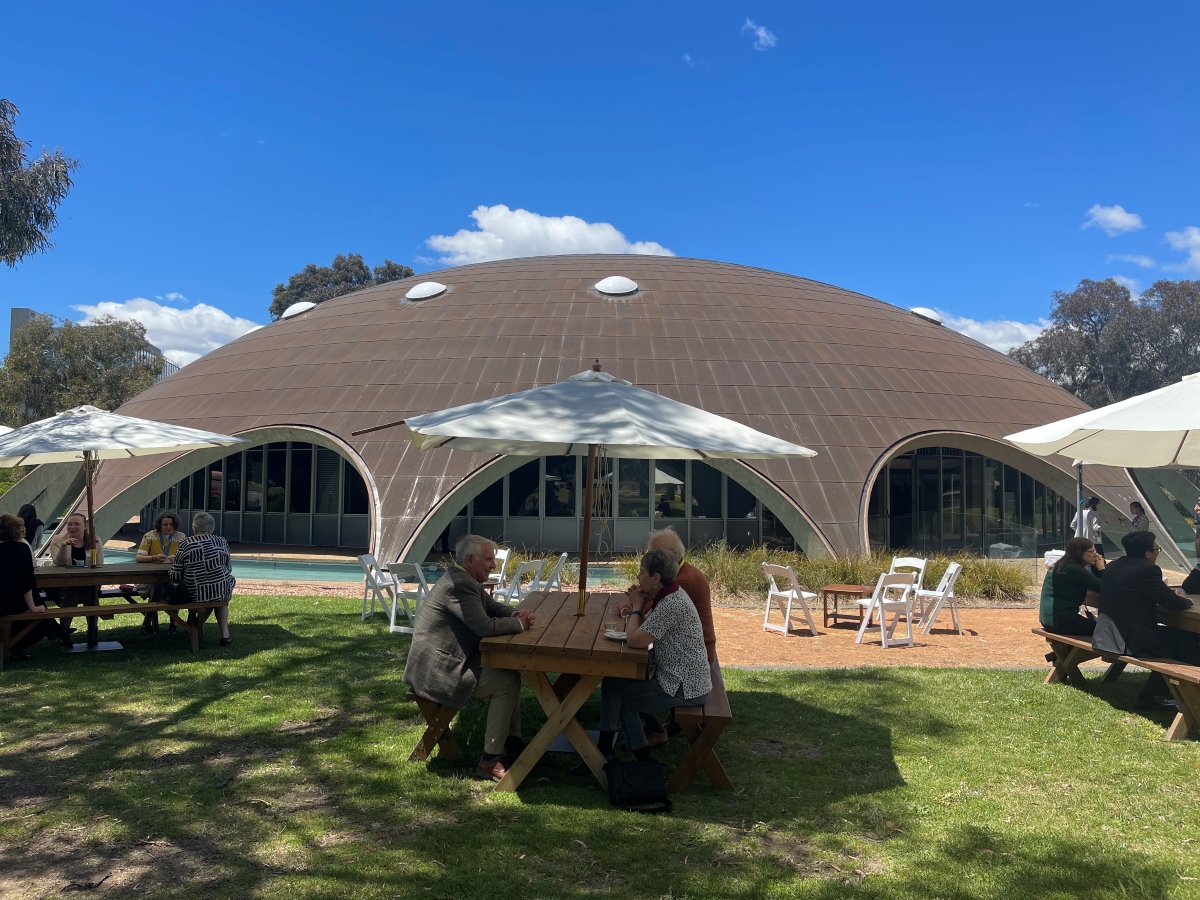
Finally, after Canberra had treated its visitors to some icy winds and low temperatures over the previous few days, the sun came out.
Attendees made the most of the warmth, catching up at the picnic tables outside the Shine Dome, and continuing to enjoy the ever-popular gelato cart!
Day 2: Wednesday 23 November
The 2022 Fellows
The second day of Science at the Shine Dome focused on the Academy Fellows elected this year. They spoke passionately and about their life’s work and achievements, acknowledged the people who have supported them on their journey of discovery, and shared their thoughts about possible futures for Australia and the world.
Many in-depth interviews were also filmed with Fellows—don’t miss them!
Watch the Fellows’ presentations and interviews
What the new Fellows were saying
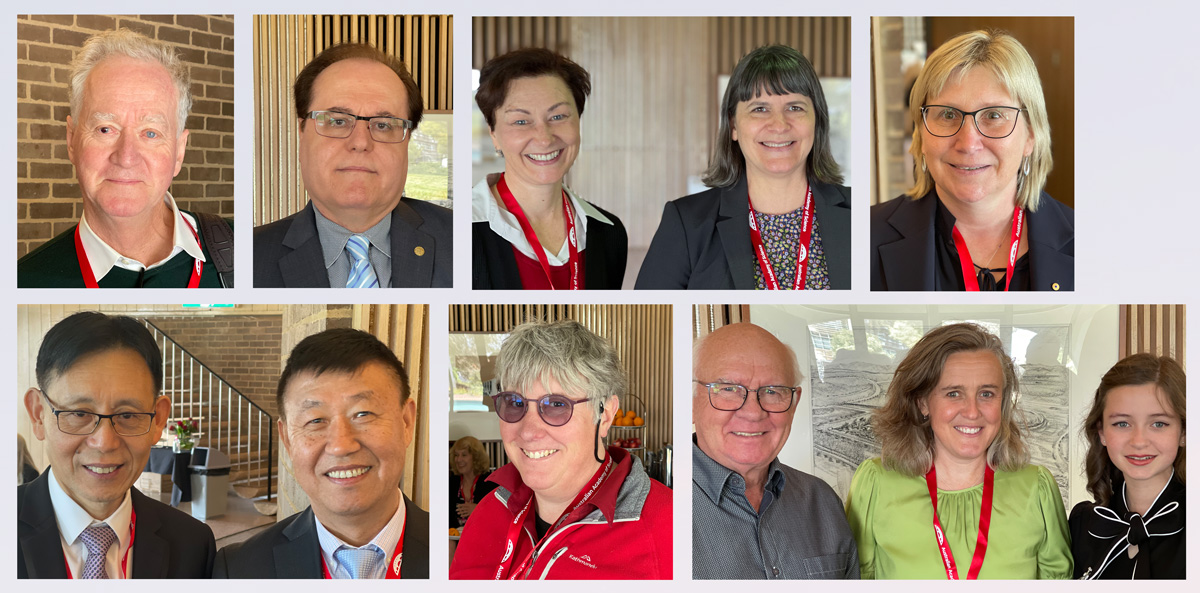
From top left
Professor Peter Langridge “Food-wise, wheat is the most important plant for humanity and it’s great to work on—the genome is so flexible you can break and re-join it. Working with plants is fantastic; they can do so many things and they are the basis on which all life depends.”
Professor Albert Zomaya “For me, it’s a humbling experience when you are watching the talks from people who are at the forefront of their fields. It’s great to see the depth and breadth of research here today—wow! My research in computer science goes all the way from the theoretical to the practical. It has now transitioned into changing people’s lives.”
Professor Kate Smith-Miles “We would never approve pharmaceutical drugs without a clinical trial, but there are very few regulations for algorithms. My work tests algorithms to help improve accuracy.”
Professor Catherine Greenhill “It’s great that Fellows over the last three years get to be here in person and be recognised for their achievements. We live in a networked world and understanding random graphs—what I work on—can help us to understand these networks.”
Professor Ute Roessner “I’m excited to be a Fellow; humbled to be amongst all these other scientists. It’s good to celebrate the wonderful plant science happening. [My science] uncovers the chemical diversity of life, which is astonishingly complex.”
From bottom left
Dr Wenju Cai “I use science to make predictions that minimise damage and maximise adaption—in a sense I predict the future. It is eye-opening being here, there is so much science across so many different areas.”
Professor Huijun Zhao “Science makes you feel younger; makes you feel useful. It’s wonderful to see all my colleagues and friends—finally we get to see each other again!”
Dr Beth Fulton “There is lots to learn—I’m surrounded by such smart people, it’s really amazing. [From my research], making copies of the world inside a computer we can figure out how to have a sustainable and healthy future without using up our current one.”
Professor Naomi McClure-Griffiths, with father David and daughter Madeleine “I’m looking forward to signing that book!” David said, “I’m extremely proud of Naomi. Ever since she was a small child she was interested in science – this is the ultimate recognition as far as I’m concerned. I’m very proud she became a scientist.”
Gala dinner
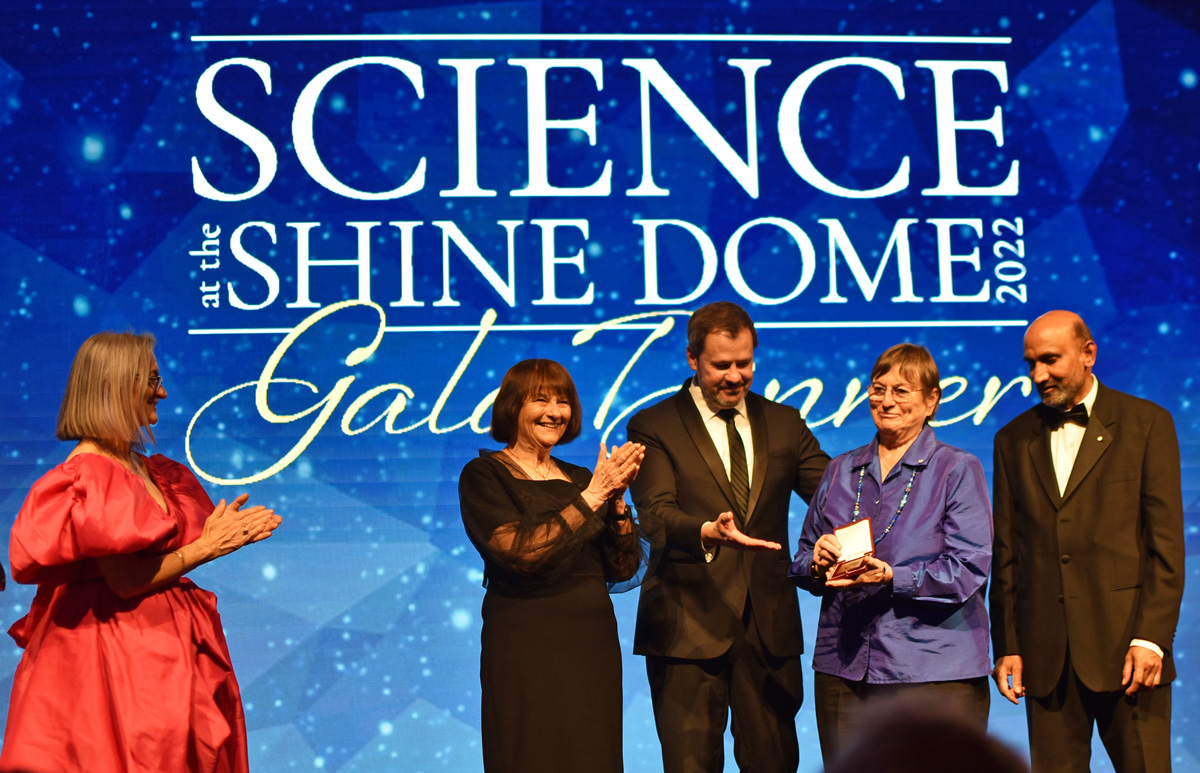
Professor Marilyn Renfree (second from right) receiving the 2020 Macfarlane Burnet Medal from the Minister for Industry and Science Ed Husic at the Academy’s gala dinner.
More than 400 scientists and science supporters attended the Academy’s annual gala dinner on Wednesday night at the Great Hall of Parliament House. The evening was hosted by Academy Council members Professor Lyn Beazley and Professor Frances Separovic.
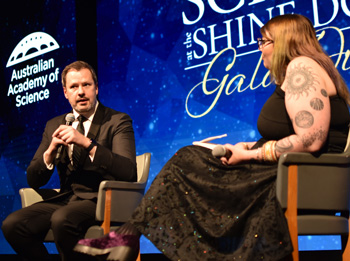
One of the highlights of the evening was a conversation on stage between Karlie Alinta Noon, a Gamilaroi yinarr woman and astronomy PhD candidate and lecturer from the Australian National University, and the Minister for Industry and Science the Hon Ed Husic MP. Other highlights were the presentation of the Academy’s most prestigious medals: the 2020 Macfarlane Burnet Medal to Professor Marilyn Renfree and the 2022 medal to Professor Steve Simpson; the 2021 Matthew Flinders Medal to Professor Andrew Holmes; and the 2021 Ruby Payne-Scott Medal to Professor Cheryl Praeger and the 2022 medal to Dr Liz Dennis.
Tribute to Robyn Williams
During the evening the Academy paid tribute to iconic ABC broadcaster and Academy Fellow, Professor Robyn Williams, and showed two videos to mark his nearly five decades of dedication to reporting, promoting and exploring science for the ABC. Watch the second video.
Day 1: Tuesday 22 November
The first day of Science at the Shine Dome was a major celebration of Australian science as more than 60 leading scientists, covering fields from Antarctic life to the evolution of our galaxy, were formally admitted to the Academy.
Also celebrated were the recipients of the Prime Minister’s Prizes for Science, with a breakfast in Canberra’s iconic Shine Dome. The breakfast followed the official prize ceremony at Parliament House on Monday night, where Academy Fellow Professor Trevor McDougall took home the 2022 Prime Minister’s Prize for Science for his research on the role the ocean plays in transferring heat around the globe.
Three years of new Fellows formally admitted to the Academy
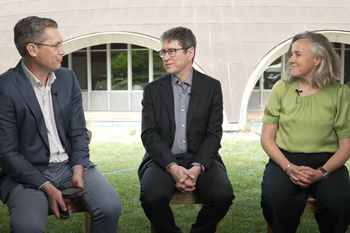
In addition to our new Fellow admission ceremonies, there are plenty of fascinating live interviews throughout the event with our new Fellows. Highly recommended watching—catch them on the livestream recording below.
Science at the Shine Dome was opened with a Welcome to Country by Ngunnawal Elder Aunty Violet Sheridan. During the day we saw 60 Fellows elected in 2020, 2021 and 2022 sign the Charter Book, signifying their formal admission to the Academy. Two 2019 Fellows were also able to sign the book. A video was shown for each new Fellow to as an introduction to their science.
Highly recommended!
For the very first time, the Academy is enriching the experience of those watching online by broadcasting live interviews with scientists and other attendees from the grounds of the Dome. These fascinating discussions are revealing more about each person’s research, what drives them to discover new things, and their interests outside of science. Highly recommended watching!
Watch the day’s admission ceremonies and live interviews
2020 Fellows
The work of the 2020 Fellows includes pioneering research into the colour vision of animals that’s improved the performance of digital cameras, identifying the cause of mass frog extinctions across the globe, and the first commercialisation of quantum communication.
See photos and videos for the 2020 Fellows.
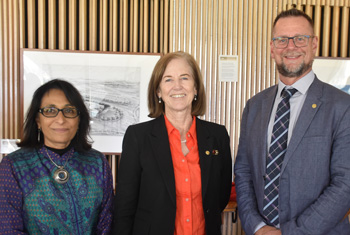
Professor Robyn Owens (centre) has supervised dozens of researchers. In a wonderful coincidence, she was admitted to the Academy on Tuesday alongside two of those researchers, Professor Svetha Venkatesh and Professor Ian Reid.
Professor Robyn Owens (centre) has supervised dozens of researchers. In a wonderful coincidence, she was admitted to the Academy on Tuesday alongside two of those researchers, Professor Svetha Venkatesh and Professor Ian Reid.
2021 Fellows
The achievements of the Fellows elected in 2021 have myriad benefits to science and society—from helping to mitigate the worst impacts of regional climate extremes to improving weather forecasting.
See the photos and videos for the 2021 Fellows.
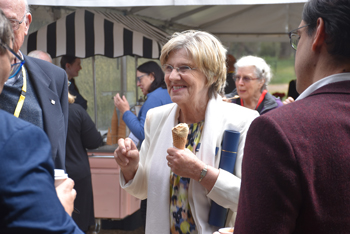
During a short break in proceedings, the Fellows proved they weren’t put off by the unseasonally cool weather, taking time to mingle and enjoy a scoop of gelato.
2022 Fellows
The final admissions were the 2022 Fellows, including Professor Tom Calma, a descendant of the Kungarakan and Iwaidja tribal groups and the first Fellow elected to the Academy who identifies as an Aboriginal person.
See the photos and videos for the 2022 Fellows.
Professor Jiang Lei, a chemist and materials scientist at the Chinese Academy of Sciences, was also at the Shine Dome to be admitted as a Corresponding Member.
The 2022 cohort marks the first time gender parity was achieved in the Academy’s annual election of new Fellows.
The day concluded with a cocktail soiree held in a marquee near the Academy’s other historic building, Ian Potter House.
Handy links
Download the event program (PDF 4.3MB)
Twitter: #ShineDome22 and Academy.
Supporting Ukrainian scientists through a partnership with the Breakthrough Prize Foundation
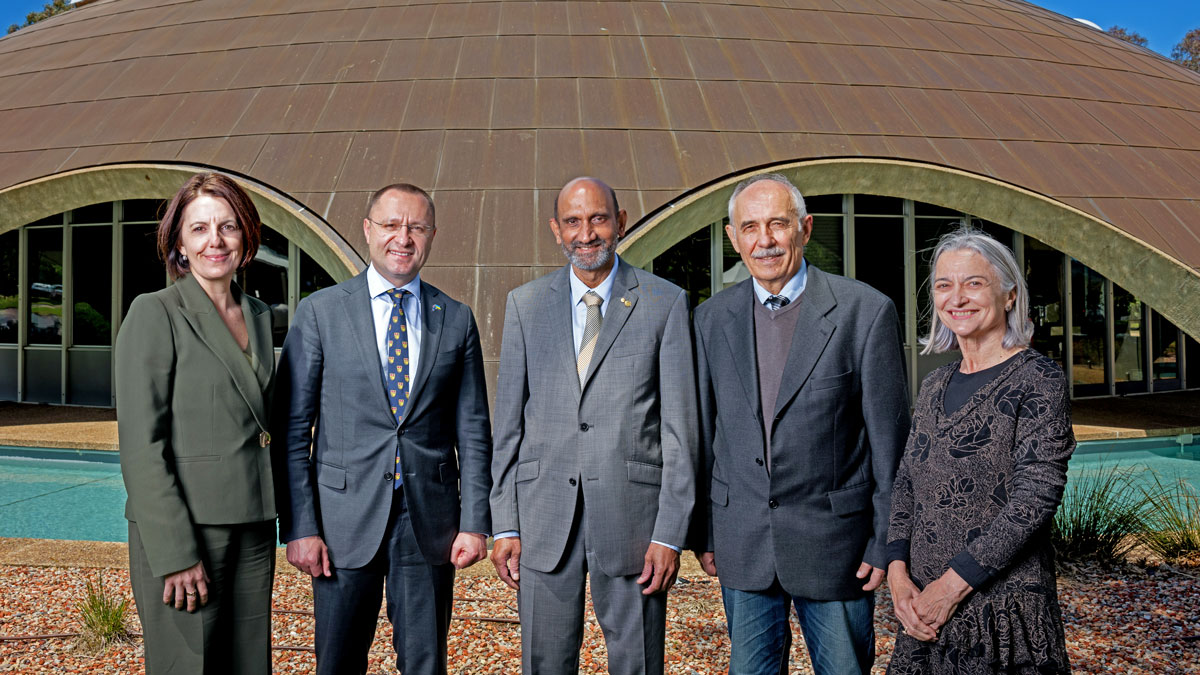
(From L-R) Academy Chief Executive Anna-Maria Arabia, His Excellency Ambassador of Ukraine Vasyl Myroshnychenko, Academy President Professor Chennupati Jagadish, Ukranian scientist Professor Vladimir Chegel and Academy Foreign Secretary Professor Frances Separovic.
Ukrainian scientists who have fled the war with Russia or who have been unable to work due to the destruction of their workplace are set to receive a helping hand from their Australian counterparts.
The assistance will come in the form of an A$800,000 donation from the non-profit Breakthrough Prize Foundation to the Australian Academy of Science, announced today.
The donation will support initiatives including:
- the establishment of long-term research collaborations between Ukrainian and Australian scientists, focusing on early-and-mid-career researchers (this may consist of short-term visits to Australian research facilities to establish links that last beyond the war)
- providing Ukrainian scientists with access to leading Australian science and research infrastructure and facilities such as supercomputing programs, synchrotrons telescopes and NCRIS facilities
- the opportunity to send data and samples to Australian research facilities for analysis, with the results returned to Ukrainian research institutes.
All efforts to assist Ukrainian scientists will adhere to the ten-point action plan developed to ensure measures focus on rebuilding a modern and globally integrated science and research system in Ukraine.
President of the Australian Academy of Science Professor Chennupati Jagadish said the Academy stands by the people of Ukraine and their scientific workforce at home and in exile.
“A considerable number of Ukrainian research facilities and universities have been destroyed by the war. We see this initiative as one of the most effective ways Australia can support the Ukrainian scientific community,” Professor Jagadish said.
“This new initiative will be a mutually beneficial partnership and a two-way knowledge exchange between Australian and Ukrainian scientists.
“We thank the Breakthrough Prize Foundation for its generous donation and its ongoing support for Ukrainian scientists.”
The initiative is part of a global movement to support Ukrainian scientists and will complement work already underway by other countries such as the United States, Poland and Denmark, who have received primarily Ukrainian women scientists who have fled their country.
The Academy is also part of a coordinating committee of other national academies including the National Academy of Sciences (US), the Polish Academy of Sciences and the National Academy of Sciences of Ukraine.
“It is inspiring to see the scientific community come together across continents in support of Ukrainian scientists and their critical research,” said Yuri Milner, founder of the Breakthrough Prize Foundation.
“I applaud the Australian Academy of Science for its contribution to this global effort.”
Background
The Australian Academy of Science is a Fellowship of 590 of Australia’s leading scientists. The Academy provides independent scientific advice, promotes international scientific engagement, builds public awareness and understanding of science, and champions, celebrates and supports excellence in Australian science.
The Breakthrough Prize Foundation is a non-profit organisation dedicated to recognising the world’s great scientists, advancing cutting-edge scientific research, and helping to create a knowledge culture in which everybody, especially the next generation, can be inspired by the big questions of science. The Breakthrough Prize, renowned as the ‘Oscars of Science’, recognises the world’s top scientists in the fields of life sciences, fundamental physics and mathematics. Each prize is $3 million. The Breakthrough Junior Challenge is an annual global video competition for students to inspire creative thinking about science.
Applications for the Ukraine-Australia Research Fund are currently closed.