




Enabling Australia's data-driven future for science


The Australian Academy of Science has launched a new report: Australia’s Data-Enabled Research Future: Science calling for action to support the future of scientific research across the nation. The report presents the findings from consultations within the science community on data-related needs to ensure the continuity of scientific research in Australia.
Australia’s data-enabled research future: Science report (hyperlinked)
Improved collection, management, access and sharing of quality data are fundamental to support all areas of science. For example, biomedical researchers are seeking to analyse larger genome sets to detect correlations between genes, lifestyle, and disease. And geoscientists could better analyse Earth’s systems to enable the discovery of critical mineral resources.
Research and data are fundamental for evidence informed decision making. Data allows governments to make timely, informed decisions on complex issues or to rapidly respond to societal challenges and crises such as pandemics and natural disasters.
Key findings of the report:
- There is a need for greater coordination and integration so that data is easily accessible across Australia’s research disciplines, government, and industry. Development of an integrated system of repositories and clear strategic data priorities are needed.
- The development of consistent and enforceable data policies and standards to facilitate responsible sharing and reuse of data is required.
- There is an imperative to invest in people and infrastructure to manage data and make data FAIR.
- Expanding volumes of data and data-intensive research activities, such as moving and analysing large amounts of data, data storage and retention, are key challenges for scientists, the private sector and governments
- Developing a digitally skilled research workforce to support effective data infrastructure and data-intensive research is an urgent national need.
The report provides important considerations for implementing the 2021 National Research Infrastructure Roadmap. The findings from this report also reinforce the Academy’s Advancing data-intensive research in Australia report launched in October 2021. It also highlights the need for greater research data infrastructure, policies, and standards and the need to build a more equipped workforce to drive data-intensive research.
The report is one of five from Australia's learned academies – the Australian Academy of Technology and Engineering (ATSE), Australian Academy of the Humanities (AAH), Academy of the Social Sciences in Australia (ASSA), Australian Academy of Health and Medical Sciences (AAHMS) – each exploring data-related needs to support research in their domains. Read the synthesis report examining the common themes and inter-disciplinary opportunities and needs.
These reports are the result of a partnership between the Australian Research Data Commons, Australia’s five learned academies and the Australian Council of Learned Academies (ACOLA) to ensure Australia can undertake excellent data-enabled research across all fields. The partnership sought to help build a more coherent data policy and strategic data planning environment.
Queen’s Birthday honours for four Academy Fellows
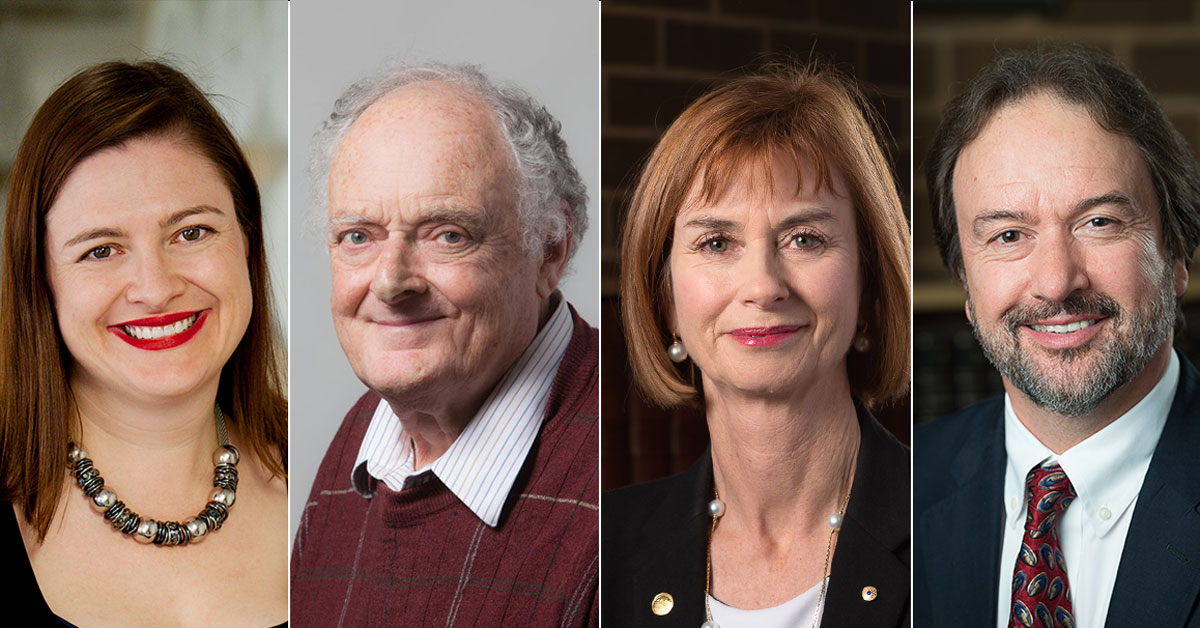
The Australian Academy of Science congratulates its four Fellows recognised in the 2022 Queen’s Birthday Honours List with appointments to the Order of Australia for their outstanding service and exceptional achievements.
This year the awardees include Professor Tanya Monro AC FAA FTSE, Professor Jennie Brand-Miller AO FAA, Professor Warren Ewens AO FAA FRS, and Professor David Gardner AM FAA.
Professor Tanya Monro received the Companion in the General Division of the Order of Australia (AC). Professor Monro received the award for eminent service to scientific and technological development, to research and innovation, to tertiary education, particularly in the field of photonics, and to professional organisations. She is acknowledged for her eminent achievement and merit of the highest degree in service to Australia or to humanity at large.
Professor Monro is currently Chief Defence Scientist after her appointment in 2019. Prior to this she served as Deputy Vice-Chancellor and Vice-President of Research and Innovation at the University of South Australia. Throughout her career Professor Monro has been an advocate for diversity and inclusion and championed the Science in Gender Equity (SAGE) initiative. In 2019, she was commended for her contributions to the advancement of gender equality across Australia, receiving the Australian Award for Excellence in Women’s Leadership. In 2012 she became one of the youngest living Fellows of the Australian Academy of Science. And in 2011 she was named South Australia’s Australian of the Year.
Academy President Professor Chennupati Jagadish said that he was delighted to see four of the Academy’s scientists recognised this year of the Queen’s Platinum Jubilee. In 1954, the Academy’s first President Sir Mark Oliphant received the Academy’s founding document, the Royal Charter, from the hands of Queen Elizabeth II herself.
“It is a very special occasion and I congratulate all the recipients for their innovation and scientific excellence,” Professor Jagadish said.
“Science continues to provide answers to the world’s greatest challenges. It is fantastic to see scientific success recognised here today as it is a benefit to all Australians.”
Companion of the Order of Australia
Professor Tanya Monro AC FAA FTSE is recognised for eminent service to scientific and technological development, to research and innovation, to tertiary education, particularly in the field of photonics, and to professional organisations. She is acknowledged for her eminent achievement and merit of the highest degree in service to Australia or to humanity at large. She is Australia's Chief Defence Scientist.
Officer of the Order of Australia
Professor Jennie Brand-Miller AO FAA is recognised for distinguished service to the field of human nutrition and for her role as an advocate for people with disabilities. Professor Brand-Miller has championed the role of the glycaemic index (GI) in health and disease and transformed the way carbohydrate foods are considered by scientists. She has held the Presidency position at the Glycemic Index Foundation since 2009.
Professor Warren Ewens AO FAA FRS is recognised for distinguished service to biology, data science and for his work in tertiary education. He has made major contributions to mathematics, statistics and population genetics. He was elected a Fellow of the Australian Academy of Science in 1981 and of the Royal Society of London in 2000.
Member of the Order of Australia
Professor David Gardner AM FAA is recognised for significant service to reproductive medicine and to education. His work has laid the foundations for the creation of the world’s first human embryonic stem cells. Professor Gardner was head of the School of BioScience at the University of Melbourne 2008–14. He’s now the Scientific Director at Melbourne IVF.
Make research integrity training mandatory, say 73% of Australian researchers
The results of the first national survey to investigate research integrity in Australia, a collaboration between the Australian Academy of Science and publisher Springer Nature, indicate broad support for mandatory research integrity training. The survey found that whilst 68% of respondents stated that their institution offered research integrity related training and 50% stated it was mandatory, 73% felt that such training should be mandatory for all those holding a research position.
Key findings from the survey include:
- When asked to describe Research Integrity, including practices related to it, 86% of the responses focused on positive research traits, the most popular being ethical, honest and transparent. Under 10% of responses made statements related to research misconduct.
- 68% of respondents indicated that their institution provided training on research integrity, with 88% of institutional management responding in the affirmative, as compared to 72% of senior researchers, 69% of mid-level researchers and 65% of early-career researchers.
- Current training has a greater focus on policy and guidance than practical skills, yet eight of the top ten subjects that respondents felt would be most beneficial related to practical data-related topics such as data storage and management.
- A quarter of those surveyed felt that there was a research integrity problem in their field, but this concern was disproportionately distributed, with many more researchers from the life sciences indicating concern than those from the physical sciences.
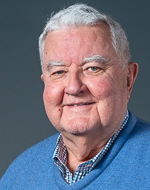
Professor Ian Chubb, Secretary for Science Policy at the Australian Academy of Science. Photo: Australian Academy of Science.
Professor Ian Chubb AC, Secretary for Science Policy at the Australian Academy of Science, said it is vital that research in Australia and globally is conducted ethically and with integrity, so that the public and government can have confidence in its outcomes.
“Greater consistency in the provision of research integrity training along with a greater uptake among those working in the sector, particularly among early career researchers is one way to meet that objective.”
Dr Ed Gerstner, Director of Research Environment Alliances at Springer Nature, added: “A smaller scale survey from 2019 that looked across multiple countries suggested that Australia was a world leader when it comes to delivering research integrity training at research institutions. These results look to support that, with both surveys finding around 68-69% of Australian institutions providing such training. Whilst these numbers are encouraging, it’s notable that awareness is lower for early career researchers, and that more detailed training focussed on specific needs would be welcomed.”
The survey was conducted between December 2020 and November 2021 and aimed to investigate perceptions of research integrity and good research practices and training at Australian research institutions. Questions were addressed to both institutional management and researchers/faculty members to deliver a baseline review of perceived levels of training in research integrity and good research practices at research institutions, including training in statistics, data management, data sharing and mentorship. Almost one thousand responses, including from 35 universities, representing 85% of universities in Australia, were received and analysed.
Chris Graf, Research Integrity Director at Springer Nature concluded: “It’s interesting to note that 73% of respondents support mandatory training on research integrity, yet only 26% felt that there was a problem with lack of research integrity in their field. This very much supports our position that training in research integrity is absolutely about embedding good responsible research practices.
“This survey continues Springer Nature’s work to support good practices internationally by understanding research integrity training and needs through national surveying. We hope to launch similar surveys in other countries soon to add more data to the evolving picture of training in research integrity globally.”
Australia’s leading scientists welcome new ministers
The Australian Academy of Science has welcomed the new Albanese ministry, in particular the appointments of Ed Husic (Industry and Science), Chris Bowen (Climate Change and Energy), Mark Butler (Health and Aged Care), Jason Clare (Education), Tanya Plibersek (Environment and Water), and Murray Watt (Agriculture, Fisheries and Forestry).
Professor Chennupati Jagadish, who last week began his four-year term as President of Academy, congratulated the new ministers on their appointments.
“The Academy looks forward to working with the newly elected Albanese government to assist in securing Australia’s future economic and social prosperity through a stronger focus on and investment in science,” said Professor Jagadish.
“Bringing science to the service of the nation was critical to Australia’s response to the pandemic and will be critical to Australia’s economic recovery too.
“Turbo-charging productivity growth will be needed for economic recovery and we know that stimulating R&D is the most promising source of future productivity growth.
“Given the decline in immigration during the pandemic and the uncertain outlook for international mobility, Australia will be even more reliant on sovereign R&D to drive productivity growth.
“The Academy stands ready to assist with that task and will provide independent and authoritative scientific advice to the new government and the parliament,” Professor Jagadish said.
“As Australia looks for solutions to decarbonise our economy and transform traditional industries, science will play a vital role in developing the ideas, technologies, systems and processes needed,” he said.
“This government can also look to science to deal with future risks – like national security threats, major health challenges such as anti-microbial resistance, climate adaptation, advanced digital technologies like AI and quantum computing, and future pandemics.
“The Academy looks forward to working with the newly elected Albanese government and with the whole of the Australian parliament as we continue to bring science to the service of the nation,” Professor Jagadish said.
The Academy’s recommendations for the new government to secure Australia’s future are securing the scientific base through a long-term investment strategy for science; establishing a Parliamentary Science Office; undertaking a national, whole-of-government review of the science and research system; and advancing a cohesive, national approach to secure jobs through the translation of science to industry.
Academy reports achievements of 2021
Improving Australians’ understanding of the benefits of immunisation is one of the many achievements highlighted in the Academy’s recently published annual report for 2021.
To support vaccination and other COVID-related health messages, in partnership with the Australian Government, the Academy created information for broad audiences via print, videos, online articles and infographics across websites, media and social media, and supported the international collaboration of experts through a series of webinars. It also called for an RNA manufacturing capability in Australia and convened a national RNA roundtable of experts.
The Academy’s strong focus on climate change included calling attention to the risks to Australia of a warmer world and the publication of a hub of resources ahead of international climate change meetings in October.
It also focused on improving diversity and inclusion in science, remained very active in international and bilateral science activities, and prepared a decadal plan for space science ready for release in early 2022.
Its three innovative school education programs were awarded multi-year funding from the Australian Government to develop and extend education resources and program reach.
“Every major issue affecting our society today relies on scientific input. We are a community that promotes international and national engagement in science, supports and celebrates scientific excellence, and we are an increasingly prominent voice for Australian science,” said Academy President Professor John Shine in his introduction to the report.
Academy Chief Executive Anna-Maria Arabia said the annual report demonstrates “how the Academy strives to have science valued and strategically positioned to drive our economy, and inform decision-making in and between government, in our parliaments, our courts, our classrooms, in boardrooms and in the public square”.
Both leaders thanked the Academy’s Fellows for contributions to science and support for the Academy.
“In November, Academy Fellow Professor Eddie Holmes received the Prime Minister’s Prize for Science for his outstanding contributions to virology, not in the least his impacts on our understanding of COVID-19. Congratulations to Professor Holmes for this award and for his tireless commitment to research during the pandemic, and to all our Fellows who received external awards and honours,” Professor Shine said.
Other achievements featured in the annual report include:
- hosting an expert roundtable on the World Heritage Convention and climate change
- a call for the pardon of Kathleen Folbigg based on recent strong scientific evidence
- the launch of a champions program to support the implementation of the decadal plan for nutrition
- a call on the NSW Government to remove all feral horses from Kosciuszko National Park
- the launch of the STEM Women database to raise the profile of women in STEM
- holding or participating in 37 events across many scientific fields
- welcoming more than 4.4 million visitors to Academy websites and publishing more than 70 videos, many of which were embedded in mainstream media stories
- making major improvements to the Academy’s heritage-listed buildings.
In 2021 Academy published:
- a climate report on the risks to Australia of a warming world
- an updated booklet on immunisation for a broad audience
- a 10-year strategy for sustainable oceans and coasts
- a report identifying opportunities to advance data-intensive research in Australia
- a summary for policymakers on Australia’s digital future
- outcomes of two expert roundtables
- a report on gender inequity in the STEM workforce across the Asia-Pacific
- a report by Deloitte Access Economics supporting the acceleration of the discovery and documentation of Australia’s remaining biodiversity.
“The work of the Academy continues to be an immense source of pride for me, made possible by the guidance and support of our Fellows and the generosity of our donors,” Ms Arabia said.
Academy announces 2022 Fellows for outstanding contributions to science
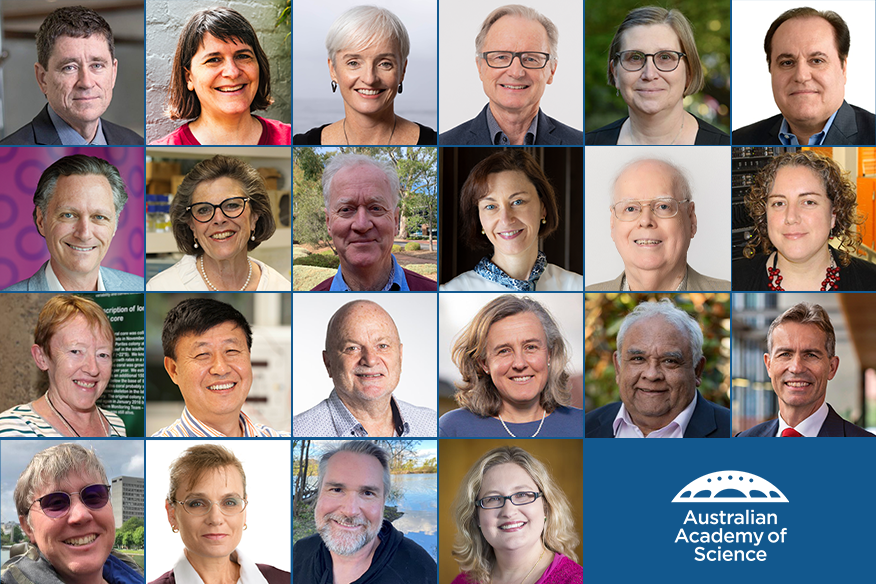
The new Fellows of 2022.
An Indigenous health champion and a pioneering astrophysicist are among 22 Australians recognised for their outstanding contributions to science by being elected Fellows of the Australian Academy of Science.
Professor Tom Calma AO, Chancellor of the University of Canberra, has been elected for championing the improvement of Indigenous peoples’ health, education and justice for over 45 years. His work continues to have an enduring impact on public discourse in Australia and beyond.
Professor Calma is the first Fellow elected to the Academy who identifies as an Aboriginal person. He is a descendant of the Kungarakan and Iwaidja tribal groups, whose traditional lands are south-west of Darwin and on the Cobourg Peninsula in the Northern Territory.
Professor Naomi McClure-Griffiths has been recognised for advancing our understanding of how our own galaxy and its neighbours evolved, including her creation of a model proving the existence of a new spiral arm of the Milky Way.
She has helped design multiple radio telescope facilities, included CSIRO’s ASKAP and the planned globe-spanning SKA, and her leadership has been instrumental to high-resolution observational surveys of the sky.
Professor McClure-Griffiths’ detailed atlases of atomic hydrogen gas in our galaxy are used by astronomers and astrophysicists around the world.
They are joined by 20 other outstanding researchers from across the breadth of Australian science, including experts on fragile river ecosystems, clean energy technologies and the genomes of Australian native animals.
Professor Chennupati Jagadish AC, who today takes the reins as President of the Australian Academy of Science, congratulated the new Fellows for their contributions to science.
“Fellows of the Australian Academy of Science are among the nation’s most distinguished scientists, elected by their peers for ground-breaking research and contributions that have had clear impact,” Professor Jagadish said.
“The Academy’s actions to improve gender diversity among our Fellowship are succeeding. This year’s Fellows include 50% women and 50% men, the first time in the Academy’s history that gender parity has been achieved in the annual election of new Fellows.
“This has been achieved by adopting a range of measures to improve our nomination process and increase opportunities to recognise all scientists. Our work to improve diversity among our Fellowship continues.
“We reflect a diverse and inclusive science community that recognises the widest range of talents, backgrounds, perspectives and experiences, and we are united by our contribution and commitment to scientific excellence,” Professor Jagadish said.
The Academy’s new Fellows for 2022 are:
ACT
- Thomas Calma – Chancellor, University of Canberra
- Naomi McClure-Griffiths – Astronomer, Australian National University
- Ute Roessner – Plant scientist, Australian National University
NSW
- Katherine Belov – Biologist, University of Sydney
- Marcela Bilek – Physicist, University of Sydney
- John Cannon – Pure mathematician, University of Sydney
- Catherine Greenhill – Pure mathematician, UNSW Sydney
- Michelle Haber – Childhood cancer scientist, UNSW Sydney
- Emma Johnston – Marine ecologist, UNSW Sydney
- Albert Zomaya – Computer scientist, University of Sydney
QLD
- Stuart Bunn – Freshwater ecologist, Griffith University
- Janice Lough – Climate scientist, Australian Institute of Marine Science
- Sarah Medland – Statistical geneticist, QIMR Berghofer Medical Research Institute
- Huijun Zhao – Chemist, Griffith University
VIC
- Matthew Bailes – Astrophysicist, Swinburne University of Technology
- Kate Smith-Miles – Applied mathematician, University of Melbourne
SA
- Peter Høj – Vice-Chancellor, University of Adelaide
- Timothy Hughes – Haematologist, South Australian Health and Medical Research Institute
- Peter Langridge – Agricultural researcher, University of Adelaide
- Craig Simmons – Groundwater scientist, Flinders University
TAS
- Elizabeth Fulton – Ecosystem modeller, CSIRO Oceans and Atmosphere
WA
- Jonathan Carapetis – Paediatric physician, Telethon Kids Institute
Find out more about our 2022 Fellows.
Corresponding Members
Also admitted to the Academy are two Corresponding Members. The new Corresponding Members for 2022 are:
- Professor Anne Dell – Biochemist, Imperial College London
- Professor Lei Jiang – Chemist and material scientist, Chinese Academy of Sciences
Corresponding Membership is a special category within the Fellowship, comprising eminent international scientists with strong ties to Australia who have made outstanding contributions to science. There are currently 34 Corresponding Members of the Academy.
More information
Following the 2022 election of our new Fellows, the Fellowship now stands at 590 Fellows.
The 2022 new Fellows will present their work and achievements at Science at the Shine Dome on 23 November. This is the Academy’s annual flagship event where Australia’s most influential scientists gather to celebrate science and to honour outstanding achievements in science.
The Australian Academy of Science was founded in 1954 by Australian Fellows of the Royal Society of London, with the distinguished physicist Sir Mark Oliphant as founding President.
Academy responds to decision to hold second inquiry into the convictions of Kathleen Folbigg
Statement by Australian Academy of Science Chief Executive, Anna-Maria Arabia
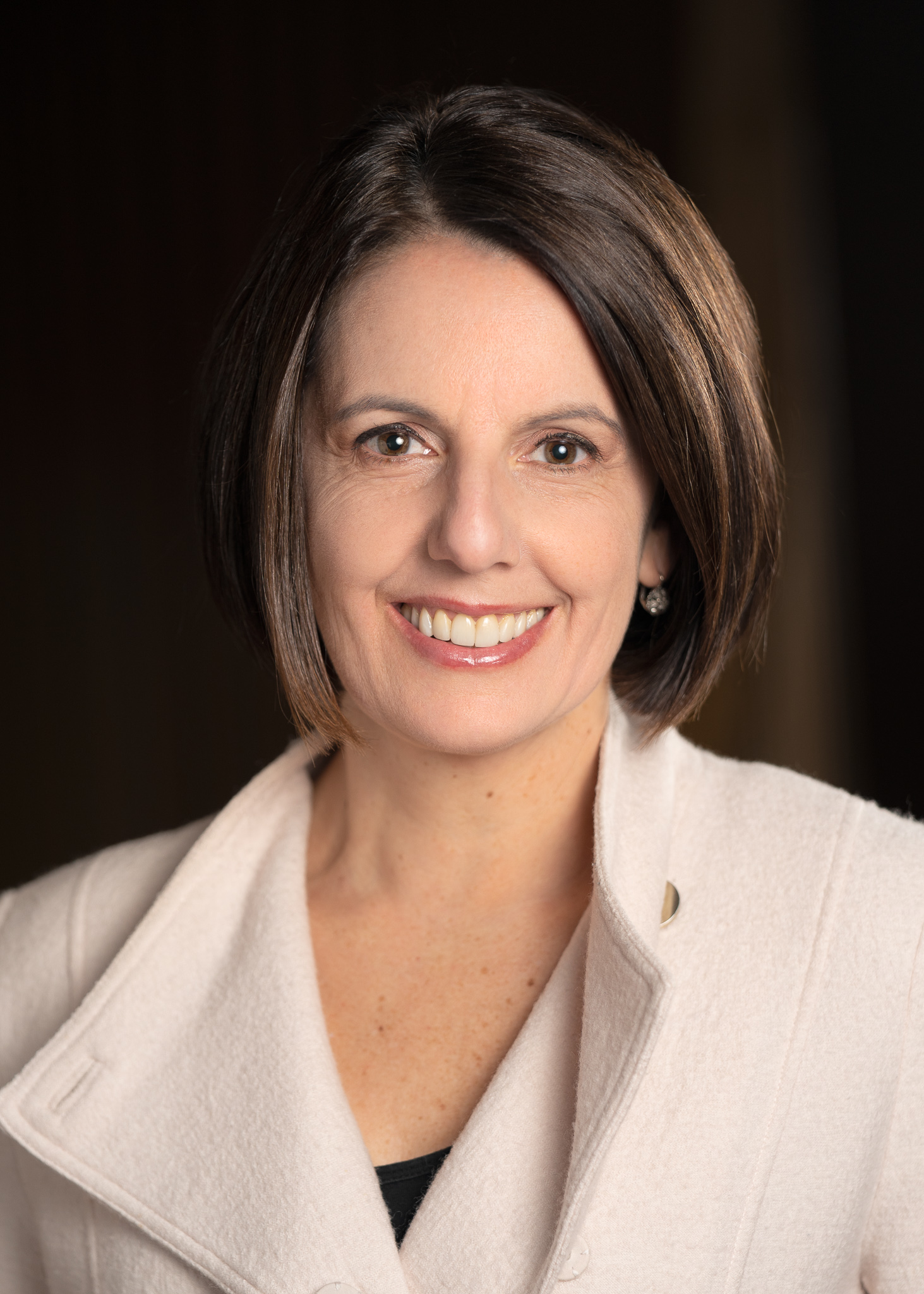
Australian Academy of Science Chief Executive, Anna-Maria Arabia
In March last year, over a hundred eminent scientists, including several Nobel Laureates, signed a petition seeking the immediate release of Kathleen Folbigg. Many of those scientists are Fellows of the Australian Academy of Science.
Last year’s petition was based on new medical and scientific evidence that came to light after the 2019 Inquiry. In particular, the new evidence dealt with the findings that Ms Folbigg’s female children had a pathogenic genetic variant capable of causing cardiac arrest and death.
Given the complicated nature of this genetic evidence, the Australian Academy of Science last year offered to assist the Attorney General by making available scientific experts to advise on the new evidence.
Today’s announcement by the Attorney General shows that he would prefer not to receive direct briefings and instead would rather have the evidence examined via another Inquiry.
While many Fellows of the Academy think there is overwhelming evidence to justify Ms Folbigg’s immediate release, we respect the Attorney General’s decision and the legal process he has decided on, which is to have a second Inquiry.
The Academy welcomes the Attorney General’s invitation to attend the new Inquiry.
The Academy intends to assist the Honourable Chief Justice Bathurst by making available suitable experts to advise on the medical, genetic, diary and probabilistic evidence. Given the complicated nature of the evidence, this will likely involve recruiting experts from around the world.
While the new genetic evidence in this case has already been peer reviewed by other scientists, the Academy appreciates that the legal community has its own methods for testing evidence.
The Academy will seek to facilitate that process as best it can and looks forward to receiving the draft terms of reference for the Inquiry from the Attorney General so it can assist in defining the scope of the Inquiry.
Statement by Australian Academy of Science Fellow Professor Carola Vinuesa
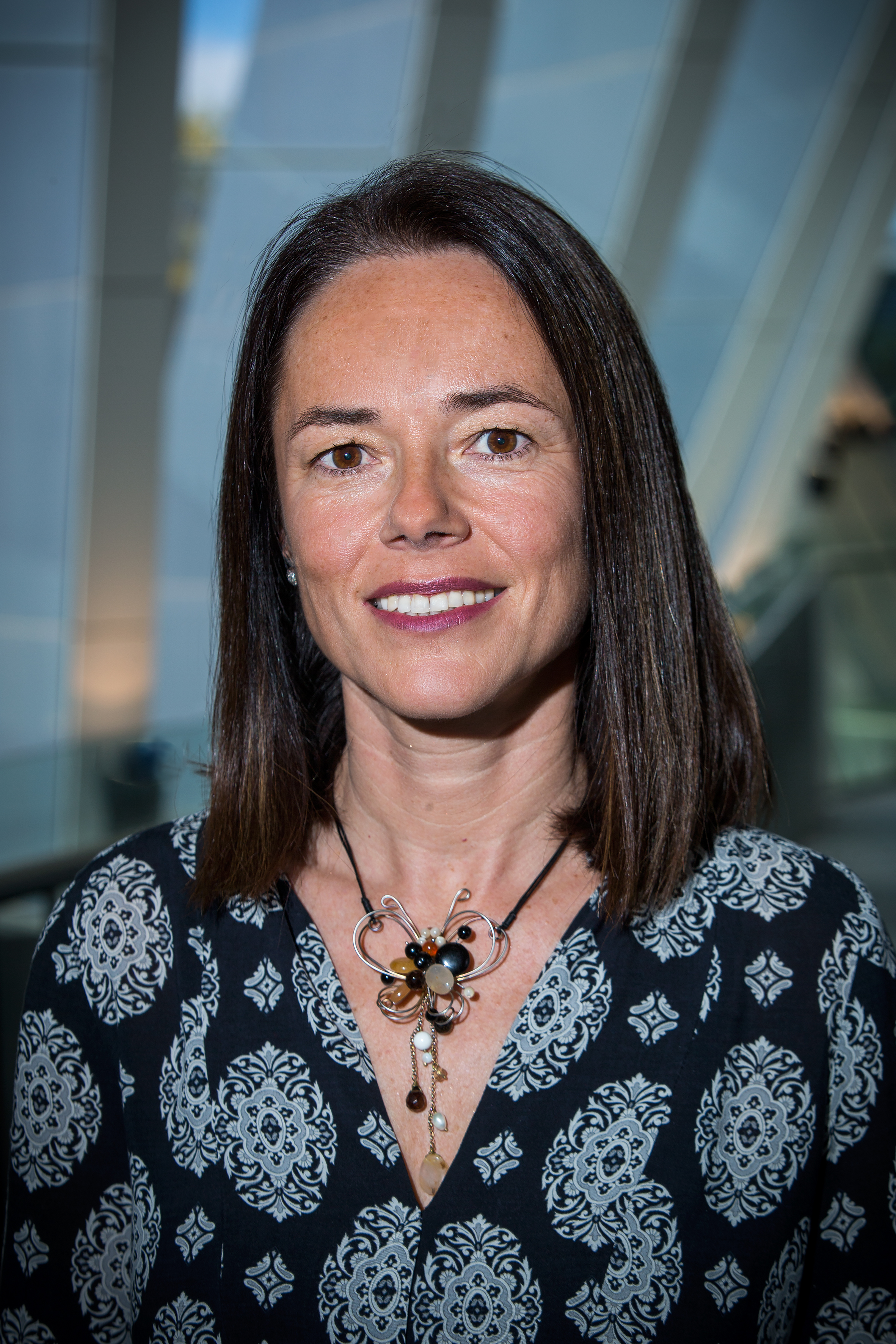
Australian Academy of Science Fellow Professor Carola Vinuesa
It is disappointing, given the strength of the medical and scientific findings, that Ms Folbigg has not been granted a pardon. The evidence goes well beyond raising a reasonable doubt and instead provides the likely explanation for the natural deaths of Ms Folbigg’s children.
In 2019 we discovered the rare gene mutation in both Folbigg girls and in 2020 an international team of 27 scientists led by Danish Professor Michael Toft Overgaard demonstrated through biochemical testing that this mutation is pathogenic.
The mutation disrupts the normal heart rhythm and can cause sudden cardiac death. The first outward sign of the disease can be a child dying while they sleep. The biochemical testing showed that the effects of the variant found in the Folbigg family are as severe as those of other mutations that have led to sudden cardiac death in young children.
As there was never any evidence of child abuse, the most likely explanation for the deaths of Sarah and Laura Folbigg is that they died from a sudden cardiac arrest caused by the genetic variant they carried.
The variant or mutation changes a protein called calmodulin that controls the way calcium enters and leaves heart cells. When mutations like this one occur, they can cause cardiac arrythmias that can lead to sudden death without warning.
Sudden death in these cases can be triggered by infection or fever and there was evidence of infection in both Folbigg daughters.
Mutations in the calmodulin genes have killed children in similar circumstances in the past. These deaths have been recorded in an international registry curated by the world leading expert in the genetics of cardiac arrythmias Professor Peter Schwartz. Mutations in calmodulin affecting heart rhythm are amongst the best recognised causes of sudden and unexpected death in children.
Our findings have been endorsed by world-leading experts Professor Peter Schwartz and Professor Reza Razavi, and Australia’s renowned cardiologist Professor Chris Semsarian.
The genetic findings are also backed by two petitions totalling over 150 scientists and clinical practitioners including three Australian Nobel Laureates.
Today’s decision points to the need for Australia to build a more scientifically sensitive and informed legal system.
It must be capable of understanding advances in science and able to apply appropriately the information to legal cases. This will help reduce the likelihood of others enduring the miscarriage of justice that Kathleen Folbigg continues to face.
Australian scientists share why science matters
Science continues to transform our lives and answer some of the world’s greatest mysteries. But why does it matter and what does it actually mean to value science?
Science not only satisfies our curiosity, it informs and provides evidence for the decisions we make every day. From questions like whether to take an umbrella when we leave our home to complex decisions about the future of our planet.
The Australian Academy of Science embraces and supports the need for all Australians to be guided by and enjoy the benefits of science.
It's not just something that affects us – the innovative and collaborative work of Australian scientists allows us to play an important role in global scientific research and related industries.
We asked six leading scientists #WhyScienceMatters.
Professor Eddie Holmes FAA FRS – University of Sydney
“One thing we’ve learned from COVID-19 is how important science is, in general.”
Professor Tanya Monro FAA FTSE – Chief Defence Scientist
“Science is about creating impact through knowledge.”
Dr Andy Thomas AO – Australia’s first astronaut
“Having respect for evidence-based thinking would go a long way toward making our political dialogue a lot healthier.”
Professor Xiaojing Hao – UNSW Sydney
“We all want our children to grow up in a world where the climate is stable, and the energy is produced without pollution.”
Associate Professor Misty Jenkins – Walter and Eliza Hall Institute of Medical Research
“It’s imperative that our leadership of this country is scientifically literate.”
Professor Richard Bryant AC FAA – UNSW Sydney
“If we don’t get the science right, there are serious, serious costs.”
Outstanding Academy Fellows elected to Royal Society
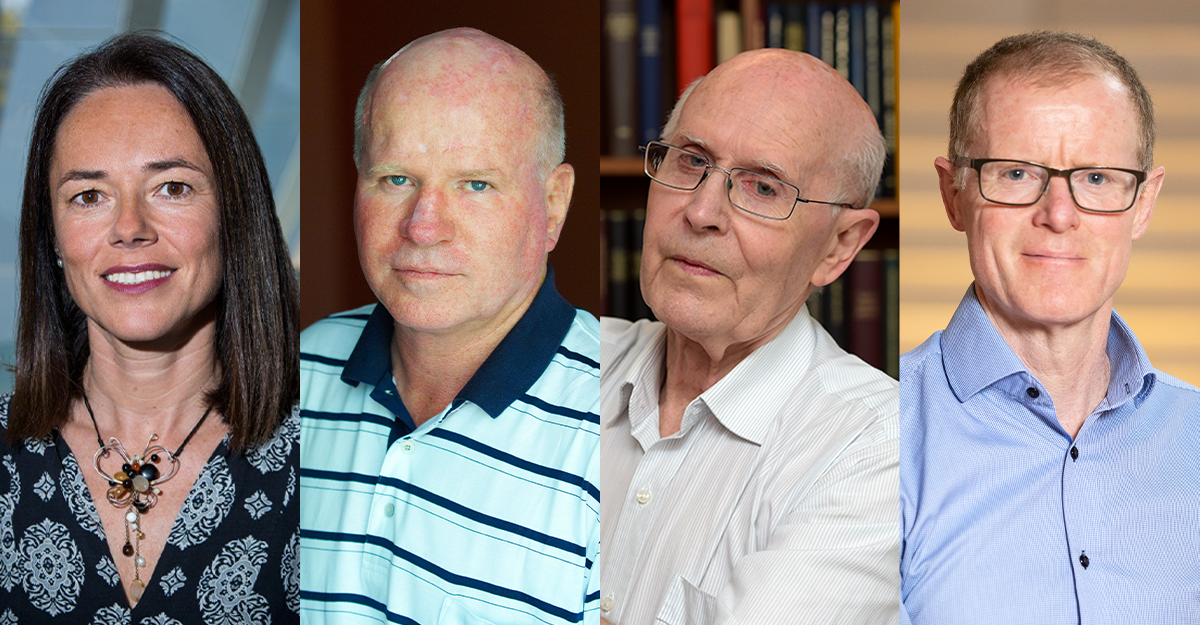
Four Australian scientists have been elected Fellows of the Royal Society, the world’s oldest scientific academy in continuous existence, for their outstanding contributions to scientific understanding.
Professor Carola Vinuesa FAA FRS FAHMS
Professors Carola Vinuesa, Jamie Rossjohn, Richard Robson and Bob Pressey are among a group of 62 individuals worldwide who have been recognised this year by the Royal Society. All are already Fellows of the Australian Academy of Science.
Professor Vinuesa has been recognised for discovering populations of immune T cells, proteins and genes that work to improve the quality of antibodies that fight infectious microbes, while preventing production of harmful antibodies that can cause autoimmune diseases such as lupus or allergies.
“I feel very grateful to the many incredible members of my team and colleagues who have contributed to our discoveries over the last 20 years,” said Professor Vinuesa, who is based at the Francis Crick Institute and the Australian National University.
“Science will be absolutely key for the survival of our species living in a warming planet and in a world with increasing antibiotic resistance and threats of viral pandemics.
“Science can also bring justice to vulnerable people, as we hope to see in the case of Kathleen Folbigg, where genomic advances have proven her innocence after 19 years in jail falsely accused of killing her four children.”
Professor Jamie Rossjohn FAA FRS FAHMS
Professor Rossjohn is a leading structural biologist who is principally known for his contributions to the understanding the molecular basis underpinning infectious disease and the vertebrate host response.
He said he felt over the moon and overwhelmed to join the prestigious Royal Society and said his election highlighted the importance of basic research.
“Breakthrough scientific discoveries represent the foundation from which new technologies and therapies ultimately emerge,” said Professor Rossjohn, who is based at Monash University.
“The importance of discovery science is rapidly diminishing in Australia. It is important for science to have a strong voice so that we are trusted and supported by the public and government.”
Royal Society President, Professor Sir Adrian Smith, said it was an honour to welcome so many outstanding researchers from around the world into the Fellowship of the Royal Society.
“Through their careers so far, these researchers have helped further our understanding of human disease, biodiversity loss and the origins of the universe,” said Professor Smith.
“I am also pleased to see so many new Fellows working in areas likely to have a transformative impact on our society over this century, from new materials and energy technologies to synthetic biology and artificial intelligence.”
The Fellowship of the Royal Society includes the most eminent scientists, engineers and technologists from or living and working in the United Kingdom and the Commonwealth.
Each year up to 52 Fellows and up to 10 Foreign Members are elected from a group of about 700 candidates.
Past Fellows and Foreign Members of the Royal Society have included Charles Darwin, Lise Meitner, Albert Einstein, Dorothy Hodgkin, and Stephen Hawking.
Read the Fellows’ citations and full list of Fellows elected to the Royal Society.
The surprising science of prawns and pipes
Global demand for prawns has been rising exponentially since the late 1990s. There is, however, an ecological limit to the number of ocean-caught prawns. The solution? Farmed prawns.
Dr Ha Truong from CSIRO was one of two research scientists who spoke about their work at a recent Academy public speaker series event. She was joined by Dr James Gong from Deakin University for ‘Surprising science: prawns and pipes’.

Dr Ha Truong from CSIRO speaking at the event
Dr Truong’s work focuses on sustainable ways to farm prawns.
“When we talk about increasing a farming industry, we also have to think about how we can do this sustainably – we have to think about the input and the outputs coming into this system and how we can minimise and better utilise waste to be used as inputs,” she said.
Prawns are notoriously unfussy eaters – discarded prawn heads and shells can be fed back to the growing stock. Prawns are also fed marine worms (which are reared on the farm’s waste); even our unwanted leftover food may one day become prawn food.
By implementing more sustainable circular economy strategies, such as turning waste into feed, we can improve the current linear approach to prawn production.
Shrimps look similar to prawns and belong to the same family of animals. The second speaker of the event, Dr Gong, researches prawns and shrimp from another angle: how taking inspiration from a shrimp can help fix leaky pipes.
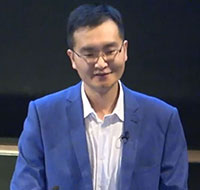
Dr James Gong from Deakin University.
“We lose about 255 gigalitres of water a year [in Australia], that’s enough treated water to supply 3.7 million people,” he said.
Detecting leaks in underground pipelines isn’t straightforward. Current techniques use a pulsed pressure wave with monitoring to detect ripples and reflections caused by pipe damage. However, the wave lacks precision so is not ideal for underground pipes. To better pinpoint damage, Dr Gong’s team sought inspiration from nature.
The snapping or pistol shrimp shoots a stream of water out of its large front claw. The stream travels at speeds up 100 km/h, enough to boil the water around it, resulting in a shockwave that stuns the shrimp’s prey.
“Inspired by this shrimp we developed a spark wave generator,” Dr Gong said.
A spark wave generator can be attached to a pipe and produces an electric spark in the water. Like the shrimp, this generates ‘cavitation bubbles’ that burst and create a pressure wave.
The result is a much more precise signal that can travel hundreds of kilometres down the pipe, all thanks to the humble snapping shrimp.
To find out about more nature-inspired solutions, see the next event in the Surprising Science series on 14 June.