




Eleven young researchers heading to Lindau Nobel Laureates Meeting

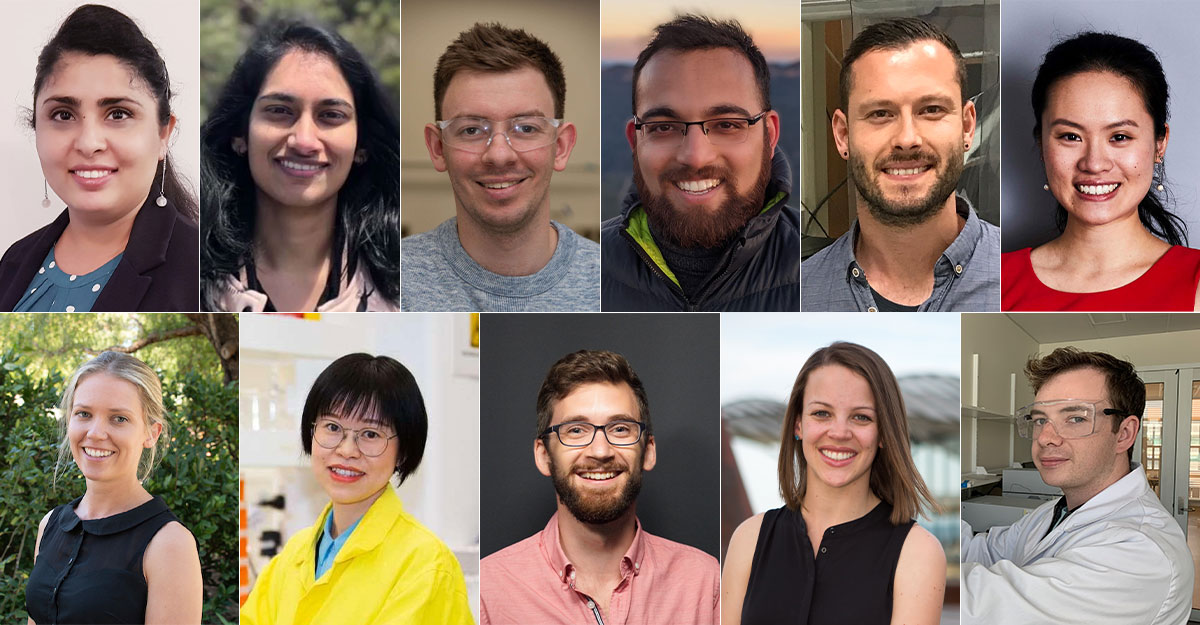
The six 2022 SIEF–AAS Fellows (top) and the five 2020 SIEF–AAS Fellows (bottom) attending the 71st annual Lindau Nobel Laureate Meeting.
Eleven young early-career researchers from Australia will be attending the prestigious Lindau Nobel Laureates Meeting in Lindau, Germany, including six recently nominated by the Australian Academy of Science and five attendees who attended the 70th meeting virtually in 2021.
The 71st annual Lindau Nobel Laureate Meeting, dedicated to chemistry, will be held from 26 June to 1 July and will bring together around 30 Nobel Laureates and around 600 young scientists from around the world.
Participation in the Lindau Nobel Laureate Meetings is proudly supported through the Science and Industry Endowment Fund (SIEF) and administered by the Australian Academy of Science (AAS).
The six PhD candidates and postdoctoral researchers selected in 2022 to attend these meetings as SIEF–AAS Fellows are:
- Dr Amandeep Kaur – researching fluorescent sensors for super-resolution imaging applications at the University of Sydney, and also a recipient of the prestigious JG Russell Award.
- Dr Neil Robinson – researching porous materials for energy applications at the University of Western Australia, and will begin a Forrest Foundation Research Fellowship from May 2022.
- Ms Sanjana Prasad – currently investigating nanochemistry and sensor technology at RMIT University.
- Mr Piyush Sharda – a PhD Candidate at the Australian National University specialising in astronomy, with a particular focus on early universe astrochemistry and chemical evolution of galaxies.
- Mr Matthias Wurdack – researching strong light-matter coupling and exciton-polaritons in atomically-thin semiconductors at the Australian National University, and also the recipient of AIP NSW Award for Postgraduate Excellence in Physics 2020 and the John Carver Award 2020.
- Miss Diana Zhang – a 2021 Fulbright Scholar specialising in analytical chemistry from the University of New South Wales, currently working at Boston University to develop an advanced machine learning method that can diagnose Parkinson’s Disease from a chemical ‘fingerprint’.
The Lindau SIEF–AAS Fellows will receive a grant to enable their attendance at the event and take part in the SIEF Research Innovation Tour in Germany, led by Academy Fellows Emeritus Professor Cheryl Praeger and Emeritus Professor Hans Bachor.
The tour will showcase some of Germany’s finest research and development facilities, while also providing opportunities to share the research done by the young scientists and encourage scientific collaboration between the two countries.
Five of the SIEF–AAS Fellows who attended the 70th meeting virtually in the field of chemistry have also been invited to participate in person and will travel with the cohort selected this year to Lindau:
- Dr Nicole Foster – previously nominated by the University of Adelaide, she is now working at the Flinders University on Environmental DNA.
- Dr Emily Kerr – an NHMRC Early Career Fellow from Deakin University, and also the recipient of the VESKI Fellowship to undertake a 10-week research visit to France for attending a conference in Spain, followed by a short research visit to Italy, prior to heading to Lindau.
- Dr Wenyue Zou – a Superstar of STEM working as a Research Fellow in Applied Chemistry at the RMIT university.
- Dr Adam Sutton – previously nominated by the University of South Australia, he is now in the USA researching green analytical chemistry.
- Dr Lukas Michalek – previously nominated by Queensland University of Technology, he is currently at Stanford University investigating polymeric materials in emerging flexible electronics from molecular scale to applications.
Their cohort from the 70th Meeting in other fields are invited to attend future Lindau Meetings.
Reforming World Heritage to mitigate the challenge of climate change

St Mark’s Square in Venice during a recent flood event. ‘Venice and its Lagoon’ was inscribed on the World Heritage List in 1987. There are fears that climate change will adversely impact the 'Outstanding Universal Value' of this iconic property. Image: Ihor / Adobe Stock.
Some of our planet’s natural and cultural assets listed under the World Heritage Convention will be impossible to maintain in the face of climate change, even if effective adaptation and on-site mitigation strategies are applied locally, a roundtable of experts concluded in a report released this week.
The Australian Academy of Science, in consultation with the Australian Academy of Law, assembled 18 Australian experts in natural and cultural heritage, climate change and diplomacy at a national roundtable in December 2021.
The impact of climate change on heritage-listed assets is complex and global.
“The Academy of Science was pleased to draw together experts to search for ways to manage these assets within this complexity, and so ensure that future generations will be able to relish them just as we have been able to do,” said Professor John Shine, President of the Australian Academy of Science.
The aim of the roundtable was to develop a ‘menu of ideas’ that would initiate serious discussion about what could be done to amend the Convention to enable it to support the world’s most precious heritage assets in the face of unremitting climate change.
Ideas put forward include: reforming the nomination, inscription, evaluation and delisting of properties included defining the limits of acceptable change to sites, the use of climate vulnerability assessments and possible changes to World Heritage Committee processes to recognise effectively the threat of climate change.
2022 is the 50-year anniversary of the World Heritage Convention, which was adopted by the General Conference of UNESCO in 1972.
Adapting the Convention to enable it to address contemporary pressures – like the consequences of climate change – would be a fitting project both to celebrate achievements to date and to prepare the utility of the Convention for the coming decades.
Australia has a strong interest in encouraging reform, as a high proportion of Australia’s world heritage properties are threatened by climate change.
The International Union for the Conservation of Nature has rated 11 of Australia’s 16 natural and mixed World Heritage properties as being at high risk from climate change.
New educational website to help teachers promote equitable learning
Planting the seeds of a scientific career. Image: Pixabay.
The Australian Academy of Science’s secondary science program, ‘Science by Doing’, is proud to announce a new website designed specifically for teachers.
Launched in February, the site builds on the Academy’s strong educational foundations with a new program using a revised pedagogical approach emphasising flexible professional learning.
Supporting teachers supports students
Recognising the pivotal role that teachers play and based on knowledge of how students learn, the program provides teachers with strategies designed to challenge Year 7–10 students to explore, ask questions, share ideas and improve their ways of thinking for the rest of their lives.
The goal is to support teachers to be confident to reach out to all students, which promotes equitable learning where all students are supported to engage with science.
Teachers are so often the source of that early spark of excitement about discovery that inspires young people to pursue a scientific career and turn their minds to the process of discovery.Dr Cathy Foley • Australia’s Chief Scientist
Teachers are provided with examples that will help their students to ‘figure things out’ through problem-oriented teaching and learning, all aligned to the Australian Curriculum.
The program incorporates sensemaking, a way to build on individual student experiences, and is designed to develop each student’s confidence to engage with the world through science.
“Teachers are so often the source of that early spark of excitement about discovery that inspires young people to pursue a scientific career and turn their minds to the process of discovery,” says Academy Fellow and Australia’s Chief Scientist, Dr Cathy Foley.
Using research-based contemporary practices, with a greater emphasis on real-world Australian science contexts, data, and scientists, the resources are adaptable to cater for the diversity amongst Australian students and different contexts across our classrooms.
Inspiring our young people through science
In designing and testing the new program, Science by Doing is examining how to enable teachers to better facilitate a guided inquiry approach, create deeper engagement and enhance outcomes for their students.
The Science by Doing program engages with teachers, science education academics and scientists – across Australia and internationally – to co-develop, trial, monitor and evaluate curriculum materials, to strengthen STEM capabilities and to meet the needs of school communities.
The Australian Academy of Science aims to inspire young people through science, and this new website is designed to help build a future Australia equipped to face the challenges and opportunities of a fast-changing world, both locally and globally.
Learn more about the Science by Doing program.
Science by Doing is supported by the Australian Government Department of Education, Skills and Employment
International Women's Day 2022

Source: Burcu Köleli for UN Women (2022).
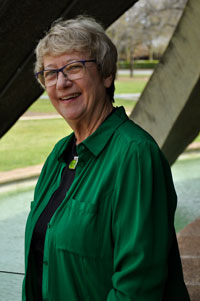
Source: Burcu Köleli for UN Women (2022).
This year, the theme for International Women’s Day is Changing Climates: Equality today for a sustainable tomorrow, which recognises the contributions of women and girls around the world, and calls for climate action for women, by women.
The Academy’s Diversity and Inclusion Strategic Lead, Allison Hornery, took the opportunity to speak with Professor Sue O’Reilly, Chair of the Academy’s Equity and Diversity Reference Group, and the Academy’s Chief Executive, Ms Anna-Maria Arabia, to explore how we might all help to change the climate of gender equality.
Reflecting on how far we have come in achieving gender equity at an institutional level, Professor Sue O’Reilly acknowledges the increase in the number of women in senior positions and how initiatives such as SAGE have played a vital role in changing the narrative around gender equity, including raising awareness and encouraging organisations to develop strategies and policies that address the issue of inequity.
“We've come a very long way on that journey. There's a long way still to go,” Professor O’Reilly said.
‘Girls don't need physics’
She also reflected on her own journey and experiences and how it has made her a strong advocate for women’s rights.
“The headmaster, who had a son in my class, looked down at me very condescendingly, and said, ‘Ah, girls don't need physics. Girls get married, and their husbands look after them’. So, my friend and I set up on the veranda for two years, working from the syllabus, working from textbooks, and then we beat all the boys in the actual final exam. It was a wakeup call to me; I think it made me a little bit feisty about advocating for women's rights.”
The headmaster, who had a son in my class, looked down at me very condescendingly, and said, "Ah, girls don't need physics. Girls get married, and their husbands look after them". So, my friend and I set up on the veranda for two years, working from the syllabus, working from textbooks, and then we beat all the boys in the actual final exam. It was a wakeup call to me; I think it made me a little bit feisty about advocating for women's rights.
The COVID-19 pandemic has had a severe impact on individuals and institutions; and has shed a light on the realities of what it is like to be a woman in STEM and the existing institutional and cultural barriers that continue to put women at a disadvantage.
“It was women who predominately took on a greater proportion of the domestic responsibility when working from home … making it particularly difficult to advance their research even when it was possible to continue research outside of a formal scientific setting,” Ms Arabia said.
Better work outcomes
Employers and organisations have had to develop flexible work arrangements which better supported individuals, and with this it has become clear that such policies can create sustainable and inclusive working environment that produce better work outcomes.
“We know diversity results in better decision making, greater profits, greater productivity and higher quality publications. With that comes more competitive research grants so there are a range of benefits in the STEM sector,” she said.
We know diversity results in better decision making, greater profits, greater productivity and higher quality publications. With that comes more competitive research grants so there are a range of benefits in the STEM sector.

Anna-Maria Arabia, Chief Executive
In order for us to achieve gender equity, it is vital that long-term and sustainable changes are implemented across the STEM sector which is why initiatives such as STEM Women and the Decadal Plan for Women in STEM have been instrumental.
“The Decadal Plan Champions program offers institutions, organisations, entities, private businesses – wherever you may sit in the STEM ecosystem – an opportunity to align your work to achieve gender equity, with the recommendations in the Decadal Plan for Women in STEM,” Ms Arabia said.
On this International Women’s Day, and every day moving forward, it is important that we continue to discuss ways we can and do advance gender equity and ensure we do so in an inclusive and intersectional manner to ensure the impacts of inequitable practice on diverse groups are considered.
“I'm really pleased that there is growing awareness, there are proactive initiatives, and part of the discussion has really matured, around how we look at Indigenous knowledge, how we bring more Indigenous scientists closer to the Academy’s work, and how we work together to design a path forward,” she said.
I'm really pleased that there is growing awareness, there are proactive initiatives, and part of the discussion has really matured, around how we look at Indigenous knowledge, how we bring more Indigenous scientists closer to the Academy’s work, and how we work together to design a path forward.
See the full transcript and recording of the interviews on the STEM Women website.
Visit the Academy’s Climate Change Hub and Future Earth Australia for more information on how the Academy is contributing to address climate change.

Australian Academy of Science statement on current conflict in Ukraine
The Australian Academy of Science condemns in the harshest possible terms the unprovoked and unlawful military aggression by Russia on the sovereign country of Ukraine. What the world is witnessing at this time is completely unacceptable and reprehensible. The Academy stands by the people of Ukraine, and in particular the Ukrainian scientific community.
Diplomacy, dialogue and good will are tested ways to try and resolve serious conflicts such as this one. We call for this to happen immediately before more innocent civilians on both sides are severely impacted or lose their lives.
We applaud those in the scientific community in Russia who have spoken against the war on Ukraine and trust that they will not be impacted by expressing their human right to do so.
Academies of science around the world will continue to speak out and work through the umbrella of science and technology to bring peace, harmony, and prosperity in the world. The Australian Academy of Science is in absolute support of the International Science Council and the InterAcademy Partnership statements on this war because of the severe outcomes that the conflict will have on the research and academic community.
Top scientists support ARC reform
The current application of the ministerial veto in the Australian Research Council (ARC) introduces "a randomness in a system that should be designed to preclude it to the maximum extent possible," says the Academy, in a submission made this month to the Senate Standing Committees on Education and Employment.
The submission to the Senate inquiry into the Australian Research Council Amendment (Ensuring Research Independence) Bill 2018 highlights the need for reform in ARC grant approvals.
It argues that the veto "disregards" the capacity of the Council to make recommendations that include consideration of national interest and value for money, and lacks transparency and clarity.
This echoes earlier statements by the Academy regarding the revelation on Christmas Eve 2021 that six ARC Discovery Projects had been rejected using ministerial veto.
In February, Academy President John Shine joined the other presidents of Australia’s learned academies to call for the Government, the ARC and universities to work together to "uphold Australia’s reputation as a home and champion of international best practice research."
One year on and still no answer from the NSW Attorney General
“Respect the scientific and medical evidence that provide ample justification for the pardon of Kathleen Folbigg and demonstrate that you take seriously your responsibility to provide justice to the people of NSW.”
This is the call by three Nobel Laureates and the outgoing and incoming Presidents of the Australian Academy of Science in a letter sent to the NSW Attorney General Mark Speakman this week.
The new appeal for Ms Folbigg’s immediate release from jail comes one year after the NSW Attorney General was provided with sufficient medical and scientific evidence that provides an alternative explanation for the deaths of Ms Folbigg’s children.
The evidence and the grounds for a pardon were laid out in a petition signed by ninety eminent scientists, which has been awaiting advice from the NSW Attorney General since March 2021. An additional 66 Royal Society of NSW Fellows backed the petition last year.
The outgoing President of the Academy, Professor John Shine, said Ms Folbigg’s continued incarceration is untenable.
“It is time that the NSW legal system accepts that a miscarriage of justice has occurred,” Professor Shine said.
“Ms Folbigg has been incarcerated for almost two decades despite scientific and medical evidence that provide reasonable explanations for the death of her children.
“We understand that the materials being considered are complex and detailed and our offer to the NSW Attorney General to facilitate a scientific briefing remains.
“I, along with colleagues, have written to the NSW Attorney General to express our deep concern about the disregard of scientific evidence in this case.
“The obligation of the NSW Attorney General is to ensure the NSW legal system is just and efficient. To avoid further exacerbating this miscarriage of justice, the NSW Attorney General must expedite this matter and advise the NSW Governor to pardon Kathleen Folbigg and release her from jail.”
“The power rests with the NSW Attorney General to not only right this wrong but to bring about the legal reform required so that no person finds themselves in a similar situation,” Professor Shine said.
Read a copy of the letter to the NSW Attorney-General. This video by the Australian Academy of Science explains the latest science.
Australian scientists’ leading research recognised with Academy awards
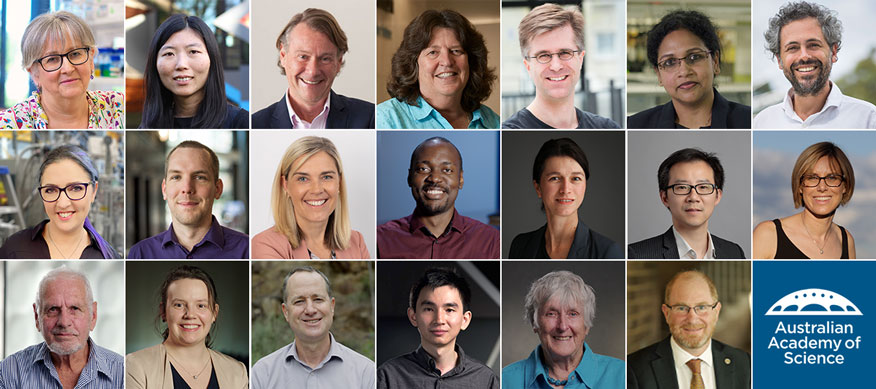
Twenty researchers from around Australia have been recognised by the Australian Academy of Science today, receiving prestigious honorific awards for their contributions to the advancement of science at the early, mid and career level.
The awarded research includes the use of gas-eating microorganisms to make sustainable animal foods, understanding how our wetlands respond to a changing climate, revealing serious complications in carbon capture, and how genetics can influence our choice in partners.
Professor Steve Simpson AC FAA FRS receives the Macfarlane Burnet Medal and Lecture – one of the Academy’s top awards – for his revolutionary research into locust swarming, spanning all the way from the brains of individual locusts to continental-scale migration patterns.
This work led to a ground-breaking framework for nutrition research which has since been applied to a wide range of organisms and used to tackle problems from aquaculture and conservation biology to the dietary effects on obesity and ageing.
Professor Andrew Roberts, the recipient of the 2022 Mawson Medal and Lecture, is recognised for his fundamental contributions to paleomagnetism, allowing scientists to use the geological record to reconstruct global plate tectonic movements and to understand variations in Earth’s magnetic field through its history.
His world-leading research, using environmental magnetism to understand climate change, has led to significant understanding of African monsoon dynamics, sea level variations, and Arctic and Antarctic glacial history.
Professor Rebecca Guy FAHMS, a mid-career researcher, receives the Gustav Nossal Medal for Global Health for her public health work for vulnerable and remote communities, such as point-of-care testing for STIs and COVID-19, and HIV self-tests that can be done at home.
Early-career researcher Associate Professor Jenny Fisher receives the Anton Hales Medal for her research into how trace gases such as mercury and other pollutants are transported and distributed through the atmosphere, which informs the management of air pollution as well as climate modelling.
President of the Australian Academy of Science, Professor John Shine, said this year’s awardees are blazing a trail for science both locally and globally.
“The award recipients have made a significant contribution to the research enterprise and the impact of their research will continue for years to come.
“They have distinguished themselves and the whole of Australian science, and the Academy is proud to support their outstanding contributions.”
Award recipients
The Academy’s 2022 honorific awards go to:
Premier honorific awards
- Macfarlane Burnet Medal and Lecture—Professor Steve Simpson AC FAA FRS, University of Sydney
- Ruby Payne-Scott Medal and Lecture—Dr Liz Dennis AC FAA FTSE, CSIRO Agriculture and Food (Canberra)
Career honorifics
- David Craig Medal and Lecture—Professor Christopher Barner-Kowollik FAA, Queensland University of Technology
- Haddon Forrester King Medal and Lecture—Dr Kathy Ehrig, BHP Billiton
- Haddon Forrester King Medal and Lecture—Professor Richard Henley, Australian National University
- Ian Wark Medal and Lecture—Professor Timothy Senden, Australian National University
- Mawson Medal and Lecture—Professor Andrew Roberts, Australian National University
- Suzanne Cory Medal and Lecture—Professor Georgia Chenevix-Trench FAA, QIMR Berghofer
Mid-career honorifics
- Gustav Nossal Medal for Global Health—Professor Rebecca Guy FAHMS, University of New South Wales Sydney
- Nancy Millis Medal for Women in Science—Professor Vanessa Peterson, Australian Nuclear Science and Technology Organisation (Lucas Heights)
Early-career honorifics
- Anton Hales Medal—Associate Professor Jenny Fisher, University of Wollongong
- Christopher Heyde Medal—Dr Francis Hui, Australian National University
- Dorothy Hill Medal—Dr Samintha Perera, University of Melbourne
- Fenner Medal—Associate Professor Chris Greening, Monash University
- Frederick White Medal—Professor Kerrylee Rogers, University of Wollongong
- Gottschalk Medal—Dr Alisa Glukhova, WEHI (Walter and Eliza Hall Institute of Medical Research)
- John Booker Medal—Associate Professor Annan Zhou, RMIT University
- Le Fèvre Medal—Dr Yuning Hong, La Trobe University
- Pawsey Medal—Dr Keith Bannister, CSIRO Astronomy and Space Science (Marsfield)
- Ruth Stephens Gani Medal—Dr Loic Yengo, University of Queensland
The awards will be presented at the Academy's event, Science at the Shine Dome 2022, in November.
Award nominations now open for 2023
Know an amazing Australian scientist? Nominate them for an award!
Nominations are now open for the Academy’s 2023 honorific awards, research conferences, research awards and travelling fellowships.
The IPCC Working Group II report and what it means for you
What impact is our changing climate having on our lives, jobs and homes? And what policy frameworks are needed to ensure a resilient and prosperous future for Australia?
Report
The Intergovernmental Panel on Climate Change (or IPCC) is widely regarded as the most important and authoritative source on climate change, its impacts and how to tackle the rising emissions that drive it.
Already released as part of the Sixth Assessment Report is the contribution from Working Group I, who focused on the physical science basis of climate change. Working Group III should publish their contribution on mitigation in April, and a Synthesis Report combining the three Working Group reports is scheduled for later this year.
At 10 pm AEDT on Monday, 28 February 2022, the contribution from Working Group II was released on the observed and projected impacts of climate change, the adaptation capabilities of communities and biosystems, and the vulnerabilities posed to humans and our natural systems.
But how does this specifically relate to Australia, and what can policymakers and professionals do, both inside and outside government, to make use of this resource in support of the critical decisions they make?
To answer these questions, the Australian Academy of Science in partnership with Future Earth Australia, held an online forum event to help inform and support policy makers and professionals in how Australia can reduce its vulnerability to the impacts of climate change.
Event
The Academy President, Professor John Shine, hosted the event and introduced short presentations from four of the lead authors of the chapter dedicated to discussing the impacts and risks for Australia and New Zealand.
Professor Brendan Mackey, Director of Griffith University's Climate Action Beacon is a Coordinating Lead Author of the IPCC Working Group II.
He spoke on the observed impacts of climate change. He outlined that climate trends have caused major impacts on our natural systems, with some Australian ecosystems already having experienced irreversible changes.
Ongoing warming is projected, with more hot days and fewer cold days, snow and glacier retreat, sea-level rise, and ocean acidification.Prof Brendan Mackey • Lead Author
He closed his presentation reminding us that climate change is not something that might occur in the future. It has happened, it is happening, and it will continue to happen into the future. It's a reality we have to deal with.
Dr Francis Chiew, a hydrologist, leads the Surface Water and Basin Outcomes research group in CSIRO in Canberra. He spoke on climate change will exacerbate the already complex challenges in managing water for competing demands in south-eastern Australia.
Finally, the frequency and severity of dangerous fire weather conditions have increased and will continue to increase with very significant consequences in this part of the world.
This is the new reality facing Australia.Professor Francis Chiew
Professor Gretta Pecl is a marine ecologist at the Institute for Marine and Antarctic Studies (IMAS), and the Director of the Centre for Marine Socioecology (CMS) at the University of Tasmania.
She spoke on the impact of climate on the Australian economy and people, reminding us that if bleaching of the Great Barrier Reef persists, an estimated 10,000 jobs and A$1 billion per year in revenue would be lost from declines in tourism alone.
Limiting warming to 1.5°C is insufficient to prevent more frequent mass bleaching events - but may reduce occurrence of warming events by an estimated 25%.Professor Gretta Pecl
Professor Lauren Rickards is Director of the Urban Futures Enabling Capability Platform and co-lead of the Climate Change Transformations Research Group at RMIT University.
She started by emphasising that many of the changes required are significant are not only those in the climate and physical systems, but are also in many areas not typically identified as related to climate change.
In terms of thinking of the way to progress adaptation it‘s about taking on the complexities.
This is hard work; we need more robust systemic risk reductions we also need serious measures to reduce social vulnerabilities.Professor Lauren Rickards
She highlighted again the amazing opportunity we have to "improve on the past and present, to enhance our well-being, to restore the planet, and to actually generate thriving communities and ecosystems."
She closed her presentation by reminding us that to fuel adaptation, we have a rich resource in our communities—we need to listen to everyone.
The panel then engaged in an audience answer session. On everyone's minds was the current flooding event in south-eastern Queensland and northern NSW, and whether there was a connection to climate change.
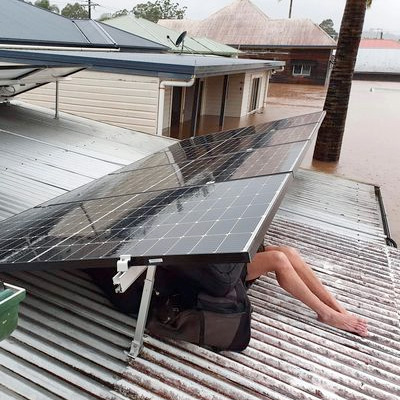
Professor Mackey's family sheltering on the roof in Lismore while awaiting rescue. Credit: Jan Fauske
While individual disasters cannot be explicitly attributed to being caused by climate change, the panel were unanimous that climate have made the severity and duration of the flood event much worse.
For Professor Mackey, the floods are personal. His extended family have "suffered the direct impacts of climate change", losing their house to the floodwaters in Lismore. He shared a striking image of them sheltering on a roof waiting to be airlifted to safety.
The panel also discussed whether the flood is a one-in-a-thousand-year event. The answer: it depends.
Flooding may not have happened to the same degree in some time, although there were devastating floods in 2011 and 1974.
However, looking forward into the future, it is unlikely that this kind of flooding won't happen for another thousand years.
The authors used this point to emphasise that any delay in both reducing emissions and addressing the impacts of an increasingly changed climate will mean we will miss this chance to secure a liveable and sustainable future for us all.
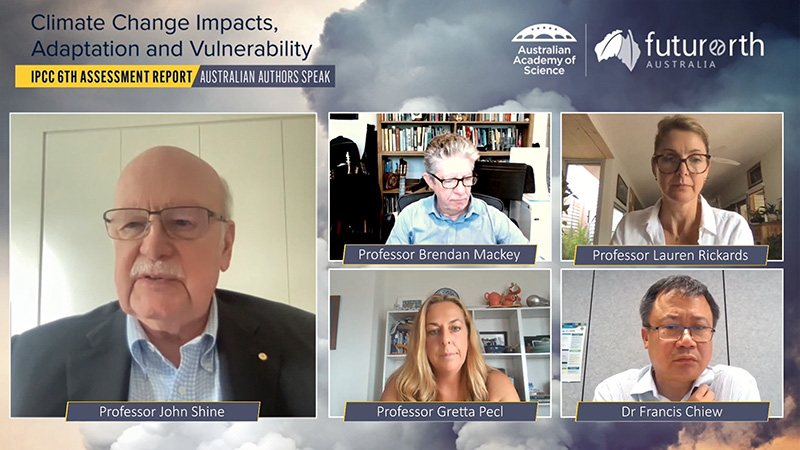
Academy President, Prof. John Shine moderated the panel discussion with four Australian lead authors of the IPCC WGII report.
Find out more
You can find out more about the Academy and the science of climate change by visiting our Climate Change Hub. More resources are available from Future Earth Australia, as a peak initiative in convening leaders to advance the sustainability agenda.
Academy urges science advice to government must continue post-pandemic
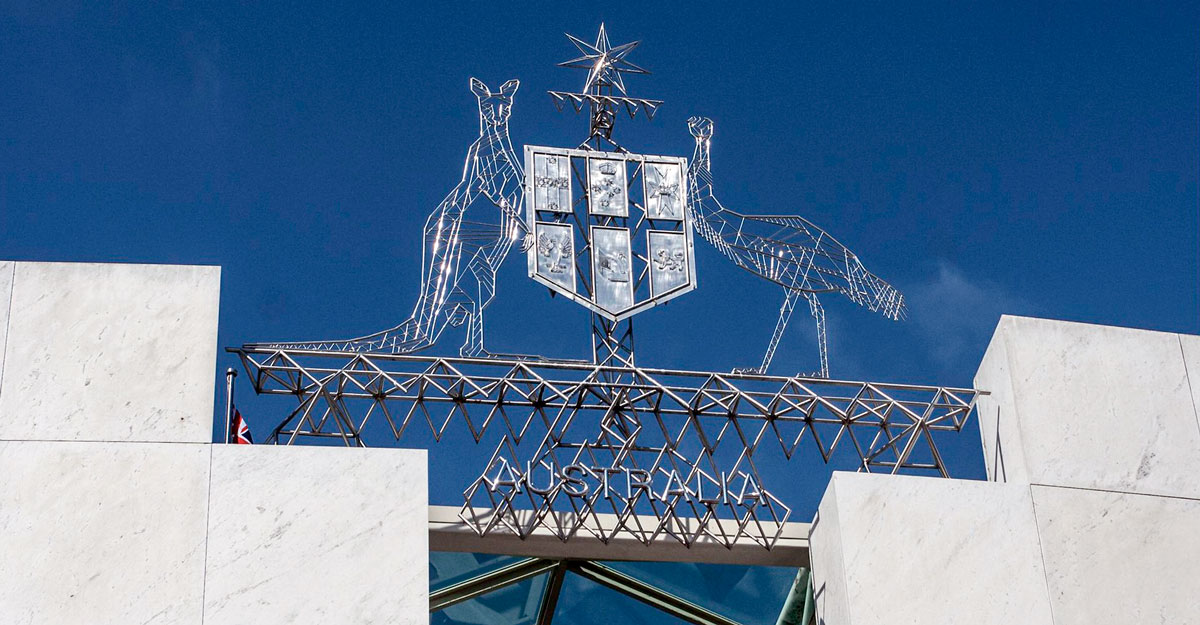
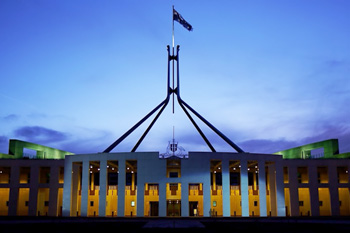
Coat of Arms over Parliament House. Adapted from photo by John on Flickr (CC-BY-SA 2.0).
Australia was well served by policymakers being able to access scientific evidence during the pandemic, and mechanisms that now bring science to the heart of government should not be lost during or after our recovery, the Academy’s submission to the 2022–23 Federal Budget reads.
Delivered to the Treasury recently as part of the public consultation process, the submission calls for the establishment of robust and permanent mechanisms for independent science advice to government.
Such mechanisms would assist in providing evidence-based answers to questions to inform a range of policy challenges, from adaption to global warming and the challenge of a circular economy, to building sovereign capability in manufacturing.
The Academy’s submission also recommends that the government act to ‘secure the base’ of scientific research by supporting the whole scientific pipeline, focused on support for fundamental research.
The submission echoes earlier comments by the Academy on the Australian Government’s announcement of a University Research Commercialisation action plan in February.
“By supporting new ideas and discoveries that underpin innovations and products, we can improve the lives and livelihoods of all Australians,” said Academy President, Professor John Shine.
“Research discoveries form a pool of intellectual capital that can be developed within Australia and globally.”
A whole-of-government review of the science and research system, including an urgent review of existing competitive grant funding schemes, is recommended.
Also recommended is a national effort to secure new jobs and industries through science and technologies, including establishing a science translation fund modelled on the current Medical Research Future Fund.
Read the full pre-budget submission and its recommendations.