




National Research Infrastructure crucial factor in research pipeline

The Australian Academy of Science welcomes the release of the Australian Government’s 2021 National Research Infrastructure (NRI) Roadmap. The Academy thanks the Expert Working Group for its contributions and guidance, particularly Academy Fellows Dr Ziggy Switkowski, Professor Barbara Howlett and Dr Cathy Foley.
The roadmap makes many noteworthy recommendations to ensure Australia’s research infrastructure is poised to deliver long-term national benefit. The Academy is particularly supportive of the recommendation made in successive roadmaps to establish an Expert NRI Advisory Group, that can deliver strategic advice on priorities, trends and opportunities. The Academy looks forward to this recommendation, among others, being implemented by the next government.
The Academy supports the development of a National Digital Research Infrastructure strategy, and the potential for this strategy to address existing issues included data access and interoperability. This strategy should consider how support for open scholarly communications infrastructure could be delivered. This is urgently needed to support the needs of researchers, funders, policymakers and the Australian public who need to publish, synthesise and access research.
Several recommendations made in the Academy’s submission to the consultation of the draft roadmap appear not to have been included in this final version. In particular, the role of both technicians and NRI Fellows remains under-acknowledged in this document. Technicians commonly have many roles in contributing to research projects and should be adequately recognised.
The challenge framework within the roadmap (recommendation 3) seeks to align the NRI system with national priorities. While this can provide consistency and focus, the Academy warns this framework does not adequately recognise the essential role fundamental research plays in developing solutions for the challenges we hope to address.
Fundamental research can’t always be mapped directly to the national interest or existing government priorities; such research underpins priorities and often contributes to more than one. Fundamental research will have applications to challenges that may not yet be realised, such as pandemics and catastrophic bushfires and floods. This work is critical to the research pipeline, as well as training and support for the workforce, and should not be forfeited in favour of additional applied research that maps more closely to these challenges.
STEM Women goes global

Visit the STEM Women Global website
The Academy’s STEM Women initiative is now extending its reach across the globe. With the support of the InterAcademy Partnership (IAP), the Network of African Science Academies (NASAC) and the Inter-American Network of Academies of Sciences (IANAS), the current STEM Women platform will be expanded to include profiles of women scientists from any country in the world.
Building on regional impact
Building on the impact of the existing platforms, this project will facilitate women working in STEM professions across the world to be offered exciting opportunities to progress their careers and personal capabilities.
The project highlights the Academy’s ongoing commitment to promoting gender equity in STEM by showcasing the breadth of scientific talent across the world, so that women researchers and professionals working in STEM across all countries can be easily discovered and offered career-advancing opportunities.
Inclusive by design
As well as expanding the platform for global reach, the project will explore tools and mechanisms to support scientists in exile and will introduce multilingual options for equity of access across locations and cultures.
The platform is expected to launch in November 2022, and expressions of interest to be featured on the platform will open in June.
For more information or to express interest in the project, email: diversity@science.org.au
About the project partners
InterAcademy Partnership (IAP)
Under the umbrella of the InterAcademy Partnership (IAP), more than 140 national, regional and global member academies work together to support the vital role of science in seeking evidence-based solutions to the world’s most challenging problems. In particular, IAP harnesses the expertise of the world’s scientific, medical and engineering leaders to advance sound policies, improve public health, promote excellence in science education, and achieve other critical development goals. IAP’s four regional networks—AASSA, EASAC, IANAS, and NASAC—are responsible for managing and implementing many IAP-funded projects and help make IAP’s work relevant around the world.
Inter-American Network of Academies of Sciences (IANAS)
IANAS is a regional network of Academies of Sciences created to support cooperation towards the strengthening of science and technology as a tool for advancing research and development, prosperity and equity in the Americas.
Network of African Science Academies (NASAC)
NASAC is a consortium of merit-based science academies in Africa and aspires to make the “voice of science” heard by policy and decision makers within Africa and worldwide. NASAC is dedicated to enhancing the capacity of existing national science academies and champions in the cause for creation of new academies where none exist.
President’s statement on the IPCC Working Group III report
The Australian Academy of Science strongly supports the message of the latest report from the Intergovernmental Panel on Climate Change (IPCC)—humanity has the tools to reduce greenhouse gas emissions and arrest catastrophic climate change, but we need to act now.
Scientific knowledge underpins the solutions to respond to climate change. We have seen the incredible power of our science capability in enabling rapid response to crises and protecting our society during the pandemic. It is not too late to leverage our skilled workforce, scale up existing technologies and harness our natural resources to urgently cut emissions.
The IPCC report has found that global net greenhouse gas emissions from human activities have continued to rise in the last decade and have increased across all major sectors since 2010. However, the world has made some progress, with the rate of growth in emissions between 2010 and 2019 lower than the previous decade.
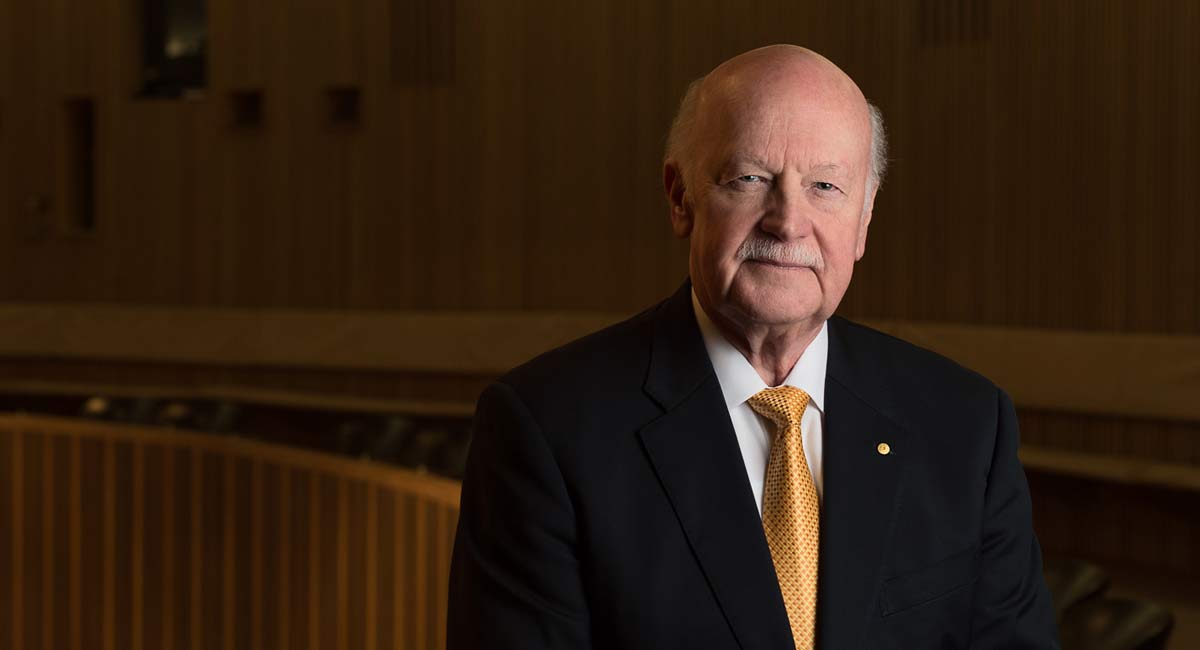
Academy President Professor John Shine
Australians are already experiencing the devastating impacts of climate change which contributed to the recent floods in NSW and QLD, and the 2019–20 summer bushfires. As identified in the Academy’s report The risks to Australia of a 3°C warmer world, without action, these events are expected to become more frequent and intense in the future.
Without further policy action, global warming between 2.2 and 3.5°C is expected within the next 80 years. All countries and sectors need to act now to limit future warming by rapidly reducing greenhouse gas emissions from human activity. We need to halve global carbon dioxide emissions within the next decade to have a 50% chance at restricting warming to 1.5°C.
The IPCC report shows a path and the tools to reduce our emissions across energy, industry, cities, agriculture and transport, but rapid, fundamental change is required. Both technological solutions and policy actions are needed to transition to net zero and beyond to net negative emissions.
The report presents opportunities for Australian industries that support our national interest including energy, critical minerals and agriculture. Australia is in a strong position to capitalise on its natural resource wealth including critical minerals such as lithium and copper for clean energy technologies. Green steel and hydrogen are also potential export industries.
Agriculture (and land use) is a large contributor to emissions. Measures such as carbon trading, sustainable crop management, soil carbon management and biochar can improve soil fertility, provide income to farmers and reduce emissions. Conserving ecosystems such as coastal waterways and using our large land mass for afforestation would also help.
Australia’s cities will need to employ solutions such as renewable energies, electrified transport, and carbon uptake and storage through building materials to reduce emissions.
The solutions we need to contribute our fair share to global efforts to reduce emissions are more readily available than ever before. To avoid the worst impacts of climate change on our health, economic security and environment now and into the future, Australia’s leaders must move to swiftly and decisively reduce emissions and deploy scientifically proven technologies that will decarbonise our nation while creating jobs and protecting our economic prosperity.
Professor John Shine AC PresAA FAHMS(Hon) FRS
President
Australian Academy of Science
Professional athletes subjected to unjustified collection of personal data
The degree of personal surveillance and body monitoring currently tolerated in professional sport may be permitted in community sports and other workplaces if the current status quo of collecting excessive personal data remains unchallenged, according to a leading group of experts.
As some of the world’s great sports enthusiasts, Australians might think they know about the role athlete data plays in professional sport.
But as sports fans, not just in Australia but around the world, watch their favourite athletes in action, how many of them are aware of the full extent of personal information being collected on and off the field, from sensor and video-based monitoring of athlete’s bodies during competition and training, to the intimacies of mental health, sleep quality, food intake and menstruation?
A new discussion paper released today, by the 12-member Expert Working Group convened by the Australian Academy of Science and the University of Western Australia’s Minderoo Tech & Policy Lab, says the growth in personal information collected about Australian professional athletes has outpaced the scientifically proven benefit to players, with the number of parties interested in this information – especially commercial parties – dramatically shifting the risk vs reward ratio against the athletes.
The discussion paper seeks to start a national conversation to identify gaps and potential risks related to sports data governance across the major football codes, basketball, netball and cricket in Australia. The working group says legal and ethical guardrails and a significant uplift in literacy and governance are necessary to ensure that athletes and their rights are protected and promoted, both in their own interest and in the public interest.
The group focused its attention on professional sport as the frontier of human monitoring but expressed concern that there is increasing uptake of these practices and technologies in junior sports and development pathways.

Led by co-chairs Associate Professor of Law and Technology Julia Powles and Professor of Artificial Intelligence Toby Walsh FAA and domain experts in sports science and sports governance, the group found collecting personal information on and off the field is now so commonplace that it is simply a matter of routine.
Many athletes and the broader public are unaware of how expansive and invasive the practice has become, prompting the question: what are we really measuring and why?
Associate Professor Powles said there is an alarming distance between how sports currently manage athlete information and existing legal requirements.

“Athlete data collection is almost completely unregulated, leaving it open to serious risks including privacy and security breaches, commercial exploitation, and misuse that impacts on careers and livelihoods,” said Associate Professor Powles.
“This is all the more startling when assessed against the minimal gains this powder keg of data delivers, in terms of improving player performance, development and wellbeing.”
Professor Walsh said the team was eager to initiate a discussion on the necessary limits to be placed on data collection and use in professional sport to avoid exploitation of athletes.
“With no disincentives and limited perceived risk around amassing ever-more data, accompanied by speculative promises that machine learning and future technologies will reveal novel insights, many sports currently have more data than they can demonstrate is useful,” Professor Walsh said.
The conclusion of the Expert Working Group is that Australia has a historic opportunity to set forward-looking practices for sports data governance, including legal, organisational and ethical limits around athlete data collection and use.
The Australian Academy of Science acknowledges support from the Minderoo Foundation’s Frontier Technology Initiative and the UWA Tech & Policy Lab for this project.
Launch event
6pm, 13 April 2022
The discussion paper is being launched at an event that is bringing together experts in professional sport, sport science, artificial intelligence, law, and governance to discuss the issues raised in the paper. The panel discussion will be chaired by renowned sports broadcaster Tracey Holmes.
Academy releases ‘Science and Australia's positive future’ position statement ahead of election
Australia must seize the opportunity to secure our future economic and social prosperity through investment in science, says the Australian Academy of Science in a released position statement.
The statement, published ahead of the 2022 federal election, contains recommendations for the next Australian government to help secure Australian jobs and industries with science.
“We are living through one of the most far-reaching upheavals since the Industrial Revolution,” says Academy President Professor John Shine.
“Science affects every domain of society, government, national identity and security – how will we embrace the possibilities of science, and secure the benefits of this transformation for Australians?”
The pandemic in Australia has brought about great purpose but also great uncertainty for scientists, who have been affected by reduced funding, job losses, increased workload and declining morale.
Despite one-off funding measures during the pandemic, Australia’s investment in research and development as a percentage of GDP has declined over the past decade.
“The science which helped inform the public health response to the pandemic – and designed, tested and manufactured vaccines – resulted from decades of patient investment worldwide and in Australia,” says Academy Chief Executive, Anna-Maria Arabia.
“At the time of investment, we couldn’t have known what we would face in the future – but patient investment secured the knowledge Australia needed to respond to a global pandemic.
“If we had waited for the crisis to invest, it would have been too late.”
The statement calls on the next Australian government to secure Australia’s future through:
- securing the scientific base through a long-term investment strategy for science
- advancing a cohesive, national approach to securing new jobs and industries through science and technology
- establishing robust and permanent mechanisms for independent science advice to inform policy across all of government
- undertaking a national whole-of-government review of the science and research system.
Learned academies to supercharge Australia’s global science and technology profile with $18.2 million government investment
The Australian Academy of Technology and Engineering (ATSE), in collaboration with the Australian Academy of Science, will deliver the Australian Government’s $18.2 million ‘Global Science and Technology Diplomacy Fund – Strategic Element’, a key part of the new $60.2 million GSTDF fund.
Over the next four years, the fund will support international collaboration to enhance Australia’s profile in science and technology research and application. Australian business, entrepreneurs and researchers can capitalise on international opportunities to commercialise their cutting-edge products and services and strengthen scientific collaborations.
The fund will advance strategic areas such as boosting the competitiveness of Australian advanced manufacturing; artificial Intelligence and quantum computing to create a safe, trusted and secure digital economy; hydrogen production to provide a zero-emissions fuel source with strong export potential; and emerging applications of RNA (including mRNA) vaccines and therapies to improve health outcomes.

Academy of Science Foreign Secretary Professor Elaine Sadler AO FAA. Photo: Australian Academy of Science
ATSE’s CEO Kylie Walker said, “By increasing links between Australia’s STEM leaders and global partners, we have a unique opportunity to unlock access to international networks that can boost our sovereign capabilities, grow our economy and build our international science and technology reputation in a win, win, win.
“The Academies have a strong commitment to international engagement, a long history of successfully supporting it, and are steadfast advocates for social and economic development that benefits all Australians. ATSE is proud to collaborate with the Academy of Science to deliver this new initiative, funded by the federal Department of Industry, Science, Energy and Resources,” Walker said.
The Academy of Science’s Foreign Secretary, Professor Elaine Sadler said, “The Global Science and Technology Diplomacy Fund will create a flexible and streamlined approach to supporting international collaboration at a time when we need it most. By identifying and supporting strategic international science and research collaboration with identified partners worldwide, the fund will boost Australia’s science and technology research and commercialisation effort.”
ATSE and the Academy of Science will draw on the expertise of their learned fellowships to support Australian researchers and innovators to build global science and technology collaborations, amplify commercialisation potential and strengthen Australia’s standing as a global science leader.
Nominations open for 2023 honorific awards and funding
Nominations are now open for the Academy’s 2023 honorific awards, research conferences, research awards and travelling fellowships.
Each year, the Australian Academy of Science shines a light on researchers who have made outstanding contributions to science, and in progressing the advancement of science in Australia, by awarding our prestigious honorific awards.
The awards recognise remarkable achievements in research fields including Earth sciences, biology, physics, mathematics, chemistry, biomedicine and more.
The Academy is committed to celebrating and supporting diversity. We are seeking nominations of outstanding scientists from all career stages, backgrounds and genders, and strongly encourage more nominations of women and other under-represented groups for all awards, in particular the career and mid-career honorific awards.
The closing date for honorific award nominations is 1 May 2022.
The closing date to apply for research conferences, research awards and travelling fellowships is 1 June 2022.
Find out more about the Academy’s awards, including how to nominate or apply.
For further information on the 2023 award round, please download the awards fact sheet (PDF, 1.28MB).
In the 2022 award round, we recognised Australian scientists’ discoveries across a breadth of research fields and career stages.
Budget contains science measures but misses opportunity to secure research base
The 2022–23 Federal Budget contains some welcome measures for science but falls short on the vision needed to support Australia’s economic recovery and protect our future.
The Australian Academy of Science welcomes funding of $5.3m over two years to improve the National Science and Technology Council provision of evidence-based advice to government.
Academy President Professor John Shine said it was pleasing to see that mechanisms that bring science to the service of government will not be lost during or after Australia’s recovery from the pandemic.
“This must continue to be an important part of our future preparedness,” Professor Shine said.
The ongoing provision of evidence-based advice to independently inform government decisions was recommended in the Academy’s pre-budget submission.
Academy President Professor John Shine said the Academy also notes the Budget’s focus on space, mRNA manufacturing, medical research and funding for the University Research Commercialisation Fund.
“Research translation, commercialisation and acceleration will be crucial for keeping Australia safe,” Professor Shine said.
“But this Budget falls short of the vision needed to put Australia on a strong footing in an uncertain future.
“It is disappointing that fundamental science capability is not recognised as the first essential step in the commercialisation effort, and there are no measures to boost basic research investment.
“This at a time when science is at the heart of every major issue being faced by our nation: the pandemic response; national security, mitigating and adapting to climate change; and recovering from flood and other extreme events,” said Professor Shine.
“Advanced industrial societies depend on a secure and active science sector to help deliver high-wage jobs and high-value industries to maintain the standard of living for their people and to propel economic growth. Australia is no different.”
“For scientists, the pandemic in Australia has brought about both great purpose and great uncertainty. Too many have been affected by reduced funding, job losses, increased workloads, and declining morale.
“Despite one-off funding for research and science during the pandemic, in 2021 the Australian Government’s investment in science was 0.56% of Gross Domestic Product (GDP)—which is lower than comparable nations—and less than R&D investment in 2010,” Professor Shine said.
The Academy welcomes the following measures announced in this Budget:
- $2b for a Regional Accelerator Program
- $1.3b for Australia’s space sector
- $83.1m for Australia’s circular waste economy
- $66.3m new funding for AIMS
- $50.5m for a virtual Critical Minerals R&D Centre
- $37.4m for research translation at CSIRO
- Expansion of the patent box tax concession to low emissions and agricultural technologies
- Continuing support for women in STEM, across the career pipeline.
- Continuing support for the Modern Manufacturing Strategy
Celebrating cultural diversity
“Don’t speak about yourself.” This was the advice given to incoming Academy President, Professor Chennupati Jagadish, growing up.
“I was taught that it is for the rest of the world to judge how good or bad you are. That is challenging when to succeed you must market yourself or promote your own research,” Professor Jagadish says.
“Culturally, it's a quite different way of looking at life.”
Each year, March 21 marks the United Nations International Day for the Elimination of Racial Discrimination, highlighting the importance of meaningful participation and representation in all areas of decision-making to combat racial discrimination.
Building from this, Harmony Week not only celebrates Australian cultural diversity*, but also aims to increase awareness of the ongoing mistreatment and lack of representation of culturally diverse people, particularly in workplaces.
With dedicated and persistent effort needed to achieve meaningful reconciliation, Australia has additional and unique complexity to discussions on cultural diversity. The Academy recognises and respects the diversity of cultures, languages, kinship structures and ways of life of Aboriginal and Torres Strait Islander peoples, and is committed to playing its part.
This year, Harmony Week had a focus was on inclusiveness, respect and a sense of belonging for everyone.
Important for science
Although the STEM-qualified population in Australia has a larger migrant representation than the general population, there is still a long way to go to support increased cultural diversity in the workforce. There is also a need for more research into cultural identity within the Australian STEM workforce.
The Australian Government’s Advancing Women in STEM report found that girls and women face multiple barriers to STEM participation, especially if they were from minority groups, rural and remote areas and disadvantaged backgrounds.
There has been growing awareness of the lack of representation in STEM, especially of culturally diverse people and in particular culturally diverse women. According to STEM Sisters, less than 40% of the STEM workforce are women, and of this, only a small fraction is culturally diverse.
“We need to include and sustain more STEM women of colour in the Australian STEM workforce by promoting a career in STEM as attractive and attainable as any other,” says STEM Sisters.

“I think finding a mentor or someone who can relate to my story and experiences as a black, immigrant woman in STEM has been hard,” says Kudzai Dune in a recent interview on the Academy’s STEM Women directory, a platform which seeks to make women in STEM and other under-represented groups more visible.
“There aren’t a lot of us out there. I’m finding that there are more people who fit this category coming through now, but not so many who have been doing it for a while,” said Kudzai Dune.
We all have a role to play
As a leader in the STEM ecosystem, the Academy recognises it has a role in advancing the discussion, in improving our own practices to eliminate racial discrimination in all its forms, and in ensuring that STEM workplaces are safe and inclusive for everyone.
Under-representation and underutilisation of the workforce are threats to Australia’s prosperity. Women in STEM Decadal Plan
As a nation we can ill afford to under-utilise all the available STEM talent.
We must work together to ensure that every Australian is able to access the transformational opportunities STEM offers and be able to thrive and contribute to Australia’s STEM sector.
Myriad reports outline gender disparities within the STEM sector, but further research on intersectional identities and the bias and barriers that culturally diverse people experience would help the sector take evidence-informed action.
As part of Harmony Week 2022, the Academy spoke with Academy Fellows, early- and mid-career researchers, industry representatives and staff, to capture their valuable stories and experiences on cultural diversity. You can read their interviews on the STEM Women blog.
Organisations can support development and increased participation of culturally diverse individuals in STEM by centring the voices and lived experiences of staff and ensuring that language and practices reflect everyone within their workforce.
There is incredible work being done by many organisations within the STEM sector to continue to address the challenges and barriers faced by culturally diverse individuals. Some organisations working to remove barriers experienced by people from culturally diverse backgrounds include:
- STEM Sisters, which supports women of colour (WOC) to challenge and overcome intersectional, gender and racial barriers in STEM education and employment. It achieves this by addressing all stages of the STEM pipeline, through engagement with STEM students and cohorts of recent STEM graduates, early-career STEM professionals, STEM returners and STEM experts.
- DeadlyScience, which aims to relieve educational poverty for remote and Indigenous students in Australia. It resources schools with STEM learning materials and equipment, connects them to STEM professionals, and runs programs that target systemic sources of educational disadvantage. It hopes to establish lasting change to disrupt cycles of educational poverty in Indigenous communities.
- QueersInScience, an Australian initiative that is building community and improving support for LGBTQIA+ people in STEMM (science, technology, engineering, mathematics, and medicine). It embraces LGBTQIA+ people of diverse ethnicities, cultural backgrounds, disabilities, religions, ages and gender identities, and acknowledges the unique place in the community of Aboriginal and Torres Strait Islander peoples, placing intersectionality at the forefront of its decision-making.
More on the Academy’s commitment to promoting and sustaining diversity and inclusion in the STEM sector is covered in our Diversity Strategic Statement.
*The term cultural diversity refers to the differences between cultures which are associated with race, ethnicity, national or geographical origin. You can find more information on the Federation of Ethnic Communities’ Councils of Australia fact sheets.
Academy Fellow honoured for international scientific collaborations
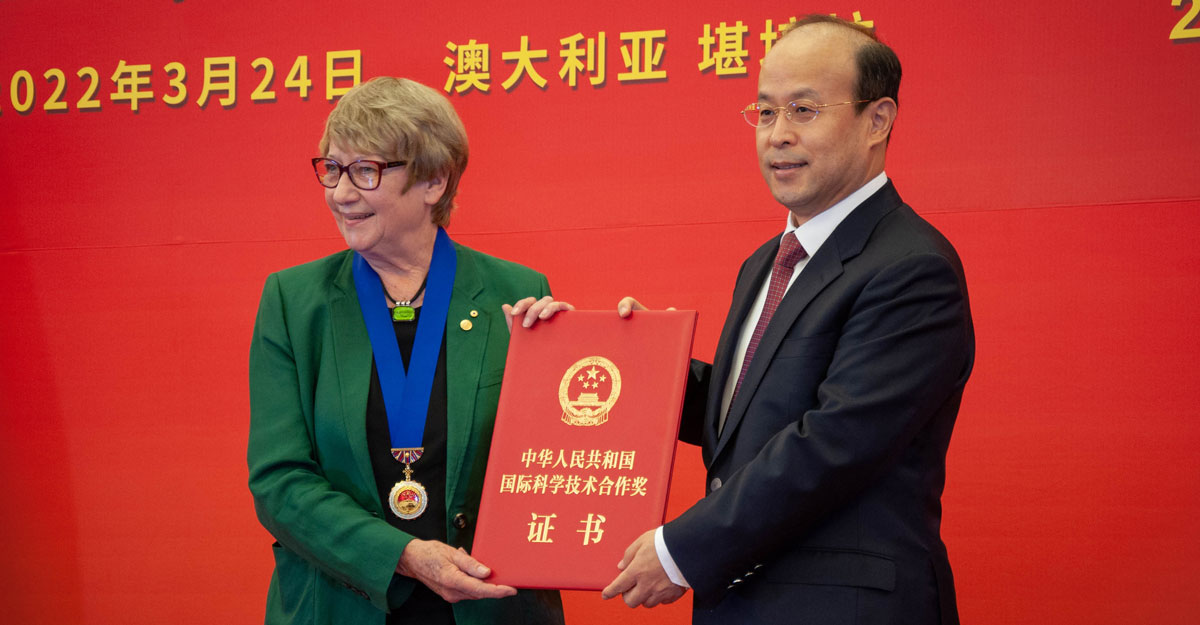
Academy Fellow Professor Sue O’Reilly AM FAA has been honoured with one of China’s most prestigious awards in recognition of her work promoting scientific and technological cooperation between China and Australia.
The China International Science and Technology Co-operation Award is the nation’s highest scientific honour for non-national individuals and institutions.
Professor O’Reilly is the second Australian to receive this international award, which was announced in 2020.
It was originally to be presented in China by Chinese President Xi Jinping, but pandemic travel restrictions prevented this.
The award was instead recently presented to Professor O’Reilly by His Excellency Mr Xiao Qian, Ambassador of the People’s Republic of China, in a ceremony at the Chinese Embassy in Canberra.
“Professor O'Reilly epitomises the two-way endeavours to promote China–Australia exchanges and cooperation in science and technology,” Ambassador Xiao said in his address.
“What she represents is a broad-mindedness to pursue ideals across national borders, and deep feelings and friendship for China.”
Building collaborations
Professor O’Reilly has been building collaborations with China since 1982, when she led the first Australia petrological-geological delegation to the country after it opened, following the end of the Cultural Revolution.
“At that time, more was known about the rocks and structures on the surface of the moon than about the continent, and indeed the Earth, beneath our feet,” said Professor O’Reilly in her acceptance speech.
“China […] was a natural laboratory – a Rosetta stone – to be able to understand the geological meaning of deep earthquake waves, [and] my co-workers and I could not have done our scientific work in understanding the deep Earth in any other location at that time.
“Our Chinese colleagues have provided different expertise and perspectives to ours, enabling enormous intellectual leverage to a very significant area of geoscience – a true demonstration of synergy.”
Professor O’Reilly said the award demonstrates that science cooperation is a robust bridge that can unite people and institutions from different cultures and backgrounds for the great benefit of all those involved.
“This award is also proof that science collaboration is a powerful way to build lasting international bonds and ongoing cooperation in an increasingly complex world – a world that we all share and must shape for the future,” she said.
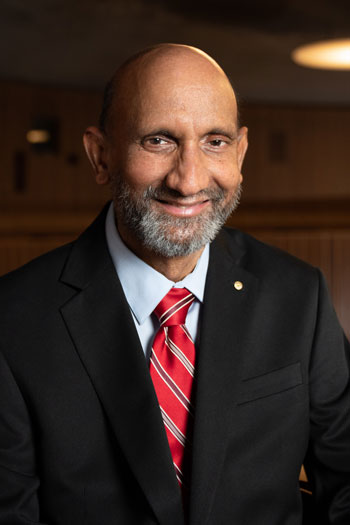
Academy President-Elect Professor Chennupati Jagadish AC FAA FTSE. Photo: Australian Academy of Science
President-Elect of the Academy, Professor Chennupati Jagadish AC FAA FTSE, said that international scientific collaborations are more important than ever to find solutions to major global problems, and to enhance economic productivity and competitiveness through innovation.
“The international research effort in response to the COVID-19 challenge demonstrates the power of science, to which international collaboration is indispensable,” said Professor Jagadish.
Elected a Fellow of the Academy in 2002, Professor O’Reilly previously served as Chair of the Academy’s National Committee for Earth Sciences and led the development of the Decadal plan for Australian Geoscience.
She is currently the Academy’s spokesperson on diversity and inclusion, and has significantly advanced diversity and inclusion practices across the Academy and across the STEM sector.
The Australian Academy of Science and the Chinese Academy of Sciences have been collaborating in bilateral activities since 1978, with the Australian and Chinese governments signing an agreement on cooperation in science and technology in 1980.
Currently, about 15% of Australia’s research publications are jointly completed with Chinese scientists.