




Three Aussie innovators to compete in Berlin for Falling Walls Lab 2022

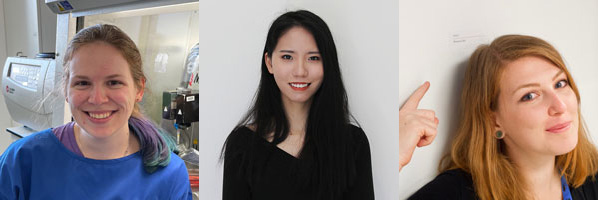
Merry Fraser, Clara Jiang and Mars Buttfield-Addison. All photos supplied.
Merryn Fraser from the Australian National University is the winner of the seventh Falling Walls Lab Australia event, hosted online by the Australian Academy of Science in partnership with the Embassy of the Federal Republic of Germany in Canberra, DAAD, the German Academic Exchange Service and EURAXESS Australia and New Zealand.
Merryn’s work explores the biology of Plasmodium parasites which cause malaria, using modified cholesterol molecules to sneak antimalarial drugs past the parasite’s defences.
Second place went to Clara Jiang from the University of Queensland, whose idea of repurposing drugs which share similar gene expression fingerprints, like statins and anti-depressants, could save time and money.
Mars Buttfield-Addison from the University of Tasmania took third place, with her idea of using existing sensors such as astronomical radio telescopes to track space debris.
The three Australian winners will represent Australia in the hybrid Falling Walls Conference 2022 alongside the other 97 global winners, and the top 10 global finalists will compete in the Falling Walls Pitches on 7 November in the Emerging Talents category.
The question of every Falling Walls Lab is: Which walls will fall next?
Three-minute pitch
Each participant had three minutes to highlight their research work, business model or unique initiative to the jury of distinguished academics and industry representatives chaired by Academy President Professor Chennupati Jagadish.
The ten contestants presenting at the Australian finale event were selected in heats held at Falling Walls Lab Sydney, organised by DAAD, the German Academic Exchange Service and EURAXESS, and Falling Walls Lab Brisbane, organised by the Queensland University of Technology.
Finalists
The ten finalists who presented their break-through ideas:
- Mars Buttfield-Addison from the University of Tasmania: Breaking the Wall of Space Debris Prevention
- Tess Brading from Queensland University of Technology: Breaking the Wall of Paediatric Chronic Pain
- Merryn Fraser from the Australian National University: Breaking the Wall of Drug Resistant Malaria
- Clara Jiang from the University of Queensland: Breaking the Wall of Treating Depression
- Chanchal Kurup from the Australian Catholic University: Breaking the Wall of Borders in Nursing
- Danielle Lee from Griffith University: Breaking the Wall of Antifungal Resistance
- Oliver Lotz from the University of Sydney: Breaking the Wall of Medical Device Bioactivity
- Martino Malerba from Deakin University: Breaking the Wall of Hidden Carbon Emissions in Agriculture
- Nipuni Peththa Thanthrige from Queensland University of Technology: Breaking the Wall of Crop Loss
- Fiona Harshini Roy Desmond Godfrey from Monash University: Breaking the Wall of Decarbonising the Planet
Learn more about the finalists and their ideas.
Jury members
The event organising partners are grateful for the involvement of the jury members for Falling Walls Lab Australia:
- Professor Chennupati Jagadish AC PresAA FTSE – President, Australian Academy of Science
- Professor Lyn Beazley AO – Secretary, Education and Public Awareness, Australian Academy of Science.
- Rosie Hicks – Chief Executive Officer, Australian Research Data Commons
- Dr Hilary Howes – Head of Science and Innovation, Embassy of the Federal Republic of Germany, Canberra
- Dr Vanessa Moss – Astronomer, CSIRO
- Craig Pandy – Partner, Government and Economic Development Kearney (Australia)
- Professor Michael Schuetz – Director, Jamieson Trauma Institute
About Falling Walls Lab
Each year, the Falling Walls Foundation supports scientific organisations around the world to host a Falling Walls Lab. This international forum promotes interdisciplinary connections between aspiring academics, innovators, entrepreneurs, investors, and professionals known for their excellent work.
Each year, nearly 100 international Labs are held with more than 1000 presenters, 100 of whom make it to the final in Berlin.
In 2019, Australian researcher Rhys Pirie took out first place at the Falling Walls Lab Finale in Berlin and was named 2019 Young Innovator of the Year. Read more about his success and a follow-up interview six months after winning the competition.
The Falling Walls Foundation is a non-profit organisation in Berlin dedicated to the support of science and the humanities. It was established in 2009, 20 years after the fall of the Berlin Wall. At its heart is the question ‘Which are the next walls to fall?’ as a result of scientific, technological, economic and sociological breakthroughs.
Learn about Fallings Walls Lab Australia and previous years’ winners.
Academy welcomes STEM Equity Monitor report
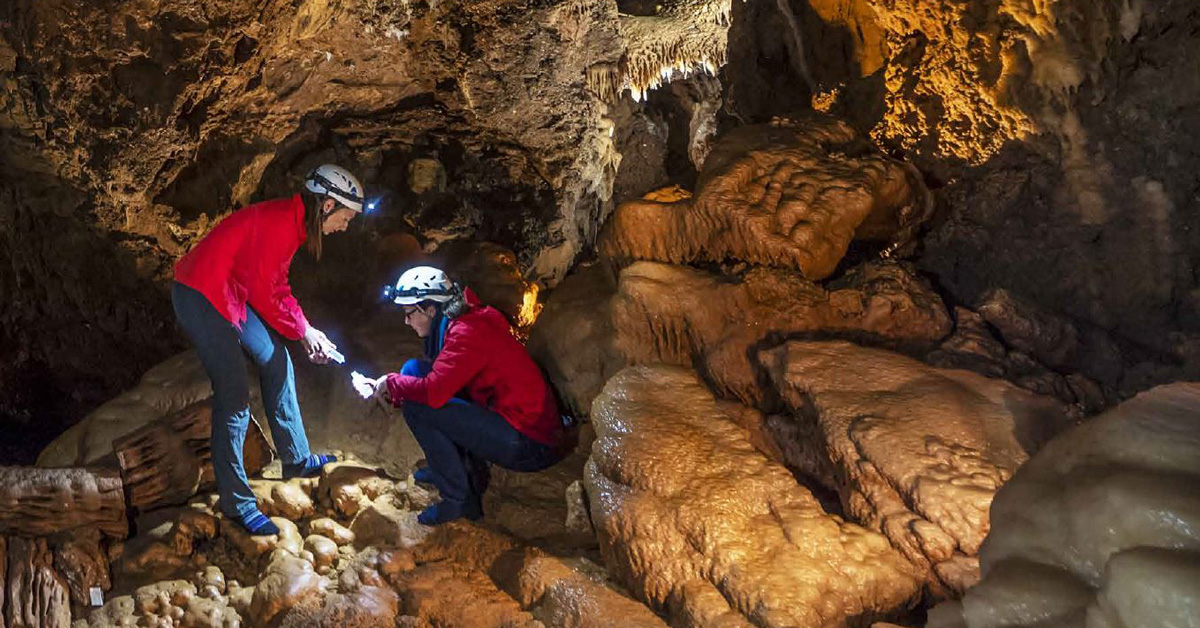
The Australian Academy of Science says the results of the latest STEM Equity Monitor reinforce the need for stronger action to remove barriers preventing gender equity and greater diversity in STEM.
Academy President Professor Chennupati Jagadish welcomed the report and said it highlighted the importance of robust and ongoing data collection and evaluation to inform decision-making.
“The report shows a modest increase in women’s workforce participation and enrolments in university STEM courses, which is great to see,” Professor Jagadish said.
“However, it’s concerning to see that girls’ confidence in all STEM subjects falls as they get older and that girls are more likely than boys to list lack of interest as a barrier to studying STEM.
“We must do more to create a more accountable STEM ecosystem that enables the attraction, retention and progression of diverse communities in STEM.
“If we wish to see greater diversity at senior levels in STEM professions, we must take actions that are evidence informed. The STEM Equity monitor is a valuable tool to guide decision-making and to drive investment into measures that work.
“As the Academy’s ten-year Plan for Women in STEM made clear, if you can’t measure it, you can’t improve it.
“The Women in STEM Decadal Plan shows that evaluating programs and activities is critically important so proven measures can be taken to achieve equity in STEM,” Professor Jagadish said.
“To break down persistent barriers faced by under-represented communities, the STEM ecosystem – government, academia, educators and industry – needs to push in the same direction and harness the opportunities in the Women in STEM Decadal Plan so as to reach gender equity by 2030.
"The Academy’s Women in STEM Decadal Plan Champions are an excellent example of the impact of collective action from industry and leading practice employers who are committed to addressing gender equity within the decade,” he said.
The Academy applauds the development of an evidence-based evaluation framework by the Women in STEM Ambassador Professor Lisa Harvey-Smith, and improved data collection, monitoring and reporting by the Australian Government.
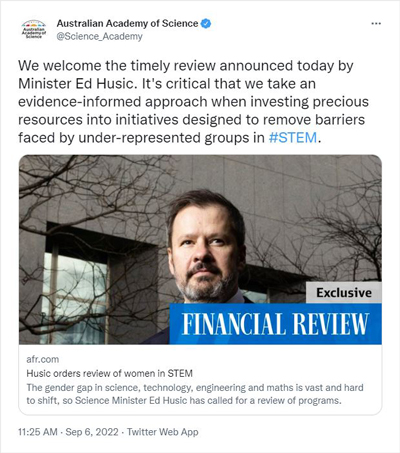
Earlier this month, the Academy welcomed the announcement by Industry and Science Minister Ed Husic to review how existing government programs can be reformed to support greater diversity in Australia’s science and technology sectors.
“Demand for STEM skills will continue to grow, so Australia can ill afford to under-utilise all of the nation’s available talent.
“We welcome a widening of the national discourse to boost participation of other under-represented groups including gender diverse people, First Nations people, culturally and ethnically diverse, mature workers, LGTBQIA+, and those living with disability, amongst others,” Professor Jagadish said.
In 2022, the Academy achieved 50/50 between men and women in the annual election of new Fellows. The Academy is taking an evidence-based approach to better understand and remove barriers experienced by under-represented groups and to support emerging STEM professionals.
New areas of research must be explored to achieve negative emissions

Australia’s research expertise, wealth of critical minerals and renewable energy potential could make it an international leader in removing carbon dioxide from the atmosphere, according to leading experts.
The country’s unique strengths and comparative advantages were part of a discussion on novel negative emissions approaches at a national roundtable hosted by the Australian Academy of Science in September.
The event was chaired by Academy President, Professor Chennupati Jagadish AC PresAA FTSE, with participants including experts in greenhouse gas (GHG) removal, storage and use, climate and environmental science, climate policy, and governance and innovation policy.
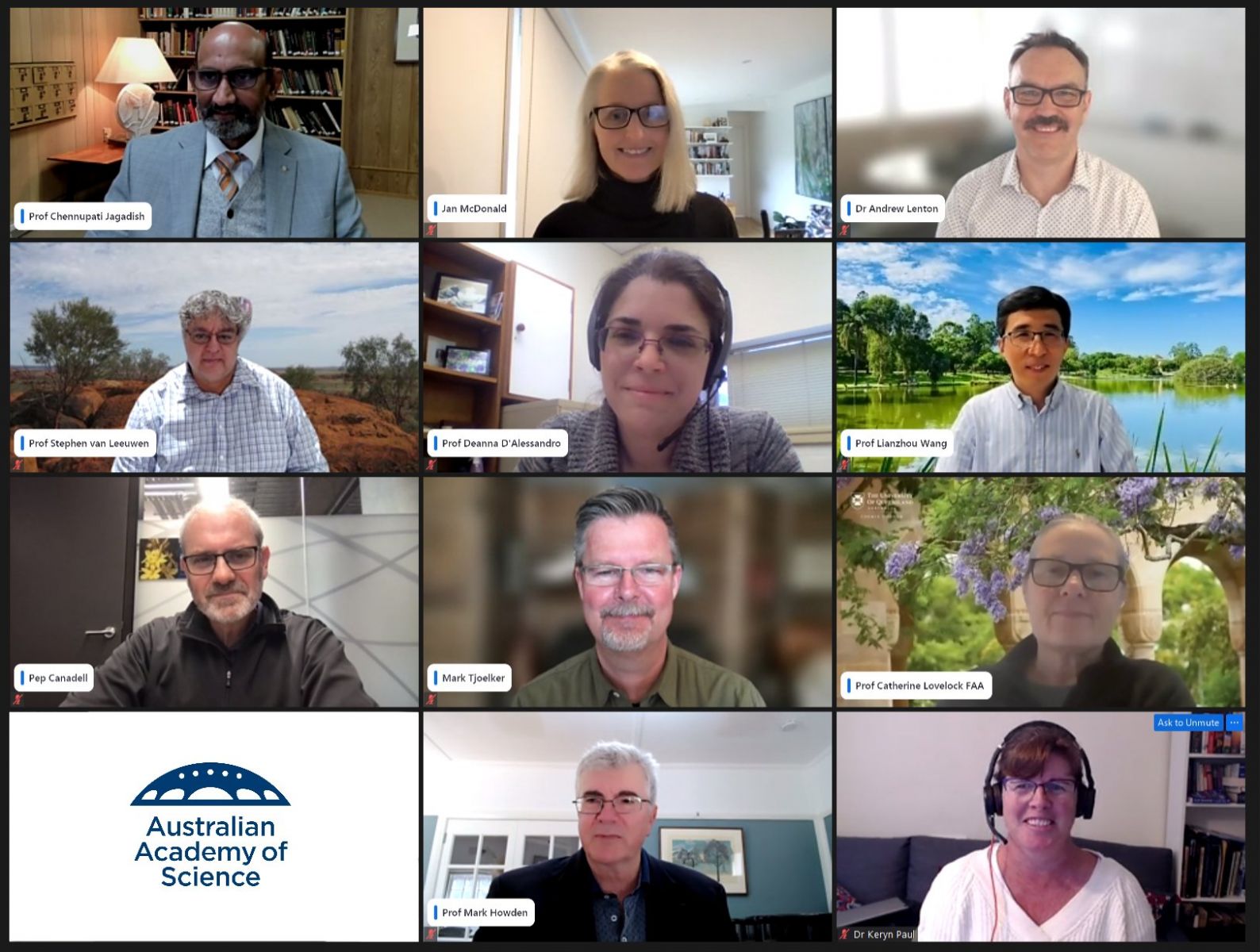
Questions the roundtable sought to discuss included:
- How do we develop the capacity to drawdown GHGs at a globally effective scale while reducing emissions to close to zero?
- Do we have the knowledge and science capability?
The participants agreed that of the present methods used for removal of GHGs (primarily CO2) and its long-term storage or utilisation, none are at the scale required. They concluded that reducing GHG emissions as much and as fast as possible is the highest priority to limit global warming. In parallel, we need rapid and large-scale removal of GHGs from the atmosphere, combined with long-term storage.
The roundtable identified opportunities for Australia including the importance of creating an innovation and regulatory environment to accelerate the development of novel approaches, and investing in human capital, especially young researchers, to develop negative emissions research capability.
Participants identified a range of novel approaches across capture, storage, utilisation and monitoring. These are new areas of research that could prove fruitful but are currently not a core part of the negative emissions discussion. Participants highlighted that a wide range of options should be explored as part of a portfolio of solutions to achieve greenhouse gas removal. Some of these novel approaches will be discussed in the full report on the outcomes of the roundtable to be released later this year.
The report will offer guidance to the Australian research community, private sector, and governments on opportunities for development of negative emissions approaches in Australia.
Academy President elected to Royal Academy of Engineering
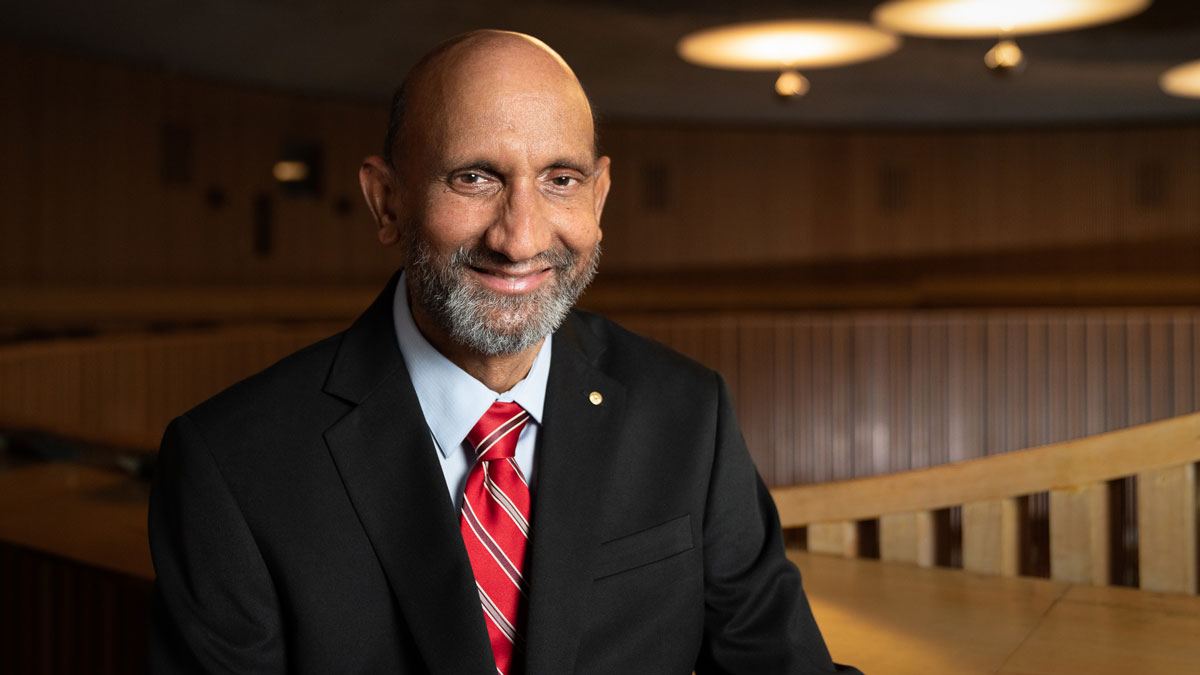
Australian Academy of Science President, Professor Chennupati Jagadish AC PresAA FTSE, has been elected an International Fellow of the United Kingdom’s Royal Academy of Engineering.
Professor Jagadish was elected by his peers for his pioneering work in applying nanotechnology to semiconductor optoelectronic sources and detectors, as well as his significant contributions to semiconductor lasers, optoelectronic integration and nanowire devices.
His work is widely exploited in optical communication systems and infrared detectors used in the defence, biomedical and manufacturing industries.
Professor Jagadish is one of seven International Fellows elected this year, alongside 60 Fellows from within the United Kingdom and five Honorary Fellows.
Professor Jagadish said it is a great honour to be elected to such an esteemed body.
“I look forward to joining the Fellows of this national academy to champion excellence in engineering, both in practice and advocacy, and bringing its many benefits to the public,” Professor Jagadish said.
The Royal Academy of Engineering is the UK’s national academy of engineering, providing leadership for engineering and technology and independent expert advice to government in the UK and elsewhere.
It was founded in 1976 with support from the late HRH Prince Philip, The Duke of Edinburgh, and is composed of a Fellowship of almost 1,700 eminent engineers.
Professor Sir Jim McDonald FREng, President of the Royal Academy of Engineering, said he was delighted to welcome such an array of enormously talented people to the Fellowship of the Royal Academy of Engineering.
“In an uncertain world, one thing is certain – engineering skills, vision and leadership will play a crucial part in addressing the escalating domestic and global challenges that we face today.
“The combined connectivity, professionalism, experience and wisdom of the new Fellows who join us today will greatly enrich the expertise and support we can provide to the government and to society in general,” Sir Jim said.
The passing of Her Majesty Queen Elizabeth II
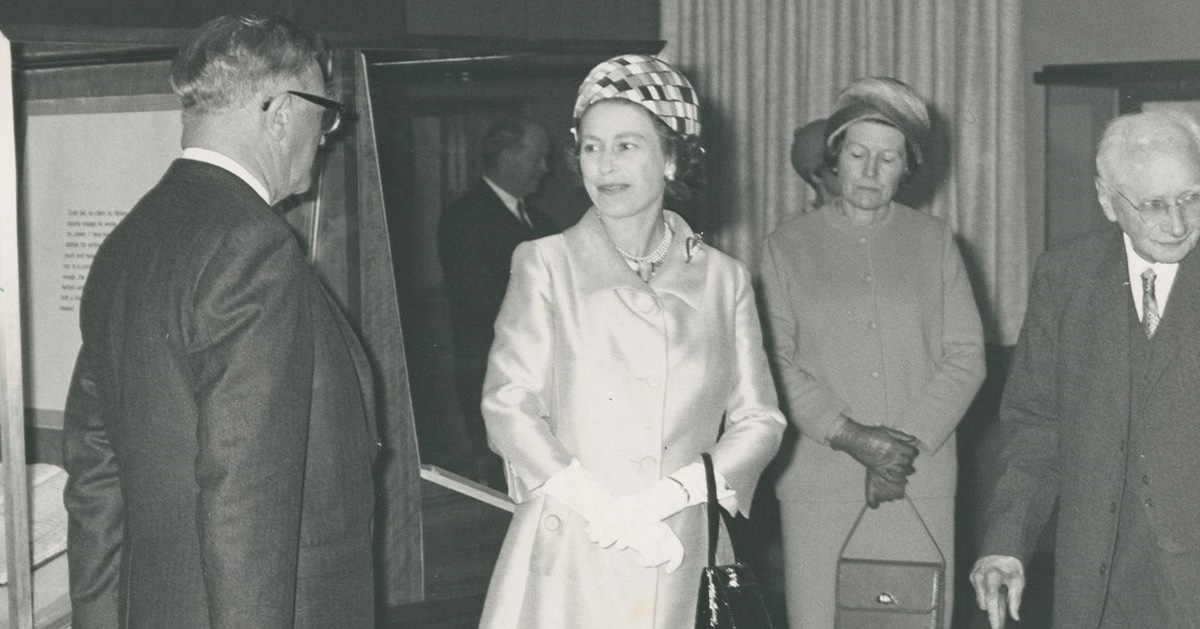
The Australian Academy of Science pays tribute to Her Majesty Queen Elizabeth II.
Throughout her reign, Her Majesty The Queen showed a great appreciation for the transformative power of science and technology, and travelled more widely than any other monarch.
After taking the throne in February 1952, Elizabeth II was the first reigning monarch of Australia to set foot on Australian soil, arriving on 3 February 1954 with her husband HRH Prince Philip, the Duke of Edinburgh.
One month before, Her Majesty affixed her official seal to the founding document of the Australian Academy of Science, the Royal Charter, after Fellows of the Royal Society of London, Sir Mark Oliphant and Dr David Martyn, led a petition to establish a Learned Academy in Australia.
Prince Philip – who had recently become a Royal Fellow of the Royal Society of London and was a keen supporter of science – was asked to present the Australian Academy of Science’s new Royal Charter to the petitioners, but he suggested the occasion was important enough for Her Majesty to present the Charter.
On 16 February 1954, the ten members of the provisional Council of the Academy went to Government House and the Queen handed Oliphant, as President, the Royal Charter of the Academy – founding the Australian Academy of Science.

At the opening of the Shine Dome, five years later, His Excellency Field Marshall Sir William Slim, Governor General of Australia, read the following message from Her Majesty The Queen:
“Please convey my good wishes to all assembled at the opening of the Australian Academy of Science Building on Wednesday. I am confident that the Academy, to which I presented its Charter five years ago, will play a significant part in the acquisition of scientific knowledge and in applying it to the progress and welfare of my subjects in the Commonwealth of Australia.”
Her Majesty Queen Elizabeth II is succeeded by her son, King Charles lll.
The Australian Academy of Science offers its sincerest condolences to the Royal Family. May she rest in peace.
Information and images for this story were sourced from the Academy’s Basser Library and Fenner Archives, which hold a rich historical collection documenting the history of science in Australia. The archives are open to the public by appointment.
Academy confirmed as independent scientific adviser at Folbigg inquiry
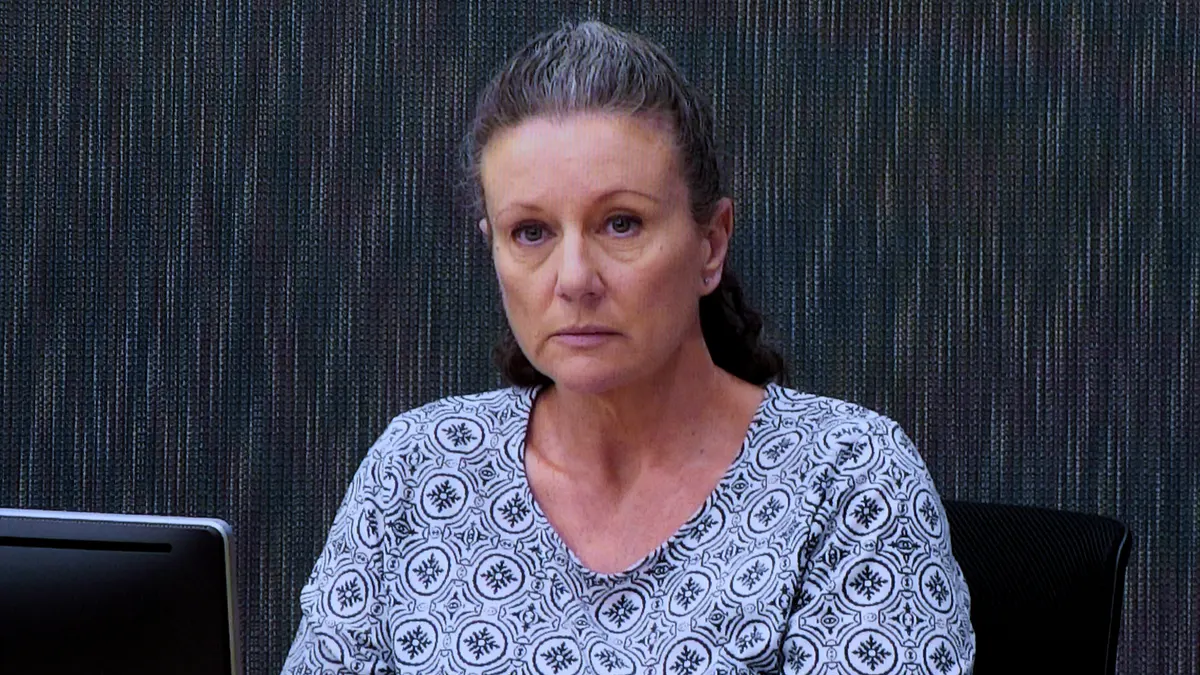
The Australian Academy of Science has been granted leave to appear and be represented by legal counsel at the Second Inquiry into the convictions of Ms Kathleen Folbigg.
The Academy’s role in the Inquiry extends to making submissions addressing:
- suitable experts in areas of specialised scientific knowledge for the purpose of obtaining relevant evidence;
- suitable questions/clarifications for experts who are engaged by the Inquiry;
- scientifically technical aspects of the inquiry: in particular how that science should be approached consistent with appropriate scientific standards and scientific rigour.
The grant of leave does not extend to the examination or cross-examination of witnesses but does not preclude the Academy from making an application to examine or cross-examine any particular witness.
Australian Academy of Science President, Professor Chennupati Jagadish, said the Academy was pleased to be able to provide scientific rigour at the inquiry, as an independent scientific adviser.
“This will ensure the commissioner and senior counsel can hear from the most qualified experts relevant to this case,” Professor Jagadish said.
“Our assistance to the Inquiry is designed to ensure that Commissioner Bathurst is able to call on the best available contemporary science to support the Second Inquiry into the convictions of Ms Kathleen Folbigg.”
Orders made by the Commissioner are published on the website of the Department of Communities and Justice.
Eureka moment for two Academy Fellows

Two Academy Fellows, Professor Veena Sahajwalla and Professor David Lindenmayer, are among Australia’s top scientists and science teams recognised at the prestigious 2022 Eureka Prizes at the Australian Museum.
Closing the loop on waste
An internationally recognised materials scientist, engineer and innovator, Professor Sahajwalla is renowned for pioneering high temperature transformation of waste in the production of a new generation of ‘green materials’.
Her work aims to shift Australia’s mindset to see unwanted products and materials not as waste, but as a valuable resource, reusing and recycling them into new products and creating a ‘circular economy’.
She received the Celestino Eureka Prize for Promoting Understanding of Science.
Real-time biodiversity
One of Australia’s leading ecologists, Professor Lindenmayer has long been known for his original and ambitious approaches to large ecological questions.
His work with Sustainable Farms, which monitored how biodiversity responds to management changes on farms over several decades, has allowed farmers to make informed management decisions – including using BirdCast, a digital tool that helps predict which birds may live in woodlands under different scenarios.
Sustainable Farms received the NSW Environment and Heritage Eureka Prize for Applied Environmental Research.
About the prizes
The Eureka Prizes celebrate outstanding achievements in Australian Science, honouring excellence across the areas of research and innovation, leadership, science engagement and school science.
Two other Academy Fellows were also shortlisted for Eureka Prizes in 2022:
- Professor Toby Walsh was a finalist for the 2022 Eureka Prize for Promoting Understanding of Science, for his leadership in the national and international debate about our artificial intelligence
- Professor Geordie Williamson was a finalist for the 2022 Eureka Prize for Leadership in Science and Innovation, for his contributions and leadership in Australia’s research capacity in pure mathematics.
See the full list of 2022 Eureka Prize winners, and the Academy Fellows recognised in 2020 and 2021.
A new climate vision for a sustainable and equitable Australia
Australia must address social injustices and support communities experiencing multiple and intersecting vulnerabilities as we adapt to a changing climate, argues a new report from Future Earth Australia.
A National Strategy for Just Adaptation, to be launched tonight (6 September) at Parliament House, aims to broaden and reimagine the way adaptation policy, planning and action are framed in Australia.
It will be launched by the Assistant Minister for Climate Change and Energy, Senator the Hon Jenny McAllister.
The strategy, developed over two years by an Expert Working Group of 35 authors from 13 university, government and private partners, highlights how everyday social inequities, uneven capacities and unequal representation undermine how well people can adapt to climate change.
Bhiamie Williamson from the Australian National University, a Euahlayi man from north-west New South Wales and Co-chair of the Expert Working Group that developed the strategy, said a central component in this new approach was recognising and including the voices, experiences and ambitions of the many people who make up Australia today – especially Indigenous Peoples.
“Recent disasters, like the flooding crisis on the east coast, have shown how entrenched inequalities multiply the risks that communities face in times of crisis,” Mr Williamson said.
“Ignoring the diversity of our country’s residents, including their needs, aspirations and capabilities, weakens Australia’s collective ability to adapt.”
Dr Petra Lundgren, Director of Future Earth Australia, said the new strategy provides a counter-narrative to previously developed adaptation strategies.
“It moves from focusing on largely technical elements to encompassing social, political and behavioural strategies and systems change,” Dr Lundgren said.
The strategy forms the backbone of Future Earth Australia’s Reimagining Climate Change Adaptation initiative that began with a state-by-state consultation in October 2020, followed by the Reimagining Climate Adaptation Summit in April 2021.
It sets out the following five practical directions for achieving transformational change in Australia’s climate adaptation planning and practice:
- Empowering Indigenous leadership
- Embedding a just adaptation framework across governments and sectors
- Including the voices and experiences of diverse stakeholders across areas of marginalisation into just adaptation processes
- Supporting communities and community groups to drive transformation
- Advancing research agendas that promote just adaptation
Professor Petra Tschakert from Curtin University, Co-chair of the Expert Working Group, said the strategy looks at adaptation as not merely an adjustment to climatic hazards and climate-related policies, but also as an urgent effort to address and overcome inequities that are all too often couched in the seemingly benevolent language of ‘vulnerable people’.
“It is precisely this labelling of ‘the vulnerable’ that obscures the structural inequities that produce vulnerabilities and maintains the uneven distribution of adaptive capacities in society. We need to move beyond this,” Professor Tschakert said.
About Future Earth Australia
Based at the Australian Academy of Science, Future Earth Australia is a peak initiative that convenes leaders across expertise, sectors and the nation to advance the sustainability agenda and forge pathways to a thriving future.
Future Earth Australia has previously produced national strategies on sustainable oceans and coasts and sustainable cities and regions.
Future Earth Australia’s vision sees Australia and its people thriving in, and contributing to, a sustainable and equitable world. It brings together influential voices to deliver leading research and programs on Australia’s most pressing sustainability challenges, and connects to unique global networks to leverage international expertise.
Expert roundtable to explore new approaches to negative emissions
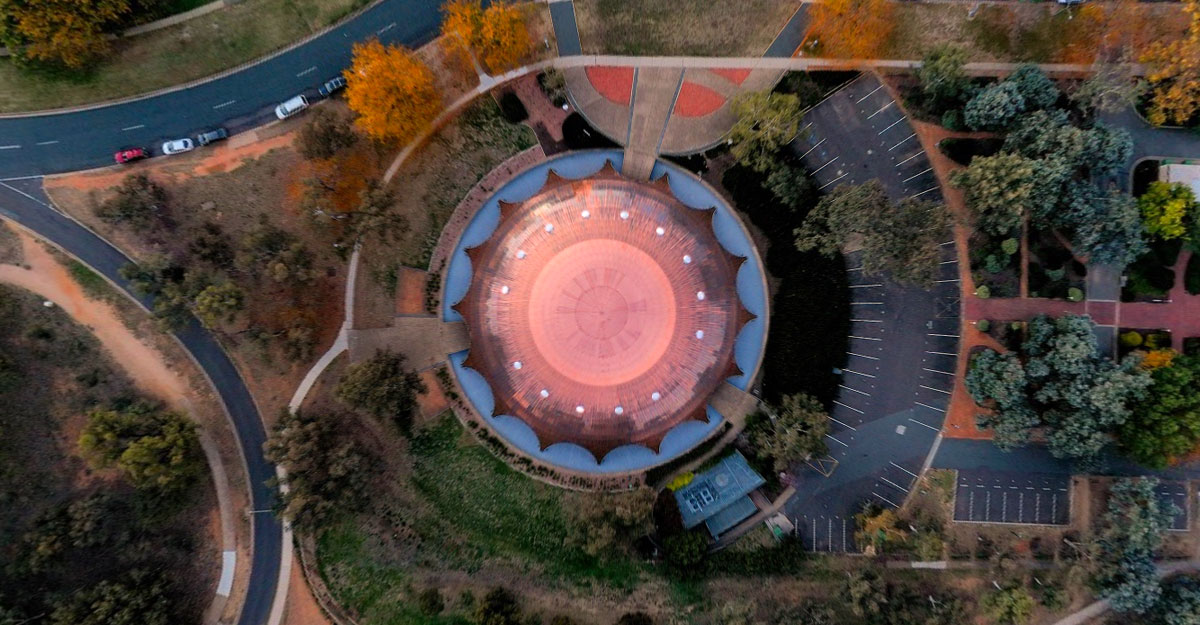
Experts from across Australia will gather for a national roundtable on September 16 to identify new approaches for negative emissions.
The invitation-only event, held online, will be hosted by the Australian Academy of Science and will be chaired by Academy President Professor Chennupati Jagadish AC PresAA FTSE.
The main question the roundtable will consider is the capability of science to draw out new negative emissions approaches, in addition to current approaches.
While Earth’s natural carbon sinks play an important role in absorbing carbon dioxide from the atmosphere, the report from the IPCC Working Group III highlighted the need for methods of removing carbon dioxide from the atmosphere to limit global warming.
Developing a range of negative emissions approaches will better place Australia, and the world, to limit global warming to 1.5°C. This requires exploring innovative future opportunities and options to achieve the scale of carbon dioxide removal required.
This roundtable will focus on identifying additional and different approaches that science might offer, rather than simply building what is already being developed at a larger scale. The roundtable will discuss:
- the impacts of large amounts of CO2 drawdown by natural sinks on ecosystems
- the science capabilities, research and investments needed to deliver new breakthroughs in negative emissions
- Australia’s research strengths and comparative advantage in negative emissions.
A statement summarising the critical outcomes of the roundtable will be released in the days following the roundtable discussion, with a full summary report to be released later this year.
For enquiries about the roundtable, please contact the Academy’s Science Policy team.
Academy archive digitisation project boosted by generous donation
A $100,000 donation by philanthropist and former pharmaceutical executive David Anstice AO will support the digitisation of the historic scientific collections held at the Australian Academy of Science.
The archives, housed in the Academy’s Shine Dome, contain the unique collections of some of Australia’s most famous scientists and have been declared of ‘immense research significance’.
“It seems important to me to keep the torch of science, in my case medical science, burning brightly,” Mr Anstice said, who is originally from Wagga Wagga, NSW but is now based in the United States.
The Academy’s digitisation of the archives program, which began in late 2020, is primarily funded by donations from Fellows and friends of the Academy and would not be possible without this support.
“The Australian Academy of Science, as the pre-eminent Australian scientific body which crosses numerous scientific disciplines, is eminently worthy of support from all who understand just how important science is to humankind, and how significant Australia’s past contributions have been in medicine, globally.”
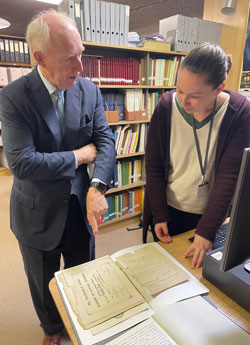
Mr Anstice and Academy archivist Clare McLellan examine a folio in the Basser library at the Shine Dome.
Mr Anstice said he has a keen interest in history and archival work and is a collector of cricket memorabilia and family genealogy. “I think that preserving the history of any serious organisation or topic is an important cultural undertaking, so that the present can always be informed by the wisdom – or follies – of the past,” he said.
“What [scientists] learned and achieved, and what they found was unproductive, saves today’s scientific leaders from unfruitful pathways or opens up new avenues based on new insights.”
Mr Anstice worked for over 50 years in the biopharmaceuticals industry, both in Australia and the United States. He retired as a senior executive of Merck & Co in September 2008, having played a critical role in securing the global development and commercialisation rights to the HPV vaccine.
He also served on the board of CSL for 10 years and was appointed an Officer of the Order of Australia in 2018 for his service to Australia–America business relations.
“My respect for medicine in Australia was established early in my career, when I had the opportunity to work across many medical disciplines,” Mr Anstice said.
“In that time, I learned to deeply appreciate the contributions of basic medical research … and the massive contributions of the research-based private sector in discovering and making medicines and vaccines that serve patient medical needs. Much of my career has thus been supporting ongoing research in medicine – in Australia and with global companies.
“I am very happy that I can support the important work of the in-house archivist,” Mr Anstice said. “My financial support of the Academy is one small way of recognising that the future can deliver even more value for subsequent generations of Australians.”