




Decoding dragons and devils, what triggers volcanoes, and more: Australia’s stars of science

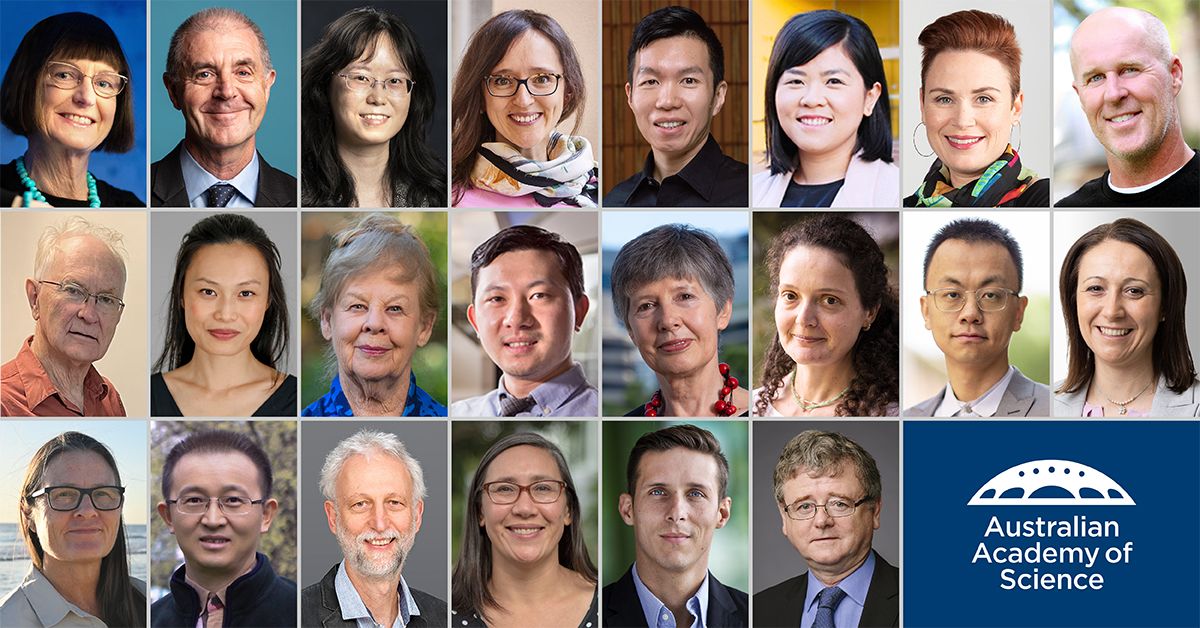
The Australian Academy of Science’s 2023 honorific awardees
From investigating the structure of space-time to the inner workings of volcanoes and the genetics of sex—twenty-two scientists are today recognised by the Australian Academy of Science for their outstanding contributions to science.
Leading minds and future superstars
The honorific awards celebrate the achievements of the country’s leading minds and future superstars, spanning early-career recipients to those who have made career-long advancements in their fields.
In 2023, Professor Lidia Morawska of the Queensland University of Technology is awarded one of the most prestigious career awards of the Academy: the Matthew Flinders Medal and Lecture.
Professor Morawska’s 30 years of pioneering work has advanced the multifaceted study of air pollution, including laying the foundation for the 2021 World Health Organization (WHO) Global Air Quality Guidelines. In early 2020, she led a group of more than 200 international experts calling for authorities to recognise the importance of airborne transmission in the COVID-19 pandemic.
Professor Jennifer Graves of La Trobe University is awarded the Ruby Payne-Scott Medal and Lecture, another of the most prestigious Academy awards. An international leader in comparative genomics of vertebrates, Professor Graves has shown Australian animals are a powerful source of information for investigating the evolution and mechanisms of sex chromosomes.
Studying kangaroos, dragons, devils and more, she has made fundamental discoveries including how the X chromosome is genetically silenced in female mammals, and that the Y chromosome is decaying and could “self-destruct” in a few million years.
Professor David Craik of the University of Queensland is awarded the David Craig Medal and Lecture, recognising the significant achievements stemming from his discovery of a family of circular plant peptides. Along with becoming a world leader in defining the structures and functions of these cyclotides, he’s spurring innovations to harness their diverse applications—including developing new classes of drugs and eco-friendly pesticides.
The Suzanne Cory Medal is jointly awarded to Professor Catherine Lovelock of the University of Queensland and Professor Terence Hughes of James Cook University. Their achievements include demonstrating the role of coastal wetlands in mitigating climate change, and pioneering exploration of the resilience of coral reefs to pollution, overfishing and climate stressors, respectively.
Professor Susan Scott of The Australian National University and Professor Nick Wormald of Monash University receive the Thomas Ranken Lyle Medal for outstanding achievements in mathematics and physics.
Professor Scott played a leading role in Australia’s participation in the first direct detection of gravitational waves and has made fundamental advances in our understanding of the fabric of space-time in general relativity, while Professor Wormald’s advancements in random graph theory have led to versatile tools used in network optimisation, underground mine design and genetics.
At the mid-career level, Professor Di Yu of the University of Queensland receives the Jacques Miller Medal, in recognition of his significant immunological discoveries, including the key molecules and pathways for T cell function in health and diseases.
Dr Teresa Ubide of the University of Queensland, one of 11 early-career scientists recognised in this year’s honorifics, receives the Anton Hales Medal.
Dr Ubide is working to forecast volcanic eruptions, for the benefit of millions of people living close to or visiting active volcanoes around the world. By studying the chemistry of tiny crystals in volcanic rocks, she’s working to decipher what triggers eruptions, as well as exploring metals for renewable energy technologies.
President of the Australian Academy of Science Professor Chennupati Jagadish AC PresAA FREng FTSE said all recipients have much to be proud of and are making tremendous contributions to science.
All recipients have much to be proud of and are making tremendous contributions to science.
“Each year, the depth and breadth of achievements, recognised by these honorific awards, continues to inspire me, as I hope it does other scientists and Australians,” Professor Jagadish said.
“These awardees are working not only to advance their fields, but for the betterment of our communities and the planet—improving our understanding of the world while addressing some of the most pressing challenges facing us.
“I encourage other scientists across Australia to nominate a colleague, especially underrepresented individuals, for a 2024 honorific award.”
2023 award recipients
Premier honorific awards
Matthew Flinders Medal and Lecture—Professor Lidia Morawska FAA, Queensland University of Technology
Ruby Payne-Scott Medal and Lecture —Professor Jennifer Graves AC FAA, La Trobe University
Career honorifics (for lifelong achievement)
David Craig Medal and Lecture—Professor David Craik FAA FRS, University of Queensland
Suzanne Cory Medal—Professor Catherine Lovelock FAA, University of Queensland and Professor Terence Hughes FAA, James Cook University
Thomas Ranken Lyle Medal—Professor Susan Scott FAA, Australian National University and Professor Nick Wormald FAA, Monash University
Jaeger Medal—Professor Matthew England FAA, University of New South Wales
Hannan Medal—Professor Richard Hartley FAA, Australian National University
Mid-career honorifics (8—15 years post-PhD)
Jacques Miller Medal—Professor Di Yu, University of Queensland
Nancy Millis Medal for Women in Science—Professor Renae Ryan, University of Sydney
Early-career honorifics (up to 10 years post-PhD)
Anton Hales Medal—Dr Teresa Ubide, University of Queensland
Christopher Heyde Medal—Dr Valentina Wheeler, University of Wollongong
Dorothy Hill Medal—Dr Raffaella Demichelis, Curtin University
Fenner Medal—Associate Professor Emily Wong, Victor Chang Cardiac Research Institute
Gottschalk Medal—Professor Si Ming Man, Australian National University
John Booker Medal—Dr Amelia Liu, Monash University
Le Fèvre Medal—Associate Professor Rona Chandrawati, University of New South Wales and Professor Tianyi Ma, RMIT University
Moran Medal—Associate Professor David Frazier, Monash University and Dr Rachel Wang, University of Sydney
Pawsey Medal—Professor Yuerui Lu, Australian National University
More information
Read more about the awardees and their research.
Nominations are now open for the Academy’s 2024 honorific awards. Nominations close 1 May 2023.
New technology needed to remove greenhouse gases at scale and halt global warming impacts
The impacts of climate change are being felt around the world. Limiting global warming requires not just dramatically reducing future emissions but removing greenhouse gases from the atmosphere already released.
Today the Australian Academy of Science has published a new report that explores the scientific capability, research and collaboration needed to support new breakthroughs in greenhouse gas removal.
President of the Academy, Professor Chennupati Jagadish, welcomed the report.
“We are pleased to have been able to bring together a broad range of experts to discuss novel greenhouse gas removal approaches for Australia,” Professor Jagadish said.
“This is an evolving topic, with policy frameworks for greenhouse gas removal under development both globally and in Australia.
“Australia can be proactive to create an environment that supports fundamental science and research and development for greenhouse gas removal. We can seize this opportunity as part of our national strategies and international obligations to respond to climate change.”
The report examines emerging technologies, including direct air capture—a technology that mimics trees in the way it can extract CO2 directly from the atmosphere.
Roundtable participant, Professor Deanna D’Alessandro from the University of Sydney, said the scale of the problem we’re facing with climate change means that we can’t discount any approaches, and that everything needs to be on the table.
“This is going to take a mammoth effort across the world, including a portfolio of approaches, in order to get us to this point where we can indeed stabilise our climate and avoid a climate catastrophe,” Professor D’Alessandro said.
Roundtable participant Professor Mark Howden, from the Australian National University, highlighted the big gap between doing things in a lab and doing them at a real-world scale significant enough to make a difference to climate change.
“That jump brings a whole series of uncertainties, risks and costs but also massive opportunities,” Professor Howden said.
“If done correctly, the portfolio of greenhouse gas removal approaches outlined in this report will both create new industries and reshape existing ones.”
Opportunities for the development of negative emissions in Australia can be found on page 27 of the report.
Experts deliver evidence in long COVID parliamentary hearing
Defining long COVID and understanding knowledge gaps about the condition and its impacts in Australia were among the major themes discussed at a recent expert roundtable.
The Australian Academy of Science in partnership with the Australian Academy of Health and Medical Sciences organised the roundtable discussion on 17 February at Parliament House, to inform the House Standing Committee on Health, Aged Care and Sport’s Inquiry into Long COVID and Repeated COVID Infections.
It was the first time the two Academies have jointly convened a roundtable to provide expert, independent advice to a parliamentary committee inquiry.
The roundtable followed a joint submission to the Inquiry from the Academies. It brought together experts from across disciplines and sectors, such as infectious diseases, epidemiology, respiratory medicine, primary care, allied health and public health, as well as patients with lived experience.
Key points raised during the discussion included:
Australia needs a suitable and consistent definition of long COVID
Participants discussed whether the current definition of long COVID put forward by the World Health Organization is fit for purpose.
Acknowledging the importance of having a definition, participants discussed how a revised version would need to serve the needs of clinical care, research, public health, policy development and more.
Different requirements of a definition for research purposes were also highlighted, such as laboratory confirmed acute COVID infection. Any definition would need to ensure equity in diagnosis and management of long COVID.
Australia can contribute to and align with international efforts that are underway, but also urgently needs to agree upon an interim definition that can be used now.
Further research is required to address key knowledge gaps
While research on long COVID is taking place in Australia, further research is required to understand issues including:
- the impacts of infections, vaccination and treatments on development of long COVID
- the most effective treatments and management strategies, and evidence-based models of care and support
- the prevalence and impact of long COVID, including on Aboriginal and Torres Strait Islander peoples, CALD communities, people with disabilities and other priority populations
- identifying biomarkers for diagnostics and further research
- long COVID patient access to, and experience within, the health system and longer-term support (e.g., with disability)
- how to equip the health workforce to respond to long COVID.
A national coordinated strategy is required for data collection and research funding
There is a strong need to improve data collection to understand the prevalence, severity and impacts of long COVID on the Australian community, particularly for priority populations. Research systems and infrastructure such as biobanks, extending research networks, surveillance and improved data collection would assist in these efforts.
A national coordinated and targeted research effort could help fill the knowledge gaps outlined above. The committee heard about the potential role for an advisory group of experts and national strategy or knowledge mission for post-COVID recovery to address research priorities. There is also a need to better embed research in the health system.
Education and engagement are essential
Ongoing education and engagement on long COVID will be necessary for the general public, patients and health professionals, including those working in primary care and allied health, among other fields. Equitable access and improved recruitment to research and clinical trials will be an important step towards addressing long COVID knowledge gaps and ensure they are reflective of our diverse population.
List of participants
A full list of participants in the panel is available below.
Roundtable chair: Professor Tania Sorrell AM FAHMS, The University of Sydney
Roundtable participants:
- Professor Craig Anderson FAHMS; The George Institute for Global Health
- Professor Andrew Baillie; The University of Sydney and Sydney Local Health District
- Associate Professor Philip Britton; The Children's Hospital at Westmead, Sydney Children's Hospitals Network, Sydney Infectious Diseases Institute, The University of Sydney
- Professor Allen Cheng; Monash University
- Professor Brendan Crabb AC FAA FAHMS; Burnet Institute
- Ms Kristy Crooks; Menzies School of Health Research, Charles Darwin University
- Professor Maria Crotty; Flinders University, South Australian Health and Medical Research Institute (SAHMRI), Southern Adelaide Local Health Network
- Professor Margaret Hellard AM FAHMS; Burnet Institute, Monash University
- Professor Martin Hensher; Menzies Institute for Medical Research, University of Tasmania
- Professor Anne Holland; Monash University and Alfred Health
- Associate Professor Alex Holmes; Royal Melbourne Hospital, The University of Melbourne
- Associate Professor Louis Irving; Royal Melbourne Hospital
- Dr Jen Kok; Institute of Clinical Pathology and Medical Research, NSW Health Pathology, Westmead
- Professor Dennis Lau; Royal Adelaide Hospital, The University of Adelaide, SAHMRI
- Professor Julie Leask; School of Nursing and Midwifery and Sydney Infectious Diseases Institute, The University of Sydney
- Professor Sharon Lewin AO FAHMS; Peter Doherty Institute for Infection and Immunity, The University of Melbourne
- Professor Andrew Lloyd AM FAHMS; Kirby Institute, The University of New South Wales
- Dr Sarah Lynar; Royal Darwin and Palmerston Hospitals, Menzies School of Health Research
- Professor Kristine Macartney FAHMS; National Centre for Immunisation Research and Surveillance, The University of Sydney
- Professor Gail Matthews; Kirby Institute, The University of New South Wales, St Vincent’s Hospital Sydney
- Professor Jodie McVernon; Peter Doherty Institute for Infection and Immunity, The University of Melbourne, Royal Melbourne Hospital
- Professor Adrian Miller; Central Queensland University
- Professor Jeremy Nicholson; Murdoch University, Imperial College London
- Miss Michelle O'Brien; Consumer Health Forum, Call For Change Australia, Consumer and Advisory Community Network Committee for Sydney Dental Hospital & Oral Health Services, Sydney Local Health District
- Professor Ingrid Piller FAHA; Macquarie University
- Professor Lena Sanci; The University of Melbourne
- Associate Professor Kirsty Short; The University of Queensland
- Professor Steve Wesselingh PresAHMS; SAHMRI
Learn more about the House Standing Committee on Health, Aged Care and Sport inquiry into Long COVID and Repeated COVID Infections.
Emerging Indigenous women scientists recognised with Academy award
Emerging scientists Michelle Hobbs and Stephanie Beaupark are the recipients of the 2023 Australian Academy of Science Aboriginal and Torres Strait Islander Scientist Award.
The award recognises research by outstanding Aboriginal and Torres Strait Islander PhD students and early- and mid-career scientists.
Ms Beaupark, an associate lecturer and PhD student at the University of Wollongong, will use the award to further her research, which combines her passions of chemistry and visual art.
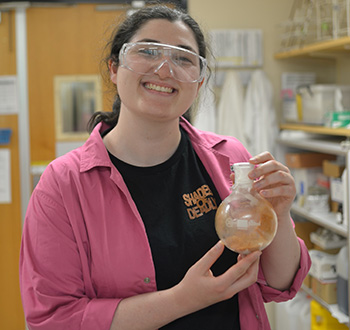
Ms Beaupark explores the chemistry of native natural dyes. Photo: Corey Mantuano
She’s studying the colour chemistry of natural dyes from Australian native trees such as Eucalyptus cinerea and using an Indigenist methodology involving yarning with other Indigenous natural dye artists and weavers.
“I’m looking specifically at the eucalyptus dye used to make artworks and how the colourant compounds interact with the dye mixture to fix onto silk fabric and wool,” said Ms Beaupark, a descendant of the Ngugi people of Quandamooka Country.
“The aim of this project is to define how creative practice can build connections between chemistry and Indigenist ways of being and gaining knowledge.
“I hope the better integration of these knowledge systems will also allow us to better take care of Australia and create a sustainable future for textiles colourants and alternatives to mainstream artmaking materials.”
Ms Hobbs, who’s a Bidjara descendent and associate lecturer and PhD student at Griffith University, will use the award to provide new insights into the management of Australian freshwater ecosystems and freshwater mussels.
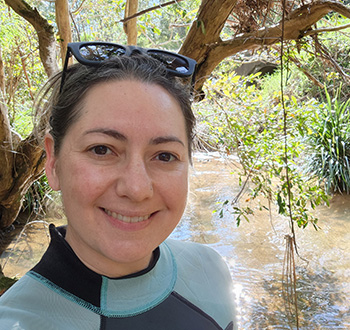
Ms Hobbs' research focus includes the cultural significance to Indigenous peoples of freshwater mussels.
Ms Hobbs said freshwater mussels are one of the most imperilled groups of animals.
“Extinctions or population declines of mussels are likely to disproportionately affect Indigenous peoples who use them, yet relatively little has been published about mussels from Indigenous perspectives or regarding the cultural values of mussels,” Ms Hobbs said.
“Current risk assessment methods and natural resource management tend to limit Indigenous involvement to cultural heritage objects or artefacts, while cultural values or uses of biota or landscapes are not explicitly addressed, despite their clear importance to Indigenous peoples.
“I hope this project will fill in some of the knowledge gaps in this area, within the broader context of my PhD research.”
Ms Hobbs will travel to Canada later this year to meet with First Nations researchers and discuss Indigenous uses and management of mussels, and the role of Indigenous values and communities in water management.
About the award
Established in 2018, the award recognises research in the physical and biological sciences, allowing interdisciplinary and sociocultural research straddling the social sciences and humanities.
It aims to support research and the growth of research networks and international knowledge exchange through visits to relevant international centres of research. Awards include up to $20,000, with additional support provided to attend the Academy's annual Science at the Shine Dome event.
The award is also part of the Academy’s work to champion diversity and inclusion in the sciences and empower the next generation of scientists. This will strengthen the voice of science and support scientific excellence.
Applications for the 2024 award open on 16 February. More information about the award.
Parliament invites leading experts to inform Long COVID and Repeat Infections Inquiry
How can you receive quality healthcare for an illness if there isn’t a clear definition of what that illness is?
This is one of many issues the country’s leading experts will address during a roundtable discussion at Parliament House in Canberra on 17 February 2023, to inform the Inquiry into Long COVID and Repeated COVID Infections.
Following a joint submission to the Inquiry by the Australian Academy of Science (AAS) and the Australian Academy of Health and Medical Sciences (AAHMS), they will bring together experts in areas such as infectious diseases, epidemiology, immunology, mental health and public health to provide evidence to the House Standing Committee on Health, Aged Care and Sport.
The experts will address topics including: a standard definition of long COVID that considers differences between adults and young people; the most significant knowledge gaps in the impacts of long COVID; which actions to prioritise in addressing those gaps; and how the government, research and health sectors can work to deliver those interventions.
Media and the public can follow the discussion via live stream.
The event will be chaired by Professor Tania Sorrell AM FAHMS, an internationally renowned infectious diseases physician and AAHMS Fellow.
“Long COVID is increasingly recognised as a complex and life-changing illness that could affect many thousands of Australians,” Professor Sorrell said.
“To significantly improve health and wellbeing, we must better understand long COVID itself, as well as its impacts on individuals, their families and carers, and society.”
AAHMS President Professor Steve Wesselingh PresAHMS added that with evidence on long COVID and repeated infections still evolving, the workshop would help direct attention to key gaps.
“Further research in this area, within the Australian context, is crucial to aid decision-making.
“The roundtable is an important opportunity to provide government with expert advice from our research community, which will help improve the national understanding of long COVID and enhance coordinated research efforts and care pathways in the future,” Professor Wesselingh said.
AAS President Professor Chennupati Jagadish AC PresAA FREng FTSE said the learned academies welcomed the opportunity.
“We are grateful for the opportunity to convene this roundtable, providing parliamentary committee members with direct access to those at the forefront of COVID research and treatment,” Professor Jagadish said.
“This roundtable speaks to the unique roles of the learned academies and their remit to provide independent, authoritative and influential scientific advice to government. We hope this becomes a blueprint for future inquiries.”
R&D investment boost needed in Federal Budget

Australia’s leading scientists have urged the Australian Government to commit to a bold and ambitious structural reform agenda for science, including a target to boost investment in research and development (R&D) and an independent review of the Australian science system.
In a pre-budget submission for 2023–24, the Australian Academy of Science calls on the government to formally adopt a target of 3% of GDP invested in R&D from the present (2020) of 1.79% (0.92% business, 0.61 universities and 0.18% government); all need to increase.
Growing to the target would act as a key driver of economic growth, innovation and competitiveness. But it would need a change in policies.
The Academy also recommends a comprehensive and independent review of the Australian science and research sector, which currently operates on a 30-year-old system.
While the government has commissioned reviews of the Australian university system, science and research priorities, diversity in STEM, and the Australian Research Council, linking these endeavours to a national priority to lift our R&D performance is urgently required.
With R&D expenditure falling over the past decade, Academy President Professor Chennupati Jagadish AC PresAA FREng FTSE said stronger investment would help Australia to become a knowledge-based economy, in line with other OECD countries that have a greater dependence on knowledge, information and high-skill levels.
“Australia should decide the skills and capabilities we need to build and the research strengths we need to sustain them,” Professor Jagadish said.
“These recommendations will take time to implement, but are achievable, and we hope the upcoming budget helps to reposition Australian science to advance national prosperity and global competitiveness.”
The Academy’s other recommendations in its pre-budget submission for 2023–24 are:
- Policies should be implemented to increase the complexity of the Australian economy and create more R&D intensive enterprises.
- Collect data on Australian science frequently and comprehensively.
- Prioritise major strategic investments to drive an uplift in investment in R&D.
Background
On 25 January 2023, the Academy made a submission to the 2023–24 Federal Budget.
Developments in Australian science to watch out for in 2023
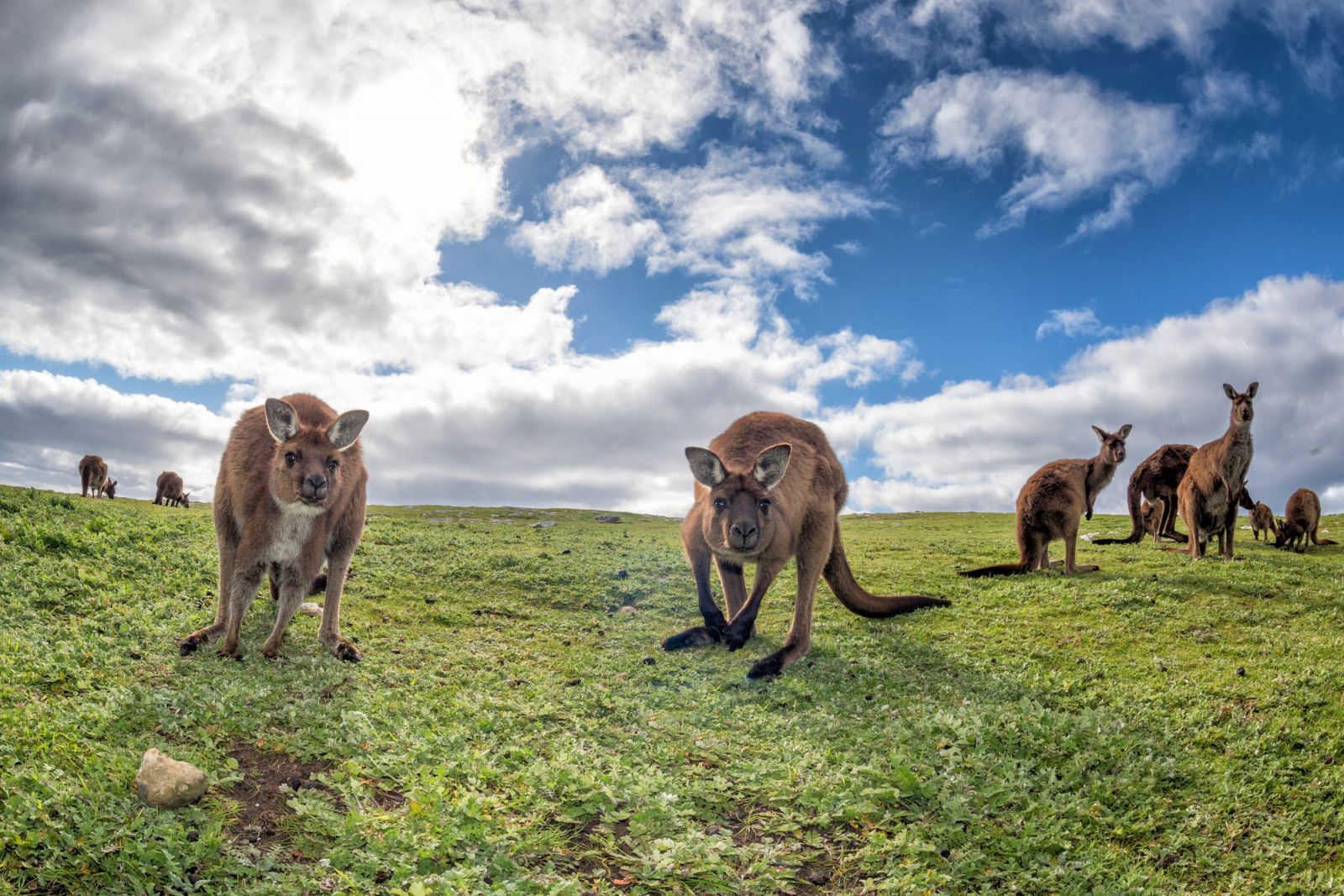
Environmental reform, new national science and research priorities and stronger scientific engagement in the Asia-Pacific are among the big-ticket items on the agenda for Australian science in 2023.
Research
Before April: The Australian Research Council’s Review Panel will provide the Minister for Education with a final report. The Academy’s submission to the review of the ARC Act says fundamental research should be the primary focus of the ARC. The submission calls on the Australian Government to commission an independent science and research system review.
Before October: Minister for Industry and Science Ed Husic has committed to renewing Australia’s National Science and Research Priorities and to developing a National Science Statement. Academy Fellows will inform this debate on how to build critical Australian science capabilities and play to our research strengths.
Science diplomacy
First six months: The International Science Council Asia-Pacific Regional Presence, led by the Australian Academy of Science, will begin operation. The Regional Presence will strengthen Australia’s scientific leadership in the region and globally.
Throughout the year: Ukrainian scientists who have fled the war with Russia or who have been unable to work due to the destruction of their workplace will receive a helping hand from Australia. The assistance will be provided thanks to an A$800,000 donation to the Academy from the Breakthrough Prize Foundation.
Scientific evidence and the law
This year: A decision will be handed down by Commissioner Tom Bathurst AC KC, who is leading the Second Inquiry into the convictions of Kathleen Folbigg. The second hearing block in the Inquiry is scheduled to commence on 13 February and will address cardiac and genetic evidence as well as psychology, psychiatry, and other evidence relevant to Ms Folbigg's diaries. The Academy is an independent scientific adviser to the Inquiry.
Environment
First six months: A new package of national environmental legislation will be prepared to implement reforms outlined in the Australian Government’s response to an independent review of the Environment Protection and Biodiversity Conservation Act (1999), handed down in 2020. The shape of some of the proposed reforms remains unclear. The Academy looks forward to continuing to engage with the Australian Government in refining and implementing these reforms.
Legislation will be introduced into the Australian Parliament to reform carbon offsets and on the safeguard mechanism to help industry reduce emissions. The Academy says Australia needs a credible, high integrity and effective carbon offsets system.
Higher education
June and December: The Australian Universities Accord was announced in 2022 as a long-term plan for Australia’s higher education system. The Accord Panel is currently engaging across the higher education sector and is due to issue an interim report in June 2023 and a final report in December 2023. The Academy made a submission to the Panel’s initial consultation on the Terms of Reference and looks forward to continuing to engage throughout the review process.
Health
February: The House of Representatives Health Committee has begun an inquiry to look at the long-term effects of long COVID, which is disproportionately affecting young people and women. On 17 February, the Academy and the Academy of Health and Medical Sciences will hold an expert roundtable at Parliament House to highlight the latest scientific evidence on the issue.
Academy events to watch out for this year:
- 14 February 2023: First of six public lectures on Indigenous knowledge
- March: Annual honorific awardees announced
- May: New Fellows announced
- November: Science at the Shine Dome
Academy Fellows celebrated with Order of Australia honours
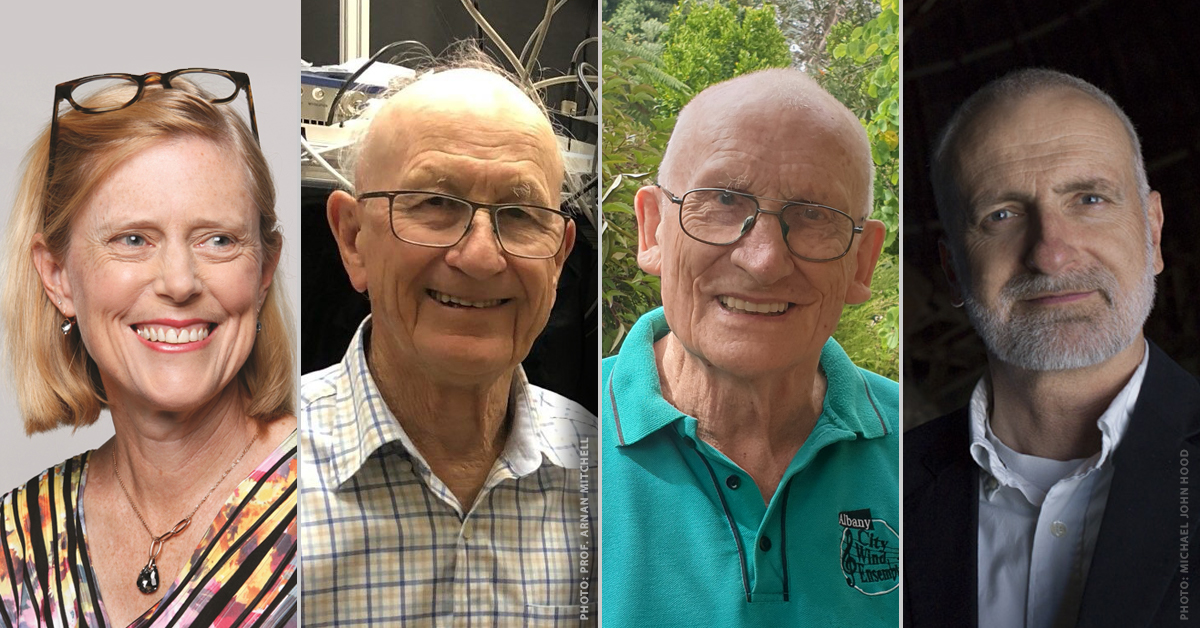
Fellows of the Australian Academy of Science continue to exemplify excellence in science, with four Fellows among those recognised in the 2023 Order of Australia honours.
This year, two Fellows—Professor Melissa Little and Emeritus Professor Peter Hannaford—have received Companion of the Order of Australia (AC) Awards, the highest appointment to the Order of Australia, recognising “eminent achievement and merit of the highest degree in service to Australia or to humanity at large”.
Professor Matthew Colless has received the prestigious Officer of the Order of Australia (AO) medal, while Emeritus Professor John Pate’s achievements have seen him recognised as a Member of the Order of Australia (AM).
Professor Melissa Little AC FAA FAHMS
Professor Little is internationally recognised for her research on kidney development and her pioneering studies into renal regeneration.
Her work has been featured on the front covers of Nature and Nature Cell Biology, describing the generation of kidney organoids from human pluripotent stem cells—a breakthrough that opened the door to kidney disease modelling, drug screening and the bioengineering of replacement kidney tissue.
Together with a strong track record of commercial translation, she has been a leader in Australian science policy through her membership of both the Wills and McKeon reviews of health and medical research.
Professor Little has been awarded an AC “for eminent service to medical research through pioneering contributions to regenerative therapies for kidney disease, and to stem cell medicine”. She was elected an Academy Fellow in 2017.
Emeritus Professor Peter Hannaford AC FAA
Elected to the Academy in 1991, Emeritus Professor Hannaford is a prominent physicist and Distinguished Professor at Swinburne University of Technology.
Professor Hannaford was also Chair of the National Committee for Spectroscopy from 1993 to 2003.
His contributions to atomic spectroscopy include: the analysis and interpretation of the profiles of atomic resonance lines emitted by hollow-cathode atomic spectral lamps; the development of methods of generating atomic vapours by cathodic sputtering; and the realisation that such vapours would greatly facilitate many fundamental investigations by high-resolution and time-resolved laser spectroscopy.
These contributions constituted the creation of an increasingly important new field of laser spectroscopy with sputtered atoms.
Professor Hannaford receives his AC “for eminent service to science, particularly to experimental physics, as an academic and researcher, to professional institutions, and as a role model for young scientists”.
Professor Matthew Colless AO FAA
Professor Colless has led high-impact research in the fields of observational cosmology, galaxy and cluster evolution and the large-scale structure of the Universe, and has driven the development of multi-object spectroscopy in the new field of statistical astronomy. In particular, his conception of and leadership of the 2dFGRS survey has firmly established the values of many key cosmological parameters. These include the determination of the Hubble constant, the cosmological constant, the matter density in the Universe, the baryonic to dark matter fraction, and an upper limit on the neutrino fraction.
Professor Colless is Director of the Research School of Astronomy and Astrophysics at the Australian National University and was previously Director of the Australian Astronomical Observatory.
He has been awarded the AO “for distinguished service to scientific research, particularly to astronomy and astrophysics, and to professional societies”.
Professor Colless was elected an Academy Fellow in 2004.
Emeritus Professor John Pate AM FRS FAA
Pre-eminent in the field of plant biology and physiology, Emeritus Professor Pate’s major contribution has been the quantitation and integration of our understanding of the carbon and nitrogen economy of legume plants, especially the pea. Using a wide range of experimental approaches and techniques, many of his own devising, he has analysed the circulatory system for nitrogen and carbon compounds, particularly in the fruits, but also in the leaves, roots and nitrogen-fixing nodules.
His work has elucidated the interrelations and traffic between xylem and phloem, and the nature of the competition between roots and nodules in their metabolic activities. With Professor B.E.S. Gunning, he discovered transfer cells and elucidated their function in plants.
Elected an Academy Fellow in 1980, Professor Pate has been recognised as a Member of the Order of Australia “for significant service to botany, and to tertiary education”.
Professor Pate was also elected to the Royal Society of London in 1985 and inducted to the Western Australian Science Hall of Fame in 2017.
Academy welcomes new philanthropy director
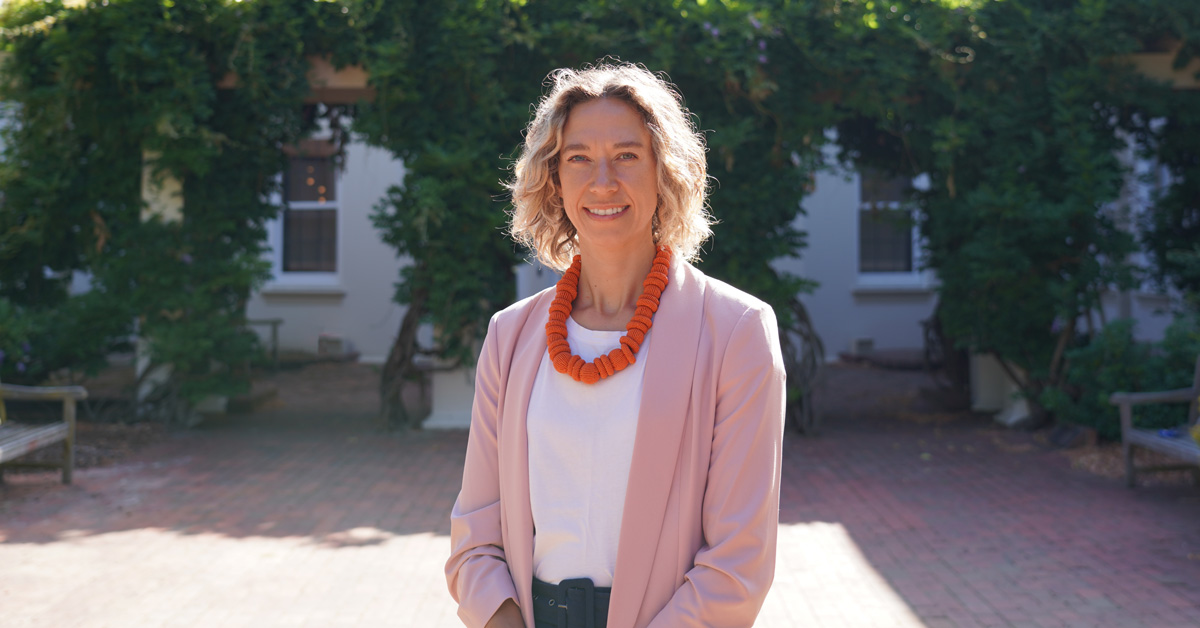
Kate Groves will play a key role as Philanthropy Director at the Academy.
The Australian Academy of Science welcomes Kate Groves to the role of Philanthropy Director.
Kate brings to the Academy a wealth of experience in philanthropy, strategic planning and developing fundraising campaigns and models, most recently with the St Vincent’s Curran Foundation as the Director of Campaigns, and previously at the National Gallery of Australia Foundation. Kate also brings to the Academy a warmth for getting to know people and building connections.
Academy Chief Executive Anna-Maria Arabia said philanthropy is directly responsible for many of the Academy’s achievements including support for early- and mid-career researchers, the provision of independent scientific advice to inform decisions, the development of scientific research programs and many other activities, and will continue to be essential for capacity building for science in Australia.
“Kate will play a key role in supporting the Academy’s vision to foster scientific excellence and innovative research through philanthropy, working with our valued donors, supporters and stakeholders. Philanthropy will continue to be a vital source of funding increasing our capabilities to deliver activities and strengthening the Academy’s impact as leaders in science,” Ms Arabia said.
Find out more about the Academy’s philanthropy and partnerships, and our unique opportunity to celebrate science by dedicating a copper tile on the iconic shine dome to a scientist or teacher.
For more information about becoming involved and how you can support the Academy, please contact Kate:
Email: kate.groves@science.org.au
Phone: 02 6201 9460
Academy to advise on future of the Great Barrier Reef

The Australian Academy of Science will assemble Australia’s leading experts to discuss the future of the Great Barrier Reef under different climate scenarios and ways to boost its health and resilience for the decades to come.
The Department of Climate Change, Energy, the Environment and Water engaged the Academy to convene a series of roundtables that will support the Reef 2050 Independent Expert Panel in its role of advising government.
Throughout three roundtables this year, cross-disciplinary scientists, specialists and Traditional Owners will discuss the latest evidence around pressures on reef species, habitats and ecosystems (both terrestrial and marine), key gaps in knowledge, and potential responses—including new and emerging technologies—in the context of future climate scenarios.
The Academy will provide a final report which will be a robust evidence-based synthesis of the science. The report will present the most likely impacts of climate change on the ecosystems that make up the Great Barrier Reef.
The final report will be publicly available as a resource for governments and the non-government sector.
Academy President Professor Chennupati Jagadish said the role of independent expert advice was more critical than ever.
“Despite substantial investment, the outlook for the health and resilience of the reef continues to trend downwards. We welcome this opportunity to assist in providing a contemporary evidence base for use by governments and advisors,” Professor Jagadish said.
“The Academy has demonstrated experience harnessing knowledge and expertise across the science sector, and we look forward to documenting the outcomes from these gatherings of experts.”