




Education leader recognised for service to Australian research

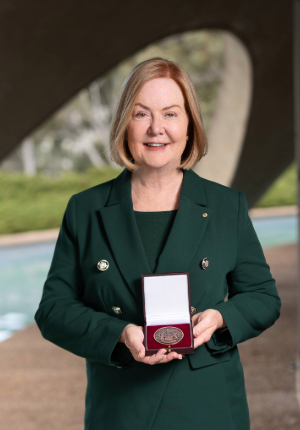
Lisa Paul AO PSM, 2024 Academy Medal recipient.
Chancellor of the University of Canberra Lisa Paul AO PSM has been recognised by the Australian Academy of Science today for advancing the cause of research and higher education in Australia.
She joins distinguished Academy Medal recipients including former Prime Minister of Australia the Hon Bob Hawke (1990), Dr Norman Swan (2004), Professor Mike Gore (2006), Professor Megan Clarke (2019) and Kim Carr (2022).
The Academy Medal is awarded to a person outside the Academy’s Fellowship who has, by sustained efforts in the public domain, significantly advanced the cause of science and technology in Australia or who has made a substantial contribution to the Academy by means other than research.
Academy President Professor Chennupati Jagadish AC said Ms Paul’s commitment and contribution to advancing policy in higher education, science, research and innovation stood out across her many years of service.
“She has also made a significant and sustained contribution to the governance of the Academy as Chair of our Audit Committee for the past six years,” Professor Jagadish said.
“Ms Paul’s personal values of equity and access for all align with the Academy as we continue our work to improve pathways for equity and diversity in STEM.”
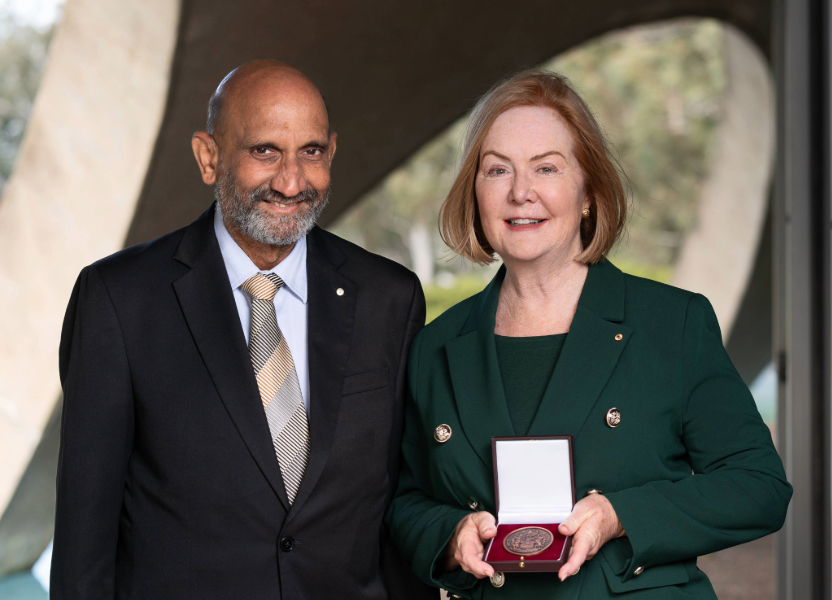
Ms Paul said she was honoured to receive the award.
“It is a huge honour to be acknowledged in this way by the Academy, and to be part of such a prestigious cohort of previous Medal recipients,” Ms Paul said.
“It has been a great privilege to serve the Academy. The Academy’s Fellows have each made an outstanding contribution to our nation. We should all be proud of the impact their research has made.
“The Academy is called upon often by governments and others for its impartial advice on science, for example on climate or bushfire recovery. The Academy is a huge asset for Australians.”
Throughout her career, Ms Paul said she has championed the importance of bridging the worlds of research and policymaking.
“It has been an honour to do this both through my support of the Academy and as Chancellor of the University of Canberra,” she said.
Academy response to the release of the National Digital Research Infrastructure Strategy
The Australian Academy of Science welcomes the release of the Australian Government’s National Digital Research Infrastructure Strategy.
National digital research infrastructure (NDRI) is essential for Australia’s research infrastructure ecosystem to be more equitable, accessible and connected.
The strategy recognises the importance of research software as an essential part of the NDRI system.
The Academy welcomes the recognition in the strategy of the role of NDRI to support maintenance and availability of software for research users, and the need for investment in activities and infrastructure for research software development.
The Academy supports the ongoing focus on the FAIR and CARE principles for Indigenous data being included in the future NDRI ecosystem.
Addressing how research funding settings and policies may need to change to cover the costs of compliance by researchers with the FAIR and CARE principles must be a priority as the strategy is implemented.
The strategy highlights the intrinsic value of data in the research ecosystem and identifies the need for a sector-wide data management framework. It also provides an opportunity to embed the UNESCO Open Science Recommendation in full rather than being noted as guidance.
Additional work must be undertaken to articulate a long-term strategy for high-performance computing, which is lacking.
Australia’s current research supercomputers are a powerful asset, but their lifecycle is limited.
The nation must plan now for the next generation of high-performance computing and data infrastructure for research, including exascale capability. Australia needs a national strategy that responds to the escalating needs of research to enable science to meet national priorities and keep pace with global advancements.
Overall, the strategy outlines a strong vision for NDRI in Australia. However, further detail is needed as to how the vision will be realised.
The Academy is committed to contributing science advice to inform the implementation of the NDRI strategy and development of the NDRI investment plan, to strengthen Australia’s scientific capability.
The Academy extends our thanks to the National Research Infrastructure Advisory Group, including Academy Fellows Professor Calum Drummond AO FAA FTSE and Dr Cathy Foley AO FAA FTSE, for their work in delivering this strategy.
Read the Academy submission to the draft National Digital Research Infrastructure Strategy.
Read the Academy document: Future computing needs of the science sector.
Academy journal explores history of plant pathology in Australia
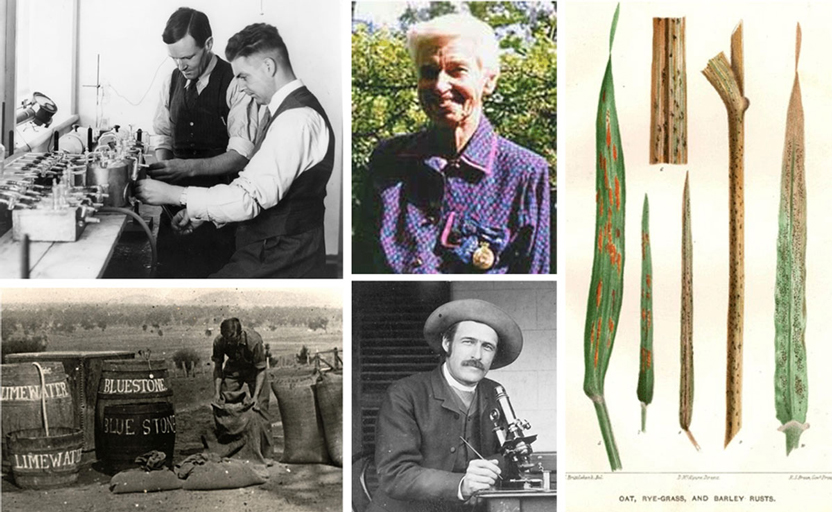
Clockwise from top left: Geoffrey Samuel and Rupert Best at Waite Institute, 1934 (source); Dr Gretna Weste at her AM award ceremony, 1989 (source); watercolour of oat, rye-grass, and barley rusts, 1906 (source); one of the first plant pathologists, Nathan Cobb (source); treating wheat seed with bluestone and limewater at the Wagga Experiment Farm about 1910 (source).
The latest edition of the Academy’s journal, Historical Records of Australian Science, is devoted to the history of plant pathology in Australia. Despite the challenges of academic isolation and lack of communication, early plant pathologists flourished and made many world-first discoveries that assisted Australian farmers to overcome challenges in crop growth.
This special issue, published in cooperation with the Australasian Plant Pathology Society, pays specific attention to describing some of the major plant diseases that affected agriculture during the 19th and early 20th centuries.
According to Associate Professor Andrew Geering of the University of Queensland, the guest editor of this issue, Australia is one of the most food secure nations in the world with farmers producing enough to feed three times the country’s population.
However, farmers have had to overcome many challenges to grow their crops, including extreme weather variability, shallow and infertile soils, and attacks by pests and pathogens. Early attempts to transplant European farming practices into Australia often failed, and extensive scientific research was required to achieve the current level of success.
Boom-and-bust environment
Little is known about the impact of plant pathogens on Indigenous food systems prior to colonisation and whether there was active intervention by Indigenous Peoples to prevent or treat plant diseases other than by fire management. However, it’s likely that the impacts of plant diseases would have been much less severe than now, as the Indigenous Peoples had learnt to cope with the boom-and-bust nature of the Australian environment.
Indigenous family units were not anchored to a single plot of land, and local declines of a plant species due to disease would not have posed the same threat to food security because of the mobility of these peoples. Indigenous communities also utilised a much more genetically diverse food base, both at the individual plant species and plant community levels.
One of the major causes of plant disease epidemics in modern cropping systems is the planting of large areas of genetically uniform plant varieties that are a susceptible to one or more plant pathogens. It did not take long after the British colonisation of Australia for plant diseases to make an impact, with crop failure from stem rust and smut disease of wheat occurring in the convict settlement of Sydney in the first few years of the 1800s. Wheat was the staple starch crop, and the arrival of these two diseases would have been hardest felt by the very poorest in society, who lived mainly on bread and cheese, supplemented by butter and meat if they could afford them.
The first plant pathologist
Continuing epidemics of wheat stem rust throughout the 19th century prompted the appointment of the first plant pathologist in Australia, Daniel McAlpine, who in May 1890, was made Consulting Vegetable Pathologist to the Department of Agriculture in Victoria (the term ‘Vegetable’ was used in the traditional sense, to refer to all edible plant matter). It is thought that this was the very first full-time appointment of its kind in the British empire. The Government of New South Wales was quick to follow, appointing Nathan Cobb as its plant pathologist. The other colonies (later states) took longer to act, and McAlpine and Cobb served the plant pathology needs of much of Australia for at least a decade.
There was no scientific specialisation among the early plant pathologists—they were equally adept at researching plant pathogenic bacteria as fungi, swapping between the subject areas with ease. Joseph Bancroft was a medical surgeon when he discovered Fusarium wilt of banana, and even joined the royal commission to investigate the rabbit problem!
Pathologists had to work in isolation, not aware of what was happening in the neighbouring jurisdictions, let alone overseas. The discoveries they made are even more remarkable because of this fact. In addition, there was slow recognition of the discoveries made in Australia within the scientific powerhouse nations of North America and Europe. Rupert Best deserved to be a joint Nobel Prize winner with Wendell Stanley for the physico-chemical characterisation of tobacco mosaic virus. However, as lamented by Best himself, the chances of an Australian scientist based in Australia winning a Nobel Prize prior to World War II were virtually nil.
Prejudice and rivalry
Along with successes, the early plant pathologists and the organisational structures within which they worked had many flaws, including a gender bias towards men. Dr Gretna Weste AM, one of the pioneering female plant pathologists of Australia, suffered much prejudice and misogyny. Racial prejudice was also widespread in the 19th and early 20th centuries, some of it officially sanctioned by the Australian Government through the ‘White Australia policy’. Australians of Chinese and South Pacific Islander heritage were victims of this racial prejudice in the banana and sugarcane industries, respectively. Finally, many of the early male plant pathologists were very egotistical, and interstate rivalry was rife even a few decades after the federation of Australia. There was much unnecessary bickering that impeded the progress of research, and the contributions of farmers to solving plant disease problems were also ignored or not properly recognised by the scientists.
This content above is adapted from the Guest editor’s page: the path to food security in Australia through better plant disease management by Associate Professor Geering, who is President of the Australasian Plant Pathology Society and Vice President-elect of the International Society for Plant Pathology. The full article contains references. The response by authors in this topic was so great that the next issue of Historical Records of Australian Science, due in January 2025, will contain more fascinating research on the history of plant pathology in Australia.
All 16 articles in this special issue are open access.
New editor sought for our journal
The Academy is currently seeking expressions of interest for the contract position of Co-Editor for Historical Records of Australian Science. Find more information on our website. Expressions of interest close Friday 20 September 2024.
Release of national science statement and research priorities
The release of the National Science Statement and the National Science and Research Priorities that support it signal an important first step to focus and scale Australia’s science and research activity, which is needed to meet our national and global challenges.
The Academy applauds the Australian Government on having the discipline to identify science and research priorities. However, they will be ineffective without an implementation plan to drive action across government portfolios, industry and the research sector.
Previous science and research priorities were ineffective because they lacked implementation, monitoring and evaluation and therefore did little to focus and scale up science and research in the identified areas.
President of the Australian Academy of Science Professor Chennupati Jagadish said both documents clearly illustrate the critical underpinning role science and research play to our economy, wellbeing, job creation and national security and to the success of the Future Made in Australia policy.
“It’s imperative that the priorities are backed by a robust implementation plan that clarifies how ministers across governments, and the industry and research sectors can use the levers available to them to turn words into action.
“If the government is serious about implementing its core industrial policy—Future Made in Australia—it will be serious about implementing the National Science and Research Priorities.
“When supported with investment, the National Science and Research Priorities can drive scientific and technological progress at the scale we need to meet our national and global challenges.
“Australia needs urgently to transition its economy to make it more complex and resilient to external shocks.
“This requires us to prioritise those activities only Australia can perform and those that we must perform to have a seat at the global decision-making table.”
The Academy thanks Chief Scientist Dr Cathy Foley AO PSM FAA FTSE for consulting widely and leading the national conversation on behalf of the government to inform this work.
Academy expert receives international award for mathematics education

Professor Kaye Stacey has been awarded the Emma Castelnuovo Award for her work in mathematics education.
Emeritus Professor Kaye Stacey has been awarded the 2024 Emma Castelnuovo Award in recognition of her more than 40 years of research-based design, development and implementation of innovative, influential work in the practice of mathematics education.
The Emma Castelnuovo award is a prestigious international award in the mathematics education research community. Professor Stacey received the award at the 15th International Congress on Mathematical Education held in July in Sydney, where 3,000 mathematics educators explored current global trends in mathematics education research and mathematics teaching practices at all levels.
The Academy congratulates Professor Stacey for the recognition she has received.
A long-standing relationship with the Academy
Professor Stacey was a director of the Academy’s reSolve: Mathematics by Inquiry project for its initial three years, with her work with the Academy being a significant contributing factor to her being awarded the prize. Professor Stacey has a long-standing relationship with the Academy and was instrumental in the Academy obtaining the reSolve: Mathematics by Inquiry project. She authored a paper as to why the Academy should work in mathematics education and what the focus of this work should be.
Over her 40-year career, Professor Stacey has significantly impacted mathematics education through her innovative work on problem-solving, integrating new technologies, and researching student thinking. Her efforts have influenced assessments globally, benefiting many teachers and students.
Professor Stacey began her career in pure mathematics and earned a scholarship to the University of Oxford, where she completed her doctorate in number theory. Her deep passion for mathematics and its practical applications has driven her work, focusing on equipping students to tackle important problems. She enjoys mathematics for both its beauty and usefulness, and this appreciation underpins her work.
She believes the core goal of mathematics is solving significant problems, and the goal of mathematical education is to prepare students for this challenge. Like Emma Castelnuovo, she has dedicated her efforts to making this vision a reality for more teachers and students. This vision is encapsulated in her International Society for Design and Development in Education Prize Lecture titled ‘How to create a mathematics curriculum truly worth learning’.
Professor Stacey was the Foundation Chair of Mathematics Education at the University of Melbourne for 20 years until her retirement in 2012, and has led numerous research-based projects at various levels.
About the award
According to the International Commission on Mathematical Instruction (ICMI), the Emma Castelnuovo Award recognises outstanding achievements in the practice of mathematics education. The award reflects the ICMI principles of developing mathematical education at all levels, and promoting the reflection, collaboration, exchange and dissemination of ideas on the teaching and learning of mathematics, from primary to university level. The award is named after the Italian mathematics educator, born in 1913, to celebrate her 100th birthday and honour her pioneering work.
The Academy’s impact in history: Scientific rigour in the formation of Australia’s National Parks
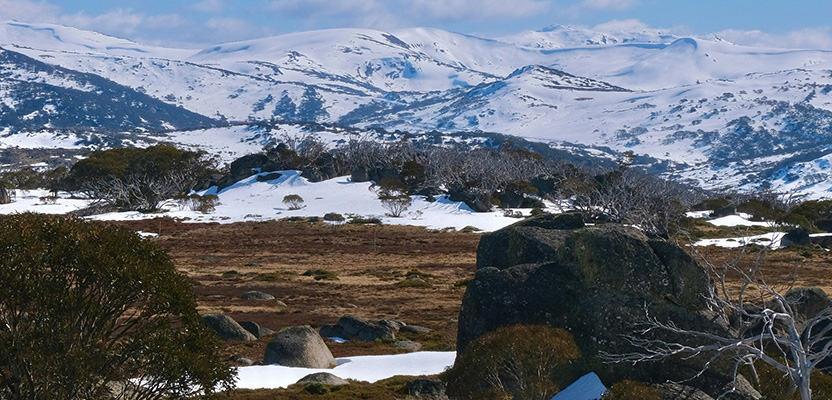
Snowy Mountains, Kosciuszko National Park, Australia. Credit: Jack McGrath on Unsplash.
Australia is famous worldwide for its natural attractions—and for good reason. With more than 700 national parks covering deserts to rainforests and much more, many of our extraordinary environments and their biodiversity are studied and protected.
But it wasn’t always this way.
Prior to 1950, most of our national parks were selected based on scenic grandeur rather than scientific or conservation significance.
They were managed by the states with no national coordination, and there had been no country-wide research into what ecosystems were represented in protected parks and reservations.
Since its formation in 1954, the Australian Academy of Science has played a crucial role in turning that around, prioritising conservation and greatly influencing the evolution of national parks as we know them today.
It established a Committee for National Parks in 1958 to investigate how existing parks were managed, what other areas of Australia should receive conservation protection, and what measures should be taken to ensure these areas were scientifically managed.
The Academy found that much of the research needed did not exist and could only be created if subcommittees in each state undertook the work locally. Over the next decade, subcommittees were formed and produced impressive documentation of Australia’s national parks, ecosystems and biological diversity.
In the committee’s final report, published in 1968, the Academy assessed the effectiveness of Australia’s conservation areas and defined three regions requiring urgent attention: the eastern coastline, the arid zone and the Great Barrier Reef.
Specific features of the Australian landscape, such as drought, floods and fire, received special mention in the report. It also outlined legislative features of a national park system that should be incorporated into federal parliamentary Acts: defining the aims of conservation areas, establishing a body dedicated to their care and ensuring that any alienation of national park land would require an Act of Parliament.
The majority of the Academy’s recommendations in the 1968 report have been implemented.
Specialist Academy committees for national parks, flora and fauna, and conservation have continued to advise on proposals for UNESCO World Heritage listings, the extension of the national park system, and the case for scientific research in protected areas.
National parks in Australia provide critical protection for landscapes and biodiversity, and unique opportunities for research.
They also give people the opportunity to explore and enjoy the natural environment and gain an understanding of the management of healthy land and connection to Country through the knowledge of First Nations peoples.
The Academy’s work not only established the foundations for ecology as a scientific basis for conservation principles in national parks, but it also foreshadowed the current idea that management of healthy country requires acknowledgement of scientific principles.
The Academy continues to provide scientific perspectives to the community and senior decision makers regarding the relationship between natural resource management and land health.
More recently, the Academy has advised on and advocated for the protection of ecosystems across Australia based on scientific evidence, including decisions on managing feral horses in Kosciuszko National Park, advice on Australia’s threatened species and faunal extinction crisis, and expertise on the necessary management interventions and future health of the Great Barrier Reef.
Donate to support the Academy’s work
Academy’s work to create a more science-aware justice system continues
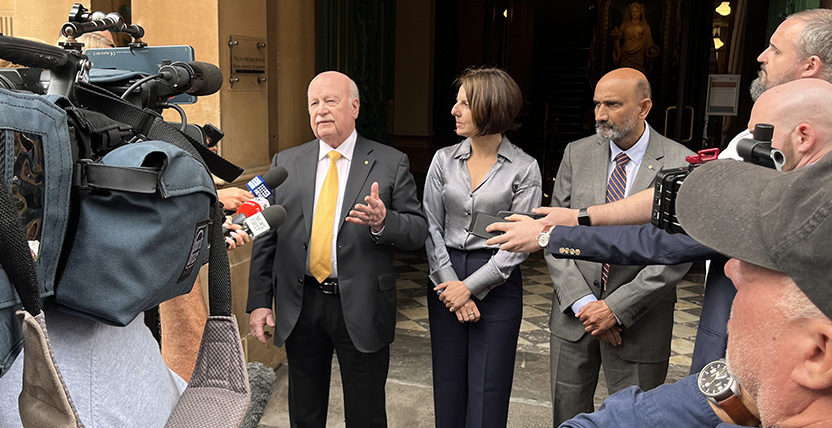
Communicating the value and benefits of science to decision makers and the wider community is one of the Academy’s commitments.
Individual Fellows of the Academy have a history of doing so, including using science to inform the justice system.
Academy Fellows Sir Gus Nossal and Professor Ian Frazer were among 30 scientists who signed an open letter questioning the evidence used to convict Lindy and Michael Chamberlain.
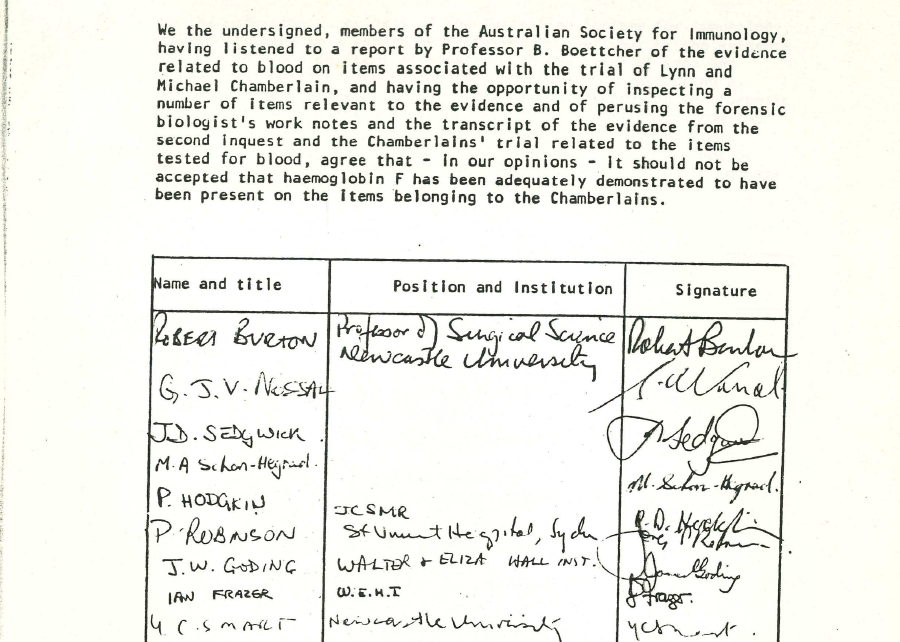
The Northern Territory Government subsequently established a royal commission which overturned the Chamberlains’ convictions.
Almost 35 years later, the reception, quality and evaluation of scientific evidence in Australian courts was the focus of an Academy joint symposium with the Australian Academy of Law, an initiative started by the academies in 2018.
Academy Fellows presenting at the event included Professor David Balding, whose DNA analysis profiling helped convict one of Scotland’s most notorious killers in 2014.
Academy Fellow Professor Carola Vinuesa also spoke about new genetic research she’d recently completed with international colleagues.
Shortly afterwards, Professor Vinuesa’s research prompted 90 eminent scientists—including Nobel laureates, medical practitioners, science leaders and other prominent Australians—to sign a petition calling for Kathleen Folbigg’s immediate pardon and release from jail.
“Expert advice should always be heard and listened to. It will always trump presumption,” said Professor Ian Chubb, former Chief Scientist and the Academy’s current Secretary for Science policy, regarding his signing of the petition.
The new research, the petition and the Academy’s role as an independent scientific adviser in the Folbigg case were among the factors that played a role in overturning one of Australia’s biggest miscarriages of justice.
“Science needs to inform decisions wherever they are made, including in the justice system, and the second Folbigg Inquiry benefited from the Academy being appointed an independent scientific adviser,” said Academy President Professor Chennupati Jagadish.
Following this judicial inquiry, the Academy has been calling for a more science-aware legal system in every Australian jurisdiction, so that miscarriages of justice are prevented or made less likely.
“The second Folbigg Inquiry amply illustrates how rapidly scientific knowledge is changing. The justice system needs a mechanism to accommodate relevant changes as and when they occur,” Professor Jagadish said.
The Academy supports law reform in three key areas:
- the adoption of a reliability standard under which expert evidence would only be considered by the courts if it is factual, not opinion or suspicion — a process some other jurisdictions with similar court systems have adopted
- mechanisms for the selection of experts by independent and reliable sources, particularly where complex scientific material is required to inform decision making
- the establishment of post appeals review mechanisms, such as a Criminal Cases Review Commission.
Law academics and media outlets are among those who have joined the Academy in calling for reform in Australia’s justice systems.
The Academy’s work to bring about law reform to create more science-aware legal systems continues, including seeking discussions with the scientific and legal communities, and Attorneys-General across Australia.
The Academy’s law reform proposals for a more science-receptive legal system featured recently in the Australian media.
Distinguished scientists set to share research with new audiences
The Academy is pleased to announce the 2024 recipients of the Graeme Caughley Travelling Fellowship, Selby Fellowship and Rudi Lemberg Travelling Fellowship which will support four researchers in travelling both to Australia and overseas.

Ecosystem conservation with the Graeme Caughley Travelling Fellowship
Professor Richard Kingsford – University of New South Wales
Conservation biologist Professor Richard Kingsford from UNSW is this year’s recipient of the Graeme Caughley Travelling Fellowship. He will visit South Africa, Botswana, Kenya, the United Kingdom and Europe, connecting with wildlife managers to discuss conservation in uncertain conditions based on the best available science and adjusting decisions as evidence is gathered, known as strategic adaptive management.
Professor Kingsford works with communities and governments across Australia on ecosystem management and implementing effective conservation actions. He will also use this Fellowship as an opportunity to inform scientific and conservation managers on the application of a new classification of Earth’s ecosystems – the Global Ecosystem Typology.
“This can be a platform for assessment of the status of ecosystems and their drivers, which can focus management,” Professor Kingsford said.
Offered every two years, the Fellowship commemorates the work of Dr G. J. Caughley FAA in ecology and wildlife management. The Fellowship is financed through the generosity of his friends and colleagues, to enable ecologists resident in Australia or New Zealand to share their expertise by visiting scientific centres in countries outside of the Fellow’s own country.
“I had the privilege of having Graeme Caughley as a lecturer when I was an undergraduate at the University of Sydney,” Professor Kingsford said.
“I still clearly remember marvelling at his intellect, wit and quantitative acumen articulating the critical importance of experimental design and analyses in applied wildlife management.”
From bio-inspired design to ocean ecosystems, two international scientists will showcase their research in Australia thanks to the Selby Fellowship
Professor Ben Halpern and Professor Anette Hosoi are this year’s recipients of the Selby Fellowship which will support their visits to scientific centres in Australia to share their research.
Professor Ben Halpern – University of California, Santa Barbara
Professor Ben Halpern is the Director of the National Center for Ecological Analysis and Synthesis (NCEAS) and Professor in the Bren School of Environmental Science and Management at the University of California, Santa Barbara.
His research uses environmental data science to address the many ways human activities are impacting ocean ecosystems and species, and the consequences of those impacts on the benefits we receive in return.
With funding from the Selby Fellowship, Professor Halpern will tour through Sydney, Perth and Brisbane, bringing his ocean sustainability science to new audiences.
“I’m so excited to have the chance to visit different parts of Australia, meet with new people and visit old friends, and share what I have been working on lately,” Professor Halpern said.
Professor Anette Hosoi – Massachusetts Institute of Technology
Professor Anette (Peko) Hosoi is the co-founder of the MIT Sports Lab which connects the MIT community with pro-teams and industry partners to address data and engineering challenges that lie within the sports domain. Her research is at the junction of fluid dynamics, biomechanics and bio-inspired design.
“The Selby Fellows are an exceptionally distinguished group of researchers, and I am incredibly proud and honoured to be added to the list,” Professor Hosoi said.
“I am excited about my trip, and I am very much looking forward to meeting new people, starting new collaborations and getting to know Australia.”
Awarded to two distinguished scientists this year, the Selby Fellowship fosters the international exchange of scientific ideas and is financed through the generosity of the trustees of the Selby Scientific Foundation.
Inspiring the next generation of scientists with the Rudi Lemberg Travelling Fellowship
Professor Peter Reich – University of Michigan and University of Minnesota
Professor Peter Reich is this year’s recipient of the Rudi Lemberg Travelling Fellowship and will visit Australia to share his research on understanding and stewarding nature.
Previously the Chief Scientist at the Hawkesbury Institute for the Environment at Western Sydney University, Professor Reich is now the Director, Institute for Global Change Biology, University of Michigan and holds a Professorship at the University of Minnesota.
“Australian scientists and their institutions have always made me feel supremely welcome, and have hosted a great deal of exciting research done amidst high levels of collegiality and fun,” Professor Reich said.
From small-group to large-team studies covering topics including biodiversity, biogeochemistry, and climate change – social justice interactions, Professor Reich will share his knowledge at presentations across Australia.
“I am enthused about sharing our research findings from North America and around the world with the Australian plant science, ecological and global change science communities,” Professor Reich said.
“I am equally eager to learn from student, postdoc and faculty researchers about all of the amazing work ongoing across multiple institutions in Australia.”
The Rudi Lemberg Travelling Fellowship commemorates the contributions of Professor Max Rudolph Lemberg FAA FRS to science in Australia, enabling either Australian or overseas scientists of standing to visit Australian scientific centres and deliver lectures. The Fellowship is financed through the generous bequest of Mrs Hanna Lemberg and the Australian Society for Biochemistry and Molecular Biology.
Dates and details of all tour dates and public lectures will be published on the Academy website once confirmed.
Visit the Academy’s awards and opportunities to find out about our honorific awards and funding opportunities.
Celebrating seven decades of the home of Australian science
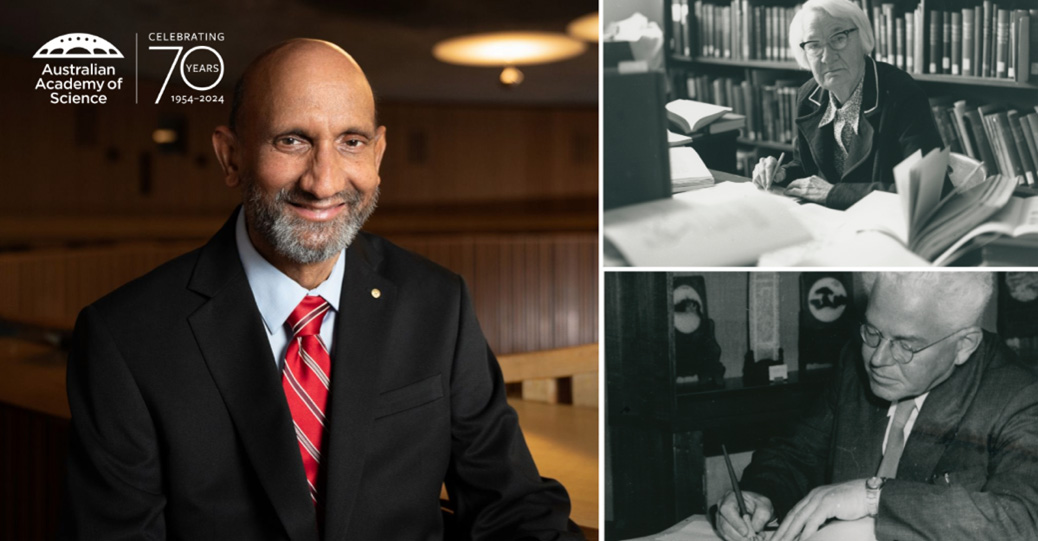
Today, the Australian Academy of Science celebrates seven decades of serving the nation as the home of science.
Discussion of the Academy began in 1951 when leading scientists, technologists and industrialists met in Canberra to talk about the future of science and technology in Australia, ultimately deciding there was a need for a national establishment of scientists.
Earlier attempts to establish such an organisation had been unsuccessful, but with scientific capacity and capability accelerating in Australia, the need for this organisation was now urgent.
Renowned physicists Sir Mark Oliphant AC KBE FAA FTSE FRS and Dr David Martyn FAA FRS championed the initiative.
“If science for its own sake was to have coherence, there must be a means whereby that coherence could be expressed,” Oliphant said at a seminar in 1951, when convincing others of the possibilities of an Australian Academy.
He went on to say, “most countries have a National Academy of Science, Britain has its Royal Society” and, because of the great talent and growing capability of Australian scientists, he was inspired to establish a national scientific identity closer to home.
Above: Watch Robyn Williams AM FAA in discussion with Michael Wilson, Sir Mark Oliphant’s grandson, about Oliphant’s legacy and vision for science in Australia. See the full interview (30mins)
Petition to Queen Elizabeth II
The collaboration between Oliphant and Martyn overcame the difficulties that had defeated previous attempts to form an Academy, and together they organised the Petition to Queen Elizabeth II requesting the formation of the Australian Academy of Science.
On this day in 1954 the founding members of the Academy’s first Council, originally just ten members of the United Kingdom’s Royal Society, gathered in a small room at Government House to receive the Academy’s founding document, the Royal Charter, from the Queen.
The Royal Charter establishes the Academy as an independent body with government endorsement, and independence remains a talisman of the organisation.
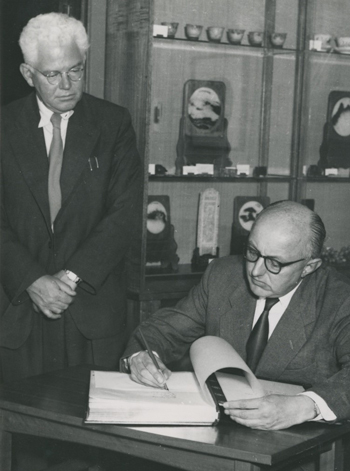
Oliphant was the Academy’s first President, choosing to stay in Australia to continue to build research capacity and advocate for the organisation of scientists in this country – instead of pursuing what might have been a lucrative research career overseas.
“(I have a) deep confidence in the part which science can play in making us strong and prosperous, and an idea that the proper use of science within its diverse territories may point the way to a secure and good life for all,” Oliphant said, about staying in Australia to establish a home for science.
Current President of the Academy Professor Chennupati Jagadish AC, said the establishment of the Academy created the opportunity to recognise local talent, make their expertise available domestically and to grow recognition of Australia’s contribution on the global stage.
“We strive to ensure that wherever decisions are made, they are informed by evidence, whether that be in our parliaments, courtrooms, boardrooms, classrooms or in the public square,” he said.
To this day, the Academy remains an independent organisation of distinguished Australian scientists, championing science for the benefit of all – with 915 Fellows elected to the Academy from 1954 to 2023.
“We are non-partisan, we do not carry vested interests, we are not a governmental organisation, and we are not beholden to any single institution,” Professor Jagadish said.
A truly national organisation
And while the home of the Academy may be in Canberra, it is a truly national organisation, with Fellows elected from every state and territory in Australia.
From the invention of the Wi-Fi router to the development of the world’s first anti-cancer vaccine (Gardasil), the creation of spray-on skin for burn treatment and world-leading progress in gravitational wave detection and energy efficient solar cells, Fellows of the Academy are elected for their outstanding contributions to science.
We invite all Australians, from every corner of society, to collaborate with us to benefit from the value of science and share in the treasure that is our Fellowship and the knowledge they generate and share.Professor Jagadish
The Academy is built on the vision of bringing scientists together as part of a national identity, now providing a valuable window into the history of Australian scientific discovery and serving as a springboard for scientific collaboration and education in Australia.
“As we enter our eighth decade we are as committed as ever to our mission to advance Australia as a nation that embraces scientific knowledge and whose people enjoy the benefits of science,” Professor Jagadish said.
“As we look to the future, the Academy will continue to work with you to ensure a healthy science system and make the best expertise available to the service of the nation.”
A full calendar of events
The Academy is celebrating seven decades of scientific excellence with a full calendar of events, to reflect on its vivid history and look to the future of science.
There will be a six-part public speaker series with events throughout the year, the annual symposium will be held during the World Science Festival in Brisbane and Science at the Shine Dome will be in September. Keep an eye on the Academy’s events page to join in the festivities.
Related content
70th anniversary President’s message
We are 70 years young – here are some things you might not know about us
Australia’s R&D system is broken and needs more than band-aids
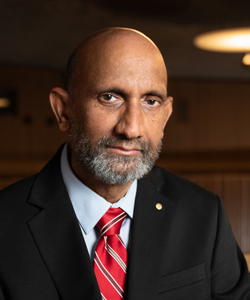
Academy President Professor Chennupati Jagadish
For a community that loves its smartphones and obligingly updates the operating system when we are advised a few times each year, why are we prepared to live with an operating system for our research that hasn’t been updated in 30 years?
Good intentions, just-in-time measures, ad-hoc interventions, politics and overlapping state and Commonwealth priorities have led to a system spread over 176 programs and 14 federal portfolios.
We are left with an incoherent system band-aided to slow the bleeding but not to fix the problem.
The lack of a coherent and strategic approach yields a research funding model that is broken.
Universities, which perform 87% of discovery or basic research in Australia, rely heavily on international student fee revenues to fund research or to meet the indirect costs which hard-to-win research grants rarely cover.
Politicians talk regularly about mitigating sovereign risk yet watch Australia’s research capacity be increasingly dependent on highly contested international student markets, and vulnerable to geopolitical issues.
We expect a lot from Australian researchers. They are not only asked to advance the frontiers of knowledge but to train the next generation, inspire the public, commercialise their research, protect national security, and solve global challenges.
Yet, many of these tasks are not supported by the current system and are not captured by the metrics used to assess performance.
A poorly functioning Australian science and research system has wide-ranging impacts. Australia’s productivity growth is declining - in the decade to 2020, Australia’s productivity growth was the slowest in 20 years, and our investment in R&D declined to a new low point over the same period.
We know R&D can increase the number of industries Australia benefits from, thereby raising economic complexity and making our economy less vulnerable. As government investment in R&D falls, the incentive for business investment falls with it.
The Prime Minister has personally acknowledged that science is essential to future economic growth and could unlock our potential as a country.
But acknowledging the importance of science is one thing. Investing in science is another. And right now, it is clear there is a mismatch between Australia's aspirations and its support for science.
The Australian Government must urgently commission a cross-portfolio, cross sectorial review of the Australian research and development (R&D) system. This review would inform a 10-year roadmap to enable R&D to power our economy and meet our national ambitions.
Reversing the downward trend of government investment in R&D is not the work of any single budget. All levels of government, industry, universities, the research sector, and philanthropy must play their part.
But a national strategy, a roadmap and a decade of commitment to boost investment in R&D is an essential start.
Read the 2024-25 Pre-Budget submission and the related media release.
Professor Chennupati Jagadish AC PresAA FREng FTSE
President, Australian Academy of Science
This piece was first published in The Australian.