




Inaugural Tri-Academy Partnership fosters Indigenous knowledge sharing across borders

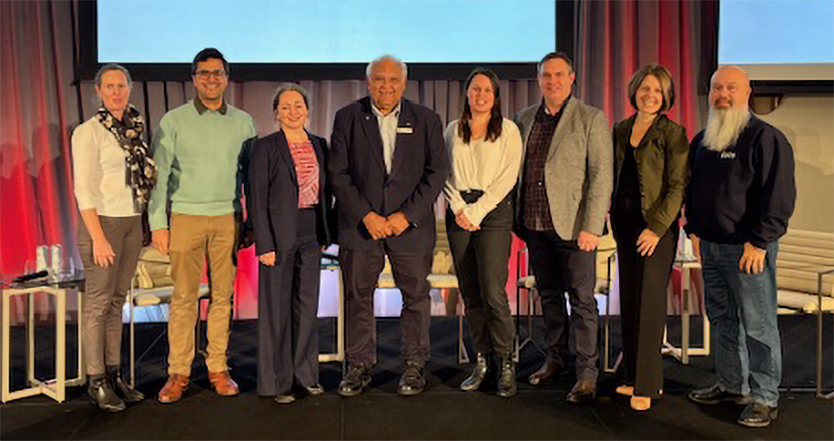
The Australian group attending the Tri-Academy Partnership on Indigenous Engagement were (from left) Lynn Allan from the Australian Academy of Science, Dr Jordan Pitt, Michelle Hobbs, Professor Tom Calma, Dr Katrina Wruck, Professor Ray Lovett, Anna-Maria Arabia, and Professor Bradley Moggridge.
On the unceded territories of the xʷməθkwəy̓əm (Musqueam), Skwxwú7mesh (Squamish), and səlilwətaɬ/Selilwitulh (Tseil-Waututh) nations in Vancouver Canada, Indigenous scholars, academics and allies from across three nations came together for the inaugural Tri-Academy Partnership on Indigenous Engagement, which took place from 4 to 6 November.
Hosted by the Royal Society of Canada in collaboration with the Australian Academy of Science and the Royal Society of New Zealand Te Apārangi, the Tri-Academy Partnership inaugural summit was centred around the theme of cultural heritage in an era of reconciliation. It provided valuable opportunities for deeper understanding, knowledge sharing and connections between Indigenous scholars and academics from Australia, Aotearoa New Zealand and Canada, as well as non-Indigenous allies and stakeholders.
The three-day event saw panel discussions and keynote addresses from leading knowledge holders from the three countries, including Kungarakan Elder and Iwaidja man Professor Tom Calma AO FAA, representing the Australian Academy of Science and Ngiyampaa/Wongaibon epidemiologist Professor Ray Lovett from the Australian National University who participated in a panel discussion about the future of Indigenous engagement in academia. Discussions took place around the current state of Indigenous engagement in the academic sector, and how the sector and learned academies can improve and meaningfully engage with Indigenous knowledge and leadership.
Great opportunities
Professor Calma, a member of the Tri-Academy Partnership steering committee, said “I think there are some great opportunities coming out of forums like this between our three countries, on a number of different levels.
“[There is] the knowledge exchange that takes place here at the summit but also the contacts that we are able to make with each other.
“I've already made contacts with quite a number of our Canadian delegates who are here, both on language and on teaching, and learned a bit about their current projects.
“We have got to establish a global network of like minds, and the academies are a great example of where we can get those like minds together to share information and to learn from each other.”
Along with Professor Calma and Professor Lovett, the Australian delegation to Canada included distinguished scientists Dr Jordan Pitt, a Birri Gubba man and Chair of the Academy’s Early- and Mid- Career Researcher Forum; Michelle Hobbs, a descendent of the Bidjara people and 2023 joint recipient of the Academy’s Aboriginal and Torres Strait Islander Scientist Award; and Kamilaroi man Professor Bradley Moggridge and Mabuigilaig and Goemulgal woman Dr Katrina Wruck – both Indigenous advisers to the Academy’s Reconciliation Action Plan working group.
“Many of the issues Indigenous academics raised were common to all three nations,” Dr Jordan Pitt said, reflecting on the summit.
“Fundamentally these issues are all rooted in the same thing – the significant power imbalance between Indigenous communities and the academic community that seek to engage them.
“This has resulted in previous engagement being a purely extractive process which has eroded trust.
“While there is movement to improve engagement by moving from projects done ‘on us’ to projects done ‘with us’ and ‘by us’, to do so will require long-term and strategic engagement of Indigenous communities to move from merely nice-to-have representation to genuine partnership,” he said.
This event will help build understanding across academies, borders and cultures. We are also proud to have supported the attendance of EMCR delegates Dr Jordan Pitt (@jpapitt below), Michelle Hobbs (@MichyPossum) and Dr @KatrinaWruck. #TAP2024 pic.twitter.com/xtQLE8obRl
— Australian Academy of Science (@Science_Academy) November 6, 2024
Genuine Indigenous engagement
The summit was also attended by Anna-Maria Arabia, Chief Executive of the Academy.
“The Tri-Academy Partnership on Indigenous engagement was a tremendous opportunity to listen carefully about how our academies can understand and act upon our responsibilities toward genuine Indigenous engagement,” Anna-Maria Arabia said.
The Tri-Academy summit kicked off an initial three-year commitment to the gathering of Indigenous knowledge holders across the three countries, with the next summit to be hosted by the Royal Society of New Zealand Te Apārangi, and the third in Australia, hosted by the Australian Academy of Science.
“Already we are seeing the enthusiasm by members participating, knowing that this is really the start of a process for some in understanding how Indigenous practices occur in other countries,” Professor Calma said.
Brian and Dianne Anderson establish new medal for information and communications technology
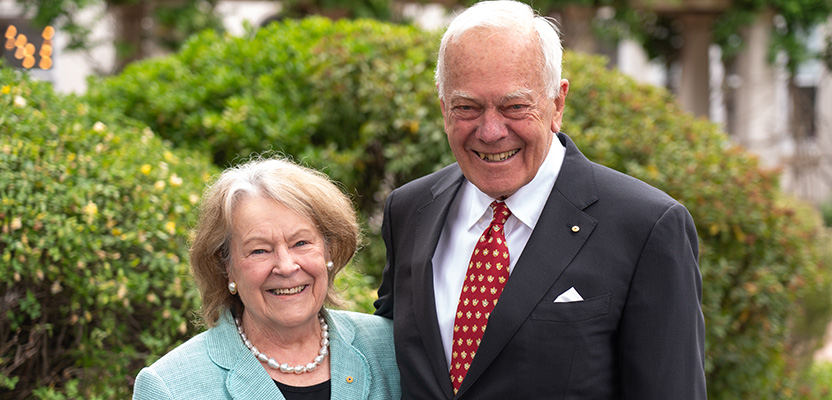
Image: The commitment of Dianne (left) and Brian Anderson to this new medal reflects a shared vision to support future leaders in fields that shape and strengthen the pipeline for early-career researchers.
The Australian Academy of Science is celebrating a generous donation from Professor Brian Anderson AC FAA FTSE FRS and Dianne Anderson AM, who have established the Brian Anderson Medal for information and communications technology (ICT).
This new award will honour the outstanding achievements of early-career researchers who are engaged in high-quality ICT research, underscoring the importance of fostering emerging talent in this rapidly evolving field.
These researchers play a vital role in shaping the future of a major recently emerged disciplinary cluster and this award will provide recipients with valuable recognition, networking opportunities and support to further their research goals and career aspirations.
Supporting the future of ICT in a digital age
As ICT becomes increasingly central to economic growth and social development, research in this area, starting with the scientific underpinnings, is more important than ever. ICT breakthroughs—whether in areas such as artificial intelligence, data processing, quantum encryption, networked system operation or cybersecurity—are vital to the operation of industries worldwide, from healthcare to finance and beyond.
The medal will shine a spotlight on researchers who contribute to such advancements, emphasising the value of ICT solutions that serve communities and bolster industry resilience or Australia’s security.
“It’s no exaggeration to say that the ICT Revolution is as big as the Industrial Revolution—in terms of the underlying scientific activity as well as the role the associated technologies play in today’s economy,” Professor Brian Anderson said.
Professor Anderson said it was their intention that the research recognised may encompass theoretical, experimental, or applied aspects of ICT—with ICT deemed to include all aspects of computer science, and most aspects of ‘light current’ electrical engineering, including but not limited to information theory, cyber-physical systems, robotics, signal processing, control systems and networks, as well as communications.
“Application of the science underpinning ICT to various applications domains can be considered,” he said.
“Examples might include applying machine learning to medical diagnosis, detection of disinformation in social media, peak hour traffic control, drone formation management, or applying the many techniques of control systems in power system control, epidemic control, or control of social networks.”
Empowering the next generation
The establishment of this medal marks a step towards recognising ICT talent whilst reinforcing a field that is integral to the future of Australian science.
The Brian Anderson Medal highlights the importance of nurturing and supporting emerging talent in ICT and promises more than accolade; it is structured to offer networking opportunities for awardees, empowering recipients to further their research impact and build connections within the ICT community.
About Brian and Dianne Anderson
Professor Brian Anderson is a distinguished researcher and former President of the Australian Academy of Science.
Most of his professional life has been linked in some way to ICT, including, but not limited to, his personal research, and he has consistently promoted the need for a continuous pipeline of skilled researchers dedicated to pushing the boundaries of technology.
Professor Anderson’s research is distinguished principally for his contributions to control and systems theory, while he has also worked substantially in signal processing and telecommunications. Applications work has involved aircraft control, water supply systems, economic modelling, and networked aspects of drone operation. He served as President of the Australian Academy of Science from 1998 to 2002.
He was appointed a Companion of the Order of Australia in 2016.
Since her teenage years, Dianne Anderson has been a significant supporter of many charitable initiatives, of many organisations promoting music in the Canberra community, and of several outstanding musicians seeking to launch an international career.
She was appointed a Member of the Order of Australia in 2018 for this significant service to the community. Her support of the new medal reflects her enthusiasm for backing outstanding young individuals.
“As an avid user, but not researcher, in ICT, I recognise it is a force for good in the world, and the many researchers I have met over the years have impressed me as highly dedicated and ethical individuals,” Dianne Anderson said.
“I can see that the most exceptional of these individuals deserve recognition by a body such as the Academy. Given the role the Academy has played in my husband Brian’s life, the proposal to establish the new medal drew from me an immediate and highly enthusiastic response.”
Nominations
Nominations for the inaugural round will open mid-February 2025 and close 1 May 2025.
Eligibility guidelines and how to nominate can be found on the award webpage.
Q&A with Brian and Dianne
Academy: Can you share more on what inspired you to establish the Brian Anderson Medal for ICT?
Brian: I have had a very fortunate life and am motivated to give something back to the Australian community, especially that part of it I have been close to.
My principal career activity has been as a researcher, and from the start of my training, I was imbued with the idea that one should strive for excellence. I learnt in my graduate studies at Stanford University that the three most important aims of a research university were excellence, excellence and excellence.
That was also my lived experience in the Institute of Advanced Studies at the Australian National University where I spent a major part of my career. The Australian Academy of Science stands out for me today as one of the key bodies in Australia whose DNA is built around excellence, and so it seemed a natural vehicle to fulfill the ambition of giving something back in a way that celebrates excellence in research.
At the same time, it was important for me that Dianne, a life partner who has given me unstinting support, should be emotionally and practically involved in this endeavour.
Dianne: I totally support the establishment of the Brian Anderson Medal at the Australian Academy of Science. I have been the wife of an incredible researcher for over half a century, and I have supported and partnered Brian in his involvement with the Academy, especially when he was President.
It will be wonderful for the Academy to now offer a prize for a young researcher in the ICT area, hitherto unrepresented as a discipline among the awards of the Academy.
Academy: Brian, could you share your perspective on the importance of ICT and the rapid evolution of this field? You previously mentioned that one of your papers from 1982 has seen a significant increase in citations over the past two years. What factors do you think are driving this renewed interest and relevance in your work?
Brian: Is ICT important? To say no, I think you would have to be either exceptionally brave, or exceptionally foolish, or both.
But it was not always so, especially in Australia. It was only 25 years or so ago that Australians were essentially passive consumers of ICT products. Major projects by companies and governments to introduce ICT systems failed in many cases, at great cost, often because of lack of expertise.
At that time, the Australian Research Council was funding more postdoctoral awards in archaeology and anthropology than in ICT, and normalised international citation comparisons across countries and disciplines showed that Australian-sourced research papers in ICT were valued internationally far less than Australian-sourced papers from almost every other discipline.
International patent comparisons also told a dismal story. Of course, the ICT field in Australia has progressed hugely since then. E-mail is no longer just a tool for university researchers. Phone calls around the world no longer cost an arm and a leg.
Most industries involving many consumers, e.g. banking, insurance, or retail utility supply, deliver services that reflect some substantial savings due to ICT. All manner of scanning devices assists in managing health problems, and robot-aided surgery is commonplace.
Cars are much safer, due to the incorporation of so many sensors to assist the driver. And while the tax code has become more complicated, the process of filling out and submitting tax returns is much simpler.
These evolutions have arisen in part through the usual workings of the economy in a liberal democracy, while at the same time recognition by the Federal Government 25 years ago of the parlous state of university ICT research activity secured interventions which started to improve matters.
The result is that ICT expertise is now far more widespread, and there are pockets of excellence in both the commercial world and universities.
Now you ask about a particular paper: the paper itself was published in 1982, and its original intention was to provide a tool for solving some signal processing problems where noisy data was recorded and subsequently processed in order to extract a best estimate of the intelligent content of the data, i.e. to eliminate as much as possible the noise.
The technical details are not important, but I will mention that the paper presented a procedure to obtain a reverse-time model of what is called a diffusion process (the term being familiar at least to physicists).
The paper received about two citations per year up to 2022, so about 80 citations over 40 years. In that year, the citation numbers started to skyrocket, and they have increased by a factor of 10. Over about 10 months in 2024, there have been over 400 citations.
The reason is that the idea of the paper proved useful to a subset of the AI community, people who seek techniques to generate images from textual descriptions—a bear dancing on the moon, Vladimir Putin on a surfboard, and so on. Programs that do this sort of thing are a very recent development.
Those developing the programs somehow picked up my old publication as providing a framework underpinning the various approaches being developed to handle the image generation problem.
Is there then a lesson to be learnt? I doubt it. But the incident does remind us of the possibility that research addressing one problem may ultimately prove useful for some other problem.
It also illustrates that judgments about a paper based on citations may be fragile judgments.
For 40 years, the paper would not have appeared on any list of my major work. But now it is entering the range of my most highly cited papers. Yet the quality of the paper of course is invariant through the process.
Academy: Dianne, could you tell us more about what inspires your commitment to philanthropy, particularly in supporting young talent? You recently supported Polish concert pianist Lucas Krupinski to travel to Australia to perform. What motivates you to invest in young talent and researchers?
Dianne: I should first explain a little about my life and how I became involved in charity work and philanthropy.
I grew up in Newcastle. My father, Murree Allen, went to Fort Street High School in Sydney and topped the State in NSW when he did the Leaving Certificate. He went on to study medicine and obtained his heart specialist degree during the Second World War, but he died in 1956 of a heart attack when he was 45 years of age.
After my father died, my mother supported our family of four children, working with the Methodist Home Nursing Service and managing some properties my father had purchased when alive, which I often looked after her when I was older. My three brothers and I all had organ scholarships at Christ Church Cathedral Newcastle.
Brian had returned from the US after finishing his PhD at Stanford University and worked in Silicon Valley. He had taken up a position as full Professor and Head of the Engineering Department at Newcastle University at a very young age. We met in Newcastle while I was still a student at Newcastle Teacher’s College and we had a whirlwind romance before marrying after five months. Maybe I saw something of my father in Brian who had come second in NSW when he did the Leaving Certificate ...
I graduated with a diploma in music education, majoring in organ. When we married it was accepted, and financially possible, for women not to work. I had an interest in starting and raising a family, so over the years we had three daughters. I continued being both a church and relief organist and became a band and choir director at several ACT Government schools. I have always enjoyed hosting and organising regular dinner parties for friends, academics and students, house renovation, home decoration, gardening (which led to our garden in Canberra being included in Australia’s Open Garden Scheme).
Certainly, I am not an academic and believe that I had ‘creative intelligence’ from my father which in some way complemented Brian. We have been a good team and enjoyed bringing up our three daughters, who have all had interesting lives and who are creative in their own right. They are now based in the US, Malaysia and France with their families and we have a total of 10 grandchildren whom we enjoy keeping in contact with, especially when we travel or when they visit.
When we were first married Brian actually had the idea that he may not be able to do any research past the age of 36 (!) so he became exceptionally focused on his research and working with colleagues both in Australia and overseas from a young age. I therefore became more involved in charity work over the years, supporting especially musicians and organisations helping young people.
The most fulfilling has been supporting, for 23 years, the Indian family of a rickshaw driver whom I met in Varanassi.
This included covering the family’s needs and education costs for the children up until today. Charities and organisations included the Newcastle Youth Service, the Australian National Eisteddfod’s Choirs and Piano Divisions, Wesley Music Centre, The Smith Family’s ‘Learning for Life Program’, Canberra RSPCA, Canberra Symphony Orchestra and the Canberra International Music Festival as well as many pianists and individuals.
Friendships made through these organisations have added another dimension to my life and in recent years this work has become more philanthropic.
I have been the wife of an incredible researcher for over half a century, and I have partnered Brian in his involvement with the Australian Academy of Science, especially when he was President.
I totally support the establishment of the Brian Anderson Medal and Annual Prize at the Academy and am excited that with our sponsorship, the Academy is now able offer a prize for a young researcher in the ICT area, hitherto unrepresented as a discipline among the awards of the Academy.
Heatwave mitigation and deep space research: funding awarded to research conferences
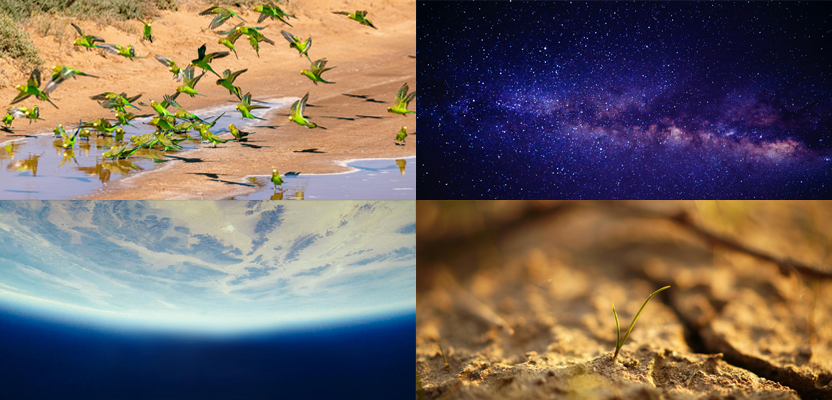
The Australian Academy of Science is proud to support scientific research through sponsorship of specialist conferences that focus on rapidly developing fields.
The Academy is pleased to announce funding towards two conferences to be held in 2025.
Exploring the first billion years of the universe with the Elizabeth and Frederick White research conference
The future of research into the early universe will be the focus of a workshop for the Elizabeth and Frederick White research conference in 2025.
Recent advances in technology have allowed researchers to make significant strides in understanding the universe's first billion years. With the development of new tools, such as the Square Kilometre Array currently under construction in Australia, deep space research is poised to take another leap forward.
Astrophysicists and cosmologists from around the globe will come together to discuss new possibilities for exploration into our early universe.
Funding for the Elizabeth and Frederick White research conferences is offered for research conferences in the physical and mathematical sciences related to the solid Earth, the terrestrial oceans, Earth’s atmosphere, solar-terrestrial science, space sciences and astronomy.
Preparing nature and society for a hotter world with the Fenner conference on the environment
Finding solutions for the impacts of extreme heat on Australian landscapes will be the focus of the 2025 Fenner conference on the environment.
High temperature records are being broken globally each year. Australia is especially vulnerable to extreme heat challenges, with life-threatening heatwaves becoming more frequent and severe.
Researchers, policymakers and stakeholders from industry and environmental groups will gather to discuss the stake of current research and form new collaborations to develop positive futures for Australian landscapes and society under extreme heat conditions.
Funding for the Fenner conferences on the environment is offered for conferences that bring together those with relevant scientific, administrative and policy expertise to consider current environmental and conservation problems in Australia, to contribute to the formation of policies to alleviate them.
2026 applications opening soon
The 2026 award round for research conference funding will open in mid-February 2025.
Find out more about the Academy’s awards and opportunities.
Australia needs a coordinated, national institute to respond to the changing climate
Scientists are calling for the urgent establishment of a national agency responsible for coordinating the science required to transform Australia’s response to climate change.
Australia will struggle to achieve net zero emissions, mitigate risks against natural disasters or ensure water security and agricultural success unless we update our approach to climate science research.
A leadership vacuum exists within Australia’s climate science research strategic plans.
Ambitious and strategic climate science research programs are scattered across several institutions, and none are tasked with coordinating the answers to critical questions about Australia’s unique climate.
Australian Academy of Science Fellow and Chair of the Academy’s National Committee for Earth System Science (NCESS), Professor Andy Pitman AO said that without coordination across existing research programs, we are building our climate policies on crumbling foundations.
“A unifying agency is needed to address the critical gaps in our understanding of Australia’s climate and the impacts of change, and to support and engage the excellent individual researchers we have.”
Scientists have recommended this coordination capability be achieved by establishing an Australian Institute for Earth System Science which prioritises long-term national oversight, strategy and implementation of climate science research.
Establishing such an institute is the first of 14 recommendations made in A Decadal Plan for Australian Earth System Science 2024–2033, released today. Watch the launch webinar.
The plan, developed by NCESS under Professor Pitman’s leadership, provides a roadmap of the scale and ambition required to leverage Earth system science in answering the questions climate change is demanding of our nation.
“Our knowledge is incomplete, and we cannot address the gaps if we do not reignite our ambition to excel in Earth system science,” Professor Pitman said.
“How can our land and ocean be used to support net zero ambitions? Where in Australia is at risk of abrupt changes in weather and climate? Where is freshwater in Australia resilient to climate change? How do we manage the exposure of our cities to climate extremes?
“We can build a comprehensive understanding of our atmosphere, oceans and land to answer these questions, but to do so we need ambition, organisation and leadership.”
Many of Australia’s counterparts in the northern hemisphere, including Germany, the United States and the United Kingdom, have permanent research-focused organisations that are ambitious and provide coordinated responses to critical questions for their nations over the long term.
“As a nation, we are uniquely positioned to lead the research required in the southern hemisphere because of our local talent, connection to the Pacific and our existing investment in the essential capabilities,” Professor Pitman said.
“By implementing the recommendations in this plan, Australia can build the foundations for far more robust and actionable climate intelligence.
“This is an opportunity to ensure management of emerging climate risks in Australia, and across our region, are based on scientific evidence.”
The Academy acknowledges the NCESS members who contributed to the production of the decadal plan, and thanks them for fostering the development of an active community of Earth system science researchers in Australia.
Science is essential to Australia’s pandemic preparedness
The Australian Academy of Science welcomes the release of the COVID-19 Response Inquiry Report, which serves as both a reminder and a warning for Australia’s pandemic preparedness.
The inquiry highlights the need for the nation to ensure its systems, capabilities and people are prepared for future pandemics.
Findings and recommendations in the report provide an evidence-based roadmap for future pandemic preparedness, and the Academy thanks the panel members for their work and collaboration with the scientific community in developing these conclusions.
President of the Academy Professor Chennupati Jagadish said it is sobering to note Australia may be less prepared today to respond to a global pandemic than we were in early 2020.
“We cannot afford to let the lessons of COVID-19 be forgotten as the immediate threat of a pandemic fades from our view,” Professor Jagadish said.
“Science is, and will continue to be, the foundation of any future pandemic response.
“This is an opportunity to embed the system and structures that underpin organised scientific input during a crisis, to mitigate and respond to risks and threats as they emerge.”
The Academy’s submission to the inquiry called for a national strategic plan for emergency readiness that integrates scientific knowledge into government planning.
“Our scientific community was able to mobilise science, research and technology to contribute to the national and international public health response to COVID-19,” Professor Jagadish said.
“Ensuring Australia's scientists and science infrastructure–including science advisory mechanism–are properly supported is essential for a robust national response to future health threats.”
The Australian Government must continue to invest, reinforce and build upon these capabilities now to ensure a wholistic and multidisciplinary response to a future pandemic.
“Australia’s scientists and public health experts were at the forefront of the nation’s COVID-19 response, providing the information and advice that was essential to evidence-informed decision-making, and it saved lives” Professor Jagadish said.
“There remains work to be done to enable independent scientific advice to routinely inform decision making. This capability is the bread and butter of the Academy and the pandemic demonstrated how valuable it is to society when utilised.
“The more volatile the world becomes and the more misinformation proliferates, the more critical it becomes to bring evidence to decisions.”
Truth, then reconciliation in the academy
By Frank Deer, Tom Calma and Carwyn Jones*
Text originally published by the Royal Society of Canada on 28 October 2024
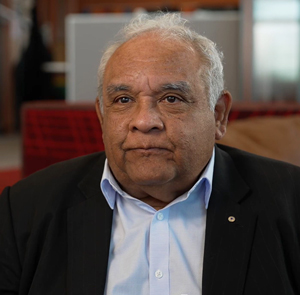
Professor Tom Calma, Fellow of the Australian Academy of Science.
Former Commissioner of the Truth and Reconciliation Commission of Canada Murray Sinclair recently wrote that “education got us into this mess and education will get us out of it”.
By “this mess”, Mr Sinclair appropriately evokes the history of research and scholarship in a colonial enterprise during which scholars and scholarly institutions were complicit—sometimes actively, often implicitly—in a systematic marginalisation of Indigenous voices, both within Canada and in countries with analogous histories such as Australia and New Zealand.
In Canada, Orange Shirt Day and the National Day for Truth and Reconciliation are among more recent societal acknowledgments of our difficult history that offer the opportunity for us all to recommit to truth as the necessary precursor to reconciliation.
As Indigenous Members of scholarly academies in Canada, Australia, and New Zealand, we have observed evolving practices at the individual and institutional level that serve as inspiring examples of engaging with Indigenous peoples, premised on the simple and vital principle of respect that infuses the UN Declaration on the Rights of Indigenous Peoples.
In Canada, for example, Professor Val Napoleon’s contributions to the field of Indigenous legal orders have evolved the study and practice of law in Canada.
Dr Sara Goulet at the University of Manitoba is engaging with Indigenous communities with a view to closing the gaps in health outcomes for Indigenous peoples.
And Professor Peter Leavitt, a biologist at the University of Regina, studies inland aquatic ecosystems in the traditional territories of the Indigenous peoples of the Canadian Prairies.
Unsurprisingly, given the parallels of our histories, similar developments are occurring in Australia and in New Zealand.
In Aotearoa (New Zealand), the reconciliatory journey has been closely tied to, amongst other things, academic discovery.
The research sector in Aotearoa has recognised that investment in research by, with, or for Māori is disproportionately low.
In response, it has been proposed that research, science and innovation policy should be designed to enable opportunities for Indigenous knowledge, Māori researchers and Māori-led research to deliver on Māori aspirations.
In Australia, reconciliation formally commenced in 1991 when The Royal Commission into Aboriginal Deaths in Custody presented its final report and recommended to the Australian Parliament that a process of national reconciliation should be undertaken.
In response, the academic community of Australia has enabled Aboriginal and Torres Strait Islander scientists to engage in the scientific community in meaningful ways.
As a component of our collective journey toward reconciliation, the Royal Society of Canada, the Australian Academy of Science and the Royal Society Te Apārangi are now committed to working together in order to improve our understanding of how Indigenous perspectives on the sciences, social sciences, humanities and other areas of scholarly endeavor are not only amplifying voices but leading to important change within our communities of scholarship and research.
The first of three conferences co-organised by our three academies between now and 2026 will occur in November on the unceded territory of the Coast Salish Peoples, including the territories of the xʷməθkwəy̓əm (Musqueam), Skwxwú7mesh (Squamish), and səlilwətaɬ/Selilwitulh (Tsleil-Waututh) nations (commonly known as Vancouver, British Columbia).
At the inaugural conference, Indigenous delegates including students from multiple universities in Canada as well as members our academies with expertise in social sciences, Indigenous water science, mathematics and fluid dynamics, social epidemiology, freshwater ecology and wastewater treatment will contribute to a conversation on the future of Indigenous engagement in our academies.
In coming together as academies, we have three objectives:
- to establish an international, Indigenous-led research agenda with the goal of impacting public policy to benefit Indigenous communities
- to incorporate Indigenous student voices and meaningful international mentoring contexts in the convenings and research agenda
- to advance thought leadership in how post-secondary institutions can innovatively partner with Indigenous communities.
We are optimistic that, in our collective pursuit of truth, we will contribute to next steps in reconciliation, and we invite you to engage with us on the journey within and across nations.
*Authors
Frank Deer is President of the College of the Royal Society of Canada
Tom Calma is a Fellow of the Australian Academy of Science
Carwyn Jones is a Fellow of the Royal Society Te Aparangi, New Zealand
Pioneering researcher awarded 2024 Geoffrey Frew Fellowship
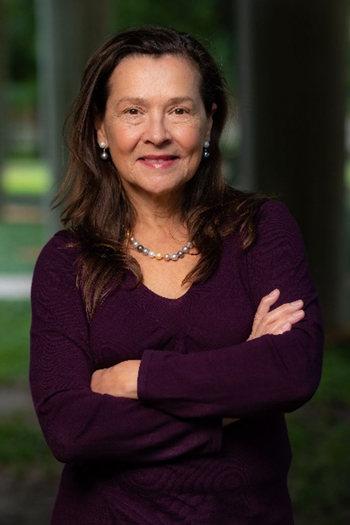
Professor Naomi Halas is a pioneering researcher in the fields of nanophotonics and plasmonics.
Professor Naomi J Halas of Rice University in the US has been awarded the Australian Academy of Science’s 2024 Geoffrey Frew Fellowship.
Professor Halas is a pioneering researcher in the fields of nanophotonics and plasmonics.
She is renowned for her work demonstrating how the nanoscale internal and external morphology of noble metal nanoparticles controls their optical properties.
Her groundbreaking research merged chemical nanofabrication with optics, leading to the establishment of the field of plasmonics.
At Rice University, Professor Halas holds the titles of University Professor and Stanley C Moore Professor of Electrical and Computer Engineering.
Her research extends to a broad range of applications, including biomedicine, optoelectronics, chemical sensing, photocatalysis and solar water treatment.
She also leads fundamental studies in light–nanoparticle interactions, making significant contributions to advancing both scientific understanding and practical innovations in her field.
Professor Halas is a member of the US National Academy of Sciences and the National Academy of Engineering, as well as the American Academy of Arts and Sciences.
She has been recognised internationally with memberships in the Royal Danish Academy of Sciences and Letters and the Royal Society of Chemistry in the UK.
As part of her fellowship, Professor Halas will be speaking at the 25th Congress of the Australian Institute of Physics (AIP) in Melbourne, which runs from 2 to 5 December 2024.
The congress is co-locating with the 17th International Conference on Near-field Optics, Nanophotonics, and Related Techniques (NFO-17), the 2024 Australian and New Zealand Conference on Optics and Photonics (ANZCOP), and the 2024 Conference on Optoelectronic and Microelectronic Materials and Devices (COMMAD).
About the Geoffrey Frew Fellowship
The Geoffrey Frew Fellowship was established in 1970 through a generous personal donation from Mr GSV Frew, Chair of Varian Techtron Pty Ltd. Fellowships are awarded to distinguished overseas scientists to participate in the biannual Australian Spectroscopy Conferences and to visit scientific centres across Australia.
The Australian and New Zealand Optical Society generously matches the Academy’s funding support for this fellowship.
Creating history for the new Pacific Academy of Sciences

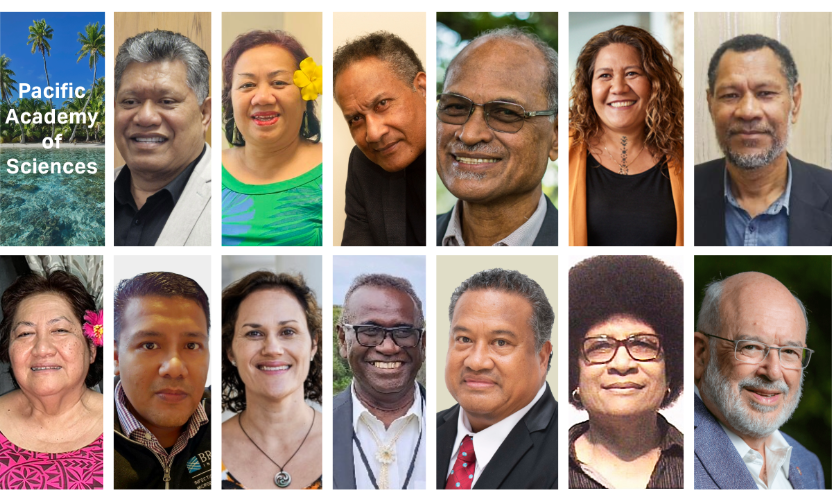
When the Pacific Academy of Sciences was launched in Apia, Samoa on 23 October, an important part of the ceremony was the admission of the Academy’s 12 Foundation Fellows.
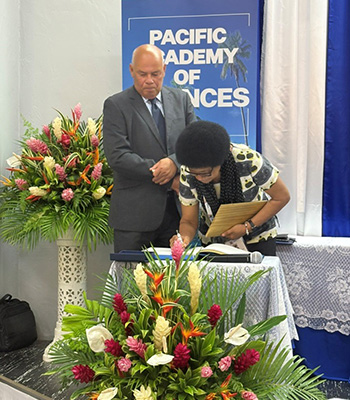
The signatures of the Founding Fellows will be followed by those of other eminent scientists for years to come.
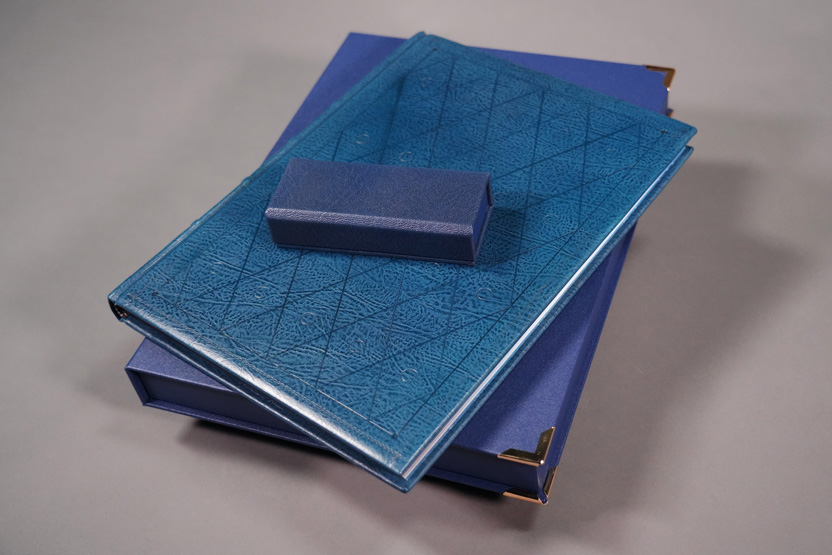
Each Fellow signed their name in a hand-crafted signature book—a gift from the Australian Academy of Science and the Royal Society Te Apārangi—to continue a long-held tradition among learned academies across the globe.
As with the Australian Academy of Science’s own charter book, which was a gift from the Royal Society in 1954 and today contains the signature of every Fellow elected to the Academy, the Pacific Academy of Sciences’ signature book will record the signatures of their elected Fellows and become a historical record.
All components of the gift were carefully selected to ensure quality and longevity in humid Pacific conditions, a process greatly guided by the expertise of bookbinder Phil Ridgeway of OrtBindery – Melbourne School of Bookbinding, and Australian Academy of Science Archivist Bethany Holland and Chief Executive Anna-Maria Arabia.
The book’s beautiful workmanship includes many hand-executed details, including the hand-polished blue goatskin leather to reflect the colour of the ocean, secured using a Bradel binding and French link stitch; the silk headbands at the top and tail of the book’s spine handsewn by Phil; and a diamond and circle pattern hand-tooled onto the cover to signify continuity in tradition and knowledge.
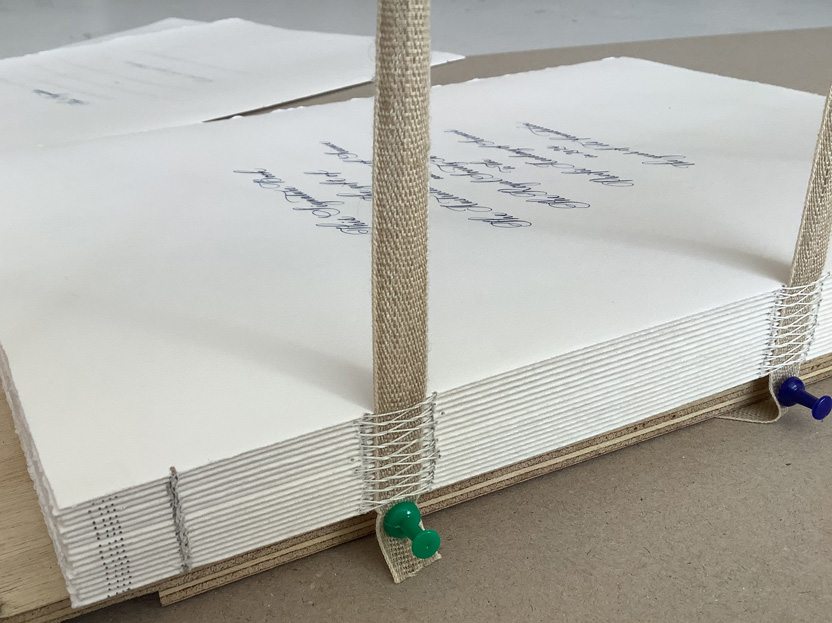
The book was compiled using French link stitch and Bradel binding. Photo: Phil Ridgeway
Inside the volume, the calligraphy on the dedication and title pages was by Zinnia Cheng of Zizi Calligraphy; the pattern decorating the endpapers was designed and handmade to mimic sunlight reflecting on the Pacific Ocean; and the shifting blue hues colouring the page edges were carefully tailored to match the colour of the cover.
Like the Australian charter book, the Pacific Academy gift also included a protective box which will help provide a stable and relatively airtight enclosure for the book.
The Pacific Academy of Sciences also received a presentation pen from the International Science Council to mark its establishment.
The Monteverde pen, made of mother of pearl, was used by the Founding Fellows to sign their names and will be used in coming years to fill the book’s pages with the names of other eminent scientists.
The pen’s matching blue leather case was also created by Phil.
All involved in the project feel privileged to have contributed to the production of such an important founding document for the Pacific Academy of Sciences and its Fellows.

Learned academy a first for Pacific Islands scientists
The Pacific Islands is the only region in the world that does not have its own learned academy and a local collective voice for science, despite the region experiencing profound impacts due to climate change.
That changes from today, thanks to the launch of the Pacific Academy of Sciences and the election of 12 eminent scholars as Foundation Fellows, who will provide a strong voice for science in the region.
The Australian Academy of Science welcomes the establishment of the new academy, which was launched today alongside the Commonwealth Heads of Government meeting in Samoa.
The new academy will promote the study and application of the natural and social sciences, the humanities, Indigenous Knowledge and technology for the benefit of the Pacific Islands region and beyond.
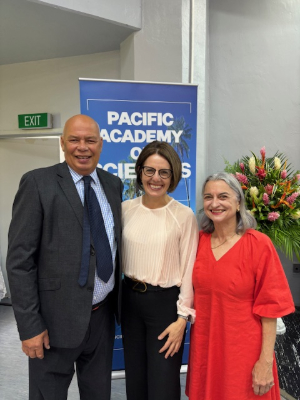
Pacific Academy Establishment Committee co-chair Collin Tukuitonga, with Anna-Maria Arabia and Professor Frances Separovic AO FAA from the Australian Academy of Science, at the launch of the Pacific Academy of Sciences in Samoa on 23 October 2024.
Australian Academy of Science President Professor Chennupati Jagadish said the Australian Academy was proud to have played a role in the establishment of the new Pacific Academy through its leadership of the International Science Council Regional Focal Point for Asia and the Pacific, along with other partners.
“Until now, there has been no mechanism for Pacific scholars to convene and bring together their knowledge so it can inform regional and international decision-making, despite the region experiencing profound impacts arising from a changing climate,” Professor Jagadish said.
“More often than not, decisions are made by others about them, not with them, even though local scientists and Indigenous communities possess unique knowledge about their respective regions and inhabitants. That changes from today.”
Foundation Fellow and newly appointed Pacific Academy of Sciences President, Professor Teatulohi Matainaho from Papua New Guinea, highlighted the opportunities the academy would create for young scientists in the region.
“The Pacific Academy of Sciences will support our young people with their career development in the Pacific for the Pacific by providing mentors and building collegiality with peers regionally and globally,” Professor Matainaho said.
“The Pacific Academy of Sciences offers exciting possibilities to connect scholars from across the globe who share a common goal, that is: addressing global challenges through evidence-based science and actionable knowledge.”
The admission ceremony of the Pacific Academy of Sciences Foundation Fellows. #PacificScience pic.twitter.com/HpHuAGyn12
— International Science Council Asia Pacific region (@ISCAsiaPacific) October 23, 2024
The Pacific Academy has been established as a charitable trust to be based in Apia, Samoa.
The first meeting of the Governing Council (Trustees and Foundation Fellows) is set to be held after the launch.
Pacific Academy of Sciences Foundation Fellows
(from left to right in this image)
Professor Palatasa Havea FPAS MNZM
Dean Pacific, Massey University
Professor Patila Amosa FPAS
Vice Chancellor and President, National University of Samoa
Distinguished Professor Steven Ratuva FPAS FRSNZ
Pro-Vice Chancellor, Pacific, University of Canterbury
Professor Teatulohi Matainaho FPAS
Vice Chancellor, Pacific Adventist University (PNG)
President, Pacific Academy of Sciences
Professor Jemaima Tiatia-Siau FPAS
Pro-Vice Chancellor Pacific, University of Auckland
Professor Macquin Maino FPAS
Head of School of Agriculture, Papua New Guinea University of Technology
Professor Ioana Tuugalei Chan Mow FPAS
Professor Computing and Computer education, National University of Samoa
Dr Bwarenaba Kautu FPAS AKK
Independent consultant and scientist, Kiribati
Professor Jodie Hunter FPAS
Professor of Mathematics Education, Massey University
Professor Transform Aqorau FPAS
Vice Chancellor, Solomon Islands National University
Professor Jito Vanualailai FPAS
Deputy Vice-Chancellor & Vice-President (Education), University of the South Pacific
Professor Maretta Kula-Semos FPAS
Professor of Humanities, Director of Higher Degrees, Divine Word University, Madang, Papua New Guinea
Sir Peter Gluckman FPAS (hon) ONZ KNZM FRSNZ FMedSci FISC FRS
President, International Science Council
Sir Peter is acknowledged as an Honorary Fellow for his vision and initiative which led to the official launch of the Academy
About the Regional Focal Point for Asia and the Pacific
The International Science Council Regional Focal Point for Asia and the Pacific (ISC RFP-AP) is funded by the Australian Government and hosted by the Australian Academy of Science. The five-year program (2023–28) is working to ensure that regional needs and priorities are adequately represented in the International Science Council’s global agenda, that regional voices are actively engaged in the governance and management of the ISC's work, and that the region benefits from the results of that work.
Two Fellows awarded PM Prizes for Science
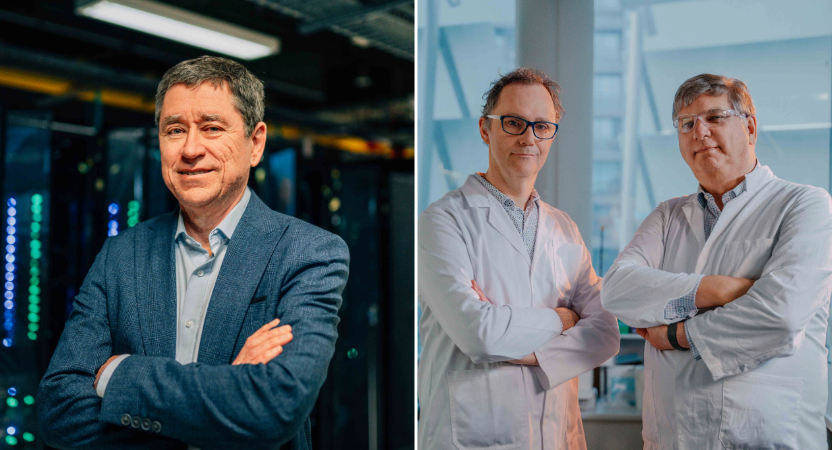
Academy Fellow Professor Matthew Bailes has been awarded the 2024 Prime Minister’s Prize for Science for his world-first discovery of fast radio bursts (FRBs).
In 2007, Professor Bailes was part of a team that identified the ‘Lorimer Burst’, the first example of FRBs. The discovery is now helping to determine how much normal matter exists in the universe.
The prize, awarded by the Prime Minister at a ceremony at the Great Hall of Parliament House last night, also recognises Professor Bailes’s leadership of Australian astronomy research centres.
“All the Prime Minister’s Prize recipients are exceptional, and I congratulate them all,” Academy President, Professor Chennupati Jagadish, told the audience at a breakfast to honour the group.
“But I pause to offer a few words about Professor Matthew Bailes because of a very moving experience I had at his laboratory earlier this year,” Professor Jagadish said.
“Matthew shared with me what was so obviously a point of much pride, his work to communicate astrophysics to young people: to inspire them, to nurture the next generation of scientists.
“For me, Matthew is as much a scientist as he is teacher and mentor. The trio is a powerful combination.”
Professor Bailes was elected to the Academy in 2022.
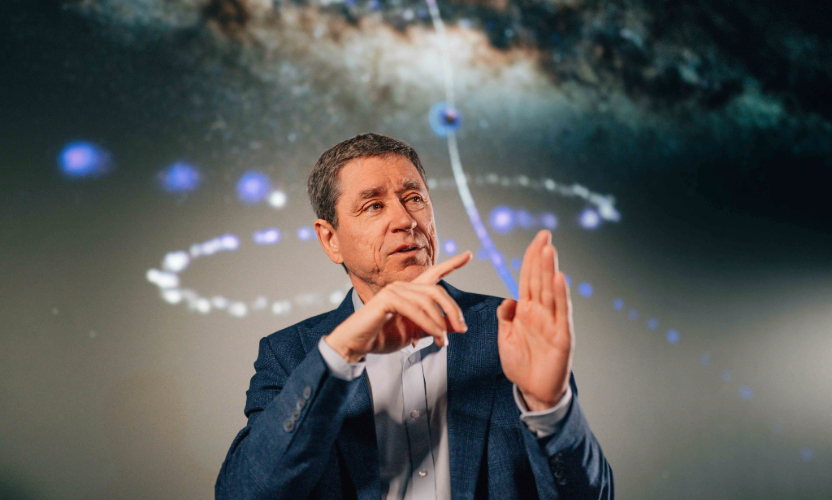
Academy Fellow Professor Andrew Wilks is the joint recipient of the 2024 Prime Minister’s Prize for Innovation alongside his colleague Dr Christopher Burns.
They are recognised for inventing and commercialising a drug called momelotinib that is used to treat myelofibrosis, a rare form of blood cancer.
“Our work is very much a team sport,” Professor Wilks said.
“It is a great privilege to have been part of this collaboration to discover these important intracellular JAK enzymes and help invent momelotinib.”
Professor Wilks was elected to the Academy in 2023.
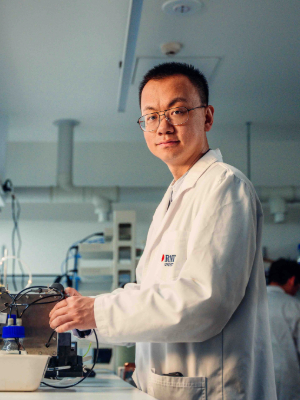
Distinguished Professor Tianyi Ma (photo: Prime Minister's Prizes for Science)
Academy Fellows have featured in the Prime Minister’s Prizes for Science each year since the awards’ inception in 2000.
Distinguished Professor Tianyi Ma is the recipient of the 2024 Malcolm McIntosh Prize for Physical Scientist of the Year.
Professor Ma is recognised for his groundbreaking work in renewable energy, which could support Australia in its clean energy transition and the path to net zero.
In 2023 he received the Academy’s Le Fèvre Medal and was also Australia’s nominee for the 2023 ASPIRE Prize.
Professor Jagadish also acknowledged recipients of the Prime Minister’s Prize for Excellence in Science Teaching in Primary Schools, Daniel Edwards, and the Prime Minister’s Prize for Excellence in Science Teaching in Secondary Schools, Alice Leung.
“We owe you a debt of gratitude. Teachers change lives and do more than deliver education,” Professor Jagadish said.
“They are the early role models for our scientists and innovators, and I wish to personally thank every one of them.”
The 2024 Prime Minister’s Prizes for Science winners are listed here.