




Submission—Australian Centre for Disease Control bills

On 28 October 2025, the Academy made a submission on the Australian Centre for Disease Control Bill 2025 and Australian Centre for Disease Control (Consequential Amendments and Transitional Provisions) Bill 2025.
In the submission, the Academy welcomes the introduction of legislation to establish the Australian Centre for Disease Control (ACDC) as an independent, statutory agency.
The Academy recommends:
- expanding the Director-General’s engagement with scientific and research institutions to identify future priority areas in disease control, pandemics, and public health response, and ensure that the ACDC’s advice is informed by the best available scientific information
- additional support for Australian Bureau of Statistics (ABS) and Australian Institute of Health and Welfare (AIHW) to coordinate data linkages and ensure data security
- including scientific expertise on the membership of the advisory board would ensure a robust group of experts to develop a strategy, and plan and prioritise research.
Submission—Algal Blooms in South Australia
On 1 September 2025, the Academy made a submission on the Algal Blooms in South Australia inquiry.
It is vital to acknowledge the role of anthropogenic climate change in creating the conditions that led to the South Australian algal bloom. The Academy recommends:
- That Australia accelerates decarbonisation efforts and strengthens its emissions targets.
- The Australian Government improves mechanisms to anticipate, prepare for and respond to marine disasters.
Science at the Shine Dome 2026
Join us to connect, celebrate and be inspired!
From 15 to 17 September 2026, the science community will gather at the Shine Dome in Canberra for the Academy’s flagship event.
Together, we will honour outstanding achievements and celebrate excellence spanning the breadth and depth of Australian science.
Fellows elected in 2026 will sign the historic Charter Book, joining the ranks of the country’s scientific greats. Recipients of the Academy’s prestigious awards will showcase their discoveries and innovation.
Delegates will gain unique insights from the nation’s brightest minds and be part of cutting-edge conversations. For early- and mid-career researchers, this is an unparalleled opportunity to network and forge new collaborations.
Registrations will open in June 2026.
Draft program
Tuesday 15 September
- Early- and Mid-Career Researcher (EMCR) workshops
- New Fellows Charter Book admission ceremony
- EMCR evening networking function
Wednesday 16 September
- New Fellows' presentations
- Gala Dinner at the Great Hall of Parliament House
Thursday 17 September
- Awards lectures and presentations
- Awardees and donors lunch
- Awards medal ceremony
- Coaches to airport
Please note: this program is draft, and is likely to change. The finalised program will be made available closer to the event.
Event Partners for 2026
Platinum
- Department of Defence
Gala Dinner
- University of Sydney
Diversity and Inclusion
- University of Queensland
Gold
- Australian National University
- Deakin University
- University of Melbourne
Bronze
- Swinburne University of Technology
Gelato Cart
- QUT
EMCR Supporters
- Macquarie University
- NCI
- QUT
- University of Melbourne
- University of Western Australia
- UNSW Sydney
EMCR Workshop Supporters
- Australian Science Media Centre
- The GrantEd Group
Partnership opportunities
Opportunities are available to partner with the Academy to help deliver this significant event. Event partners enjoy a range of benefits, including complimentary registrations, speaking and branding opportunities, extensive promotion on social media platforms, and more.
Contact events@science.org.au to discuss these opportunities.
Fellows' reading and listening list 2025
Spark your curiosity, make a fresh discovery or dive into a new world this summer with entertainment recommendations from some of Australia's top scientists.
From compelling real-life yarns to lively children’s stories, this list crowdsourced from the Academy’s Fellows has something for everyone.
Books | Children's books | Podcasts | Television
Books
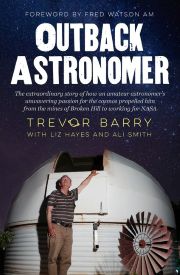
Outback Astronomer
Trevor Barry with Liz Hayes and Ali Smith
Recommended by Emeritus Professor Barbara Nowak FAA
An inspiring feel-good autobiography of Trevor Barry, an amateur outback astronomer, who while working in Broken Hill zinc mine built his own telescope and observatory. His curiosity and passion are impressive and resulted in contribution to NASA research, finishing an astronomy degree and publishing papers in scientific journals. I really enjoyed the style of this book – it reads like a story you would hear over a beer in the pub, but it contains information on the science and history of astronomy and it is a great lesson in communication of science.
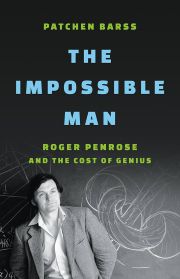
The Impossible Man: Roger Penrose and the cost of genius
Patchen Barss
Recommended by Professor Peter Hannaford AC FAA
The Impossible Man is an intimate biography that explores the life of one of the giants of twentieth-century mathematics and physics, Nobel-Prize-winning mathematical physicist Roger Penrose. It reveals the complex and compelling character of the man alongside the importance of his contributions to geometry, relativity, gravity and cosmology.
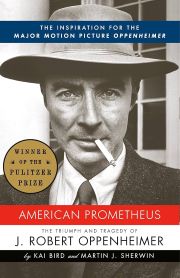
American Prometheus: The triumph and tragedy of J. Robert Oppenheimer
Kai Bird and Martin J. Sherwin
Recommended by Emeritus Professor Cheryl Praeger AC FAA
Beautifully written biography of J. Robert Oppenheimer, brilliant physicist, and ‘father of the atomic bomb’. The book covers his whole life, from childhood, through the scientific excitement at Los Alamos, the unethical ‘trial’ finding that Oppenheimer could not be trusted with America's nuclear secrets, and his later years as director of the Institute for Advanced Study at Princeton. Winner of the Pulitzer Prize 2006, it underpins the 2023 film Oppenheimer.
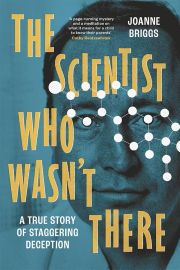
The Scientist Who Wasn’t There: A true story of staggering deception
Joanne Briggs
Recommended by Emeritus Professor Barbara Nowak FAA
A shocking story of deception in science about Michael Briggs, infamous for being the first academic fraud in Australia. This book is a real page-turner and a real-life thriller with the author making comparisons of Briggs to Frank Abagnale Jr (subject of the film Catch Me If You Can) or James Bond. It was written by Briggs’ daughter, a journalist and former barrister, and uncovers new facts about him and raises some new suspicions and speculations. I enjoyed the dry humour and the empathy shown by the author.
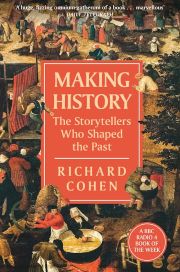
Making History: The storytellers who shaped the past
Richard Cohen
Recommended by Emeritus Professor Harry Poulos AM FAA FTSE
This is a huge but instructive and entertaining book about the writers and recorders of history. It spans from authors in ancient times to the modern-day television presenters of popular history.
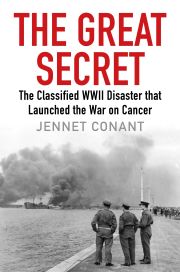
The Great Secret: The classified World War II disaster that launched the war on cancer
Jennet Conant
Recommended by Dr Phil McFadden AO FAA
The classified World War II disaster at Bari that launched the war on cancer. Amazing scientific/sleuth work by Lieutenant Colonel (Dr) Stewart Alexander that shaped the development of effective chemotherapy drugs and protocols.
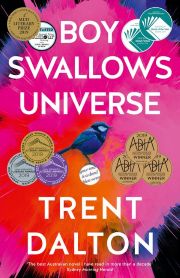
Boy Swallows Universe
Trent Dalton
Recommended by Emerita Professor Mary Garson AM FAA
I intend to reread the novel Boy Swallows Universe, a hilarious black comedy in which Dalton tells the story of Eli Bell and his family involvement in a local crime syndicate. Dalton’s descriptions of Brisbane locations, weather, and unconventional characters – as well as of the darker side of suburban life – are beautifully crafted. The stories come alive because many of the western suburb locations are familiar to me. Reading excellent books is an ideal way to stay out of the Brisbane heat and storms this summer season!
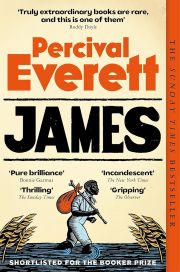
James
Percival Everett
Recommended by Emerita Professor Jennifer Martin AC FAA
The Adventures of Huckleberry Finn retold from the perspective of Jim, a slave. Recommend reading in conjunction with the original story. Will make you angry, uncomfortable, hopeful.
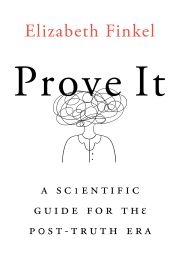
Prove It: A scientific guide for the post-truth era
Elizabeth Finkel
Recommended by Emeritus Professor Robin Batterham AO FAA FTSE
This is a must read for anyone that thinks evidence-based reasoning beats opinions. Elizabeth Finkel has chosen five major topics, each controversial and with captivating writing and well researched data leads the reader through to a sound position. For those like me who believe that truth is always shifting, this book is compulsory reading.
Also recommended by Emeritus Professor Susanne von Caemmerer FAA FRS
At a time when heeding scientific evidence seems to be an optional extra, and the USA is in the process of dismantling any scientific basis for decision-making, Elizabeth Finkel’s book provides a fascinating and relevant view of how science works in the context of several current issues. As she states, “what distinguishes science from conspiracy is that science rejects assertions that fail to clear the bar of evidence.” But understanding how science does this as it is applied to solve a wide range of different problems can be difficult to understand – even for those who work in science. The scientific method can look very different in different contexts as it sets about ‘testing ideas to destruction’. Each section of the book looks at a different issue as diverse as global climate change, understanding human consciousness, and the response to COVID-19, and provides a detailed but easily understood analysis of how scientific thinking was applied to each problem and how governments and society have responded. This book, by an Australian author, makes an important contribution to how we understand science.
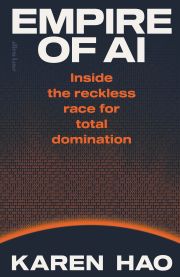
Empire of AI: Inside the reckless race for total domination
Karen Hao
Recommended by Professor Peter Corke FAA FTSE
A recent summary of the state of play in the AI race. It introduces key people, describes their motivations, and dives into some of the lesser-known adverse consequences of this technological race. A hefty but very readable pop-tech book.
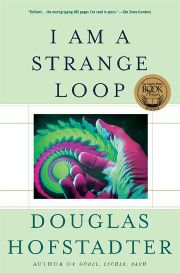
I Am a Strange Loop
Douglas Hofstadter
Recommended by Professor Kylie Catchpole FAA FTSE
I Am a Strange Loop is a glorious examination of self-reference. Language being what it is (with the necessity of subject and object in sentences), I can't tell you how thinking of myself as a feedback loop has changed me. Just read it – you will never think of yourself in the same way again.
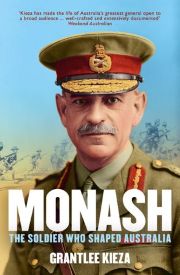
Monash: The soldier who shaped Australia
Grantlee Kieza
Recommended by Professor Nick Martin FAA FAHMS FASSA
Every Australian knows the name Monash, but I wonder how many are aware of the scale and breadth of his achievements. I certainly wasn't. Coming from a very poor German-Jewish immigrant background with an underachieving family, the story of Monash's ascent through extraordinary self-discipline and hard work – not to mention assiduous self-promotion and social climbing – makes compelling reading. And that is before he even gets to WWI, in which many have claimed he played a deciding role in Allied victory. That his achievements are not better recognised is at least in part due to the most appalling anti-Semitism he encountered, worst of all from Prime Minister Billie Hughes. In the wake of October 7 this makes for poignant reading.
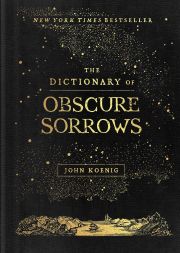
The Dictionary of Obscure Sorrows
John Koenig
Recommended by Professor Robert Williamson FAA
Science can't describe the world without names. Koenig presents a natural history of emotions and proposes new names for complex emotions that are currently anonymous (for example, zielschmerz: the dread of finally pursuing a lifelong dream, and worrying you may well fail; or lutalica: the sense that you're more than the categories that society puts you in). Reading Koenig's delightful book one wonders whether alexithymia [emotional blindness] is simply due to a lack of vocabulary rather than being a disability.
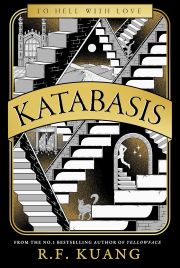
Katabasis
R.F. Kuang
Recommended by Emeritus Professor Barbara Nowak FAA
A satirical fantasy book about two PhD students from Cambridge’s Department of Analytic Magick, searching in Hell for their PhD supervisor Professor Jacob Grimes, department chair, Nobel Prize laureate and twice-elected president of the Royal Academy of Magick. Interestingly, “Hell is a campus”. While the book will particularly resonate with disgruntled PhD students and researchers disenchanted with academia, we can all recognise some aspects of academic life in the Department of Analytic Magick. The author has firsthand experience of academia as she is currently completing her PhD at Yale University and studied sinology at Cambridge and Oxford Universities as a Marshall Scholar. I enjoyed the humour and romance of this interesting and entertaining book.
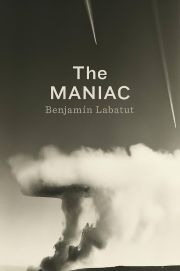
The Maniac
Benjamin Labatut
Recommended by Distinguished Professor Emeritus Frances Separovic AO FAA
A fictional account of the life of the legendary polymath, John von Neumann, this dark and fascinating novel follows von Neumann’s career, and his work on the atomic bomb, computing, and artificial intelligence.
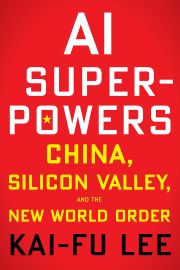
AI Superpowers: China, Silicon Valley and the new world order
Kai-Fu Lee
Recommended by Professor Chennupati Jagadish AC PresAA FTSE FRS FREng
Kai-Fu Lee, a Taiwanese AI researcher who has worked in the US and China, compares and contrasts AI developments in China, the US and the rest of the world. This is an interesting read about how various countries are using AI as a way to influence the world and grow their economies.
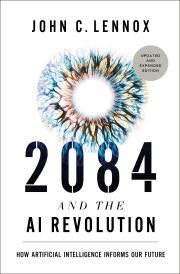
2084 and the AI Revolution: How artificial intelligence informs our future
John C. Lennox
Recommended by Professor Graeme Clark AC FAA FTSE FRS
I found this book enjoyable and was surprised to find it easy bedside reading. I can do no better than quote Professor James Tour, Professor of Chemistry, Materials Science and Nanoengineering at Rice University, who said, “If you plan to read one book on AI this should be it.” Jeremy Gibbons, Professor of Computing at Oxford, also said, “a forceful warning from a Christian perspective about the potential risks of an AI dystopia: algorithmic unfairness, existential threat, transhumanist hubris.”
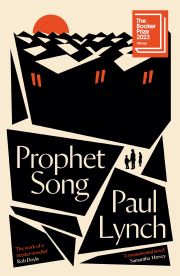
Prophet Song
Paul Lynch
Recommended by Emerita Professor Jennifer Martin AC FAA
Booker Prize Winner 2023. Dystopian novel set in Ireland in the here and now, though it could really be any western democracy. A disturbing, gripping warning of how authoritarianism steadily erodes freedoms and then access to basic needs.
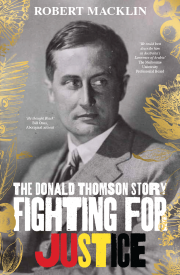
Fighting for Justice: The Donald Thomson story
Robert Macklin
Recommended by Professor Fiona Stanley AC FAA FAHMS(Hon) FASSA
I had known about Thomson and his work in Arnhem Land but not the extent of his progressive anthropological views and deep understanding of the Yolngu people. Biographies are a great way to learn history and Donald's life and work were in competition with the elitist anthropological views of the 1920s and onwards in Australia and internationally. He lobbied intensively and unsuccessfully to protect the Yolngu way of life and culture as a human right with his scholarship eventually being acknowledged too late in the day.
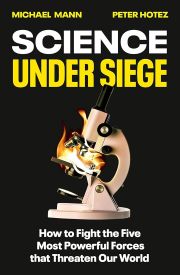
Science Under Siege: How to fight the five most powerful forces that threaten our world
Michael Mann and Peter Hotez
Recommended by Professor David Bowtell FAA FAHMS
Interesting (and somewhat disturbing) account of how organised forces of disinformation have weaponised climate change and COVID-19 to discredit science. Provides an important call for academics to defend evidence-based information.
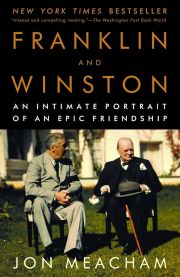
Franklin and Winston: An intimate portrait of an epic friendship
Jon Meacham
Recommended by Emeritus Professor Jeremy Mould FAA
Franklin and Winston is the story of Winston Churchill’s campaign to befriend the President of the United States at a time when Britain was losing every battle with the Nazi war machine and the empire of Japan – an exception being the Battle of Britain, the air war. It is not a war chronicle like Churchill’s six-volume story that begins with The Gathering Storm and appeasement policies; it is a character analysis of these two exceptional and proud men, the one imperialist and prone to rhetorical excess, and the other, a shrewd American patrician who carefully anchored himself to his countrymen and women’s opinion. Both come across as very human, Churchill crazy with schemes, but forgiving when they were touched, and Roosevelt, overcoming his disability, and focused on real progress. Both had to explain themselves to the people they led – FDR with his radio fireside chats and occasional addresses to Congress, and Churchill with frequent public reports to the House of Commons. The result is a piece of human history well worth reading, not least because quirky leaders are a recurring theme.
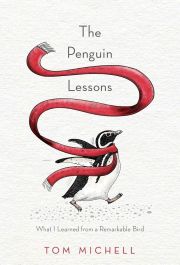
The Penguin Lessons
Tom Michell
Recommended by Professor Georgia Chenevix-Trench FAA
This is a charming story of an English teacher working in Buenos Aires who adopts – or more accurately is adopted by – a penguin called Juan Salvador. The excellent film, starring Steve Coogan, places more emphasis on the upheaval in Argentina in the 1970s – perhaps because they couldn't find a penguin actor good enough to play Juan Salvador. The Audible version is read by Bill Nighy who is perfect in the part. There is also an interesting interview somewhere online that describes how Penguin (the publisher) contacted the author after he self-published on Kindle.
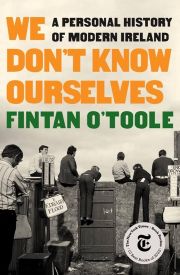
We Don’t Know Ourselves: A personal history of Ireland since 1958
Fintan O’Toole
Recommended by Professor Peter Doherty AC FAA FAHMS FRS Nobel Laureate
Apart from binging on Val McDermid’s Scottish crime novels, I’m currently re-reading Fintan O’Toole’s history, We Don’t Know Ourselves, that gives an incisive, even forensic, account of events in Ireland from 1958. Some of the parallels with what happened here through those years are intriguing. Like Australia, Ireland is an exporting nation, but its biggest export has, for decades, been people!
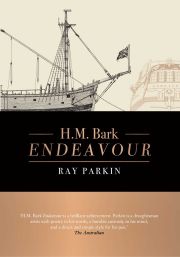
H.M. Bark Endeavour
Ray Parkin
Recommended by Emeritus Professor David Smyth FAA
This scholarly work is in two parts. The first details the setting up of Cook's ship and crew in minute detail and is really of interest only to historians and those ‘mad about boats’. The second is about the Endeavour's voyage north along Australia's east coast, and is a very interesting read with annotated excerpts from the ship's log, and the journals of Cook, Banks and others. One can really relive the sighting of Point Hicks, calling into Botany Bay, negotiating the Great Barrier Reef, and the ship's repair at Cooktown. A great adventure story.
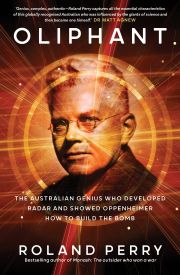
Oliphant: The Australian genius who developed radar and showed Oppenheimer how to build the bomb
Roland Perry
Recommended by Professor Fiona Stanley AC FAA FAHMS(Hon) FASSA
This is a great Australian story – stimulated because Oliphant was excluded from the film about the atomic bomb, Oppenheimer. Oliphant was one of our most brilliant scientists and went to Rutherford's lab in Cambridge as a young physicist from South Australia. During the war he discovered and developed radar, and keen to ensure that the Allies got the bomb before Hitler, his research was the basis for the bomb. He shared this with both Oppenheimer and the Russians to get there first and after Hiroshima and Nagasaki, he lobbied with Oppenheimer to stop it being used again. Oliphant was the first President of the Australian Academy of Science.
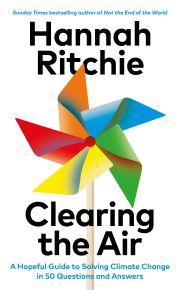
Clearing the Air: A hopeful guide to solving climate change in 50 questions and answers
Hannah Ritchie
Recommended by Emeritus Professor Neville Nicholls FAA
Calmly and persuasively presents the data that show we can, with global efforts, avoid the worst consequences of global warming. If you read only one climate change book, make it this one.
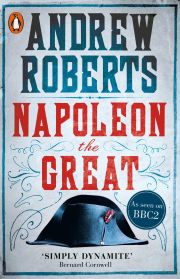
Napoleon the Great
Andrew Roberts
Recommended by Professor Maria Forsyth AM FAA FTSE
Fascinating non-fiction account of the life of Napoleon – from his childhood, schooling, rise though the army, the coup that made him first consul – and, eventually, Emperor – through to his abdication and final years in exile. Based around thousands of surviving written letters to various family, friends and subordinates. Very human.
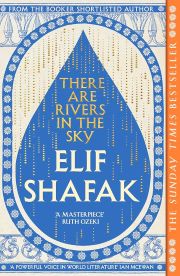
There Are Rivers in the Sky
Elif Shafak
Recommended by Professor Maria Forsyth AM FAA FTSE
A beautifully written book intertwining three characters connected by a drop of water that travels through centuries from ancient Nineveh and Victorian London through to modern Türkiye and modern London. It covers interesting history and diverse cultures, but everything interconnected in the end. Although fictional it is well researched.
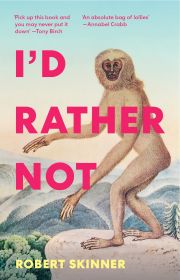
I’d Rather Not
Robert Skinner
Recommended by Emerita Professor Jennifer Martin AC FAA
A little light relief, quasi-antidote to cope with a weary, beleaguered world. This lucky dip of amusing anecdotes and comical conundrums is set (mostly) in Melbourne and Adelaide, so it's easy to picture where the action happens. LOLed throughout.
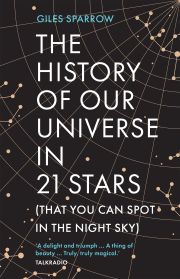
The History of Our Universe in 21 Stars (that you can spot in the night sky)
Giles Sparrow
Recommended by Emeritus Professor Lyn Beazley AO FAA FTSE
The book tells the story of the universe from the Big Bang onwards in an engaging yet scientifically quite advanced way. It documents our understanding from ancient observations to modern astronomy using 21 stars and three non-stars. As a bonus, it guides you to easily locate the objects in the night sky.
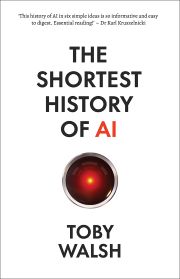
The Shortest History of AI
Toby Walsh
Recommended by Professor Toby Walsh FAA FTSE
The subtitle of the book is ‘Six ideas are all you need to know’. AI has been around since 18 June 1956. Find out more about our ongoing journey to build artificial minds in this short and entertaining history.
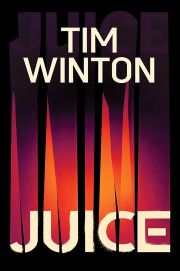
Juice
Tim Winton
Recommended by Professor Emeritus Michael Hynes FAA
I read this dystopian novel by the famed Western Australian almost one year ago. Unlike many of the books I have read in the ensuing months its impact remains. In particular, images of summers spent completely underground and vigilante organisations waging war against clans of fossil fuel providers in their fortresses. The issues arising in 2025 from the policies of world governments regarding climate change indicate that this is the future for my grandchildren.
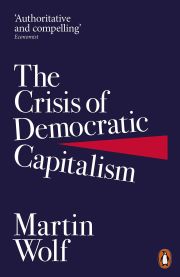
The Crisis of Democratic Capitalism
Martin Wolf
Recommended by Dr Phil McFadden AO FAA
A magnificent reckoning of how and why the marriage between democracy and capitalism is coming undone all over the world, and what can be done to save it.
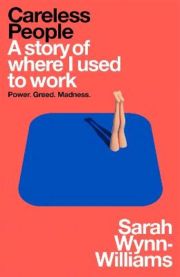
Careless People: A cautionary tale of power, greed, and lost idealism
Sarah Wynn-Williams
Recommended by Emeritus Professor Ross Street FAA
On the first page we are led in with the sentence: “My childhood was pretty normal, I guess, except for the time I was attacked by a shark.” And from that point on, I was hooked. The book reveals how the world now works under the control of “careless people”. The mixture of the author's own life and the workings of the senior Facebook people makes for a page-turner with a scary message.
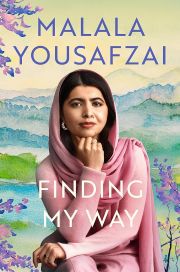
Finding My Way
Malala Yousafzai
Recommended by Emerita Professor Mary Garson AM FAA
Malala Yousafzai’s latest book Finding My Way reveals the real persona behind the Nobel Peace Laureate activist and explores her struggles growing up with fame.
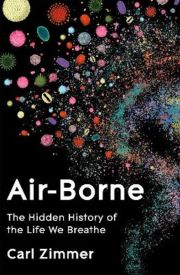
Air-Borne: The hidden history of the life we breathe
Carl Zimmer
Recommended by Distinguished Professor Lidia Morawska FAA FTSE
There is nothing more fundamental to our existence than breathing. Without air, we would die in a matter of minutes. But the consequences of inhaling airborne pathogens are profound and understanding them is important to our protection. That’s why this book is both fascinating and important.
Children's books
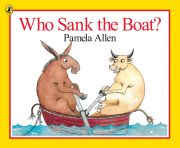
Who Sank the Boat?
Pamela Allen
Recommended by Professor Georgia Chenevix-Trench FAA
A popular children's book that introduces many key scientific principles, especially in physics, biology, epidemiology and scientific reasoning.
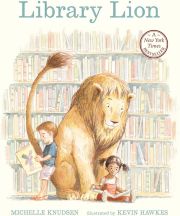
Library Lion
Michelle Knudsen
Recommended by Scientia Professor Helen Christensen AO FAA FAHMS FASSA
An exciting story of a lion, a library, a broken arm and breaking rules. Suitable for children 2 years old and up.
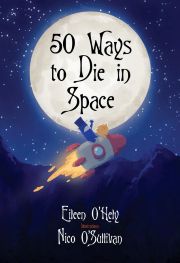
50 Ways to Die in Space
Eileen O’Hely, illustrated by Nico O’Sullivan
Recommended by Professor Tamara Davis AM FAA
Hilarious and captivating take on all the ways to die in space. It's a graphic novel following the story of a grumpy grandfather warning his grandchild of all the gruesome ways to die in space. The author has a PhD in astrophysics, and has done a brilliant job of getting real science across in an entertaining and joyful manner.
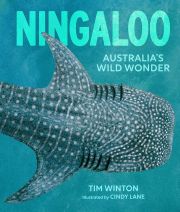
Ningaloo: Australia’s wild wonder
Tim Winton, illustrated by Cindy Lane
Recommended by Professor Fiona Stanley AC FAA FAHMS(Hon) FASSA
This beautifully produced older children's book is based on the impressive three-hour ABC documentary which Tim produced on the Ningaloo Reef, the Cape Range National Park and Exmouth Gulf in the North of WA. It illustrates clearly how the three areas are interdependent – with descriptions of the history, geology, ecology, and plant and animal life. It provides children with the wonder of the wild and all the arguments needed to protect it. The illustrations make the book come alive.
Podcasts
The Life Scientific
Jim Al-Khalili
Recommended by Emerita Professor Jennifer Martin AC FAA
Jim Al-Khalili interviews scientists. He asks how they became scientists, what their science entails, how their breakthroughs impact our lives. A fascinating insight into the myriad ways people find facts, discover and detect, innovate and invent.
The Rest is History
Tom Holland and Dominic Sandbrook
Recommended by Professor Thomas Maschmeyer AO FAA FTSE
Join Dominic and Tom as they discuss Harald Hardrada’s astonishing time as a Varangian Guard in Constantinople, his hair-raising escape back to Scandinavia, and his fight for the throne of Norway, on the road to the dramatic climax of his epic life: the Battle of Stamford Bridge in 1066.
Terrible Lizards
David Hone and Iszi Lawrence
Recommended by Professor Andrew White FAA
A tremendous amount of fun as two former uni friends reunite – due to the pandemic – to make a podcast about dinosaurs, pterosaurs, marine reptiles, and more. Informed by the latest research, with interviews with current practitioners from all over the world, and discussion ranging from recent papers to movies, it never for a minute talks down to the audience. For the latest on stompity-stomps and flappy-flaps there is no finer podcast.
Television
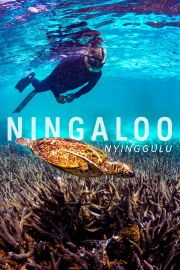
Ningaloo Nyinggulu
ABC
Recommended by Professor Fiona Stanley AC FAA FAHMS(Hon) FASSA
An outstanding wildlife documentary about Ningaloo Reef, Cape Range National Park and Exmouth Gulf. Produced and written by Tim Winton, it shows the incredible interdependence of these three ecosystems. It makes the case for protecting this pristine environment and was instrumental in the WA Government’s decision to create a protected marine park there.
Slow Horses
Apple TV
Recommended by Emerita Professor Jennifer Martin AC FAA
Gripping,* edge-of-the-seat MI5 misfit spy drama. Each new series surpasses its predecessor in absurdity, dysfunctionality, unconventionality.
*May be watched while peeking through fingers.
Summer reading recommendations from our Fellows
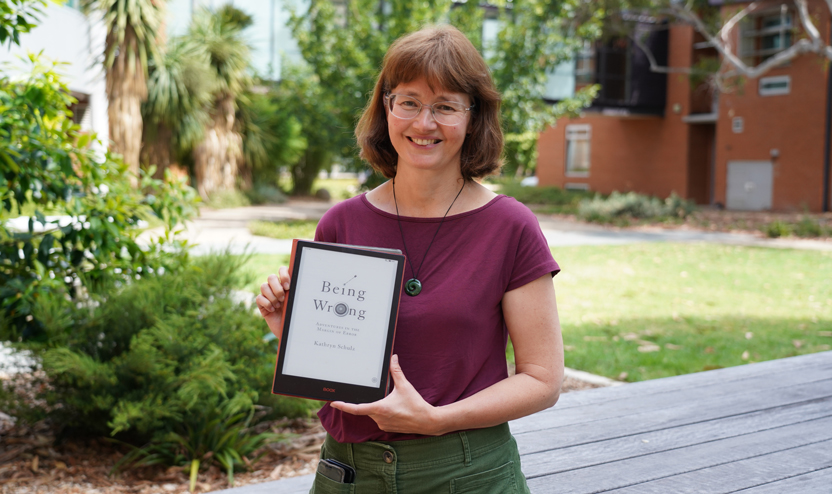
Professor Kylie Catchpole's book recommendation touches on the many ways people have been wrong throughout history. She was one of the many Fellows who shared their summer reading and listening picks in 2024.
Young Australian scientists learn from Nobel laureates
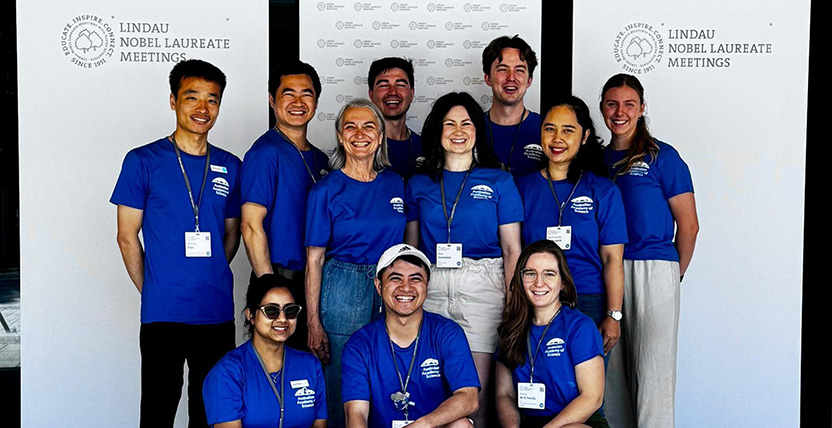
Ten of Australia’s brightest early-career scientists have attended the 74th Lindau Nobel Laureate Meeting, dedicated to chemistry.
The event, held from 29 June to 4 July in Lindau, Germany, is a highly prestigious annual gathering of Nobel laureates and approximately 600 young scientists from around the world.
It provides a unique opportunity for the young scientists to share their research, experiences and ideas, and gain inspiration from fellow emerging scientists and Nobel laureates.
As well as meeting their heroes, the Australian delegates also made a strong impression by presenting their work in the Next Gen Science sessions.
Dr Wenchao Duan of CSIRO presented on ‘Machine Learning-Driven Electrochemical Sensors for Antibiotics Detection in Water’ and Dr Damon de Clercq of the University of New South Wales presented on ‘Molecules for Efficient Solar Energy’.
“This platform enabled me to showcase my work and gain valuable recognition for my research contributions,” said Dr Wenchao Duan.
“Several researchers approached me afterwards to discuss my research and explore potential collaborations.”
Dr Damon de Clercq said he was one of 45 young scientists chosen from among 606 to present their research in the NextGen Science Sessions.
“My talk took place in the main hall to an audience of approximately 400. After my talk, Professor Morton Meldal [Nobel Prize Chemistry, 2022] shook my hand, congratulated me, and we had a fruitful discussion,” Dr de Clercq said.
Posting reels on the Academy’s social media throughout the week, which received around 1.5k views each, the delegates gave us an inside look into the energy, inspiration, passion and optimism that makes the Lindau Nobel Laureate Meetings such a once-in-a-lifetime experience.
See the entire series of reels on Facebook
The Australian delegation was led by biophysical chemist and Academy Foreign Secretary Professor Frances Separovic, who signed a new Memorandum of Understanding at the meeting with the Council for the Lindau Nobel Laureate Meetings and the Foundation Lindau Nobel Laureate Meetings.
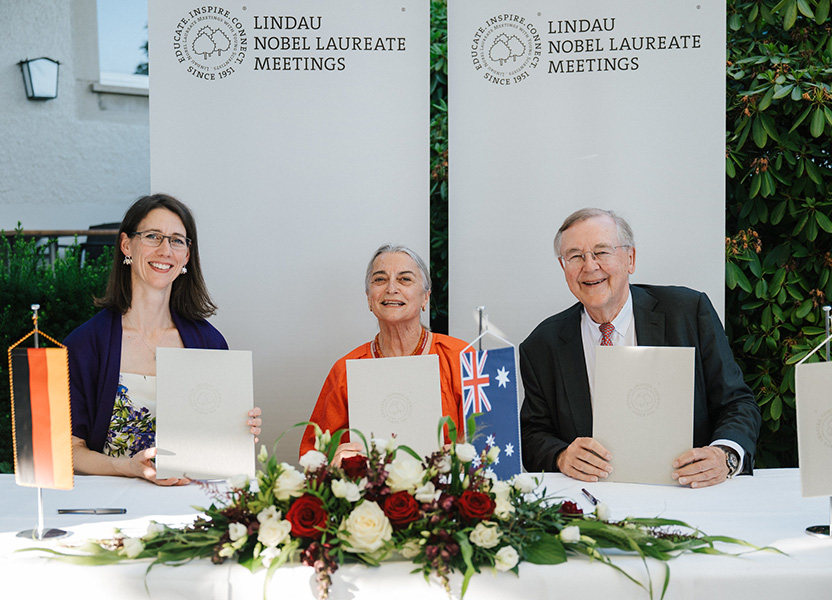
Professor Frances Separovic AO FAA signing the Memorandum of Understanding.
What the participants said
I’ve come back from the Lindau Meeting incredibly inspired and motivated. It was an exceptionally unique experience to be surrounded by so many people from such a diverse array of backgrounds that all shared such a passion for science. Regardless of the adversity some young scientists had faced, everyone was full of optimism and drive to implement real changes. This has already inspired me to realise the potential we have as students, irrespective of age, to have significant impact in solving issues big or small.Jess Algar at The Australian National University
The meeting deepened my understanding of emerging scientific directions while reinforcing the values of curiosity, collaboration and integrity. It significantly contributed to my professional growth and renewed my long-term commitment to advancing impactful, globally connected research.Dr Ken Aldren Usman at Deakin University
It was also truly energizing and interesting to learn from and connect with many Young Scientists and honourable guests from around the world, opening many doors to future collaborations. The meeting reinforced my motivation to pursue impactful research and to contribute meaningfully to science. This experience has become one of the biggest achievements in my academic life, that I will continue to cherish through the yearsMade Ganesh Darmayanti at Monash University
The meeting exposed me to phenomenal scientific ideas and diverse ways of thinking. It was intellectually energising and helped seed new research ideas and directions that I hope to pursue in the coming years. The experience helped lay important foundations for my future career through both inspiration and connection. The meeting was genuinely life changing and has cemented my ambition to have positive impact through my research.Dr James Watson at University of New South Wales
Research innovation tour
As part of the group’s travel, the Academy organised a research innovation tour in Berlin in the lead-up to the Lindau meeting.
The tour enabled the young scientists to visit a leading industry player and a range of prestigious research institutes connected to their fields of studies, including:
- Bayer
- The Leibniz-Forschungsinstitut für Molekulare Pharmakologie (FMP)
- Freie Universität Berlin
- Institut für Chemie, Humboldt Universität zu Berlin
- Helmholtz-Zentrum Berlin für Materialien und Energie GmbH (HZB) BESSY
They also met Chargé d'affaires Kate Luxford at the Australian Embassy in Berlin and learnt about the role of science in Australia and Germany’s bilateral relationship.
More information and to apply
Participation in the Lindau Nobel Laureate Meetings is proudly supported by the Science and Industry Endowment Fund (SIEF) and administered by the Australian Academy of Science.
Next year’s 75th Lindau Nobel Laureate Meeting – an interdisciplinary meeting – will be held from 28 June to 3 July 2026.
Applications for the 75th Lindau Nobel Laureate Meeting are now open and close 10 September 2025.
Top scientists share their summer reading picks
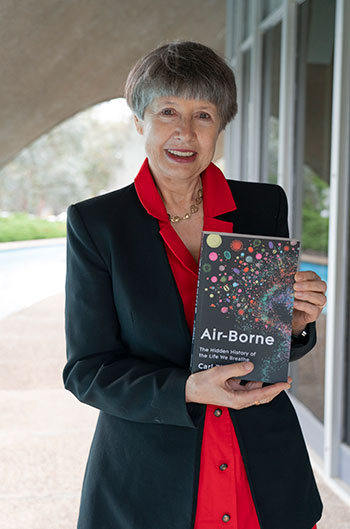
Distinguished Professor Lidia Morawska FAA FTSE recommends Air-Borne by Carl Zimmer.
Spark your curiosity, make a fresh discovery or immerse yourself in a new world this summer with reading, listening and viewing recommendations from some of Australia's top scientists.
As part of a tradition now in its 10th year, Fellows of the Australian Academy of Science reveal what media have kept them captivated ahead of the summer holidays.
The list includes a wide range of fiction, non-fiction, children’s books, podcasts, and television.
Some readers escape into satirical fantasy, while others tackle hard-hitting dystopian novels. Non-fiction selections span historical deep-dives to hilarious memoirs (“LOLed throughout,” Professor Jennifer Martin says of I’d Rather Not).
Several Fellows chose to school up on hot topics like artificial intelligence, while others opted for titles that explore the role of science in an increasingly contested world.
“Every year, I look forward to seeing what other Academy Fellows are reading,” says Professor Chennupati Jagadish AC, Academy President, who recommended AI Superpowers: China, Silicon Valley and the new world order. “I always find some fascinating books to read over the holidays.”
Academy Fellow and winner of the 2025 Prime Minister’s Prize for Science, Professor Lidia Morawska, owns multiple copies of the “fascinating and important” Air-Borne: The hidden history of the life we breathe by Carl Zimmer.
The book weaves together the spellbinding history of aerobiology with current reporting on airborne threats to public health – including Professor Morawska’s own world-leading research and advocacy for recognition that COVID-19 could be spread through the air.
Check out a taster of the picks below or browse the full list.
Find all previous Fellows’ reading lists
Selected recommendations
I Am a Strange Loop
Douglas Hofstadter
Recommended by Professor Kylie Catchpole FAA FTSE
I Am a Strange Loop is a glorious examination of self-reference. Language being what it is (with the necessity of subject and object in sentences), I can't tell you how thinking of myself as a feedback loop has changed me. Just read it – you will never think of yourself in the same way again.
Prove It: A scientific guide for the post-truth era
Elizabeth Finkel
Recommended by Emeritus Professor Robin Batterham AO FAA FTSE
This is a must read for anyone that thinks evidence-based reasoning beats opinions. Elizabeth Finkel has chosen five major topics, each controversial and with captivating writing and well researched data leads the reader through to a sound position. For those like me who believe that truth is always shifting, this book is compulsory reading.
Oliphant: The Australian genius who developed radar and showed Oppenheimer how to build the bomb
Roland Perry
Recommended by Professor Fiona Stanley AC FAA FAHMS(Hon) FASSA
This is a great Australian story – stimulated because Oliphant was excluded from the film about the atomic bomb, Oppenheimer. Oliphant was one of our most brilliant scientists and went to Rutherford's lab in Cambridge as a young physicist from South Australia. During the war he discovered and developed radar, and keen to ensure that the Allies got the bomb before Hitler, his research was the basis for the bomb. He shared this with both Oppenheimer and the Russians to get there first and after Hiroshima and Nagasaki, he lobbied with Oppenheimer to stop it being used again. Oliphant was the first President of the Australian Academy of Science.
50 Ways to Die in Space
Eileen O’Hely, illustrated by Nico O’Sullivan
Recommended by Professor Tamara Davis AM FAA
Hilarious and captivating take on all the ways to die in space. It's a graphic novel following the story of a grumpy grandfather warning his grandchild of all the gruesome ways to die in space. The author has a PhD in astrophysics, and has done a brilliant job of getting real science across in an entertaining and joyful manner.
Juice
Tim Winton
Recommended by Professor Emeritus Michael Hynes FAA
I read this dystopian novel by the famed Western Australian almost one year ago. Unlike many of the books I have read in the ensuing months its impact remains. In particular, images of summers spent completely underground and vigilante organisations waging war against clans of fossil fuel providers in their fortresses. The issues arising in 2025 from the policies of world governments regarding climate change indicate that this is the future for my grandchildren.
Time to act to improve the air we share indoors
If you’re indoors right now, do you know how much of the air you're breathing is someone else’s ‘breath backwash’ or what pollutants it contains?
The President of the Australian Academy of Science, Professor Chennupati Jagadish AC, said the answer is likely ‘no’, because Australia does not monitor indoor air to scientifically acceptable standards, despite much of our exposure to airborne pathogens and other pollutants occurring indoors.
“What we do know is that indoor air pollution has a negative impact on our health and there are available technological and policy solutions to address it,” Professor Jagadish said.
A new report to be launched today by the Australian Academy of Science provides the latest scientific evidence on the issue and explores the policy pathways to improve indoor air quality in Australia.
It includes a call for a phased approach to establish enforceable indoor air quality performance standards in public buildings, beginning with monitoring and a workplace reporting standard.
The report will be officially launched by the Assistant Minister for Health and Aged Care the Hon Rebecca White MP at the Safer Air Project’s second annual conference at Parliament House in Canberra.
Other speakers at the event include Senator Michelle Ananda-Rajah, Co-Chair of the Parliamentary Friends of Clean Air Quality group; Professor Michael Kidd, Australia’s Chief Medical Officer; patient organisations; clinicians; scientists; and industry leaders.
“To achieve clean indoor air, we must work together across government, industry and academia to translate what we know into policy and practice,” Professor Jagadish said.
Academy Fellow, world-leading expert on indoor air and winner of the 2025 Prime Minister’s Prize for Science, Distinguished Professor Lidia Morawska FAA FTSE, is the lead expert for the Academy’s new report.
Professor Morawska said every drop of water we drink from the tap and the food that we eat are both highly regulated, yet indoor air is not regulated at all.
“We know poor indoor air quality poses significant health risks to Australians, with exposure to pollutants linked to respiratory illness, allergies, and chronic health conditions,” Professor Morawska said.
“Illnesses such as colds, flu, and COVID-19 can spread in the air we breathe, particularly indoors and 2025 has just been confirmed as the worst year on record for influenza in Australia. What more evidence do governments need to act on this issue?”
Founder of the Safer Air Project, Plum Stone, said despite a large body of evidence about the scale of the problem, decision-making authorities have been slow to accept and use the scientific evidence for improving indoor air quality, meaning people living with chronic health conditions continue to face a disproportionate risk of harm when accessing shared indoor spaces, like schools, healthcare and workplaces.
“We all breathe the same air, but not with the same consequences. Millions of people with chronic health conditions are being put at risk, or quietly excluded, because we haven’t yet recognised poor indoor air quality as an accessibility issue,” Ms Stone said.
“We have the tools. What we need now is to mandate indoor air quality performance standards that effectively reduce the risk of exposure to pathogens and pollutants, and to make real-time data visible for all.”
Glen Ramos has been living with an incurable cancer for 20 years and as a result has had numerous ongoing health challenges.
He said it would serve those making public health policy well to remember that health equity requires attention to the needs and concerns of those most at risk from exposure to pollutants and viruses because of poor indoor air quality.
“I've got a rare thyroid cancer, so the last thing that I want to do is be exposed to viruses and other pollutants in the air which could impact my health even more,” Mr Ramos said.
“We know airborne pathogens and pollutants increase the risk of developing chronic health conditions, and exacerbate pre-existing conditions, so actually, improving indoor air quality is absolutely critical for everyone.”
Three early-career researchers to pitch their innovative ideas at Falling Walls Lab in Berlin
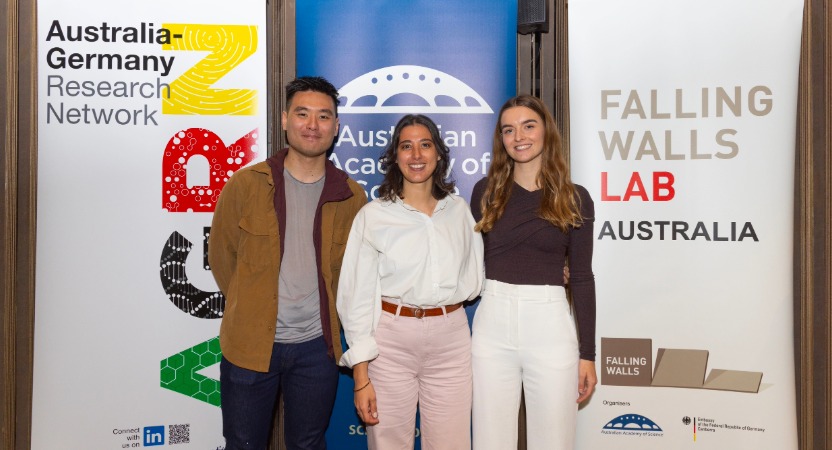
Mabel Day, a PhD candidate from the University of Adelaide, has been named the winner of the tenth Falling Walls Lab Australia, hosted by the Australian Academy of Science on 1 September 2025.
Mabel’s compelling pitch, ‘breaking the wall of forever chemicals’, not only earned her first place but also secured her the People’s Choice Award, as voted by the audience. Forever chemicals, or PFAS, are a group of human-made substances that persist in the environment and have been linked to health concerns.
“It’s an incredible honour to share my work on such a stage,” Ms Day said. “I hope it inspires more people to think about the long-term impact of forever chemicals.”
Second place was awarded to Dr Auriane Drack of Baker Heart and Diabetes Institute at the University of Melbourne, for her work on ‘breaking the wall of heart failure’.
Khoi Nguyen from Burnet Institute took third place for his pitch on ‘breaking the wall of antimalarial discovery’.
The finalists had previously won state competitions held in Adelaide, Brisbane, Hobart, Melbourne and Perth.
Ms Day, Dr Drack and and Mr Nguyen will now represent Australia at the Falling Walls Lab global finale in Berlin in November, joining 97 other finalists from around the world.
This year’s Australian finale was co-hosted by the 2023 Falling Walls Lab Australia winner, Dr Emma-Anne Karlsen, and Academy Fellow Professor Hans Bachor. Dr Karlsen went on to place third in the global Emerging Talents category of the Falling Walls Science Breakthrough of the Year.
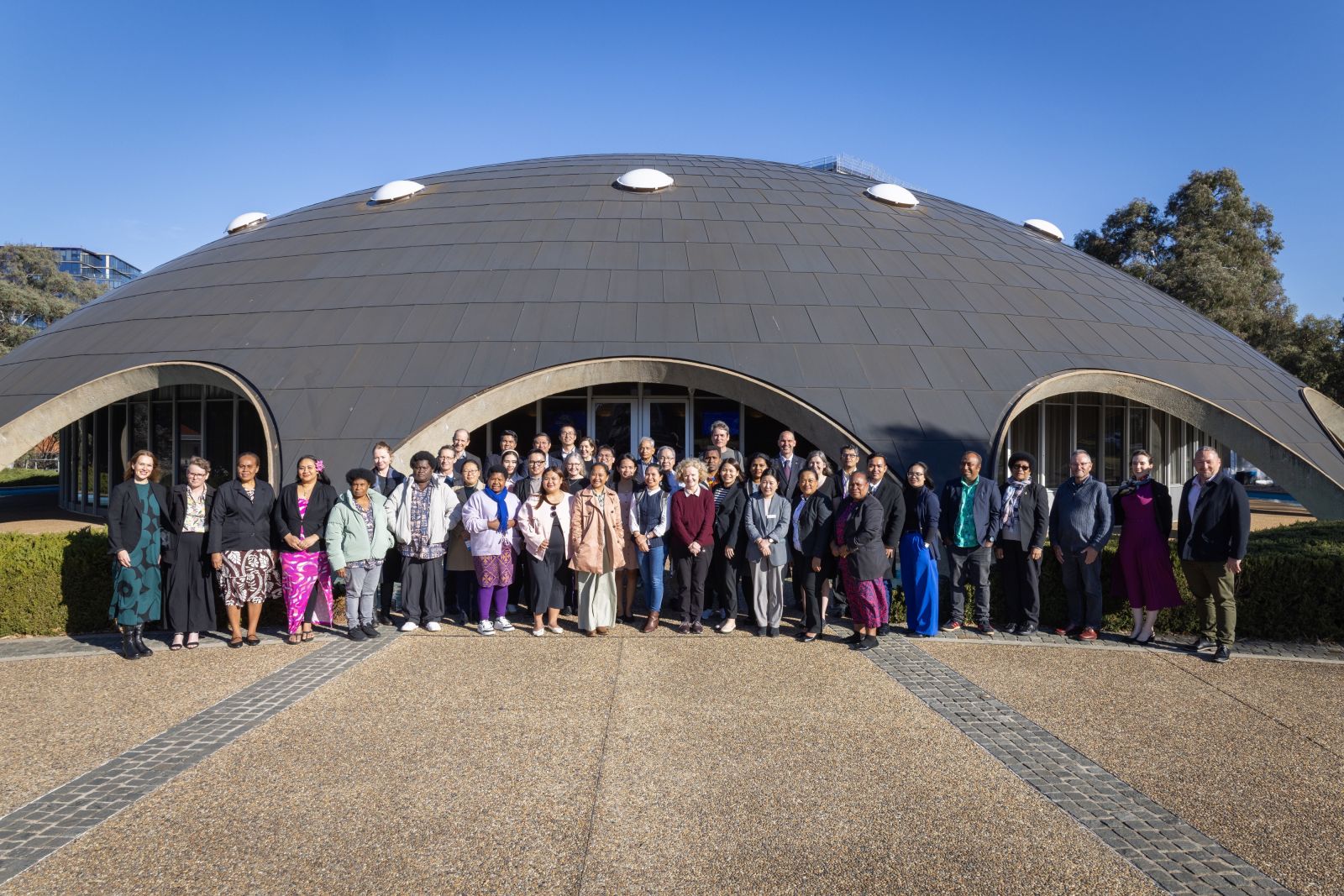
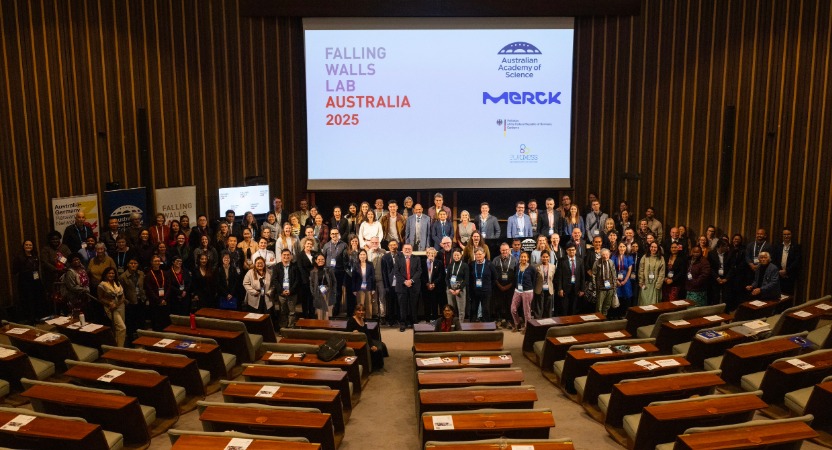
This year's Australian finale drew a strong audience, with 177 attendees filling the Shine Dome’s Ian Wark Theatre and many more tuning in online.
The three national winners were selected from 11 emerging innovators of diverse disciplines and institutes, who each had just three minutes to present their research to a distinguished jury chaired by Australia’s Chief Scientist, Professor Tony Haymet.
The Falling Walls Science Summit is an annual global forum that fosters cross-disciplinary discussion on scientific breakthroughs and innovation. It brings together scientists, entrepreneurs, policymakers, and the public to explore which ‘walls’ in science and society are the next to fall.
Falling Walls Lab Australia is organised by the Australian Academy of Science, in partnership with the Embassy of the Federal Republic of Germany in Australia and supported by event partners Merck Group and EURAXESS Worldwide.
Find out more about the international Falling Walls Lab Finale.
Speech: Building a robust, responsive, and interconnected ecosystem
This is the transcript of a speech by the President of the Australian Academy of Science President, Professor Chennupati Jagadish AC PresAA FRS FREng FTSE, delivered on 8 August 2025 at the KTSI Conference in Indonesia.
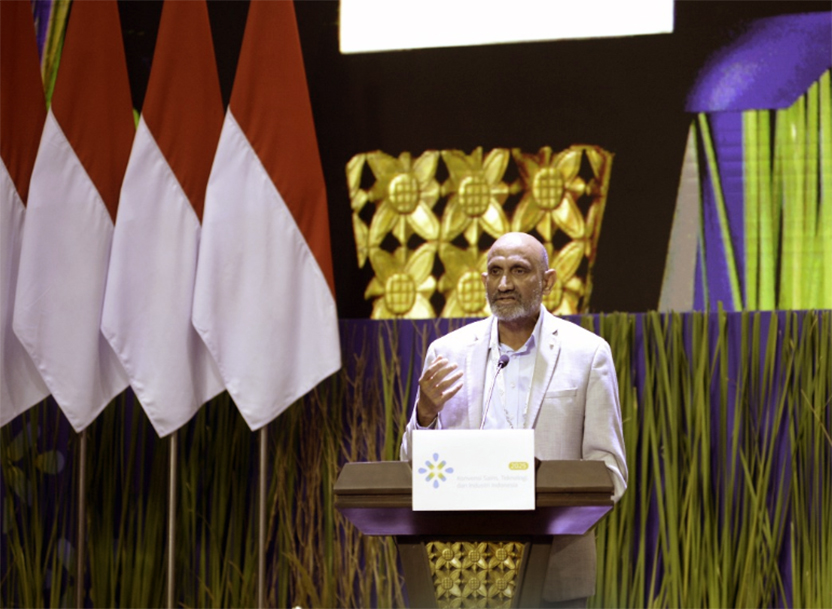
Selamat pagi.
Let me begin by sincerely thanking the Minister of Higher Education, Science and Technology, Brian Yuliarto, for the kind invitation to this event.
I’d also like to acknowledge the wonderful team at MoHEST for their warm hospitality throughout my visit.
My thanks must also go to the Director General, Professor Ahmed Najib Burhani, and the Director for the Dissemination and Utilisation of Science and Technology, Professor Yudi Darma, for coordinating my visit and our longstanding collaboration.
It is a great pleasure to be here in Indonesia to mark National Science and Technology Day – a celebration of innovation, ambition, and shared progress.
Tomorrow Australia will also begin our own annual celebration of science and technology, National Science Week.
Demonstrating how every Australian, and indeed every global citizen, benefits from science and technology is something the Australian Academy of Science is focused on not just during National Science Week, but every day of the year.
Our mission is to advance Australia as a nation that embraces scientific knowledge and whose people enjoy the benefits of science.
The Indonesian Academy of Sciences is also focused on communicating the benefits of science, along with medicine and engineering.
Reflections on recent visit
This is my first time in Bandung. Last week I was in Jakarta. I wasn’t expecting to return so soon, but it’s great to be here!
For me personally this is a sign of our deepening partnership and an opportunity to enjoy the Indonesian hospitality!
Colleagues from the Australian Academy of Science, the Regional Focal Point for Asia and the Pacific of the International Science Council, and the Australian Council of Deans of Science joined me last week in Jakarta.
Every member of the delegation would have loved to return with me today, such was the warmth of the welcome and the strength of the connections made.
While in Jakarta, I had the privilege of joining a scientific forum hosted by the Ministry, where we explored the role of science in addressing national and regional priorities.
It was fascinating to learn from the Ministry of Higher Education, Science, and Technology’s approach. And to witness how deeply the Ministry is thinking about integrating research, technology, and education into Indonesia’s development – both in terms of strategic planning and tangible investment.
The Minister and I also discussed Indonesia’s potential role within the International Science Council.
Given the country’s leadership in the region and its growing capacity in science, research, and innovation, Indonesia’s voice would be a vital and respected addition to the global scientific community.
I was especially pleased to hear that Minister Brian Yuliarto wishes to champion this important step – one that would reflect Indonesia’s commitment to shaping science on the world stage.
Last week I also visited some of the excellent organisations that make up your country’s vibrant science and technology ecosystem.
At the Indonesian Academy of Sciences, I was struck by the Academy’s strong commitment to scientific integrity, and its efforts to connect Indonesian researchers with global networks.
Having a Scientific Academy providing independent, evidence-informed advice is an essential feature of any thriving science system.
Last week Chair of the Academy, Dr Daniel Murdiyarso, spoke about Indonesia’s scientific ambitions, alongside advisors at the Ministry of Higher Education, Science, and Technology.
That level of alignment between government and the scientific community is not always easy to achieve, and it speaks very highly of the Ministry’s vision and Indonesia’s commitment to long-term, knowledge-based policymaking.
Our meeting with the Chairman of the National Research and Innovation Agency, Laksana Tri Handoko, also provided a valuable window into Indonesia’s ambition to streamline and energise your national research system.
The agency's integrated model is a bold undertaking – bringing together funding, research, and innovation under one umbrella to accelerate national priorities and build international competitiveness.
Meeting young scientists
My delegation was also very honored to meet some of Indonesia’s young scientists at the Indonesian Young Academy.
The next generation is not only the future of science but the future of society.
The Indonesian Young Academy is playing an increasingly influential role in fostering emerging research leadership and interdisciplinary collaboration.
Its energy, ambition, and commitment to public engagement are exactly what is needed to build a dynamic and future-focused scientific culture.
We are particularly grateful that the co-Chair of the Indonesian Young Academy serves on the Advisory Council of the Regional Focal Point for Asia and the Pacific of the International Science Council.
This is just one of many examples of the strong connection and collaboration between Australia and Indonesian research communities.
I also met with a group of outstanding Indonesian alumni of Australian universities. What a treat that was! Their talent, creativity and leadership were deeply impressive.
Many are already making important contributions across science, policy, and innovation – and it’s clear they will play a central role in shaping Indonesia’s research and technology future.
But they are doing so much more than that – they are weaving a culture of collaboration between Indonesia and Australia deep into the fabric of how we work.
The ties between our institutions are strong, but it is these personal and professional relationships that truly carry the partnership forward.
These conversations – from ministries to academies, agencies to alumni – kept circling back to a common theme, the focus of our discussion today: How can we build a robust, responsive, and interconnected ecosystem that links research, science, technology, and industry?
That is the question I want to explore with you today.
A strategy and priorities
The first and arguably most important element of healthy research, science, technology and industry ecosystem is strategy.
In the middle of last year the Australian Government published a new national science statement for the nation, supported by five new national science and research priorities.
They are:
- transitioning to a net zero future
- supporting healthy and thriving communities
- elevating Aboriginal and Torres Strait Islanders knowledge systems
- protecting and restoring Australia’s environment, and
- building a secure and resilient nation.
Six months later the Australian Government announced they would commence a strategic examination of Australia’s research and development system.
This review was warmly welcomed by the Academy and something we've been calling for since 2018. Why?
Because the complex web of policies, funding instruments, institutions and incentives currently in place are not serving Australia’s national interest.
The Academy is supporting this national research and development review with one of the most ambitious policy efforts in the Academy’s 71-year history.
Over the past 18 months the Academy has systematically examined the capability of Australia’s science capability against our future needs, consulting fifty Academy Fellows and other leading experts along the way.
The Academy will launch a 10-year plan for how science will support our national ambitions on 4 September at a symposium in Canberra.
This event will be live streamed, and you are all most welcome to join us in person or online.
Findings from the Government’s strategic examination of Australia’s research and development system will need to be carefully implemented and evaluated to ensure its success.
A connected approach
The second element of a healthy ecosystem is a connected, coordinated approach from research to innovation.
There is often tension between the pace of discovery, which is a long-term endeavour, and the need to accelerate the transfer of new knowledge into products, services and evidence for decision-making.
Many organisations also operate in resource constrained environments, so ways to streamline effort and avoid duplication are important.
This challenge is part of what the Australian Government’s Strategic Examination of research and development will address.
The Academy has recommended a new national model for Australia’s research and development system.
It draws inspiration from Horizon Europe’s partnerships model to coordinate national funding in Australia through a unified national system that utilises co-investment partnerships in areas of national importance.
The new model would create coordination across Australia’s different levels of government, align priorities and optimise allocation of resources for research.
It would also connect Australia’s various research agencies and funding bodies in a collaborative forum. The purpose of this forum would be to provide strategic advice on R&D policy and planning and logically sequence funding to create continuity between discovery and application.
Adequate infrastructure
A research, science and technology ecosystem cannot thrive without adequate infrastructure, which is vitally important for discovery and research productivity and increasingly important for use by industry.
There are four tiers of research infrastructure in Australia which serve different users and purposes.
- Very Large Research Infrastructure which encompasses large, internationally funded infrastructure such as the Square Kilometre Array.
- National Agency Infrastructure which is housed within and fully funded through Government agencies and available for public and private use.
- National Collaborative Infrastructure is nationally significant to the research community, government, and the private sector that operates on a user pays basis.
- Institutional Research Infrastructure is university-level infrastructure, funded through Australian Research Council grants and university funds.
Supercomputing and artificial intelligence are disrupting and transforming scientific research worldwide by augmenting science capabilities and accelerating discovery.
This presents new demands for infrastructure to meet the needs of researchers and industry and to prepare for future technological developments.
Supercomputers are critical modern infrastructure essential to the development and use of artificial intelligence and quantum computing. The capability is a critical issue not only for science in Australia, but also in the Asia-Pacific region more broadly.
Skills and talent
I mentioned earlier the Academy’s soon to be released 10-year plan for how science will support Australia’s national ambitions.
One of the key findings that has come out of our work examining our future science capability is that we aren’t training enough domestic students in artificial intelligence. That has implications for building our own sovereign capability.
Australia is not the only country grappling with the challenges of preparing for a future where STEM skills will be crucial.
I was pleased to read about the recent launch of an Indonesian initiative to enhance the literacy and skills of Indonesian youth in STEM and AI.
STEM literacy is at the heart of almost everything we do and how we advance as a nation and a globe, from solving major problems to creating new businesses and jobs we haven’t yet imagined.
A healthy science and technology ecosystem requires investment in the people that generate ideas and create breakthroughs.
This involves securing a pipeline of talent:
- from students studying science and mathematics at school and university, to well-funded PhD positions
- to early- and mid-career researchers advancing knowledge, to senior researchers who mentor the next generation.
Nurturing this pipeline requires us to:
- train the experts we need
- attract domestic and international talent, and
- retain researchers by ensuring they are supported to progress their careers and have positive workplace environments.
Funding
A healthy science and research ecosystem features funding structures that understand the role of governments to provide long term investment and take on greater risk by supporting basic research that does not deliver an immediate application or economic return.
Industry must also invest in research, but this funding is more likely to come later in the process to translate or commercialise research with a specific application.
Governments also create policy settings that incentivise businesses to invest in R&D, due to the flow on effects of this investment to economic growth and productivity.
In this way, both government and industry play important roles by supporting different parts of the ecosystem to deliver impact from science and technology research.
One of the challenges Australia faces is declining investment in research by government and business. This is impacting Australia's productivity and something the Australian Government is trying to address.
Last month the Academy put forward a proposal to incentivise greater business investment. The proposal would see the application of a research and development levy on businesses with annual revenue of $100 million or more.
The levy would be discounted for businesses who already invest heavily in research and development.
The funds collected would be invested directly into research via a long-term sustainable, interest-generating fund - growing the pool of funds available for investment in research and innovation.
We are working hard to persuade our government to consider such a measure.
International collaboration
International collaborations are vital to a healthy science and research ecosystem.
International collaborations:
- underpin knowledge sharing
- facilitate access to global research infrastructure and networks of talented researchers
- ensure decisions are made based on the best available scientific evidence, and
- allow the pursuit of ‘big science’ projects that no single nation can achieve alone.
Think about the sequencing the human genome or the detection of gravitational waves. It was only through international collaboration that these transformational research breakthroughs happened.
In our increasingly complex and unpredictable world, any country or institution can be a collaborator or competitor at any given time or in different areas.
This means that we must partner strategically, on shared goals for our region.
A healthy science and technology ecosystem must have diverse collaborations to manage risk and be able to balance competition and collaboration.
Seeds of Science
Continuing on the theme of international collaboration, I’d now like to talk about a new initiative called Seeds of Science Asia, which comes under the umbrella of the International Science Council’s Regional Focal Point for Asia-Pacific, which we host at the Australian Academy of Science.
This program offers grants which are designed to strengthen the science-policy interface across the region. This is crucial for ensuring that the research we do informs the decisions that shape our societies and our future.
The goal of Seeds of Science Asia is simple but powerful: to support evidence-informed, adaptive, and forward-looking governance throughout our region.
By building researchers’ capacity to engage with policy processes, and likewise, by building policymakers’ capacity to engage with scientists, we can make sure the best available research is used to address the complex challenges our societies face.
This is a small but significant step towards building a future where science and policy work together for the benefit of all.
There is currently a call for proposals open under Seeds of Science Asia, and I strongly encourage you and your colleagues to consider applying or sharing it within your networks. You can find out more about this on the Academy website and social media or by searching for: “Seeds of Science Asia.”
The Academy is also pleased to be supporting the Asia Science Mission for Sustainability.
This initiative brings together existing networks of researchers, policymakers and stakeholders to pilot projects that progress the Sustainable Development Goals in Asia. By harnessing the power of local science communities embedded within universities, colleges, and civil society organisations, we hope progress can be made with the SGDs.
Initiatives like these lay the foundations for stronger, more resilient, and more just societies within our region by ensuring that science is not only excellent, but also deeply connected to the decisions that shape our world.
The Australian Academy of Science is one of five learned academies in Australia, and a member of the Australian Council of Learned Academies, or ACOLA.
This forum contributes expert advice to inform national policy and to develop innovative solutions to complex global problems and emerging national needs.
And to conclude my presentation today, I'd like to share with you some insights from a study that ACOLA conducted for the Knowledge Partnership Platform between Australia and Indonesia, also known as KONEKSI.
Contributors to the paper highlighted the challenges of connecting research outputs to measurable economic growth.
This is due to several interrelated factors.
Firstly, the time lag between research investment and economic impact is significant. Benefits from research often take 5 to 10 years to materialise, making it difficult to attribute specific economic outcomes to individual research activities.
This delay complicates policy evaluation and funding decisions, especially in environments driven by short-term results.
Additionally, many research outputs – such as academic publications or early-stage prototypes – do not immediately translate into commercial products or services, further obscuring their economic value.
Secondly, fragmentation in data collection and evaluation frameworks hinders comprehensive analysis.
In Australia, multiple agencies track different aspects of research performance, but there is no unified system that links outputs, for example, patents and publications, to broader economic indicators like gross domestic product growth or productivity.
Metrics often rely heavily on Return on Investment, which can be misleading and fail to capture long-term or indirect benefits such as improved public health, environmental sustainability, or workforce development.
Experts advocate for more holistic and longitudinal approaches, including ecosystem-level indicators like collaboration density, talent mobility, and translational capacity, to better understand the full impact of research on economic growth.
The report outlined six snapshots of relevance for Indonesia, including:
- Investing in RDI drives long-term economic growth and Indonesia could consider greater investment into research in line with its GDP growth and in line with OECD indicators, to meet its advanced-economy growth targets.
- Clear terminology and frameworks are essential to ensure targeted support across the innovation pipeline.
- Metrics must go beyond ROI and include broader, long-term indicators to better capture the full impact of research and guide strategic investment such as: Human capital development, collaboration density, societal and environmental outcomes and regional resilience.
- Regional and place-based innovation matters, as local strengths can be leveraged to build integrated innovation ecosystems, reduce structural disadvantage and optimise competitive advantage.
- Collaborative models and partnerships that link universities, industry, and government can strengthen innovation capacity and societal resilience.
- Funding diversity and long-term support are crucial to bridge the “valley of death” between research and commercialisation in alignment with key government priorities.
That brings my presentation to a close.
Thank you all for your attention today.
I do hope to return to Indonesia again soon.
Science is the universal language and endeavour that unites us.
I look forward to deepening the collaboration and partnership between our two great countries.
Terima kasih.