




Speech – Australian Science, Australia’s Future: Science 2035

This is the transcript of a speech by Professor Ian Chubb AC, Chair of the advisory panel for the report Australian Science, Australia’s Future: Science 2035. It was delivered on 4 September 2025 at a national symposium hosted by the Australian Academy of Science.
Check against delivery.
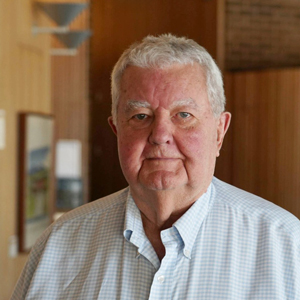
Professor Ian Chubb AC FAA FTSE
My role this morning is to make a brief introduction, remind you of some of what Jagadish said, and of the value of Australian expertise that needs breadth and depth to give us national capacity to respond to the predictable, and to the unpredictable, as the needs arise.
Then, Hayley will take you through the work that she has led within the Secretariat – and we will respond to questions and comments that may, or will, arise.
By way of introduction, I will use just two of many possible examples to illustrate the importance of national capacity. And how Australia’s response to the two was based on expertise, and the result of long-term investment.
So, to start.
By early in 2024 Australia had managed its way through several waves of Covid infections.
Imported vaccines had been put into arms from early 2021 – and we learned about strength, weakness, determination and courage through a pretty traumatic period.
And we learnt about the value of expertise; of having experts available to strategise and to plan with both the capacity and courage to reassure a concerned public that what they faced could be difficult, could be discomforting, could be disconcerting, or traumatising, but that we could manage a way forward to minimise harm in the face of uncertainty.
When we needed them, we had them. Experts able to advise political leaders as we faced a pandemic of unknown but scary possibilities; experts able to advise on how to reduce if never eliminate risks to Australians.
It was advice that was robust enough to stand against the new ways of throwing doubt on everything – what we call mis- and dis-information, or just lying. It was expertise and it led to evidence-based public health options used by government and the community in partnership.
I was reminded then of how we’d done it before. How Australia’s decades of investment in virology and microbiology and medical research more generally led Australia to develop a world-leading HIV/AIDS strategy that was strong, bipartisan and effective. I was also reminded of courage and determination: the federal Minister of the day even had the resolve to ‘launder‘ money through a convent to get support into a jurisdiction that treated HIV/AIDs as a moral issue rather than a public-health crisis.
But a key message in our Australian story is how we patiently invested in talent and built expertise, and how it was able to be mobilised when we needed it – because it was there.
Nobody in Australia was particularly focused on HIV/AIDS until it was first reported in Australia in the early 1980s. Australians first grew the Covid-19 virus just ten days after the first Australian came home with the infection. I’d be pretty sure they didn’t grow up thinking that one day there might be something called the SARS-CoV2 virus and that they could be the first in the world to grow it and make it available to researchers world-wide. They used their decades of training to produce what was described as a ‘game changer’ for the international scientific community.
Building expertise, creating knowledge, growing understanding, and being citizens in a world of knowledge were seen as laudable in their own right – and Australian experts in a range of fields have been there when we needed them.
About 18 months ago, several of us in the Academy were reflecting on how, at different stages of our history, Australia had built capacity over time – a time when the use of so-called patient capital was seen as an investment in the purposeful building of talent and knowledge, not a cost. But after 2008, the picture changed.
While never arguing that we do not need to apply knowledge to find solutions to problems that Australians – or the world – face, we asked whether we still invest in expertise that will give us the capacity should or when we need it. That same expertise is our entry to the global bank of knowledge where we are 3% depositors but where we get to learn from others and influence the big decisions with worldwide significance.
When we decided on Australian Science, Australia’s Future, the Academy did not want to add yet another glossy report full of slogans and good intentions. Or, less generously, add yet another way to gather dust on shelves, prop open doors or take up space on laptops.
We wanted to use the available data to prepare the most comprehensive analysis of Australia’s present science capability that we could.
We aimed to answer an apparently simple question: does the science we have match the science we need? Or might need.
But how to link the science to what the nation aims to be?
As the President reminded us earlier, the federal Treasurer has commented that we have an obligation to future generations to deliver a better standard of living than we enjoy today.
To look for inspiration, we turned to the Intergenerational Report produced by the Commonwealth Government in 2023.
That report sets out the five pressures Australia will face in the coming decades. They include an ageing population and its care, the economic and physical risks of climate change, and digital transformation all in the uncertainties of a shifting geopolitical landscape.
So we refined our question. We asked: what science capability would Australia need to meet those challenges, and build an economy that supports a better future for all Australians?
We set out to complete the most comprehensive analysis of Australia’s science system undertaken to date – not just to count what we have, but to test whether it is fit for purpose.
We asked: if Australia is to lift its investment in R&D, where should that investment be directed? What capability do we need to strengthen, and what capability do we need to build almost from scratch?
But it was never just an accounting exercise. Science is not separate from daily life, even if it can sometimes feel abstract or distant. It shapes the quality of the food we eat, the security of the jobs we hold, the safety of the medicines we take, and the reliability of the technologies we use.
The challenge is that much of it is invisible to the public – until it is not there when we need it.
Science is not a cost. It is an investment in the future. Other nations already understand this. They invest not because they’ve got some spare cash they don’t want to leave just lying around, but they make choices and sacrifices because they can’t afford not to.
If we continue to sit back and coast, waiting to import solutions or even research, if we continue to talk but not act, then we will fall further behind and import nearly all of what we need including even our own resources transformed into high-value goods at high cost.
The choice is clear. We can treat science as an optional extra, or we can treat it as the foundation for our future. We can repeat the rhetoric about being clever and innovative without backing it with substance, or we can commit to building the system that will let us be both. We can let economics cap our vision before we’ve even got one – or we can shape the economy to get us to where we want to be.
It takes time, it takes patience, and it takes persistence and courage. But to get to the end, you have to start.
I’ll hand over to Hayley who will take us to the starting line and beyond.
Speech: Academy Chief Executive on the State of Indoor Air in Australia report
This is the transcript of a speech delivered by Australian Academy of Science Chief Executive Anna-Maria Arabia OAM at the launch of the inaugural ‘State of indoor air in Australia 2025’ report, discussing possible impacts of the report on science.
Check against delivery.
Good morning.
I too would like to acknowledge the Wurundjeri people – the Traditional Owners of the land we meet on today.
I also acknowledge and pay respect to the Traditional Owners of all the lands on which the Academy operates, and where our Fellows and staff live and work.
The Australian Academy of Science has a long-held interest in advancing actions to improve indoor air quality.
We consider the absence of enforceable performance standards a significant gap in Australia’s public health framework, requiring priority attention.
We [the Academy] consider the absence of enforceable performance standards a significant gap in Australia’s public health framework, requiring priority attention.
What gets measured, gets managed.
In Australia, we don’t measure nor monitor indoor air to scientifically understood standards and sensitivities.
And so, we don’t manage poor indoor air.
Just a few weeks ago, 300 global leaders united at the UN headquarters on the sidelines of the General Assembly to declare that we consider indoor air quality a basic human right.
So far, more than 165 organisations have signed the global pledge recognising clean indoor air as essential to health and wellbeing – that number is growing daily.
I invite you to do so if you haven't already.
Maslow's hierarchy of needs includes air – together with food, water, shelter, and sleep – as essential to survival.
And so, it seems inconceivable that in 2025 in Australia – and in most places around the world – action is limited in improving the air that we breathe in the places we spend around 90% of our time: indoors.
This, notwithstanding a robust and growing body of scientific evidence showing that poor indoor air quality has a negative impact on our health and wellbeing.
And notwithstanding the known and available technological solutions required to address it.
At the Australian Academy of Science, every day we seek to bring evidence to decision-making.
We bring science to the service of the nation.
To do this, we lean on the extraordinary research effort across the nation and the globe, gathering evidence and translating it for use by decision-makers like ministers, policymakers, judges, teachers, and members of the public.
We especially lean on our Fellows – Australia’s distinguished scientists elected to the Academy for their sustained scientific efforts.
World leading in the area of indoor air quality is of course Professor Lidia Morawska.
That’s why I am especially delighted to speak here at the launch of the ‘2025 State of indoor air in Australia’ report on the potential impact of this report on science.
May I first offer my congratulations to both Adjunct Associate Professor Wendy Miller and Distinguished Professor Lidia Morawska on this extraordinary undertaking.
The report is both pioneering and essential.
It provides the seminal baseline on which the research community must now build.
The evidence it examines is as important as the gaps it reveals.
For the first time, Australia has a national examination of indoor air quality through the lens of different occupancy modes, pollutant risks, exposure limits, health and economic consequences, and policy responses.
The report is both pioneering and essential. It provides the seminal baseline on which the research community must now build. The evidence it examines is as important as the gaps it reveals. For the first time, Australia has a national examination of indoor air quality through the lens of different occupancy modes, pollutant risks, exposure limits, health and economic consequences, and policy responses.
By looking at indoor air quality across different building types, the findings assist in creating a hierarchy of need, illuminating where action should have the greatest priority and impact.
Most usefully, it provides state breakdowns, empowering jurisdictional decision-makers to act locally.
Importantly, it debunks myths about what regulations, ratings, standards, and laws do and don’t exist and shows how clean indoor air and energy efficiency standards can work hand in hand.
History will show that this inaugural ‘State of indoor air’ report is a ‘line-in-the-sand moment’ to both birth future strategic research efforts to fill identified data gaps; and to allow existing data to inform policy actions, nationally and globally.
I tried to skim this report, but I couldn’t.
Each chapter is revealing, and drew me in further.
And before I knew it, I had highlighted sections of every page.
It is quite unbelievable that it is the first of its kind.
It offers such fundamental information, that I feel we should have had this report decades ago.
Such is the priority we need to give our understanding and response to indoor air quality.
While it is the first, knowing Lidia and the team at Thrive, I know it will not be the last.
It can’t be the last, because for the Academy to do its job of informing decisions with evidence, we need this report to drive action.
I anticipate the report will have impacts in three key areas.
The first is to fill data gaps.
Deliberate action is needed to improve indoor air quality measurement and data collection in all building types.
I was deeply struck by the paucity of published research on indoor air quality in many settings, including in healthcare facilities, where one would expect differently.
Unbelievably, the report reveals that in Australia – the most bushfire-prone nation in the world – there is not a single published paper relating to private bushfire shelters.
I was equally struck that the ‘National action plan for the health of children and young people’, and the ‘National asthma strategy’, do not include indoor air quality in buildings.
If gas appliances and woodfired heaters and stoves are especially detrimental to those with asthma, shouldn’t priority be given to mandate indoor air quality sensors in those homes?
Going forward, research investigations are required where scientists will need to work with stakeholders across various occupancy types so that we measure, publish and manage indoor air quality in those settings.
The second is prioritisation of action requiring decision-makers in the public and private sectors, across portfolios and jurisdictions.
Where data has been published, Wendy and Lidia have very eloquently joined dots across portfolios. And it reveals much low-hanging fruit.
How is it that in 2025, we need to wonder if medical professionals routinely ask patients with respiratory illnesses questions about gas appliances in their home?
Simple modifications of design principles could better separate the proximity of garages from living areas.
The report findings illuminate whether specific classes of buildings are more suitable than others as potential evacuation centres.
And it is clear that incorporating the design and operation of schools into the ‘National preventive health strategy 2021–2030’ would have enormous impact.
I found myself wondering why we didn’t already have the answers to these questions.
So, I expect the report will assist in exerting pressure on political and policy leaders at the state and federal level – whether that be legislators, regulators, or others in the chain of influence.
And in the private sector, the findings provide invaluable insights to facility managers, owners, and builders, to support market and commercial decisions.
The third is to inform global research and action.
I understand the Global Commission on Healthy Indoor Air aims to develop a 'Global framework for action'.
This cannot be achieved without national reports like this Australian blueprint.
And of course, to make it truly Australian, the report even sheds light on a microbrewery that utilises an Internet of Things sensor capability to monitor CO2!
I will conclude by sharing that the Academy is currently finalising a report on indoor air quality. It will provide a complementary resource for policymakers and is due to be published in November.
As well as providing a primer on the scientific evidence base, our report explores the policy pathways to routine measurement and monitoring of indoor air in public buildings to an agreed set of standards and sensitivities.
The places where we live, work, learn and play must be safe and healthy.
They have unique needs, challenges and pollutant profiles as illustrated in the ‘State of indoor air in Australia 2025’.
Nevertheless, we must not let the complexity of the policy challenge distract from the clarity of the scientific evidence.
The responsibility and the opportunity sit with us all to work together across government, industry and academia to translate this knowledge into policy and practice.
Congratulations once again Wendy and Lidia.
I look forward to continuing our shared effort to improve indoor air quality for all.
-Ends-
Scientists say we are not on course to meet Paris Agreement climate goals
The President of the Australian Academy of Science, Professor Chennupati Jagadish AC, has welcomed the Government’s annual climate statement published today calling for urgent, ambitious action to increase emissions reductions to reduce global warming and meet the climate goals of the Paris Agreement.
Professor Jagadish said the Climate Change Authority’s annual progress report found that Australia’s emissions are declining too slowly and that faster, coordinated action is needed across all sectors.
“The Global Carbon Budget shows that time is up for 1.5°C. Today, Minister Bowen noted in his speech to federal Parliament that based on global emissions, we will still see warming of 2.8°C,” said Professor Jagadish.
Above 1.5°C of warming, Australia faces much greater climate risks and economic consequences. These impacts include more frequent and severe extreme weather events like floods, fires and cyclones that will contribute to the cost of living, placing further stress on household budgets.
Professor Jagadish urged the Minister to read the Academy’s report The risks to Australia of a 3°C warmer world.
“It paints a picture of what our world will be like to live in when average global surface temperatures reach 3°C, which is expected in the lifetimes of our children and grandchildren.
“We need to be able to look the next generation in the eyes and say we’re on track to leave you a world that is liveable.
“We are making progress with emissions reductions, but the Climate Change Authority’s projections show that we need to triple our current pace of emissions reduction to reach the ambitious edge of the 2035 emissions target.
“A net zero emissions outcome by 2050 is possible for Australia without compromising economic prosperity,” said Professor Jagadish.
“The Academy supports the Government’s focus on renewables and their goal to make Australia a global destination for clean energy investment.
“Now is the time to invest in science and innovation to develop the technologies we need to enhance our climate modelling and understanding, accelerate the energy transition, reduce emissions and remove greenhouse gases from the atmosphere, and prepare our communities and environment to adapt to climate change impacts.
“We must rise to the challenges presented by overwhelming scientific evidence and not only reduce future emissions but also deal with runaway emissions that are already locked into the atmosphere, making some warming inevitable.”
Science20 statement calls for urgent, science-driven action to protect the wellbeing of people and ecosystems
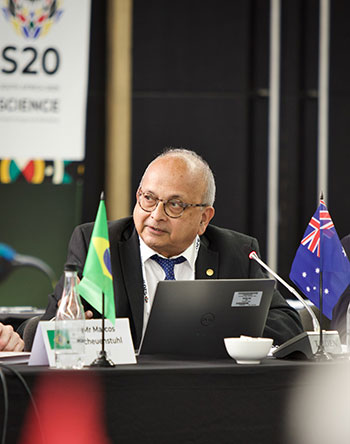
Dr Surinder Singh FAA FTSE at the Science20 meeting in Pretoria, South Africa, in February 2025.
The Australian Academy of Science has endorsed the Science20 (S20) 2025 statement, Climate change and well-being, reinforcing a collective commitment and consensus-driven call to action for preserving lives and boosting global sustainability.
The communiqué was developed after an in-person meeting in Pretoria, South Africa, in February, attended by Academy Fellow Dr Surinder Singh and finalised with feedback and contributions from experts across the member academies, including Academy Foreign Secretary, Professor Frances Separovic AO, Professor Andy Pitman AO of UNSW, and Professor Hilary Bambrick of the Australian National University.
During the final S20 meeting, Professor Separovic stressed, “Australia can’t act alone. Making greenhouse gas removal a national research priority means elevating global research collaboration in this area, pooling resources, and ensuring it is an international priority.”
A call to action for climate change and human wellbeing
Climate change is one of the most pressing global challenges, with far-reaching consequences for health, livelihoods, food security, and water availability. Its impacts are disproportionately felt by vulnerable populations.
Rising temperatures, extreme weather events, and ecosystem degradation threaten human wellbeing and the stability of Earth's life-support systems.
The S20 communiqué emphasises the urgent need for coordinated, science-driven solutions to mitigate these threats.
The S20 Statement identifies five priority areas for action:
- Human and environmental health
Strengthen monitoring of air and water quality, build early warning systems, and protect communities from climate-related health risks. - Food, water, and energy nexus
Promote climate-smart agriculture, support local food systems, and develop resource-efficient urban planning to safeguard essential resources. - Indigenous peoples, local communities, and vulnerable populations
Integrate traditional knowledge, support community-led adaptation strategies, and ensure that early warning systems reach those most at risk. - Climate change adaptation
Enhance climate-resilient infrastructure, improve access to climate data, and focus on ecosystem restoration to reduce vulnerability and protect biodiversity. - Climate change mitigation
Accelerate emission reductions, promote renewable energy solutions, and invest in emerging technologies like carbon removal, ensuring strong governance and accountability.
Science at the heart of sustainable development
International scientific collaboration plays a pivotal role in achieving the United Nations’ 17 Sustainable Development Goals (SDGs), which are integral to the 2030 Agenda for Sustainable Development. The S20 statement emphasises that science, through evidence-based policy, is key to realising these global goals.
The Australian Academy of Science congratulates the Academy of Science of South Africa for their dynamic leadership in coordinating this year’s S20 meetings and producing a statement that will offer evidence-informed advice to the G20 heads of state and government.
Next year, the National Academy of Sciences will coordinate the S20 meetings under the United States' G20 Presidency.
Environmental law reforms deliver positives, but still fall short
The President of the Australian Academy of Science, Professor Chennupati Jagadish AC, is calling on the Minister for the Environment and Water, Senator the Hon Murray Watt, to inform his decisions with science when it comes to protecting Australia’s precious environment and biodiversity.
“The environmental law reform Bills as they currently stand will not deliver the essential reforms to the EPBC Act to protect our environment,” Professor Jagadish said.
The Bills must be bolstered to address:
- the lack of strong, legislated mechanisms to embed scientific advice into decision-making
- broad ministerial discretion and the vague ‘national interest’ exemption that risks short-term agendas taking priority over protecting our environment
- damaging exemptions including forestry, cumulative land clearing and continuous use pathways
- the proposed biodiversity offset system that risks introducing a pathway for proponents to ‘pay to destroy’ without ensuring gains equivalent to losses, undermining the integrity of matters of national environmental significance.
“Our environment and biodiversity are changing at a rapid rate, and urgent action is needed to halt this decline,” Professor Jagadish said.
“It would be a stain on the Parliament of Australia if these environmental law reform Bills are allowed to pass in their current form.
“The Bills must be strengthened to ensure decision-making is informed by robust scientific evidence and can deliver the environmental improvements this reform seeks to achieve.
“The Academy recognises positive elements in the Bills, such as the concept of ‘net gain’ if properly defined and enforced; the ability of the Minister of Environment to make consistent National Environmental Standards; and the establishment of the National Environmental Protection Agency and Environment Information Australia,” Professor Jagadish said.
Prioritising R&D in Australia: ABC interview with Academy Chief Executive
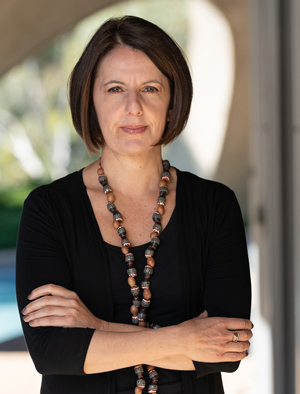
Australian Academy of Science Chief Executive Anna-Maria Arabia OAM
Anna-Maria Arabia spoke with Saskia Mabin on ABC Radio Canberra Mornings on 14 August 2025.
TOPICS: Supercomputing, investment in R&D, CSIRO job cuts, ACT Productivity roundtable.
CHECK AGAINST DELIVERY
Saskia Mabin:
Did you know that Australian scientists pioneered ultrasound technology? Professor Fiona Woods, a life saving spray on skin. These are all advances in research and development that we use and benefit from in our everyday life. The Academy of Science says for most countries, science and technology is considered an indispensable strategic national asset, but not in Australia.
Anna-Maria Arabia is the chief executive of the Australian Academy of Science; welcome to the program. Thank you for being here.
Anna-Maria Arabia:
Lovely to be with you, Saskia.
Saskia Mabin:
Now, you were at the ACT Productivity Roundtable yesterday afternoon, ahead of next week’s Economic Round Table, the Federal one. What did you speak about and what was important for you to convey in that meeting?
Anna-Maria Arabia:
Look, it was a terrific, constructive and very inclusive gathering.
We put forward two proposals to that meeting, in part because of their ability to boost the national interests, but also because they have relevance in the ACT.
One of them is a proposal that we use the ACT or that it be considered as a national hub for high-performance computing. What that means is supercomputing, and these are those extraordinary computers that don’t just store data, they actually analyse data and give us information that is critical to innovation and to research and development.
Your listeners might know that there is a fantastic supercomputer at the ANU at the National Computational Infrastructure there, but it’s reaching its end-of-life and it’s certainly not of a capacity that we need to meet all of our future needs.
So when we think about using AI and the data it generates and uses, quantum computing and wonderful startups in the ACT, like quantum brilliance, weather forecasting and modelling.
There’s a range of uses for supercomputers, and we really do need to plan forward to have the capacity we need. So the ACT could be such an extraordinary hub for this national infrastructure.
Why? We’ve got fantastic universities and VET sectors, there’s University of Canberra, there's the Canberra Institute of Technology. Our energy sources are almost 100% renewable, and we know in supercomputing they’re quite energy intensive, so that's really important. There's connectedness to the heart of government. There are many, many attributes in the ACT that would enable it to be a fantastic hub. So we put forward that possibility. It also would attract industry investments.
So, supercomputing at the moment in Australia is used mostly by researchers, but overseas, in Germany for two months a year, their supercomputers are used by industry, by the automotive industry. So there’s a real opportunity for a public–private partnership that would grow jobs, that would boost productivity, and really set us up for the future, so that we can remain innovative and use R&D as a source of economic growth.
Saskia Mabin:
And further, Katy Gallagher did mention that earlier in the program when we spoke that this was something the government was considering, looking at how they could give startups a better go and better access to capital. How much funding, you know, increase in funding for what we currently get through research and development, would you be asking for?
Anna-Maria Arabia:
So the supercomputing capability is not an inexpensive one, and that is why I think it lends itself to a public–private partnership. We often in research land talk about supercomputing as being the road of this century. So when you think about roads, toll roads, they often attract private investment, that could be superannuation investment, or other forms of private investment, and they’re tolled, and therefore they have users and they become a very viable model for public–private partnerships.
Supercomputers are not dissimilar, so they have private and public users. So there is a possibility, I think, to explore what sort of investment models might be possible. The computer power we need to set us up for the future is around a $2 billion investment over 10 years. But again, as a joint venture and one that is profitable, it could really be an extraordinary national asset for Australia and potentially service our region as well. There is a different argument around the broader boost in R&D expenditure in Australia. That’s separate investment.
Saskia Mabin:
My guest is Anna-Maria Arabia, who’s the chief executive of the Australian Academy of Science. This listener says, Australian R&D, we’re great at medical research, but sell it out to foreign companies who get billions. Is that a concern of yours, Anna-Maria?
Anna-Maria Arabia:
It is. Unfortunately, with monotonous regularity, we produce extraordinarily high-quality research. We haven’t invested enough in the translation of that research to see it to commercial impact here. That research gets picked up abroad, developed, and then we buy it back. We need to stop this trend. Australia can and should be benefitting from the commercial outcomes of the extraordinarily high-quality research that we undertake, and there are settings that could be adjusted to enable that.
Saskia Mabin:
While we’re here, I wonder if I could ask you about an item that’s running in our news this morning about the CSIRO. The head of the CSIRO has said that some areas of research will need to be cut and the union representing staff there said that there will be 450 jobs cut this financial year. This sounds concerning to me, Anna-Maria. Is this something that is on your radar right now?
Anna-Maria Arabia:
It is, both from a CSIRO perspective, but also from a broader R&D expenditure perspective. So, you know, we’re at a bit of a crossroads in Australia and our investment in R&D in Australia is nearing the bottom of the OECD.
In five years’ time, we will be at the bottom of the OECD, unfortunately. And what is required is investment in R&D from government, higher education and business. CSIRO is not exempt to that, so unfortunately, unless we make broader changes to address that problem, we’ll continue to see cuts both at CSIRO and other research agencies.
One of the proposals to the Academy of Science has put forward as part of the productivity roundtable is to look at incentivising investment in R&D by large businesses. Why have we chosen that? When we look at the data, under investment by business in R&D, is now at – Australians have, Australian businesses have under invested in R&D to the extent of $32.5 billion dollars compared to the OECD. It is a major gap and one that needs to be filled. And we really are at a crossroads where we are needing to address this quite urgently, because the current decline in overall R&D spending can’t continue.
We’ve proposed a solution to that, and that is to incentivise R&D investment through the application of an R&D levy. We’ve had some independent economic analysis done, and through that levy, it would generate research income that would feed back into that R&D loop. You can’t have D without R, and those companies that do invest in R&D would be rewarded.
They would have their levy either discounted, or potentially down to zero. So those that do well, the high R&D intensive companies would not feel the burden of the R&D levy, but those who were not contributing would either pay the levy or invest in R&D. So it’s a bit of an incentive to boost R&D, and we feel that the under-investment at the moment is now quite intolerable. We need to quite boldly address this investment gap.
Saskia Mabin:
Anna-Maria Arabia, thank you so much for your time this morning.
Anna-Maria Arabia:
It's a pleasure to be here.
Saskia Mabin:
There's the chief executive of the Australian Academy of Science there.
President’s speech: Science at the Shine Dome 2025 Gala Dinner
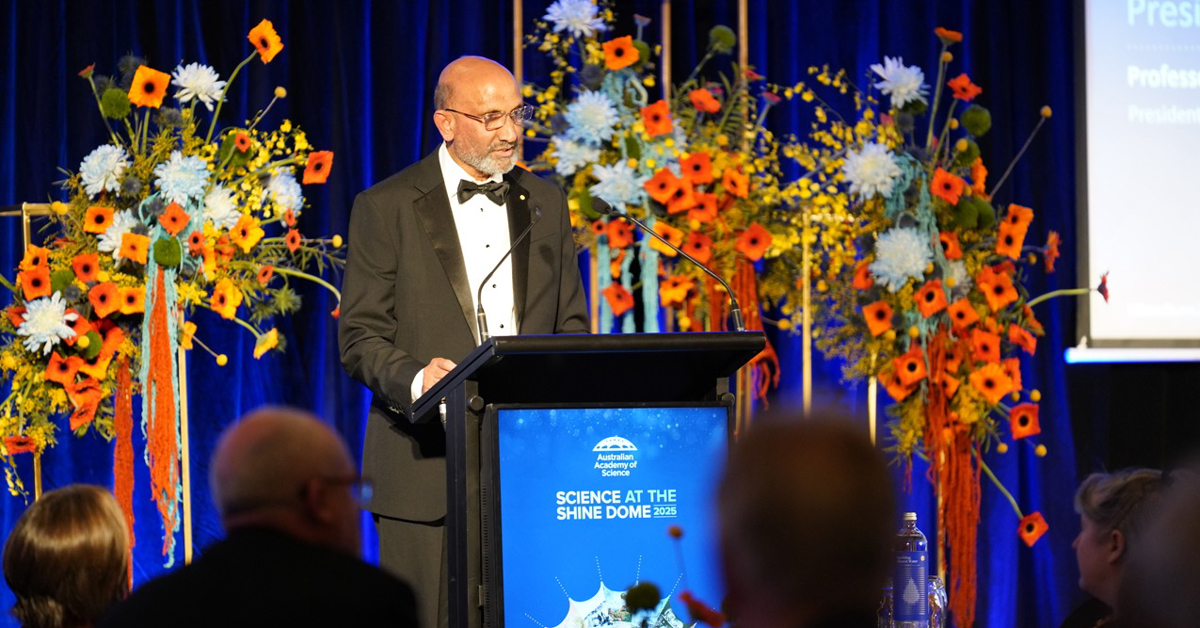
Academy President Professor Chennupati Jagadish AC PresAA FRS FREng FTSE
Check against delivery
Anna-Maria, thank you for that introduction.
Selina, we appreciate your generous welcome to us here on Ngunnawal land.
Good evening and welcome all.
I won’t repeat the acknowledgement of the many distinguished guests we have here tonight.
Suffice to say a warm thank you to Minister for Industry and Innovation, and Minister for Science, Senator the Hon Tim Ayres.
I know I speak on behalf of everyone in this room, when I say your presence here tonight is deeply appreciated.
And a special thank you to our Gala Dinner event partner, the University of Sydney. This event would not be possible without your support.
…
Over the past few days, I have listened to the presentations of our newly elected Fellows.
Their research - and the many ways it has been translated – is awe-inspiring.
The class of 2025 join our Fellowship of stellar Australian scientists who help shape our nation and whose contribution is priceless.
May I take this occasion to thank each and every Fellow for the volunteering your expertise to the Academy and to the nation.
It means science can inform decisions wherever they are made: in our parliaments, our boardrooms, our courts of law, our classrooms, and in our public squares.
Gee, we are a lucky country.
Not only because of our mineral wealth and democratic stability – which we must never take for granted.
We are lucky that so many Fellows, around half of which were born overseas, call Australia home.
Lucky that our research is of the highest quality. So good that it is developed into technologies – too often by other countries.
Lucky that our researchers are such prolific international collaborators enabling Australia to access 97% of the knowledge generated elsewhere, and adapted to the needs of our people.
Our research capability is something we should never take for granted.
The work of researchers is every where.
So ubiquitous it is often invisible to the public – until it is absent.
The sometimes invisible but essential work of the people in this room.
The truth is, whether Australians – or indeed Ministers – see it or not – we need and use research, every day.
We use Geoscience capability to find our mineral wealth.
Agricultural capability to sustain our food exports in the face of climate change.
Data science capability to fuel AI applications across our economy.
And biotechnology capability to underpin healthcare delivery.
Tomorrow, at the Academy’s National Symposium we will hear that these very capabilities are diminishing in a way that jeopardises our ability to meet Australia’s future needs.
For the first time, the Academy has gathered evidence shedding light on capability gaps that we need to address now.
Otherwise, we may find that we don’t have the science we need to participate in a technologically advanced world.
The science we need to develop defence capabilities to secure our nation.
The science we need to diversify our economy by growing new industries.
The science we need to develop medicines to treat and eliminate disease.
And the science we need to adapt to our changing environment.
Without it … our luck will run out.
The Government’s response to the evidence we present tomorrow, needs to be deliberate and decisive.
Government inaction and drift mean we won’t have the knowledge and skills we need as a nation.
Knowledge produced by our Fellows, but also early career researchers who they train.
I’m always filled with hope when I meet the next generation of scientists.
Many are with us tonight, 111 in total, including 26 guests from 11 countries across the Asia-Pacific region.
And how good are our 3 young Aussie innovators? Mabel Day, Dr Auriane Drack and Khoi Nguyen – selected as winners of the Falling Walls competition held on Monday at the Shine Dome.
Their next stop is Berlin to compete with the top 100 young innovators in the world!
I hope you will have the opportunity to meet some of our early career researchers across the room.
They are remarkable, tenacious and ambitious for a better world.
So am I.
That is why I have made supporting the next generation of researchers a key priority of my presidency.
Because they are the hope of the team.
They are the future.
And it is our collective responsibility to give early career researchers the conditions to create knowledge that will help us navigate the future.
Far too many are leaving science at a time when we are in a global race for talent.
They are faced with the unenviable choice of staying in research or buying a home.
Some unable to undertake PhDs because the stipend is below the minimum wage.
Juggling study, multiple jobs and often carer responsibilities.
The research pipeline needs to be replenished.
And that starts with valuing research as an indispensable strategic national asset.
An asset that has become a source of intense global competition and power, without which no nation can remain safe or prosperous.
It’s for these reasons, developed and developing countries have chosen to increase investment in research.
Australia has not.
Our record of R&D investment by multiple governments and business shows a sustained pattern of decline.
We have fallen so far behind the OECD average that it would take an extra $28 billion dollars per annum to reach parity.
A trend that weakens productivity, wage growth, standards of living, and our ability to respond to global volatility.
These threats have consequences for every member of society.
Three years ago, at the Academy’s Gala Dinner I felt hopeful for the nation’s research sector.
The early signs of the Albanese Government, elected in 2022, showed government understood the role of science domestically and internationally.
In 2022, the new Science Minister, the Hon Ed Husic MP, said scientists would see, not only words, but deeds from the Government.
The following year the Prime Minister said he recognised the valuable role that discovery research plays – because not every breakthrough begins with a commercial product already in mind.
In June this year, the Federal Treasurer noted that our economy is not dynamic or innovative enough.
And I’m pleased that R&D featured heavily in the discourse leading up to and during the Economic Roundtable last month.
Minister: During National Science Week just a few weeks ago, you too publicly acknowledged Australia’s low R&D investment.
Thank you for recognising this.
We aren’t keeping up with inflation, let alone fuelling productivity.
This decline is hurting Australia and future generations of Australians.
That’s why, the Academy put forward a revenue generating proposal for Government to consider as part of our submission to the Strategic Examination of R&D.
It may well be the only revenue generating proposal before Government.
System change is required.
There is no silver bullet.
In addition to funding, the Academy’s analysis shows we need to consider new investment models, that balance risk and return for superannuation and other investors.
We need measures to incentivise collaboration between academia and industry that place the onus on industry, not only on researchers.
We need to unleash public procurement to scale innovation.
We need to remove fragmentation across our federation.
We need to change oversubscribed and underperforming tax schemes to incentivise collaboration.
We need to recognise that research infrastructure today is as critical to this century as roads were to the last – not only for use by researchers but for use by industries that wish to innovate.
We need to reward – rather than discourage – mobility between academia and industry.
Where we have effective funding models like the Medical Research Future Fund, let’s continue to direct earning to research as designed.
Surely, we don’t wish to cap cures.
And we need to make use of all the available talent.
…
So, am I as hopeful as I was three years ago?
Yes and no.
We eagerly await the recommendations of the Strategic Examination due at the end of this year.
But we fear the funding pool for research will remain unchanged.
Same pie. Cut differently.
Minister, we hear your calls that we need to translate and commercialise more of our excellent research.
We agree with you.
This room is full of people who already translate their research.
But the wellspring of innovation must be replenished by supporting research.
In R&D, there is no D without R.
No researcher applied for a grant to invent the smart phone, AI or gene editing.
New innovations, products, processes and services do not appear fully grown.
They start as ideas.
Tested and developed scientifically by an expert workforce using increasingly advanced technologies.
By people.
The people in this room.
As a nation we want technologies like AI to boost productivity, we want new medicines to keep us healthy, and the most advanced defence capabilities to keep our island nation safe.
To do this, we must be willing to invest sufficiently in the discoveries that create them.
Reversing more than a decade of decline is not the job of government alone.
We need to work in partnership – government, industry, higher education and philanthropy.
The Academy is part of that partnership informing policy with evidence as we have done for the last 71 years.
Independently.
Reliably.
Respectful of all knowledge sources.
And basing all of our advice on evidence.
This is the Academy way.
…
Minister, like the early career researcher, you too are the hope of the team.
You will soon be delivered the most comprehensive review of the R&D system in a generation.
It’s a moment in time to set this nation on a course powered by science and technology with its benefits shared across our society.
To shape a system fit for our times.
In 1990, then-Prime Minister Hawke stated that he wanted Australia to be the clever country – one that must reduce its reliance on imported technology and borrowed research.
Sure, we might get by importing technology and borrowing research, but the benefits will be enjoyed by others.
Minister, you have a choice:
Let’s choose an Australia that is flourishing and fair.
A future that is better for the next generation than the one we inherited.
A self-reliant, sustainable and secure Australia as geopolitical certainties waver.
Higher paid and cleaner jobs.
I and everyone in this room wish you courage and conviction as you navigate this moment.
This fork in the road.
…
I won’t be here next year to offer you my assessment as this is my last Science at the Shine Dome as President of the Australian Academy of Science.
In May 2026, I’ll be handing the reins over to a new President.
But I wish you success and wisdom in your policy formulations and especially in the Cabinet room and with the Expenditure Review Committee!
I close by thanking the Academy’s staff, under the leadership of Anna-Maria Arabia, for tonight’s gala dinner and Science at the Shine Dome.
With a special thanks to the Academy events team – Lisa Crocker and Jamie Evans – who manage to make Science at the Shine Dome bigger and better every year.
Before we enjoy our entrees, it is customary at Science at the Shine Dome to charge your glasses, and to be up standing if you’re able, to join me in a toast to excellence in Australian science.
To excellence in Australian science.
Thank you, enjoy your entrees.
-Ends-
President's speech – Australia's choice: science and technology in an era of disruption
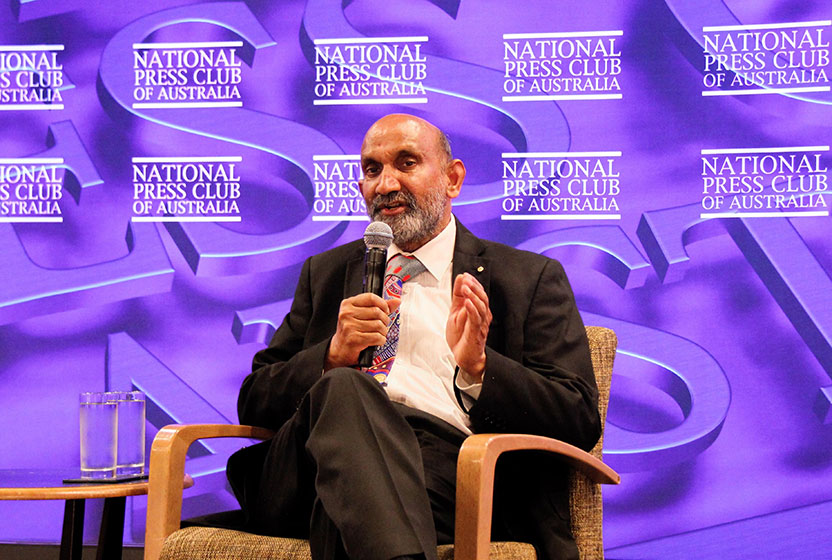
This is the transcript of the Ralph Slatyer Address on Science and Society by President of the Australian Academy of Science, Professor Chennupati Jagadish AC, at the Cooperative Research Australia 2025 National Innovation Policy Forum. The event was held at the National Press Club of Australia on Monday 3 November 2025.
Check against delivery.
Good afternoon.
Patricia – thank you for your kind introduction.
And thank you all for being here today
I, too, acknowledge the traditional custodians of this land, the Ngunnawal People.
I pay my respects to their Elders, past and present.
It is an honour to be here and join champions for progress who’ve delivered this address over the years – from across academia, politics, business and industry.
I thank Jane O’Dwyer, CEO of Cooperative Research Australia, for this opportunity, and the Slatyer family for welcoming me so warmly and encouraging me to speak as freely and boldly – as Ralph did.
I remember Professor Ralph Slatyer fondly.
When I arrived in Australia in 1990 and started at ANU, he was there, at the top.
I was at the bottom – but that’s a great place to be when you have someone like Ralph Slatyer to look up to.
I admired him greatly.
He was widely regarded as the leader of Australian science.
I’d argue he still is, in our national consciousness. He set Australia’s research capabilities in motion.
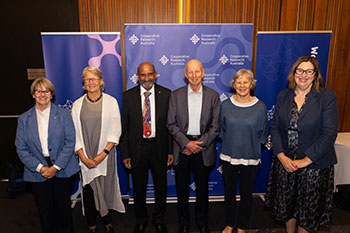
Professor Jagadish with the Slatyer family and Ms Patricia Kelly and Ms Jane O’Dwyer from Cooperative Research Australia.
I recently spoke with his daughter, Judy, who is here today together with other members of the Slatyer family, Beth, Tony and Richard.
Judy’s personal reflections matched her father’s public persona.
He was kind, she said – and curious.
A true optimist, with a natural inclination to seek out solutions.
He was a teacher at heart, always sharing his knowledge with others.
And a born collaborator, too.
He had the knack for getting people onboard.
Judy recalled their family holidays in the Snowy Mountains when she and her siblings were children. They spent their days foraging and fossicking.
Only later in life did Judy realise these trips were a ploy by her father to continue his scientific studies over the school break.
Alpine trees were his specialty, you see.
I have my own memories of Ralph’s inquisitive nature.
He met every challenge with genuine curiosity.
Every problem had a solution just waiting to be discovered.
And Ralph was always positive.
He believed science was the key to making the lives of Australians better – and our country greater.
That was when ‘the clever country’ entered the Australian vernacular.
Hawke was Prime Minister; Slatyer his trusted science adviser.
They set out on a quest to build a knowledge economy so that Australia could loosen its reliance on minerals and agriculture.
And on imported technology and borrowed research.
As one of Hawke’s ministers, John Dawkins, said at the time, I quote:
“We cannot enter the next century rollicking on the sheep’s back or creaking and swaying in some coal truck.”
Collaboration was at the heart of this mission.
As you know, it was Ralph Slatyer who established the Cooperative Research Centres, bringing together government, industry and researchers in a way Australia had never done before to fuel what he hoped would be a seismic ‘knowledge lift’ into the next millennium.
I am acutely aware I now stand at a similar vantage point to where Professor Slatyer stood 35 years ago, surveying the complex landscape before us.
We gather at a moment of profound consequence – not just for our sector, but for our nation's future.
And for future generations, in whom we must instil hope and opportunity.
Today I’d like to share with you the strategic reality for science and technology in an era of massive disruption.
The world is being reshaped before our eyes.
We're witnessing what has been called the fourth industrial revolution: the technological revolution.
Near-daily advances in artificial intelligence, quantum science, robotics, autonomous systems, space technologies, genomics…. the list goes on.
These are not distant possibilities.
They are the currency of power and prosperity right now.
Change so rapid that legislators, regulators and analysts struggle to keep up.
At the same time, the geopolitical landscape is increasingly adversarial, fragmented, and contested.
The comfortable assumptions of international cooperation that shaped our past are being tested and – in many cases, shattered.
Multilateral institutions face unprecedented strain.
National security threats are no longer limited to factors that compromise our borders.
Rather, foreign interference, cyberattacks, threats to critical infrastructure, and rampant disinformation create a complex intelligence environment.
A world where R&D makes us more secure and more vulnerable at the same time. While geonomics and engineering biology make us healthier, they grow the risk of biowarfare.
Scientists are asked to rethink the freedom of their collaborations.
We are in a global race for STEM talent.
Major conflicts rage in Ukraine, the Middle East, and Sudan.
The relationship between major powers is defined by competition.
There is a global reconfiguration of our energy systems, necessary to decarbonise our economies, while not weakening them.
And here's what matters for all of us in this room: science and technology sit at the absolute centre of these changes.
We are at the centre of these changes.
Not on the periphery. Not as an afterthought. At the centre.
What we choose for science today, will shape our destiny.
Last month’s critical minerals agreement between the United States and Australia underscores this.
It wasn't simply a trade deal.
It was recognition that geopolitics now turns on access to the raw materials of the technological revolution.
Key pillars of the US–Australia alliance include critical minerals, new technologies, and technology transfer for defence purposes.
Similarly, the Prime Minister's recent engagement with China focused on agricultural innovation, steel decarbonisation, green iron, and renewable energy technology – all questions of scientific and technological capability.
These aren't isolated examples.
They are illustrations of a new strategic reality.
A reality where Australia’s alliances and therefore our national security and prosperity are determined by our country’s scientific and technological strength.
It is therefore a matter of strategic national interest that we have the strongest possible science and technology capability we can possibly muster.
What we choose for science today, will shape our destiny.
The pathway is not straightforward, but nor is it beyond the wit of our people.
There are concerning macrotrends.
The environment that scientists operate in today has become more crowded and more opaque than in the past.
Today, the private sector is a significant and growing actor in the scientific and technological landscape.
The extraordinary growth of a small number of massive global technology companies means their economic strength and international influence now exceed those of many nation-states.
Let me put this in perspective.
In 2024, the National Science Foundation reported that due to significant growth in R&D funded by businesses, the share of total US R&D funded by the federal government decreased from 30% in 2011 to 19% in 2021.
This was before the funding cuts implemented under the current administration.
In the US today, the business sector now funds 36% of basic research.
Not applied research. Basic research.
That is nearly equivalent to the 40% share of basic research funded by the United States federal government.
There may be some in Treasury and in the Department of Industry who would be pleased to see that level of private investment in basic research.
To them I say: watch what you wish for.
This presents a serious and significant shift away from open science and away from public good research, and towards research funded for private use.
Basic research only contributes to our collective foundation of knowledge if it is able to be shared.
And shifts away from it being shared reduce the levers available to government to shape our destiny.
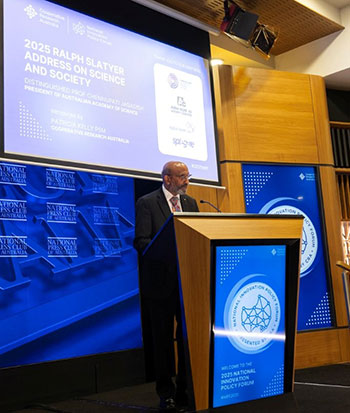
Professor Jagadish delivers the Ralph Slatyer Address on Science and Society.
This is our reality.
And it is the reason why it is a matter of strategic national interest that we have the strongest possible science and technology sector we can muster.
It is also one of the motivators for the Academy’s recent proposal to create an enduring source of public funds to support basic research in the form of a Research Fund that’s not dissimilar to the Medical Research Future Fund but for basic research across all disciplines.
Thereby leaving basic research funding for the public good in government hands.
We propose that the Research Fund be established through revenue earnt by the application of a temporary R&D levy on low-R&D-intensive businesses that generate more than $100 million dollars in annual revenue.
Nations across the globe have sought to strengthen their science and technology capability.
European Commission President, Ursula von der Leyen, in her Political guidelines for the next European Commission 2024–2029, calls for research and innovation to be placed at the heart of their economy.
Former Prime Minister of Italy, Enrico Letta, recommends that the EU add a fifth freedom to the original four freedoms that underpin the European Single Market.
To the existing four – being free movement of goods, services, people and capital – he calls for the free movement of research, innovation, knowledge, and education.
Why? Because the first four fall short of what is needed in today’s world.
He identifies the need to support R&D public–private partnerships, to align funding strategies, to share research infrastructure and to pool data in an open science approach.
And what would this achieve?
He argues it will drive economic competitiveness and ensure research-driven advancements that benefit society as a whole, not just a few.
So everyone – from entrepreneurs to established businesses – can leverage the latest research to develop transformative solutions.
It is deeply democratic and deeply visionary in troubled times.
Another former Prime Minister, Julia Gillard, as chair of the Wellcome Trust, recommends that the UK Government doubles down on its strengths in research and puts its research asset into full use by:
- strategically using it to support diplomacy and global influence
- being a regulatory innovator rather than an adopter – it isn’t only about developing new technologies, but who sets the rules for their use
- by recognising that health security is as paramount as defence security and that research is central to both.
They argue that by flaunting the UK’s track record in research excellence and international collaboration, they can position the UK as the global partner of choice for R&D.
In short, they value the global exchange of people and ideas.
The Wellcome Trust argue and I quote:
“Investing in R&D will bring growth and prosperity in the UK. Combining investment in R&D with a new approach to how the United Kingdom partners with the world will improve its global standing, make it safer and help find its leadership role in a changing world.”
Science diplomacy is at its best when we fuse our scientific strengths with our diplomatic expertise deliberately, and strategically.
When we recognise that international science collaboration is not just about advancing knowledge – it's about building influence, establishing norms, and creating opportunities that serve Australian interests.
In this area Australia has the essential ingredients but has failed to turn this into a national strategic capability.
So, as other nations seek to strengthen their science and technology capability in response to a changing world, we need to ask whether Australia’s scientific and technological sector and assets are strong, secure and strategic enough:
- to fuel our economy and productivity
- to provide national security
- to strengthen our trade negotiations
- to support our foreign policy objectives?
I do not believe this is the case.
And I struggle to imagine how anyone could argue otherwise.
I will not rehearse the current conditions of our R&D sector at length.
You all know them:
Our quarries are deep and brimming.
The quality of our science and scientists is exceptional.
R&D investment is now so far behind the average OECD as a percentage of GDP invested in R&D, it would take an additional $33.4 billion dollars per annum just to get to parity.
We are excellent international collaborators.
Our STEM talent pool is exceptional, but too small to meet our national needs.
Thanks to an 18-month investigation by the Academy published in September, we know we suffer shortages in data scientists, geologists and material scientists.
Our economy is over-reliant on few industries and has the complexity of Botswana.
The successful businesses we do have are mostly reluctant investors in new-to-market R&D.
And our industrial and manufacturing sector is having a significant, albeit snail-paced, makeover.
Fragmentation prevents efficiency and scale.
And Australia has no overarching science and technology vision or strategy.
Sadly, I can say with both confidence and despair, that science and technology is neither positioned nor valued as the national strategic asset it is at the heart of our ability to trade, make deals, boost productivity and navigate geopolitical complexity.
While nations across the globe seek to strengthen their science and technology capability in response to a changing world, Australia has not.
These are the reasons the Academy fought so long and hard for a comprehensive root-and-branch review of the R&D system.
To make the science and technology sector fit for purpose in our rapidly changing world.
And that is why the Academy has taken bold steps to establish Australia’s Global Talent Attraction Program, recognising that we are in a global race for STEM talent, so urgent that it cannot wait for reviews.
We cannot make good on our critical minerals promises when the number of geologists we attract, train and retain is in freefall.
Nor can we rely on importing talent when the International Union of Geological Sciences says other countries are experiencing similar declines.
We can’t fully adopt and exploit AI capabilities when only one in four year 12 students is studying maths.
What we choose for science today, will shape our destiny.
The time to get serious about recasting Australia’s science and technology assets was 35 years ago, as Ralph Slatyer understood.
The next best time is now.
Thankfully, I’m an optimist like Ralph Slatyer.
I believe we can get there – if we have the courage to act.
We have a choice.
We have a choice to position and prioritise science and technology.
We have an obligation to recognise that in an era of geopolitical, technological and environmental disruption – science and technology are not luxury investments.
When productivity is declining, our research and innovation unlock industrial diversification and economic growth.
We have a need to vastly mature our approach to science and technology.
We have an urgency to make the necessary policy and structural changes and investments – even if they are hard. Especially when they are hard.
That is why so much is riding on the outcomes of the Strategic Examination of Research and Development – also known as the SERD.
And why so much is riding on the Government’s willingness and courage to implement its recommendations… provided they are sensible!
The Academy will measure the SERD’s success by measuring how it stacks up against the following principles.
These are the principles that underpin a future R&D system – the vehicle – that shapes Australia’s destiny in an increasingly complex and contested world.
The SERD’s recommendations must reflect the following:
- Recognise that science, technological development, industrial competitiveness, societal challenges and innovation form a continuous network and cannot be tackled in silos or be allowed to cannibalise each other.
- Double down on what works, apply focus and align resources and polices.
- Reduce program duplication and fragmentation.
- Fund and promote excellence in collaborative discovery research.
- Stimulate partnership between the public and private sectors locally, internationally and across disciplines across the value chain from discovery through to mass industrial use.
- Enable mobility of researchers locally, internationally and across the value chain.
- Accelerate and enable research and innovation via provision of capabilities and tools like technology infrastructure. Key among them is high-performance computing and data. And provide for collaborative research infrastructure.
- Scale up investment by incentivising alignment and greater contribution of R&D funding from private sources and public sources – including from state and territory governments – as well as philanthropy.
- Back discovery research and risky applied research.
- Unleash the power of government procurement.
- Attract, train and retain STEM talent, especially where gaps exist.
- Collaborate widely and strengthen sovereign capability by developing a risk-informed international research collaboration approach that recognises any country or institution can be a collaborator, a competitor or a rival at any given time. And sometimes at the same time.
- Build nuanced and savvy science diplomacy capability by strategically using science and technology to support diplomacy and global influence, and by improving our science intelligence network.
- Create conditions that make the exchange of knowledge, data and technologies as open as possible and as closed as necessary.
- Create conditions and regulatory environments that support innovation, security and safety.
- Tend towards a culture that promotes academic freedom with responsibility.
- Build and treat our linguistic and cultural competency as a sovereign capability.
- Create mechanisms to draw on all knowledge sources.
- And never, never forget the value of the sacred contract been science and society.
I acknowledge that it is a long list. But for good reason.
This is not a trivial exercise. But it is an essential one.
Technically, we have a choice.
But actually, we have no choice if we want to prosper in an era of geopolitical, technological and environmental disruption.
Australia’s scientific and technological capability must be strong, secure and strategic.
I believe we can get there – if we have the courage to act.
We owe it to the next generation. To create hope and opportunity.
It is often said that to govern is to choose.
What we choose for science and technology today, will shape our destiny.
The moment to act is now.
Thank you for the opportunity to address you.
-Ends-


President's speech: Australian Council of Deans of Science
This is the transcript of a speech by President of the Australian Academy of Science, Professor Chennupati Jagadish AC, at the Australian Council of Deans of Science (ACDS) Annual Conference Gala Dinner. It was delivered on 21 October 2025 at the Shine Dome.
Check against delivery.
Good evening and thank you Tony for that introduction.
I’d like to acknowledge the Traditional Custodians of the land on which we meet, the Ngunnawal people.
And pay my respect to their Elders, past, present and emerging.
I also acknowledge and pay respect to the Traditional Owners and the Elders of all the lands on which the Academy operates, and its Fellows live and work.
It’s a pleasure to host you here at the Shine Dome for your annual gala dinner.
My apologies I could not join you earlier. I’ve just come from an Academy Council dinner.
Thank you, Jacqui and Tony, for the invitation to speak this evening.
I was pleased we were both able to participate in a successful Australian scientific delegation to Indonesia in July.
The visit strengthened ties with one of our nearest and strategically significant neighbours and is leading to deeper collaboration between Indonesian and Australian science in higher education and research.
It also gave me and the Academy a chance to get to know Jacqui, Tony and the ACDS and compare notes on our future strategic directions.
I’d like to acknowledge all the distinguished guests here tonight. It’s great to see representatives here from government, industry, the Academy’s Fellowship, and across the sector.
Before I share my reflections on some of the opportunities and challenges ahead for Australian university science, my congratulations to the Australian Council of Deans of Science on your 30-year anniversary.
This year also marks a 30th anniversary for me: 1995 was the year I became an Australian citizen.
I am deeply grateful, like others born overseas, for the opportunity to call Australia home.
It has been a privilege to build a successful science career in our great country.
The Deans of Science
The Science Deans hold a unique place in the Australian higher education ecosystem.
You have been the force behind significant reforms in the sector.
I know how seriously you take your commitments to teaching, learning and research.
Your efforts to develop and implement Science Threshold Learning Outcomes to drive literacy and standards in teaching and learning speak to your sector-wide and nationwide commitment to science education and excellence in undergraduate education.
It’s important to acknowledge that the task and environment you operate in have become both increasingly challenging and complex.
Educating the next generation and keeping vital university research going is performed with one hand tied behind your back as you plough through the administration and processes that come with growing institutions operating in a complex world.
Your work is done with a complex political and geopolitical backdrop.
There is an expectation that you develop the future workforce.
That you create a higher education system that delivers the best results for students, industry and the community.
Restrictions are placed on global research partners as foreign interference threats grow.
All this at a time when there is deliberate undermining of evidence-based institutions like universities.
Since the COVID-19 pandemic, universities have had to work hard to create spaces that are engaging and that provide a rich education experience.
As well as manage use and misuse of generative AI in learning.
As a nation, we aspire to higher education that is accessible to all regardless of postcode, place of birth, or socio-economic status.
Achieving this is not without its challenges.
Especially as student numbers grow.
Any lecturer will tell you how challenging it is to maintain standards of teaching excellence when student-to-teaching ratios are, on average, 24:1 in Australia.
Compare this to 11:1 in the UK.
Students’ learning experience is important.
It helps in course completion, career formation, and workforce preparedness.
And as I will mention later, it helps fill national science capability gaps.
Where science graduates end up in industry, it improves industry’s absorptive capacity.
If an industry can identify, adopt, and apply knowledge and research findings, they innovate, are more likely to invest in R&D, and are more responsive to market changes.
Adding to the complex environment you operate in is the fact that discovery research is inadequately funded and most government programs that seek to stimulate collaboration between academia and industry place the onus on universities to reach out to industry.
Friends, universities are at a crossroads.
Incentivised by successive governments to attract growing numbers of students – especially foreign students to improve balance sheets and subsidise research.
And shunned for not maintaining a social compact by those same political masters.
Government’s need to maintain a social contract with voters is at odds with its technocratic contract with universities.
Where has this left universities?
Like all industries that monetise a public good, universities are trapped between wealth creation and delivering the human right to education regardless of postcode or place of birth.
We also see this balancing act between market and mission in the provision of aged care, childcare and housing.
It doesn’t end well.
Peter Lewis rightly asks in one of his columns in The Guardian:
“If our education industry makes us richer but dumber, is it really a system of higher learning or just another market transaction where credentials are dispensed like a medieval church selling indulgences?”
I do not suggest that this is the approach to teaching and research taken by the Deans of Science, but the question does illustrate the crossroads universities face.
It is my hope that in Australia we can have a rational and balanced discourse about higher education as an industry supporting our economy, as a common good, as a social responsibility, and as a means to elevate all of us – whether we are standing in a high tech industry, in a factory, a research lab, or indeed the House of Representatives.
Australian science, Australia’s future: Science 2035
I’d now like to turn to Australia’s science capability.
Recently, the Academy released a landmark report: Australian science, Australia’s future: Science 2035. The report examines our science capability and workforce requirements over the next 10 years.
The report highlights gaps across the STEM workforce, that if not filled, will dramatically hinder our capacity to meet the challenges of our future.
The report found the current pipeline and study choices of students are not aligned with the needs of our future workforce. It also highlighted declining STEM participation and teacher shortages.
It showed us that in areas of critical importance to be able to support our economy into the future, we have gaps.
In geoscience and materials science in particular, we see existing gaps in capability that stand to worsen over the coming decade.
We are seeing compounding effects, where we are training fewer people in these skills. Forecasting shows an ageing workforce and we are attracting fewer skilled migrants.
In these areas where Australia is facing serious capability gaps, other nations are also competing to attract skilled workers with these specialisations.
All of this depletes our reservoir of expertise, and with it, our ability to control our own destiny in a rapidly changing world. Our ability to give our children and grandchildren a prosperous future.
If Australia wants to be ready for what’s next, it needs to invest in the people who will shape it.
Our education capability should be framed as a foundation for Australia’s national science capability.
What is clear is that we must enlist the experience, expertise and insights of our Science Deans to inspire, shape and build Australia’s future STEM workforce.
Your important role in illustrating the many exciting and diverse career paths available to science graduates cannot be underestimated.
An agricultural science student must know that they can aspire to a high-tech job in precision agriculture.
A physics graduate could pursue a career in nuclear science supporting national priorities, such as the AUKUS security pact, or using novel materials to solve old problems.
I believe there is also an opportunity for university science to work more closely with secondary schools to illustrate the career pathways that will help our nation fill these capability gaps.
And more, to engender a sense of possibility, of optimism, and of wonder that a career in science can bring.
I know many of you do this and I thank you for it.
The Cube at QUT is a great example of work already happening in this space.
It delivers unique interactive learning experiences that demystify research and communicate STEM concepts to secondary students and the broader public.
Discovery research
I’d like to conclude by reflecting on the value of discovery research.
I know I’m preaching to the converted among Science Deans!
We are privileged to see remarkable stories of discovery every single day.
Discoveries that go on to become life-changing technologies, or that provide strategic defence capability.
We must get better at sharing these stories with the public.
Consider the research of Academy Fellow Professor Richard Robson from the University of Melbourne, who a few weeks ago was awarded the Nobel Prize in Chemistry.
His fundamental research has myriad applications: from harvesting water from the air, to drug delivery and even carbon dioxide removal from the atmosphere.
Richard is believed to be the first Australian Nobel Prize winner whose research was funded by the ARC. Other than Laureate Professor Peter Doherty AC, all other winners conducted their seminal work abroad or were funded by other sources.
Professor Robson’s work shows that groundbreaking discoveries take time, but they happen, especially when we back excellence.
I do sometimes wonder if in today’s hyper-competitive research environment whether Richard’s work would have been backed or would have passed the ARC’s National Interest Test!
It is often noted that the quality and volume of Australia’s fundamental research effort is disproportionate to our population size.
This is in no small part due to the efforts of people in this room.
But punching above our weight does not mean Australia’s discovery research effort is adequately funded, nor can it sustain long-term funding cuts.
ARC and NHMRC funding has declined in real terms for more than a decade and a smaller proportion of it is directed to fundamental research.
Our publicly funded research agencies have systemic under-resourcing issues.
The Academy holds concerns that the Strategic Examination of Research and Development has so far offered no proposals aimed at boosting funding for discovery research – the wellspring of innovation.
There is no ‘D’ without ‘R’.
This is despite the Academy proposing a temporary R&D levy that is budget-positive; incentivises low-intensity R&D companies to invest in R&D; and creates a new revenue stream that can support fundamental research.
Our proposal is modelled on R&D levies in the agricultural and grains sector that have been successfully applied since 1989, are well tolerated, and have enabled significant and continuous innovations in these sectors.
That is why it is more important than ever that we speak with one voice, and we keep advocating for a robust R&D system able to serve the national interest.
Despite the significant challenges facing Australia and the globe, I remain optimistic about the future of our country.
We are a country of creativity and opportunity. I saw this when I arrived in 1990 and it is still true today.
I also see a bright future for Australian university science – one that is fuelled by optimism and the courage to act.
Let’s continue to work together and to speak with one voice to address the challenges ahead.
Thank you.
I’d now welcome any of your questions or comments.
-Ends-
President's keynote: Strengthening Australia–India science collaboration for a sustainable and resilient future
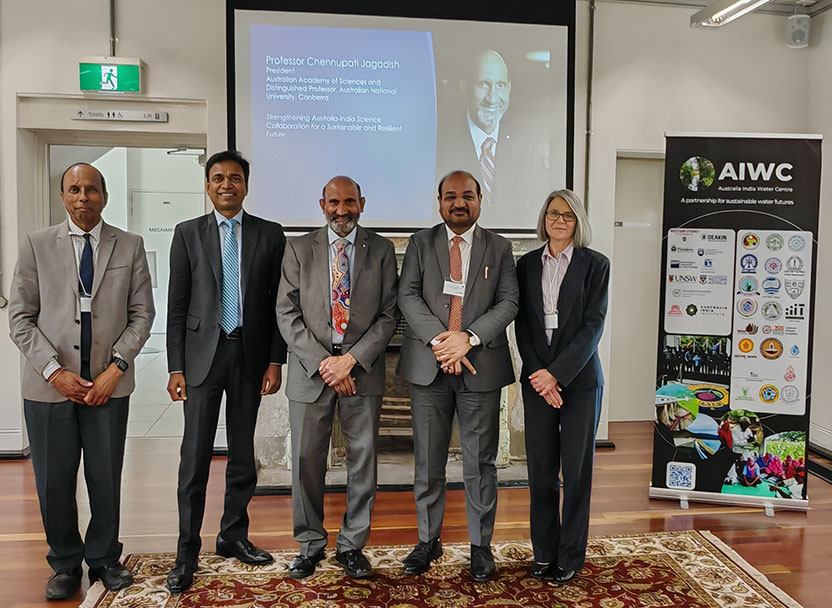
Left to right: Distinguished Professor Basant Maheshwari, Director, Australia India Water Centre, Western Sydney University; Dr S. Janakiraman, Consul General, Consulate-General of India, Sydney; Professor Chennupati Jagadish AC, President, Australian Academy of Science and Distinguished Professor, Australian National University; Dr ML Jat, Secretary, DARE and Director General, Indian Council of Agricultural Research, Ministry of Agriculture and Farmers Welfare, India; Professor Graciela Metternicht, Dean, School of Science, Western Sydney University.
This is the transcript of a keynote address delivered by Academy President, Professor Chennupati Jagadish AC, at the Australia India Water Centre (AIWC) as part of the AIWC@5 International Symposium on 17 November 2025.
Check against delivery.
Distinguished colleagues, Consul General Dr Janakiraman, Dr Jat – Director General of the Indian Council of Agricultural Research, senior officials from the Government of India, esteemed academic leaders from Australia and India, friends and partners – good afternoon.
It is my great honour to join you today to speak on ‘Strengthening Australia–India science collaboration for a sustainable and resilient future’.
Acknowledgement of Country
I begin by acknowledging the Traditional Custodians of the land on which we meet and pay my respects to their Elders past and present.
Across this continent, First Nations peoples have cared for land and water for tens of thousands of years – guided by deep knowledge of rivers, wetlands, seasons, and ecosystems.
Their enduring stewardship reminds us that water is not merely a resource, but a sacred element – a connector of life, culture, and community.
As we gather to explore the dimensions of Australia–India science collaboration, it is fitting that we draw on this wisdom – recognising that resilience is not built from technology alone, but from values, inclusion, and respect for diverse knowledge systems.
Science diplomacy and shared purpose
Throughout my own research career, I have seen the power of collaboration to transcend distance and difference.
When Australian and Indian scientists come together – bringing their unique expertise, perspectives, and creativity – the outcomes are richer, more innovative, and more impactful than we could achieve alone.
This is the essence of science diplomacy: the use of scientific cooperation to build relationships, trust, and capacity between nations.
In an era of global disruption – from climate extremes to geopolitical shifts – science diplomacy is not a luxury or an afterthought.
It is a strategic necessity.
It builds the connective tissue between nations, enabling shared discovery and collective resilience.
For Australia and India, this partnership is anchored in shared values: openness, innovation, and respect for knowledge.
Through cooperation, we not only advance science – we strengthen the very foundations of our relationship, ensuring it is enduring, strategic, and transformative.
A legacy of partnership
The Australian Academy of Science has enjoyed a long and productive relationship with the Indian National Science Academy, or INSA.
Our academies first signed a Memorandum of Understanding in 1986, renewed in 2012, and our collaboration continues through multilateral platforms such as the Science20 (S20) meetings, the International Science Council, and the InterAcademy Partnership.
Only a few weeks ago, both academies endorsed the S20 statement on climate change and wellbeing, a consensus-driven call to action for urgent, science-driven action to protect the wellbeing of people and ecosystems.
And in December, Academy Fellow Dr Surinder Singh will join a panel led by INSA at the InterAcademy Partnership’s General Assembly in Cairo on ‘Responsible and sustainable AI for society’ – a powerful example of how scientific cooperation also deepens global influence and thought leadership.
Australia–India Strategic Research Fund: Science as a bridge
One important tool of our bilateral scientific partnership is the Australia–India Strategic Research Fund.
Since its inception, the Fund has been a cornerstone of cooperation – bringing together leading researchers from both nations to tackle shared challenges in water, energy, climate, and advanced materials.
Since 2017, the Academy has managed this Fund, delivering the Early- and Mid-Career Researcher Fellowship program on behalf of the Australian Government.
Over that time, 52 emerging Australian researchers have travelled to India to work with outstanding Indian institutions – building networks, developing their understanding of diverse research cultures, and acting as future science ambassadors.
The Fund’s priorities mirror Australia’s national science and research goals, namely:
- protecting our environment
- restoring ecosystems
- strengthening resilience
- securing sustainable water and food systems.
Water, of course, sits at the heart of these priorities.
It is foundational – for life, for prosperity, and for security.
When water security falters, so too does social stability, economic productivity, and ecological integrity.
Shared challenges and opportunities
Australia understands this reality all too well – from drought to flood, from the Murray–Darling to the aquifers to our north and west.
India faces immense pressures of its own: monsoon variability, glacier melt, urbanisation, agricultural demand, and a changing climate.
These are shared challenges – but also shared opportunities for science-led solutions.
The Australia India Water Centre itself is a model for how deep collaboration can deliver real impact.
Through joint research, training, and technology transfer, it helps both nations advance water governance, catchment management, and climate adaptation.
Collaboration in action
Several projects supported by the Australia–India Strategic Research Fund exemplify this success.
In 2022, the University of Sydney and Indian partners developed real-time sensors to improve groundwater quality management.
Meanwhile, the University of South Australia collaborated on recovering critical minerals and rare earth elements from waste – addressing both environmental protection and resource resilience.
And in 2020, Dr Ashmita Sengupta from CSIRO undertook a fellowship with the Indian Institute of Technology Delhi and The Nature Conservancy.
Together, they designed environmental flow frameworks to strengthen water and ecosystem resilience in the Godavari Basin – an area highly sensitive to monsoon change.
By studying native fish species and their ecological dependencies, the team filled critical knowledge gaps and helped shape policy options for sustainable water management.
Dr Sengupta described the Fellowship as transformative – a reminder that science diplomacy operates not only in policy rooms, but in fieldwork, laboratories, and lifelong professional friendships.
Science and technology at the centre of change
Friends and colleagues, we gather at a moment of profound consequence – not only for science, but for humanity.
The world is being reshaped by climate disruption, technological acceleration, and shifting geopolitics.
Science and technology no longer sit at the periphery of these forces – they are at their centre.
What we choose for science today will shape our shared destiny.
In a world where knowledge drives security, prosperity, and influence, our capacity for collaboration – across nations and disciplines – is itself a form of resilience to the massive change around us.
This is why Australia and India must continue to treat science collaboration not merely as cooperative goodwill, but as strategic partnership – one that strengthens both nations’ ability to navigate uncertainty, manage resources wisely, and lead in innovation for sustainability.
Examples of scientific excellence
Many of our Academy Fellows embody this spirit.
Professor Craig Simmons of the University of Newcastle, and Chief Scientist of South Australia, is a world leader in groundwater modelling. He has transformed how we understand and manage subsurface water systems, shaping policy decisions from Australia to the Indo-Pacific.
Professor Stuart Bunn of Griffith University, who is internationally recognised for his research on river and wetland systems has informed environmental water management across the region.
His current work on safe and just Earth system boundaries for surface and groundwater highlights the transformations needed for a sustainable future.
Their work shows how deep expertise, coupled with collaboration and policy engagement, can guide nations toward resilience.
And Indigenous-led science is also central to this future.
Professor Bradley Moggridge, a proud Kamilaroi water scientist, bridges Traditional and western knowledge to inform sustainable water management and policy.
His leadership demonstrates how diverse knowledge systems can together produce more just and inclusive outcomes.
As we deepen collaboration between our countries, recognising the value of Indigenous and traditional knowledge – in both countries – will be vital to achieving innovation that is ethical, inclusive, and sustainable.
The strategic reality: why collaboration matters now
Globally, science diplomacy is undergoing transformation.
In a world of contested information, technological competition, and environmental fragility, scientific collaboration is not just about generating knowledge – it is about building influence, establishing norms, and shaping the future.
This is why our partnership matters.
Together, Australia and India can demonstrate how science serves both the planet and people – advancing sustainability while building strategic confidence and trust.
We can lead in water governance, in climate adaptation, in clean energy, in circular economy solutions.
We can build the STEM talent pipelines our nations need and nurture the next generation of scientists who think globally and act ethically.
In doing so, we not only advance research – we strengthen resilience, equity, and peace.
Conclusion
In conclusion, this gathering is about more than water science.
It is about science as diplomacy, as partnership, and as purpose.
It is about embedding a culture of joint leadership, shared vision, and collective responsibility.
It is about turning shared challenges into shared solutions.
Australia and India stand at the forefront of a new era – one in which collaboration will determine resilience, and where the strength of our science will define the strength of our societies.
If we have the courage to act – to deepen collaboration, invest in people, and align our efforts for the common good – we can shape a future that is sustainable, secure, and equitable for generations to come.
We owe it to the next generation – to create hope and opportunity.
Thank you.