




Conversations with Australian scientists
In these interviews, outstanding Australian scientists talk about their early life, development of interest in science, mentors, research work and other aspects of their careers.

Professor Joe Gani (1924-2016), mathematical statistician
Professor Joseph Gani was born in 1924, in Cairo, Egypt. He studied at Imperial College, London, and earned a BSc (hons) in 1947 and a DIC in 1948. He obtained a PhD in statistics from the Australian National University in 1955. In 1970 he was awarded a DSc from London University. Professor Gani moved to Australia in 1948 and worked as a lecturer in applied mathematics at the University of Melbourne from 1948 to 1950.
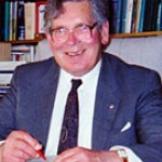
Professor John Carver (1926-2004), physicist
Professor John Carver interviewed by Professor Bob Crompton in 1997. John Carver was born in Sydney in 1926. He received a BSc in 1947 and an MSc in 1948 from the University of Sydney. Carver then went to England (1949 to 1953) to study for his PhD at the Cavendish Laboratory, University of Cambridge.
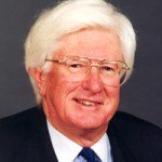
Professor John Lovering, geologist
Professor John Lovering interviewed by Professor Robyn Williams 20 July 2010. John Francis Lovering was born in Sydney in 1930. After finishing at Canterbury Boys High School, Lovering accepted a New South Wales cadetship at the Australian Museum to attend the University of Sydney.
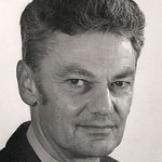
Professor John Newton, nuclear physicist
John Oswald Newton was born in 1924 in Birmingham, England. He won a scholarship to St Catharine’s College, Cambridge, where he completed the first two years of his bachelors degree (BA, 1944) before joining the war effort in 1943. During WWII Newton worked as a junior scientific officer at the radar facility in Malvern. In 1946, he was able to return to the Cavendish laboratory at Cambridge to finish his MA (1948) and later his PhD (1953).
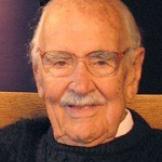
Professor John Sprent (1915-2010), parasitologist
Professor John Sprent was born in 1915, in Mill Hill, England. He received an MRCVS diploma from the Royal Veterinary College in London in 1939. In 1942 he was awarded a BSc in zoology with first class honours from the University of London. After receiving his degree, Sprent went to work at the Vom Veterinary Station in Nigeria. His work there, on Bunostomum phlebotomum (hookworms) in cattle, resulted in a PhD (1945) from the University of London, where he also received a DSc in 1953.
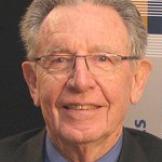
Professor John Swan (1924-2015), organic chemist
Professor John Swan interviewed by Professor Ron Brown in 2008. John Swan worked as a junior laboratory assistant at ICIANZ explosives factory from 1940. In 1944 he completed a diploma in applied chemistry at the Royal Melbourne Technical College (now RMIT University). Continuing his studies at the University of Melbourne, he received a BSc in 1947 and was awarded a CSIR (now the CSIRO) scholarship which he used to study at the University of London and complete a PhD in 1949.
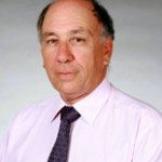
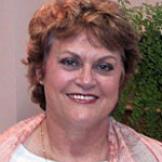
Professor Julie Campbell, vascular biologist
Professor Julie Campbell interviewed by David Salt in 2003. Professor Julie Campbell is a vascular biologist whose research has focused on the cell biology of cardiovascular disease and atherosclerosis. Her team has developed a method of growing artificial blood vessels in the peritoneal cavity of an animal into which it will be later grafted.
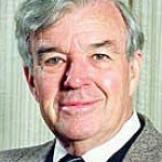
Professor Ken Campbell, palaeontologist
Professor Ken Campbell interviewed by Professor John White in 2000. Professor Ken Campbell is one of Australia’s most distinguished palaeontologists, certainly the senior palaeontologist in Australia, and one who has made a remarkable contribution to the study of that subject, not only on Australian fossils but also worldwide.