




Conversations with Australian scientists
In these interviews, outstanding Australian scientists talk about their early life, development of interest in science, mentors, research work and other aspects of their careers.

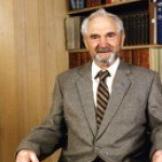
Professor Angas Hurst, mathematical physicist
Professor Angas Hurst interviewed by Professor Bob Crompton in 2010. Charles Angas Hurst was born in Adelaide in 1923. Hurst attended the Scotch College, Melbourne where he graduated dux in 1940. Hurst then enrolled at the University of Melbourne but his studies were interrupted by war.
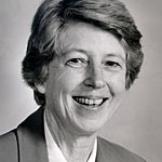
Professor Ann Woolcock (1937-2001), medical scientist
Professor Ann Woolcock interviewed by Professor Jonathan Stone in 2000. Professor Ann Woolcock was born in Reynella, South Australia in 1937. She graduated in medicine from the University of Adelaide and pursued postgraduate studies in respiratory medicine at the University of Sydney. Her MD thesis, awarded in 1967, was on the mechanical behaviour of the lungs in asthma.
Professor Anton Hales (1911-2006), terrestrial and planetary scientist
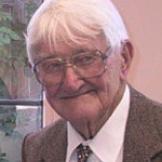
Professor Anton Hales interviewed by Professor Kurt Lambeck in 2002. Professor Anton Hales was educated at the University of Cape Town where he earned a BSc in 1929, an MSc in 1930 and a PhD in 1936. He also studied at the University of Cambridge in Britain, earning a BA in 1934 and an MA in 1952.
Professor Athel Beckwith, organic chemist
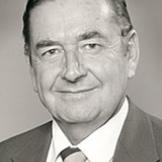
Professor Athel Beckwith was a pioneering Australian organic chemist renowned for his research on the structure and behavior of organic free radicals, earning international recognition. His life story reflects a blend of scientific brilliance and resilience, from overcoming severe childhood illness to shaping modern radical chemistry and stereoelectronic theory, while maintaining deep interests in music, education, and social issues. Interviewed by Professor Bob Crompton in 2003.
Professor Barry Marshall, gastroenterologist
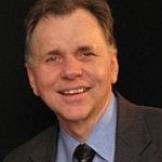
Barry Marshall, born in Kalgoorlie in 1951, earned his medical degree from the University of Western Australia in 1974 and later worked at several Perth hospitals, where he began researching stomach bacteria with Dr. Robin Warren. His groundbreaking discovery in 1984 that Helicobacter pylori causes peptic ulcers earned him and Warren the Nobel Prize in 2005. Interviewed by Dr Norman Swan in 2008.
Professor Ben Gascoigne (1915-2010), astronomer
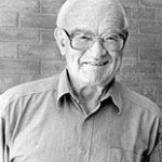
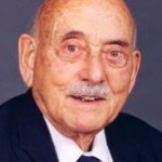
Professor Ben Gascoigne interviewed by Professor Bob Crompton in 2000. Sidney Charles Bartholomew Gascoigne, known as Ben, earned a BSc at the University College of Auckland (now the University of Auckland). A travelling scholarship took him to the University of Bristol, where he received his PhD.
Professor Beryl Nashar (1923-2012), geologist
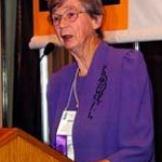
Professor Beryl Nashar interviewed by Ms Nessy Allen in 2001. Professor Beryl Nashar was the first Australian woman to be awarded a Rotary Foundation Fellowship, which she took in Cambridge. At the University of Tasmania she became the first Australian to be awarded a PhD in geology from an Australian university.
Professor Bill Compston, isotope geochemist
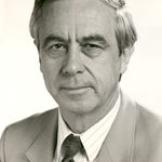
Professor William (Bill) Compston is a renowned geophysicist who began his research career fingerprinting and dating rocks at the University of Western Australia before moving to the Research School of Earth Sciences at the Australian National University. He was a principal investigator dating lunar rock samples that were collected by Apollo 11, but is best known for his work developing the Sensitive High Resolution Ion Micro Probe (SHRIMP). Interviewed by Mr David Salt, 2005.
Professor Bob Crompton, physicist
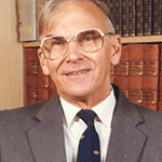
Robert (Bob) Woodhouse Crompton was born in Adelaide on 9 June, 1926. His childhood hobbies included building electric motors, and his creations included a clock, gramophone, and numerous small motors to power his toys. His hobby developed into academic success, and he graduated from Prince Alfred College in Adelaide top of the state in physics.