




Conversations with Australian scientists
In these interviews, outstanding Australian scientists talk about their early life, development of interest in science, mentors, research work and other aspects of their careers.

Dr Jane Wright, entomologist
Dr Jane Wright interviewed by Dr Victoria Haritos in 2000. Jane Wright was born in 1954 in Ontario, Canada. She received a BSc (Hons) in 1976 from Queen's University, Canada. She studied lady beetle biology at the University of Guelph, Canada, and received an MSc there in 1978.
Dr Jean Laby (1915-2008), physicist
Dr Jean Laby interviewed by Ms Nessy Allen in 2000. Jean Laby was born in 1915 in Melbourne, Victoria. She received a BSc in 1939, an MSc in 1951 and a PhD in 1959, all from the University of Melbourne. Laby was employed by the University in 1940 to work in the Department of Natural Philosophy, later named the Physics Department.
Dr Jean Youatt, chemist
Dr Jean Youatt interviewed by Ms Nessy Allen in 2000. Jean Youatt was born in 1925 in China, where her parents were missionaries. The family was interned there from 1941-45. At the internment camp she was taught mathematics by one of the other internees, and received a school certificate from Oxford University.
Dr Joel Mackay, biochemist
Dr Joel Mackay interviewed by David Salt in 2002. Dr Joel Mackay studied organic chemistry at the University of Auckland, receiving a BSc and an MSc. In 1990 he won a Commonwealth Scholarship to study at Cambridge University, where he looked at the mechanism of the action of antibiotics at the molecular level.

Dr John Passioura, Agricultural scientist
Dr John Passioura was born in Balranald on the Murrumbidgee River, New South Wales and grew up in Melbourne, where his family owned and operated a milk bar. He has a bachelor's degree in Agricultural Science (1958) and a PhD in soil chemistry (1963) from the University of Melbourne. Interviewed by Dr John Kirkegaard in 2022.
Dr June Olley, fish technologist (1924–2019)
Dr June Olley interviewed by Ms Nessy Allen in 2001. June Olley received a PhD from the London School of Hygiene and Tropical Medicine where she studied lipid metabolism. She then worked at Torry Research Station, Aberdeen, on various aspects of fish technology.
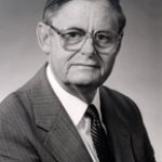
Dr Keith Boardman, biochemist
Dr Keith Boardman interviewed by Professor Ralph Slatyer in 1999. Dr Norman Keith Boardman was born in Geelong Victoria in 1926. He attended Geelong High School for 5 years then did a Leaving honours year at Melbourne Boys High School. He was awarded a Dafydd Lewis Scholarship to study chemistry at the University of Melbourne, receiving a Master of Science in 1949 for his thesis on the properties and thermodynamics of molten salt mixtures.
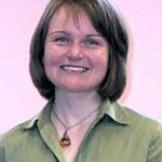
Dr Kristen Bremmell, chemical engineer
Dr Kristen Bremmell interviewed by Ms Marian Heard in 2001. Dr Kristen Bremmell received a PhD from the University of Newcastle in chemical engineering. Her doctoral studies investigated the fundamental nature of chemicals used in treating industrial wastewater.
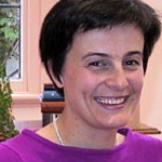
Dr Leanne Armand, marine micropalaeontologist
Dr Leanne Armand developed an early love for nature, later pursuing biology and palaeontology through fieldwork and research. Her career evolved into micropalaeontology, focusing on fossil algae to study past sea temperatures and sea ice estimation. Interviewed by Ms Marian Heard in 2001.