




Conversations with Australian scientists
In these interviews, outstanding Australian scientists talk about their early life, development of interest in science, mentors, research work and other aspects of their careers.


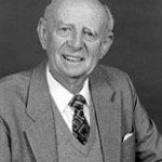
Dr Douglas Waterhouse (1916-2000), entomologist
Dr Douglas Waterhouse interviewed by Dr Max Blythe in 1993. Dr Douglas Waterhouse was born in Sydney, Australia and from a very early age the world of entomology made a great impression on him. He received a BSc and MSc from the University of Sydney and in 1938 established a career at CSIR (now CSIRO) where he remained until his retirement in 1981.
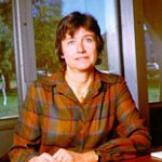
Dr Elizabeth Truswell, geologist
Dr Elizabeth Truswell interviewed by Professor Ken Campbell in 2000. Elizabeth Marchant Truswell was born in 1941 in Kalgoorlie, Western Australia. During her undergraduate studies she discovered the field of palynology (the study of fossil and living pollen grains and plant spores), which allowed her to combine a love of botany with geology.
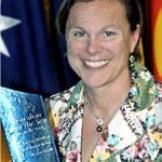
Dr Fiona Wood, plastic surgeon
Fiona Wood, born in Yorkshire in 1958, graduated from St Thomas’ Hospital Medical School in 1981 and immigrated to Australia in 1987, where she specialized in plastic surgery. She co-developed the innovative burns treatment Cellspray® in 1995, founded Clinical Cell Culture with Marie Stoner in 1999, and gained international recognition for her expertise after the 2002 Bali bombings while continuing research and teaching in Western Australia.
Interviewed by Dr Norman Swan in 2008.
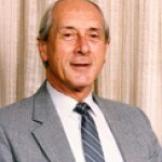
Dr Fraser Bergersen, plant scientist
Fraser grew up in Hamilton, New Zealand, in a family of inventive engineers, developing an early love for tinkering and science that led him from aspiring medical student to microbiologist. His pioneering work at CSIRO on nitrogen-fixing legumes advanced global understanding of plant-bacteria symbiosis, influencing agricultural practices and sustaining decades of collaborative research. Interviewed by David Salt in 2004.
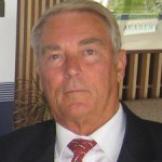
Dr Garth Paltridge, atmospheric scientist
Dr Garth Paltridge interviewed by Professor Graham Farquhar in 2010. Garth William Paltridge was born in Brisbane in 1940. He completed a BSc with honours at the University of Queensland (1961) before moving south to Melbourne. Paltridge was awarded an MSc and PhD (1965) from the University of Melbourne.
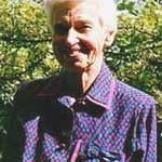
Dr Gretna Weste (1917-2006), botanist
Dr Gretna Weste interviewed by Professor Nancy Millis in 2000. Gretna Margaret Weste was born in 1917 in Dumfries, Scotland. She completed a BSc (1938), MSc (1939) and PhD (1968) at the University of Melbourne. Dr Weste became a leading Australian plant pathologist, with expertise in jarrah dieback.
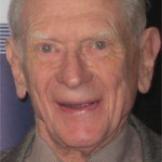
Dr Guy White (1925-2018), physicist
Dr Guy White interviewed by Professor Neville Fletcher in 2010. Guy Kendall White was born in Sydney in 1925 but spent his early years in country New South Wales. In 1935 he moved to Rose Bay, Sydney where he attended Scots College. After high school, White completed a BSc (Hons 1) (1942-45) and an MSc (1946-47), both from the University of Sydney.
Dr Harvey Millar, biochemist
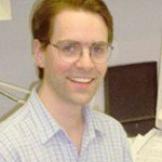
Dr Harvey Millar interviewed by Ms Marian Heard in 2001. Dr Harvey Millar received a PhD in the Division of Biochemistry and Molecular Biology at the Australian National University. His doctoral research looked at the regulation of electron transport pathways in plant mitochondria, during both normal plant growth and during symbiotic nitrogen fixation with the aid of rhizobium bacteria.
Dr Isobel Bennett, marine biologist
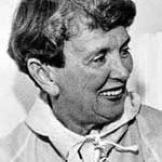
Dr Isobel Bennett, one of Australia’s most renowned marine biologists, made pioneering contributions to plankton research, intertidal ecology, and the study of the Great Barrier Reef, despite having no formal university degree in science. Her lifelong dedication to marine biology produced influential books, extensive fieldwork, and lasting educational initiatives, earning her national and international recognition. Interviewed by Ms Nessy Allen in 2000.